


Data Quality82%
MASS(Military Archive Scoring System)
ⓘ Regardless of era, the same scoring system applies to all units in the air-launched cruise missiles (alcm) category.
01 / Overview
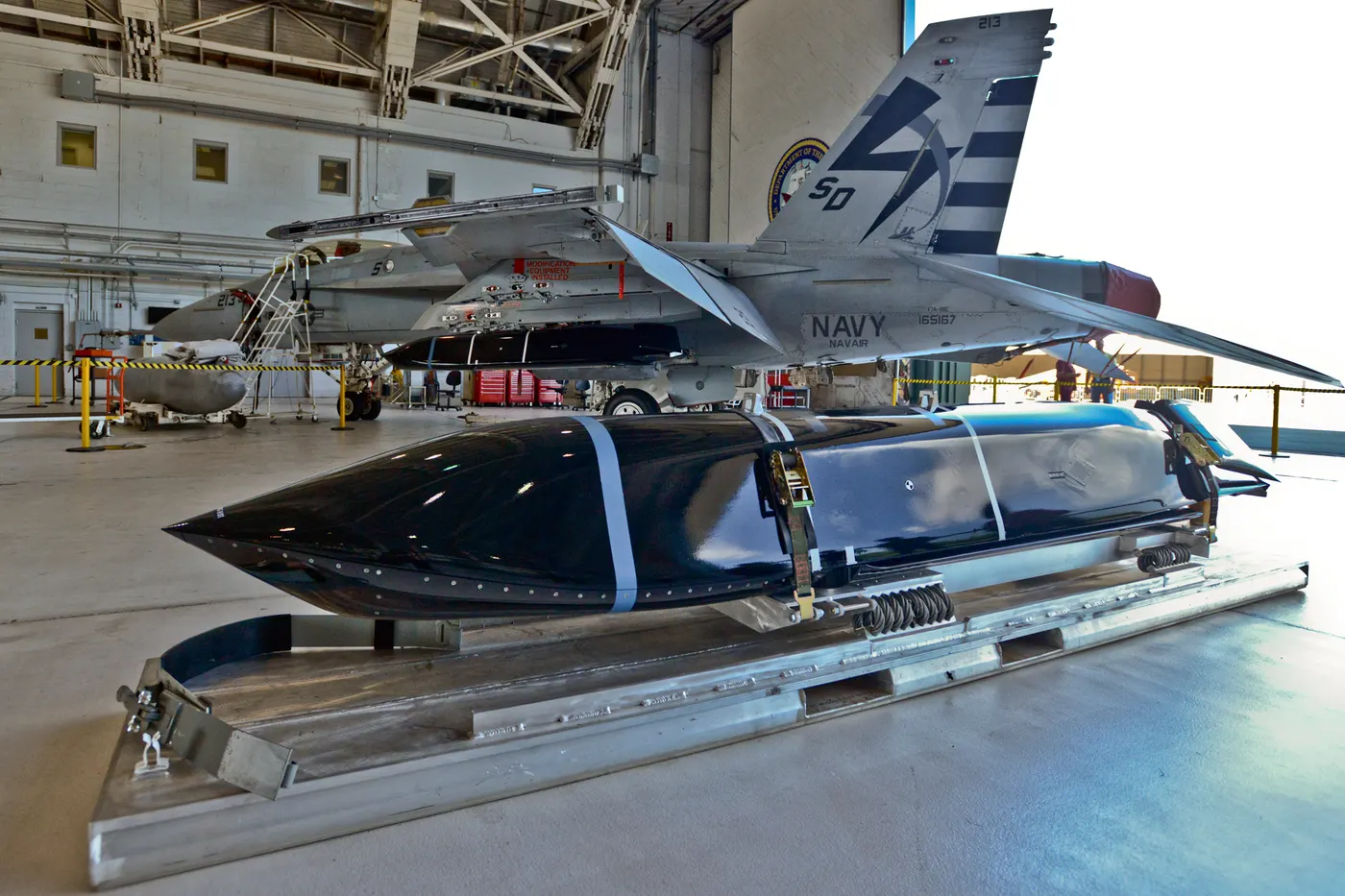
AGM-158C-1 LRASM
Country
Prime contractor
Production
2017–
Unit Price (current)
$3.3M↗ 3% inflation · 2024→2025
Original Price
$3.2M (2024)
Operators
💰 PERFORMANCE / PRICE ASSESSMENT Methodology ↗
AIR-LAUNCHED CRUISE MISSILES (ALCM) · MODERN ERA
2
PERFORMANCE/PRICE
68
UNIT COST (2025 USD)
$3.3M
Original: $3.2M (2024)
Inflation: +%3
ⓘ Performance/Price and MASS score are computed across all units in the air-launched cruise missiles (alcm) category, regardless of era.
02 / Specs & Design
◎General7MOD.7
- Missile Typestealth anti-ship cruise missile
- Service Entry Year2018
- DesignerDARPA
- Length4 m
- Diameter340 mm
- Launch Weight1,250 kg
- In ServiceYes
◈Guidance8MOD.8
- Guidance TypeInertial / GPS
- Seeker Typeimaging infrared with AI guidance
- Fire-and-ForgetYes
- Two-Way DatalinkYes
- Top-Attack CapableNo
- Imaging Infrared SeekerYes
- Inertial / GPS GuidanceYes
- Sea-SkimmingYes
▣Propulsion5MOD.5
- Propulsion Typeturbofan
- Motor TypeWilliams F107-WR-105
- Boost StageNo
- Two-StageNo
- Fuel / PropellantJP-10 or similar jet fuel
◇Performance8MOD.8
- Minimum Range500 km
- Maximum Range500 km
- Top Speed950 m/s
- Top Speed (Mach)0.8 Mach
- Cruise Altitude12,000 m
- Flight Profilesubsonic sea-skimming cruise with autonomous terminal phase
- Maximum G10
- HypersonicNo
◆Warhead5MOD.5
- Warhead Typeblast fragmentation penetrator
- Warhead Weight453.6 kg
- Tandem HEAT ChargeNo
- Proximity FuzeYes
- Nuclear-CapableNo
▤Launch Platform6MOD.6
- Launch PlatformB-1B Lancer, F-15E Strike Eagle, F-15EX Eagle II, F/A-18E/F Super Hornet, F-35 Lightning II, P-8 Poseidon, Mk 41 VLS, HIMARS
- Air-LaunchedYes
- Ground-LaunchedNo
- Naval-LaunchedNo
- Man-PortableNo
- Launcher Typeinternal bay or external hardpoint, Mk 41 VLS, HIMARS
⬢Production4MOD.4
- Unit Cost3,240,000 USD
- Operators1
- Variants1
- Production Start2,017 year
▲Warhead Detail3MOD.3
- Detonation Mechanism / FuzeFMU-156/B fuze
- Explosive Filler Weight453.6 kg
- Explosive Filler TypeHE blast fragmentation
03 / History
SERVICE LIFESPANStill in Service
- 2017Production started
- 2018Entered service
9
years in service
2
countries operating
ⓘ The producing country still actively operates it.

05 / MASS Score
AIR-LAUNCHED CRUISE MISSILES (ALCM) RANKING Air-Launched Cruise Missiles (ALCM) · Modern Era


MASS RANKINGSMASS ↗
6AIR-LAUNCHED CRUISE MISSILES (ALCM)2MODERN ERA · AIR-LAUNCHED CRUISE MISSILES (ALCM)383UNITED STATES · ALL WEAPONS1PRICE · AIR-LAUNCHED CRUISE MISSILES (ALCM)380PRICE · ALL WEAPONS10PERFORMANCE/PRICE · AIR-LAUNCHED CRUISE MISSILES (ALCM)
ⓘ Rankings are within theAir-Launched Cruise Missiles (ALCM)category.
📖 TERMS ON THIS PAGE8terms
Capability of launching an anti-tank guided missile from an airborne platform, such as a helicopter or aircraft.
Fire-and-forget refers to a missile guidance system where the missile guides itself to its target after launch, requiring no further input from the operator.
A guidance system in ATGMs that uses infrared sensors to create a thermal image of the target for precise homing.
Guidance system combining inertial navigation (self-contained motion tracking) with GPS (satellite-based positioning) for precise trajectory correction in ballistic missiles.
A guidance method that uses inertial navigation sensors together with satellite‑based GPS signals to determine a missile’s position and steer it toward a target.
A proximity fuze is a detonation mechanism in ATGMs that triggers when the missile approaches within a set distance of a target, using sensors like radar or laser to detect proximity.
Sea‑skimming is a low‑altitude flight profile in which a missile or projectile flies close to the sea surface to minimize radar detection and increase survivability.
Enables real-time sharing of position, targeting, and sensor data among aircraft and platforms for coordinated combat operations.
These terms are listed automatically because they appear on this page.full encyclopedia →
📚 Sources