


Data Quality83%
MASS(Military Archive Scoring System)
ⓘ Regardless of era, the same scoring system applies to all units in the attack helicopters category.
01 / Overview
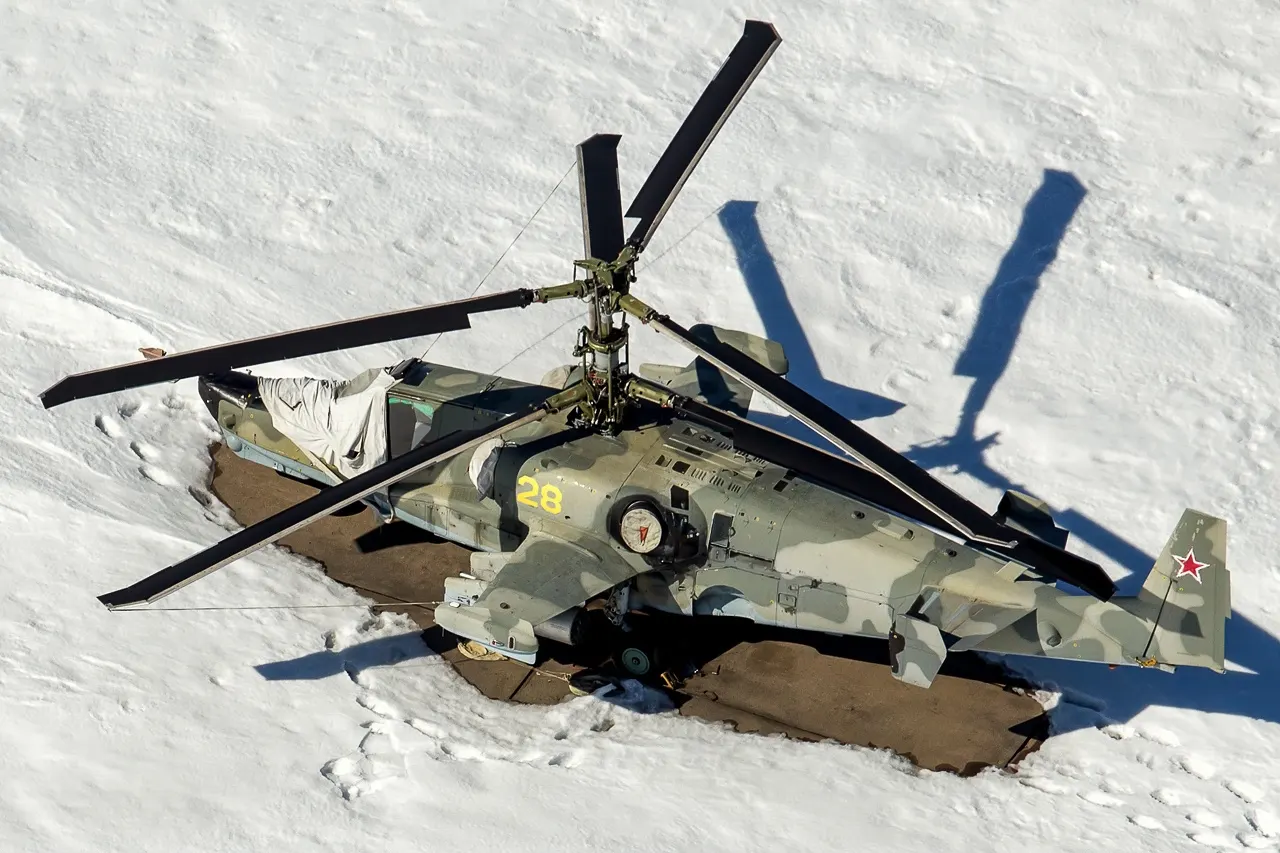
Kamov Ka-50 Black Shark
Category
Country
Prime contractor
Production
1995–
Quantity
50
Operators
💰 PERFORMANCE / PRICE ASSESSMENT Methodology ↗
ATTACK HELICOPTERS · POST-COLD WAR
5
PERFORMANCE/PRICE
55
UNIT COST (2025 USD)
—
ⓘ Performance/Price and MASS score are computed across all units in the attack helicopters category, regardless of era.
02 / Specs & Design
◎General6MOD.6
- First Flight1982
- Service Entry Year1995
- Crew1
- Passengers0
- Primary RoleAttack helicopter
- In ServiceYes
◈Powerplant8MOD.8
- Engine TypeKlimov VK-2500
- Number of Engines2
- Engine Power (each)1,660 kW
- Transmission Rating2,200 kW
- Rotor ConfigurationCoaxial contra-rotating
- Main Rotor Diameter14.5 m
- Main Rotor Blades6
- Anti-Torque TypeNone (coaxial)
▣Performance10MOD.10
- Top Speed315 km/h
- Cruise Speed270 km/h
- Never-Exceed Speed (VNE)390 km/h
- Service Ceiling5,500 m
- Hover Ceiling (IGE)4,500 m
- Hover Ceiling (OGE)3,600 m
- Range545 km
- Ferry Range1,160 km
- Rate of Climb12 m/s
- Endurance180
◇Dimensions & Weights7MOD.7
- Fuselage Length13.5 m
- Height4.93 m
- Rotor Disc Area330
- Empty Weight7.7 kg
- Max Takeoff Weight10,800 kg
- Useful Load3,100 kg
- Cabin Volume1.5
◆Armament & Mission7MOD.7
- Hardpoints4
- Weapons Payload2,500 kg
- Gun2A42 30mm
- Anti-Tank MissilesYes
- Air-to-Air MissilesYes
- Rocket PodsYes
- Rescue HoistNo
▤Avionics7MOD.7
⬢Survivability6MOD.6
▲Production3MOD.3
- Total Built18
- Unit Cost16,000,000 USD
- Variants6
◎Service History2MOD.2
- Production Start1990
- Operational StatusIn service
03 / History
SERVICE LIFESPANStill in Service
- 1995Production started
31
years in service
50
units produced
2
countries operating
ⓘ The producing country still actively operates it.


05 / MASS Score
ATTACK HELICOPTERS RANKING Attack Helicopters · Post-Cold War


MASS RANKINGSMASS ↗
8ATTACK HELICOPTERS5POST-COLD WAR · ATTACK HELICOPTERS71RUSSIA · ALL WEAPONS36PERFORMANCE/PRICE · ATTACK HELICOPTERS
ⓘ Rankings are within theAttack Helicopterscategory.
📖 TERMS ON THIS PAGE16terms
Anti-Tank Guided Missile: a missile designed to destroy tanks.
Air-to-air missiles are guided missiles fired from aircraft to engage other aircraft. They are used for self-defense and to gain air superiority.
Autopilot/AFCS (Automatic Flight Control System) is an avionics suite that automatically controls a helicopter’s attitude, navigation and flight path, providing stability augmentation and reducing pilot workload.
Chaff/Flare: Countermeasures deployed by attack helicopters to disrupt radar- or heat-seeking missiles by creating false targets or decoys.
Armored protective panels installed in the cockpit area of an attack helicopter to shield the crew from small arms fire and shrapnel.
Seats designed to absorb crash forces, reducing injury to occupants.
DIRCM/IRCM systems on attack helicopters that detect and disrupt infrared-guided missiles using directed energy or counter-radiation signals.
Combined forward-looking infrared (FLIR) and electro-optical (EO) sensor turret for target acquisition and tracking, typically mounted on aircraft or ground vehicles.
A radar system that tracks targets and guides weapons to intercept them, used for weapon aiming and missile guidance in combat aircraft and ships.
A glass cockpit is an aircraft cockpit featuring electronic instrument displays, typically LCD or CRT screens, replacing traditional analog gauges.
A helmet-mounted system that projects flight, targeting, and sensor data directly into a pilot's field of view.
A sight mounted on a helicopter's mast for targeting.
Electronic receiver system that detects and identifies radar signals, alerting aircraft to potential threats for defensive countermeasures.
Aerodynamic containers mounted on aircraft, typically helicopters or fighter jets, that hold and launch unguided rockets in rapid succession.
Fuel tanks equipped with a material that automatically seals punctures from small arms fire or shrapnel to prevent leakage and reduce fire risk.
A radar system used to detect and track precipitation, storm intensity, and wind patterns to assist in flight operations and mission planning.
These terms are listed automatically because they appear on this page.full encyclopedia →
📚 Sources