


Data Quality84%
MASS(Military Archive Scoring System)
ⓘ Regardless of era, the same scoring system applies to all units in the helicopter carriers category.
01 / Overview
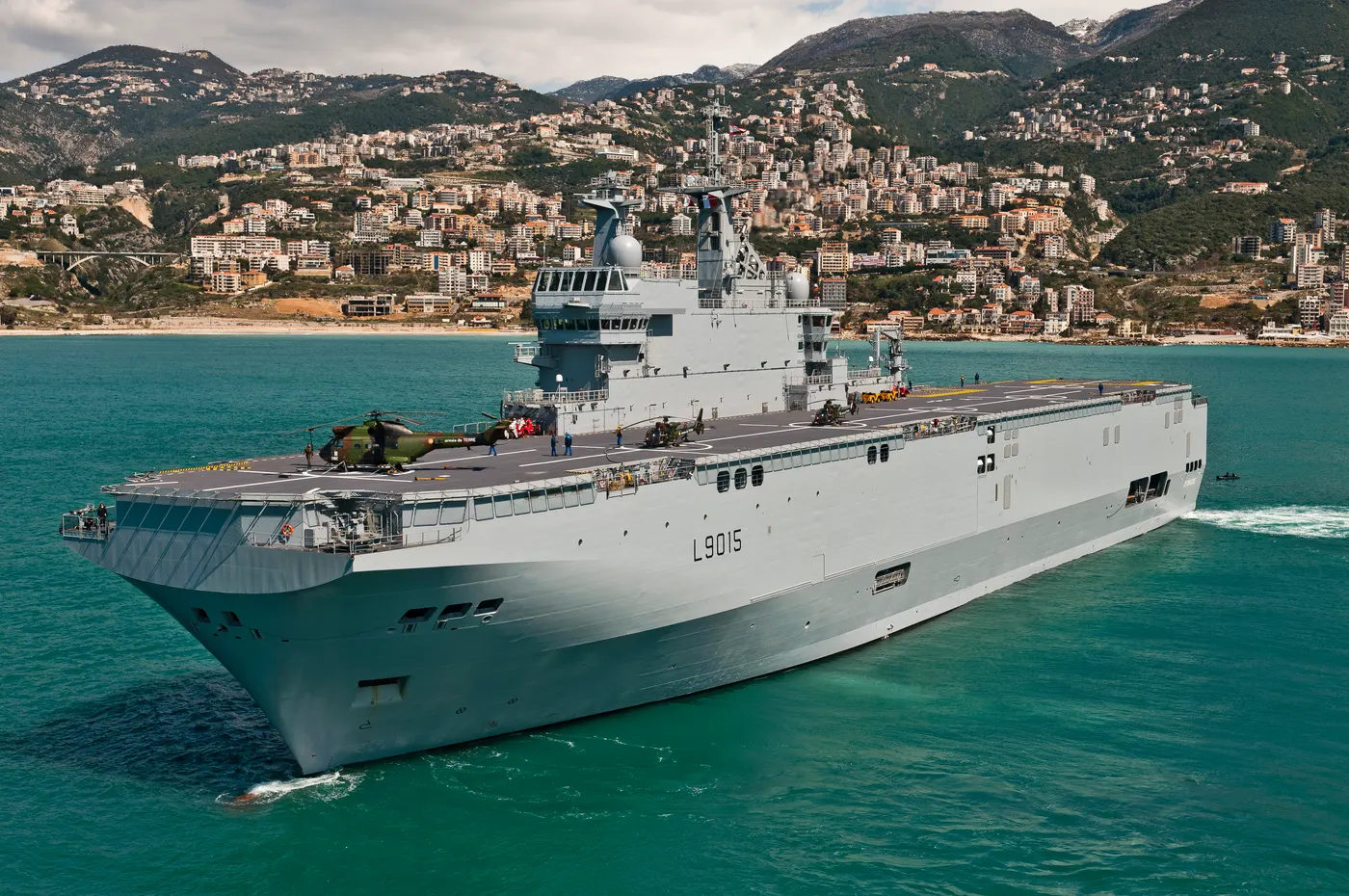
Mistral-class amphibious assault ship
Category
Country
Prime contractor
Production
2004–
Quantity
5
Unit Price (current)
$823.1M↗ 40% inflation · 2012→2025
Original Price
$587.0M (2012)
Operators
💰 PERFORMANCE / PRICE ASSESSMENT Methodology ↗
HELICOPTER CARRIERS · POST-COLD WAR
1
PERFORMANCE/PRICE
80
UNIT COST (2025 USD)
$823.1M
Original: $587.0M (2012)
Inflation: +%40
ⓘ Performance/Price and MASS score are computed across all units in the helicopter carriers category, regardless of era.
02 / Specs & Design
◎Identification8MOD.8
- Hull ClassificationLanding helicopter dock
- Ship Typeprojection and command ships
- Builder / ShipyardDCNS, STX Europe
- Laid Down2002
- Launched2004
- Commissioned2005
- Ships in Class5
- In ServiceYes
◈Displacement2MOD.2
- Light Displacement16,500 t
- Full Load Displacement21,200 t
▣Dimensions3MOD.3
- Length (overall)199 m
- Beam32 m
- Draft6.3 m
◇Complement2MOD.2
- Total Complement160
- Officers20
◆Propulsion8MOD.8
- PropulsionDiesel
- Arrangement (CODAG/COGAG…)3 Wärtsilä diesel-alternators 16 V32 (6.2 MW) + 1 Wärtsilä Vasa auxiliary diesel-alternator 18V200 (3 MW)
- Number of Engines4
- Shaft Power20,000 kW
- Shafts / Screws2
- Top Speed18.8 kn
- Range10,691
- Nuclear-PoweredNo
▤Gun Armament3MOD.3
- Main Gun30 mm Breda-Mauser
- Secondary Guns20 mm modèle F2 gun, 30 mm Breda-Mauser, M134 miniguns, M2HB Browning
- CIWSSimbad missile systems
⬢Missile Armament1MOD.1
- Surface-to-Air MissilesSimbad missile systems
▲Aviation4MOD.4
- Embarked Helicopters16
- HangarYes
- Flight DeckYes
- UAV CapabilityYes
◎Sensors & Combat Systems3MOD.3
- Air-Search RadarMRR3D-NG air/surface sentry radar
- Surface / Fire-Control RadarDRBN-38A Decca Bridgemaster E250 navigation radar
- Electronic WarfareYes
◈Survivability3MOD.3
- DegaussingYes
- Hull MaterialSteel
- Automated Damage ControlYes
▣Fleet Status3MOD.3
- Completed5
- Active5
- Planned5
03 / History
SERVICE LIFESPANStill in Service
- 2004Production started
- 2008First deployment: Operation Atalanta
- 2010Entered service
22
years in service
5
units produced
2
countries operating
ⓘ The producing country still actively operates it.


05 / MASS Score
HELICOPTER CARRIERS RANKING Helicopter Carriers · Post-Cold War


MASS RANKINGSMASS ↗
4HELICOPTER CARRIERS1POST-COLD WAR · HELICOPTER CARRIERS120FRANCE · ALL WEAPONS4PRICE · HELICOPTER CARRIERS61PRICE · ALL WEAPONS5PERFORMANCE/PRICE · HELICOPTER CARRIERS
ⓘ Rankings are within theHelicopter Carrierscategory.
📖 TERMS ON THIS PAGE7terms
Automated Damage Control is a shipboard system that detects, assesses, and mitigates combat damage on aircraft carriers using sensors and software to enhance response speed and reduce crew workload.
A technique to reduce a ship's magnetic signature by neutralizing its internal magnetic field, minimizing vulnerability to magnetic mines or detection.
Type of internal combustion engine fuel, refined from crude oil.
Military action involving the use of electromagnetic spectrum to disrupt, deceive, or destroy enemy electronic systems.
The upper deck of an aircraft carrier, equipped for aircraft takeoff, landing, and maintenance operations.
Unmanned Aerial Vehicle: a remotely piloted or autonomous aircraft used for reconnaissance, surveillance, or combat missions without a human onboard.
These terms are listed automatically because they appear on this page.full encyclopedia →
📚 Sources