


Data Quality82%
MASS(Military Archive Scoring System)
ⓘ Regardless of era, the same scoring system applies to all units in the destroyers category.
01 / Overview
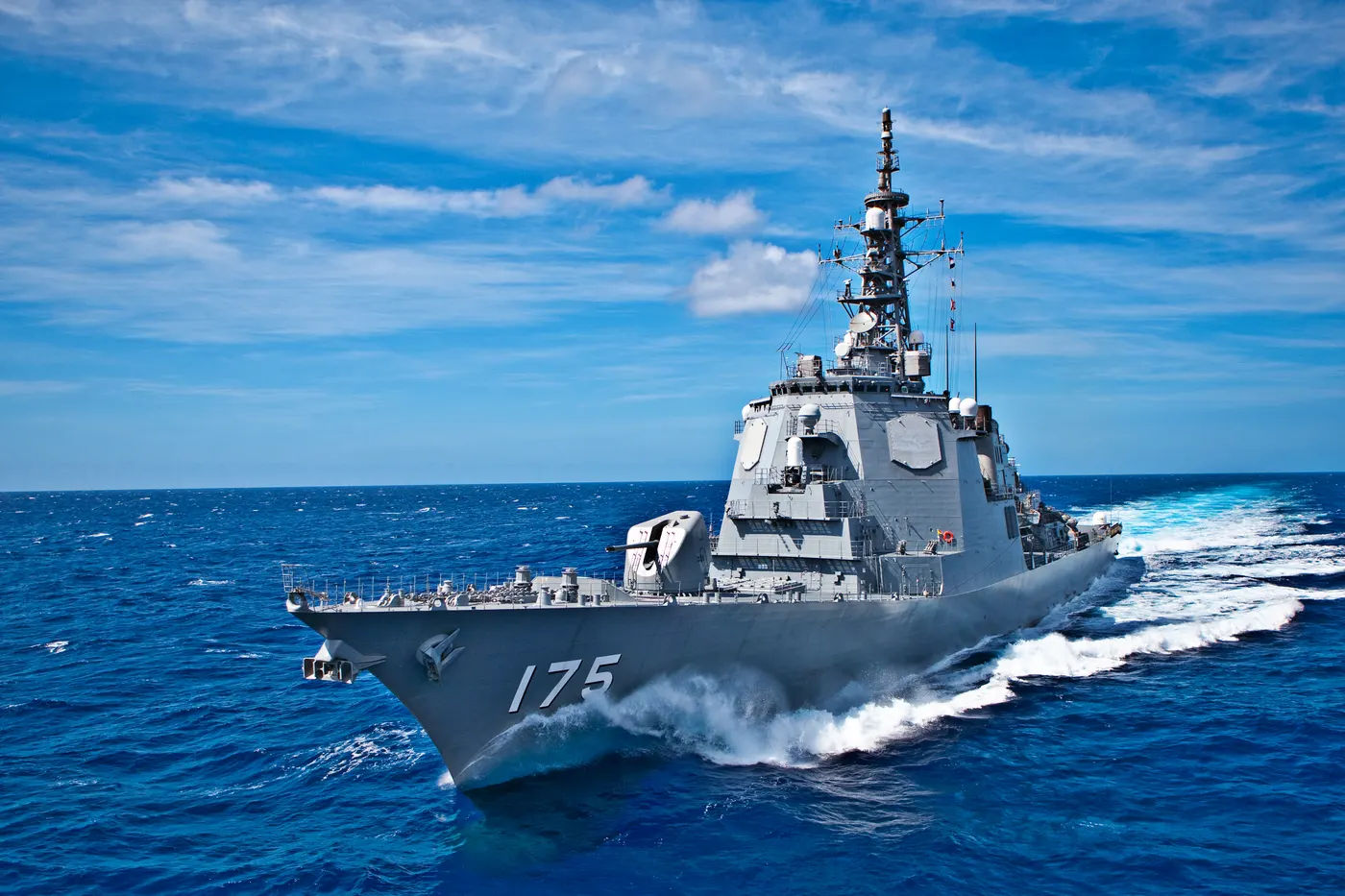
Kongō-class destroyer
💰 PERFORMANCE / PRICE ASSESSMENT Methodology ↗
DESTROYERS · COLD WAR
3
PERFORMANCE/PRICE
88
UNIT COST (2025 USD)
—
ⓘ Performance/Price and MASS score are computed across all units in the destroyers category, regardless of era.
02 / Specs & Design
◎Identification5MOD.5
- Hull ClassificationDDG
- Ship TypeGuided-missile destroyer
- Builder / ShipyardMitsubishi Heavy Industries, IHI Corporation
- Ships in Class4
- In ServiceYes
◈Displacement3MOD.3
- Light Displacement7,250 t
- Standard Displacement7,250 t
- Full Load Displacement9,500 t
▣Dimensions3MOD.3
- Length (overall)161 m
- Beam21 m
- Draft6.2 m
◇Complement1MOD.1
- Total Complement300
◆Propulsion8MOD.8
- PropulsionGas Turbine
- Arrangement (CODAG/COGAG…)4x LM2500 gas turbines, 2 shafts
- Number of Engines4
- Shaft Power74,570 kW
- Shafts / Screws2
- Top Speed30 kn
- Range4,500
- Nuclear-PoweredNo
▤Gun Armament4MOD.4
- Main GunOTO Melara 127 mm/54 Compact
- Main Gun Calibre127 mm
- Main Gun Count1
- CIWS2x Phalanx CIWS
⬢Missile Armament6MOD.6
- VLS Cells90
- Anti-Ship MissilesRGM-84 Harpoon
- Surface-to-Air MissilesSM-2MR, SM-3, ESSM
- Land-Attack Cruise MissilesYes
- Ballistic Missile DefenseYes
- ASW Rocket / MissileYes
▲Underwater Warfare4MOD.4
- Torpedo Tubes6
- ASW CapabilityYes
- Hull-Mounted SonarYes
- Towed Array SonarYes
◎Aviation5MOD.5
- Embarked Helicopters1
- HangarNo
- Flight DeckYes
- Fixed-Wing Aircraft0
- UAV CapabilityNo
◈Sensors & Combat Systems7MOD.7
- Air-Search RadarAN/SPY-1D PESA
- Surface / Fire-Control RadarOPS-28C or D
- Phased-Array RadarYes
- Combat SystemAegis Weapon System (AWS)
- Aegis / EquivalentYes
- Electronic WarfareYes
- Decoy LaunchersMark 36 SRBOC (4x), Type 4 towed anti-torpedo decoy
▣Survivability1MOD.1
◇Fleet Status8MOD.8
- Completed4
- Active4
- Under Construction0
- Planned0
- Cancelled0
- Lost0
- Retired0
- Preserved0
03 / History
SERVICE LIFESPANStill in Service
- 1991Production started
- 1998Production ended
35
years in service
7
years in production
4
units produced
1
countries operating
ⓘ The producing country still actively operates it.

05 / MASS Score
DESTROYERS RANKING Destroyers · Cold War


MASS RANKINGSMASS ↗
ⓘ Rankings are within theDestroyerscategory.
📖 TERMS ON THIS PAGE12terms
Anti-Submarine Warfare. Capability to detect, track, and engage submarines.
Anti-submarine warfare (ASW) rocket or missile: a weapon system used to detect and engage underwater targets, typically deployed from aircraft.
Aegis combat system or equivalent refers to naval combat systems integrating radar, missiles, and guns for air defense and anti-submarine warfare capabilities.
Systems designed to detect, track, intercept, and destroy ballistic missiles and their warheads.
Military action involving the use of electromagnetic spectrum to disrupt, deceive, or destroy enemy electronic systems.
The upper deck of an aircraft carrier, equipped for aircraft takeoff, landing, and maintenance operations.
A type of internal combustion engine that generates power using a turbine driven by gas expansion.
Sonar system installed on the hull of a ship, used for underwater detection and navigation by emitting and receiving sound waves.
Cruise missiles designed to strike land targets from naval platforms, typically launched from ships or submarines.
Radar system using multiple small antennas whose signals are combined to create a steerable beam without physical movement, enabling rapid scanning and tracking of multiple targets.
A system of hydrophones towed behind a vessel to detect submarines and torpedoes, minimizing interference from the ship's self-noise.
These terms are listed automatically because they appear on this page.full encyclopedia →
📚 Sources