


Data Quality86%
MASS(Military Archive Scoring System)
ⓘ Regardless of era, the same scoring system applies to all units in the destroyers category.
01 / Overview
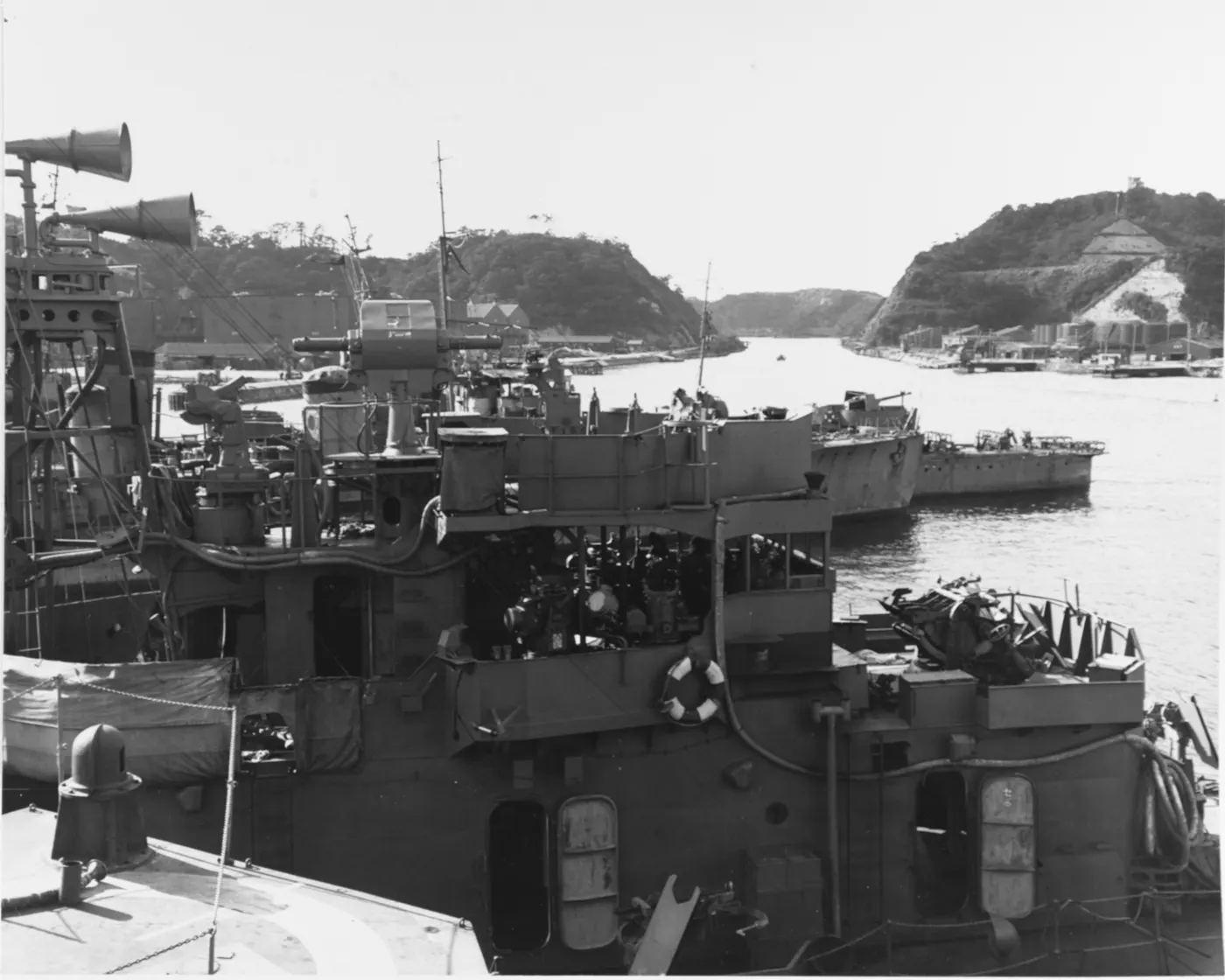
Tachibana-class destroyer
Category
Country
Prime contractor
Production
1944–1945
Quantity
14
Operators
💰 PERFORMANCE / PRICE ASSESSMENT Methodology ↗
DESTROYERS · WORLD WAR II
38
PERFORMANCE/PRICE
78
UNIT COST (2025 USD)
—
ⓘ Performance/Price and MASS score are computed across all units in the destroyers category, regardless of era.
02 / Specs & Design
◎Identification5MOD.5
- Ship Typedestroyer
- Builder / ShipyardYokosuka Naval Arsenal, Maizuru Naval Arsenal, Fujinagata Shipyards, Kawasaki Dockyard Co.
- Laid Down1943
- Ships in Class14
- In ServiceYes
◈Displacement3MOD.3
- Light Displacement1,350 t
- Standard Displacement1,350 t
- Full Load Displacement1,640 t
▣Dimensions4MOD.4
- Length (overall)100 m
- Length (waterline)92.15 m
- Beam9.35 m
- Draft3.41 m
◇Complement1MOD.1
- Total Complement211
◆Propulsion8MOD.8
- PropulsionSteam Turbine
- Arrangement (CODAG/COGAG…)2 × Kampon water tube boilers, 2 × Kampon impulse geared turbines, 2 shafts
- Number of Engines2
- Shaft Power14,000 kW
- Shafts / Screws2
- Top Speed27.3 kn
- Range3,500
- Nuclear-PoweredNo
▤Gun Armament4MOD.4
- Main Gun3 × 127 mm L/40 Type 89 AA guns (1×2, 1×1)
- Main Gun Calibre127 mm
- Main Gun Count3
- Secondary Guns25 × 25 mm Type 96 AA guns (4×3, 13×1)
⬢Missile Armament3MOD.3
▲Underwater Warfare4MOD.4
- Torpedo Tubes4
- ASW CapabilityYes
- Hull-Mounted SonarYes
- Towed Array SonarNo
◎Aviation5MOD.5
- Embarked Helicopters0
- HangarNo
- Flight DeckNo
- Fixed-Wing Aircraft0
- UAV CapabilityNo
◈Sensors & Combat Systems5MOD.5
- Air-Search Radar1 × 13-Gō early warning radar (wavelength 2 m)
- Surface / Fire-Control Radar1 × 22-Gō surface search radar (wavelength 10 cm)
- Phased-Array RadarNo
- Aegis / EquivalentNo
- Electronic WarfareYes
▣Survivability4MOD.4
◇Fleet Status7MOD.7
- Completed14
- Under Construction0
- Planned80
- Cancelled122
- Lost10
- Retired14
- Preserved0
03 / History
SERVICE LIFESPANStill in Service
- 1944Production started
- 1945Production ended
82
years in service
1
years in production
14
units produced
1
countries operating
ⓘ The producing country still actively operates it. 2 countries retired it.


05 / MASS Score
DESTROYERS RANKING Destroyers · World War II


MASS RANKINGSMASS ↗
ⓘ Rankings are within theDestroyerscategory.
📖 TERMS ON THIS PAGE4terms
Anti-Submarine Warfare. Capability to detect, track, and engage submarines.
Military action involving the use of electromagnetic spectrum to disrupt, deceive, or destroy enemy electronic systems.
Sonar system installed on the hull of a ship, used for underwater detection and navigation by emitting and receiving sound waves.
A mechanical device that converts steam pressure into rotational energy, used to drive shipboard generators or propulsion systems.
These terms are listed automatically because they appear on this page.full encyclopedia →
📚 Sources