


Data Quality82%
MASS(Military Archive Scoring System)
ⓘ Regardless of era, the same scoring system applies to all units in the ship-launched anti-ship missiles category.
01 / Overview
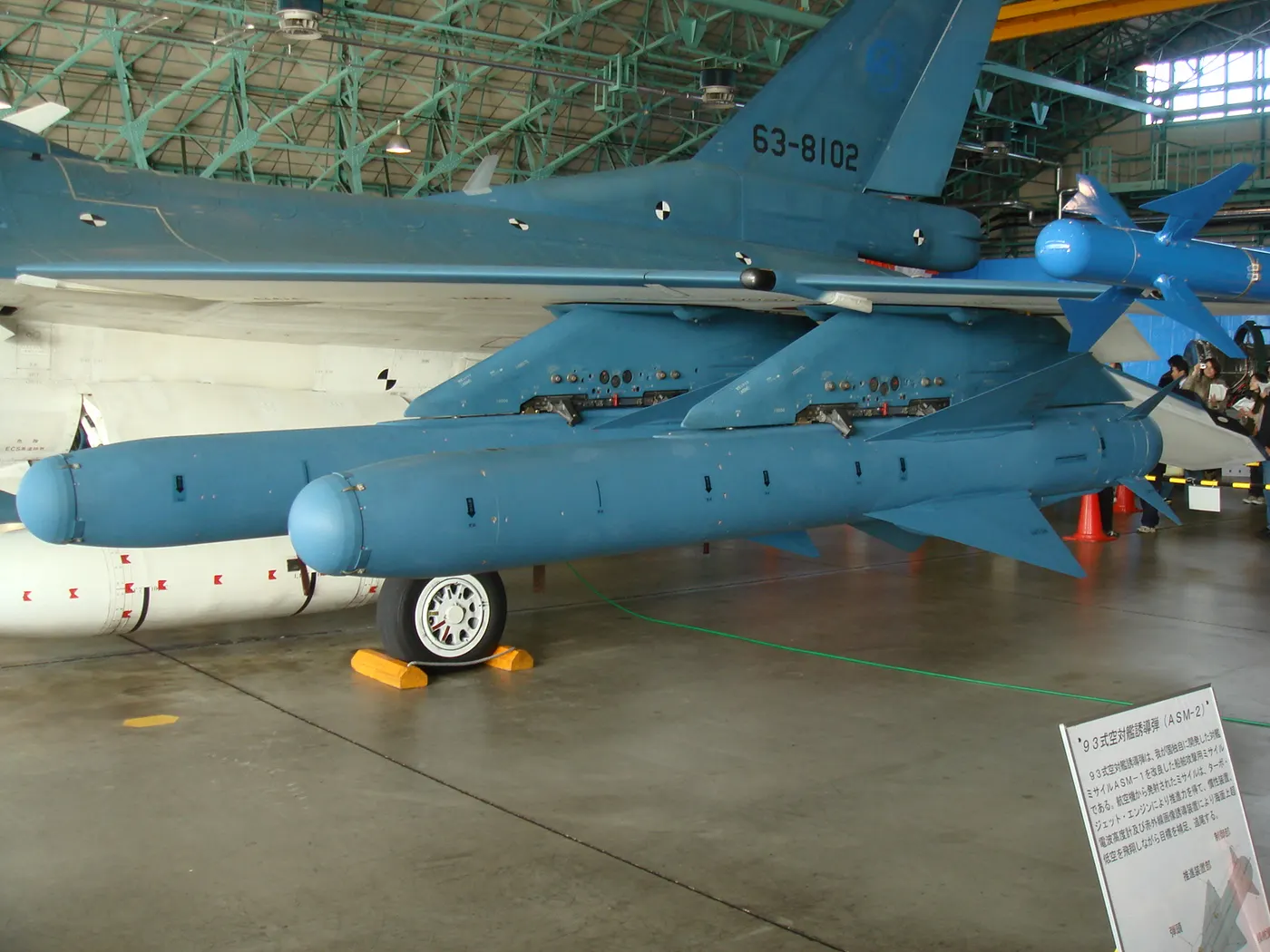
ASM-2
Category
Country
Prime contractor
Production
1993–
Operators
💰 PERFORMANCE / PRICE ASSESSMENT Methodology ↗
SHIP-LAUNCHED ANTI-SHIP MISSILES · POST-COLD WAR
3
PERFORMANCE/PRICE
80
UNIT COST (2025 USD)
—
ⓘ Performance/Price and MASS score are computed across all units in the ship-launched anti-ship missiles category, regardless of era.
02 / Specs & Design
◎General7MOD.7
- Missile TypeAnti-ship, Anti-ground (ASM2b) cruise missile
- Service Entry Year1995
- DesignerMitsubishi Heavy Industries
- Length4 m
- Diameter350 mm
- Launch Weight530 kg
- In ServiceYes
◈Guidance6MOD.6
- Guidance TypeInfrared
- Seeker TypeIR Imaging
- Fire-and-ForgetYes
- Imaging Infrared SeekerYes
- Inertial / GPS GuidanceYes
- Sea-SkimmingYes
▣Propulsion4MOD.4
- Propulsion TypeTurbojet
- Motor TypeTurbojet
- Boost StageYes
- Two-StageYes
◇Performance4MOD.4
- Maximum Range170 km
- Cruise Altitude5 m
- Flight Profilesea-skimming
- HypersonicNo
◆Warhead2MOD.2
▤Launch Platform5MOD.5
- Launch PlatformMitsubishi F-2, F-4EJ Kai Phantom II
- Air-LaunchedYes
- Ground-LaunchedNo
- Naval-LaunchedNo
- Man-PortableNo
⬢Production2MOD.2
- Operators1
- Variants2
03 / History
SERVICE LIFESPANStill in Service
- 1993Production started
33
years in service
1
countries operating
ⓘ The producing country still actively operates it.

05 / MASS Score
SHIP-LAUNCHED ANTI-SHIP MISSILES RANKING Ship-Launched Anti-Ship Missiles · Post-Cold War


MASS RANKINGSMASS ↗
17SHIP-LAUNCHED ANTI-SHIP MISSILES3POST-COLD WAR · SHIP-LAUNCHED ANTI-SHIP MISSILES15JAPAN · ALL WEAPONS42PERFORMANCE/PRICE · SHIP-LAUNCHED ANTI-SHIP MISSILES
ⓘ Rankings are within theShip-Launched Anti-Ship Missilescategory.
📖 TERMS ON THIS PAGE9terms
Capability of launching an anti-tank guided missile from an airborne platform, such as a helicopter or aircraft.
The initial propulsion phase where a high-thrust motor accelerates the missile to operational velocity.
Fire-and-forget refers to a missile guidance system where the missile guides itself to its target after launch, requiring no further input from the operator.
A guidance system in ATGMs that uses infrared sensors to create a thermal image of the target for precise homing.
A guidance method that uses inertial navigation sensors together with satellite‑based GPS signals to determine a missile’s position and steer it toward a target.
Electromagnetic radiation with wavelengths longer than visible light, used in missile guidance systems to detect and track targets based on heat signatures.
A proximity fuze is a detonation mechanism in ATGMs that triggers when the missile approaches within a set distance of a target, using sensors like radar or laser to detect proximity.
Sea‑skimming is a low‑altitude flight profile in which a missile or projectile flies close to the sea surface to minimize radar detection and increase survivability.
A two-stage ATGM propulsion system where a booster stage initially accelerates the missile before a sustainer stage maintains flight velocity.
These terms are listed automatically because they appear on this page.full encyclopedia →
📚 Sources