


Data Quality82%
MASS(Military Archive Scoring System)
ⓘ Regardless of era, the same scoring system applies to all units in the landing ship tank (lst) category.
01 / Overview
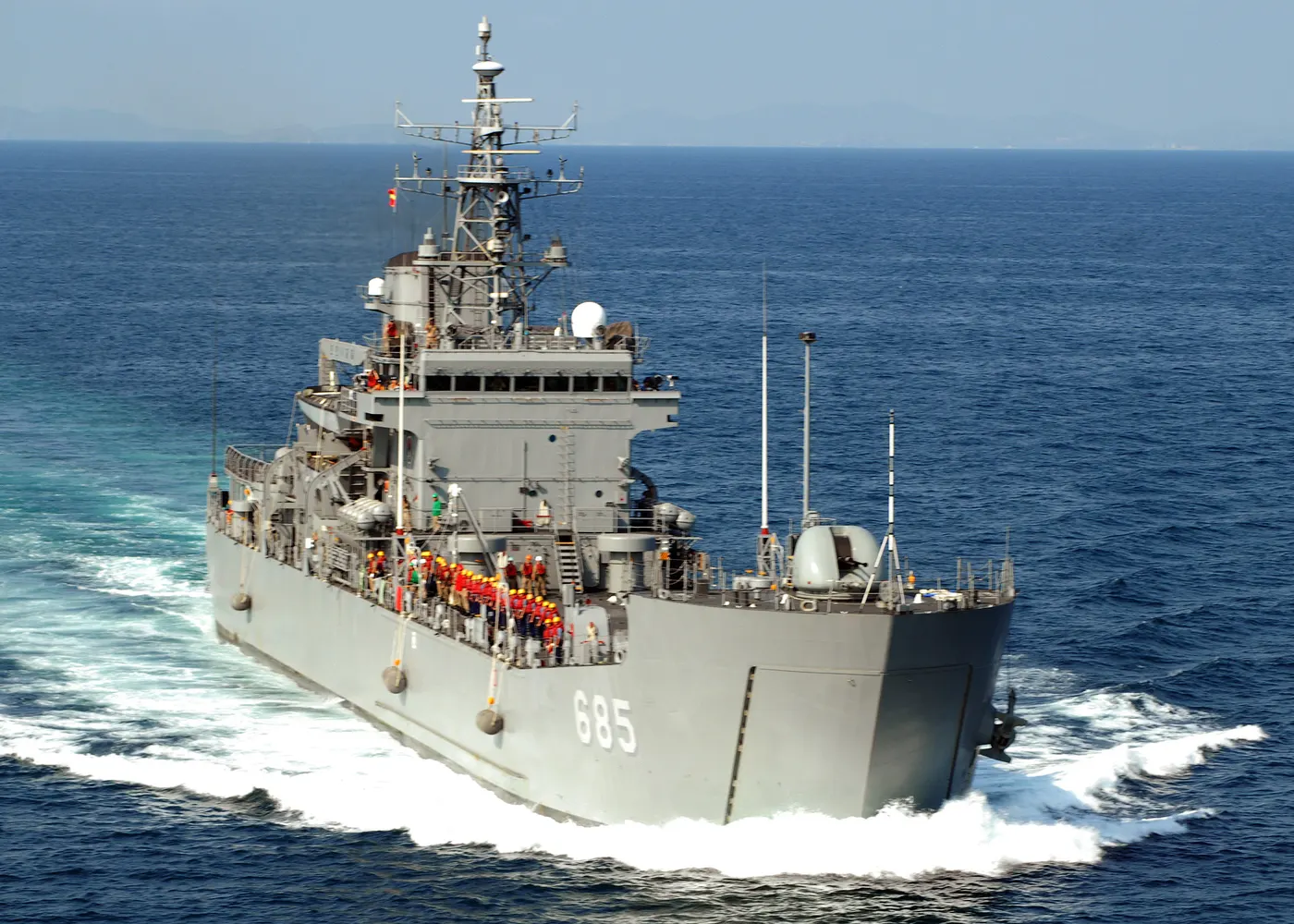
Go Jun Bong-class LST
Category
Country
Prime contractor
Production
1994–1996
Quantity
4
Operators
💰 PERFORMANCE / PRICE ASSESSMENT Methodology ↗
LANDING SHIP TANK (LST) · POST-COLD WAR
6
PERFORMANCE/PRICE
87
UNIT COST (2025 USD)
—
ⓘ Performance/Price and MASS score are computed across all units in the landing ship tank (lst) category, regardless of era.
02 / Specs & Design
◎Identification6MOD.6
- Ship TypeLanding Ship, Tank
- BuilderHanjin Heavy Industries
- Commissioned1994
- Ships in Class4
- Roleamphibious landing ship
- In ServiceYes
◈Displacement & Dimensions5MOD.5
- Light Displacement2,600 t
- Full Load Displacement4,300 t
- Length112.7 m
- Beam15.4 m
- Draft3.1 m
▣Capacity4MOD.4
- Troop Capacity258
- Vehicle Capacity12 tanks, 14 amphibious assault vehicles, 8 2.5ton trucks
- Landing Craft Carried4
- Ro-Ro CapabilityYes
◇Propulsion5MOD.5
- PropulsionDiesel
- Shaft Power9,545 kW
- Top Speed16 kn
- Range4,500
- Complement (crew)121
◆Aviation2MOD.2
- Embarked Helicopters1
- Flight DeckYes
▤Self-Defense2MOD.2
- Main Gun4 × 40mm Breda L/70K or 4 × Emerlec 30mm
- CIWS2 × Vulcan 20 mm Gatling
⬢Fleet Status2MOD.2
- Completed4
- Active4
03 / History
SERVICE LIFESPANStill in Service
- 1994Production started
- 1996Production ended
32
years in service
2
years in production
4
units produced
1
countries operating
ⓘ The producing country still actively operates it.

05 / MASS Score
LANDING SHIP TANK (LST) RANKING Landing Ship Tank (LST) · Post-Cold War


MASS RANKINGSMASS ↗
39LANDING SHIP TANK (LST)6POST-COLD WAR · LANDING SHIP TANK (LST)65SOUTH KOREA · ALL WEAPONS13PERFORMANCE/PRICE · LANDING SHIP TANK (LST)
ⓘ Rankings are within theLanding Ship Tank (LST)category.
📖 TERMS ON THIS PAGE3terms
Type of internal combustion engine fuel, refined from crude oil.
The upper deck of an aircraft carrier, equipped for aircraft takeoff, landing, and maintenance operations.
Ro-Ro (Roll-on/Roll-off) capability enables vehicles and equipment to be driven on/off a ship via ramps, facilitating rapid vehicle loading/unloading for amphibious operations.
These terms are listed automatically because they appear on this page.full encyclopedia →
📚 Sources