

A canisterized ballistic missile ships, stores and fires from inside a sealed metal or composite tube rather than riding bare on its launch vehicle. The canister is not just a shipping crate. It is an environmental seal that keeps moisture, dust and handling shocks off the missile's airframe and guidance electronics for years at a time, and it is also the launch tube itself, so the missile never has to be lifted out and mounted before a launch can begin. A missile without this feature travels exposed on its transporter erector launcher (the missile visibly strapped to its erector arm, as older Soviet and Chinese designs did for decades), which leaves the airframe open to weather and to visual identification, and forces ground crews to complete final assembly steps in the field rather than at the factory. Canisterization is what let missile forces make the road-mobile launcher the norm rather than the exception, since a sealed tube tolerates rough handling on public roads and rail cars in a way a bare airframe cannot.
Canisterization is frequently paired with cold launch, an ejection method that pushes the missile clear of the tube on gas pressure before the main rocket motor ever ignites. The two ideas reinforce each other but are not the same thing. A canister is the sealed container the missile lives in from factory to firing point, while cold launch describes only the instant of ejection, and a canisterized missile can in principle still ignite its motor inside the tube (a hot launch) if the canister and launcher are built to survive the exhaust plume.
01The Soviet Origin of the Cold-Launch Canister
The design traces back to the Soviet RSD-10 Pioneer, known to NATO as the SS-20 Saber, which entered service in 1976 as a two-stage, solid-fuel intermediate-range missile riding on a six-axle MAZ-547 transporter erector launcher.1 The missile lived inside a sealed transport-launch canister mounted on that vehicle, and at the firing site a solid-propellant gas generator popped the whole airframe clear of the tube before the first-stage motor lit, protecting the launcher and crew from the brutal heat of ignition.2
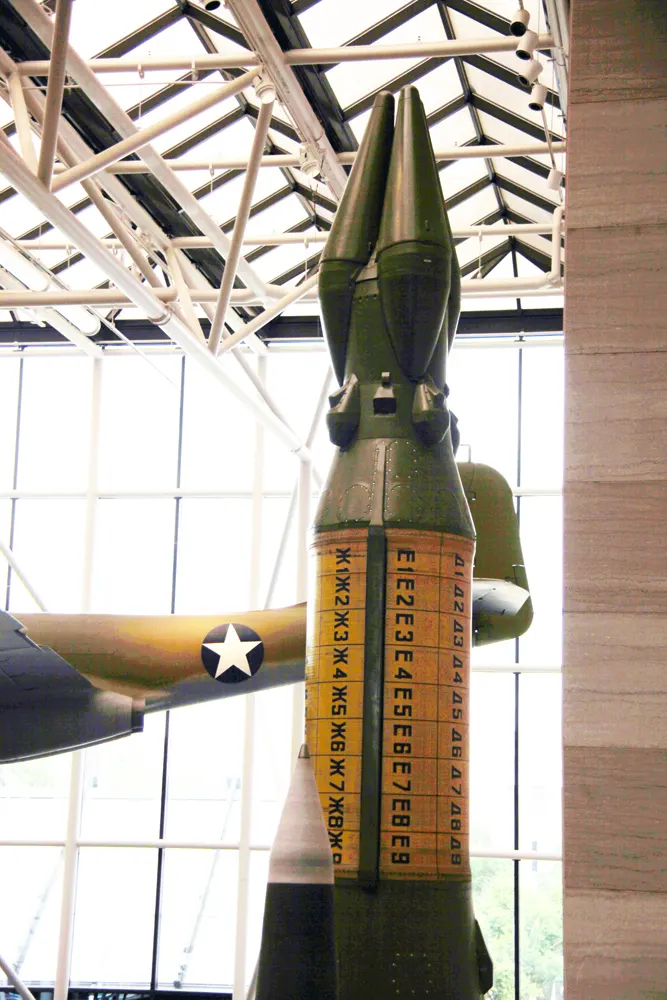
That sequence, ejection first and ignition second, is the whole mechanical case for pairing a canister with cold launch. A missile fired straight out of an open rail directs its rocket exhaust down onto the transporter erector launcher itself, forcing engineers to armor the vehicle against that plume and limiting how fast a follow-up shot can be prepared. Ejecting the sealed round on gas pressure before the motor lights means the vehicle needs no exhaust shielding at all, and it lets a canister be mounted, cold-launched from, and reloaded onto platforms an exposed missile never could reach, submarine launch tubes and rail cars among them, because the tube supplies its own pressure-tight environment independent of the launch platform's structure.
The design bureau behind the Pioneer, the Moscow Institute of Thermal Technology, carried the same canister-and-cold-launch formula forward into the Topol family that replaced the Pioneer after the 1987 INF Treaty forced its retirement, cementing canisterization as the default for Russia's road-mobile missile force rather than a one-off feature.3
01From China's Anti-Ship Missile to India's Rail-Mobile Agni-P
The People's Liberation Army Rocket Force fields the canisterized approach across multiple missile families. The DF-21D, the world's first anti-ship ballistic missile, cold-launches from its canister atop a Wanshan transporter erector launcher, with the motor igniting only after the missile has cleared roughly twenty meters of altitude.4 The shorter-range DF-16 rides the same canister-and-TEL formula on its own five-axle launcher, developed by China's China Academy of Launch Vehicle Technology.5
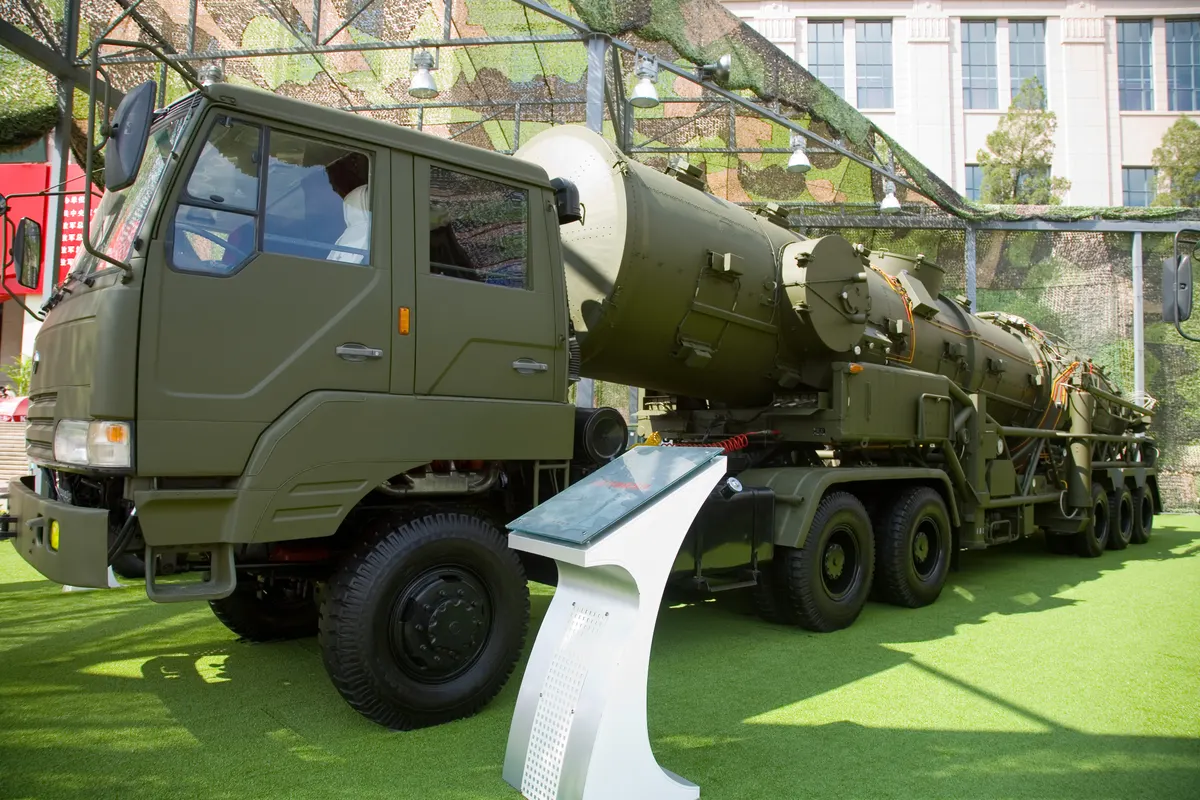
India's Agni-P, developed by the Defence Research and Development Organisation, became the country's first fully canisterized missile, with the warhead mated and sealed inside the tube well before any launch order, cutting preparation time sharply against earlier Agni variants that needed field assembly.6
North Korea's Pukguksong-2 shows the same tube adapted across domains, a land-mobile missile derived directly from the submarine-launched Pukguksong-1, using an identical cold-gas ejection sequence on a tracked launcher instead of a submarine tube.7
01Notes and Sources
- "RSD-10 Pioneer", Wikipedia — en.wikipedia.org ↩
- "Medium-range missile complex RSD-10 Pioneer (SS-20)", Missilery.info — en.missilery.info ↩
- "RT-21M / SS-20 SABER", GlobalSecurity.org — globalsecurity.org ↩
- "DF-21 (CSS-5)", Missile Threat, CSIS — missilethreat.csis.org ↩
- "DF-16 (CSS-11)", Missile Threat, CSIS — missilethreat.csis.org ↩
- "Agni-Prime (Agni-P), India's Rail-Mobile Canisterised Missile Explained", DefenceNiti — defenceniti.com ↩
- "Pukguksong-2 (KN-15)", Missile Threat, CSIS — missilethreat.csis.org ↩


