


Data Quality84%
MASS(Military Archive Scoring System)
ⓘ Regardless of era, the same scoring system applies to all units in the nuclear warheads category.
01 / Overview
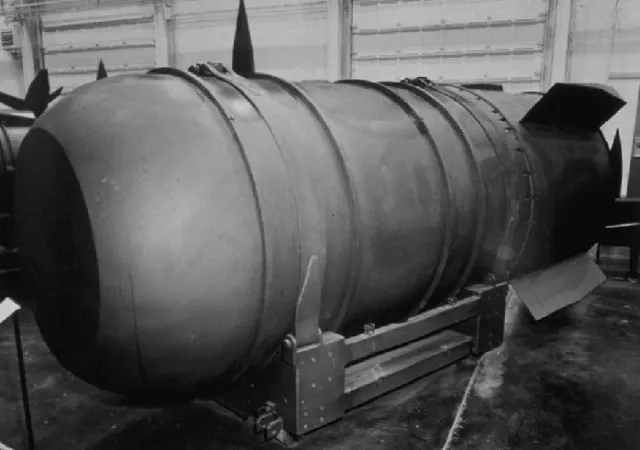
Mark 36 nuclear bomb
💰 PERFORMANCE / PRICE ASSESSMENT Methodology ↗
NUCLEAR WARHEADS · EARLY COLD WAR
3
PERFORMANCE/PRICE
70
UNIT COST (2025 USD)
—
ⓘ Performance/Price and MASS score are computed across all units in the nuclear warheads category, regardless of era.
02 / Specs & Design
◎General6MOD.6
- Warhead Typethermonuclear
- Service Entry Year1956
- Weight7,938 kg
- Length3.81 m
- Diameter1,524 mm
- In ServiceNo
◈Yield6MOD.6
- Yield6,000
- Yield Range6 megatons (clean) to 19 megatons (dirty)
- ThermonuclearYes
- Boosted FissionNo
- Variable Yield (Dial-a-Yield)No
- Enhanced Radiation (Neutron)No
▣Delivery5MOD.5
- Delivery Systemsgravity bomb
- MIRV-CompatibleNo
- Missile WarheadNo
- Gravity BombYes
- Artillery ShellNo
◇Safety & Security3MOD.3
◆Production4MOD.4
- Number Built920
- Designer / LabUnited States
- First Test1954
- Operators1
03 / History
SERVICE LIFESPANRetired
- 1956Production started
- 1961Production ended
70
years in service
5
years in production
920
units produced
0
countries operating
ⓘ The producing country no longer actively operates it. 1 countries retired it.

05 / MASS Score
NUCLEAR WARHEADS RANKING Nuclear Warheads · Early Cold War

MASS RANKINGSMASS ↗
18NUCLEAR WARHEADS3EARLY COLD WAR · NUCLEAR WARHEADS383UNITED STATES · ALL WEAPONS16PERFORMANCE/PRICE · NUCLEAR WARHEADS
ⓘ Rankings are within theNuclear Warheadscategory.
📖 TERMS ON THIS PAGE2terms
A gravity bomb is a type of bomb that relies on gravity to guide it to its target, using no thrust or lift during its descent.
Relating to nuclear weapons that derive destructive power from both fission and fusion reactions, typically used in intercontinental ballistic missiles.
These terms are listed automatically because they appear on this page.full encyclopedia →
📚 Sources