


Data Quality87%
MASS(Military Archive Scoring System)
ⓘ Regardless of era, the same scoring system applies to all units in the multirole fighters category.
01 / Overview
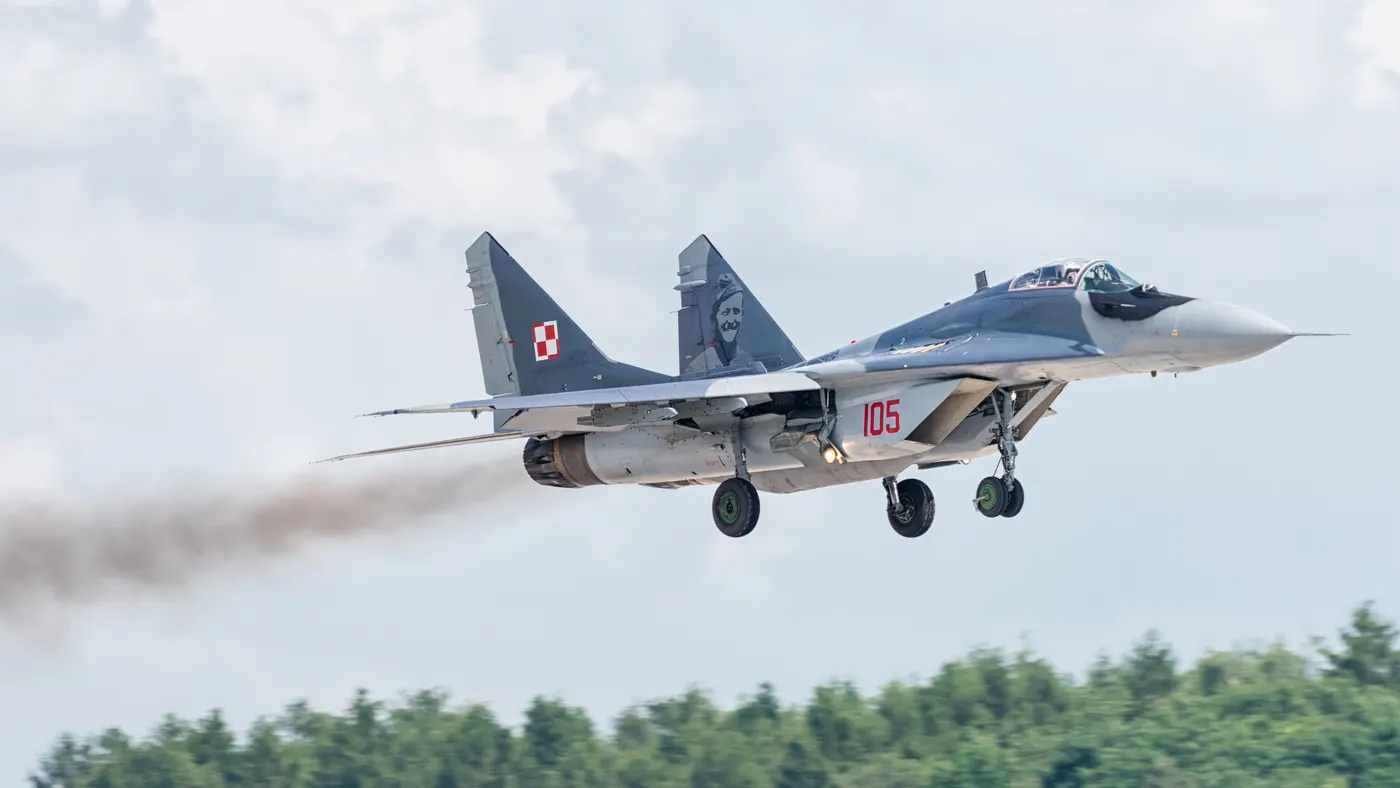
MiG-29A
Category
Country
Production
1983–2019
Quantity
1,600
Unit Price (current)
$73.9M↗ 146% inflation · 1990→2025
Original Price
$30.0M (1990)
Operators
💰 PERFORMANCE / PRICE ASSESSMENT Methodology ↗
MULTIROLE FIGHTERS · COLD WAR
10
PERFORMANCE/PRICE
87
UNIT COST (2025 USD)
$73.9M
Original: $30.0M (1990)
Inflation: +%146
ⓘ Performance/Price and MASS score are computed across all units in the multirole fighters category, regardless of era.
02 / Specs & Design
◎General6MOD.6
- First Flight1977
- Service Entry Year1983
- Crew1
- Primary Roleair superiority fighter
- Generation4th generation
- In ServiceYes
◈Powerplant10MOD.10
- Engine Typeturbofan
- Engine ModelRD‑33
- Number of Engines2
- Thrust (dry, each)50
- Thrust (afterburner, each)81
- Thrust-to-Weight0.68
- AfterburnerYes
- SupercruiseNo
- Thrust VectoringNo
- Internal Fuel3,000 kg
▣Performance10MOD.10
- Top Speed2,400 km/h
- Top Speed (Mach)2.25 Mach
- Cruise Speed900 km/h
- Stall Speed260 km/h
- Service Ceiling18,000 m
- Ferry Range2,100 km
- Combat Radius700 km
- Rate of Climb330 m/s
- G-Limit9
- Takeoff Run500 m
◇Dimensions & Weights7MOD.7
- Length17.32 m
- Wingspan11.36 m
- Height4.73 m
- Wing Area38
- Empty Weight11,000 kg
- Loaded Weight16,600 kg
- Max Takeoff Weight18,000 kg
◆Armament8MOD.8
- Hardpoints6
- Weapons Payload4,000 kg
- Internal Gun30 mm GSh‑30‑1 cannon
- Internal Weapons BayNo
- Air-to-Air MissilesYes
- Air-to-Ground MissilesYes
- Anti-Ship MissilesYes
- Nuclear CapableNo
▤Avionics & Stealth8MOD.8
- RadarPhazotron N019 Rubin
- AESA RadarNo
- Stealth / Low ObservableNo
- IRSTNo
- Electronic Warfare SuiteYes
- Helmet-Mounted SightYes
- Tactical DatalinkNo
- Targeting PodYes
⬢Production4MOD.4
- Total Built1,600
- Unit Cost30,000,000 USD
- Operators30
- Variants12
▲Service History3MOD.3
- Production Start1981
- Production End2019
- Operational StatusIn service
03 / History
SERVICE LIFESPANStill in Service
- 1983Production started
- 2019Production ended
43
years in service
36
years in production
1,600
units produced
8
countries operating
ⓘ The producing country still actively operates it. 3 countries retired it.
04 / Operators


05 / MASS Score
MULTIROLE FIGHTERS RANKING Multirole Fighters · Cold War


MASS RANKINGSMASS ↗
27MULTIROLE FIGHTERS10COLD WAR · MULTIROLE FIGHTERS54RUSSIA · ALL WEAPONS5PRICE · MULTIROLE FIGHTERS242PRICE · ALL WEAPONS22PERFORMANCE/PRICE · MULTIROLE FIGHTERS
ⓘ Rankings are within theMultirole Fighterscategory.
📖 TERMS ON THIS PAGE7terms
An afterburner is a device that injects fuel into a jet engine's hot exhaust gases, generating additional thrust through combustion.
Air-to-air missiles are guided missiles fired from aircraft to engage other aircraft. They are used for self-defense and to gain air superiority.
Air-to-Ground Missiles are guided missiles fired from aircraft to attack ground targets. They enable aircraft to engage and destroy enemy ground positions, vehicles, and installations.
Anti-ship missiles are guided missiles designed to engage and destroy naval vessels. They are typically used by aircraft, ships, or submarines to attack enemy ships.
A collection of integrated electronic systems on a military aircraft designed to detect, identify, disrupt, or deceive enemy radar, communications, and guided weapons.
A helmet-mounted display system that allows pilots to aim weapons by looking at targets, tracking head movements to direct sensors or weapons.
A targeting pod is an external sensor module mounted on aircraft that provides laser designation, infrared imaging, and range‑finding to support precision strike and reconnaissance.
These terms are listed automatically because they appear on this page.full encyclopedia →
📚 Sources