


Data Quality82%
MASS(Military Archive Scoring System)
ⓘ Regardless of era, the same scoring system applies to all units in the infantry fighting vehicles (ifv) category.
01 / Overview
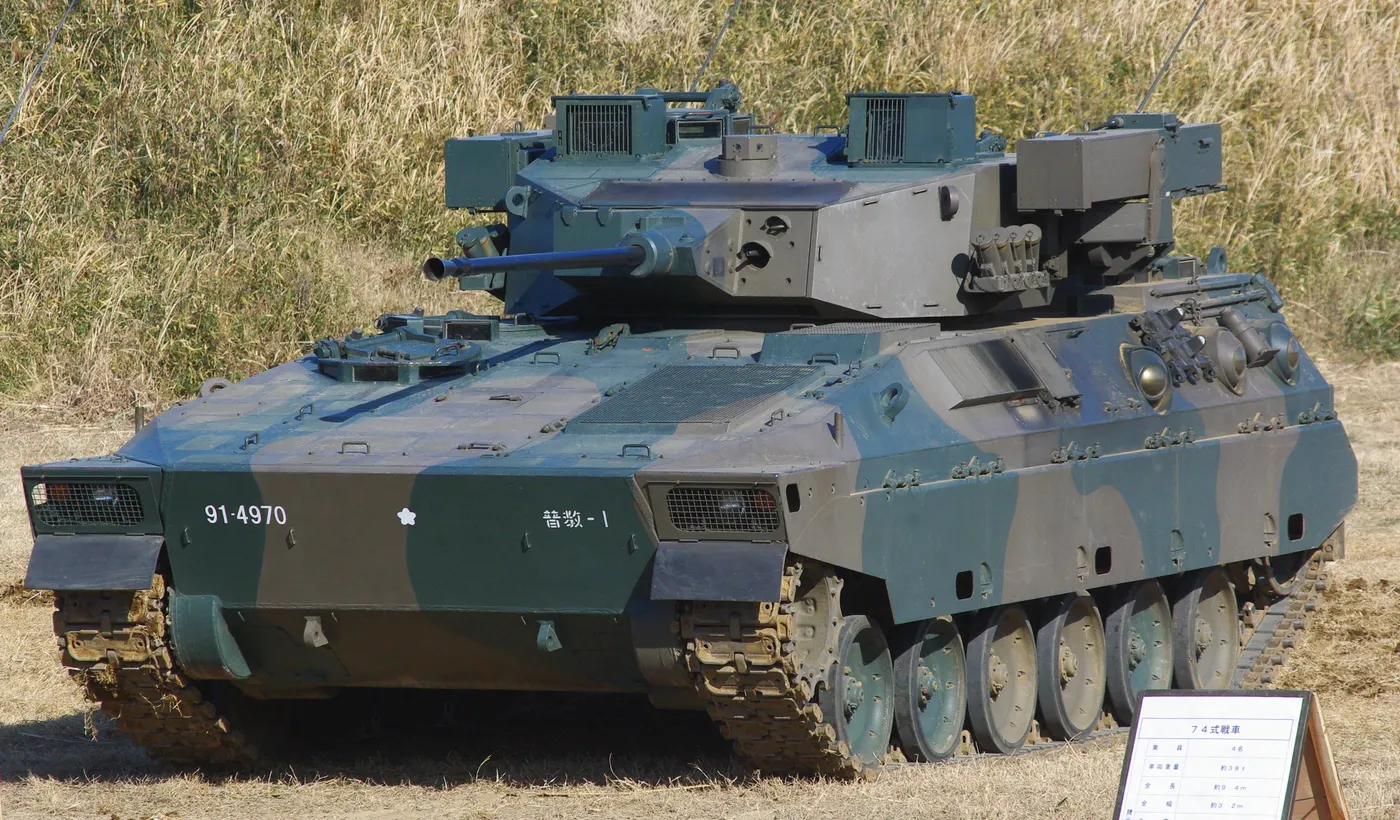
Mitsubishi Type 89 IFV
Category
Country
Prime contractor
Production
1989–2004
Quantity
68
Unit Price (current)
$3.0M
Operators
💰 PERFORMANCE / PRICE ASSESSMENT Methodology ↗
INFANTRY FIGHTING VEHICLES (IFV) · COLD WAR
11
PERFORMANCE/PRICE
75
UNIT COST (2025 USD)
$3.0M
Inflation: +%0
ⓘ Performance/Price and MASS score are computed across all units in the infantry fighting vehicles (ifv) category, regardless of era.
02 / Specs & Design
◎General6MOD.6
- Service Entry Year1989
- Combat Weight26.5 t
- Crew3
- Passengers / Dismounts7
- Vehicle ClassInfantry fighting vehicle
- In ServiceYes
◈Armament8MOD.8
- Main ArmamentOerlikon 35 mm KDE autocannon
- Main Gun Calibre35 mm
- Gun Typeautocannon
- Secondary Armament2×Type 79 Jyu-MAT missile launchers, 7.62 mm Type 74 coaxial machine gun
- ATGM CapableYes
- Remote Weapon StationNo
- Stabilized GunYes
- Ammunition Stowage200
▣Protection13MOD.13
- Armour TypeRolled homogeneous armour
- STANAG Protection Level2
- Hull Front (RHA equiv.)35 mm
- Turret Front (RHA equiv.)35 mm
- Active Protection SystemNo
- Reactive Armour (ERA)No
- Slat / Cage ArmourNo
- Mine / IED ProtectionYes
- V-Shaped HullNo
- Spall LinerYes
- NBC ProtectionYes
- Smoke GrenadesYes
- Fire SuppressionYes
◇Mobility13MOD.13
- Engine TypeMitsubishi 6SY31WA 4-stroke I6 liquid-cooled turbocharged diesel
- Engine Power600 hp
- Power-to-Weight22.64 hp
- Transmissionautomatic
- SuspensionTorsion bar
- Max Road Speed70 km/h
- Max Off-Road Speed70 km/h
- Operational Range400 km
- AmphibiousNo
- Fording Depth1 m
- Gradient30
- Trench Crossing2.7 m
- Vertical Obstacle0.8 m
◆Electronics & Optics7MOD.7
▤Dimensions4MOD.4
- Length6.8 m
- Width3.2 m
- Height2.5 m
- Ground Clearance0.45 m
⬢Production4MOD.4
- Total Production68
- Production Start1,989 year
- Unit Cost700 USD
- Variants1
03 / History
SERVICE LIFESPANStill in Service
- 1989Production started
- 2004Production ended
37
years in service
15
years in production
68
units produced
1
countries operating
ⓘ The producing country still actively operates it.

05 / MASS Score
INFANTRY FIGHTING VEHICLES (IFV) RANKING Infantry Fighting Vehicles (IFV) · Cold War


MASS RANKINGSMASS ↗
33INFANTRY FIGHTING VEHICLES (IFV)11COLD WAR · INFANTRY FIGHTING VEHICLES (IFV)102JAPAN · ALL WEAPONS5PRICE · INFANTRY FIGHTING VEHICLES (IFV)388PRICE · ALL WEAPONS35PERFORMANCE/PRICE · INFANTRY FIGHTING VEHICLES (IFV)
ⓘ Rankings are within theInfantry Fighting Vehicles (IFV)category.
📖 TERMS ON THIS PAGE10terms
Anti-Tank Guided Missile: a missile designed to destroy tanks.
A vehicle-mounted night vision system enabling drivers of infantry fighting vehicles to navigate and operate in low-light conditions.
A vehicle subsystem that detects, contains, and extinguishes internal fires to protect crew and critical components.
Optical device that uses laser pulses to measure the distance to a target with high precision.
Protection systems in IFVs designed to mitigate damage from landmines and improvised explosive devices, including armored hulls, blast-resistant seats, and counter-IED electronics.
Nuclear, Biological, Chemical protection for crew and occupants.
Smoke grenades are pyrotechnic devices deployed by infantry fighting vehicles to create a visual screen, obscuring movement or positions from enemy observation or targeting.
A spall liner is an interior armor layer in armored vehicles, such as IFVs, designed to catch or reduce high‑velocity fragments (spall) generated when the vehicle's outer armor is penetrated.
A firearm or automatic weapon mounted on a vehicle and equipped with a gyroscopic or hydraulic system to reduce recoil and maintain aim during movement.
Thermal sights are infrared imaging devices that detect heat signatures to provide a visual display for target detection and navigation in low‑visibility conditions.
These terms are listed automatically because they appear on this page.full encyclopedia →
📚 Sources