


Data Quality84%
MASS(Military Archive Scoring System)
ⓘ Regardless of era, the same scoring system applies to all units in the interceptors category.
01 / Overview
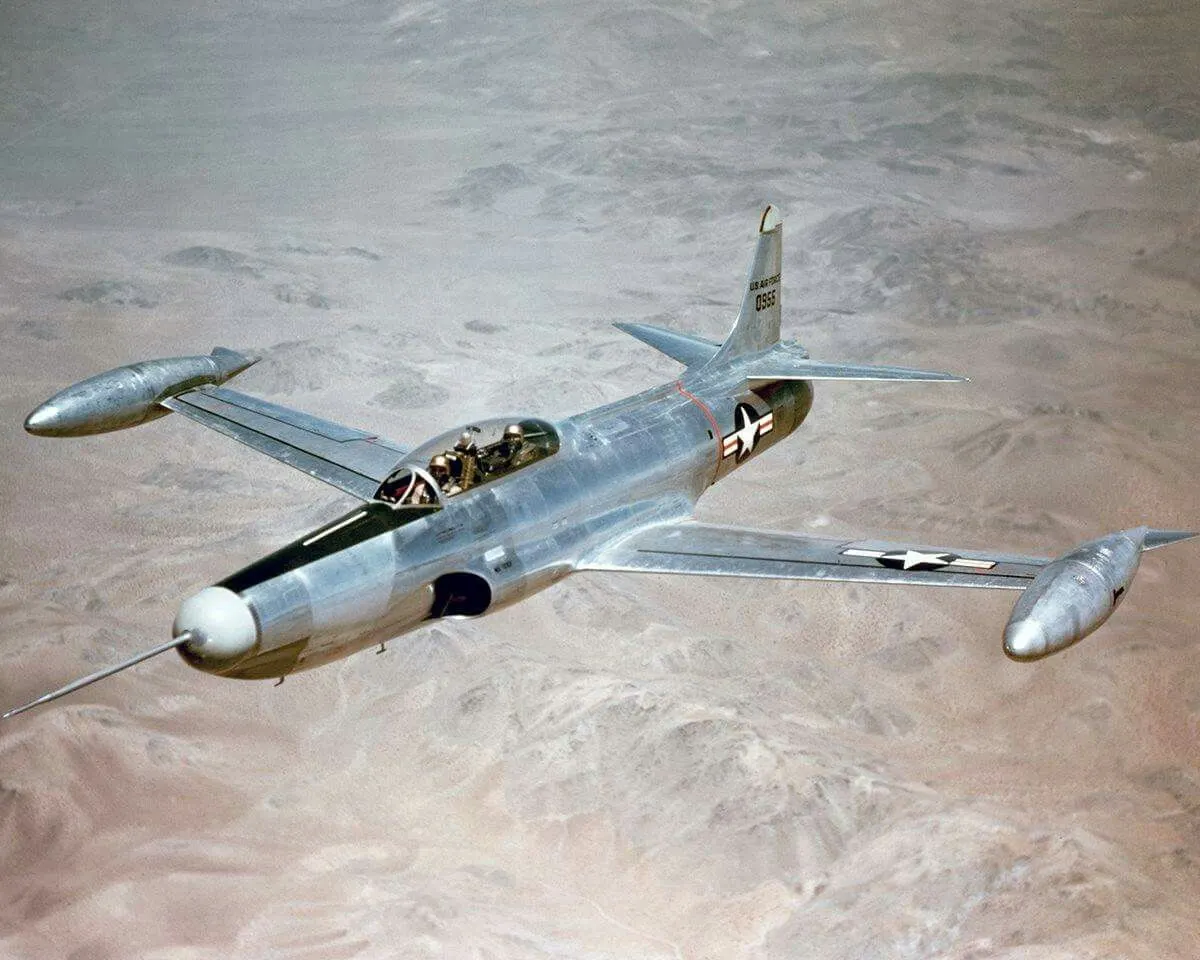
Lockheed F-94 Starfire
Category
Country
Prime contractor
Production
1950–1954
Quantity
855
Operators
💰 PERFORMANCE / PRICE ASSESSMENT Methodology ↗
INTERCEPTORS · EARLY COLD WAR
16
PERFORMANCE/PRICE
70
UNIT COST (2025 USD)
—
ⓘ Performance/Price and MASS score are computed across all units in the interceptors category, regardless of era.
02 / Specs & Design
◎General5MOD.5
- First Flight1949
- Service Entry Year1950
- Crew2
- Primary RoleAll-weather interceptor
- Generationfirst-generation
◈Powerplant7MOD.7
- Engine TypePratt & Whitney J48-P-5
- Engine ModelAllison J33
- Number of Engines1
- Thrust (dry, each)20
- Thrust (afterburner, each)31
- AfterburnerYes
- Internal Fuel900 kg
▣Performance6MOD.6
- Top Speed1,030 km/h
- Top Speed (Mach)0.92 Mach
- Service Ceiling15,666.72 m
- Ferry Range1,600 km
- Combat Radius400 km
- Rate of Climb40.538 m/s
◇Dimensions & Weights7MOD.7
- Length13.411 m
- Wingspan10.2 m
- Height3.76 m
- Wing Area24.5
- Empty Weight5,200 kg
- Loaded Weight10,000 kg
- Max Takeoff Weight11,000 kg
◆Avionics & Stealth1MOD.1
- RadarAN/APG-33
▤Production3MOD.3
- Total Built855
- Operators1
- Variants9
⬢Service History4MOD.4
- Retirement Year1958
- Production Start1949
- Production End1954
- Operational StatusRetired
03 / History
SERVICE LIFESPANStill in Service
- 1950Production started
- 1954Production ended
76
years in service
4
years in production
855
units produced
1
countries operating
ⓘ The producing country still actively operates it.

05 / MASS Score
INTERCEPTORS RANKING Interceptors · Early Cold War


MASS RANKINGSMASS ↗
63INTERCEPTORS16EARLY COLD WAR · INTERCEPTORS2057UNITED STATES · ALL WEAPONS36PERFORMANCE/PRICE · INTERCEPTORS
ⓘ Rankings are within theInterceptorscategory.
📖 TERMS ON THIS PAGE1terms
An afterburner is a device that injects fuel into a jet engine's hot exhaust gases, generating additional thrust through combustion.
These terms are listed automatically because they appear on this page.full encyclopedia →
📚 Sources