


Data Quality87%
MASS(Military Archive Scoring System)
ⓘ Regardless of era, the same scoring system applies to all units in the anti-radiation missiles (arm) category.
01 / Overview
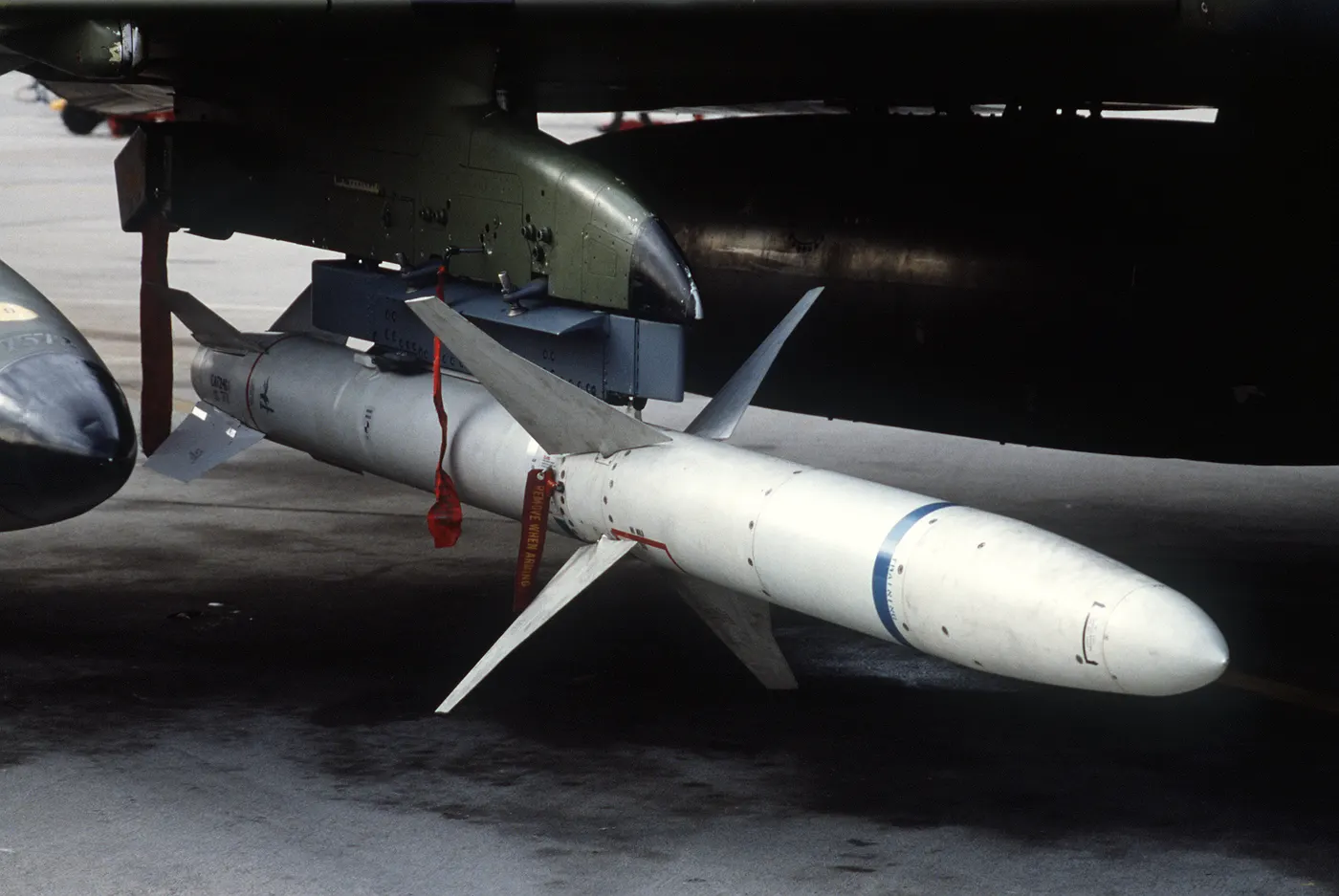
AGM-88 HARM
Category
Country
Prime contractor
Production
1985–
Unit Price (current)
$284.0K
Operators
Conflicts
💰 PERFORMANCE / PRICE ASSESSMENT Methodology ↗
ANTI-RADIATION MISSILES (ARM) · COLD WAR
1
PERFORMANCE/PRICE
88
UNIT COST (2025 USD)
$284.0K
Inflation: +%0
ⓘ Performance/Price and MASS score are computed across all units in the anti-radiation missiles (arm) category, regardless of era.
02 / Specs & Design
◎General7MOD.7
- Missile TypeAir-to-surface anti-radiation missile
- Service Entry Year1985
- DesignerTexas Instruments, Alliant Techsystems (ATK)
- Length4.17 m
- Diameter254 mm
- Launch Weight361 kg
- In ServiceYes
◈Guidance8MOD.8
- Guidance TypeActive Radar
- Seeker TypePassive radar homing with home-on-jam, millimeter-wave active radar homing (AARGM variants)
- Fire-and-ForgetYes
- Two-Way DatalinkYes
- Top-Attack CapableNo
- Imaging Infrared SeekerNo
- Inertial / GPS GuidanceYes
- Sea-SkimmingNo
▣Propulsion5MOD.5
- Propulsion Typerocket
- Motor TypeThiokol SR113-TC-1 dual-thrust rocket engine
- Boost StageYes
- Two-StageNo
- Fuel / Propellantsolid propellant
◇Performance6MOD.6
- Minimum Range25 km
- Maximum Range148 km
- Top Speed987 m/s
- Top Speed (Mach)2.9 Mach
- Flight ProfileLow-level, medium-level, standoff
- HypersonicNo
◆Warhead5MOD.5
- Warhead Typeblast-fragmentation
- Warhead Weight68 kg
- Tandem HEAT ChargeNo
- Proximity FuzeYes
- Nuclear-CapableNo
▤Launch Platform6MOD.6
- Launch PlatformF-4G, EA-6B, F-15E, F-16, F/A-18A/B/C/D, F/A-18/E/F, EA-18G, Tornado IDS/ECR, F-35, MiG-29, Su-27
- Air-LaunchedYes
- Ground-LaunchedNo
- Naval-LaunchedYes
- Man-PortableNo
- Launcher Typeaircraft internal or external hardpoint
⬢Production2MOD.2
- Unit Cost284,000 USD
- Production Start1,983 year
▲Warhead Detail3MOD.3
- Detonation Mechanism / Fuzeproximity and impact
- Explosive Filler Weight68 kg
- Explosive Filler TypeWAU-7/B blast-fragmentation warhead
03 / History
SERVICE LIFESPANStill in Service
- 1945First deployment: Cold War
- 1985Production started
41
years in service
21
countries operating
ⓘ The producing country still actively operates it.
04 / Conflicts
AGM-88 HARM · CONFLICTS SERVED IN29% win·14% ongoing
Total Conflicts
7
Victories
2
Ongoing
1
Losses
0
2023–Red Sea crisis—→2022–full-scale Russo-Ukrainian warOngoing→20112011 military intervention in Libya—→2003–2011Iraq WarDecisive victory→20032003 invasion of IraqDecisive victory→1998–1999Kosovo War—→1986–Action in the Gulf of Sidra—→
ⓘ Shown only from conflicts recorded in our database.
05 / Operators
Operator Countries21country


06 / MASS Score
ANTI-RADIATION MISSILES (ARM) RANKING Anti-Radiation Missiles (ARM) · Cold War


MASS RANKINGSMASS ↗
2ANTI-RADIATION MISSILES (ARM)1COLD WAR · ANTI-RADIATION MISSILES (ARM)113UNITED STATES · ALL WEAPONS3PRICE · ANTI-RADIATION MISSILES (ARM)568PRICE · ALL WEAPONS1PERFORMANCE/PRICE · ANTI-RADIATION MISSILES (ARM)
ⓘ Rankings are within theAnti-Radiation Missiles (ARM)category.
📖 TERMS ON THIS PAGE8terms
Guidance system using onboard radar to actively emit and receive signals for target tracking and missile course correction.
Capability of launching an anti-tank guided missile from an airborne platform, such as a helicopter or aircraft.
The initial propulsion phase where a high-thrust motor accelerates the missile to operational velocity.
Fire-and-forget refers to a missile guidance system where the missile guides itself to its target after launch, requiring no further input from the operator.
A guidance method that uses inertial navigation sensors together with satellite‑based GPS signals to determine a missile’s position and steer it toward a target.
Launched from naval platforms, such as ships or submarines.
A proximity fuze is a detonation mechanism in ATGMs that triggers when the missile approaches within a set distance of a target, using sensors like radar or laser to detect proximity.
Enables real-time sharing of position, targeting, and sensor data among aircraft and platforms for coordinated combat operations.
These terms are listed automatically because they appear on this page.full encyclopedia →
📚 Sources