
01 / Overview
Turkey runs one of NATO's largest and most operationally tested militaries, built around a roughly 355,000-strong active Turkish Armed Forces (TSK) core, alliance membership dating back to 1952, and a defense industry that now arms most of that force domestically.1 Add the paramilitary Gendarmerie and Coast Guard, both around 150,000 strong and under military command in wartime, and the combined figure climbs past 480,000, the number Ankara points to when it calls itself the alliance's second-largest army after the United States.2 What sets Turkey apart from most forces its size is how recently it has actually fought. Over the past decade its troops have intervened directly inside Syria and Libya, and its weapons tipped the balance in Azerbaijan's favor during the 2020 Caucasus war, an operational record spread across the whole force rather than resting on any one branch or platform.
- Largest and most combat-proven armed-drone fleet in NATO, exported to dozens of countries
- Deep, largely self-sufficient defense industrial base (ASELSAN, Baykar, [Turkish Aerospace Industries](/en/companies/turkish-aerospace-industries), [ROKETSAN](/en/companies/roketsan))
- Real recent combat record across Syria, Libya, and Nagorno-Karabakh, not just paper capability
- Controls the Bosphorus and Dardanelles, the only sea link between the Black Sea and the Mediterranean
- No fifth-generation fighter in service yet, and the indigenous [KAAN](/en/weapons/tai-kaan) program remains years from serial deliveries
- Locked out of the F-35 program since 2019 over its S-400 purchase, still unresolved as of 2026
- Navy still lacks a true air-defense destroyer, with the first indigenous design not expected before 2030
- Defense budget as a share of GDP trails the effort implied by its regional ambitions
That force sits inside a country of roughly 85.8 million people and an economy the IMF now puts closer to $1.6 trillion nominal, well above the archive's own dated baseline figure.3 The industrial base behind the TSK is built around Baykar's armed drones, ASELSAN's electronics, and a naval shipbuilding program that has quietly become one of the most productive in Europe, converting recent fighting experience into an export business rather than leaving it as paper capability. The result is a military the archive's own scoring already rates above several wealthier NATO members, on the basis of operational record rather than raw spending.
02 / Military Strength · 76 metrics · 9 categories
The TSK is organized into Land Forces (Kara Kuvvetleri), Naval Forces (Deniz Kuvvetleri), and Air Forces (Hava Kuvvetleri), commanded through the General Staff and, since the 2016 restructuring described below, subordinated to the Ministry of National Defense rather than operating with the semi-autonomous status it held for decades.4 Land Forces are organized around four field armies, the 1st, 2nd, 3rd, and Aegean Army, reflecting Turkey's exposure on multiple fronts at once.4

Conscription remains universal for Turkish men, with a standard service period the archive records at around 120 days, but the force is in the middle of a deliberate shift away from a conscript-heavy model toward a professional one, underway since the late 1990s. The share of active personnel serving as paid contract soldiers rose from about 38 percent in 2017 to roughly 55 percent by 2021 and has continued climbing since, while combat operations in southeastern Turkey, Iraq, and Syria have been fought almost entirely by professional soldiers rather than short-service conscripts.5 The TSK has nonetheless struggled to fill tens of thousands of vacant contract positions, a real bottleneck behind the professionalization push.5
That transition has not dented the institution's standing at home. Independent surveys, including Gallup's long-running polling and a 2024 Asal Research study, consistently find the TSK to be Turkey's most trusted public institution by a wide margin, ranking well above the police, the presidency, and parliament, a pattern that has held for decades even through the strain of the 2016 coup attempt described below.6
01 Personnel 8
- Active Personnel 355,000
- Reserve Personnel 378,000
- Paramilitary Personnel 152,000
- Total Military Personnel 885,000
- Available for Military Service 35,000,000
- Reaching Military Age Annually 1,200,000
- Conscription Status Universal
- Conscription Duration (days) 120 day
02 Land Forces 12
- Total Tanks 2,500
- IFV Count 2,500
- APC Count 4,000
- Recon Vehicle Count 500
- MRAP Count 1,000
- Towed Artillery Count 2,000
- Self-Propelled Artillery Count 1,000
- MLRS Count 500
- Mortar Count 3,000
- ATGM Launcher Count 5,000
- SHORAD Count 1,000
- MANPADS Count 5,000
03 Air Forces 12
- Total Aircraft 1,050
- Fighter Aircraft Count 400
- Ground Attack Aircraft Count 150
- Bomber Aircraft Count 0
- Transport Aircraft Count 100
- Tanker Aircraft Count 7
- AWACS Count 6
- Trainer Aircraft Count 150
- Total Helicopters 500
- Attack Helicopter Count 100
- Transport Helicopter Count 200
- UAV Count 100
04 Naval Forces 11
- Total Ships 120
- Aircraft Carrier Count 0
- Amphibious Assault Ship Count 0
- Cruiser Count 0
- Destroyer Count 0
- Frigate Count 16
- Corvette Count 10
- Total Submarines 12
- SSN Count 0
- SSBN Count 0
- Patrol Boat Count 40
05 Strategic Forces 9
- Nuclear Status None
- Nuclear Warhead Count 0
- Deployed Warhead Count 0
- ICBM Count 0
- SLBM Count 0
- IRBM Count 0
- Triad Status None
- BMD Capability ✗ No
- Space Assets ✓ Yes
06 Budget & Economy 10
- Defense Budget (USD) 30,000,000,000 USD
- Defense Budget (% of GDP) 1.9 %
- Defense Budget per Capita (USD) 350 USD
- GDP (Nominal, USD) 1,600,000,000,000 USD
- GDP (PPP, USD) 3,300,000,000,000 USD
- Arms Exports (USD) 8,500,000,000 USD
- Arms Imports (USD) 3,000,000,000 USD
- Defense Industry Rank 15
- Defense Industry Size (USD) 10,000,000,000 USD
- Defense Sector Employment 100,000
07 Logistics & Infrastructure 6
- Military Airport Count 20
- Total Airport Count 90
- Major Port Count 10
- Oil Production (bbl/day) 45,000 bbl/day
- Oil Reserves (bbl) 445,000,000 bbl
- Coastline (km) 7,200 km
08 Demographics 5
- Total Population 85,816,199
- Military Age Population 45,000,000
- Urban Population (%) 76 %
- Literacy Rate (%) 98 %
- Area (km²) 783,562 km²
09 Government & Alliances 3
- Government Type Republic
- NATO Member ✓ Yes
- UN Security Council P5 ✗ No
Land Forces field a large armored and mechanized inventory built around the aging but still-substantial M60 and Leopard 2 fleets, backed by thousands of armored personnel carriers and self-propelled and towed artillery, with the indigenous Altay main battle tank now beginning to enter service in numbers (see Inventory). The Air Force still centers on a large F-16 fleet, and the Navy has shifted its doctrine decisively toward frigate- and corvette-sized surface combatants built at home rather than the destroyer-class ships some older references still credit it with.
03 / Inventory · 886 systems · 116 categories · 421,825 units
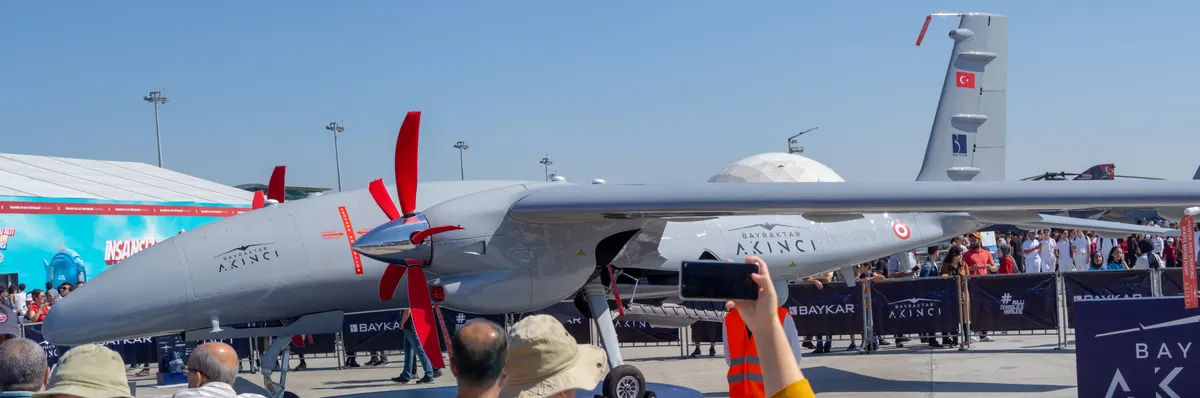
Turkey's most consequential recent inventory story is not a single platform but a family of them. Baykar's Bayraktar TB2 proved itself in Syria, Libya, and the 2020 Second Nagorno-Karabakh War, and the larger, jet-powered Bayraktar Akıncı has followed it into service. Baykar has now held the position of the world's largest armed-drone exporter for three straight years, with $2.2 billion in exports in 2025 alone and agreements covering 37 countries.7 Its next step, the unmanned fighter jet Bayraktar Kızılelma, scored the first-ever beyond-visual-range air-to-air kill by an unmanned combat jet in a December 2025 test and is expected to enter TSK service in 2026, with a first export contract already signed with Indonesia.8
-
 United States 308
-
 Germany 146
-
 France 60
-
 United Kingdom 60
-
 Russia 50
-
 Italy 29
-
 Belgium 15
- Lockheed Martin 22
- Raytheon 20
- Heckler & Koch 18
- Bell Textron 17
- FN Herstal 17
- Colt's Manufacturing Company 15
- General Dynamics 15
- Mauser 13
On the ground, the Altay main battle tank finally reached serial production in September 2025 after a long and troubled development, with a dedicated BMC factory near Ankara delivering its first tanks the following month.9 The first production batch runs on a South Korean Doosan diesel powerpack because the original German engine deal was blocked, with the indigenous BMC Power Batu powerpack scheduled to take over from the second production block onward.9 Turkey has also started fielding heavyweight precision munitions of its own. The Ministry of National Defense's R&D center unveiled the GAZAP thermobaric bomb at the IDEF 2025 defense show, a roughly 970-kilogram weapon already carried on the F-16 and older F-4, described in Turkish and international coverage alike as among NATO's most powerful conventional air-delivered weapons in its class and slated for future integration with KAAN.10
ARMOURED VEHICLES
ARTILLERY & MISSILE SYSTEMS
AIR DEFENSE SYSTEMS
MINES & EXPLOSIVE DEVICES
FIREARMS
GRENADE LAUNCHERS & GRENADES
OPTICS & TARGETING
PERSONAL PROTECTIVE EQUIPMENT
MILITARY VEHICLES
NON-LETHAL WEAPONS
FIGHTER & ATTACK AIRCRAFT
BOMBER AIRCRAFT
TRANSPORT & CARGO AIRCRAFT
TANKER AIRCRAFT
HELICOPTERS
UAV / DRONES
SPECIAL MISSION AIRCRAFT
TRAINING AIRCRAFT
AIRCRAFT SYSTEMS
CARRIERS & AMPHIBIOUS
SURFACE COMBATANTS
SUBMARINES
AMPHIBIOUS WARFARE SHIPS
MINE WARFARE & PATROL
AUXILIARY & SUPPORT SHIPS
NAVAL WEAPON SYSTEMS
NUCLEAR BOMBS & WARHEADS
ATGM
ANTI-SHIP MISSILES
AIR-TO-AIR MISSILES
AIR-TO-SURFACE MISSILES
CRUISE MISSILES
BALLISTIC (CONVENTIONAL)
GUIDED BOMBS
UNGUIDED AERIAL MUNITIONS
THERMOBARIC & SPECIAL
NAVAL SAM
RADAR SYSTEMS
LAUNCH VEHICLES
In the air, the fifth-generation KAAN fighter flew for the first time in February 2024 and remains in flight testing, with serial deliveries now pushed to 2029, well behind the program's original schedule.11 Turkey meanwhile operates the world's second-largest F-16 fleet after the United States itself and has been negotiating to buy 40 new Block 70 jets after scaling back an earlier, larger package.12
- 2025Eurofighter Typhoon
- 2025Baykar Bayraktar TB3
- 2025STM Alpagu
- 2024AGM-88E AARGM
- 2023Gepard
- 104yHotchkiss M1922 machine gun
- 98yvz. 24
- 95yBeretta M1923
- 94yBreguet 19
- 92yT-37A
The F-35 story is more complicated. Turkey was removed from the program in 2019 after taking delivery of Russian S-400 air-defense components, and CAATSA sanctions followed in December 2020.13 As of mid-2026 the diplomatic picture is shifting again. At a NATO summit hosted in Ankara in July 2026, President Trump said Washington would lift the CAATSA sanctions and called Turkey's possible return to the F-35 program something the United States would certainly consider, without naming a number of aircraft or a timeline.14 President Erdoğan told reporters at the same summit that he understood five jets to have already been promised, a specific claim Trump's own remarks stopped short of confirming, and the legal barrier written into US law still requires Turkey to give up the S-400 system entirely before any transfer can proceed.15
At sea, Turkey's MILGEM program has moved from the four Ada-class corvettes to a larger İstanbul-class frigate line, with the lead ship commissioned in January 2024 and further hulls following through the late 2020s, alongside new Reis-class submarines built under German Type 214 license, the first of which entered service in August 2024.16 Despite figures still circulating that credit Turkey with a destroyer fleet, the country currently operates none. Its planned first indigenous air-defense destroyer, the TF-2000, will not be commissioned before roughly 2030, and the ships often mislabeled as destroyers are in fact the MEKO-derived frigates and MILGEM corvettes described above.17
04 / Defense Sector · 18 companies · 124 systems produced · 114 deals
Turkey's defense industry has reached a genuinely high level of self-sufficiency. The Presidency of Defense Industries (SSB), the state's central procurement and industrial-policy authority, put the domestic localization rate above 80 percent as of mid-2025, meaning the great majority of the TSK's equipment needs are now met from inside the country.18 Five Turkish companies now sit inside SIPRI's list of the world's 100 largest arms producers, led by ASELSAN at 47th with $3.5 billion in arms revenue, followed by Turkish Aerospace Industries at 65th, Baykar at 73rd, ROKETSAN at 87th, and MKE at 93rd in its first appearance on the list, together posting combined 2024 arms revenue of $10.1 billion, up 11 percent year on year.19
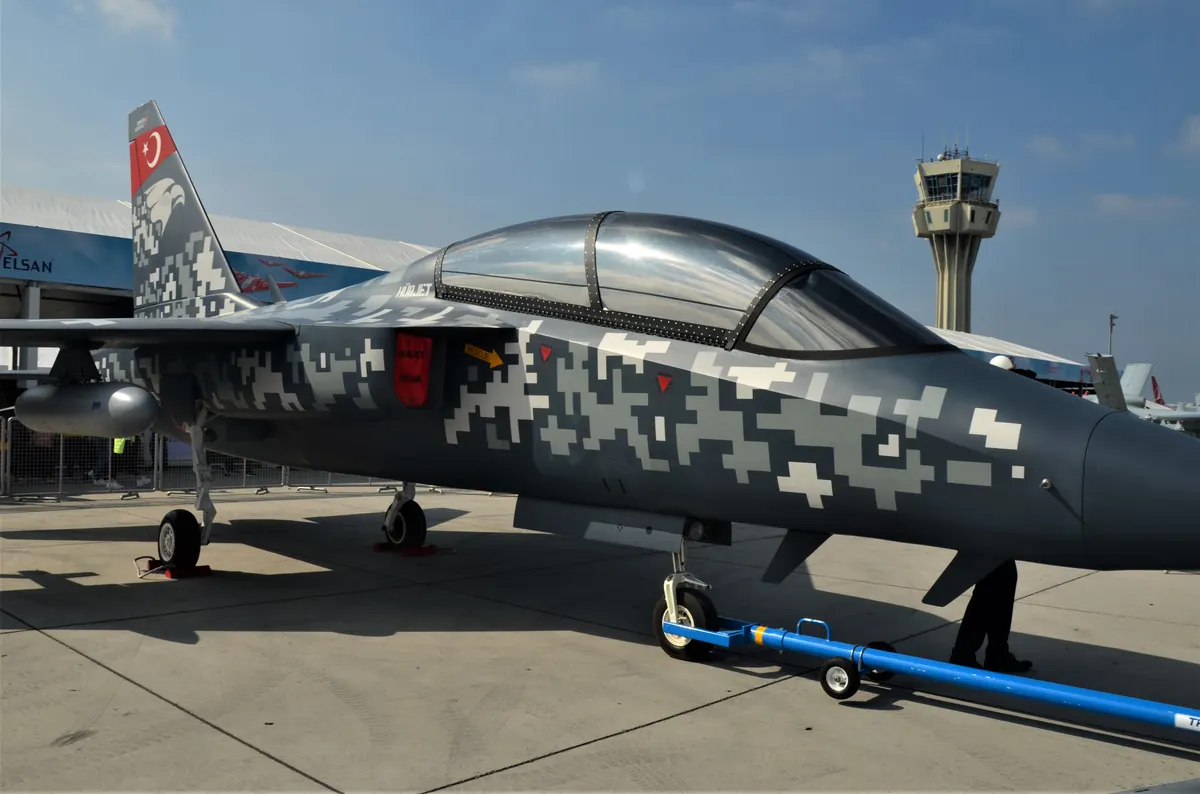
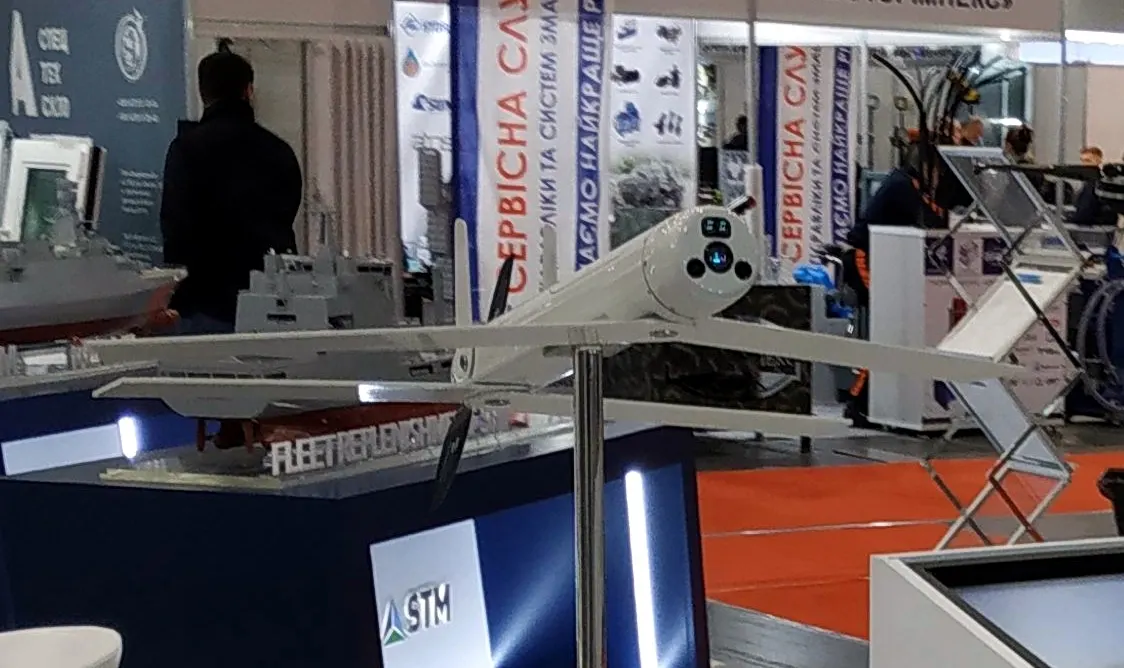
ASELSAN, Turkey's largest defense electronics firm, reported roughly $4.1 billion in 2025 revenue, up 15 percent, with export contracts more than doubling year on year.20 Turkish Aerospace Industries (branded TUSAŞ) carries the KAAN fighter program and the Hürjet trainer, which is already in service and intended to eventually replace Turkey's aging T-38 trainer fleet. ROKETSAN builds Turkey's missile and rocket systems and posted more than $2 billion in 2025 revenue, up 50 percent on the year before.21 STM, best known for the compact Kargu and Alpagu loitering munitions already in TSK service, made its first sale of the systems to a NATO and EU member state in Europe in January 2026, a milestone for a product line that had until then sold mostly outside the alliance.22
Armored-vehicle makers Otokar and FNSS round out the picture, both competing for export contracts abroad while supplying the TSK's mechanized forces at home, and the older state arsenal MKE (Mechanical and Chemical Industry Corporation) still produces the rifles and light weapons Turkish infantry actually carry, including the MPT-76 battle rifle that replaced the license-built Heckler & Koch G3 in 2014.
| Company | Revenue | Systems | Score |
|---|---|---|---|
| ASELSAN ASELS | $4.1B | 15 | — |
| Turkish Aerospace Industries | $2.2B | 17 | — |
| Baykar | $2.0B | 11 | — |
| Otokar OTKAR | $1.3B | 12 | — |
| ROKETSAN | $1.3B | 24 | — |
| Anadolu Shipyard | — | 1 | — |
| BMC | — | 4 | — |
| FNSS Company | — | 3 | — |
| Gölcük Naval Shipyard | — | 3 | — |
| Imperial Arsenal | — | 3 | — |
| Istanbul Naval Shipyard | — | 4 | — |
| Mechanical and Chemical Industry Corporation | — | 8 | — |
| Nurol Holding Company | — | 2 | — |
| Q127462729 | — | 1 | — |
| STM | — | 5 | — |
| Sarsilmaz | — | 2 | — |
| TÜBİTAK Defense Industries Research and Development Institute | — | 2 | — |
| Vestel | — | 1 | — |
President Erdoğan has publicly set a target of ranking Turkey among the world's top ten arms exporters by 2028, up from its current position in the high teens on SIPRI's tracked list, a goal industry analysts treat as ambitious given recent export growth but not out of reach.23
ARMOURED VEHICLES
ARTILLERY & MISSILE SYSTEMS
AIR DEFENSE SYSTEMS
FIREARMS
MILITARY VEHICLES
UGV & ROBOTS
NON-LETHAL WEAPONS
FIGHTER & ATTACK AIRCRAFT
HELICOPTERS
UAV / DRONES
TRAINING AIRCRAFT
SURFACE COMBATANTS
SUBMARINES
AMPHIBIOUS WARFARE SHIPS
MINE WARFARE & PATROL
AUXILIARY & SUPPORT SHIPS
NAVAL WEAPON SYSTEMS
ATGM
ANTI-SHIP MISSILES
AIR-TO-AIR MISSILES
AIR-TO-SURFACE MISSILES
CRUISE MISSILES
BALLISTIC (CONVENTIONAL)
UNGUIDED AERIAL MUNITIONS
THERMOBARIC & SPECIAL
This buildup traces directly to a specific historical shock. The 1975 to 1978 United States arms embargo, imposed after the 1974 Cyprus operation described below, left Turkish forces unable to secure spare parts and communications equipment from their main supplier at the time. ASELSAN was founded in November 1975, within months of the embargo taking effect, explicitly to reduce that dependency, and Turkish official accounts still describe the company as a direct response to the embargo.24 ROKETSAN's founding in 1988 is a step further removed, arriving via the Undersecretariat for Defense Industries created in 1985 as the institutionalized lesson of that same episode rather than as a direct embargo-era reaction.24
| Direction | Year | Counterparty | Product / Service | Quantity | Amount | Type | Status | |
|---|---|---|---|---|---|---|---|---|
| ↗ | 2026 | — | Kargu + Alpagu bundle with land-vehicle/BMS integration | — | — | Sale | Signed | |
| ↗ | 2025 |  Georgia | MKE KNT-76 | — | — | export | confirmed | |
| ↗ | 2025 | Georgia | MPT-76 | — | — | export | confirmed | |
| ↗ | —→2025 |  Somalia | TAI/Leonardo T129 ATAK | 6 | — | new-build | Delivered | |
| ↗ | 2024 |  Azerbaijan | Kemankeş-1 loitering munition (bundled with TOLUN glide bomb) | — | — | Sale | Delivered | |
| ↗ | 2024 |  Bosnia and Herzegovina | BMC Kirpi | — | — | new-build | ordered | |
| ↗ | 2024 |  Indonesia | TAI Anka | 6 | — | new-build | ordered | |
| ↗ | 2023 |  Cameroon | MPT-76 | — | — | export | confirmed | |
| ↗ | 2023 | — | Alpagu (first export batch) | — | — | Sale | Delivered | |
| ↗ | 2023 |  Kazakhstan | Otokar Arma | 834 | $4.4 Mr | new-build | ordered | |
| ↗ | 2023→2025 |  Estonia | Otokar Arma | 230 | $130 M | new-build | Delivered | |
| ↗ | 2023 |  Algeria | TAI Anka | 10 | — | new-build | ordered | |
| ↗ | —→2023 |  Philippines | TAI/Leonardo T129 ATAK | 6 | — | new-build | Delivered | |
| ↗ | 2022 |  Peru | Kargu loitering munition | — | — | Sale | Delivered | |
| ↘ | 2022 |  People's Republic of China | Type 80 | 2,800 | — | new-build | Delivered | |
| ↗ | 2022 |  Ukraine | Bayraktar Mini UAV | — | — | new-build | Delivered | |
| ↗ | 2022→2023 | Kazakhstan | TAI Anka | 3 | — | new-build | Delivered | |
| ↗ | 2021→2022 |  Kosovo | BMC Kirpi | 14 | — | new-build | Delivered | |
| ↗ | 2020 |  Senegal | MKE KNT-76 | — | — | export | confirmed | |
| ↗ | 2020 |  Libya | Bayraktar Mini UAV | — | — | new-build | Delivered | |
| ↗ | 2019 |  Pakistan | Ada-class corvette | 4 | — | license-production | Delivered | |
| ↗ | 2018 | Somalia | MPT-76 | 450 | — | export | confirmed | |
| ⟳ | 2018 | BMC | BMC Kirpi | 529 | — | new-build | ordered | |
| ↗ | 2016 | Azerbaijan | TRG-300 Kasirga | 20 | — | new-build | Delivered | |
| ⟳ | 2015 | Sarsilmaz | MPT-76 | 10,000 | — | domestic | confirmed | |
| ⟳ | 2015 | Domestic supply | MPT-76 | 15,014 | $18 M | domestic | confirmed | |
| ⟳ | 2015 | Mechanical and Chemical Industry Corporation | MPT-76 | 20,000 | — | domestic | confirmed | |
| ↗ | 2012 |  Qatar | Bayraktar Mini UAV | — | — | new-build | Delivered | |
| ↗ | 2010 |  Bahrain | Otokar Arma | 73 | $74 M | new-build | Delivered | |
| ↗ | 2009 |  Colombia | MO-120-RT | 38 | — | license-production | Delivered | |
| ↗ | 2008 | Georgia | Nurol Ejder | — | — | new-build | Delivered | |
| ↘ | 2007→2009 |  South Korea | K1A1 tank | 40 | — | license-production | Delivered | |
| ↘ | 2005 |  Israel | IAI Harop | — | — | new-build | Delivered | |
| ↘ | 2002 | Israel | Sabra | — | $687 M | ordered | ||
| ↘ | 1993 | United States | General Atomics GNAT | 22 | — | new-build | Delivered | |
| ↘ | 1986→1992 | United States | M44 self-propelled howitzer | 222 | — | license-production | Delivered | |
| ↘ | 1983 | Germany | MEKO 200-class frigate | 4 | — | new-build | Delivered | |
| ↘ | 1953→1954 | United States | M26 Pershing | 100 | — | aid | Delivered | |
| ↘ | 1949 | United States | Gleaves-class destroyer | 4 | — | gift | Delivered | |
| ↘ | 1934→1935 | Russia | T-26A/T-26-4 | 60 | — | new-build | Delivered | |
| ↘ | 1932 | United States | BFC Hawk | 19 | — | new-build | Delivered | |
| ↘ | —→1932 | United States | BFC Hawk | 19 | — | new-build | Delivered | |
| ↘ | 1931 | Italy | Beretta M1923 | 25 | — | new-build | Delivered | |
| ↘ | 1924 | France | Blériot-SPAD S.51 | 1 | — | new-build | Delivered | |
| ↘ | 1921 | United Kingdom | Airco DH.9 | 4 | — | new-build | Delivered | |
| ↘ | 1916 | Germany | 10.5 cm Gebirgshaubitze L/12 | 32 | — | new-build | Delivered | |
| ↘ | 1913 |  Brazil | Minas Geraes-class battleship | 1 | — | second-hand | Cancelled | |
| ↗ | 1911→1914 | United Kingdom | Reshadieh-class dreadnought battleship | 2 | — | new-build | Delivered | |
| ↘ | 1908→1914 | Belgium | FN Model 1903 | 8,000 | — | new-build | Delivered | |
| ↗ | 1878 | United Kingdom | Belleisle-class ironclad | 2 | $2 M | purchase | Delivered | |
| ↘ | — | United States | Mark 81 | — | — | license-production | Delivered | |
| ↘ | — | Germany | Ar 95 | — | — | new-build | Cancelled | |
| ↘ | — | United Kingdom | Supermarine Southampton | 6 | — | new-build | Delivered | |
| ↘ | — | United States | BFC Hawk | 1 | — | new-build | Delivered | |
| ↗ | — |  Saudi Arabia | JNG-90 | — | — | new-build | Delivered | |
| ↗ | — |  Turkmenistan | JNG-90 | — | — | new-build | Delivered | |
| ⟳ | — | Mechanical and Chemical Industry Corporation | JNG-90 | — | — | new-build | Delivered | |
| ↗ | — |  Kyrgyzstan | JNG-90 | — | — | new-build | Delivered | |
| ↗ | — | Azerbaijan | JNG-90 | — | — | new-build | Delivered | |
| ↘ | — | Italy | TAI/Leonardo T129 ATAK | 4 | — | new-build | Delivered |
| Country | Export (→) | Import (←) | Total |
|---|---|---|---|
| Kazakhstan | $4.6 Mr | — | $4.6 Mr |
| Israel | — | $1.2 Mr | $1.2 Mr |
| Estonia | $137 M | — | $137 M |
| Bahrain | $109 M | — | $109 M |
| United Kingdom | $66 M | — | $66 M |
- #1C-139 tank landing ship49countryLanding Ship Tank (LST)
- #2Bayraktar TB231countryCombat / Strike Drones
- #3Otokar Cobra24countryMRAP & Protected Mobility Vehicles
- #4Otokar Cobra II15countryMRAP & Protected Mobility Vehicles
- #5MAM-L Smart Micro Munition15countryGeneral Purpose (Iron) Bombs
- #6Baykar Bayraktar Akıncı14countryCombat / Strike Drones
- #7BMC Kirpi14countryArmoured Personnel Carriers (APC)
- #8Nurol Ejder13countryArmoured Personnel Carriers (APC)
05 / History & Conflicts · 128 armed events
📜 Chronological Conflict List
| Conflict | Years | Opponent | Role | Outcome |
|---|---|---|---|---|
| 2026 northeastern Syria offensive Special Op. | 2026 | Democratic Autonomous Administration of North | Primary | — |
| 2026 interceptions of Iranian missiles in Turkey Special Op. | 2026–present | Intervention | Primary | — |
| 2026 strikes on Akrotiri and Dhekelia Special Op. | 2026–present | (alleged) | Primary | — |
| 2026 Iranian strikes on Qatar Special Op. | 2026–present | Intervention | Secondary | Ongoing |
| 2025 Shabelle offensive Special Op. | 2025–present | Intervention | Primary | — |
| 2024 Manbij offensive Special Op. | 2024 | Manbij Region | Primary | — |
| 2024 Kobani offensive Special Op. | 2024–present | Intervention | Primary | — |
| East Aleppo offensive Special Op. | 2024–present | Intervention | Primary | — |
| Arab tribal insurgency in Eastern Syria Insurgency | 2023–present | Intervention | Primary | — |
| 2022 Central Somalia offensive Special Op. | 2022–2023 | al-Shabaab | Primary | — |
| Operation Claw-Eagle 2 Special Op. | 2021 | Kurdistan Workers' Party (PKK) | Primary | — |
| 2020–2021 U.S. troop withdrawal from Afghanistan Proxy | 2020–2021 | Qatar negotiating team | Primary | — |
| 2019 Turkish offensive into north-eastern Syria Special Op. | 2019–present | Intervention | Primary | — |
| Operation Claw Special Op. | 2019–present | PKK | Primary | — |
| Northwestern Syria offensive (December 2019 – March 2020) Special Op. | 2019–2020 | Intervention | Primary | — |
| Northwestern Syria offensive Special Op. | 2019 | Intervention | Primary | — |
| Battle of Al-Watiya Airbase | 2019–2020 | House of Representatives Supported by: | Primary | — |
| Second Battle of Ras al-Ayn Civil War | 2019 | Autonomous Administration of North | Primary | — |
| Western Libya campaign Civil War | 2019–2020 | Intervention | Primary | — |
| Turkish military operation in Idlib Governorate Special Op. | 2017–present | Syrian Arab Republic | Primary | Decisive Win |
| 2016 Aleppo summer campaign Special Op. | 2016 | Intervention | Primary | — |
| Operation Euphrates Shield Special Op. | 2016–2017 | Intervention | Primary | — |
| Northern Aleppo offensive Civil War | 2016 | Intervention | Primary | — |
| Battle of al-Rai (August 2016) Civil War | 2016–present | Intervention | Primary | — |
| Battle of Mosul Civil War | 2016–2017 | Army of the Men of the Naqshbandi Order | Primary | — |
| Battle of al-Bab Civil War | 2016–2017 | Intervention | Primary | — |
| 2016 Turkish coup d'état attempt Coup | 2016–present | Government of Turkey | Primary | — |
| Operation Martyr Yalçın Special Op. | 2015–present | Islamic State of Iraq | Primary | — |
| Cizre Operation Special Op. | 2015–present | PKK YDG-H | Primary | — |
| 2015 Hakkari assault Special Op. | 2015–present | Kurdistan Workers' Party (PKK) | Primary | — |
| 2015–2016 Latakia offensive Civil War | 2015–present | Intervention | Primary | — |
| Siege of Sur Insurgency | 2015–2016 | Kurdistan Workers' Party (PKK) YDG-H | Primary | — |
| 2014 Latakia offensive Civil War | 2014 | Syrian Arab Republic Syrian Resistance Ba'ath Brigades | Primary | — |
| Iranian intervention in the Syrian civil war Civil War | 2013–present | Intervention | Primary | — |
| Mali War Civil War | 2012–present | Intervention | Primary | — |
| Operation Active Fence Special Op. | 2012–present | (Since 2015) | Primary | — |
| Operation Dawn Special Op. | 2012 | Kurdistan Workers' Party (PKK) | Primary | — |
| Rojava Revolution Civil War | 2012–present | Intervention | Primary | Ongoing |
| War in the Sahel Interstate | 2011–present | Intervention | Primary | — |
| Turkish involvement in the Syrian civil war Special Op. | 2011–present | {{ubl| Syrian Democratic Forces| PKK }} | Primary | — |
| Operation Unified Protector Special Op. | 2011 | Intervention | Primary | — |
| 2011 military intervention in Libya Intervention | 2011 | Armed Forces Pro-Gaddafi militias Mercenaries (alleged) | Primary | — |
| August 2011 Turkey-Iraq cross-border raids Insurgency | 2011 | PKK TAK PJAK | Primary | — |
| Syrian Civil War Civil War | 2011–2024 | Syrian opposition | Primary | Decisive Loss |
| Operation Ocean Shield Special Op. | 2009–2016 | Somali pirates | Primary | — |
| 2008 Turkish incursion into northern Iraq Special Op. | 2008–present | PKK PJAK | Primary | — |
| Operation Enduring Freedom Special Op. | 2001–2014 | Intervention | Primary | — |
| Operation Active Endeavour Special Op. | 2001–2016 | Unspecified terrorist | Primary | — |
| War in Afghanistan (2001–2021) Interstate | 2001–2021 | Intervention | Primary | — |
| Operation Murat Special Op. | 1998 | PKK | Primary | — |
| Kosovo War Interstate | 1998–1999 | | commander1 = {{ubl | Primary | — |
| Operation Hammer Special Op. | 1997 | Intervention | Primary | — |
| Operation Dawn Special Op. | 1997 | Intervention | Primary | — |
| Afghan Civil War Civil War | 1996–2001 | Intervention | Primary | — |
| Operation Hawk Special Op. | 1996–present | Intervention | Primary | — |
| Operation Steel Special Op. | 1995 | Kurdistan Workers' Party (PKK) | Primary | — |
| 1995 Azerbaijani coup d'état attempt Coup | 1995–present | Special Purpose Police Unit (Azerbaijan) and Turkish putschists (supported by Nationalist Movement Party) | Primary | Decisive Win |
| Iraqi Kurdish Civil War Civil War | 1994–1997 | Intervention | Primary | — |
| Turkish army winter Campaign of 1994–95 Insurgency | 1994–1995 | Kurdistan Workers Party (PKK) | Primary | — |
| United Nations Operation in Somalia II Special Op. | 1993–1995 | Intervention | Primary | — |
The Republic of Turkey emerged from the Turkish War of Independence (1919 to 1923), fought simultaneously against occupying Allied forces and local rivals after the Ottoman Empire's defeat in the First World War. Led by Mustafa Kemal Atatürk, Turkish forces won the decisive Battle of Dumlupınar in 1922 and forced the Treaty of Lausanne in July 1923, which replaced the punitive earlier Treaty of Sèvres and secured the borders of the new republic, proclaimed that October.27 The war's western front, fought against Greek forces that had landed at Smyrna (İzmir) in 1919, is often treated as a separate Greco-Turkish War, and it ended with a compulsory population exchange in 1923 affecting roughly 1.5 million Greek Orthodox Christians and half a million Muslims, a demographic rupture still felt in Greek-Turkish relations today.28
Turkey joined NATO alongside Greece in February 1952, the alliance's first enlargement after its founding, a step historians widely link to Turkey's contribution of a brigade to the Korean War two years earlier, which demonstrated Ankara's reliability as a Cold War partner.29
The defining crisis of the 1970s was the 1974 invasion of Cyprus, codenamed Attila. A coup by the Cypriot National Guard, backed by Greece's ruling military junta and aimed at union with Greece, ousted President Makarios on 15 July 1974. Turkey landed forces near Kyrenia on 20 July under its rights as a treaty guarantor, and a second push in mid-August extended Turkish control over roughly a third of the island, close to today's UN buffer line.30 Casualty and displacement figures are disputed between Turkish, Greek Cypriot, and international sources, but a jointly agreed missing-persons list eventually totaled 2,002 names, and well over 100,000 Greek Cypriots were displaced south while tens of thousands of Turkish Cypriots relocated north over the following year.30 The operation triggered a United States arms embargo that ran from February 1975 to the summer of 1978, with consequences for Turkey's defense industry described above.24

From the 1980s onward, Turkey fought a long internal conflict against the PKK, an insurgency that began in 1984 and had claimed a cumulative death toll commonly estimated near 40,000 by the time it effectively ended in 2025.31 The conflict repeatedly spilled across the border into northern Iraq over the decades, including a roughly 35,000-troop cross-border campaign in 1995 and a further incursion in 2008 against PKK bases.31 That long war closed in a way few observers expected. From prison, PKK founder Abdullah Öcalan called on the group in February 2025 to dissolve itself and lay down its arms, and the organization convened a congress that May and announced it was dismantling its structure and abandoning armed struggle, formally ending four decades of conflict.32
Turkey became a direct participant in the Syrian Civil War from 2016 onward, running four distinct cross-border operations against Islamic State and the YPG-led Kurdish militia on its southern border. Operation Euphrates Shield (2016 to 2017) cleared ISIL and blocked Kurdish YPG forces from linking territory along the border. Operation Olive Branch (January to March 2018) captured the Afrin canton from the YPG, at a cost of 43 Turkish dead and, according to Human Rights Watch, civilian casualties from strikes that failed to take adequate precautions.33 Operation Peace Spring, launched in October 2019 after a US troop withdrawal from the area, pushed Turkish and allied forces across a 32-kilometer buffer zone agreed with Russia at Sochi.33 Operation Spring Shield followed in early 2020 after a Syrian government airstrike killed dozens of Turkish soldiers near Idlib. Turkish F-16s shot down two Syrian jets in response, and the campaign is widely cited as the first large-scale use of Bayraktar TB2 drones against a state military's armor and air defenses at scale.34 The fall of the Assad government in December 2024 and Öcalan's dissolution call three months later reshaped this fight again. In March 2025 the Syrian Democratic Forces, the YPG-led umbrella Turkey had fought across all four operations, signed an agreement with Syria's new government to fold its military and civilian structures into the Syrian state, a deal Ankara welcomed cautiously as consistent with its longstanding goal of ending YPG-led autonomy on its border, even as implementation has since proven contentious.35
Turkey's role in Libya shifted dramatically between two episodes a decade apart. In the 2011 NATO intervention, Turkey was a reluctant, secondary participant contributing naval assets to the arms-embargo patrol rather than joining the airstrike campaign.36 By contrast, after signing military cooperation agreements with Libya's UN-recognized government in November 2019, Turkey deployed advisors, air-defense systems, drones, and Syrian proxy fighters in direct support of Tripoli, a campaign that culminated in the Turkish-backed capture of Al-Watiya airbase in May 2020 and the collapse of a 14-month siege of the capital weeks later.36
Turkey did not fight directly in the 2020 Second Nagorno-Karabakh War, but its material, advisory, and diplomatic support for Azerbaijan was substantial, and analysts widely believe Turkish crews likely operated some of the newly delivered TB2 drones during the war's opening phase before Azerbaijani crews were trained.37
The 2016 coup attempt on the night of 15 to 16 July, launched by a faction within the armed forces and blamed by the government on the Gülen movement, killed at least 251 people before collapsing within roughly 24 hours amid police resistance and mass civilian opposition.38 In its immediate aftermath, 149 of the TSK's 325 generals and admirals, nearly half, were dismissed, a figure that grew far larger over the following years of sustained purges.38 The coup reshaped Turkey's chain of command permanently, subordinating the General Staff to the Ministry of National Defense and giving the presidency direct authority to appoint the Chief of General Staff, a decisive shift toward civilian control that came at the cost of a depleted, less experienced officer corps in the years immediately after.38
06 / Geostrategy · 3 rivals
Turkey is positioned within the global security architecture as a NATO member . Geo-Strategic MACSI score: 45.
01Personnel
02Land Forces
03Air Forces
04Naval Forces
05Strategic Forces
06Budget & Economy
07Logistics & Infrastructure
08Demographics
Turkey's geography makes it structurally central to NATO's southern flank and to any confrontation involving the Black Sea. Under the 1936 Montreux Convention, Turkey controls the Bosphorus and Dardanelles, the only maritime route between the Black Sea and the Mediterranean, and can close the straits to warships of any belligerent power in wartime while guaranteeing merchant shipping free passage.39 Turkey invoked exactly that authority in February 2022, closing the straits to warships of both Russia and Ukraine after formally recognizing the war in Ukraine as an armed conflict, a move welcomed by both sides as it froze naval force levels in the Black Sea for the war's duration.39
Relations with Greece are usually framed as a rivalry, and real disputes do sit between the two countries (continental shelf and exclusive economic zone boundaries in the Aegean Sea, the width of territorial waters, where Greece claims six nautical miles today but retains the legal right under the Law of the Sea to extend to twelve, an extension Turkey's parliament has formally declared a cause for war, and a mismatch between Greek airspace and territorial-water claims that produces regular air intercepts).40 But the balance of forces underneath those disputes is so asymmetric that few serious analysts treat Greece as a peer military threat to Turkey. Turkey's population of roughly 85.8 million and active-duty force of about 355,000 dwarf Greece's population of around 10.4 million and active force of roughly 142,700.41 What sustains the tension is less the historical friction itself than what lies beneath the seabed. The Eastern Mediterranean has produced some of the largest natural gas discoveries found anywhere in the past two decades, Egypt's Zohr field alone estimated near 30 trillion cubic feet, Israel's Leviathan and Tamar fields together above 30 trillion cubic feet, and Cyprus's Aphrodite field around 6 trillion cubic feet, with the wider region's reserves potentially exceeding 125 trillion cubic feet as exploration continues.42 Turkey was left out of the East Mediterranean Gas Forum that Egypt, Israel, Cyprus, Greece, Jordan, and the Palestinian Authority formed in January 2019 to coordinate development and a possible pipeline route to Europe, and Ankara has since worked to contest exploration and pipeline projects it was not party to defining.43 Related but legally distinct is the Cyprus dispute, where Turkey remains the only country recognizing the Turkish Republic of Northern Cyprus, declared unilaterally in 1983 and still rejected by the United Nations Security Council.30
Turkey's own EU candidacy, granted in 1999, has been effectively frozen since June 2018, when the European Council declared accession talks had reached a standstill over rule-of-law and judicial-independence concerns, and only 16 of the 35 accession chapters were ever opened.44 The unresolved S-400 and F-35 dispute described above sits alongside this frozen European track as one of the two major open fractures between Turkey and its Western partners.13
Turkey's relationship with Russia defies easy labels. The two countries have backed opposing sides in Syria, Libya, and indirectly in the Caucasus, yet cooperate closely on energy, with Russia's Rosatom building Turkey's first nuclear plant at Akkuyu and the TurkStream pipeline carrying Russian gas to Turkey and onward into southeastern Europe since 2020.45 Turkey has not joined Western sanctions on Russia since 2022, even as it has supplied Bayraktar TB2 drones to Ukraine and positioned itself as a mediator, hosting Russia-Ukraine talks in Istanbul in 2022.45
Turkey's standing relative to Israel has also become more openly competitive since 2024, as Turkish-backed forces gained influence in a post-Assad Syria that borders Israel directly. Regional commentary, including from Israeli outlets themselves, increasingly frames the two countries as rivals for influence across the Levant, a framing that sharpened after the July 2026 NATO summit produced US openness to restoring Turkey's F-35 access at a moment when some observers described Israel's own regional standing as comparatively diminished.46 Beneath the political and religious language both governments sometimes reach for, analysts point to the same Eastern Mediterranean gas competition described above as a genuine long-running driver, since Turkey's exclusion from the Israel-Egypt-Cyprus-Greece coordination bloc leaves it outside a resource base its neighbors are actively developing, a structural friction that further discoveries could sharpen further and that could increasingly draw Egypt, the bloc's largest single producer, deeper into direct friction with Ankara.43
With Azerbaijan, the relationship is close enough that both governments describe it as "one nation, two states," a framing formalized in the Shusha Declaration signed by the two countries' presidents in June 2021, which commits both sides to mutual military assistance obligations well beyond a normal arms-sales relationship.37
Turkey has also built a genuine overseas military footprint rare among regional powers. Its base in Qatar, opened in 2015 and Turkey's first permanent Gulf presence, was reinforced within days when Saudi Arabia, the UAE, Bahrain, and Egypt blockaded Qatar in 2017 and demanded the base's closure, a demand Ankara and Doha both refused.47 Camp TURKSOM in Mogadishu, Somalia, opened in 2017, is Turkey's largest overseas military installation, a 400-hectare facility that has trained thousands of Somali troops under the "African Eagle" program.48 Turkish forces also remain garrisoned in northern Cyprus and across the buffer zones its Syria operations created.
Much of this assertiveness traces to the Blue Homeland (Mavi Vatan) naval doctrine, first articulated by Turkish naval officers in 2006 and politicized after the 2016 coup attempt as part of a broader push for strategic autonomy. The doctrine rejects the UN Convention on the Law of the Sea, which Turkey has never ratified, and asserts Turkish jurisdiction over roughly 462,000 square kilometers of surrounding seas across the Aegean, the Eastern Mediterranean, and the Black Sea.49 Its most concrete expression came in November 2019, when Turkey signed a maritime boundary memorandum with Libya's government that cuts across Greek island claims south of Crete, a move condemned by Greece, Cyprus, the EU, and several other states but one Ankara has continued to build on through annual Mavi Vatan naval exercises.49
07 / Frequently Asked Questions · 5 questions
Is Turkey a nuclear power?
No. Turkey does not possess nuclear weapons and has no nuclear triad. It does host a NATO nuclear-sharing arrangement at Incirlik Air Base, where estimates of the number of stored US B61 bombs range roughly from 20 to 50, though no official figure has ever been confirmed.39
How strong is the Turkish military compared to the rest of NATO?
By personnel it is regularly described as NATO's second largest after the United States, and its recent combat record in Syria, Libya, and the Caucasus, combined with a defense industry that meets over 80 percent of its own equipment needs, makes it one of the alliance's more operationally proven forces despite a comparatively modest defense budget as a share of GDP.1
Does Turkey have F-35 fighter jets?
Not currently. The United States removed Turkey from the F-35 program in 2019 after Ankara purchased the Russian S-400 air-defense system, and CAATSA sanctions followed. As of mid-2026 Washington has signaled it will lift the sanctions and is weighing a return to the program, and Erdoğan has said he expects five jets, but nothing has been delivered and US law still requires Turkey to give up the S-400 first.14
Why does Turkey control the Bosphorus and Dardanelles?
Under the 1936 Montreux Convention, Turkey was granted sovereign control over both straits linking the Black Sea to the Mediterranean, including the right to close them to warships of belligerent powers during wartime, a power Turkey has exercised since Russia's 2022 invasion of Ukraine.39
Who are Turkey's closest military partners?
Turkey remains a NATO member with deep, if occasionally strained, ties to the United States, and has built its closest bilateral military relationship with Azerbaijan, formalized through the 2021 Shusha Declaration. It also maintains permanent military bases in Qatar and Somalia and close operational ties with the Turkish-backed government of Libya.37
- "As the Ally With NATO's Second-Largest Army, Türkiye Has Always Placed NATO at the Core of Its Own Security", Defence Turkey Magazine — defenceturkey.com ↩
- "Türkiye Casts Itself as NATO's Second-Largest Military Force", Kurdistan24 — kurdistan24.net ↩
- "Turkey GDP 2025", StatisticsTimes — statisticstimes.com ↩
- "Turkish Armed Forces", Wikipedia — en.wikipedia.org ↩
- "The Professionalization of the Turkish Armed Forces", NATO Association of Canada — natoassociation.ca ↩
- "Survey Reveals Turkish Armed Forces as Most Trusted Institution in Türkiye", Türkiye Today — turkiyetoday.com ↩
- "Baykar Sets $2.2B Export Record, Kızılelma to Enter Inventory in 2026", Türkiye Today — turkiyetoday.com ↩
- "Türkiye's Unmanned Fighter Jet Bayraktar Kızılelma Hits Target at First Air-to-Air Test Firing", Naval News — navalnews.com ↩
- "Altay Serial Production Begins", European Security & Defence — euro-sd.com ↩
- "IDEF 2025, Türkiye Unveils Mk 84 Gazap Fragmentation Bomb", Janes — janes.com ↩
- "TAI TF Kaan", Wikipedia — en.wikipedia.org ↩
- "Turkey Reduces F-16 Procurement Cost to $6.7B From $23B, TAI to Modernize Existing Jets", Defense Mirror — defensemirror.com ↩
- "After Ankara, Lifting CAATSA Doesn't Unlock the F-35 for Turkey", JINSA — jinsa.org ↩
- "Trump Says US Will Lift CAATSA Sanctions on Turkey, Consider F-35 Sale", Al-Monitor — al-monitor.com ↩
- "Trump Says He'll Consider Giving Turkey F-35 Jets, Adds That US Will Lift Sanctions", ABC News — abcnews.com ↩
- "TKMS Hands Over Second Reis-Class Submarine to Turkish Navy", Naval News — navalnews.com ↩
- "Türkiye to Receive Its First National TF-2000 Air Defense Destroyer by 2027 for Carrier Protection", Army Recognition — armyrecognition.com ↩
- "The Localization Rate in Turkey's Defense Industry Has Exceeded 80 Percent", Raillynews — raillynews.com ↩
- "Turkish Defense Industry Revenues Exceed $10 Billion in SIPRI Ranking", Turkish Minute — turkishminute.com ↩
- "Turkey's ASELSAN Sees Over $4 Billion in Revenue, Up 15% From Last Year", Breaking Defense — breakingdefense.com ↩
- "ROKETSAN Projects Major Acceleration in Missile Production Capacity in 2026", Türkiye Today — turkiyetoday.com ↩
- "Turkey's STM Brings Loitering Munitions to Europe", The Defense Post — thedefensepost.com ↩
- "Türkiye Targets Top 10 Global Defence Exporter Ranking by 2028, Erdogan", TRT World — trtworld.com ↩
- "Turkey's Response to Embargoes, ASELSAN Turns 50", Anadolu Agency — aa.com.tr ↩
- "Türkiye's Global Arms Exports Surge by 103%, Ranks 11th Worldwide", P.A. Turkey — paturkey.com ↩
- "Türkiye's Defense, Aerospace Exports Reach $8.5 Billion in 2025", Hürriyet Daily News — hurriyetdailynews.com ↩
- "Turkish War of Independence", Wikipedia — en.wikipedia.org ↩
- "Greco-Turkish War (1919 to 1922)", Wikipedia — en.wikipedia.org) ↩
- "Türkiye and NATO", NATO official history — nato.int ↩
- "1974 Cypriot Coup d'État", Wikipedia — en.wikipedia.org ↩
- "Kurdistan Workers' Party Insurgency", Wikipedia — en.wikipedia.org ↩
- "Kurdish Leader Ocalan Told the PKK to Disband, It Did, Here's What to Know", Al Jazeera — aljazeera.com ↩
- "Operation Euphrates Shield, Goals and Challenges", SETA DC — setadc.org ↩
- "Operation Spring Shield", Wikipedia — en.wikipedia.org ↩
- "Landmark SDF-Damascus Deal Presents Opportunity, and Uncertainty, for Turkey", Atlantic Council — atlanticcouncil.org ↩
- "Battle of Al-Watiya Airbase", Wikipedia — en.wikipedia.org ↩
- "Shusha Declaration", Wikipedia — en.wikipedia.org ↩
- "2016 Turkish Coup d'État Attempt", Wikipedia — en.wikipedia.org ↩
- "Montreux Convention Regarding the Regime of the Straits", Wikipedia — en.wikipedia.org ↩
- "Aegean Dispute", Wikipedia — en.wikipedia.org ↩
- "Greece Military 2026, Troops, Budget, World Rank", GlobalMilitary.net — globalmilitary.net ↩
- "Regional Analysis Brief, Eastern Mediterranean Energy Overview", US Energy Information Administration — eia.gov ↩
- "A Mediterranean Scramble, Unraveling the Turkish Fight for Natural Gas", The Fuse (Energy Fuse) — energyfuse.org ↩
- "Accession of Turkey to the European Union", Wikipedia — en.wikipedia.org ↩
- "Turkey-Russia Relations", Wikipedia — en.wikipedia.org ↩
- "NATO Summit and Trump's Support for F-35s Sale Boost Turkey's Standing, as Slumping Israel Sees Clout Erode", The Times of Israel — timesofisrael.com ↩
- "Turkey Sets Up Largest Overseas Army Base in Somalia", Al Jazeera — aljazeera.com ↩
- "Camp TURKSOM", Wikipedia — en.wikipedia.org ↩
- "Blue Homeland (Mavi Vatan)", Wikipedia — en.wikipedia.org) ↩