


The Cessna XT-37, company designation Model 318, was the prototype that won the US Air Force's 1952 competition for a basic jet trainer and, after a rocky flight-test program, became the direct ancestor of the T-37A.1 Cessna built three flying prototypes and one non-flying static-test airframe under a 1954 contract, a small batch entirely separate from the roughly 1,269 production T-37A, T-37B, and T-37C aircraft that followed once the design was reworked and cleared for manufacture.1,2
- Side-by-side seating impressed Air Force evaluators over tandem rivals
- Compact, simple twin-jet layout kept unit cost and training complexity low
- Won the contract despite Cessna having zero prior jet experience
- First prototype proved dangerously spin-prone, needing a major redesign
- One of three prototypes was destroyed before the design was fixed
- Early YJ69-T-9 engines gave modest thrust and limited climb performance
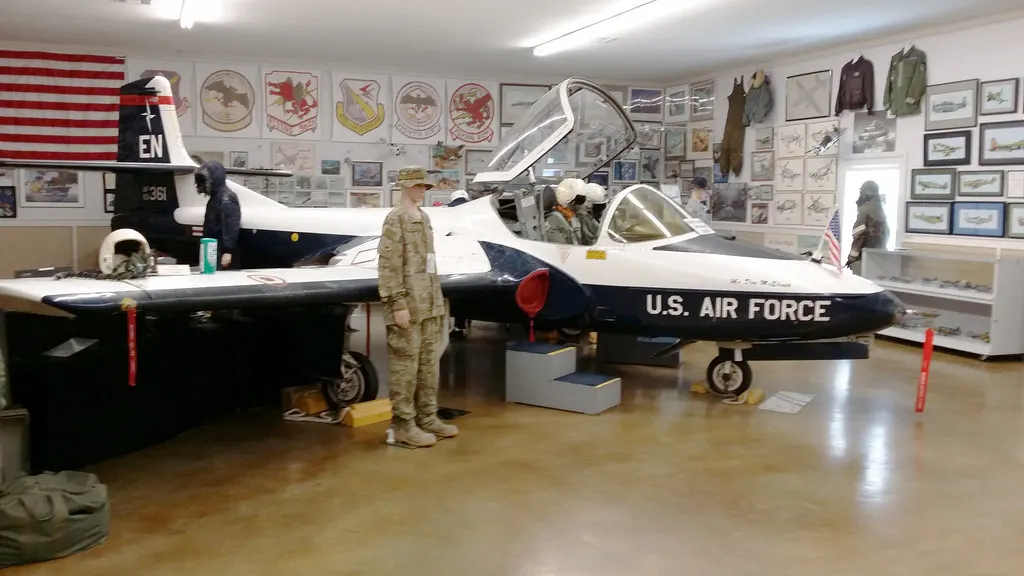
The Air Force's Trainer Experimental requirement wanted a simple, twin-engine jet cheap and forgiving enough to take a cadet straight from a propeller trainer into jet flying. Eight companies responded; Cessna, a firm with no jet experience at all, won the design competition in April 1953, largely on the strength of its side-by-side cockpit, a layout neither of its closest rivals, Temco and Beechcraft, offered.3,2
A full year passed between selection and metal being cut, and the Air Force's hardware contract was not signed until spring 1954.1 What followed was no smooth validation program: the first prototype was destroyed in a spin-test accident, and only a substantial tail and nose redesign kept the program alive long enough to reach production, a story told in full below.6,5
Beating Temco and Beechcraft to the Contract
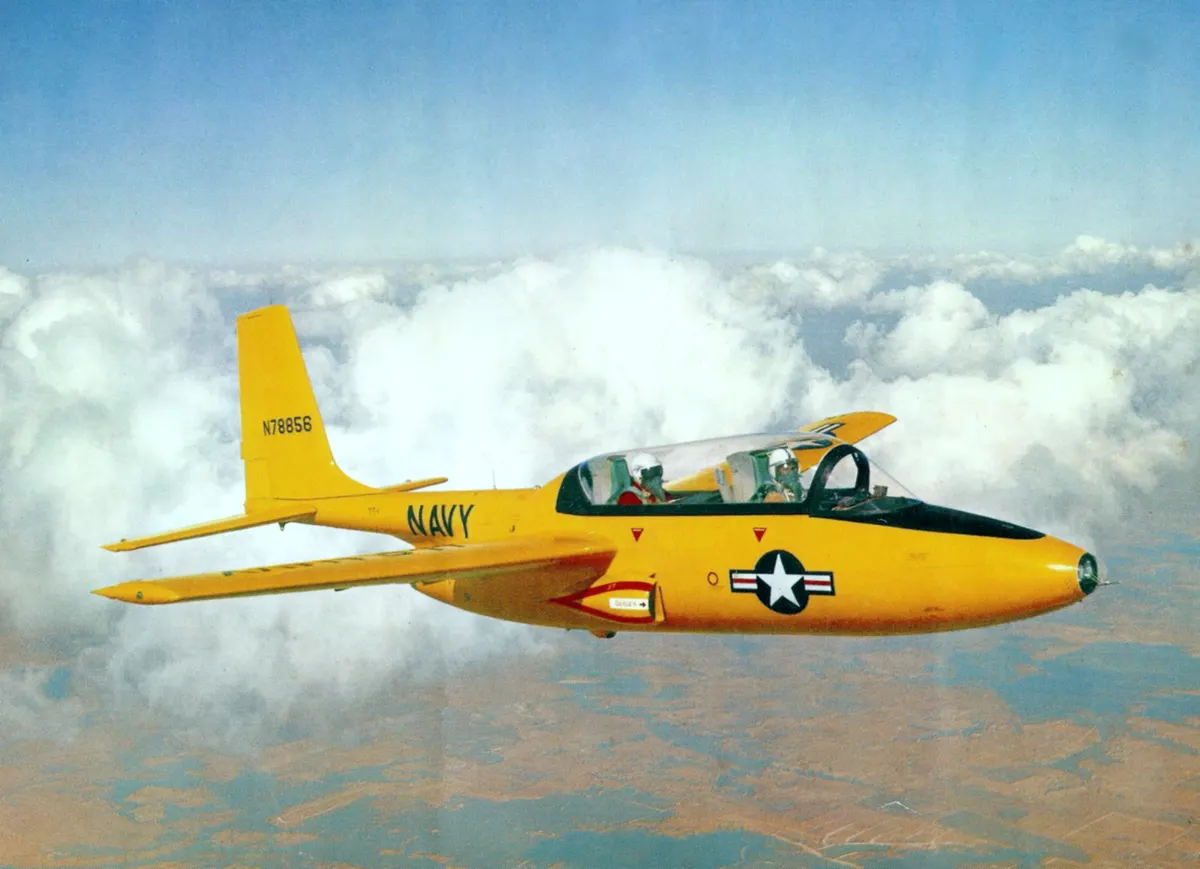
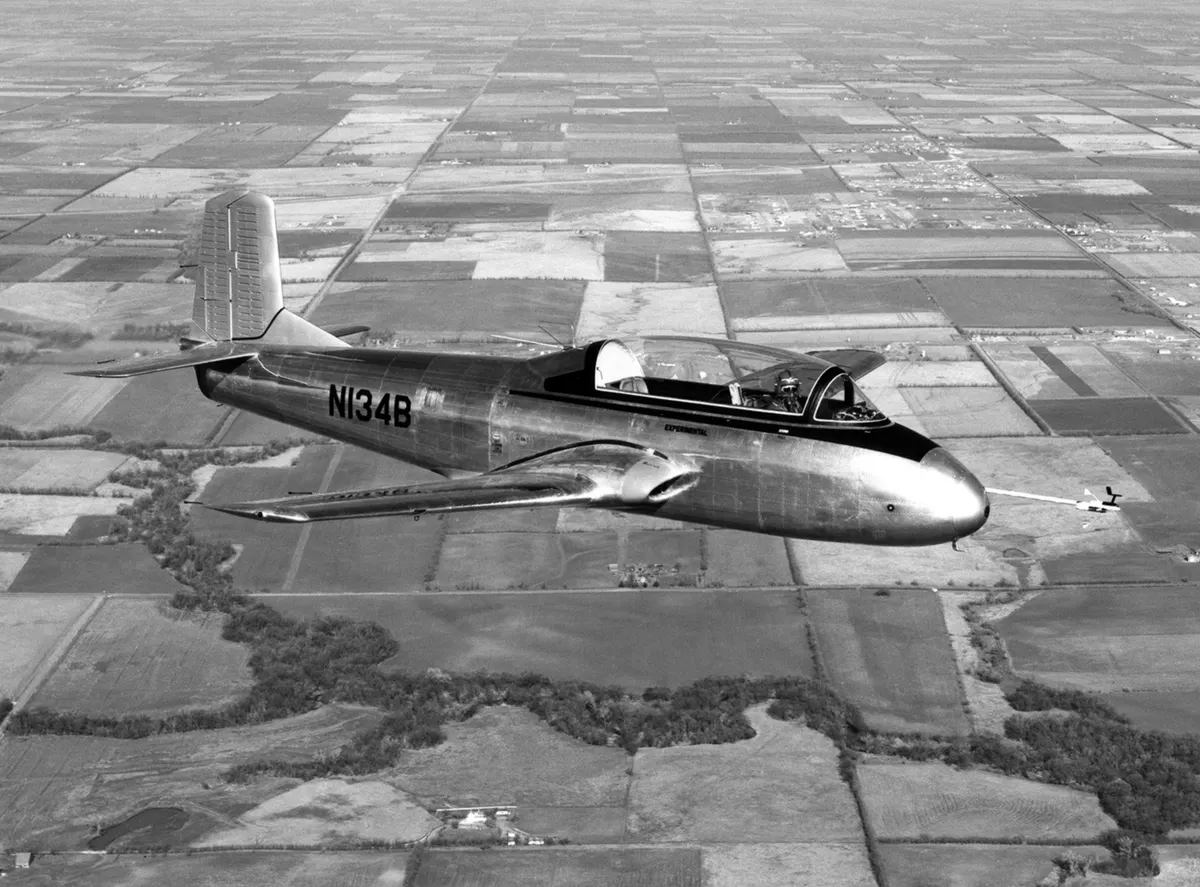
Cessna's Model 318 beat two serious rivals: the single-engine Beechcraft Model 73 Jet Mentor, built around recycled Model 45 Mentor components, and the Temco Model 51, later built for the Navy as the TT-1 Pinto.3,4 Both used tandem seating; Cessna's side-by-side layout, letting an instructor watch a student's hands and eyes directly, was the feature evaluators cited most.2
- First Flight1954
- Service Entry Year1956
- Crew (seats)2
- Trainer Typebasic jet trainer
- In ServiceYes
The hardware contract, in spring 1954, asked for three complete flying prototypes plus a fourth non-flying airframe for structural load testing, all designated XT-37.1
- Engine Typeturbojet
- Thrust4.1
The YJ69-T-9 Turbojets
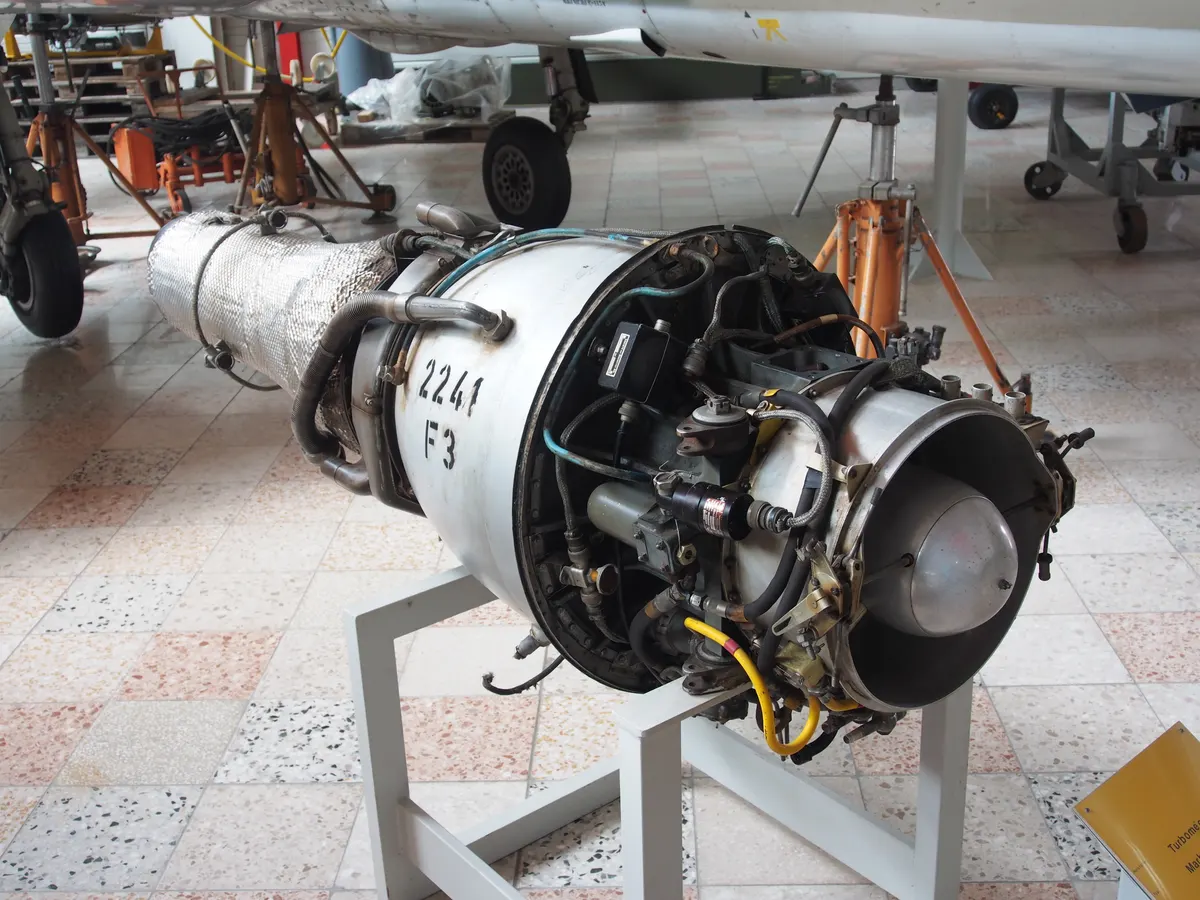
Power came from two Continental-Teledyne YJ69-T-9 turbojets, a pre-production designation of the same licensed French Turbomeca Marboré derivative that would power the production T-37A, each delivering about 920 lbf (4.1 kN) side by side beneath a single shared canopy.2,7 In early flight testing the prototype reached roughly 390 mph (628 km/h) at altitude, with a service ceiling near 35,000 ft (10,668 m) and a range on internal fuel of about 935 miles (1,505 km), figures that changed only modestly once the redesigned aircraft reached production.7
- Top Speed628 km/h
- Service Ceiling10,668 m
- Range1,505 km
All three flying XT-37 prototypes, like the static-test airframe, were designed and built by Cessna at its Wichita, Kansas plant, with the great majority of structure and instrumentation sourced domestically.1 The one significant foreign-origin element was the engine's underlying design: the Continental-Teledyne YJ69-T-9 was manufactured in the United States under a license Continental held on the French Turbomeca Marboré, so the physical engines were American-built even though the core design originated in France.2,7
- Cockpit Configurationside-by-side
- Ejection SeatsYes
- Total Built1,269
- Retirement Year2009
- Production Start1955
- Production End1975
First Flight and a Near-Disaster
The first prototype, serial 54-716, flew on 12 October 1954 with Cessna test pilot Robert "Bob" Hagan at the controls, from the company's own airfield in Wichita.7,6 Flight testing through the following winter went well enough that Air Force confidence in the design held, even as engineers began noticing that its spin behavior needed closer study.5
On its 205th test flight, that prototype entered a flat spin during deliberate spin testing and became uncontrollable; Hagan ejected safely, but the aircraft was destroyed.6 Data recovered showed the unmodified design spun at close to 70 degrees nose-low and needed nearly five full rotations, with full anti-spin input already applied, to recover, an unacceptable margin for an aircraft meant to teach spin recovery to cadets.5
The Redesign That Saved the Program

Cessna's engineers answered with a substantial redesign: the empennage was extended about 25 inches from the spin axis, the vertical tail enlarged, elevator authority increased, a ventral fin added, and strakes fitted along the nose, a change the Air Force judged the single most important fix.5 The modified aircraft spun only about 45 degrees nose-low at a slower rate and recovered in a little over one turn, a margin the Air Force accepted as adequate for students.5 The third and final prototype flew on 3 May 1955 already carrying these changes, and a pre-production T-37A, incorporating the same fixes, first flew on 27 September 1955.1,2 The Air Force then ordered the design into full production as the T-37A, ending the XT-37's own short career.1


XT-37 vs Temco TT-1 Pinto: The Navy Chose Differently
Temco's Model 51, from the same 1952 competition and eventually built for the Navy as the TT-1 Pinto, shared the XT-37's Continental-built Turbomeca-derived engine but little else.4 It kept conventional tandem seating, had only one engine giving marginal wave-off power, and offered barely an hour's endurance.4 Fourteen TT-1s were built for Navy evaluation between 1955 and 1957 before withdrawal around 1960 on performance grounds, while Cessna's design, despite its own near-disastrous prototype phase, became the Air Force's standard trainer for five decades.4 The gap was not raw power so much as redundancy: two smaller engines gave the XT-37 lineage an engine-out margin a single-engine trainer could not match.
XT-37 vs Beechcraft Model 73 Jet Mentor: The Rival That Never Reached Production
Beechcraft's entry, built by grafting a jet powerplant onto the existing Model 45 Mentor's wings and tail, first flew on 18 December 1955, over a year after the XT-37.3 Its single 920 lbf Continental J69-T-7 gave a top speed of about 295 mph and a range of only 450 miles, both below the XT-37's early figures, and the Air Force never revisited its April 1953 decision once the Model 73 flew.3 The design impressed Navy and Marine evaluation pilots on handling, but only the single prototype was built; it survives today at the Kansas Aviation Museum.3
| Contender | Engine(s) | Top speed | Result |
|---|---|---|---|
| Cessna XT-37 (Model 318) | 2 × Continental-Teledyne YJ69-T-9 | ~390 mph (628 km/h)7 | Won contract, became T-37A |
| Temco Model 51 / TT-1 Pinto | 1 × Continental J69-T-9 | ~345 mph4 | Built for US Navy, only 14 made |
| Beechcraft Model 73 Jet Mentor | 1 × Continental J69-T-7 | ~295 mph3 | Sole prototype, no orders |


How many XT-37 prototypes were built?
Three flying prototypes plus one non-flying static-test airframe, distinct from the roughly 1,269 production T-37A, T-37B, and T-37C aircraft built afterward.1
When did the XT-37 first fly, and why did the first prototype crash?
12 October 1954, at Wichita, Kansas, with test pilot Bob Hagan.7 On its 205th test flight it entered an unrecoverable flat spin and was destroyed; Hagan ejected safely, and the crash forced a tail and nose redesign before production could proceed.6,5
What is the difference between the XT-37 and the production T-37 Tweet?
The XT-37 was the pre-production phase, flown in 1954 and 1955 across four airframes. The production T-37A, cleared only after the redesign, served as the Air Force's standard jet trainer from 1957 until 2009.1,5
- "Cessna T-37 Tweet", Wikipedia — en.wikipedia.org ↩
- "Cessna T-37 Tweet Jet-Powered Advanced Trainer / Light Attack Aircraft", MilitaryFactory — militaryfactory.com ↩
- "Econo-Jet – the Model 73", King Air Magazine — kingairmagazine.com ↩
- "Temco TT Pinto", Wikipedia — en.wikipedia.org ↩
- "The Fascinating Spin History of the T-37 Tweet", The CFI Guy — thecfiguy.com ↩
- "List of accidents and incidents involving military aircraft (1955-1959)", Wikipedia — en.wikipedia.org) ↩
- "Cessna T37 Tweety", Minijets — minijets.org ↩
- "Mid-America Air Museum", Wikipedia — en.wikipedia.org ↩