

The BAC Jet Provost is a British two-seat basic jet trainer, developed by Hunting Percival in the early 1950s and produced into the 1960s by that company's successor, the British Aircraft Corporation. It was designed to take a student pilot with no flying experience straight onto a jet rather than through a piston aircraft first, and it became the Royal Air Force's standard basic trainer from the late 1950s until 1993.1 Power came from a single Armstrong Siddeley (later Bristol Siddeley, then Rolls-Royce) Viper turbojet, and the two seats were arranged side by side rather than in tandem, letting an instructor watch a student's hands directly.1,5
- forgiving, docile handling ideal for first-time jet students
- simple, low-maintenance single-engine design
- side-by-side seating aided instruction
- cheap and mechanically robust Viper turbojet
- large surviving warbird fleet keeps spares and expertise alive
- modest performance next to contemporary tandem-seat jet trainers
- Viper's drone-derived ancestry brought early reliability quirks
- unpressurised early marks limited high-altitude training
- armed export versions were lightly protected for the attack role
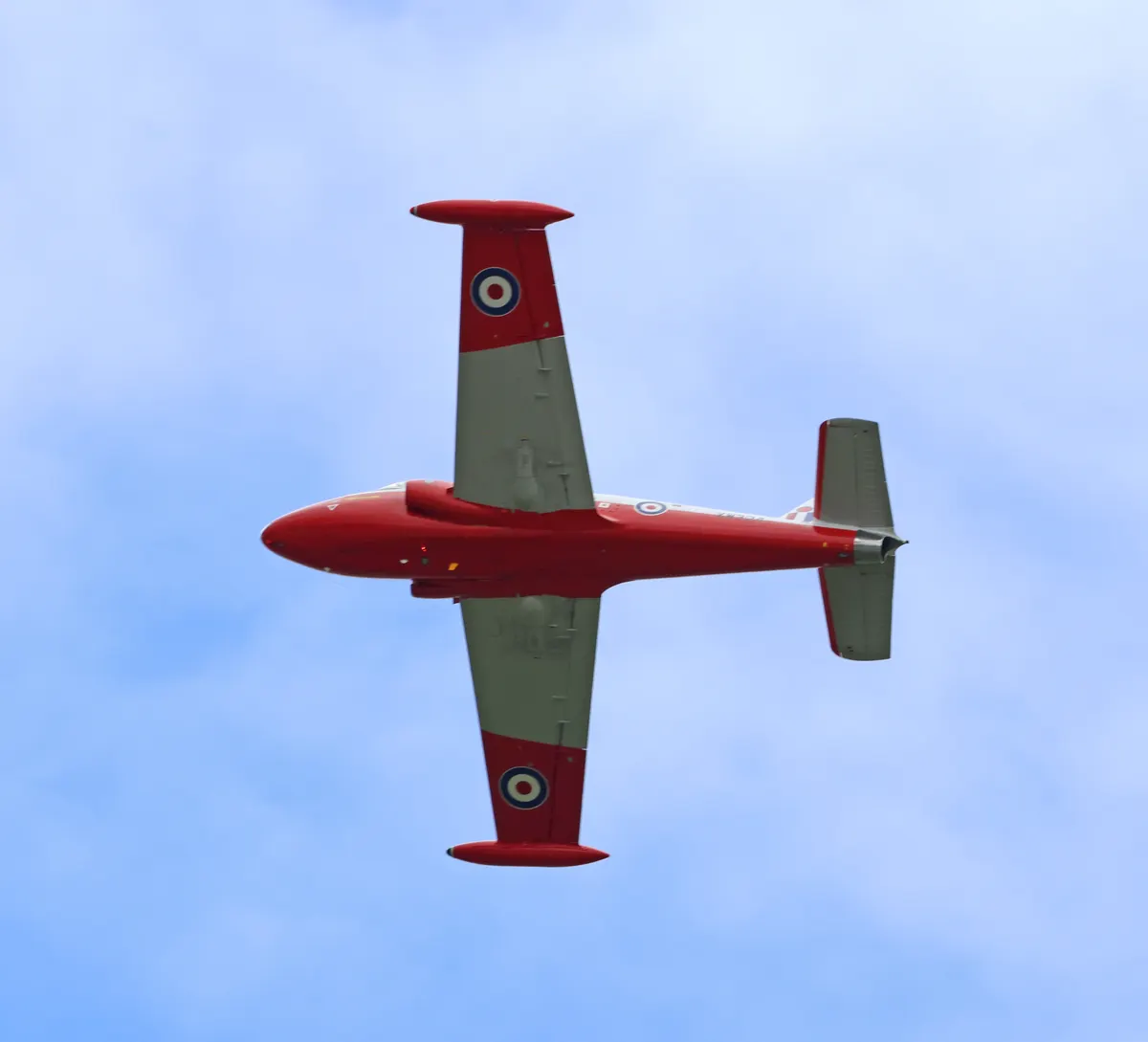
The aircraft's origins were economical by design. Rather than build a new jet trainer from scratch, Hunting Percival reused the tail surfaces, wings and main undercarriage legs of its piston-engined Percival Provost, married to a new fuselage and engine installation.1 That let the prototype, XD674, fly at Luton on 26 June 1954, only a few years after design studies began. Pre-production T1 aircraft then went through Central Flying School trials at RAF Hullavington in 1955-56; instructors found students reaching first solo sooner than on piston trainers, and No. 2 Flying Training School is generally credited as the first flying school anywhere to run a complete ab initio jet syllabus.1,13
Around 700 Jet Provosts of all marks were eventually built, split between RAF training versions (T1 through T5A) and armed export versions sold to roughly a dozen air forces.1 Those armed exports carried machine guns, rockets or light bombs for light attack work alongside training, and the demand they generated fed into a separate, purpose-built armed derivative, the BAC Strikemaster, covered on its own page rather than retold here.1,2 The unarmed Jet Provost itself never lost its identity as a trainer, even where individual airframes were pressed into combat.
The Armstrong Siddeley Viper and an Engine Born for a Target Drone
The Viper turbojet that powers every Jet Provost mark did not start out meant for a manned cockpit. Armstrong Siddeley designed it as a cheap, short-life powerplant for the Jindivik target drone, with a total-loss oil system and limited-life parts that assumed the engine, like the drone around it, was expendable.5 Adapting it for a trainer meant a conventional lubrication system and more durable materials, work done through the early-1950s Viper 5 programme that gave the RAF what is often described as the world's first genuinely all-through jet training system.5 Early T3s used the roughly 1,750 lbf Viper 102; the T4 and T5 stepped up to the approximately 2,500 lbf (11.1 kN) Viper 202.1,4 The family proved durable in the end: over 5,500 Vipers were built, logging more than 13 million flying hours, with Viper-powered RAF aircraft remaining in service into 2011.5
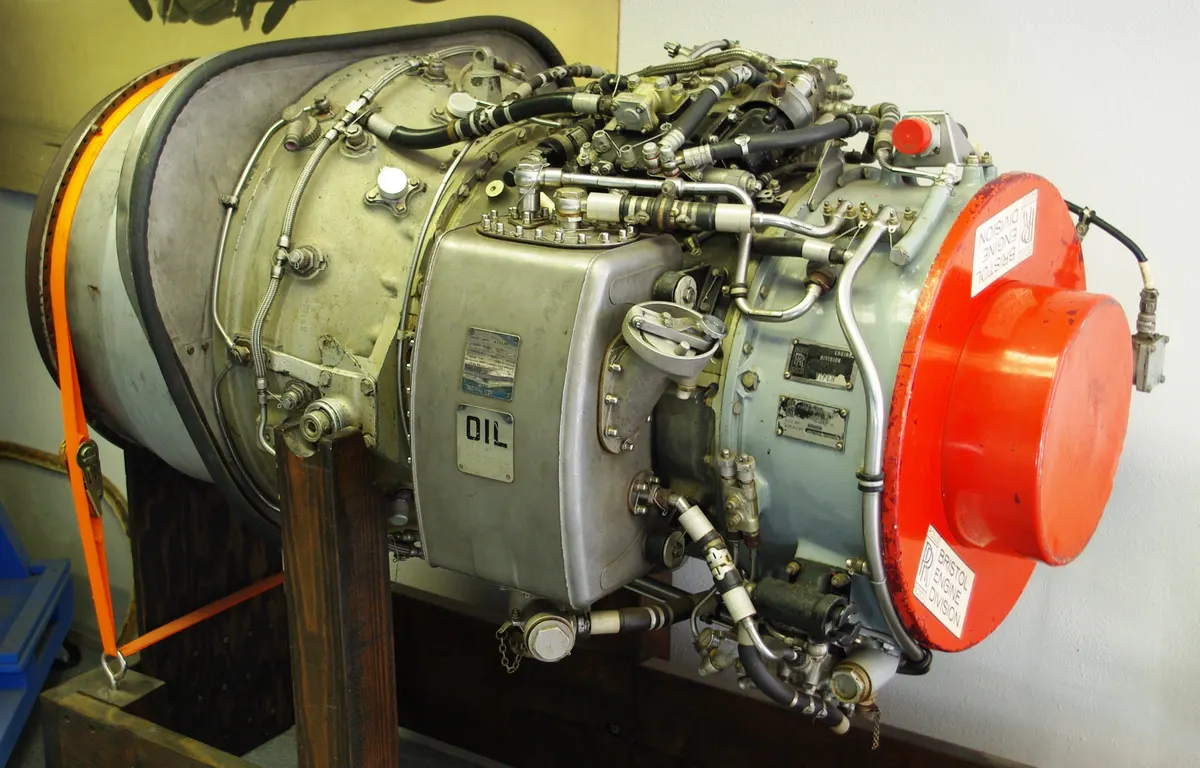
Crews sometimes called the early T3 "Constant Speed, Variable Noise," a comment on how a single-spool turbojet's power changes lagged behind throttle inputs compared with a piston engine.16 It is squadron folklore rather than a documented defect, but it captures something real: students had to learn to manage spool-up lag on a jet for the first time, which was precisely the skill the aircraft existed to teach.
Side-by-Side Seating and the Martin-Baker Ejection Seat
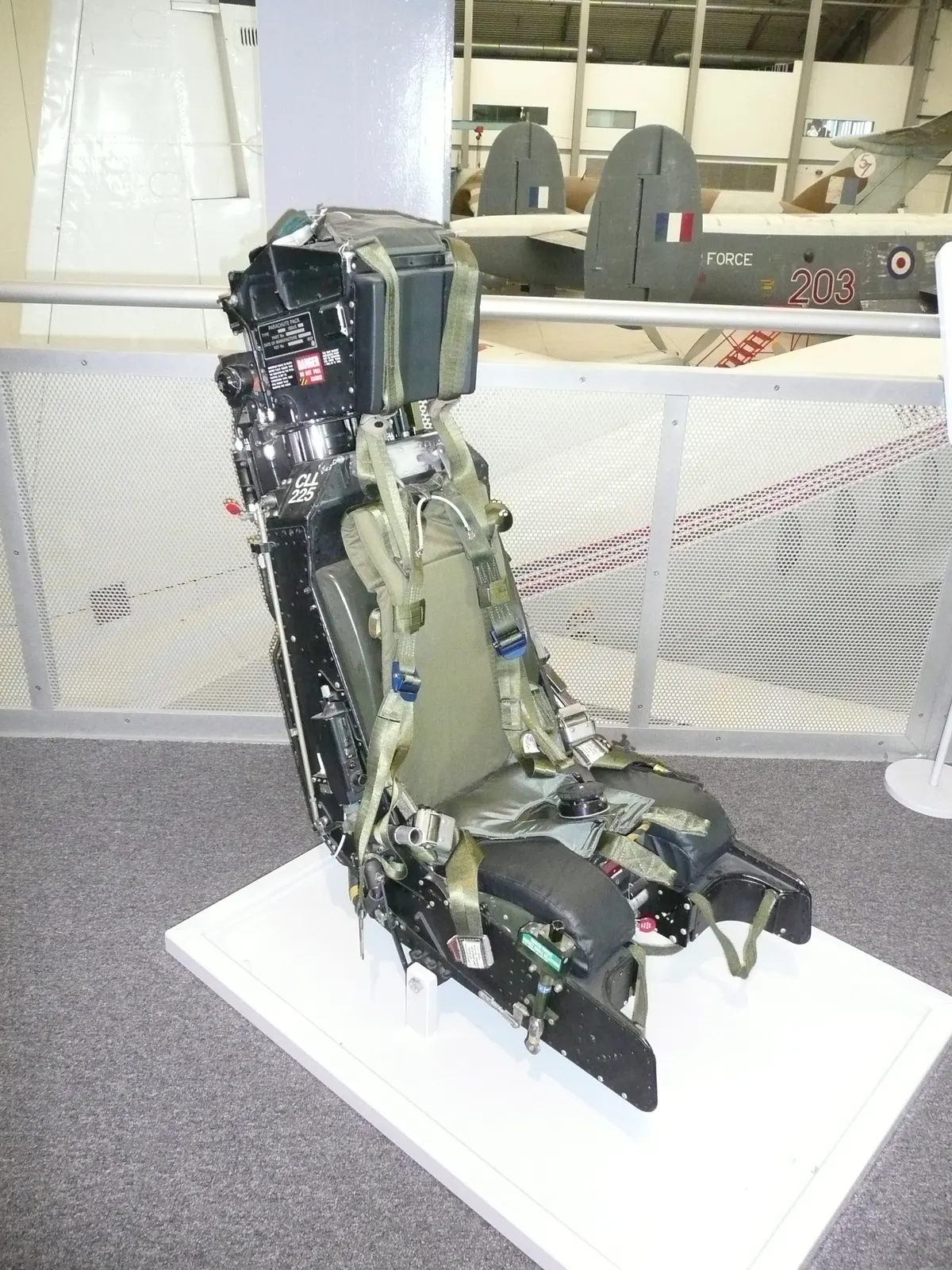
The Jet Provost's cockpit set it apart from most jet trainers of its generation, which typically seated instructor and student in tandem. Side-by-side seating meant an instructor could see exactly what a student's hands and feet were doing at every stage of a manoeuvre, at some cost to frontal area and top speed.1 Each occupant sat in a Martin-Baker ejection seat, part of the Mk4 family, retaining the firm's 80 ft/sec ejection gun and duplex-drogue system while aiming at safer escape at the low speeds and altitudes typical of a syllabus full of circuits, spins and forced-landing practice.6
From T1 to T5A: Pressurisation and Airframe Refinement
The T3 (201 built) was the first mark bought in numbers, becoming the RAF's definitive early trainer from 1959.1 The T4 (198 built) added the more powerful Viper and was used for weapons and applied flying training. The T5 (110 built, first flown February 1967) introduced a pressurised cabin, letting students train at altitudes and in weather the earlier marks avoided; the improved T5A (93 built) followed with better avionics and a wing leading-edge modification meant to sharpen the stall warning.1 Even the undercarriage evolved: the prototype's longer legs, chosen for a soft ride on rough strips, were shortened and strengthened on production aircraft for a stiffer tricycle gear.1
The Jet Provost was, in its RAF form, an almost entirely British aircraft. Hunting Percival, then BAC, built the airframe at Luton and, for the pressurised T5, at Warton; Armstrong Siddeley (later Bristol Siddeley, then Rolls-Royce) built the Viper turbojet at Coventry; and Martin-Baker in England supplied the ejection seats fitted to every mark.1,5,6 The only meaningful imported content sat in a handful of instruments and radio fit standard across British military aircraft of the era, leaving domestic content close to total for the versions the RAF actually flew.
Hunting Percival began design studies for a jet-powered trainer in 1951, while the company was still tooling up mass production of the piston Percival Provost for the RAF.1 The two aircraft shared a design lineage deliberately: reusing the Provost's tail, wings and undercarriage legs let engineers concentrate on the new fuselage, engine installation and side-by-side cockpit.

The prototype, XD674, first flew from Luton on 26 June 1954 with test pilot Dick Wheldon at the controls, before official trials at RAF Boscombe Down.1 Pre-production T1 aircraft followed in February 1955, and three went to the Central Flying School for a two-stage evaluation at RAF Hullavington running from May 1955 into July 1956: first an assessment by CFS instructors, then a trial with real ab initio students. The results were unambiguous enough that No. 2 Flying Training School is generally credited as the first flying school in the world to run a complete beginning-to-advanced jet syllabus.13,1
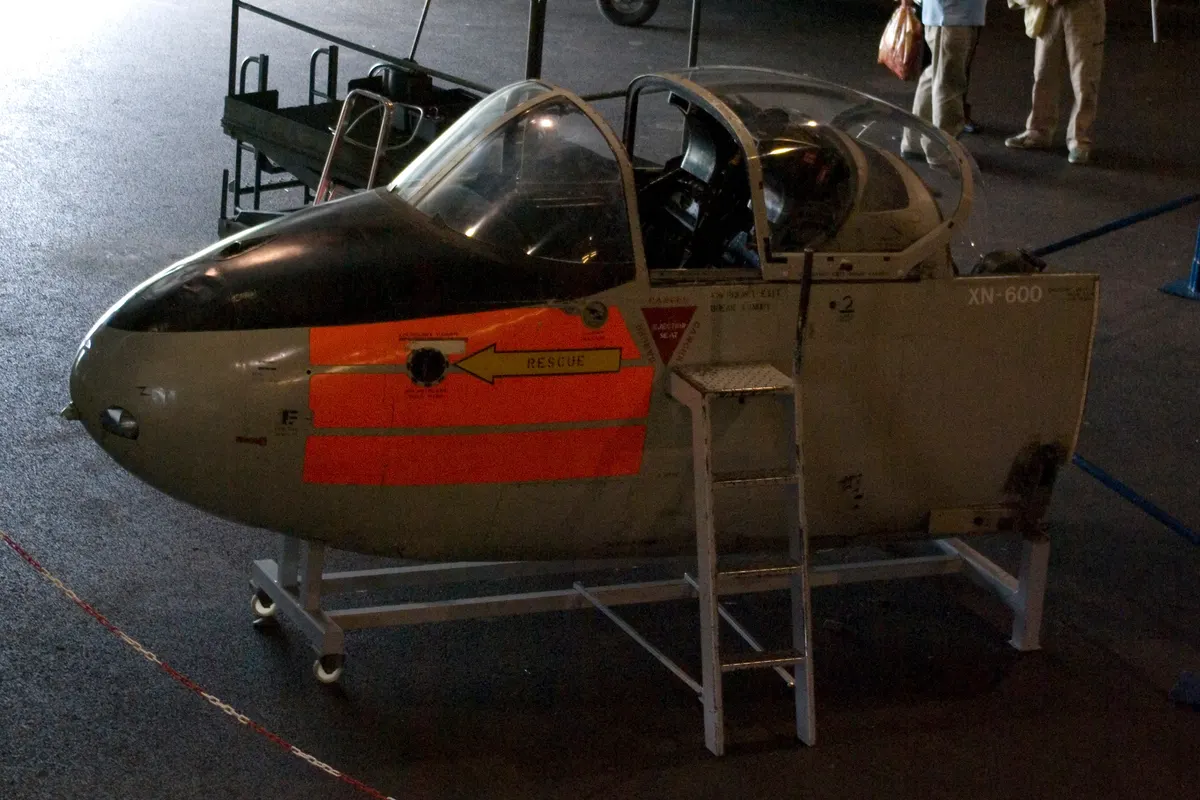
The T3 entered squadron service with No. 2 FTS at RAF Syerston from 1959 and spread across the RAF's other basic flying training schools, joined through the 1960s by the T4 and then the pressurised T5.1 The type also equipped several RAF aerobatic display teams, most memorably the Central Flying School's "Gemini Pair" and "The Swords" from No. 3 FTS, and RAF College Cranwell's "The Poachers," which flew T4s and then T5s from the mid-1960s until 1976, when the Ministry of Defence disbanded all Jet Provost teams as a cost-saving measure.9,10
The RAF kept the Jet Provost as its standard basic trainer for over three decades, finally displaced by the turboprop Short Tucano, whose first RAF aircraft arrived at the Central Flying School in June 1988; deliveries continued until January 1993, by which point the Jet Provost fleet was almost entirely retired.11 The Tucano was reported to be roughly 70 percent cheaper to run than the Jet Provost's Viper, a gap that says as much about how training-fleet economics changed over three decades as about any shortcoming in the older jet.11
Most Jet Provosts never fired a shot; the RAF's own fleet was unarmed and never intended for combat. But several export operators bought armed variants — the T51, T52 and T55 — fitted with underwing hardpoints for machine guns, rockets or light bombs, and at least two used them in actual fighting.1
The clearest case is Ceylon (now Sri Lanka). The Royal Ceylon Air Force had taken delivery of a dozen armed T51s from around 1959, and when the 1971 JVP insurrection broke out, it pulled five of its Jet Provosts out of storage, serviced and rearmed them within days, and flew them from RAF Chinabay to Katunayake, strafing and bombing insurgent concentrations en route.7 With the insurgents possessing no anti-aircraft capability, the sorties — flown alongside Bell 47 helicopters used for reconnaissance and light attack — could operate low and largely unopposed, and are generally credited with helping break several JVP-held positions, including near the Alawwa bridge.7
Nigeria is the other documented case. Two ex-Sudanese T51s acquired in 1967 were used by the Nigerian Air Force against Biafran forces during the Nigerian Civil War (1967-1970), reportedly serving in both training and improvised ground-attack roles.1 Other armed operators — Iraq, Sudan, Kuwait and Venezuela among them — appear to have used their Jet Provosts mainly for training and patrol rather than documented combat, though gaps in open-source unit histories for several of these air forces make it hard to rule out smaller actions that went unrecorded outside their own countries.
It is worth being precise about what this record does and does not show. The Jet Provost was never designed, armed or armoured for sustained ground-attack work the way the purpose-built Strikemaster was; its combat appearances came from operators improvising with stored airframes against opponents unable to shoot back — a different story from the Strikemaster's own, more sustained counter-insurgency record, addressed in that aircraft's separate article.2
The RAF-only lineage ran T1 (a dozen pre-production aircraft used for trials), a handful of T2 development airframes, then the definitive early T3 (201 built) with the lower-powered Viper 102.1 The T4 (198 built) introduced the roughly 2,500 lbf Viper 202 and was used for more advanced training, including armament familiarisation with practice weapons. The T5 (110 built) added cabin pressurisation, and the improved T5A (93 built) closed out RAF production with updated avionics and a wing modification meant to sharpen the stall warning.1
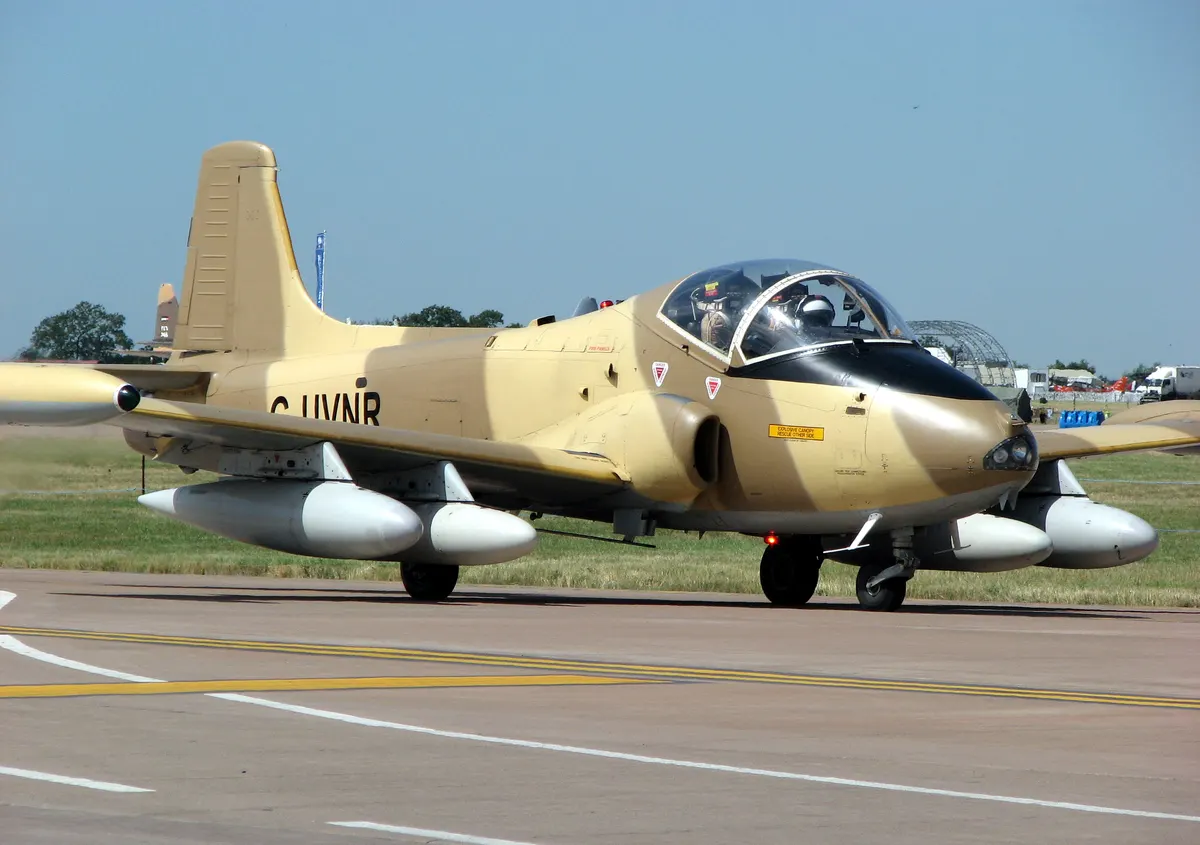
Export customers bought variants built specifically for them. The T51 (22 built: 12 for Ceylon, 4 for Sudan, 6 for Kuwait) and T52 (43 built: 20 for Iraq, 15 for Venezuela, 8 for Sudan) added underwing hardpoints for two machine guns plus rockets or up to four 540 lb bombs, on top of the training role.1 A T52A batch went to South Yemen, three of which later passed to Singapore in the mid-1970s; the final armed export mark, the T55, went exclusively to Sudan (5 built).1 Production totals are given inconsistently across sources, from roughly 600 to as high as 734 depending on which batches are counted, so "around 700" is a reasonable working figure rather than a precise one.1
The armed-export demand eventually justified a dedicated aircraft rather than more converted trainers: the Strikemaster, structurally strengthened and fitted with the considerably more powerful roughly 3,410 lbf Viper 535, of which 146 were built for operators including Saudi Arabia, Oman, Kenya, Singapore, Ecuador and New Zealand.2 Because the Strikemaster has its own combat history — most notably in Oman's Dhofar War — and its own article on this site, it is intentionally not re-covered in depth here; the two aircraft share ancestry but are best treated as related, distinct types rather than variants of one another.2
The Royal Air Force was the dominant operator, flying Jet Provosts of every RAF mark from the mid-1950s trials through retirement around 1993, spread across most of its basic and Central Flying School units over that period.1,13
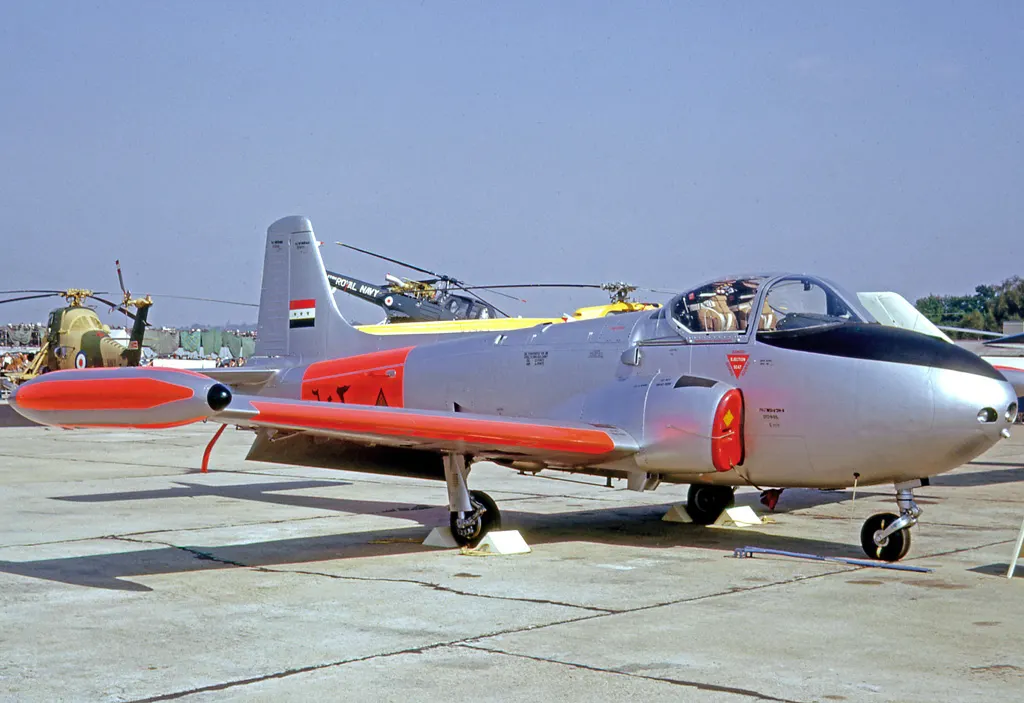
Export customers were smaller in scale but geographically wide-ranging. Ceylon (now Sri Lanka) was first, taking delivery of a dozen armed T51s from around 1959.7 Kuwait's air force took six T51s in 1962, among its very first jet aircraft as the newly independent state stood up its own air arm.14 Iraq received 20 T52s from August 1964, Venezuela 15 T52s, and Sudan a mixed fleet of T51s, T52s and T55s across several batches, making it the most persistent Jet Provost export customer.1 South Yemen received T52As, three of which passed to Singapore between 1975 and 1980, and Nigeria acquired two second-hand Sudanese T51s in 1967 that saw service in the Nigerian Civil War.1 Single evaluation aircraft also went to Australia and Portugal without leading to further orders.1
Today the type's largest surviving "operator" is arguably the civilian warbird community. A substantial number of retired airframes are in private hands, mostly in the UK, restored to airworthy condition and flown at airshows or offered through warbird experience operators; asking prices have been quoted from roughly $150,000 to under $1 million depending on mark and hours, though that range is indicative rather than a firm benchmark given how thin warbird sales data generally are.15
The Jet Provost's closest Western contemporary is the Cessna T-37 Tweet, the United States Air Force's basic jet trainer from 1957 into the 1990s, and the comparison is instructive because both aircraft solved the same problem — putting an inexperienced student directly onto a jet — in different ways. Both used side-by-side seating, but the Jet Provost mounted a single Viper turbojet in the fuselage with a tailpipe at the rear, while the T-37 buried two small Continental-Teledyne J69 turbojets in the wing roots.12 The twin-engine layout gave the T-37 a measure of redundancy the single-engined Jet Provost never had, at the cost of two smaller engines to maintain instead of one; the T-37's engines were also infamous for a piercing high-frequency shriek at high power, which gave the "Tweet" nickname its ironic edge.12
Performance came out close: the T-37B reached about 425 mph against roughly 440 mph for the pressurised Jet Provost T5, with the Jet Provost's edge coming mainly from its later, more powerful Viper 202 rather than any aerodynamic advantage.1,12 The two diverged more sharply in scale: the T-37 was built in far larger numbers and served more air forces, reflecting the much larger U.S. Air Force training requirement and its export sales programme compared with the smaller RAF.12,1
| Spec | BAC Jet Provost T5 | Cessna T-37B |
|---|---|---|
| Engines | 1x Viper 202 turbojet, 2,500 lbf1,4 | 2x Continental-Teledyne J69 turbojets12 |
| Max speed | ~440 mph (707 km/h)4 | ~425 mph (684 km/h)12 |
| Entered service | 1959 (T3); T5 19671 | 195712 |
Both types were eventually retired in favour of turboprop primary trainers — the Jet Provost by the Short Tucano from 1988, the T-37 by the T-6 Texan II from the late 1990s — a shared verdict, reached independently a decade apart, that turbine-jet basic training had become more expensive than the syllabus justified.11
How fast was the Jet Provost? The pressurised T5, the fastest RAF production mark, reached about 440 mph (707 km/h) at 25,000 ft on its roughly 2,500 lbf Viper 202 turbojet; earlier T3s with the less powerful Viper 102 were somewhat slower.1,4
How many Jet Provosts were built? Individual variant totals add up to roughly 690-700 aircraft across all RAF and export marks, though published tallies range from around 600 to as high as 734 depending on which small export batches and development airframes are included.1
What is the difference between the Jet Provost and the BAC Strikemaster? The Jet Provost is the unarmed-to-lightly-armed basic trainer described here; the Strikemaster is a distinct, structurally strengthened, more powerfully engined derivative built for armed light-attack and counter-insurgency work, with its own combat history and export list.2
Is the Jet Provost still flying today? Yes. It was retired from RAF service by 1993, but a substantial number of ex-military airframes are privately owned and airworthy, mostly in the UK, and appear at airshows and through warbird flight-experience operators.15,11
Did the Jet Provost see combat? Rarely, and never in RAF hands. Armed export operators used it in action in at least two conflicts: Sri Lanka (then Ceylon) during the 1971 JVP insurrection, and Nigeria against Biafran forces in the Nigerian Civil War.7,1
- "BAC Jet Provost", Wikipedia — en.wikipedia.org ↩
- "BAC Strikemaster", Wikipedia — en.wikipedia.org ↩
- "Hunting Percival / BAC P.84 Jet Provost - Specifications", flugzeuginfo.net — flugzeuginfo.net ↩
- "Armstrong Siddeley Viper", Wikipedia — en.wikipedia.org ↩
- "MK4", Martin-Baker — martin-baker.com ↩
- "1971 JVP insurrection", Wikipedia — en.wikipedia.org ↩
- "The Jet Provost Display Team", AeroResource — aeroresource.co.uk ↩
- "RAF Jet Provost Display Teams", Jet Provost Heaven — jetprovostheaven.com ↩
- "Short Tucano", Wikipedia — en.wikipedia.org ↩
- "Cessna T-37 Tweet", Wikipedia — en.wikipedia.org ↩
- "No. 2 Flying Training School RAF", Wikipedia — en.wikipedia.org ↩
- "Kuwait Air Force", Wikipedia — en.wikipedia.org ↩
- "BAC Jet Provost Aircraft for Sale", AvPay — avpay.aero ↩
- "Aircraft Nickname Master List", WW2Aircraft.net Forums — ww2aircraft.net ↩