


- Full-scale, realistic radar and visual signature for bomber-simulation trials
- Genuine turbojet speed and altitude performance, unlike smaller subsonic drones
- Reused already-paid-for surplus trainer airframes instead of new-build targets
- Destroyed outright on a successful intercept, unlike recoverable subscale drones
- Required a separate manned director aircraft to fly and command it
- Sparse public documentation of exact numbers converted and dates
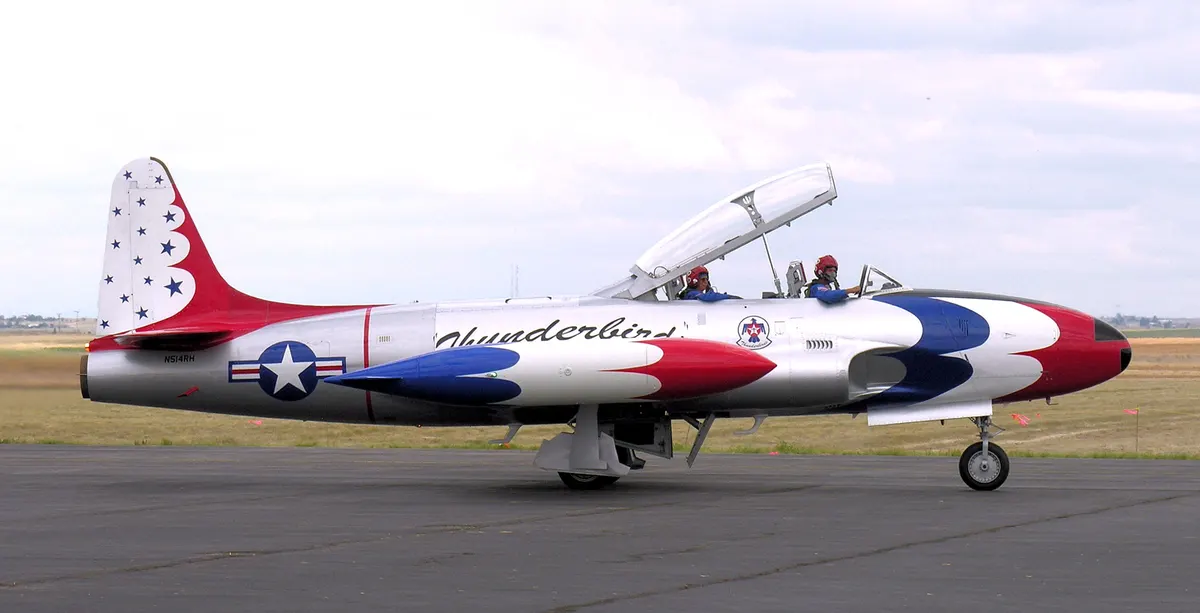
The Lockheed QT-33A is a full-scale aerial target drone converted from surplus Lockheed T-33A Shooting Star jet trainers.1 The US Navy fitted retired T-33As with radio-command equipment so the airframe could be flown unmanned and expended in missile trials rather than scrapped.2,3
QT-33A drones flew principally from the Pacific Missile Test Center at Point Mugu and the Naval Weapons Center at China Lake, both in California.3 A companion family, the DT-33A/B/C director aircraft, kept a pilot aboard to issue the drone's radio commands; the QT-33A itself carried no crew once configured for a mission.2,4
Records of these range programs were kept as internal test paperwork, and exact production totals or conversion dates were not found in accessible public sources.
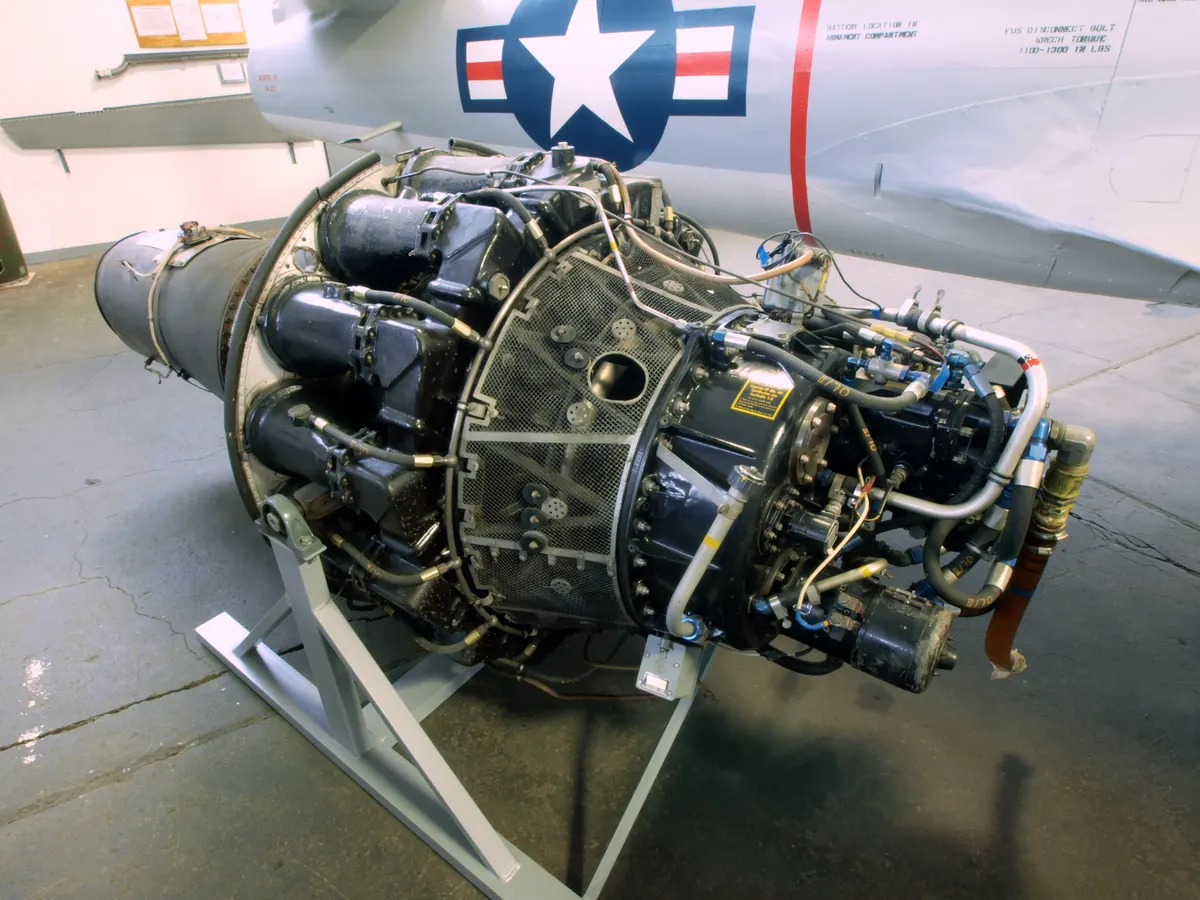
As a conversion, the QT-33A kept the T-33A's Lockheed airframe and single Allison J33-A-35 turbojet, rated near 5,400 lbf (24 kN), giving a sea-level top speed around 600 mph (965 km/h) and a service ceiling near 48,000 ft (14,630 m).1
The drone-specific work added a radio-command receiver and autopilot, a flight-termination (self-destruct) system for range safety, and a mineral-oil smoke generator so observers could track it visually during an intercept.6,7 No public source names the contractor who did the conversion work.
That the termination and smoke systems appear as separate government engineering studies suggests the conversion package was refined over more than one iteration.6,7
The donor T-33A airframe and its Allison J33-A-35 engine were both American: the airframe built by Lockheed in Burbank, California, the engine by Allison in Indianapolis.1 The drone-specific additions, radio link, autopilot, destruct charges, and smoke generators, were likewise US government and contractor equipment. No foreign-sourced major system has been identified in the QT-33A conversion.
Converting a retired jet into a full-scale drone target was not new by the time the T-33 was chosen: the Air Force had already turned surplus F-80s into QF-80 target and cloud-sampling drones in the early 1950s, guided by a Lockheed-built director aircraft flying alongside.8
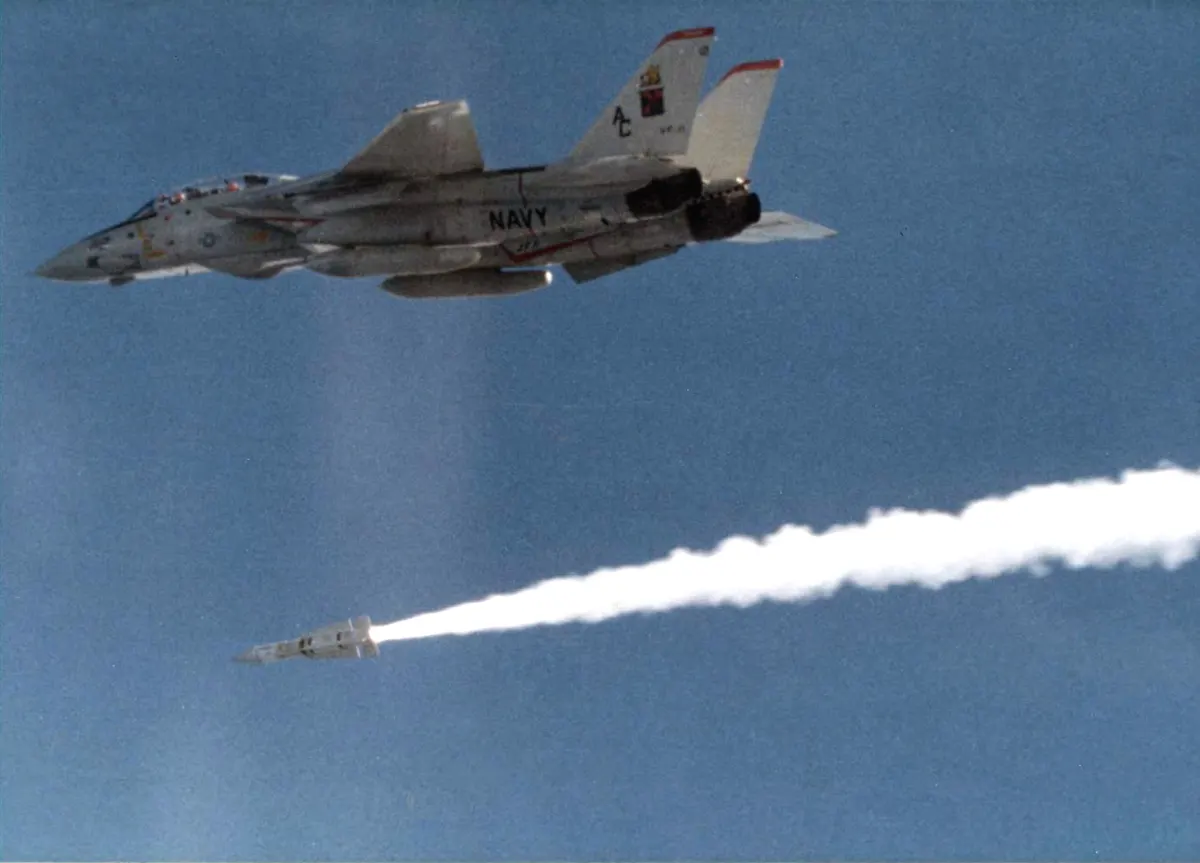
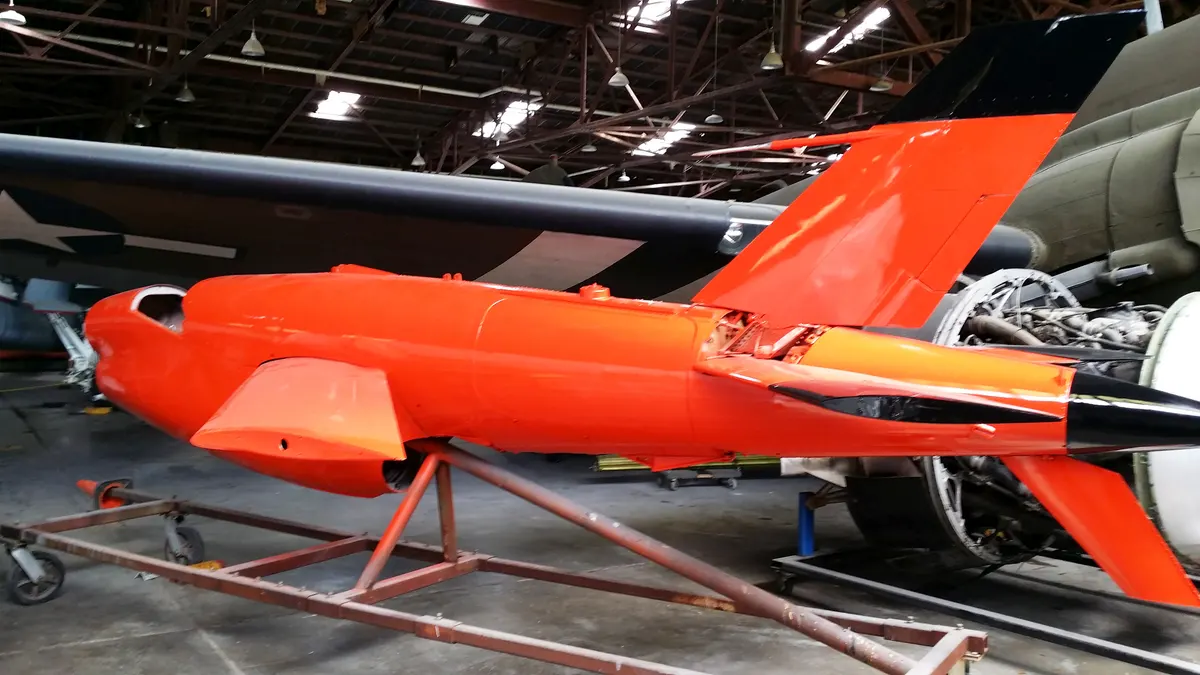
The T-33-based family reused that concept once enough T-33As had themselves become surplus. The best-documented mission is the Navy's "six-on-six" test of the Grumman F-14's AIM-54 Phoenix missile, launched from Point Mugu on November 21, 1973: three QT-33As, standing in for bombers, flew alongside three smaller BQM-34 Firebee drones simulating fighters, and a single F-14 fired all six of its Phoenix missiles in one pass.9
Two of the three QT-33As were destroyed by direct hits; the third survived only because its incoming missile's own radar antenna failed.9
Individual airframe records show conversions from the 1960s into the mid-1970s, as retired USAF T-33As were transferred to the Navy for the purpose.3,5,10
By the later 1970s, purpose-built subscale drones increasingly took over routine missile-scoring work, and full-scale conversions like the QT-33A grew less common as the pool of retired T-33As shrank.
The QT-33A was the unmanned, expendable target version of the T-33: once configured for a mission it carried no pilot and flew entirely by radio command, typically relayed from a companion director aircraft.2
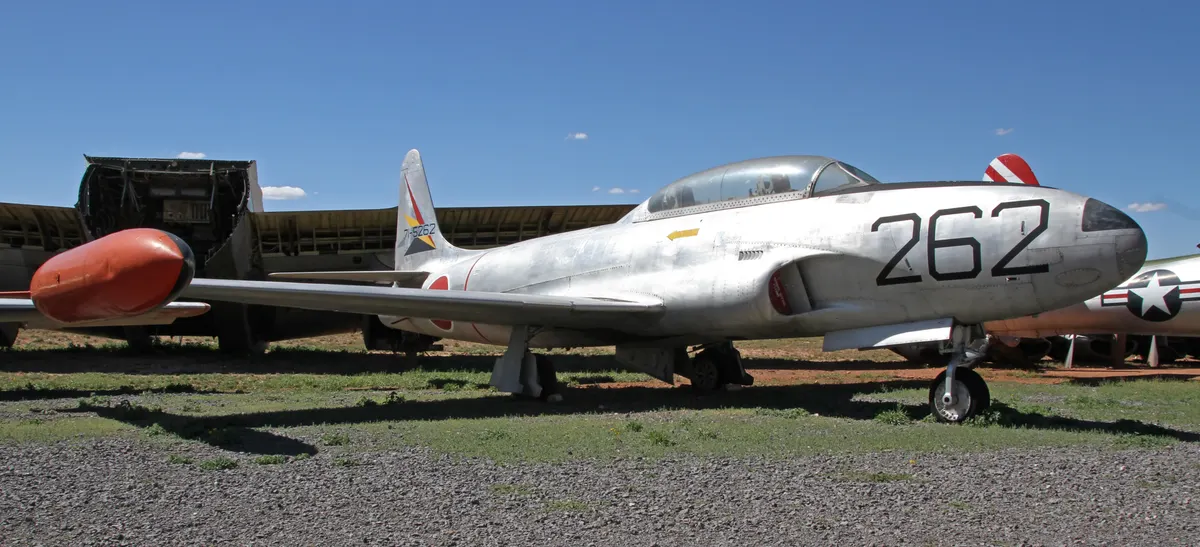
The Air Force's DT-33A retained a pilot who flew nearby to transmit commands, a role documented in the mid-1960s guiding QF-104 and QB-47 targets at Eglin AFB, Florida.4 The Navy's DT-33B (redesignated from the TV-2D in 1962) carried out the same director role, while its DT-33C (from the TV-2KD) was a radio-controlled target that, unlike the QT-33A, kept a pilot's seat so it could be flown home between missions rather than expended every time.2,4
The QT-33A's only confirmed operator was the US Navy, flying it from its two main missile-test ranges at Point Mugu and China Lake.3
The related DT-33 director variants served with both the Navy and the Air Force, the latter reportedly including Eglin AFB in the mid-1960s.4 Conversions drew on whichever airframes the Navy had on hand, so individual drones carried a wide mix of prior histories, including former fighter-training aircraft from Hamilton AFB, California.3,10
The QT-33A's closest contemporary counterpart was the BQM-34 Firebee, and the two flew in the same test, the 1973 Phoenix six-on-six shoot, standing in for different threat classes.9 The Firebee was purpose-built as a drone, smaller and usually recovered by parachute rather than destroyed. The QT-33A was a repurposed manned trainer, larger and radar-significant enough to represent a bomber, and essentially disposable once committed to a live-fire mission. Range planners needed both a small, reusable target for fighters and a bigger airframe for bomber-class threats, and converting an idle T-33A was cheaper than designing a new large drone.
Set against the earlier QF-80, the QT-33A is the same idea one generation later, arriving once T-33As had become the surplus type on hand.8


How many QT-33A drones were converted? No source consulted gives a firm total; airframe histories confirm conversions from the 1960s into the mid-1970s, but a full count was not found.3,5,10
What is the difference between the QT-33A and the DT-33? The QT-33A is the unmanned target; the DT-33A/B/C are director-aircraft designations that kept a pilot to command the drone, with the DT-33C alone also usable as a recoverable target.2,4
Was the QT-33A used in combat? No. It was a missile-test range asset, expended against weapons like the AIM-54 Phoenix at Point Mugu and China Lake.3,9
Do any QT-33A airframes survive today? Yes. At least one, BuNo 156158, is preserved, though displayed with incorrect foreign markings.5
- "Lockheed T-33", Wikipedia — en.wikipedia.org ↩
- "Aircraft: Lockheed DT-33A Shooting Star", Aero-web.org — aero-web.org ↩
- "Lockheed T-33 (F-80 trainer)", History of War — historyofwar.org ↩
- Visitor/crew accounts, "Aircraft: Lockheed DT-33A Shooting Star", Aero-web.org — aero-web.org ↩
- "Lockheed 580 T-33A-1-LO 53-5341 / QT-33A 156158 in Valle", Flickr (Johnny Comstedt) — flickr.com ↩
- "QT-33A Flight Termination System Development", Defense Technical Information Center — apps.dtic.mil ↩
- "QT-33A Aerial Target Smoke-Generating Systems (Mineral Oil)", Defense Technical Information Center — apps.dtic.mil ↩
- "Drones and atomic clouds", geographicalimaginations.com — geographicalimaginations.com ↩
- "How the F-14 Tomcat Sharpened Its Teeth: The Story of the Six-on-Six Missile Shot Test", The Aviation Geek Club — theaviationgeekclub.com ↩
- "Aerial Visuals - Airframe Dossier - Lockheed QT-33A, s/n 156057 USN, c/n 580-7019", Aerial Visuals — aerialvisuals.ca ↩