


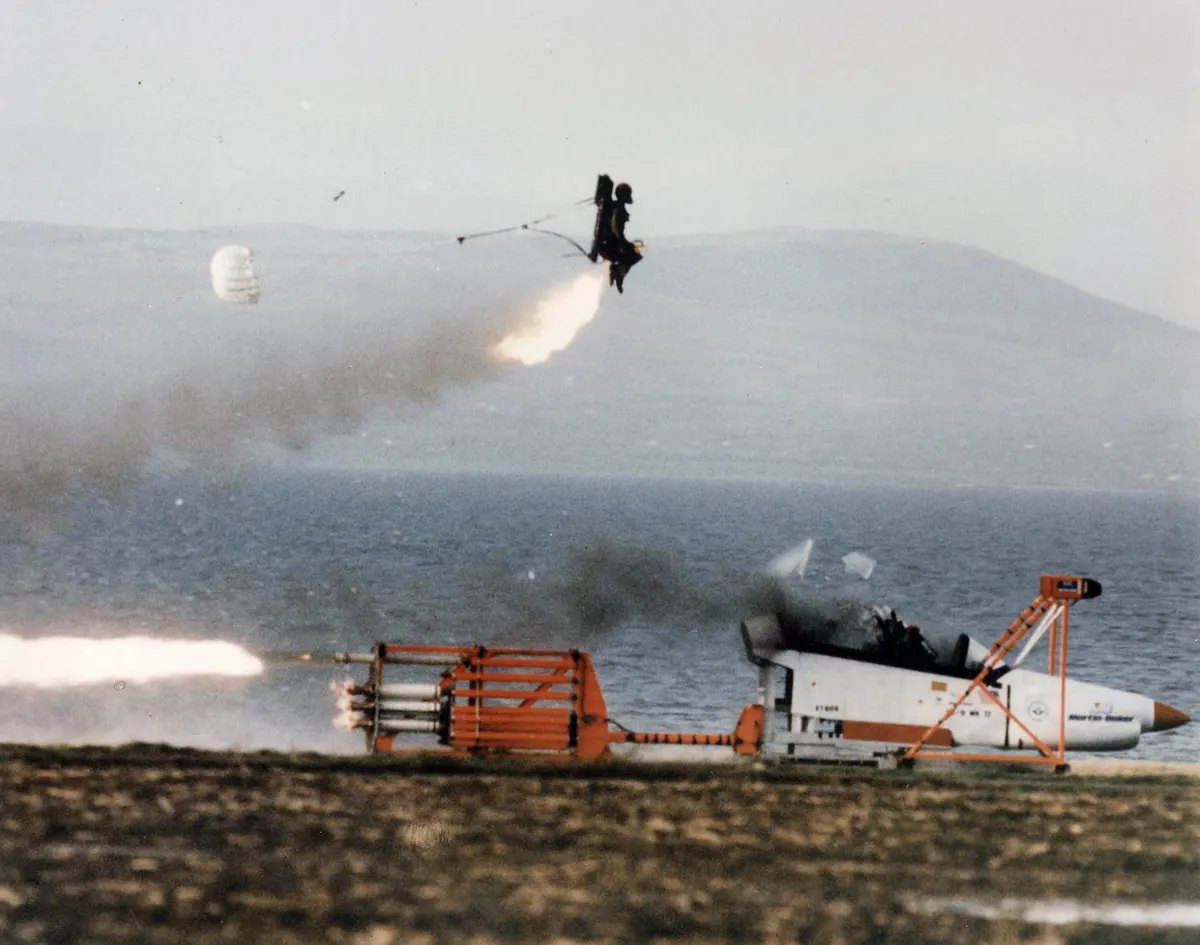
The Fouga CM.173 Super Magister, later renamed Potez 94, is a one-off re-engined and re-equipped derivative of the Fouga CM.170 Magister jet trainer, built as a private venture by Potez rather than to any government contract.3,4 Where the standard Magister flew on twin Turbomeca Marboré II or, from 1960, Marboré VI turbojets, the Super Magister used the more powerful Marboré Super VI, and, uniquely among Magister variants, was fitted with Martin-Baker/Hispano ejection seats as standard rather than the manual bail-out escape of every production CM.170.1,4 Exactly one example was completed, and it never carried a squadron or export operator of its own.3,4
- Ejection seats standard, unlike almost every production Magister
- More powerful Marboré Super VI engines than the baseline CM.170-1
- Increased fuel capacity and powered ailerons over the original design
- Pressurized, lower-drag canopy with improved pilot view
- Never ordered by any air force, including France's own
- Only one example ever built, so no fleet-level experience exists
- Higher weight than the baseline Magister, eroding some of the performance gain
- Development history and test-program details are very sparsely documented
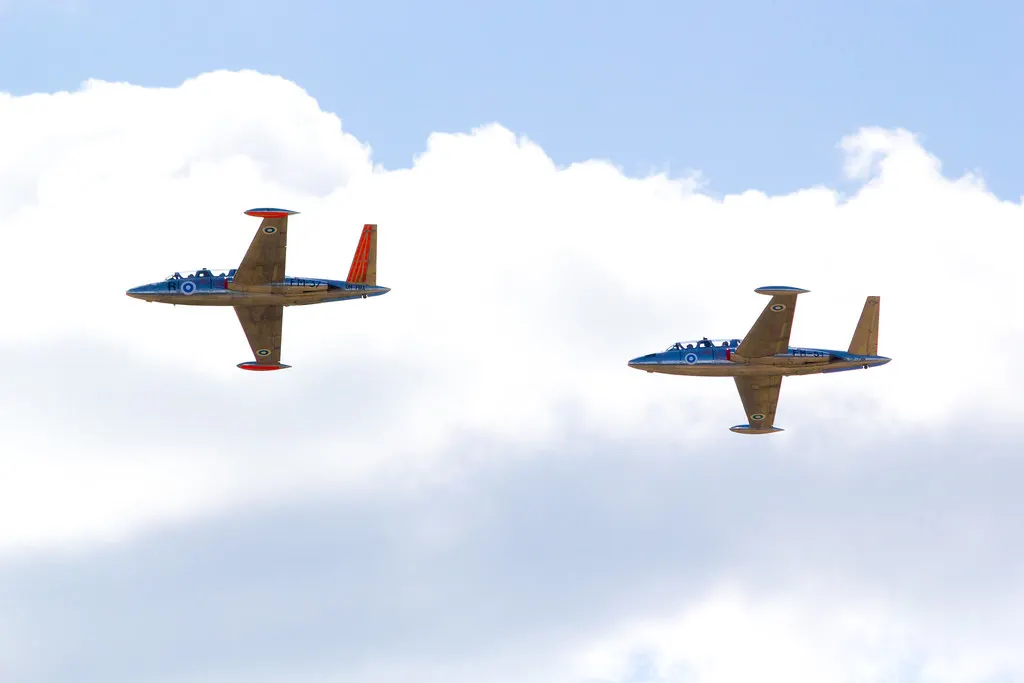
The project sat between two other developments that are easy to confuse with it. The CM.170-2, a modest mid-life upgrade that swapped in the Marboré VI and reached 137 production airframes, is a genuinely different aircraft from the Super Magister, which went further: a new pressurized cockpit, a redesigned lower-drag canopy, ejection seats, more internal fuel, and powered ailerons.1,4 None of that extra engineering translated into orders. Potez pitched the Super Magister to existing Magister operators looking to modernize, and to the French Armée de l'Air itself, and secured neither.2,5
Sourcing on this aircraft is genuinely thin. Beyond a first-flight date, a short specifications list, and the bare fact of its rejection, little detailed documentation of the test program, any specific evaluation criticism, or the exact reasoning behind Potez's later abandonment of the project survives in accessible form. What follows states plainly what is known and flags where the record simply runs out.
Marboré Super VI, Not the CM.170-2's Marboré VI
The Super Magister's twin Turbomeca Marboré Super VI turbojets are rated at around 480 to 530 kgp (roughly 4.7 to 5.2 kN, call it 5.1 kN as a working average) each, a step up from the 4.7 to 4.8 kN of the plain Marboré VI fitted to the CM.170-2 from 1960.3,4 The naming is a genuine trap: at least one widely cited technical reference labels the CM.170-2 itself as a "Super Magister," a designation more properly reserved for this separate, ejection-seat-equipped prototype, and the two are not the same aircraft.6
- First Flight1952
- Service Entry Year1956
- Crew (seats)2
- Trainer TypeJet trainer
- In ServiceNo
Beyond the engines, Potez reworked the airframe rather than simply re-motoring it. Fuel capacity rose from the Magister's 965 liters to 1,200 liters, the ailerons were powered rather than manual, and the cockpit was pressurized to accommodate the new Martin-Baker/Hispano ejection seats under a redesigned, lower-drag canopy said to improve pilot visibility over the original.4 The extra equipment shows up in the dimensions: length grew slightly to about 10.21 meters and wingspan shrank to roughly 11.30 meters, since the prototype apparently did without the CM.170's wingtip fuel tanks, while empty weight rose to around 2,449 kg and maximum takeoff weight to about 4,080 kg, both well above the baseline CM.170-1's figures.3,4
- Engine TypeTurbomeca Marboré Super VI turbojet
- Thrust5.1
Performance moved forward with the extra thrust and airframe changes: sources converge on a maximum speed around 780 km/h, a range near 1,600 km on the enlarged fuel load, and a rate of climb around 16.5 to 17.5 m/s, all improvements over the CM.170-1 baseline.3,4 Armament is described as two wing pylons carrying up to 550 kg of stores, with one account also citing twin 12.7mm machine guns, though the gun fit is less consistently corroborated across sources than the pylon and payload figures.3,5
- Top Speed715 km/h
- Service Ceiling11,000 m
- Range925 km
- Rate of Climb14 m/s
- G-Limit7
- Endurance2.5
Like the CM.170 it derived from, the Super Magister was an almost entirely French aircraft. Potez, by then merged into the broader Sud Aviation industrial group, built the airframe, and the Marboré Super VI engines came from Turbomeca's own French plant.1,4 The one clearly foreign element was the Martin-Baker ejection seat, sourced from the British specialist that supplied seats to air forces worldwide (paired here with French Hispano equipment), making the escape system the aircraft's single notable imported component.4
- Cockpit ConfigurationTandem
- Glass CockpitNo
- Embedded SimulationNo
- Light Attack CapableYes
- Hardpoints0
- Ejection SeatsYes
- Length10.06 m
- Wingspan12.15 m
- Height2.8 m
- Max Takeoff Weight3,200 kg
- Total Built1
- Operators1
- Production Start1958
- Operational StatusPrototype only
A Private-Venture Upgrade, First Flown at Toulouse in 1964
Potez developed the Super Magister on its own initiative during the early 1960s as a modernized, higher-performance follow-on aimed at existing Magister customers rather than a government-sponsored program.1,5

The sole prototype, registered F-ZWWL, made its first flight at Toulouse on 8 June 1964, with test pilot Jacques Grangette at the controls and Pierre Caneill aboard as flight test engineer.4 By then the CM.170-2's simpler Marboré VI upgrade had already answered most existing operators' appetite for more power at a fraction of the cost, and France's own trainer requirements were increasingly looking toward the next generation of jet aircraft rather than a further-modified 1950s airframe.1,2
No Orders, No Second Prototype
Despite its improvements, the Super Magister found no buyers. The French Wikipedia's account of the aircraft attributes the lack of series production explicitly to budget, noting the type "attracted no customers and was never built in series, notably for budgetary reasons," a rare instance of a stated rather than merely inferred cause in the sources available for this aircraft.2
Internationally, this is roughly the same period in which Aermacchi's rival MB-326 was sweeping up the light jet-trainer export orders that Potez had hoped a modernized Magister derivative might capture, a contrast explored further below under Comparison.7 Beyond the budget line and that market backdrop, detailed records of any formal Armée de l'Air evaluation, or of specific technical criticisms raised during testing, do not appear to survive in accessible form; whether the aircraft was found wanting on its merits, simply cost more than the market would bear, or lost out purely to timing is not something this research can settle with confidence.
The prototype was not scrapped after the test program ended. It survives today, dismantled, in the storage reserves of the Musée de l'Air et de l'Espace at Le Bourget outside Paris, alongside other unsold or one-off French prototypes rather than the production aircraft on public display.2,4 No second example was ever started, and Potez did not revisit the concept once the CM.170-2 had already covered the same ground more cheaply.
The Super Magister has no variants of its own; it exists as the single F-ZWWL airframe and nothing built from it.3,4 It should not be confused with the CM.170-2, the genuinely production Marboré VI upgrade of the baseline Magister, nor with an entirely separate use of a similar name: Ireland's later "Super Magister" nickname for secondhand CM.170R Magisters bought via Austria in the mid-1970s.8

Ireland's aircraft were straightforward secondhand purchases, several rebuilt from airframes previously flown by Austria, supplemented by Aerospatiale-managed upgrades rather than anything resembling Potez's ejection-seat, pressurized-cabin redesign.8 The overlap in naming is coincidental rather than technical, and readers researching either aircraft should not assume a shared design lineage from the shared nickname alone.


No air force ever operated the Super Magister. It remained a manufacturer demonstrator flown by Potez's own test pilots, evaluated informally by French officials without leading to a contract, and it never reached the roughly two dozen air arms that eventually flew the standard CM.170.1,2 That contrast, a widely exported trainer alongside a technically improved sibling that attracted no operator at all, is one of the more telling details in the Magister family's history.
The Super Magister Versus Its Own Cheaper Sibling, the CM.170-2
The most instructive comparison for the Super Magister is not an external rival but the CM.170-2, the production Magister upgrade it was meant to outclass. Both used a more powerful Marboré engine than the original CM.170-1, but the CM.170-2 achieved its 137-airframe production run precisely because it changed less: same airframe, same escape method, a straightforward engine swap that existing operators could absorb cheaply.1,5 The Super Magister asked customers to pay for ejection seats, a pressurized cabin, and a new canopy on top of the engine upgrade, and found that the added cost outweighed the added capability for a training aircraft market that, by the mid-1960s, was not short of alternatives.
| Spec | CM.173 Super Magister | CM.170-2 Magister |
|---|---|---|
| Engines | 2 x Marboré Super VI (~5.1 kN each) | 2 x Marboré VI (~4.7-4.8 kN each) |
| Ejection seats | Yes | No |
| Max speed | ~780 km/h | ~715 km/h |
| Number built | 1 | 137 |
The Wider Market: Losing Out to the Aermacchi MB-326
Potez was trying to sell a modernized trainer into a market the Italian Aermacchi MB-326 had already begun to dominate. First flown in 1957 and in production through the 1960s and beyond, the MB-326 went on to roughly 800 airframes built, including licence production in Australia, Brazil, and South Africa, and export sales across more than ten air forces, a scale of success the CM.170 approached but the Super Magister never came close to.7 The comparison is less about matching specification sheets, since the two aircraft addressed overlapping but not identical requirements, and more about market timing: Aermacchi offered a clean-sheet, combat-capable jet trainer just as air forces worldwide were shopping for exactly that, while Potez was asking existing Magister operators to fund a costly upgrade to a design already a decade old.


What is the Fouga CM.173 Super Magister? It is a one-off, more powerful, ejection-seat-equipped derivative of the Fouga CM.170 Magister jet trainer, built by Potez as a private venture and first flown on 8 June 1964; only a single example was ever completed.3,4
How many CM.173 Super Magisters were built? Just one, registered F-ZWWL, which never entered series production and is now stored, dismantled, at the Musée de l'Air et de l'Espace at Le Bourget.3,4
How does the CM.173 differ from the CM.170-2? Both use an upgraded Marboré engine, but the CM.170-2 kept the standard CM.170 airframe and escape method and reached 137 production units, while the Super Magister added ejection seats, a pressurized cockpit, a new canopy, and more fuel, and attracted no orders at all.1,4,6
Did the Super Magister ever enter military service? No. It was evaluated informally in France but never adopted by the Armée de l'Air or any export customer, reportedly for budgetary reasons.2
What was the CM.173 Super Magister's top speed? Sources put it at around 780 km/h, faster than the roughly 715 km/h commonly cited for the baseline CM.170-1.3,4
- "Fouga CM.170 Magister", Wikipedia — en.wikipedia.org ↩
- "Fouga CM-170 Magister", Wikipédia (French) — fr.wikipedia.org ↩
- "Potez CM-173 'Super Magister'", Aviafrance — aviafrance.com ↩
- "Potez 94 / CM173 Super Magister", Minijets — minijets.org ↩
- "Potez CM.173 Super Magister Advanced Jet Trainer / Light Strike Aircraft", Military Factory — militaryfactory.com ↩
- "Fouga CM-170 Magister / CM-170-II Super Magister", GlobalSecurity.org — globalsecurity.org ↩
- "Aermacchi MB-326", Wikipedia — en.wikipedia.org ↩
- "Fantastic Fouga Magisters of the Irish Air Corps", Key.Aero — key.aero ↩