


The PZL TS-11 Iskra is a Polish tandem two-seat jet trainer, designed by Tadeusz Sołtyk and built by PZL-Mielec from 1963 to 1987.1 It first flew on 5 February 1960, powered by an imported British Armstrong Siddeley Viper turbojet fitted to the prototype before Poland's own WSK SO-1 and later SO-3 engines took over on production aircraft.1,5 Total production reached 424 airframes across roughly a dozen sub-variants, making it the only jet trainer Poland ever designed and mass-produced on its own.1
- Simple, rugged all-metal airframe easy to maintain in the field
- Light, agile handling praised over the L-29 in 1961 trials
- Long service life with a strong overall safety record
- Domestic engine gave Poland independence from Soviet suppliers
- Early WSK SO-1 engine needed overhaul every 100 hours
- Never adopted outside Poland and India, so no export economies of scale
- Modest thrust limited by a low-bypass 1950s-era turbojet
- No radar or modern avionics fitted to the vast majority of airframes
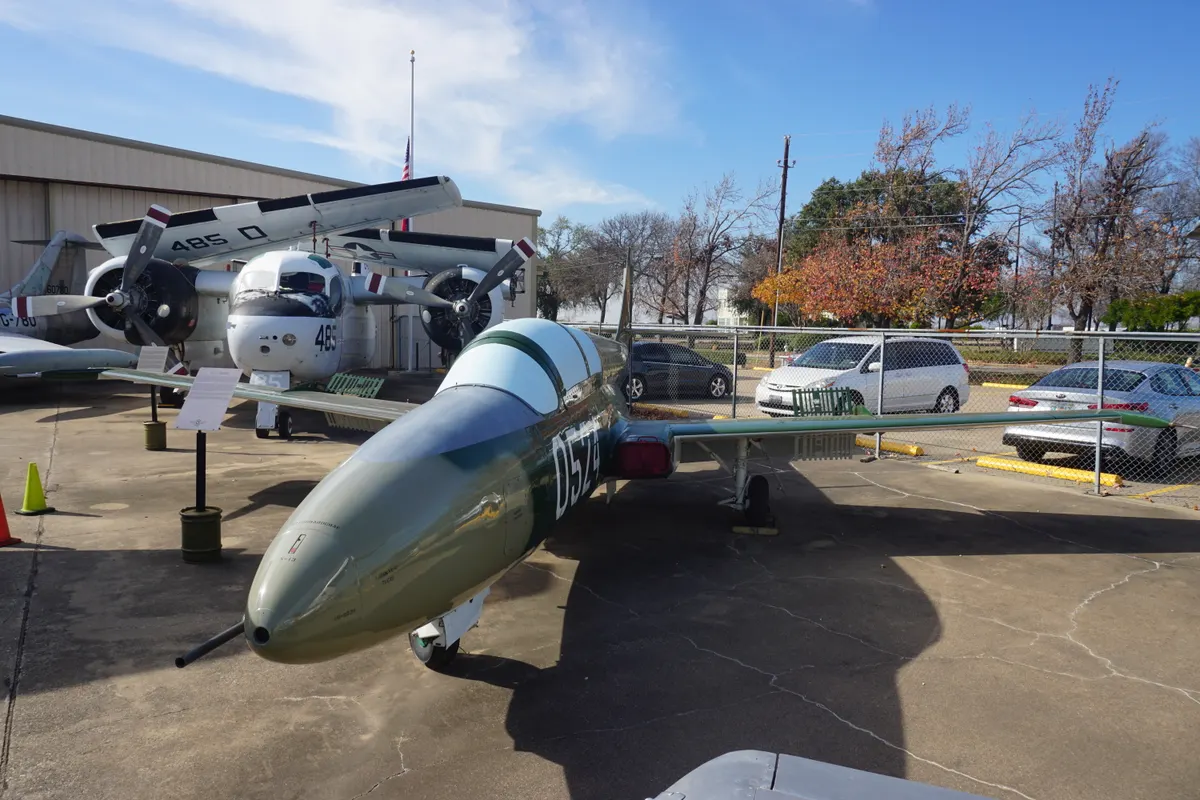
What makes the Iskra's story unusual is not the design itself, which is a conventional mid-wing, wing-root-intake jet trainer of its era, but what happened after Poland lost the 1961 Warsaw Pact competition to pick a single standard trainer for the whole alliance. The Czechoslovak Aero L-29 Delfín won that contest and went on to be built in the thousands for a dozen air forces. Poland's own delegation believed the Iskra had flown better in the side-by-side trials, and Warsaw simply declined to adopt the winner. It kept building and flying its own aircraft instead, for both the Polish Air Force and Polish Navy, for close to sixty more years.1,2
That decision left the Iskra an oddity: a trainer designed to meet a multinational standard, rejected by that standard, yet kept in frontline training service longer than almost any comparable Cold War jet trainer anywhere. It never received a NATO reporting name, unlike almost every other Eastern Bloc combat type of its generation, a small but telling sign of how little attention Western intelligence paid to an aircraft that only Poland, and later India, ever flew.1
India became the type's sole export customer. New Delhi bought an initial batch of 50 aircraft delivered between October 1975 and May 1976, followed by a further batch in the 1990s, and used them for advanced pilot training alongside the indigenous HAL HJT-16 Kiran.3 Polish-built and Polish-designed, the Iskra ended up training pilots on two different air arms, on two different continents, using a homegrown Polish turbojet that nobody outside the Eastern Bloc had ever heard of.
The WSK SO-3 Turbojet and Its Troubled Predecessor
The Iskra's single engine sits mid-fuselage, fed by intakes buried in the wing roots, with the exhaust exiting beneath a boom-mounted tailfin, a layout the aircraft's own designers admitted gave it "a fairly unusual silhouette" among jet trainers of the period.1 Early production aircraft from 1966 used the WSK SO-1, a Polish-designed turbojet rated at roughly 9.8 kN, but the SO-1 needed a full overhaul after only about 100 flying hours, a punishing maintenance burden for a training fleet flying constant circuits.7 From 1969 the improved WSK SO-3 replaced it, stretching the time between overhauls to roughly 400 hours; a later SO-3W variant pushed maximum thrust to 10.8 kN.1,7 Polish engineers spent years chasing down fatigue cracking in the SO-3's first-stage compressor blades and intermittent compressor stalls, problems eventually traced and corrected through dedicated diagnostic work rather than a wholesale redesign.7
- First Flight1960
- Service Entry Year1964
- Crew (seats)2
- Trainer Typejet trainer
- In ServiceNo
Cockpit, Ejection Seats, and the Boom-Tail Silhouette
Student and instructor sit in tandem under separate canopy sections, each with an ejection seat rated for use on the ground as well as in flight; early flight tests specifically verified that the seats could fire the pilot clear through the closed canopy in an emergency, not only after the canopy had been jettisoned.1 Fixed armament on combat-capable variants is a single nose-mounted Nudelman-Rikhter NR-23 cannon with 80 rounds, and four underwing hardpoints stressed for up to 400 kg of bombs, or Mars-4 pods carrying eight 57 mm S-5 unguided rockets each, or Zeus-1 gun pods.1 None of this is exotic by the standards of a 1960s trainer, but it made the Iskra genuinely light-attack capable rather than a pure unarmed schoolhouse jet, a distinction that mattered later when India sent armed examples to a real conflict zone.
- Engine TypeWSK SO-3
- Thrust10.8
The Iskra's airframe, cockpit systems, and armament integration were designed and built entirely in Poland by PZL-Mielec, with the aircraft's WSK SO-1 and SO-3 turbojets also of indigenous Polish design and manufacture by WSK-Rzeszów, a rarity among Eastern Bloc trainers that typically relied on Soviet-designed engines.1,7 The only meaningful non-Polish content sat in the earliest prototypes, which flew on an imported British Armstrong Siddeley Viper turbojet, and in later Indian Air Force airframes, which used some India-sourced avionics and instrumentation during overhaul cycles.1 By full production standard, the aircraft was close to entirely domestic by value, an unusual degree of self-sufficiency for a small Warsaw Pact state's aviation industry.
- Top Speed720 km/h
- Cruise Speed600 km/h
- Service Ceiling11,000 m
- Rate of Climb14.8 m/s
- Cockpit Configurationtandem two-seat
- Glass CockpitNo
- Embedded SimulationNo
- Light Attack CapableYes
- Hardpoints4
- Ejection SeatsYes
- Length11.15 m
- Max Takeoff Weight3,840 kg
- Total Built424
- Operators2
- Retirement Year2021
- Production Start1963
- Production End1987
- Operational StatusRetired
Tadeusz Sołtyk's Design and the 1960 First Flight
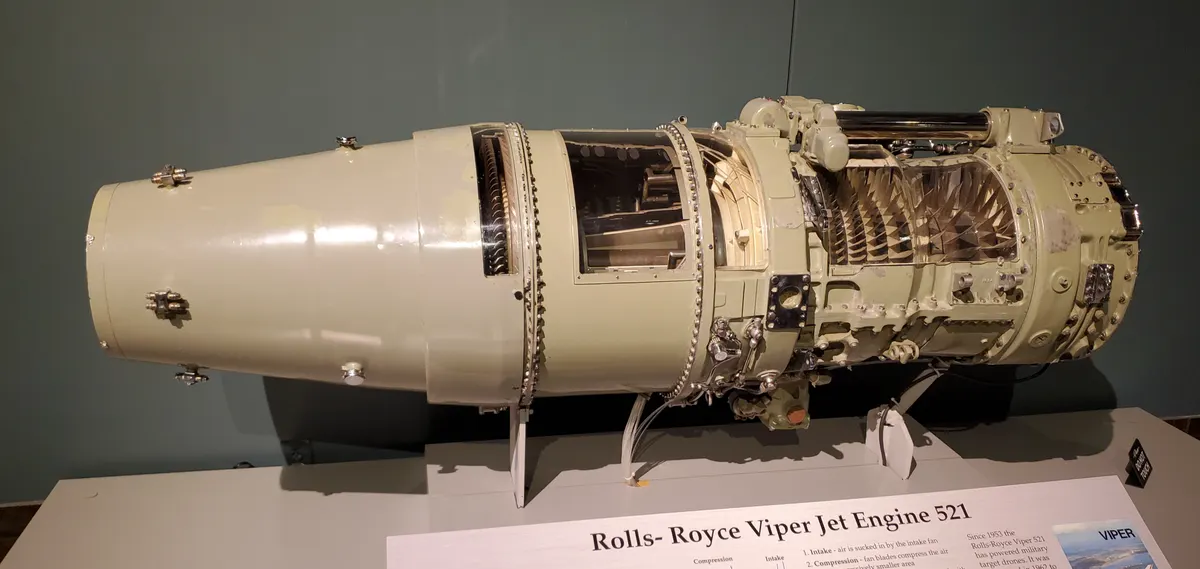
The Iskra grew out of a 1950s effort at Poland's Aviation Institute to keep a domestic jet design capability alive after Stalin's death loosened Moscow's grip on satellite-state aircraft programs.1 Chief designer Tadeusz Sołtyk led the project from the start, and the aircraft's designation, TS-11, carries his initials. The first prototype flew on 5 February 1960 with a borrowed Viper engine; two further prototypes followed in 1961 running on Polish-built Viper copies designated WSK HO-10, buying time until the SO-1 was ready.1,5 Production of the initial bis A version began at Mielec in 1963.
Losing the Warsaw Pact Trainer Contest to the L-29 Delfín
In August and September 1961, the Iskra was flown against the Czechoslovak Aero L-29 Delfín and the Soviet Yakovlev Yak-30 in comparative trials near Moscow, held to choose one aircraft as the standard basic jet trainer for every Warsaw Pact air force.2 By most technical accounts the Iskra came out ahead of the Yak-30 in climb and turn performance, and Polish test pilots argued it matched or beat the L-29 in handling and, at least at some points in the flight envelope, straight-line speed.2 The L-29 won anyway. Analysts have generally read the decision as political rather than technical, favoring a Czechoslovak industry that Moscow judged more central to the Pact's aviation base, though no side has ever produced a full public record of the scoring.2 It is worth stating plainly that this is where the record thins out: the detailed trial scoresheets, if they still exist, have not surfaced publicly, and claims of Iskra superiority rest mostly on Polish retrospective accounts rather than a neutral third-party verdict.
Poland's Lone Path: Continued Production After Rejection
Rather than adopt the L-29 like every other Warsaw Pact state, Poland kept building and flying its own design, becoming the sole Eastern Bloc operator of the Iskra.1 Production ran through nine variants over 24 years: the bis A initial trainer, the armed bis B, a small run of single-seat bis C reconnaissance conversions, the higher-payload bis D built in parallel for the home fleet and for export to India, and the multi-role bis DF that became the definitive late production standard.1
The Biało-Czerwone Iskry Display Team
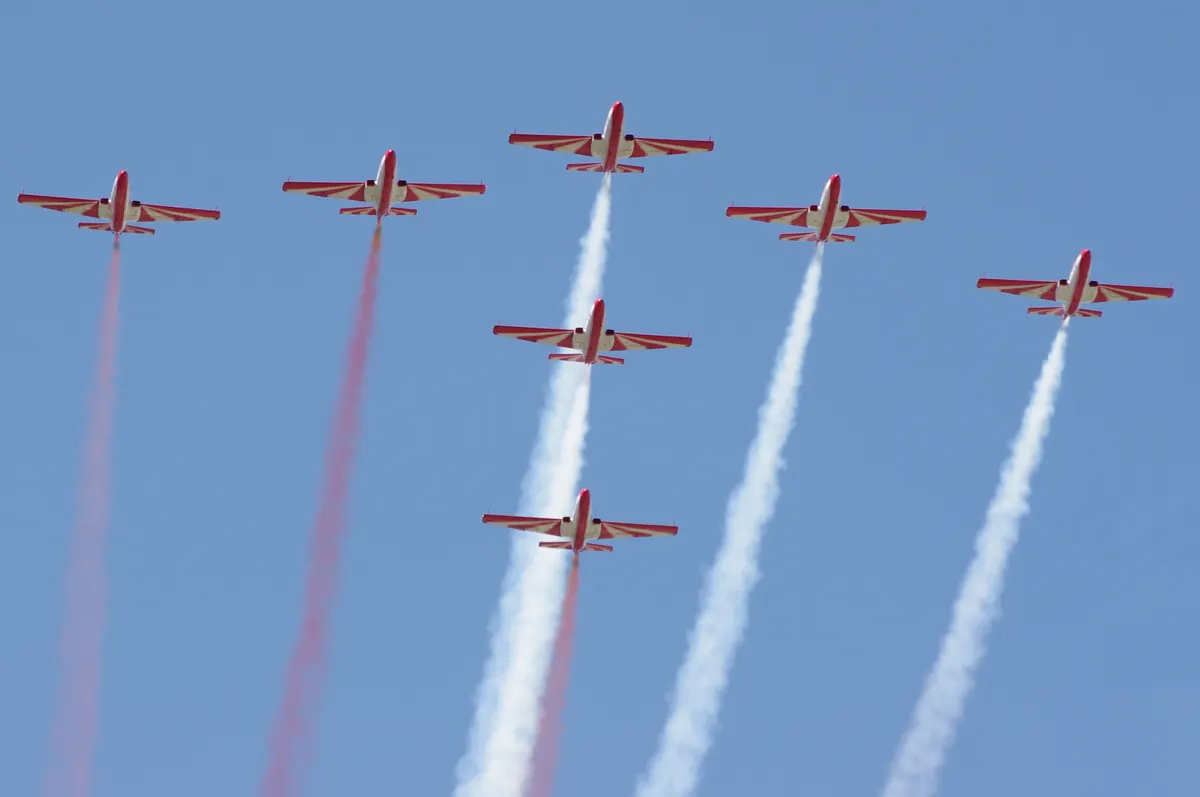
Poland formed its first Iskra-equipped aerobatic team, nicknamed Rombik, in 1969 at the 60th Training Aviation Wing in Radom; that team disbanded in 1981.4 A successor team gave its first display in Poznań on 5 July 1984, adopted the unofficial name Iskry ("Sparks") in 1989, and painted its aircraft in the white-and-red livery that gave the team its eventual full name, Biało-Czerwone Iskry, after relocating to the 1st Air Training Centre at Dęblin in 2000.4,9 A fatal accident during a weather-check flight on 11 November 1998 grounded the team for two years before it resumed flying.4
Retirement after Six Decades
The Polish Air Force flew its last Iskra training sortie on 9 December 2020, handing jet training duties to the Alenia Aermacchi M-346 Master; the aircraft used that day, serial 2001, was symbolically transferred to the Dęblin aviation museum.6 Biało-Czerwone Iskry flew the type's genuinely final Polish military display on 22 August 2021, with disarmed examples subsequently sold off to civilian warbird operators in the United States, Australia, and elsewhere.6,8
The Iskra was designed as a trainer, and for most of its career that is exactly what it did: it was never used in any war by the Polish Air Force. Its one documented brush with an actual shooting conflict came in Indian service. During the 1999 Kargil War, the Indian Air Force forward-deployed armed Iskras, fitted with their cannon and 57 mm rocket pods, to Srinagar air base specifically to intercept slow, low-flying reconnaissance drones crossing into Jammu; the Iskra's low minimum speed and light armament suited it to that narrow anti-UAV role better than the IAF's faster fighters.3

Losses in Indian service were otherwise a peacetime training story rather than a combat one. Six Iskras were written off in accidents over nearly three decades of IAF use, out of a fleet that logged more than 190,000 flying hours; the first loss came in June 1976, when a senior instructor testing spin recovery had to eject, after which the IAF restricted spinning in the type to a single turn.3,10
Poland's own accident record includes crashes in 1965, 1986, 1997, 1998, and 2001, several fatal, spread across six decades of intensive training use rather than clustered around any single design flaw.10
The bis A, delivered from 1963, was the baseline unarmed trainer; the bis B added the underwing hardpoints and cannon that made the Iskra light-attack capable, and became the most widely used early production standard.1 A small batch of bis C single-seaters, converted for reconnaissance work in the early 1970s, proved a dead end and were converted back into ordinary two-seat trainers by 1983.1 The bis D raised payload and became the export standard sold to India, while the bis DF, built from the mid-1970s into the late 1980s, combined the armament of the bis B with updated equipment and became the definitive late-production version flown by both the Polish Air Force and Navy into the 2000s.1

A separate naval branch produced six Iskra R conversions in the early 1990s, fitted with an American-made RDS-81 weather radar and GPS, and flown by the Polish Navy's 3rd Air Squadron at Siemirowice for a decade of maritime reconnaissance training, a stopgap solution adopted because Poland lacked a purpose-built naval reconnaissance aircraft at the time.1 A single-seat attack and reconnaissance prototype, the BR200, flew in 1972 but never reached production. Poland's planned jet-trainer successor, the PZL I-22 Iryda, was meant to replace the Iskra outright from the late 1980s; chronic development problems meant only a handful were ever completed, and the Iskra ended up soldiering on for another three decades past its intended retirement date.1


Poland was the aircraft's only military operator among the Warsaw Pact states, flying it continuously with the Polish Air Force, and later the Polish Navy, from 1963 until December 2020 for front-line training and into 2021 for the display team.1,6 India was the sole export customer, taking 50 aircraft from 1975 and a further batch in the 1990s, and running them until an official withdrawal ceremony on 16 December 2004 marking nearly 29 years of Indian Air Force service and around 1,500 trained pilots across 54 courses.3
No third country ever bought the Iskra, a direct consequence of losing the 1961 Warsaw Pact trial: the L-29, and later its L-39 Albatros successor, absorbed almost the entire Eastern Bloc trainer export market that a win would have opened to Poland.1,2
The natural comparison is the aircraft that actually won the contest the Iskra lost: the Aero L-29 Delfín. On paper the two are close. The Delfín's Motorlet M-701 turbojet produces roughly 8.7 kN of thrust, noticeably less than the Iskra's 9.8 to 10.8 kN depending on engine mark, and period test reports credited the Polish design with a tighter turn and a faster climb, exactly the qualities Polish trial pilots pointed to when arguing they had built the better trainer.1,2 The L-29 answers back with a simpler, more forgiving airframe that Soviet-aligned mechanics with limited jet experience could maintain in large numbers, and with a straight-line top speed that some sources place as high as 655 to 800 km/h in its later production series against the Iskra's 720 km/h, though these figures are measured under different conditions and are not directly comparable.1,2
| Spec | PZL TS-11 Iskra | Aero L-29 Delfín |
|---|---|---|
| Engine thrust | 9.8 to 10.8 kN (SO-3/SO-3W) | ~8.7 kN (M-701) |
| Top speed | 720 km/h | 655 to 800 km/h (source-dependent) |
| Service ceiling | 11,000 m | 11,000 to 11,500 m |
| Rate of climb | 14.8 m/s | ~14 m/s |
| Total built | 424 | over 3,600 |
The production gap is the real story the specification sheet cannot tell on its own. The L-29 was built in the thousands and exported across the Warsaw Pact and beyond; the Iskra topped out at 424 airframes and one export customer. Poland's decision to keep flying an aircraft it believed was better, in a market where "better" mattered less than "adopted by Moscow's chosen supplier," meant the Iskra never got the production runs, the parts commonality, or the export revenue that scale brings. It got six extra decades of active Polish service instead, a trade the L-29's operators, most of whom retired their Delfíns by the 1990s, never had the chance to make.1,2


How many PZL TS-11 Iskra were built? Poland built 424 Iskras between 1963 and 1987 across roughly nine production variants, split between the Polish military and a single export customer, India.1
What engine powers the TS-11 Iskra, and how much thrust does it produce? Production aircraft used the Polish WSK SO-1 turbojet at first, replaced from 1969 by the improved WSK SO-3, rated around 9.8 kN, with a later SO-3W version reaching 10.8 kN.1,7
Is the TS-11 Iskra still in service? No. The Polish Air Force flew its last training sortie in December 2020 and the Biało-Czerwone Iskry display team gave its final performance in August 2021; disarmed airframes now fly only in private warbird hands.6,8
How does the TS-11 Iskra compare to the Aero L-29 Delfín? The Iskra had a somewhat more powerful engine and reportedly better handling in the 1961 Warsaw Pact trials, but the L-29 won the standardization contest, went into far larger production, and became the far more widely exported of the two.1,2
What was the TS-11 Iskra's top speed? Most production variants are credited with a maximum speed of 720 km/h at altitude; a specially prepared 1960s prototype briefly reached 839 km/h during a record attempt, a figure well above normal operating limits.1
- "PZL TS-11 Iskra", Wikipedia — en.wikipedia.org ↩
- "Aero L-29 Delfín", Wikipedia — en.wikipedia.org ↩
- "Iskras In The IAF Service", Bharat Rakshak — bharat-rakshak.com ↩
- "Bialo-Czerwone Iskry History", Aerobatic Teams — aerobaticteams.net ↩
- "Today in Aviation History: First Flight of the PZL TS-11 Iskra", Vintage Aviation News — vintageaviationnews.com ↩
- "Polish Air Force withdraws TS-11 Iskra and hands over training task", Scramble — scramble.nl ↩
- "Expert System to Support Operational Safety of the TS-11 Iskra Aircraft and Overhauls of the SO-3 Engines", NDT.net — ndt.net ↩
- "Unraveling the Legends of the Sky: The TS-11 Iskra Warbird", Platinum Fighters — platinumfighters.com ↩
- "White-and-Red Sparks", Wikipedia — en.wikipedia.org ↩
- "PZL-Mielec TS-11 Iskra", Aviation Safety Network — aviation-safety.net ↩