

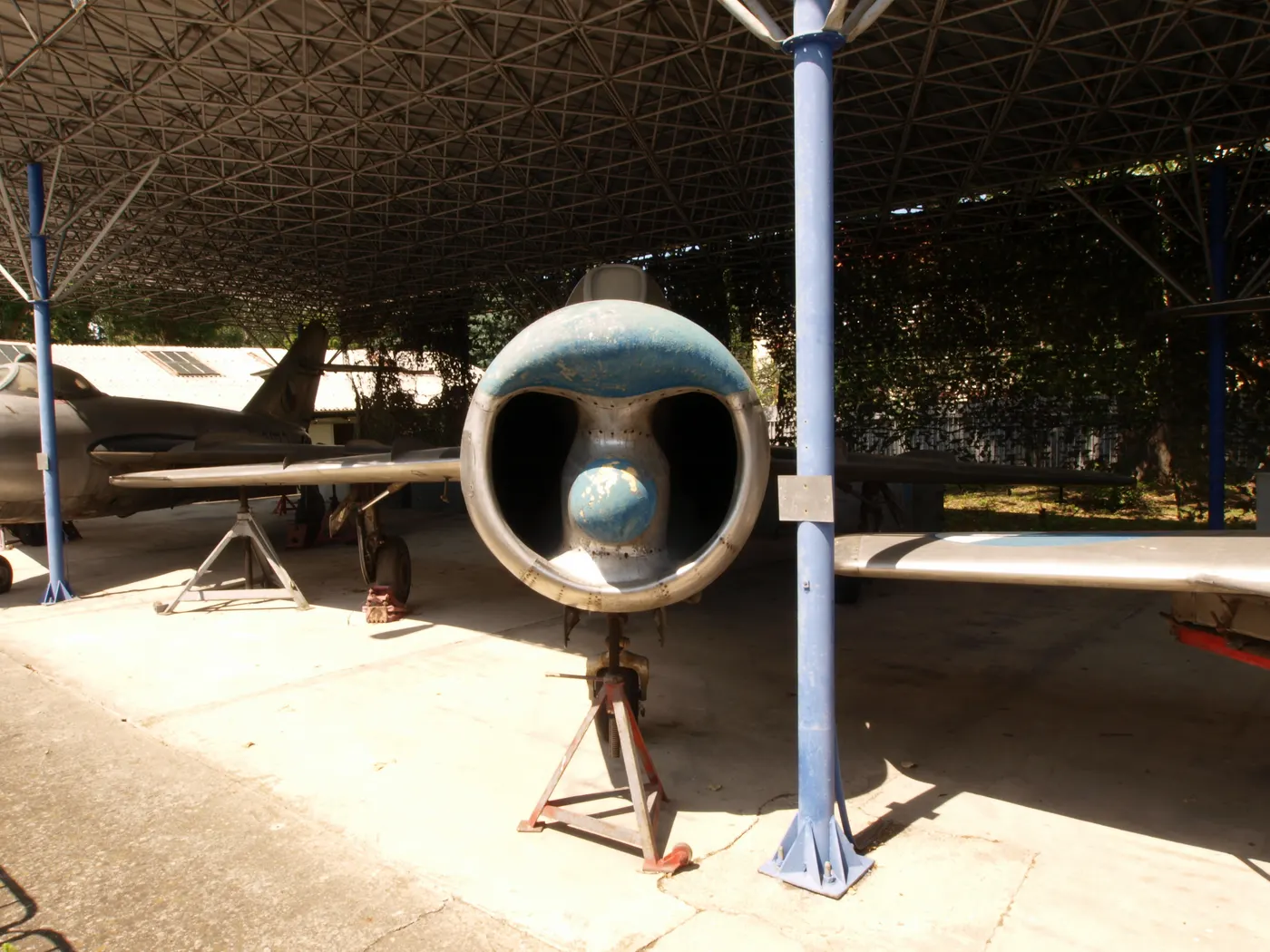

The MiG-15UTI is the two-seat, dual-control trainer version of the Mikoyan-Gurevich MiG-15 swept-wing fighter, given the NATO reporting name "Midget." Mikoyan's bureau stretched the single-seat fuselage by roughly 250mm ahead of the wing to fit a second, elevated cockpit behind the student's position, keeping the wings, tail, landing gear, and armament layout otherwise close to the fighter it was based on.1 The prototype, internally designated I-312T (also referred to as the ST), first flew in January 1949, a little over a year after the single-seat fighter's own December 1947 debut, and production deliveries followed that spring.1,5
- Simple, well-proven MiG-15 airframe and systems
- Forgiving, docile handling at training speeds
- Rugged construction, easy field maintenance
- Enormous worldwide production and spares base
- Genuine air-combat-fighter performance for lead-in training
- Cramped rear cockpit with poor forward visibility for the instructor
- Early, unreliable gunpowder-cartridge ejection seats
- Thirsty centrifugal-flow engine limits endurance
- No factory two-seat successor left it in service far past its prime
- Sluggish throttle response and marginal brakes by modern standards
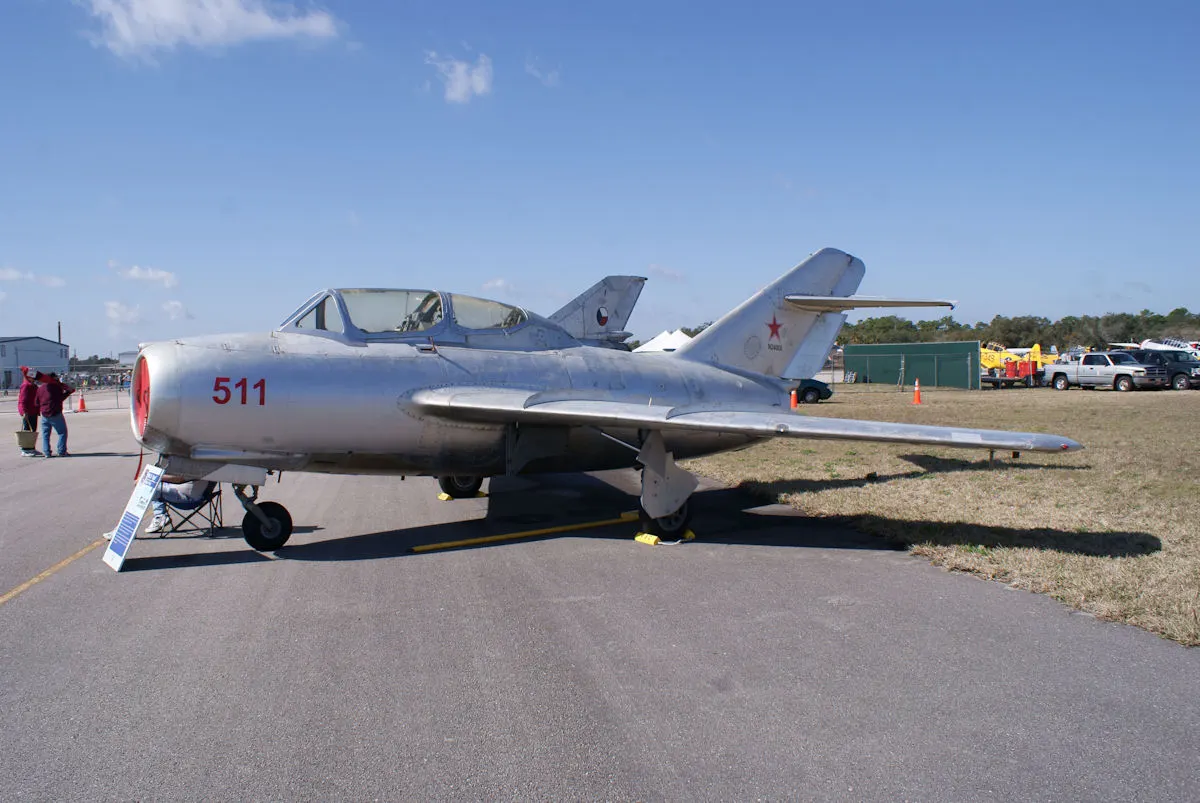
What makes the aircraft historically significant is less its own performance than an accident of Soviet procurement. Mikoyan-Gurevich never put a factory two-seat trainer version of the later, faster MiG-17 or MiG-19 into mass production, so the MiG-15UTI, despite being tied to a fighter that Soviet frontline units retired from combat duty within a decade of its introduction, remained the standard advanced jet trainer of the Soviet Union and the Warsaw Pact for roughly three decades.1 Generations of pilots who eventually flew MiG-17s, MiG-19s, MiG-21s, and beyond made their first tandem-jet flights in a Midget, and only the arrival of the purpose-built Aero L-29 Delfin from 1963, and later the L-39 Albatros, gradually took over the bulk of that training load across the Eastern Bloc.1
Production reached at least 5,446 airframes across the Soviet Union and Czechoslovakia alone, before counting Polish conversions and a further Chinese production run, making the Midget one of the most numerous dedicated jet trainers ever built.1,4 It went on to serve with somewhere in the region of thirty air forces on every populated continent, from Warsaw Pact core states to Cuba, Egypt, Finland, Indonesia, Mongolia, Nigeria, and Vietnam, and a handful of examples remain in North Korean service today, alongside a modest but active population in Western civilian hands.1,7
Because it descends so directly from a Korean War-era fighter, the MiG-15UTI is a relatively simple, unglamorous airplane by later trainer standards: unpressurized systems by modern norms, a centrifugal-flow turbojet with none of the refinement of later axial-flow engines, and a rear cockpit that pilots checking out on the type still describe as cramped and short on forward visibility.7 What it offers instead is honest, forgiving handling at training speeds, a genuinely rugged and well-understood airframe, and a production run large enough that spare Midgets and Midget-derived airframes turn up in museums and private hangars worldwide six decades after the type stopped rolling off any assembly line.
The Klimov RD-45F and Its British Ancestry
Most production MiG-15UTIs, like the single-seat MiG-15 they derive from, were powered by a single Klimov RD-45F centrifugal-flow turbojet rated at about 22.3 kN (2,270 kgf, roughly 5,000 lbf) of static thrust, giving the trainer a top speed of around 1,015 km/h at 3,000 meters and a service ceiling near 14,800 meters.3 The RD-45 family is not an original Soviet design in its origins: it is a reverse-engineered and then licensed derivative of the British Rolls-Royce Nene, a batch of which the United Kingdom's postwar Labour government controversially agreed to sell to the USSR in 1946 to help pay wartime debts, only for Soviet engineers under Vladimir Klimov to copy and mass-produce the design almost unchanged.1 A distinct, later production thread used the more powerful Klimov VK-1, an enlarged derivative of the same Nene lineage rated closer to 26 kN (about 2,600 kgf); it powered the definitive MiG-15bis fighter and some MiG-15bis-derived trainer conversions, though it was never the standard engine of the mainline UTI production run, and its higher fuel burn measurably shortened range compared with the RD-45F-powered majority.1,7
- First Flight1947
- Service Entry Year1949
- Crew (seats)2
- Trainer Typeadvanced trainer
- In ServiceYes
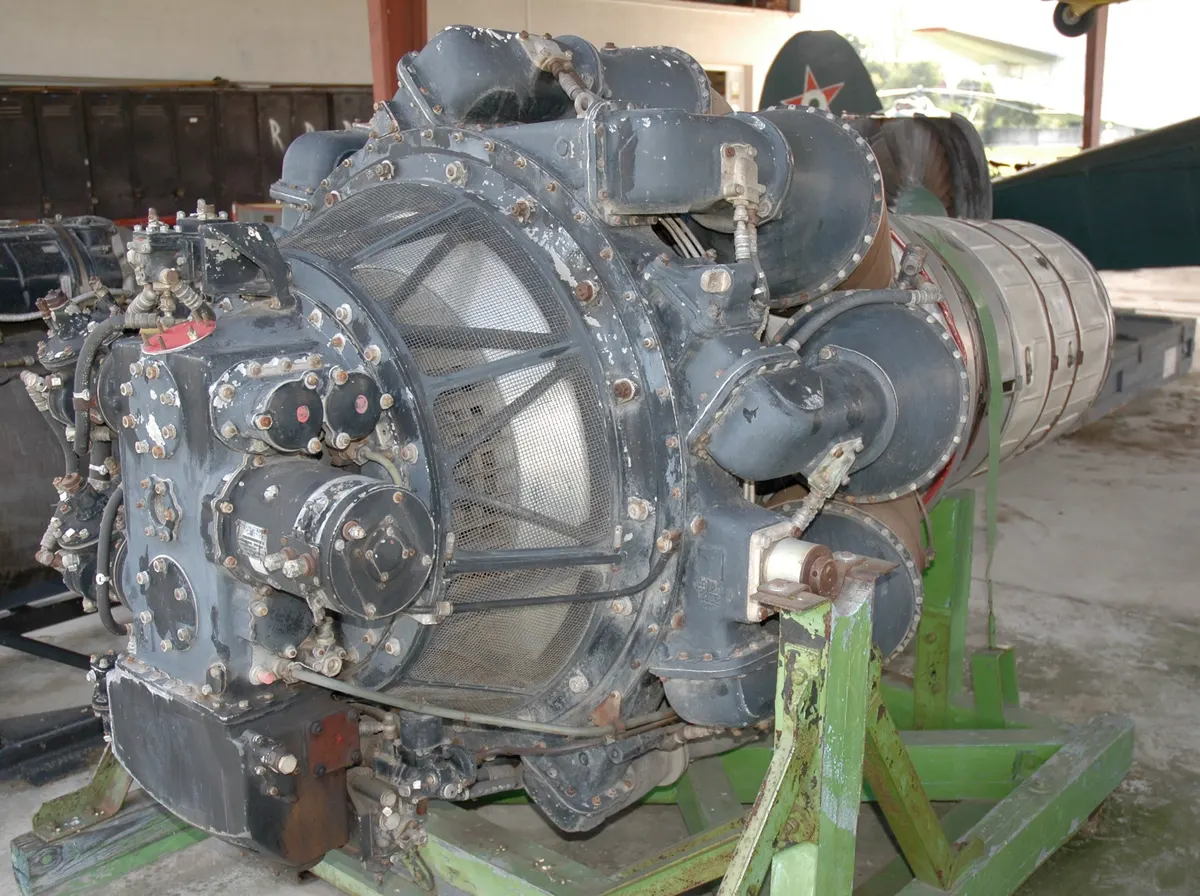
Airframe dimensions changed only modestly from the single-seat fighter: length grew to about 10.11 meters, wingspan stayed close to 10.09 meters, and height rose slightly to about 3.70 meters, figures within centimeters of the single-seater apart from the lengthened forward fuselage.3,4 Empty weight ran around 3.69 tonnes and maximum takeoff weight about 5.4 tonnes, somewhat lighter than a fully armed single-seat MiG-15bis because the trainer usually carried reduced or no cannon armament to make room for the second cockpit's structure and equipment.3 Internal fuel alone gave a range of roughly 950 km; underwing drop tanks, where fitted, extended that to as much as 1,425 km, though pilots who fly the type today still describe fuel planning as unforgiving, with consumption around five gallons a minute and only about ninety minutes of endurance even with tanks.3,7
- Thrust26
Tandem Cockpit and Handling: A Fighter Cockpit Behind a Fighter Cockpit
The defining physical change from fighter to trainer was the second cockpit, fitted directly behind the front seat under an extended, hinged canopy, with the instructor's position raised slightly to improve his view over the student's head.1 In practice, pilots who have flown restored examples describe the rear seat as tight and poorly glazed by modern standards, "like a booby-trapped cage" compared with later Warsaw Pact trainers such as the Aero L-39, with most cockpit placards still in Cyrillic and an attitude indicator whose brown-over-blue orientation is inverted relative to Western instruments, a detail that has caught out unwary Western civilian pilots on instrument approaches.7 Both seats retained the MiG-15's original explosive-cartridge ejection seat, a 1940s-vintage system with no zero-altitude or zero-airspeed capability and a documented history of injuring or killing pilots who used it, a fact civilian instructors brief new students on emphatically before every flight.7
- Top Speed1,000 km/h
- Range1,200 km
Handling itself earned a better reputation than the cockpit ergonomics. At low speed the ailerons lose authority below roughly 140 knots, leaving the aircraft to "wallow" rather than roll cleanly and capping practical crosswind landings at about 20 knots, and the centrifugal-flow engine is sluggish to accelerate, needing noticeably more runway to get moving than later trainers.7 Once established in cruise or a dive, though, pilots describe the controls as balanced and the aircraft as more pitch-stable than later types like the L-39, a legacy of a wing and tail designed for a genuine transonic fighter rather than a docile basic trainer.1,7 That fighter-derived performance was, in fact, the entire point: air forces that adopted the Midget got a trainer whose flying qualities closely matched the single-seat MiG-15s and, to a useful degree, the MiG-17s their students would fly operationally, at a time when no factory two-seat version of those later fighters existed.
- Cockpit Configurationtandem
Domestic Content
The standard Soviet-built MiG-15UTI was, airframe and systems, an entirely domestic Soviet product, manufactured at the same state aircraft plants that built the single-seat MiG-15 and assembled by Mikoyan-Gurevich's own design bureau.1 The one significant imported element, by lineage rather than by literal supply chain, was the engine: the standard Klimov RD-45F was a licensed, reverse-engineered copy of the British Rolls-Royce Nene, itself acquired through a 1946 Anglo-Soviet engine sale, though by the time production MiG-15UTIs were being built the RD-45 was manufactured entirely within the USSR under Klimov's design leadership.1 License-production countries changed this picture further downstream: Czechoslovakia's Aero Vodochody plant and Poland's WSK-Mielec factory built their CS-102 and SBLim variants domestically under license, while China's Shenyang plant eventually built its JJ-2 derivative with a locally produced Wopen-5 copy of the same Nene-derived engine, making each national production run close to fully domestic in manufacture even though the underlying design and much of its intellectual property remained Soviet, and ultimately British, in origin.1,6
- Length10.1 m
- Wingspan10 m
- Height3.5 m
- Max Takeoff Weight6,800 kg
- Total Built5,446
From I-312T Prototype to Warsaw Pact Standard
Design work on a two-seat trainer conversion began in 1948, a year after the single-seat MiG-15 fighter's own first flight, once it became clear that pilots transitioning directly from propeller trainers into a swept-wing, transonic jet needed a dual-control intermediate step.1 The resulting prototype, the I-312T, flew for the first time in January 1949, and production aircraft, distinguished from the fighter mainly by the lengthened forward fuselage and second cockpit, began reaching Soviet training units that same year.1,5 Soviet pilots reportedly gave the type an affectionate nickname along the lines of "grandmother," a nod to how comparatively docile and unthreatening it seemed once pilots had mastered it, in contrast to the single-seat fighter's sharper reputation.5
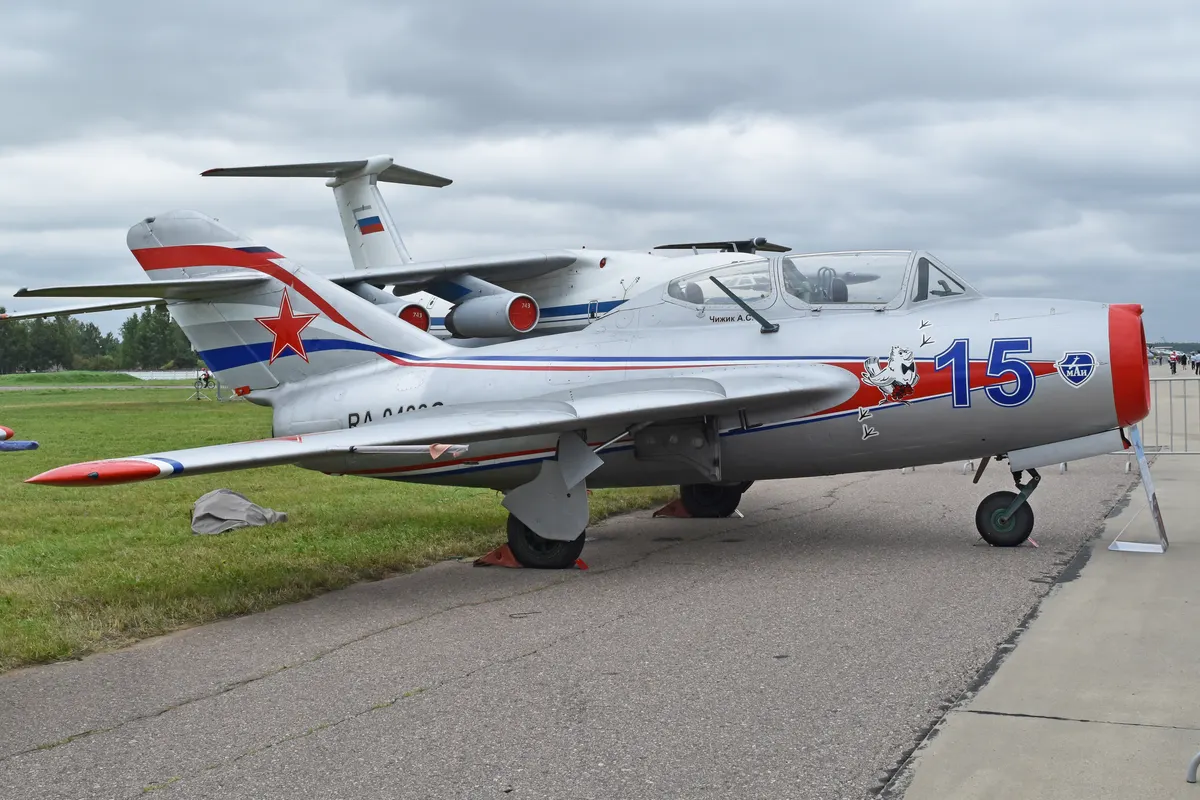
Soviet production alone reached 3,434 two-seaters, and Czechoslovakia's Aero Vodochody plant, building the type under the local designation CS-102 (with a related S-103 designation used at points in its production run), added a further 2,012 between 1954 and 1961, for a combined total of 5,446 from these two countries alone.1,5 Aero Vodochody kept only 155 of its own CS-102s for Czechoslovak service and exported the remaining 1,857, the largest single export block, 1,417 aircraft, going back to the Soviet Union itself to supplement Soviet-built production.1 Poland's WSK-Mielec plant added smaller numbers of SBLim-1 and SBLim-2 trainers, many of them remanufactured from existing single-seat Lim (Polish-built MiG-15/MiG-15bis) airframes rather than built new, and China's Shenyang factory eventually built its own JJ-2 derivative, with estimates of Chinese production ranging from roughly 120 to several hundred airframes depending on the source.1
27 March 1968: The Death of Yuri Gagarin
The MiG-15UTI's best-known moment in world history has nothing to do with training pilots. On 27 March 1968, cosmonaut Yuri Gagarin, the first human to fly in space, took off from Chkalovsky Air Base near Moscow at 10:18 a.m. in a MiG-15UTI (serial 612739, built at Aero Vodochody in March 1956) alongside instructor pilot Colonel Vladimir Seryogin for what was meant to be a routine roughly twenty-minute training sortie.2 Gagarin radioed that the exercise had been completed at 10:27; contact was lost around 10:30, and the aircraft crashed near the village of Novosyolovo in Vladimir Oblast at approximately 10:31, killing both men instantly.2
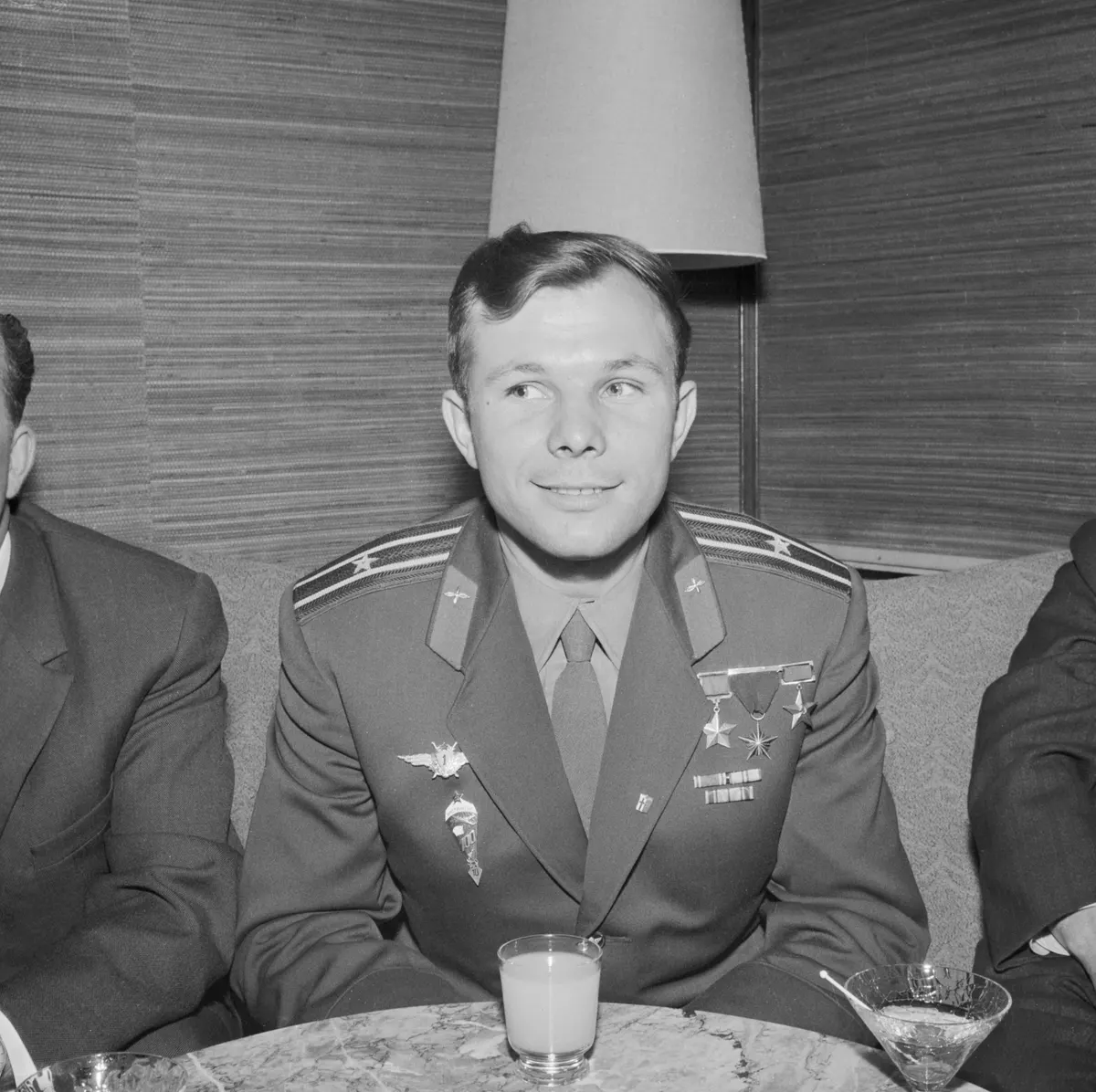
At least three separate investigations, by the Air Force, a government commission, and the KGB, produced a 29-volume report that remained classified for decades, and the exact cause is still disputed more than half a century later.2 The government's official finding was that an abrupt evasive maneuver, prompted by unspecified "changes in the air environment," sent the aircraft into a spin from which the crew could not recover, and investigators explicitly found no mechanical fault with the airplane itself.2 Competing theories advanced since include a bird strike or evasive turn gone wrong, a since-declassified KGB report's suggestion; a half-open cabin ventilation valve that may have caused oxygen starvation and a disorienting emergency descent; cosmonaut Alexei Leonov's account that an unauthorized Sukhoi Su-15 passed within 15 to 20 meters of the MiG-15UTI at supersonic speed, its wake vortex flipping the smaller aircraft into an unrecoverable spin; and a version, attributed to the former head of cosmonaut training, that Seryogin suffered a heart attack, unbuckled from his own harness in distress, and in doing so fouled the flight controls while Gagarin tried in vain to help him and fly the aircraft at the same time.2 Forensic evidence that Gagarin's hand bones were broken in a way consistent with gripping the controls at impact is often cited as support for that last theory, though, as with every other explanation offered, it remains unproven.2
A Persistent Safety Record
Gagarin's death was the most famous MiG-15UTI accident, but far from the only serious one, a reflection of both the type's age and its dated ejection and flight-control systems rather than any single design flaw. A civilian-registered MiG-15UTI that took off from Canberra Airport, Australia, on 13 March 1993 entered a steep, unrecoverable nose-down attitude roughly four kilometers from the runway and crashed, killing both occupants; Australian investigators traced the accident to an engine over-temperature condition, probably caused by an internal failure in one of the aircraft's two engine fuel pumps.8 Incidents like this help explain why modern civilian operators of the type treat it with considerably more caution than most piston-engine warbirds, restricting type training to experienced pilots with instrument ratings and several hundred hours already logged, and generally insisting on time in a more modern jet trainer such as the L-29 or L-39 first.7
The Suez Crisis: Trainers Caught in a Real War
The MiG-15UTI's most direct brush with combat came not through its own actions but through being caught on the ground. In 1955, Syria placed an order that included 24 MiG-15bis fighters and four MiG-15UTI conversion trainers from Czechoslovakia; delivery, routed through Egypt, was completed by October 1956, but Egyptian and Syrian pilots and ground crews were still working up on the new jets when Israel, followed by Britain and France, invaded Egypt during the Suez Crisis that October and November.1 British air attacks on Abu Suweir air base destroyed twenty Egyptian MiG-15bis fighters and one MiG-15UTI trainer on the ground; three other MiG-15UTIs were evacuated in time, flown out via Saudi Arabia and Jordan to safety in Syria.1
Beyond that episode, the type's role in most later Middle Eastern and Southeast Asian conflicts was firmly behind the front line. Egypt and Syria continued flying MiG-15UTIs as conversion trainers alongside their MiG-15bis fleets into the 1970s and early 1980s respectively, feeding pilots toward more capable MiG-17s, MiG-19s, and MiG-21s rather than fighting in the trainers themselves.1 North Vietnam received MiG-15UTIs as part of a February 1964 Soviet aid package that also included MiG-17 fighters, and used them exclusively for pilot training; no MiG-15 of either configuration is recorded flying combat sorties against American aircraft during the Vietnam War, unlike the MiG-17s and MiG-21s the Midget helped prepare pilots to fly.1
Aero Vodochody CS-102/S-103: The Biggest License Run
Czechoslovakia's Aero Vodochody plant built the largest license-production run of the trainer outside the Soviet Union itself, completing 2,012 aircraft under the designation CS-102 between 1954 and 1961, with some documentation also referencing an S-103 designation within the same broad production family.1,5 Deliveries ran in significant batches nearly every year of that span, and, as noted above, the great majority went to export customers rather than Czechoslovakia's own air force, most strikingly a batch of 1,417 that went to the Soviet Union to supplement domestic Soviet output.1
Poland's SBLim-1 and SBLim-2
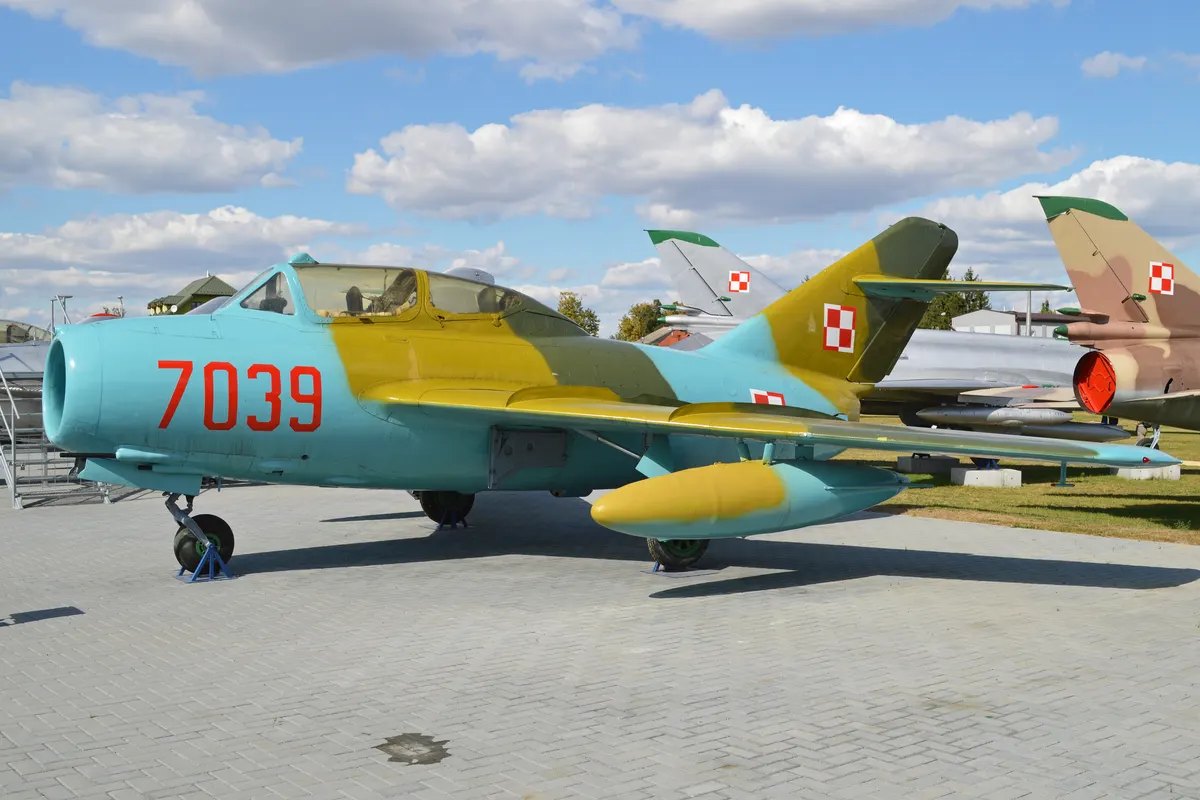
Poland's WSK-Mielec plant, already building single-seat Lim-1 and Lim-2 fighters (its designations for the MiG-15 and MiG-15bis), produced the SBLim-1 and SBLim-2 trainer conversions, a substantial share of which were remanufactured from existing Polish-, Czechoslovak-, or Soviet-built single-seat airframes rather than assembled as new-build trainers from the outset.1 Several SBLim-2s survive today in Western museum and warbird collections, among the more commonly encountered Midget variants on the airshow circuit because of the relatively large number that reached the civilian market after the Cold War.1
China's JJ-2/FT-2 and Its Long Afterlife
China initially received MiG-15UTIs as imports alongside its purchase of MiG-15 fighter know-how in the early 1950s, then began building its own version domestically at the Shenyang aircraft factory under the designation JJ-2 (exported as the FT-2), fitting a Chinese-built Wopen-5 turbojet, itself a licensed copy of the same Nene-derived engine family, in place of the Soviet RD-45F.1,6 Chinese production estimates vary considerably by source, from roughly 120 to several hundred airframes, reflecting how much of the Chinese effort blended imported components with locally built ones during the transition to full domestic manufacture.1 The JJ-2's influence outlasted its own production run: when China needed a two-seat trainer for its later Shenyang J-5 (MiG-17 derivative) fighter, engineers at Chengdu based the new JJ-5's tandem cockpit section directly on the JJ-2's, rather than designing one from scratch, extending the original MiG-15UTI cockpit layout's service life by another generation of Chinese jets.6
 AfghanistanACTIVE
 AlbaniaACTIVE
 AngolaACTIVE
 North KoreaACTIVE
 AlgeriaRETIRED
 ArgentinaRETIRED
 BulgariaRETIRED
 CambodiaRETIRED
 CubaRETIRED
 Czech RepublicRETIRED
 EgyptRETIRED
 FinlandRETIRED
 GermanyRETIRED
 GuineaRETIRED
 HungaryRETIRED
 IndonesiaRETIRED
 IraqRETIRED
 MaliRETIRED
 MongoliaRETIRED
 MoroccoRETIRED
 MozambiqueRETIRED
 NigeriaRETIRED
 PakistanRETIRED
 PolandRETIRED
 RomaniaRETIRED
 RussiaRETIRED
 SomaliaRETIRED
 Sri LankaRETIRED
 SyriaRETIRED
 UgandaRETIRED
 United StatesRETIRED
 VietnamRETIRED
 YemenRETIRED
The Soviet Union and the Warsaw Pact Core
The Soviet Air Forces were the largest single operator, using the MiG-15UTI as the standard pipeline aircraft for essentially every Soviet jet fighter pilot from the early 1950s well into the 1970s, before the L-29 and L-39 progressively absorbed the basic and intermediate stages of that training and left the Midget for later, fighter-specific conversion work.1 East Germany, Czechoslovakia, Poland, Hungary, Romania, and Bulgaria all flew Soviet- or Czechoslovak-built examples in the same role, making the type as ubiquitous across the Warsaw Pact as the T-33 was across NATO air forces in the same period.1
Finland: A Trainer Without the Fighter
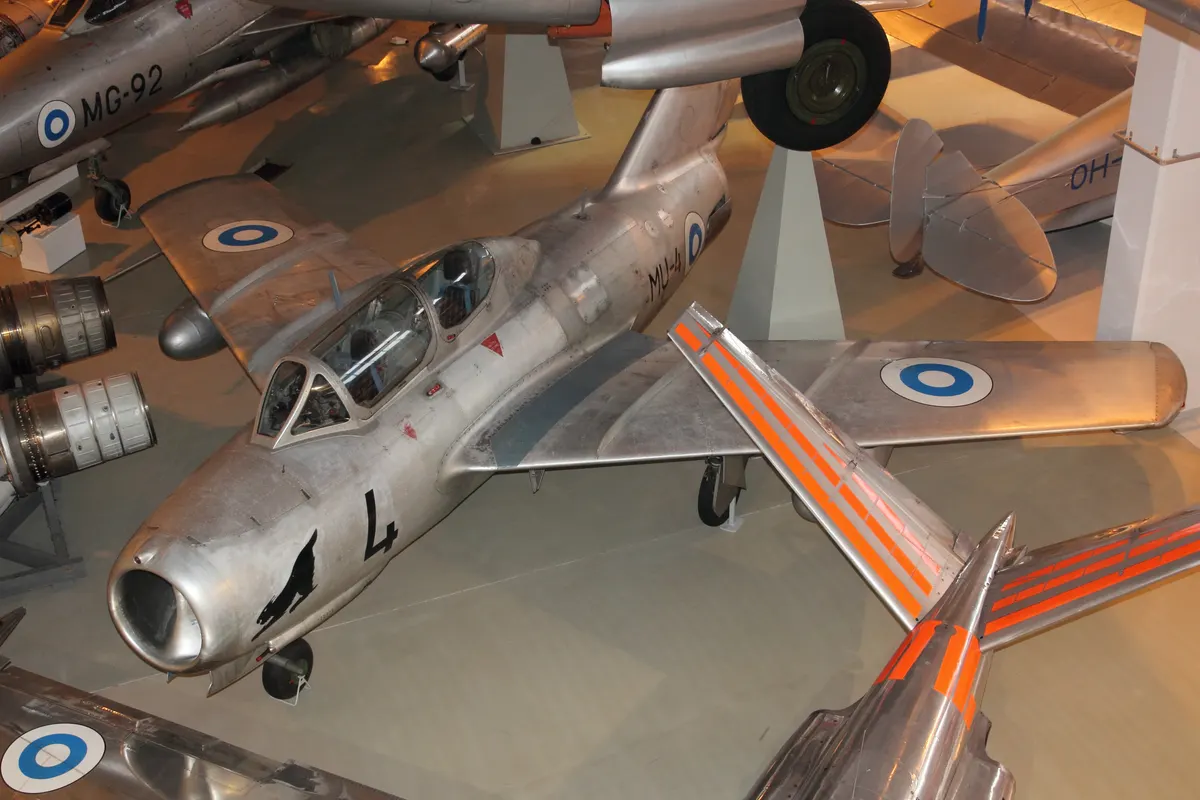
Finland is the rare case of an air force that operated the MiG-15UTI without ever flying the single-seat MiG-15 fighter it derives from. Facing a gap in 1962 between the piston-adjacent Fouga Magister and the newly ordered MiG-21, which had no two-seat variant available yet, the Finnish Air Force ordered four MiG-15UTIs that January, took delivery that November, and used them as an interim fast-jet trainer until 1977.9 Finnish pilots reportedly nicknamed the type "Mukelo," roughly "ungainly," and the aircraft's mismatch with the far more advanced MiG-21 it was meant to prepare pilots for, combined with weak brakes and dated avionics, meant it served a comparatively short career in Finnish colors before retirement.9 Three examples survive today in Finnish aviation museums.9
Wider Export: Middle East, Africa, and Asia
Beyond the Warsaw Pact and Finland, the MiG-15UTI reached air forces across the developing world through Soviet military assistance and export sales. Egypt and Syria used it for MiG-15/MiG-17 pilot conversion from the mid-1950s; Indonesia flew MiG-15UTIs (alongside single-seat MiG-15s) as part of pilot preparation ahead of the 1962 Operation Trikora campaign in western New Guinea; Nigeria's air force operated the type as a jet trainer; Mongolia took delivery of four in 1970, its first jet aircraft of any kind alongside a parallel MiG-17 order; and North Vietnam received Midgets as part of a 1964 Soviet aid package used purely for training rather than combat.1
North Korea: The Last Military Operator
North Korea is the only air force still known to fly the MiG-15 family in any military capacity, and its inventory includes MiG-15UTI trainers used for advanced instruction alongside single-seat MiG-15s that have long since been retired everywhere else, a reflection of the country's chronic difficulty replacing aging Soviet- and Chinese-era airframes with newer types.1
Civilian Warbirds Today
Outside military service, a genuine population of MiG-15UTIs, mostly Polish SBLim-2s and Czechoslovak CS-102s imported to the West after the Cold War, now flies as privately owned civilian jets, primarily in the United States. Specialist operators offer type training and orientation flights, but treat the aircraft with more caution than most piston warbirds: applicants typically need an instrument rating and 500 hours or more as pilot in command, instructors recommend time in a more modern jet trainer first, and briefings emphasize the type's dated, largely unsurvivable ejection seats before every flight.7
MiG-15UTI vs Lockheed T-33 Shooting Star: Parallel Fighter Conversions
The closest conceptual counterpart to the MiG-15UTI is the American Lockheed T-33 Shooting Star, and the parallel runs deeper than nationality. Both aircraft were created the same way: by taking an existing single-seat fighter, the MiG-15 in one case and the Lockheed P-80 in the other, and stretching the fuselage to add a second, elevated cockpit with dual controls, while leaving wings, tail, and engine essentially untouched.1 Both ended up wildly outliving the combat relevance of the fighters they were derived from, and both became the default advanced jet trainer of an entire alliance bloc for decades. The clearest difference is how each side handled the successor problem: the United States kept building purpose-designed jet trainers, the T-37 and T-38, relatively promptly after the T-33, whereas the Soviet Union left the MiG-15UTI without a factory-built two-seat successor for the MiG-17 or MiG-19, forcing it to soldier on as the sole option well into the 1970s until the Czechoslovak-built L-29 and L-39 filled the gap from outside the fighter lineage entirely rather than from within it.1 Performance-wise the two were fairly close for their era, with the RD-45F-powered Midget's roughly 1,015 km/h top speed slightly ahead of a clean T-33's approximately 965 km/h, though the American aircraft carried a longer-legged range on internal fuel and enjoyed a notably better-regarded, more spacious rear cockpit.1,3
MiG-15UTI vs Aero L-29 Delfin: Fighter Trainer Meets Purpose-Built Trainer
A more instructive comparison within the Warsaw Pact itself is between the MiG-15UTI and the aircraft that eventually displaced it from most of the basic training syllabus, the Aero L-29 Delfin. Where the Midget is fundamentally a cut-down fighter, carrying a fighter's wing loading, fighter-derived handling quirks, and a fighter's thirstier centrifugal-flow engine, the L-29, selected in 1961 as the Warsaw Pact's standard jet trainer and built in more than 3,500 examples from 1963, was designed from the outset purely as a docile, cheap-to-fly training airframe.1 The result was a division of labor rather than a straightforward replacement: the L-29 (and later the L-39) took over basic and intermediate jet instruction across most Warsaw Pact air forces, while the MiG-15UTI, precisely because its handling qualities so closely resembled an actual fighter's, kept its niche as the final conversion step for pilots about to fly MiG-17s, MiG-19s, or early MiG-21s, a role the gentler L-29 was never quite meant to fill.1 That functional split is why the MiG-15UTI survived in front-line training use for a decade or more after a nominally superior successor entered service, an outcome shaped by mission fit rather than by either aircraft's raw performance numbers.
| Spec | MiG-15UTI | Lockheed T-33 | Aero L-29 |
|---|---|---|---|
| First flight | 1949 | 1948 | 1959 |
| Engine | 1 x Klimov RD-45F | 1 x Allison J33 | 1 x Motorlet M701 |
| Top speed | ~1,015 km/h | ~965 km/h | ~655 km/h |
| Seats | 2 (tandem) | 2 (tandem) | 2 (tandem) |


How many MiG-15UTI trainers were built?
Soviet production reached 3,434 aircraft, and Czechoslovakia's Aero Vodochody plant added a further 2,012 as the CS-102, for a combined 5,446 from those two countries alone.1,5 Poland converted further numbers from existing single-seat airframes as the SBLim-1 and SBLim-2, and China built its own JJ-2 derivative in numbers variously estimated from roughly 120 to several hundred, pushing total worldwide production well beyond 5,446 once every license-production line is counted.1
What was the MiG-15UTI's top speed?
Powered by its standard Klimov RD-45F turbojet, the MiG-15UTI had a top speed of about 1,015 km/h (roughly 630 mph) at 3,000 meters altitude, with a service ceiling near 14,800 meters and an internal-fuel range of about 950 km, extendable to roughly 1,425 km with drop tanks.3
Why did Yuri Gagarin die in a MiG-15UTI?
Gagarin, the first human in space, died alongside instructor Vladimir Seryogin when their MiG-15UTI crashed on 27 March 1968 during a routine training flight near Moscow.2 The exact cause remains disputed: the official Soviet investigation blamed an abrupt evasive maneuver leading to an unrecoverable spin, while later theories point variously to a bird strike, a dangerously close pass by a Sukhoi Su-15, a cabin depressurization emergency, or a mid-flight medical incident affecting Seryogin.2 Investigators found no mechanical fault with the aircraft itself.2
Is the MiG-15UTI still in service anywhere?
North Korea is the only country still known to operate the MiG-15 family, including MiG-15UTI trainers, in a military role, largely because it has struggled to replace aging Soviet- and Chinese-supplied jets with newer aircraft.1 Outside North Korea, the type's only active flying is in the hands of a small number of civilian warbird owners and operators, mostly in the United States, who fly and offer training in restored Polish- and Czechoslovak-built examples.7
What is the Chinese JJ-2, and is it the same as the MiG-15UTI?
The JJ-2 (exported as the FT-2) is China's own version of the MiG-15UTI, built domestically at the Shenyang aircraft factory with a Chinese-built Wopen-5 turbojet in place of the Soviet RD-45F, after China initially received imported MiG-15UTIs in the early 1950s.1,6 It is close enough in design that the later Chengdu JJ-5 trainer, built around the MiG-17-derived J-5 fighter, reused the JJ-2's tandem cockpit section rather than engineering a new one.6
How does the MiG-15UTI compare to the Lockheed T-33?
The two aircraft are close analogues: both were created by stretching a single-seat fighter fuselage, the MiG-15 and the Lockheed P-80 respectively, to add a second cockpit with dual controls, and both went on to serve as their bloc's standard advanced jet trainer for decades.1 The Midget was marginally faster, at around 1,015 km/h against the T-33's roughly 965 km/h, but the American aircraft had a somewhat longer range and a more spacious, better-regarded cockpit.1,3
What does "UTI" mean, and why "Midget"?
UTI is a Russian-language abbreviation, roughly "training-fighter" (uchebno-trenirovochnyi istrebitel), the standard Soviet designation pattern for two-seat trainer conversions of single-seat fighters.1 "Midget" was simply the NATO reporting name assigned to the type under the Air Standardization Coordinating Committee system used to label Soviet aircraft for Western intelligence purposes, unrelated to any Soviet nickname; Soviet pilots themselves reportedly used an informal, affectionate nickname along the lines of "grandmother" for the trainer.1,5
- "Mikoyan-Gurevich MiG-15", Wikipedia — en.wikipedia.org ↩
- "Death of Yuri Gagarin", Wikipedia — en.wikipedia.org ↩
- "MiG-15UTI", Weaponsystems.net — weaponsystems.net ↩
- "Mikoyan-Gurevich MiG-15 (Fagot) Single-Seat Jet-Powered Fighter Aircraft", MilitaryFactory.com — militaryfactory.com ↩
- "Mikoyan-Gurevich MiG-15UTI / МиГ-15УТИ", Afterburner.com.pl — afterburner.com.pl ↩
- "Shenyang J-5", Wikipedia — en.wikipedia.org ↩
- "MiG-15: Flying the enemy fighter", AOPA — aopa.org ↩
- "Mikoyan & Gurevich MiG 15 UTI, Canberra, ACT, 13 March 1993", Australian Transport Safety Bureau — atsb.gov.au ↩
- "Mikoyan-Gurevich MiG-15UTI (MU-4)", Finnish Air Force Museum — airforcemuseum.fi ↩