

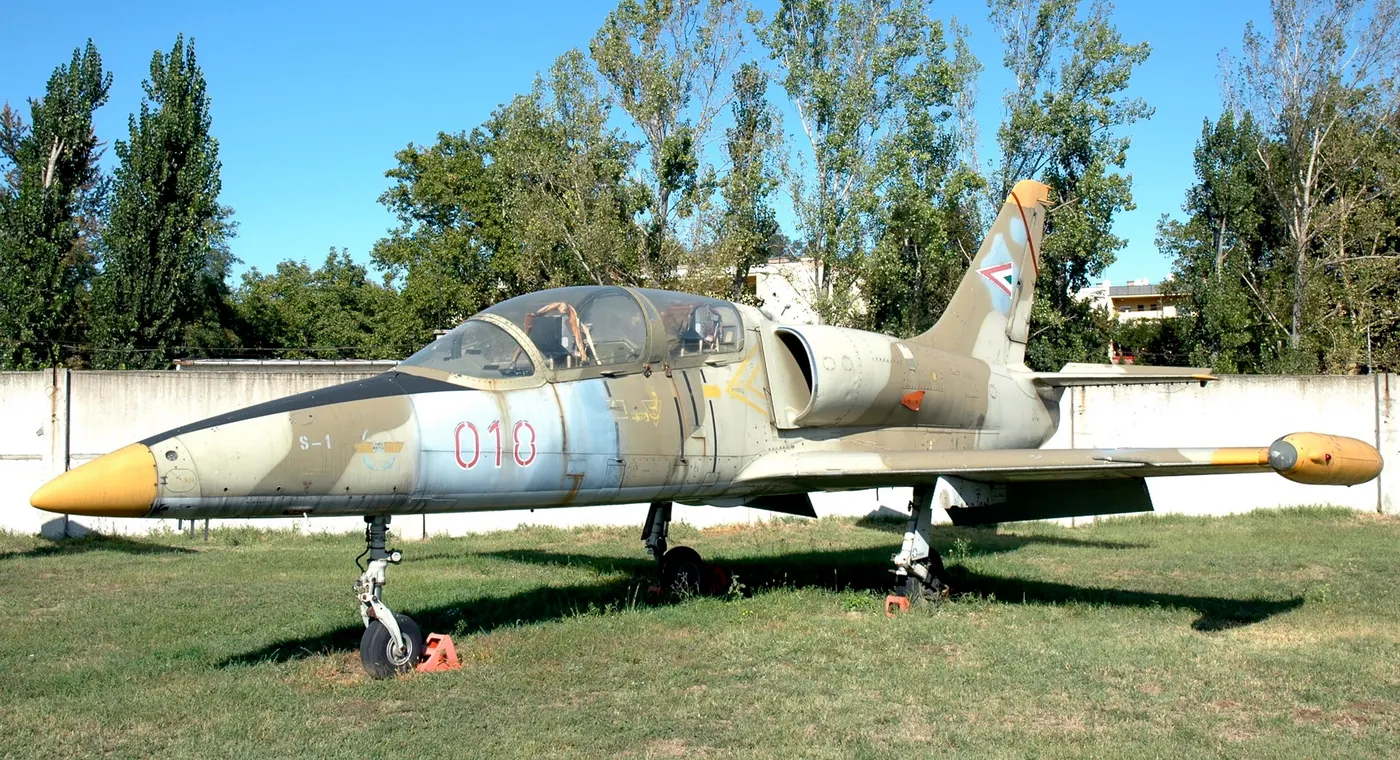

The Aero L-39ZO Albatros is the armed weapons-training version of the Czechoslovak L-39 jet trainer, distinguished from the baseline L-39C by a reinforced wing carrying four underwing hardpoints instead of two, along with uprated main landing gear to absorb the added weight and rougher-field use that comes with a combat-training role.1 The "Z" in its designation stands for the Czech word zbraně, meaning weapons, marking it out within the wider Albatros family as the sub-variant built to teach live weapons employment rather than pure flight instruction.1 It first flew on 25 June 1975, entered service with Iraq's air force in 1977, and 337 examples were eventually built for export customers who needed a trainer that could also fight.1
- Four hardpoints (vs two on the L-39C) for real weapons training and light attack
- Reinforced wing and landing gear tolerate rough strips and war loads
- Shares the L-39C's cheap, simple turbofan and proven airframe
- Broad, battle-tested export history across several real conflicts
- No internal gun; armament is limited to podded weapons on the wings
- Payload and protection are modest next to any purpose-built attack jet
- Original Soviet-Ukrainian engine supply chain has grown harder to sustain since 2014
- Superseded in most later export orders by the cannon-armed L-39ZA
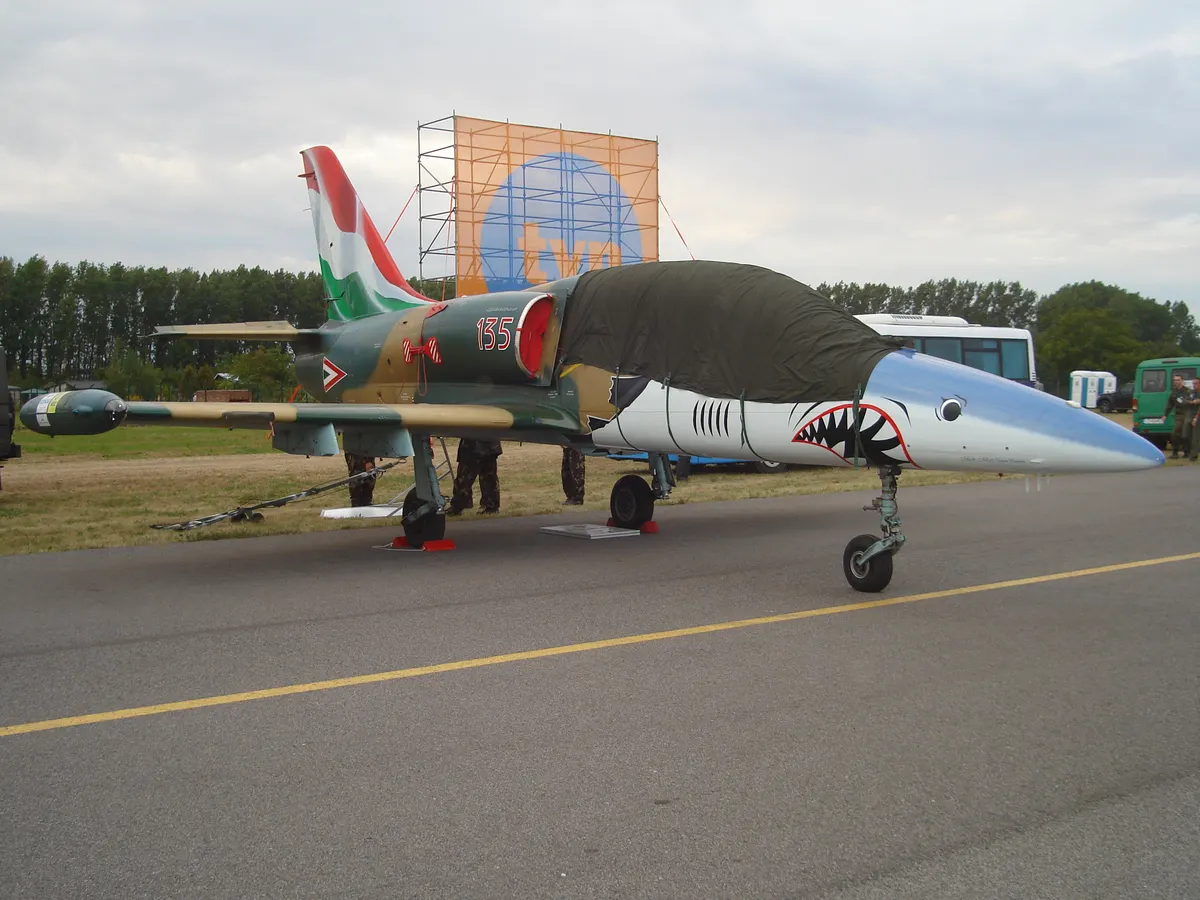
Where the base L-39C's two wing pylons were sized mainly for drop tanks and light practice bombs, the ZO's four stations, rated at 500 kg on the inboard pair and 250 kg on the outboard pair, gave export customers a genuine light-attack capability bolted onto an otherwise unchanged trainer airframe.1,2 That combination attracted air forces that could not afford a dedicated strike jet but still faced real counter-insurgency or border conflicts, which is why so many customers used it for actual combat sorties rather than classroom training alone.
Its client list reads like a roster of Cold War frontline states rather than pure flying schools: Iraq, Libya, Syria, and East Germany between them took the bulk of the production run, and several of those air forces flew the type in actual combat rather than confining it to the syllabus its "Z" designation implied.2 A further-developed derivative, the L-39ZA, later added an internal cannon and saw wider export success; it is covered in this article's Variants section, while the plain trainer version has its own separate entry.
The Reinforced Wing and Its Four Hardpoints
The airframe, cockpit, and Ivchenko AI-25TL turbofan carry over unchanged from the L-39C; the ZO's real engineering work went into the wing structure and undercarriage.1 Aero Vodochody's engineers stiffened the wing spar and skin to accept two additional stores stations, taking the type from two pylons to four, and strengthened the main gear legs and wheels to handle a heavier, unevenly loaded aircraft operating from the semi-prepared strips typical of many of its export customers.1,3
- First Flight1975
- Service Entry Year1977
- Crew (seats)2
- Trainer Typeadvanced jet trainer
- In ServiceYes
Total external stores load across the four pylons is usually quoted at around 1,150 kg (2,500 lb), and that added war-load weight is also why several independent sources list the ZO's maximum takeoff weight noticeably above the clean trainer's figure, a discrepancy worth noting rather than smoothing over.4,5
- Engine TypeIvchenko AI-25TL turbofan
- Thrust16.9
- Power (turboprop)16.9 kW
The ruggedization was not cosmetic: Iraqi and Libyan units in particular flew the type from forward, lightly prepared airstrips during actual combat operations, exactly the rough-field use the strengthened gear was designed to survive.1,2
- Top Speed750 km/h
- Cruise Speed600 km/h
- Service Ceiling11,000 m
- Range1,000 km
- Rate of Climb22 m/s
- G-Limit8
- Endurance3.8
Underwing Armament and the Missing Cannon
Typical loads recorded across ZO operators include free-fall bombs, UB-16 and UB-32 rocket pods firing 57mm S-5 rockets, podded twin or triple 7.62mm machine guns, a five-camera daylight reconnaissance pod carried on the inboard port station, and, on the inboard stations only, external fuel tanks of up to 350 liters.4,5
- Cockpit Configurationtandem two-seat
- Glass CockpitNo
- Embedded SimulationNo
- Light Attack CapableYes
- Hardpoints4
- Ejection SeatsYes
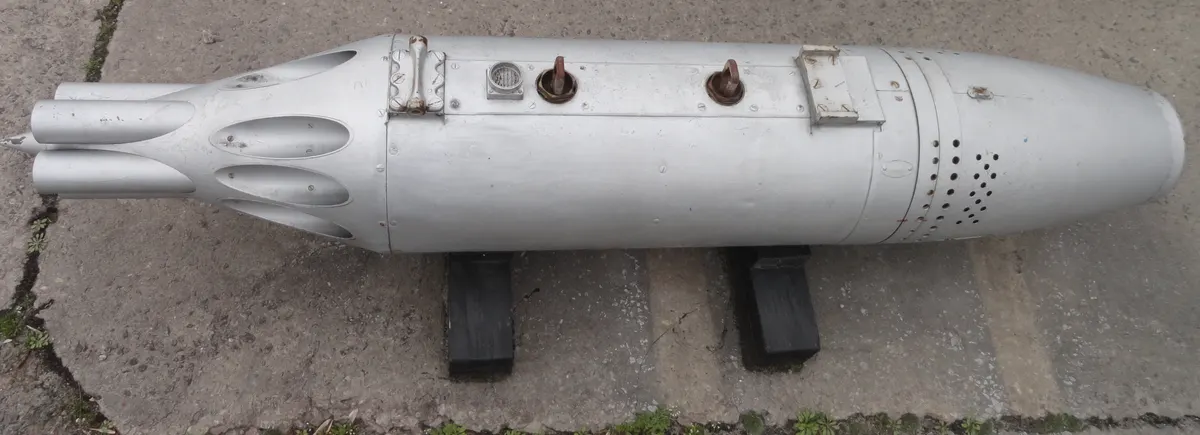
What the ZO never received was an internal gun: unlike the L-39ZA that followed it, weapons capability here is entirely podded, which kept the airframe simple but meant every gun mission needed a dedicated external pod taking up a hardpoint that could otherwise carry ordnance.1
- Length12.13 m
- Wingspan9.46 m
- Height4.77 m
- Max Takeoff Weight4,700 kg
Across Libyan, Syrian, and Iraqi service, rocket pods and free-fall bombs remained the loads most commonly fitted; the twin-barrel cannon stayed a signature of the L-39ZA rather than the ZO.1,2
- Total Built337
As with the base trainer, the L-39ZO's airframe, tooling, final assembly, and the domestically designed VS-1 BRI ejection seat were entirely Czechoslovak, built by Aero Vodochody at Odolena Voda.1 The aircraft's single largest imported component remained its engine, the Ivchenko AI-25TL turbofan, designed by the Zaporizhzhia bureau now known as Ivchenko-Progress and built with the Motor Sich plant, both then inside the Soviet Union.1 The rocket pods, gun pods, and reconnaissance pod carried on the reinforced wing were themselves largely Soviet-pattern ordnance rather than Czechoslovak products, so the variant's added combat capability actually widened, rather than narrowed, its dependence on Eastern Bloc suppliers.4
- Production Start1975
- Production End1996
- Operational Statusin service
Aero Vodochody developed the ZO alongside the rest of the L-39 program, and the type first flew on 25 June 1975.1 Iraq became the launch customer, taking delivery from 1977 and using its fleet for combined weapons training, light attack, and tactical reconnaissance rather than pure instruction.1,2 Libya followed with the largest single order, around 170 to 180 aircraft delivered from about 1978 onward, which equipped the Sabha and Okba Ben Nafi flying schools alongside Yugoslav-built Galebs and Italian SF.260s.1,2
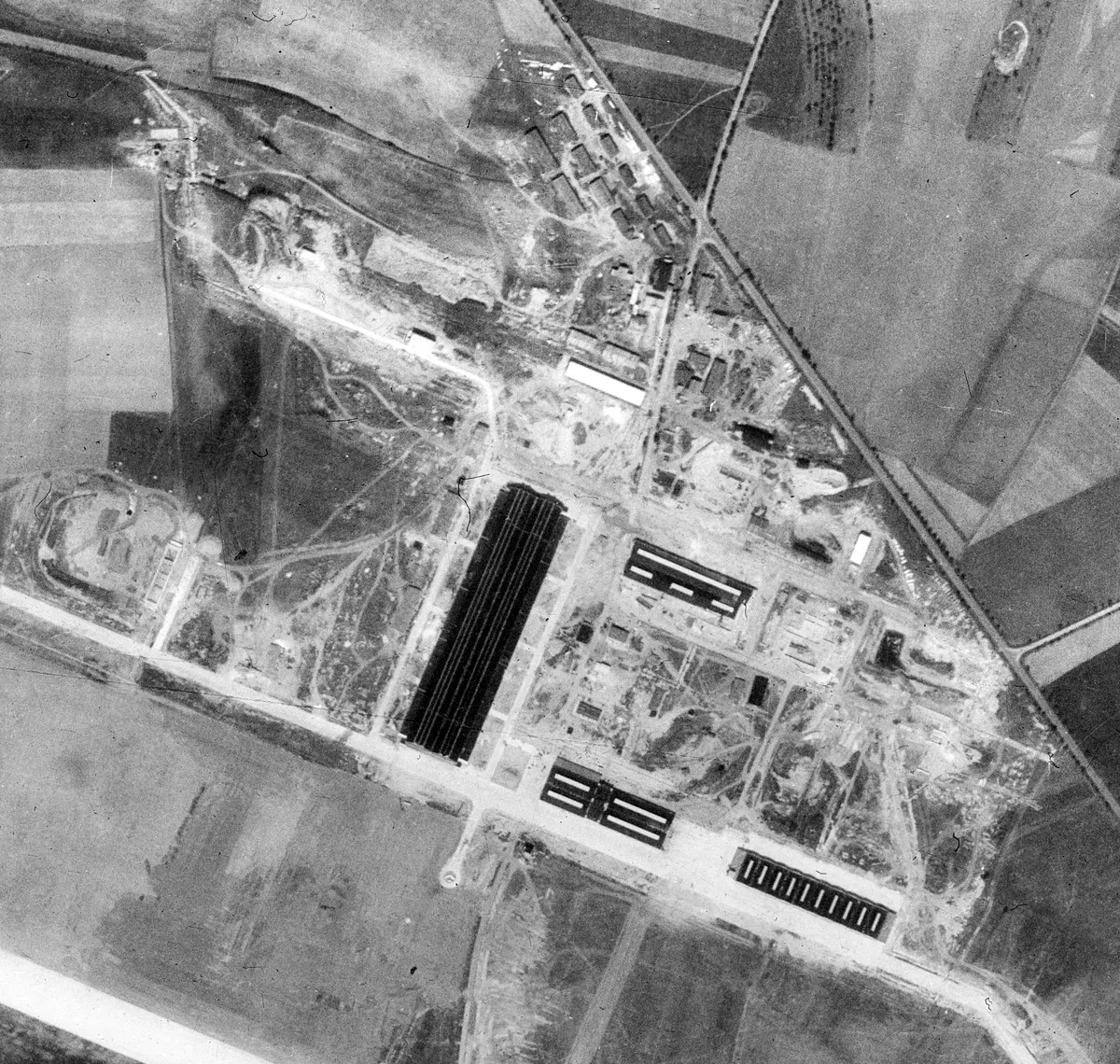
East Germany's air force took 52 L-39ZOs, which after reunification passed largely intact to Hungary: in November 1993 Hungary bought 24 of the ex-NVA aircraft, overhauled 20 of them at the Danubian Aircraft works at Tököl, and flew them as an advanced trainer and light-attack type until finally retiring the fleet around 2009.2,6
Syria bought 55 L-39ZOs from Czechoslovakia through the 1970s and 1980s alongside a smaller batch of the cannon-armed L-39ZA, and those airframes would go on to see the type's heaviest and most sustained combat use, decades later, in its own civil war.2
Libya's L-39ZO fleet took the type's heaviest single loss during the Chadian-Libyan War. Based largely at Ouadi Doum in northern Chad, Libyan Albatroses flew ground-attack sorties through the 1980s until the Chadian army's final offensive overran the base in March 1987; Chad reported capturing eleven L-39s there and destroying or downing at least four more, alongside Soviet-supplied SAM systems and armor lost in the same collapse.7,8
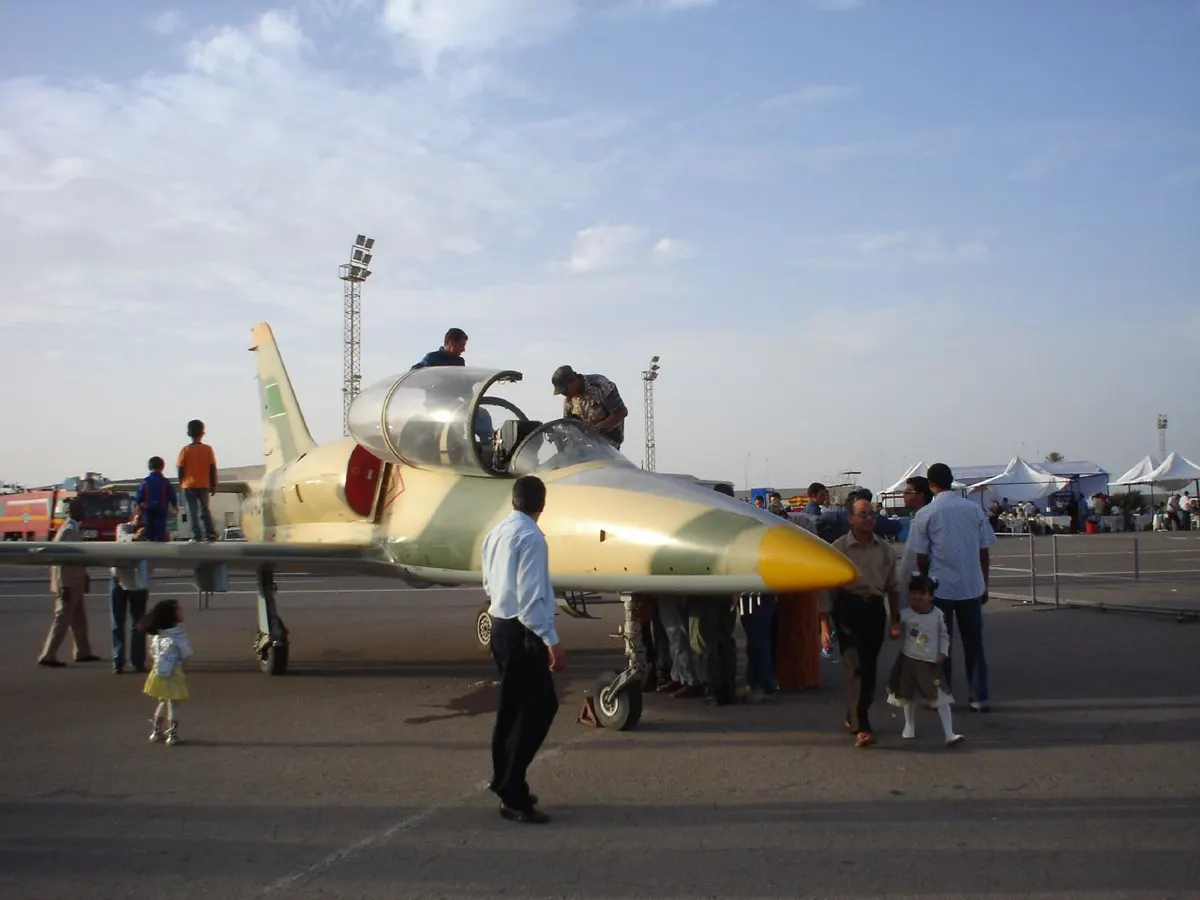
Iraq's fleet flew ground-attack and reconnaissance sorties through the Iran-Iraq War of 1980 to 1988, though no Iraqi L-39 is recorded in air-to-air combat during that conflict.2
Syria's L-39ZOs and L-39ZAs saw far heavier and more sustained use once its civil war began in 2011, flying repeated counter-insurgency strikes against rebel-held territory; multiple airframes were shot down by rebel ground fire or anti-tank missiles between 2012 and 2017, including one downed by anti-aircraft fire over rural Hama in July 2016.9 The type's most unusual Syrian loss came later still, on 3 March 2020, when a Turkish Air Force F-16 shot down a Syrian L-39 over Idlib province during Operation Spring Shield, a rare instance of a jet trainer being killed in genuine air-to-air combat rather than by ground fire.10
The L-39ZO's direct successor, the L-39ZA, first flew on 29 September 1976 and entered production in 1980, with 208 delivered.1 It kept the ZO's four hardpoints and reinforced wing but added sturdier landing gear again, a higher total external load of 1,290 kg, and, most importantly, a GSh-23L 23mm twin-barrel cannon carried in a conformal pod under the cockpit floor with a 150-round internal magazine, finally giving the family an organic gun rather than relying entirely on podded weapons.1,3
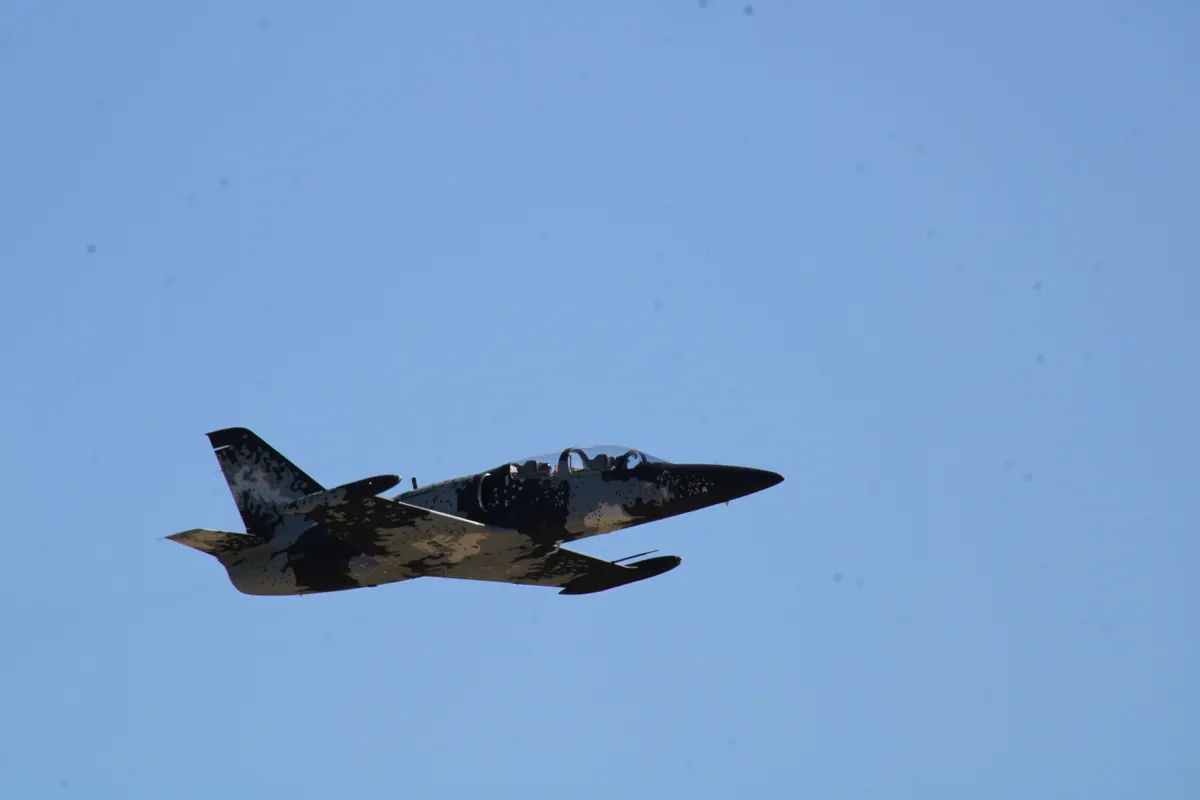
Most later export customers, including Syria's second-generation orders and Thailand's L-39ZA/ART fleet, bought the ZA rather than the ZO once it was available, effectively making the ZO a transitional design: proof that a four-hardpoint Albatros could work in export service, quickly overtaken by a version with a real gun.1,2
Where a country's fleet mixed both types, as Syria's did, the ZA generally flew the more demanding strike work while surviving ZOs continued in the weapons-training role the "Z" was originally built for.


Iraq, Libya, Syria, and East Germany were the type's original and largest customers, and Hungary inherited the East German fleet after 1993 rather than buying new-build aircraft.1,2,6 Chad briefly became an unintentional operator in 1987 through the eleven L-39ZOs its forces captured intact from Libya at Ouadi Doum, though it never sustained the fleet as an operational force.7 Ghana took two aircraft, and Nigeria bought 24 L-39s in 1986 to 1987 for its 303rd Aviation School at Kano, where the type has since flown patrol, reconnaissance, and ground-attack sorties in addition to training, most notably in the long-running counter-insurgency campaign against Boko Haram in the country's northeast.2,11
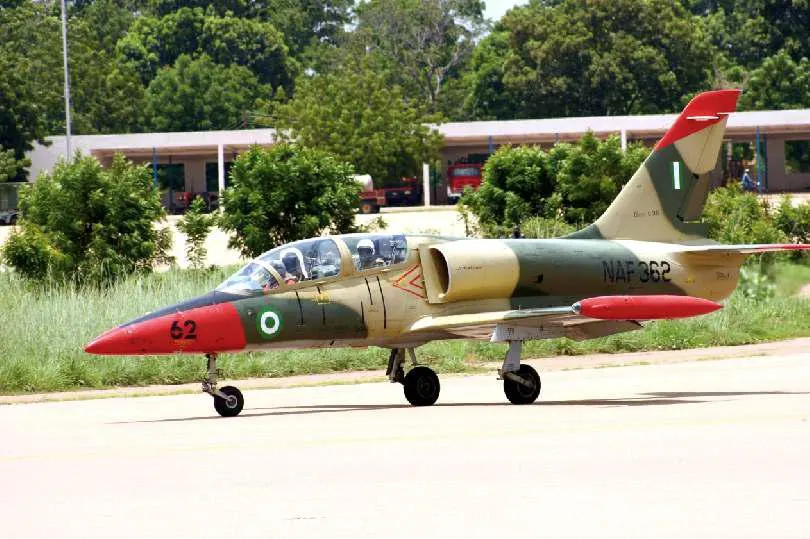
Almost none of the original ZO fleets remain combat-relevant today. Libya's and Iraq's air forces were gutted by later wars and sanctions, and Syria's surviving airframes are tied to a state that collapsed in 2024.12
Most of the surviving ZOs elsewhere have been retired, sold onward, or quietly superseded as Aero Vodochody's new-build L-39NG "Skyfox" wins fresh export orders across many of the same regions the ZO once served.12
Set against its own parent, the L-39C, the ZO is less a different aircraft than the same airframe with a heavier job description: identical engine and dimensions, but a wing built to carry twice the stores stations and gear built to survive the weight and airstrips that job implies. That extra hardware is dead weight on a pure training sortie, which is why most air forces that never needed the light-attack role bought the plain C model instead.
Against its own direct successor, the L-39ZA, the ZO looks more like a stopgap than a finished design. The ZA kept everything the ZO offered and added the one capability that matters most in a real strike role: an internal cannon that does not consume a hardpoint and cannot be shot away as easily as an external pod. That is reflected in the order books, since almost every later customer who wanted a combat-capable Albatros bought the ZA once it existed, leaving the ZO's export run effectively frozen at the point the newer variant reached the market in 1980.
| Spec | L-39ZO | L-39ZA |
|---|---|---|
| First flight | 25 June 1975 | 29 September 1976 |
| Hardpoints | 4 underwing | 4 underwing + internal cannon |
| Max external load | ~1,150 kg | ~1,290 kg |
| Built | 337 | 208 |


What does the "Z" in L-39ZO stand for? It comes from the Czech word zbraně, meaning weapons, identifying the ZO as the armed weapons-training branch of the Albatros family rather than the plain L-39C trainer.1
How many L-39ZO Albatros aircraft were built? 337 were built, against 208 of the later cannon-armed L-39ZA.1
What is the L-39ZO's top speed? Sources generally quote figures matching the base L-39C, around 750 km/h at altitude, though published numbers vary noticeably between sources and loaded configurations, and some armed-variant data sheets list considerably lower speeds at low level.1,5
Is the L-39ZO still in service? Some remain nominally on strength with a handful of air forces, but most original ZO fleets have been retired, lost in conflict, or civilianized; Aero Vodochody's newer L-39NG "Skyfox" is now the type actively being bought by former ZO operators' regional neighbors.12
How does the L-39ZO differ from the L-39ZA? The ZA is a later, more capable derivative with sturdier landing gear, a higher external load of about 1,290 kg, and an internal GSh-23L cannon; the ZO relies entirely on podded weapons across its four hardpoints.1,3
- "Aero L-39 Albatros", Wikipedia — en.wikipedia.org ↩
- "List of Aero L-39 Albatros operators", Wikipedia — en.wikipedia.org ↩
- "L-39 Albatros Trainer / Ground Attack Aircraft", Airforce Technology — airforce-technology.com ↩
- "Aero L-39 Albatros Advanced Jet Trainer / Light Attack Aircraft", Military Factory — militaryfactory.com ↩
- "Aero Vodochody Aero L-39ZO Albatros", Skytamer — skytamer.com ↩
- "Hungary takes uprated L-39ZO", Flight Global — flightglobal.com ↩
- "Battle of Maaten al-Sarra", Wikipedia — en.wikipedia.org ↩
- "Chadian-Libyan War", Wikipedia — en.wikipedia.org ↩
- "List of aviation shootdowns and accidents during the Syrian Civil War", Wikipedia — en.wikipedia.org ↩
- "Syrian L-39 Shot Down By Turkish Air Force F-16 Over Syria", The Aviationist — theaviationist.com ↩
- "Nigerian L-39s are preparing for the future", Aero-Space.eu — aero-space.eu ↩
- "Kecskemét Welcomes First Batch of Hungarian L-39 'Skyfox' Trainers", The Aviationist — theaviationist.com ↩