


Data Quality86%
MASS(Military Archive Scoring System)
ⓘ Regardless of era, the same scoring system applies to all units in the armoured personnel carriers (apc) category.
01 / Overview
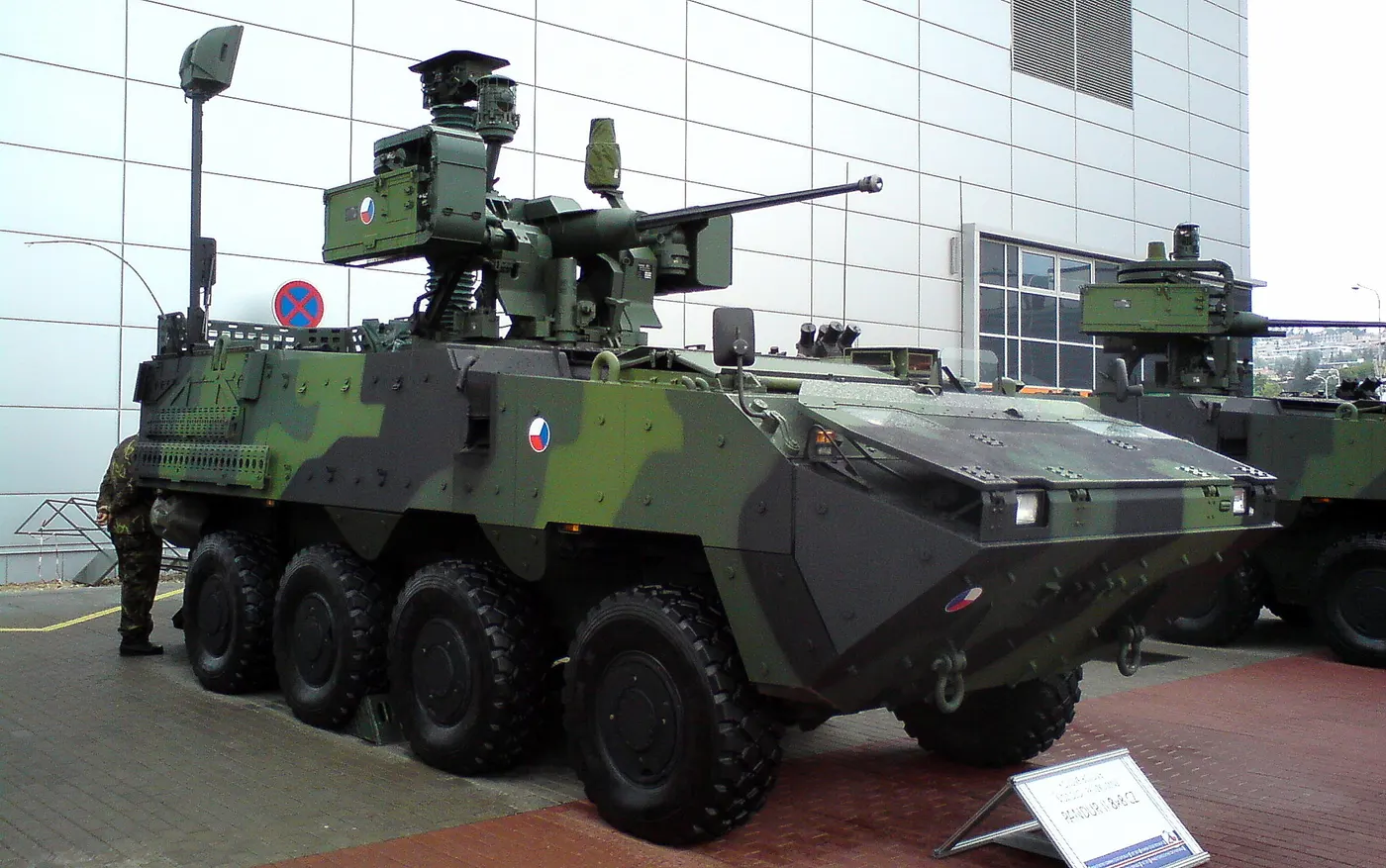
Pandur II
💰 PERFORMANCE / PRICE ASSESSMENT Methodology ↗
ARMOURED PERSONNEL CARRIERS (APC) · POST-COLD WAR
23
PERFORMANCE/PRICE
78
UNIT COST (2025 USD)
—
ⓘ Performance/Price and MASS score are computed across all units in the armoured personnel carriers (apc) category, regardless of era.
02 / Specs & Design
◎General6MOD.6
- Service Entry Year2001
- Combat Weight22 t
- Crew2
- Passengers / Dismounts12
- Vehicle ClassArmoured Personnel Carrier (APC)
- In ServiceYes
◈Armament8MOD.8
- Main Armament30 mm Mk44 Bushmaster II gun
- Main Gun Calibre30 mm
- Gun Typeautoloaded autocannon
- Secondary Armament7.62 mm FN MAG machine gun
- ATGM CapableYes
- Remote Weapon StationYes
- Stabilized GunYes
- Ammunition Stowage12
▣Protection13MOD.13
- Armour Typeall-welded steel body with optional armour upgrades
- STANAG Protection LevelSTANAG 4569 Level 2
- Hull Front (RHA equiv.)10 mm
- Turret Front (RHA equiv.)10 mm
- Active Protection SystemNo
- Reactive Armour (ERA)No
- Slat / Cage ArmourNo
- Mine / IED ProtectionYes
- V-Shaped HullNo
- Spall LinerYes
- NBC ProtectionYes
- Smoke GrenadesYes
- Fire SuppressionYes
◇Mobility13MOD.13
- Engine Type6-cylinder in-line liquid-cooled turbo-charged intercooled diesel
- Engine Power450 hp
- Power-to-Weight20 hp
- TransmissionZF 6HP602c automatic
- Suspensioncoil springs with hydraulic shock absorbers, MacPherson strut-like
- Max Road Speed105 km/h
- Max Off-Road Speed11 km/h
- Operational Range700 km
- AmphibiousYes
- Fording Depth1.5 m
- Gradient60
- Trench Crossing2 m
- Vertical Obstacle0.6 m
◆Electronics & Optics7MOD.7
▤Dimensions4MOD.4
- Length7.35 m
- Width2.67 m
- Height2.08 m
- Ground Clearance0.45 m
⬢Production1MOD.1
- Production Start2,001 year
03 / History
SERVICE LIFESPANStill in Service
- 2001Production started
- 2009Sale: Czech Republic (107 units)
- 2016Sale: Indonesia · $39 M
- 2017Sale: Czech Republic (20 units)
- 2020Last sale: Philippines (10 units)
25
years in service
7
countries operating
ⓘ 1 countries retired it.
04 / Operators
Operator Inventory3country · 325units


325active
Pandur IISALES6records
| Year | Buyer | Quantity | Amount | Present Value (2025) |
|---|---|---|---|---|
| 2020 |  Philippines | 10 | — | — |
| 2019 |  Indonesia | 22 | — | — |
| 2017 |  Czech Republic | 20 | — | — |
| 2016 | Indonesia | — | $39.0 M | $52.3 M |
| 2009 | Czech Republic | 107 | — | — |
| 2007 |  Portugal | — | — | — |
ⓘ "Present Value" is an estimated amount adjusted for inflation.
05 / MASS Score
ARMOURED PERSONNEL CARRIERS (APC) RANKING Armoured Personnel Carriers (APC) · Post-Cold War


MASS RANKINGSMASS ↗
91ARMOURED PERSONNEL CARRIERS (APC)23POST-COLD WAR · ARMOURED PERSONNEL CARRIERS (APC)89AUSTRIA · ALL WEAPONS60PERFORMANCE/PRICE · ARMOURED PERSONNEL CARRIERS (APC)
ⓘ Rankings are within theArmoured Personnel Carriers (APC)category.
📖 TERMS ON THIS PAGE16terms
The ability to perceive and understand all surroundings, 360 degrees, in real-time, providing a comprehensive view of the operational environment.
Anti-Tank Guided Missile: a missile designed to destroy tanks.
A Battle Management System (BMS) is a command‑and‑control software suite that gathers, processes, and shares battlefield data to provide situational awareness and coordinate the actions of military units.
A vehicle-mounted night vision system enabling drivers of infantry fighting vehicles to navigate and operate in low-light conditions.
A vehicle subsystem that detects, contains, and extinguishes internal fires to protect crew and critical components.
A navigation system combining Global Positioning System (GPS) for absolute positioning and Inertial Navigation System (INS) for dead reckoning, providing continuous and accurate location and orientation data.
A hunter-killer capability in an infantry fighting vehicle allows the gunner to engage targets while the commander independently searches for new targets, typically using separate optics and control systems.
Optical device that uses laser pulses to measure the distance to a target with high precision.
Protection systems in IFVs designed to mitigate damage from landmines and improvised explosive devices, including armored hulls, blast-resistant seats, and counter-IED electronics.
Nuclear, Biological, Chemical protection for crew and occupants.
A Remote Weapon Station is a weapon mount controlled from within an armored vehicle, allowing operation without exposing the operator to direct fire.
Smoke grenades are pyrotechnic devices deployed by infantry fighting vehicles to create a visual screen, obscuring movement or positions from enemy observation or targeting.
A spall liner is an interior armor layer in armored vehicles, such as IFVs, designed to catch or reduce high‑velocity fragments (spall) generated when the vehicle's outer armor is penetrated.
A firearm or automatic weapon mounted on a vehicle and equipped with a gyroscopic or hydraulic system to reduce recoil and maintain aim during movement.
Thermal sights are infrared imaging devices that detect heat signatures to provide a visual display for target detection and navigation in low‑visibility conditions.
These terms are listed automatically because they appear on this page.full encyclopedia →
📚 Sources