


Data Quality88%
MASS(Military Archive Scoring System)
ⓘ Regardless of era, the same scoring system applies to all units in the armoured personnel carriers (apc) category.
01 / Overview
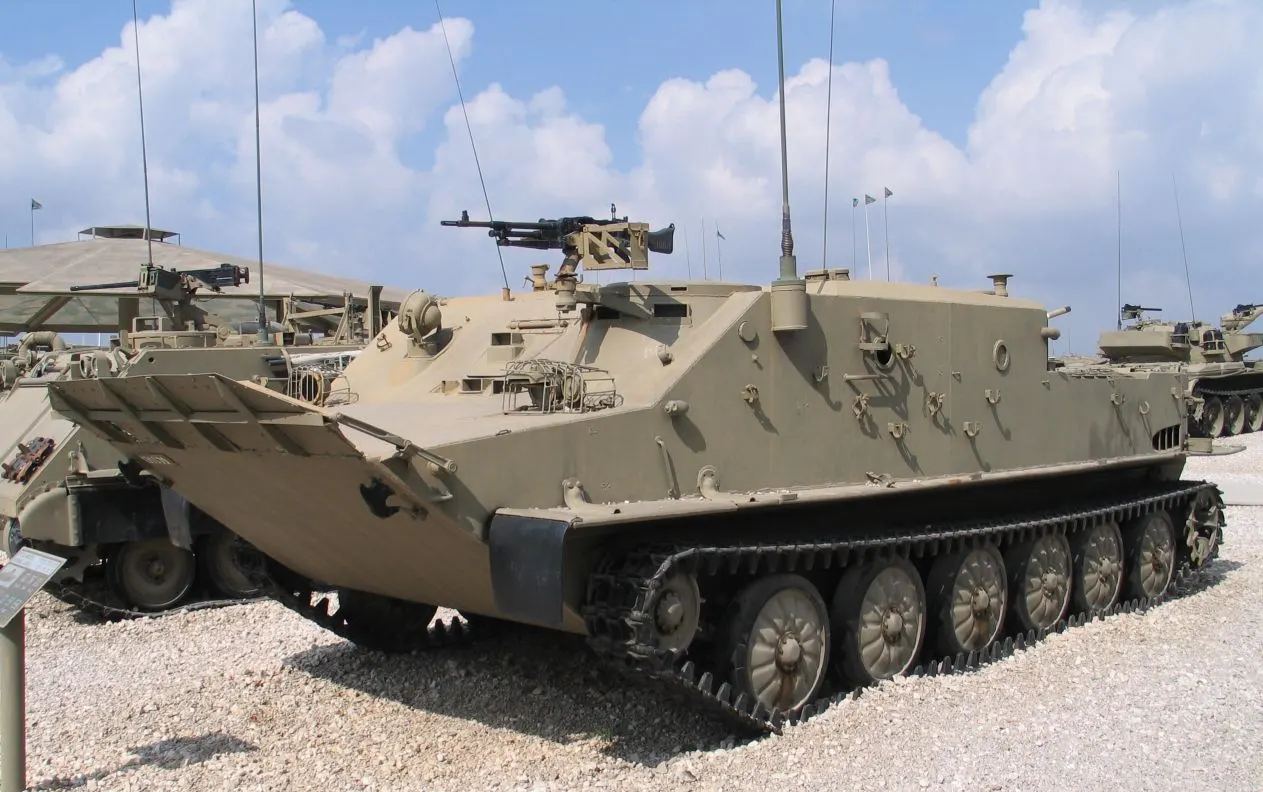
BTR-50
Country
Production
1954–1970
Operators
Conflicts
💰 PERFORMANCE / PRICE ASSESSMENT Methodology ↗
ARMOURED PERSONNEL CARRIERS (APC) · EARLY COLD WAR
9
PERFORMANCE/PRICE
78
UNIT COST (2025 USD)
—
ⓘ Performance/Price and MASS score are computed across all units in the armoured personnel carriers (apc) category, regardless of era.
02 / Specs & Design
◎General6MOD.6
- Service Entry Year1954
- Combat Weight14.5 t
- Crew2
- Passengers / Dismounts20
- Vehicle ClassArmoured Personnel Carrier
- In ServiceYes
◈Armament8MOD.8
- Main ArmamentNone ; BTR-50P & BTR-50PK: 7.62 mm SGMB medium machine gun (1,250 rounds) ; BTR-50PA: 14.5 mm KPV heavy machine gun
- Main Gun Calibre7.62 mm
- Gun TypeMachine gun
- Secondary ArmamentNone
- ATGM CapableNo
- Remote Weapon StationNo
- Stabilized GunNo
- Ammunition Stowage1,250
▣Protection12MOD.12
- Armour TypeHomogeneous welded steel
- Hull Front (RHA equiv.)13 mm
- Turret Front (RHA equiv.)0 mm
- Active Protection SystemNo
- Reactive Armour (ERA)No
- Slat / Cage ArmourNo
- Mine / IED ProtectionYes
- V-Shaped HullNo
- Spall LinerNo
- NBC ProtectionYes
- Smoke GrenadesNo
- Fire SuppressionNo
◇Mobility14MOD.14
- Engine TypeThe "V-6" 6-cylinder 4-stroke in line water-cooled diesel
- Engine Power240 hp
- Power-to-Weight16.6 hp
- TransmissionFive gear manual shaft-type
- Suspensiontorsion bar
- Max Road Speed44 km/h
- Max Off-Road Speed44 km/h
- Operational Range400 km
- Fuel Capacity400 L
- AmphibiousYes
- Fording Depth1.1 m
- Gradient60
- Trench Crossing2.8 m
- Vertical Obstacle1.1 m
◆Electronics & Optics7MOD.7
▤Dimensions4MOD.4
- Length7.08 m
- Width3.14 m
- Height2.03 m
- Ground Clearance0.37 m
⬢Production1MOD.1
- Production Start1,954 year
03 / History
SERVICE LIFESPANStill in Service
- 1945First deployment: Cold War
- 1954Production started
- 1963Sale: Afghanistan (100 units)
- 1964Sale: Egypt (500 units)
- 1970Production ended
- 1975Sale: Angola (92 units)
- 1979Last sale: Afghanistan (560 units)
72
years in service
16
years in production
29
countries operating
ⓘ The producing country still actively operates it. 5 countries retired it.
04 / Conflicts
BTR-50 · CONFLICTS SERVED IN10% win·10% ongoing·20% loss
Total Conflicts
10
Victories
1
Ongoing
1
Losses
2
2022–full-scale Russo-Ukrainian warOngoing→2011–2024Syrian Civil WarDecisive victory→2003–20042003–2004 Indonesian offensive in Aceh—→1979–1989Soviet-Afghan WarDecisive victory→1977–1978Ogaden War—→1975–2002Angolan Civil War—→1975–1990Lebanese Civil War—→1967–1970War of AttritionCeasefire→1956Hungarian Revolution of 1956—→1955–1975Vietnam WarDecisive victory→
ⓘ Shown only from conflicts recorded in our database.
05 / Operators
Operator Inventory23country · 4,027units


4,027active
BTR-50SALES8records
| Year | Buyer | Quantity | Amount | Present Value (2025) |
|---|---|---|---|---|
| 1979 |  Afghanistan | 560 | — | — |
| 1977 |  Algeria | 130 | — | — |
| 1975 |  Angola | 92 | — | — |
| 1964 |  Egypt | 500 | — | — |
| 1963 | Afghanistan | 100 | — | — |
| — |  Albania | 200 | — | — |
| — |  Democratic Republic of the Congo | — | — | — |
| — | Egypt | — | — | — |
ⓘ "Present Value" is an estimated amount adjusted for inflation.
06 / MASS Score
ARMOURED PERSONNEL CARRIERS (APC) RANKING Armoured Personnel Carriers (APC) · Early Cold War


MASS RANKINGSMASS ↗
145ARMOURED PERSONNEL CARRIERS (APC)9EARLY COLD WAR · ARMOURED PERSONNEL CARRIERS (APC)1171RUSSIA · ALL WEAPONS60PERFORMANCE/PRICE · ARMOURED PERSONNEL CARRIERS (APC)
ⓘ Rankings are within theArmoured Personnel Carriers (APC)category.
📖 TERMS ON THIS PAGE4terms
A vehicle-mounted night vision system enabling drivers of infantry fighting vehicles to navigate and operate in low-light conditions.
Protection systems in IFVs designed to mitigate damage from landmines and improvised explosive devices, including armored hulls, blast-resistant seats, and counter-IED electronics.
Nuclear, Biological, Chemical protection for crew and occupants.
These terms are listed automatically because they appear on this page.full encyclopedia →
📚 Sources