

Silo-based describes a ballistic missile stored, fueled, and fired from a hardened underground shaft rather than a wheeled launcher, a train car, or open ground. It stays in the same fixed location for essentially its entire service life, launched from the same shaft where it sat on alert, sometimes for years.
That fixed placement is the reverse tradeoff from road-mobile basing, where a launcher relocates a missile between dispersal points, or rail-mobile basing, which hides a missile inside an ordinary freight train. A silo cannot move, and its coordinates become permanent and eventually knowable to satellite reconnaissance. In exchange, reinforced concrete, a heavy blast door, and depth below grade let it survive overpressure that would destroy an exposed launcher outright, and it typically launches faster once the order comes.
01From Open Launch Pads to the Dvina Complex
The earliest Soviet medium-range missiles fired from soft, unhardened concrete pads defended mainly by dispersal and camouflage, not structure. The R-12 Dvina, built by Mikhail Yangel's bureau and known to NATO as the SS-4 Sandal, was deployed this way when Soviet crews rushed several into Cuba in 1962. Their above-ground pads under construction are exactly what a single U-2 flight photographed that October, triggering the Cuban Missile Crisis.1,3
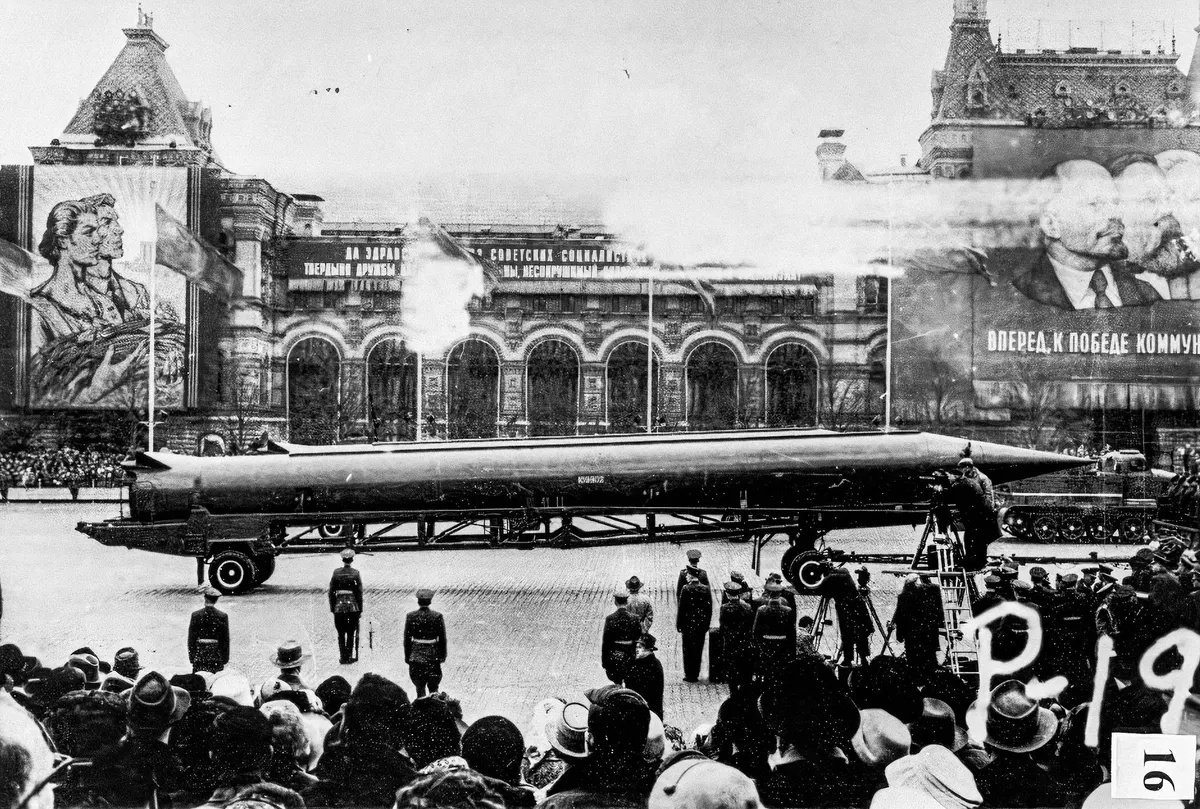
Soviet planners had already begun testing a hardened alternative before the crisis. The redesigned R-12U went into a silo complex codenamed Dvina, four launchers grouped around one shared control point, declared operational in January 1963.1,2 Removing the aerodynamic fairings that an above-ground launch table required cut the missile's structural weight, and a silo-based R-12U reached launch readiness in five to fifteen minutes, against one to three hours for a soft-pad R-12.1
The R-14 Chusovaya, NATO's SS-5 Skean and a longer-range sibling from the same Yangel bureau, followed the identical path. Its silo-launched R-14U variant went on alert at Priekule in Soviet Latvia in 1964, arranged as a three-silo battery around a hardened control point.4 Each shaft ran roughly 30 meters deep and survived close to 28 psi of overpressure, more than the R-12U's shallower silos, reflecting the larger missile and fast-maturing Soviet hardening techniques.5
01Hardening, Prefueling, and the Reaction-Time Argument
Silo hardening is normally expressed as the overpressure a shaft and its blast door can absorb without failure. France's S2, the country's first land-based strategic missile, sat in one of eighteen silos dug into the Plateau d'Albion in Provence from 1971, each about 30 meters long, capped by a 140-tonne door needing roughly twenty minutes to open for maintenance and only a few seconds to clear on launch.6
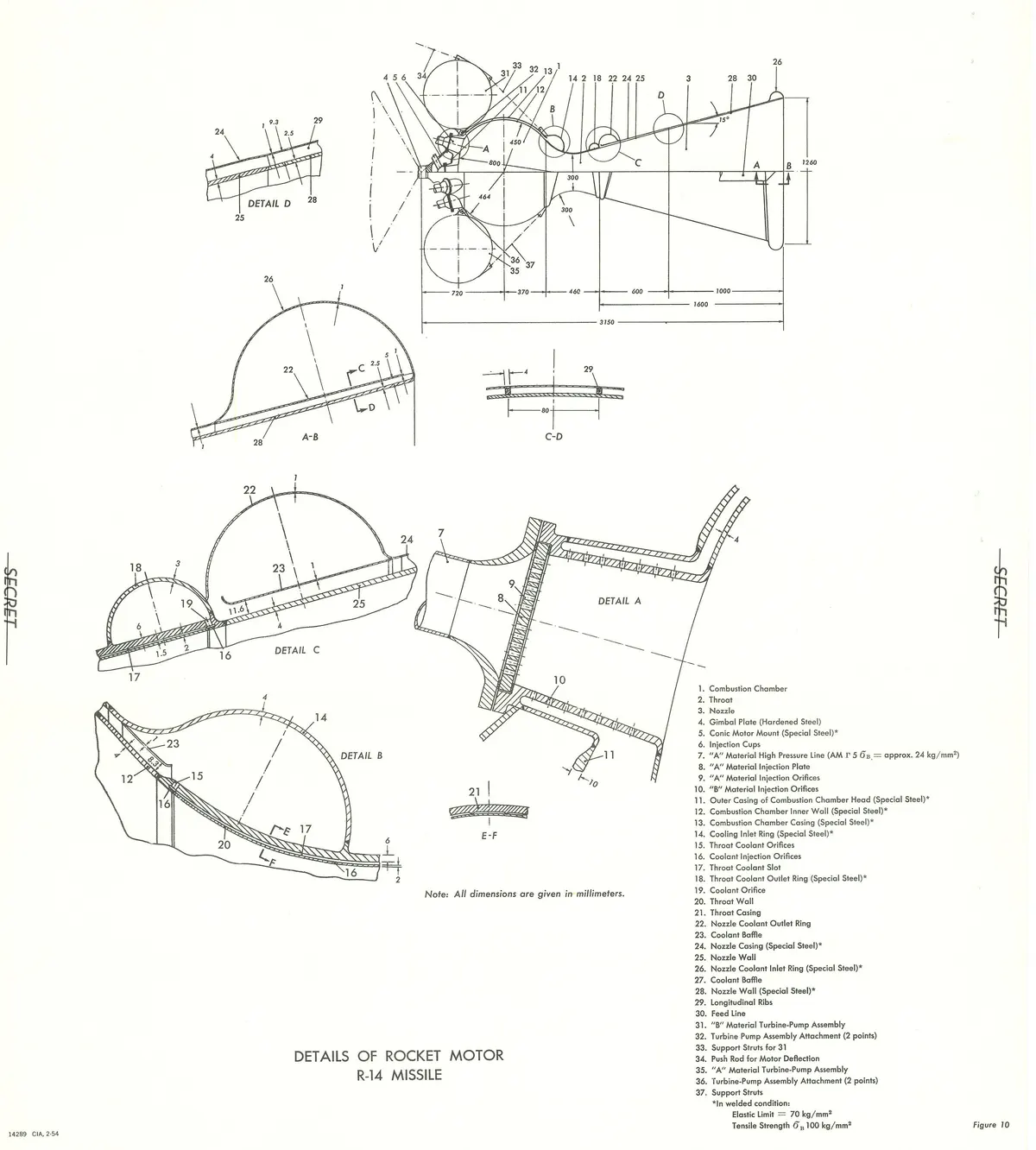
Depth and concrete solve only the survivability half of the tradeoff. The other half is speed, which comes from keeping the missile ready rather than from the silo's walls. A missile on a soft pad has to be fueled, checked, and erected before it can fire, timed at one to three hours for the R-12. A silo-based missile can instead stay fueled and vertical continuously, and the same prefueled-readiness logic applied wherever silo basing spread.1,7
China's DF-3, NATO's CSS-2 and China's first operational intermediate-range missile, applied the same reasoning directly. Built as a silo-based system from the outset, it sat prefueled inside its shaft, giving it a markedly faster reaction time than the shorter-ranged DF-2 it replaced. Deployment began around 1971 and reached roughly 90 to 120 launchers by the 1980s.7
01A Capability, Not Always the Whole Missile
Silo-based is a capability a missile can carry alongside others rather than a category that defines it entirely. Israel's Jericho-2, developed from the 1970s and declared operational by 1994 following the 1991 Gulf War, illustrates the point. Reporting describes it as launchable from a silo, a rail car, or a mobile launcher, with Israeli units near Sdot Micha relying mainly on hardened caves and mobile launchers rather than a dedicated silo field.8
The Soviet RT-15, NATO's SS-14 Scamp, makes the tradeoff more explicit. Soviet planners built a silo-based version and a road-mobile version of the same 8K96 missile side by side under one 1961 program, rather than committing to a single mode from the start. The road-mobile variant rode a heavy-tank chassis in a sealed container, while its silo-based counterpart buried the same missile in a fixed shaft. Only ten test launches flew before cancellation in 1970, and the split shows both modes weighed against each other, rather than one succeeding the other.9
01Notes and Sources
- "R-12 / SS-4 SANDAL", Federation of American Scientists — nuke.fas.org ↩
- "Medium range ballistic missile R-12/R-12U (8K63/8K63U)", Missilery.info — en.missilery.info ↩
- "The Cuban Missile Crisis, 1962: The Photographs", National Security Archive — nsarchive2.gwu.edu ↩
- "R-14 / SS-5 SKEAN", Federation of American Scientists — nuke.fas.org ↩
- "R-14 Chusovaya", Wikipedia — en.wikipedia.org ↩
- "Les zones de lancement du plateau d'Albion", CapCom Espace — capcomespace.net ↩
- "DF-3A", Federation of American Scientists — nuke.fas.org ↩
- "Jericho 2", GlobalSecurity.org — globalsecurity.org ↩
- "RT-15", Wikipedia — en.wikipedia.org ↩


