


The DF-3 (Dongfeng-3, meaning East Wind, NATO reporting name CSS-2) was China's first land-based missile capable of reaching Guam and other American Pacific bases, and it remains the design that ended China's brief, awkward experiment with cryogenic-fueled ballistic missiles. Entering service in 1971, the single-stage, liquid-propellant missile replaced the short-legged DF-2 with a switch to storable propellant and a near doubling of range, and it went on to become the delivery system behind China's only confirmed sale of a complete ballistic missile force to a foreign buyer, a 1987 deal with Saudi Arabia kept secret from Western intelligence for months.1 Most authoritative sources classify the DF-3 and its improved DF-3A variant as an intermediate-range ballistic missile rather than a medium-range ballistic missile, since its roughly 2,500 to 4,000-kilometer reach sits above the conventional 1,000 to 3,000-kilometer MRBM band. That classification tension is itself a genuinely interesting fact about the missile's place in China's arsenal, not an error to smooth over, because the DF-3 was designed, in effect, to outgrow the medium-range category its predecessor had occupied.
- Storable propellant, ending the DF-2's multi-hour liquid-oxygen fueling delay
- First Chinese missile able to threaten Guam and the Soviet Far East
- Large single-warhead yield, reported up to roughly 3.3 megatons
- Basis for China's first successful missile export, to Saudi Arabia in 1987
- Silo and cave basing meant no genuine mobility once deployed
- Circular error probable estimated at 1 to 4 kilometers, poor by later standards
- Rushed into service ahead of full flight-test validation in 1969 to 1970
- Fully retired from Chinese service by 2014, replaced by solid-fueled designs
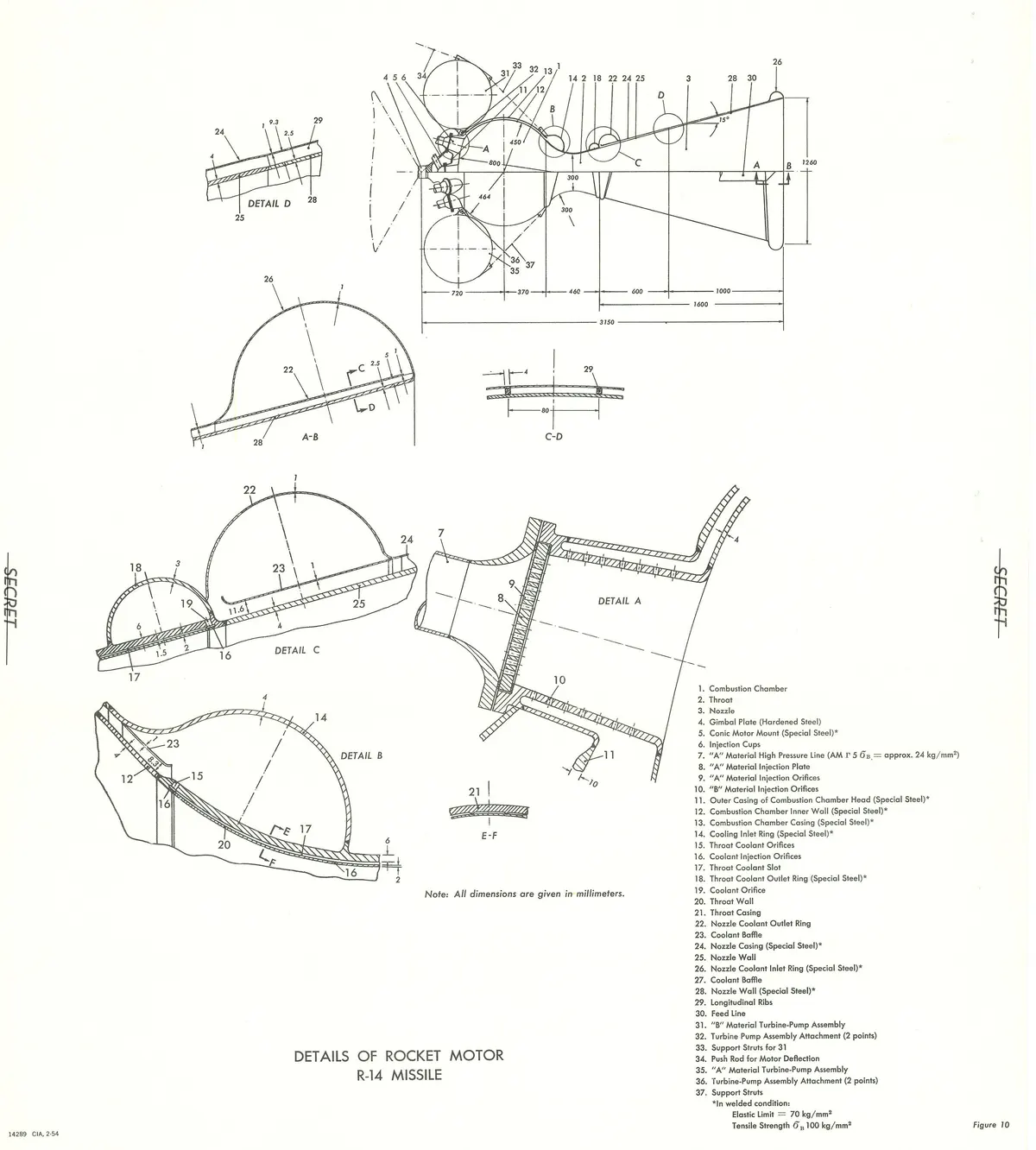
Development traced back to the China Academy of Launch Vehicle Technology's institutional ancestor, the Ministry of National Defense's Fifth Academy, under chief designers Tu Shou'e and Sun Jiadong, both of whom went on to lead later, more famous Chinese aerospace programs.2 The DF-3 borrowed its first-stage engine concept from the Soviet R-14 Chusovaya, a missile China had never received under license but studied closely, and the resulting design gave the People's Liberation Army's Second Artillery Corps a nuclear-capable missile that no longer needed hours of pre-launch cryogenic fueling.3 Roughly 110 missiles reached the field at the type's peak deployment around 1984, a figure often mistakenly quoted as the DF-3's total lifetime production run rather than its peak inventory.4 China converted its last DF-3A units to the newer DF-21 by 2014, the same year Saudi Arabia, for the first and only time, publicly displayed its own DF-3 missiles at a military parade.4
The DF-3's importance is best measured against what came immediately before and after it. Its predecessor, the DF-2, needed a ground radio-correction antenna and hours of dangerous liquid-oxygen fueling before it could fly, while its successor, the DF-4, pushed range out to intercontinental-adjacent distances capable of striking Moscow.5 Sitting between them, the DF-3 was the missile that actually gave China a workable, if crude, intermediate-range nuclear deterrent for close to two decades, and the missile whose export to Saudi Arabia turned a routine Cold War arms deal into a genuine diplomatic crisis once Washington discovered it.
A 64-Tonne, Single-Stage Airframe Built Around Storable Propellant
The DF-3 measured 24 meters long and 2.25 meters in diameter, with a launch weight of 64,000 kilograms, figures confirmed consistently across the Federation of American Scientists' China missile database and other technical sources.6 It flew as a single-stage design, powered by four YF-1 engines burning a storable, hypergolic combination of nitric acid or nitrogen tetroxide oxidizer and unsymmetrical dimethylhydrazine (UDMH) fuel, together producing about 64 tons of liftoff thrust.6 That choice of storable propellant was the single most consequential design decision in the whole program. China's earlier DF-2 burned liquid oxygen, which boils off if left standing and forced hours of pre-launch fueling every time the missile was to be used. Storable propellants can sit loaded in a missile's tanks for extended periods, cutting reaction time dramatically and making the DF-3 the first Chinese ballistic missile design built around that capability.3
- Missile ClassIRBM
- Service Entry Year1971
- DesignerChina Academy of Launch Vehicle Technology
- Length24 m
- Diameter2.25 m
- Launch Weight64,000 kg
- In ServiceYes
A Genuinely IRBM-Class Range, Not the 4,000 to 5,000-Kilometer Figure Sometimes Cited
Published DF-3 range figures vary by source and by variant, but the most consistently cited numbers place the baseline DF-3 at roughly 2,500 kilometers, with some assessments running as high as 2,660 to 2,810 kilometers.6 The improved DF-3A extended that considerably, to a standard 3,000 kilometers with a full payload and reportedly as far as 4,000 kilometers with a reduced warhead load.4 A widely circulated 4,000 to 5,000-kilometer range band for the DF-3 appears to conflate the missile with its successor, the DF-4, which was the design that actually reached that distance class.5 Even at the more conservative, better-sourced figures, the DF-3/DF-3A family sits above the roughly 1,000 to 3,000-kilometer band normally used to define a medium-range ballistic missile, which is why the US Department of Defense and most Western analysts classify it within the intermediate-range ballistic missile category instead.7 That range, whichever exact figure is used, was still enough to put Guam, other American bases in the Western Pacific, and the Soviet Far East within reach from launch sites in China for the first time.6
- Propulsion Typeliquid-propellant rocket
- Number of Stages1
- Fuel TypeNitrogen tetroxide / UDMH
- Solid-FuelNo
- Cold-LaunchNo
- CanisterizedNo
Guidance, Accuracy, and a Warhead Debated Between One Large Yield and Three Smaller Ones
The DF-3 relied on inertial guidance, without any terminal guidance correction or maneuverable reentry vehicle technology, and its published circular error probable spans a wide band, roughly 1,000 to 4,000 meters depending on the source and era, reflecting the imprecise guidance electronics of a 1960s-designed missile rather than a single tightly bounded figure.6 The throw weight is generally put at around 2,000 kilograms, broadly consistent with the payload needed for the warhead options reported for the type.6 Those options themselves diverge in an interesting way. Most sources describe a single reentry vehicle carrying a thermonuclear warhead anywhere from 700 kilotons up to roughly 3.3 megatons, alongside an alternative loadout of three separate warheads in the 50 to 100-kiloton range each, a configuration closer to a multiple reentry vehicle arrangement than a true independently targeted MIRV payload.6 Either loadout puts the DF-3 firmly in the thermonuclear-yield class, a point worth stating plainly, since the missile has occasionally been described only as a straightforward atomic weapon in less careful summaries.
- Minimum Range2,500 km
- Maximum Range4,000 km
- Apogee1,000 km
- Re-Entry Speed (Mach)10 Mach
- Throw Weight2,150 kg
- Depressed-Trajectory CapableNo
Silo and Cave Basing, Not the Road-Mobile Launcher Sometimes Attributed to It
Every serious technical assessment of the DF-3 describes it as a silo-based or cave-adjacent fixed-site missile, never a road-mobile system.6 China's early liquid-fueled missile generation, the DF-2, DF-3, DF-4, and DF-5, all shared this limitation. Their long, careful fueling procedures, reported at roughly 120 to 150 minutes for the DF-3 even after streamlining, made a genuinely mobile transporter-erector-launcher impractical, so the missiles were instead emplaced in fixed silo complexes, some built into hillsides for protection.8 A road-mobile basing mode attributed to the DF-3 elsewhere does not match any sourced account of how the Second Artillery Corps actually operated the type, and the distinction matters operationally, since a fixed silo is a known, targetable location in a way a genuinely mobile launcher is not.
- Circular Error Probable (CEP)2,500 m
- Guidance TypeInertial / GPS
- Terminal GuidanceNo
- Maneuverable Re-Entry Vehicle (MaRV)No
- Penetration Aids / DecoysNo
- Warhead Typethermonuclear
- NuclearYes
- ThermonuclearYes
- Yield (per warhead)2,000
- MIRVNo
- Warhead / RV Count1
- Conventional-CapableYes
- Basing Modesilo
- Silo-BasedYes
- Road-Mobile (TEL)No
- Rail-MobileNo
- Submarine-LaunchedNo
- Total Production110
- First Test1966
- Detonation Mechanism / Fuzecontact fuze
- Explosive Filler TypeNuclear
Design Work at the Fifth Academy, Borrowing From a Soviet Rival

Design work on what became the DF-3 began in the early to mid-1960s inside the Ministry of National Defense's Fifth Academy, the direct institutional predecessor of today's China Academy of Launch Vehicle Technology.2 Tu Shou'e and Sun Jiadong are the two designers most consistently credited with leading the program. Tu Shou'e went on to lead China's DF-5 intercontinental ballistic missile program at the same institute, while Sun Jiadong later became chief designer of China's early satellite and lunar exploration efforts, giving the DF-3 program a direct institutional line to two of the most significant later chapters in Chinese aerospace history.2 The missile's first-stage engine design was reportedly derived from the Soviet R-14 Chusovaya, NATO reporting name SS-5, even though China never received the R-14 under license the way it had the earlier R-2 rocket. Chinese engineers studied the Soviet design and adapted its booster engine concept for the DF-3's four YF-1 engines, a detail that places the DF-3 in a direct engineering line from Soviet 1950s rocketry despite the collapse of formal technical assistance between the two countries by 1960.3
Rushed Into Service Ahead of Its Own Flight Tests
The DF-3 first flew in 1966, and by 1972 the program had accumulated roughly 14 to 16 test firings, a modest number by the standards of a fully validated weapons program.4 What happened next is one of the more striking, less-repeated facts in the DF-3's history. Armed clashes with the Soviet Union along the Ussuri River in March 1969, centered on the first and second battles of Zhenbao Island, pushed Chinese leadership to accelerate deployment of a credible deterrent against the Soviet Far East.1 Missiles were delivered to the Second Artillery Corps before the DF-3's flight-test program had actually finished, and the force reportedly rejected the type outright on delivery, unwilling to accept an unvalidated weapon into operational service. A proper proof-of-concept test only followed in 1973, years after the DF-3 had nominally entered service in 1971.1
The DF-3A, Peak Deployment, and a Slow Decline
Development of the improved DF-3A began around 1981, extending range, refining guidance, and entering service sometime between 1986 and 1988 depending on the source consulted, a genuine discrepancy in the public record rather than a settled date.4 Deployment of the DF-3 family peaked at roughly 110 missiles around 1984, the figure most often quoted as the type's total production run when it actually describes the peak deployed inventory at that single point in the 1980s.4 Numbers declined steadily after that, to about 50 missiles by 1993 and roughly 17 missiles across 10 launchers, organized as a single brigade, by 2010.4 China completed the conversion of its remaining DF-3A units to the solid-fueled DF-21 by 2014, closing out a service career of more than four decades for a missile family that had entered service in 1971.4
The DF-3 was never fired at a target in an actual war, and its significance sits almost entirely in deterrence and export politics rather than combat use. Its Chinese deployment history, however, cannot be separated from the Sino-Soviet border conflict of the late 1960s. The March 1969 clashes at Zhenbao Island, fought amid deepening ideological and territorial disputes between Beijing and Moscow, directly drove the decision to push the still-unvalidated DF-3 into operational service with the Second Artillery Corps rather than wait for a completed test program.1 In that sense the missile functioned as an emergency deterrent response to a specific, escalating crisis, aimed at Soviet Far East targets, more than as a weapon developed against any single adversary from the outset.
The DF-3's other major real-world entanglement came through Saudi Arabia, and it involves the Iran-Iraq War only as a cover story rather than genuine combat use. China's 1987 missile shipment to Riyadh was reportedly disguised within an unrelated consignment of Chinese weapons Saudi Arabia had separately purchased, ostensibly on behalf of Iraq during that country's war with Iran.9 The DF-3 itself was never employed in the Iran-Iraq War, and describing it as a participant in that conflict would overstate a genuinely different fact, that its export was smuggled under cover of an arms relationship connected to it.
- DF-2 (predecessor), China's first indigenous medium-range ballistic missile, 20.6 meters long with a 1.65-meter diameter and an initial range around 1,050 kilometers, extended to roughly 1,250 kilometers on the improved DF-2A. Liquid-oxygen fueling made it slow to launch, the exact problem the DF-3 was designed to solve.11
- DF-3 (baseline), the initial production model covered above, entering service in 1971 with a range around 2,500 kilometers.6
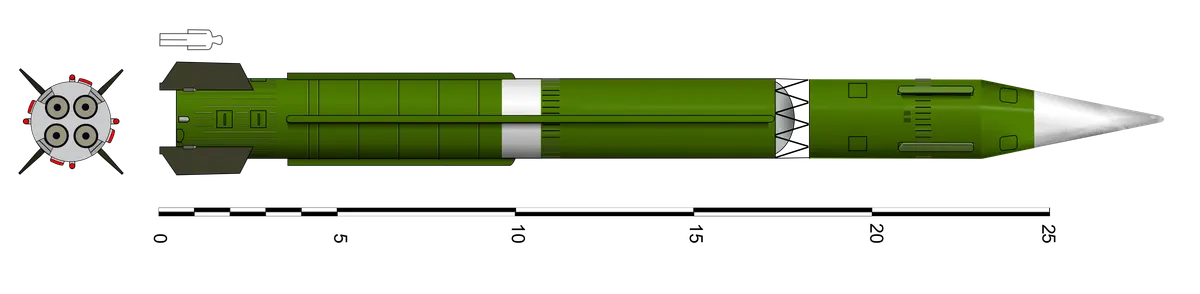
- DF-3A (improved), extending range to 3,000 kilometers standard and up to 4,000 kilometers on a reduced payload, with refined inertial guidance, entering service in the mid-to-late 1980s and eventually accounting for the bulk of the type's deployed inventory before its 2014 retirement.4
- DF-4 (successor), developed in parallel with the DF-3 from around 1965 rather than strictly afterward, the DF-4 pushed range out to 4,500 to 5,500 kilometers, enough to threaten Moscow after a post-1969 redesign, on a larger 82,000-kilogram, 28-meter airframe carrying a single 1 to 3-megaton warhead.5


| Year | Buyer | Quantity | Amount | Present Value (2025) |
|---|---|---|---|---|
| 1987 |  Saudi Arabia | — | $3.25 Mr | $9.21 Mr |
China's Second Artillery Corps, later renamed the PLA Rocket Force, was the DF-3's sole domestic operator from 1971 until the last units converted to the DF-21 by 2014.4 The only foreign operator was Saudi Arabia, whose Royal Saudi Strategic Missile Force received an estimated 36 to 60 missiles beginning in 1987, reportedly configured with conventional high-explosive warheads only, following written assurances China gave the Reagan administration that Riyadh would not arm the missiles with chemical or nuclear payloads.9 The Institute for International Strategic Studies estimates that more than 10 DF-3 launchers remain nominally in Saudi inventory, though their operational status is unclear given the missile's age and the difficulty of maintaining a decades-old liquid-fueled system.10 Saudi Arabia reportedly sought a more accurate, solid-fueled replacement by the 2000s, acquiring DF-21 (CH-SS-5) missiles from China around 2007 to supplement or eventually succeed its aging DF-3 force.12
The DF-3's most instructive comparison is against the very missile it borrowed engineering ideas from, the Soviet R-14 Chusovaya, because the two designs reveal how far apart Chinese and Soviet missile engineering still stood in the 1960s despite the direct technical link between them. The R-14, which entered Soviet service in 1961 under chief designer Mikhail Yangel, was both longer-ranged and heavier than the DF-3, at 3,600 to 4,500 kilometers and roughly 86,300 kilograms against the DF-3's 2,500-kilometer reach and 64,000-kilogram launch weight, despite the two missiles sharing almost identical dimensions, 24.4 meters by 2.4 meters for the R-14 against the DF-3's 24 meters by 2.25 meters.13 The R-14 also carried a higher-yield warhead, 1 to 2.3 megatons, and a tighter circular error probable, roughly 1.1 to 2.4 kilometers against the DF-3's wider 1 to 4-kilometer band.13 That gap is best read as a measure of where Chinese storable-propellant missile design actually stood relative to its Soviet inspiration, close enough in layout to show direct influence, but still behind in propulsion efficiency and guidance precision even a decade later.
| Spec | DF-3 | R-14 Chusovaya |
|---|---|---|
| Length | 24 m | 24.4 m |
| Diameter | 2.25 m | 2.4 m |
| Launch weight | 64,000 kg | 86,300 kg |
| Range | ~2,500 km (DF-3A to 4,000 km) | 3,600 to 4,500 km |
| CEP | 1,000 to 4,000 m | 1,100 to 2,400 m |
Against its own successor, the DF-4, the comparison tells a different story, one of continuity rather than a technological leap. The DF-4 kept the DF-3's basic storable-propellant approach and silo basing, but stretched the airframe to 28 meters and 82,000 kilograms to reach 4,500 to 5,500 kilometers, enough to bring Moscow within range after the 1969 border clashes convinced Chinese planners they needed more than a Guam-reaching missile.5 Where the DF-3 to R-14 comparison is about a technology gap with a foreign design, the DF-3 to DF-4 comparison is about China deliberately building the next rung on a ladder it had already started climbing, using the same fuel, the same basing concept, and much of the same production infrastructure at Factory 211.
Is the DF-3 still in service anywhere today? In China, no, the last units converted to the DF-21 by 2014. In Saudi Arabia, the honest answer is unclear. More than 10 launchers reportedly remain in the Royal Saudi Strategic Missile Force's inventory, but no independent assessment has confirmed whether any are still maintained in a launch-ready condition after nearly four decades of service.


What is the DF-3 (Dongfeng-3) missile? The DF-3, NATO reporting name CSS-2, is a Chinese single-stage, storable liquid-propellant ballistic missile that entered service in 1971 as China's first weapon capable of reaching Guam and other American bases in the Western Pacific.6
What is the range of the DF-3 missile? The baseline DF-3 reaches roughly 2,500 kilometers, and the improved DF-3A extends that to 3,000 kilometers with a standard payload or up to 4,000 kilometers with a reduced warhead, figures that place the DF-3 family in the intermediate-range rather than medium-range category.6,4
Is the DF-3 missile still in service? China retired its own DF-3/DF-3A force by 2014, converting the last units to the DF-21. Saudi Arabia is reported to still hold more than 10 DF-3 launchers, but their operational readiness after decades of service is not independently confirmed.4,10
Did Saudi Arabia really buy the DF-3 missile from China? Yes. Saudi Arabia secretly purchased an estimated 36 to 60 DF-3/DF-3A missiles from China in a deal concluded around 1986, with the first deliveries arriving in 1987 hidden within an unrelated arms shipment, a purchase that became public only in 1988 and remains China's first confirmed export of a complete ballistic missile system.9
What is the difference between the DF-3 and the DF-3A? The DF-3A is the improved variant, extending range from the baseline DF-3's roughly 2,500 kilometers to 3,000 or, on a reduced payload, up to 4,000 kilometers, with refined inertial guidance, and it made up the bulk of the type's deployed force from the mid-to-late 1980s until final retirement in 2014.4
Who manufactured the DF-3 missile? The China Academy of Launch Vehicle Technology's institutional predecessor, the Fifth Academy of the Ministry of National Defense, developed the DF-3 under chief designers Tu Shou'e and Sun Jiadong, with production centered at Factory 211.2,6
- "Dongfeng (missile)", Wikipedia — en.wikipedia.org) ↩
- "China Academy of Launch Vehicle Technology", Wikipedia — en.wikipedia.org ↩
- "DF-3", Astronautix — astronautix.com ↩
- "DF-3A", Wikipedia — en.wikipedia.org ↩
- "DF-4", Missile Threat, Center for Strategic and International Studies — missilethreat.csis.org ↩
- "DF-3A", Federation of American Scientists — nuke.fas.org ↩
- "DF-3 (Dongfeng 3) Chinese Intermediate-Range Ballistic Missile (IRBM)", ODIN, US Army TRADOC — odin.tradoc.army.mil_Chinese_Intermediate-Range_Ballistic_Missile_(IRBM)) ↩
- "Dong Feng 3 (CSS-2)", GlobalSecurity.org — globalsecurity.org ↩
- "Saudi Arabia's Missile Force", Federation of American Scientists — irp.fas.org ↩
- "Royal Saudi Strategic Missile Force", Wikipedia — en.wikipedia.org ↩
- "DF-2", Wikipedia — en.wikipedia.org ↩
- "Saudi Rattles Its Saber", Nuclear Threat Initiative — nti.org ↩
- "R-14 Chusovaya", Wikipedia — en.wikipedia.org ↩