



The Ababeel is a road-mobile, solid-fuel medium-range ballistic missile developed by Pakistan and first flight-tested on 24 January 2017. It is the country's first missile publicly credited with a multiple independently targetable re-entry vehicle (MIRV) payload, and its stated purpose is narrow and specific, defeating India's developing ballistic-missile-defense (BMD) shield rather than extending Pakistan's reach. Pakistan's Inter-Services Public Relations (ISPR) described the Ababeel test as validating a system able to engage multiple targets with high precision, defeating the enemy's hostile radars.1 That framing, MIRV as an anti-BMD tool rather than a range or yield upgrade, has defined how the Ababeel missile is discussed ever since.
- First South Asian MIRV-payload claim, forcing India's BMD planners to hedge against multiple simultaneous warheads
- Shares a mature Shaheen-III airframe and solid-fuel motor base rather than starting from a clean sheet
- Road-mobile TEL basing improves survivability against a first strike
- Declared range covers all of India from launch sites well inside Pakistani territory
- MIRV separation and independent targeting have never been confirmed by independent flight data
- Publicly known tests (2017, 2023, 2025) show a pattern of shortened flights and reported failures
- Range sacrificed relative to the parent Shaheen-III to accommodate the larger MIRV bus
- No confirmed operational deployment as of the most recent reporting
Airframe and propulsion trace directly to the Shaheen-III missile, Pakistan's longest-ranged solid-fuel design. Both share a reported length of 21.5 meters and a diameter near 1.7 meters, and the Ababeel is widely described as a Shaheen-III derivative with an enlarged nose section built to house a MIRV bus instead of a single re-entry vehicle.2 The tradeoff shows up directly in the numbers. Shaheen-III's tested range reaches roughly 2,750 km, while the Ababeel's declared maximum range is only 2,200 km, a reduction consistent with a heavier, multi-warhead payload replacing pure range.3
What makes the Ababeel unusual in this leaf is how contested its core claim still is. Western defense officials, most explicitly the US Defense Intelligence Agency in 2019 congressional testimony, have stated flatly that the January 2017 test demonstrated South Asia's first MIRV payload.4 Independent missile analysts are far less certain, and openly question whether Pakistan's National Development Complex has solved the specific engineering problems, warhead miniaturization and a functioning post-boost bus for independent targeting, that separate a genuine MIRV from a missile that merely carries several bomblets released together.5 The Ababeel therefore sits in an unusual position for an encyclopedia entry, officially declared an operational-capability system by Islamabad, treated as an unconfirmed and repeatedly troubled program by outside observers.
The Ababeel missile's role inside Pakistan's arsenal is best understood alongside its stablemates. It is one of several medium-range ballistic missiles fielded or tested by Pakistan, alongside the older single-warhead Shaheen-II and Ghauri-I, and it answers directly to India's own MIRV-capable Agni-P and the earlier Agni-II. Understanding what the Ababeel is built to do, penetrate rather than simply reach, is the key to reading every other section below.
Pakistan's official figures for the Ababeel missile describe a three-stage, solid-fuel MRBM measuring 21.5 meters long with a diameter reported at roughly 1.7 meters, though some sources give a slightly wider nose (near 1.8 m) tapering to a narrower body, consistent with a Shaheen-III airframe carrying an enlarged MIRV fairing.2,6 Pakistan states the missile's maximum payload is 1,500 kg, distributed either as three warheads of about 500 kg each, five of 300 kg, or up to eight of 185 kg, numbers that only make sense if the missile genuinely disperses independent re-entry vehicles rather than a single fused warhead.6
- Missile Classmedium_range_ballistic_missile_mrbm
- Designernational_development_complex_nescom
- Length21.5 m
- Diameter1.7 m
- In ServiceNo
Guidance is described only in general terms, inertial navigation with a terminal-guidance stage, a scheme broadly consistent with Pakistan's other Shaheen-family missiles and their claimed circular error probable improvements over the early Ghauri series.2 Pakistan has not published a CEP (circular error probable) figure for the Ababeel specifically, and no independent agency has verified one either.
- Propulsion Typethree_stage_solid_rocket_motor
- Number of Stages3
- Fuel Typesolid_composite_propellant
- Solid-FuelYes
The missile launches from a road-mobile transporter erector launcher (TEL), continuing the basing pattern of the Shaheen family rather than the fixed or semi-fixed arrangements used by some early Pakistani systems.2 Road-mobile basing matters strategically here as much as technically, since it is the physical survivability half of the same equation MIRV payloads address on the offensive side, both features exist to make the Ababeel harder for India to find, track, or intercept before or after launch.
- Maximum Range2,200 km
- Throw Weight1,500 kg

What the Ababeel actually derives from is the most debated part of its technical file. Analysts broadly agree the airframe, first and second stage solid motors, and general aerodynamic shape derive from the Shaheen-III, itself flight-tested in March 2015 with a declared 2,750 km range.3 Pakistan's National Development Complex, the same organization responsible for assembling the Shaheen-II and other Shaheen-series missiles, is consistently credited as the entity behind Ababeel's final assembly, working under the broader National Engineering and Scientific Commission (NESCOM), which oversaw Ababeel's design phase reportedly beginning in the mid-to-late 2000s.7,8
- Guidance TypeInertial / GPS
- Terminal GuidanceYes
The specific technology that separates a real MIRV bus from a simple cluster of warheads, a post-boost vehicle capable of firing small thrusters to place each re-entry vehicle on its own trajectory, is where outside skepticism concentrates most heavily. Analysts writing for the Center for Strategic and International Studies note this requires precision fabrication of small propellant tanks, high-pressure plumbing, and guidance electronics that Pakistan's missile industry has not previously had to demonstrate, and several point to reported Chinese technical assistance as the likely source of whatever progress Pakistan has made.5,9 Pakistan has never confirmed foreign assistance for the Ababeel program specifically.
- Warhead Typemirv_nuclear_or_conventional_reentry_vehicles_disputed
- NuclearYes
- ThermonuclearNo
- MIRVYes
- Warhead / RV Count8
- Conventional-CapableYes
- Basing Moderoad_mobile_tel
- Silo-BasedNo
- Road-Mobile (TEL)Yes
- Rail-MobileNo
- Submarine-LaunchedNo
- Operators1
- First Test2017
Pakistan's Ababeel missile made its public debut on 24 January 2017, launched from a test site near Winder on Pakistan's Balochistan coast, only days after Pakistan had also tested its Babur-III submarine-launched cruise missile.1,10 ISPR's statement tied the two tests together explicitly, framing them as parts of the same push toward an assured second-strike capability, part of the strategy of measured response to nuclear strategies and postures being adopted in Pakistan's neighborhood.10
Independent analysis of the 2017 test complicates the official account. Notices to mariners issued by the Pakistan Navy ahead of the launch defined a danger zone consistent with a flight of roughly 1,100 km at an apogee near 500 km, well short of the missile's declared 2,200 km maximum range, suggesting the test validated basic design and staging parameters rather than a full-range, full-payload MIRV separation event.5 Whether the re-entry vehicles actually separated and maneuvered independently that day has never been publicly confirmed by flight telemetry.
The missile went untested in public for more than six years before Pakistan announced a second flight, on 18 October 2023, under the label Ababeel Weapon System. ISPR again described the purpose as reaffirming design parameters and subsystem performance rather than demonstrating a finished, fielded weapon.11 The International Institute for Strategic Studies read the test as Pakistan moving a further step toward defeating India's maturing BMD architecture, situating it inside Pakistan's declared doctrine of full spectrum deterrence under credible minimum deterrence.12 Open-source analysts and eyewitness reporting, however, raised doubts about whether the October 2023 flight actually met its own test objectives, despite Pakistan's public statement calling it a success.13
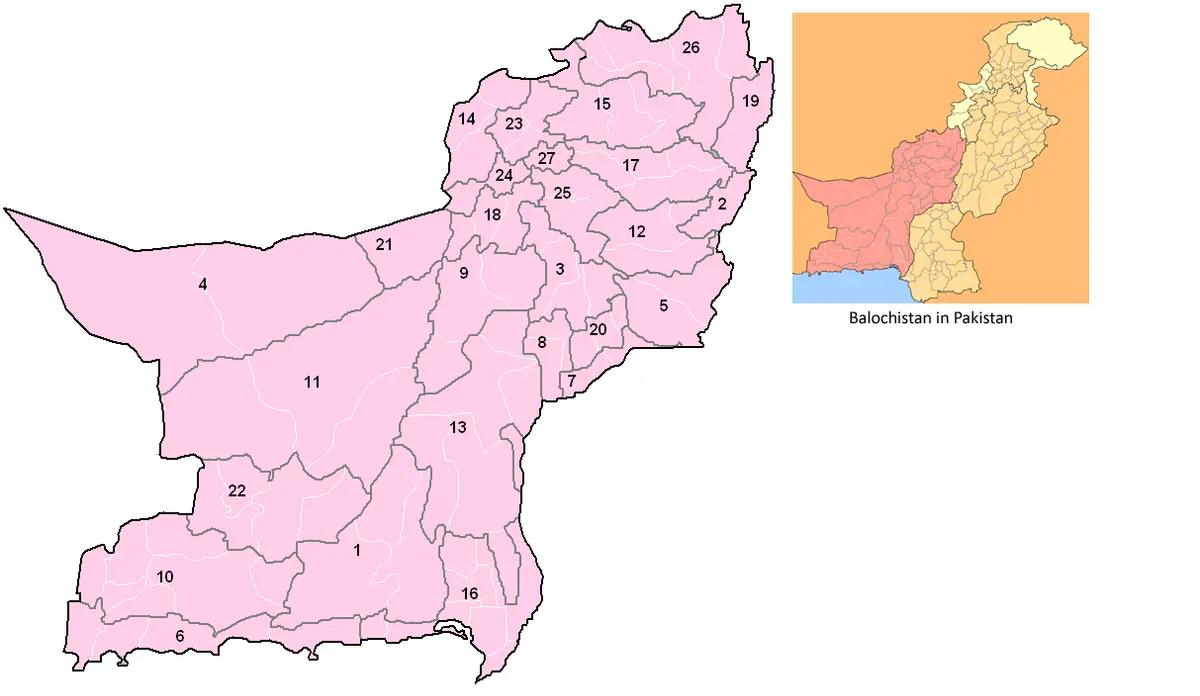
A third reported test, on 20 July 2025, ended in a documented failure. Wreckage attributed to the Ababeel came down near a populated area of Dera Bugti district in Balochistan, and open-source analysts attributed the loss to either a propulsion malfunction or in-flight structural breakup rather than a controlled, planned end of flight.14 US intelligence reportedly tracked the launch closely, deploying an RC-135S Cobra Ball telemetry-collection aircraft over the Arabian Sea, the kind of asset the United States uses specifically to observe foreign ballistic-missile re-entry behavior.14 Pakistan has not issued a detailed public accounting of the failure.
Taken together, the public test record, one flight in 2017 flown well short of its declared range, a 2023 test whose success is independently disputed, and a 2025 failure with debris on populated ground, has become the strongest evidence cited by skeptics that the Ababeel's MIRV capability, whatever Pakistan's engineers have built toward, has not yet been demonstrated as a reliable, field-ready system.15
Pakistan has not disclosed distinct production variants of the Ababeel missile. Every public reference describes a single configuration, distinguished only by payload arrangement rather than by separate model designations, three re-entry vehicles near 500 kg each, five near 300 kg, or eight near 185 kg, all reportedly interchangeable within the same 1,500 kg payload envelope.6 Whether these represent genuinely selectable warhead loads on a single missile design or simply illustrative configurations Pakistan has described to reporters is not independently confirmed.

Pakistan is the only reported operator or developer of the Ababeel missile, and no export customer has ever been publicly suggested, consistent with the missile's stated purpose as a narrowly bilateral counter to India's ballistic-missile-defense programs rather than a general-purpose export product.1,9 Given the unresolved test record described above, some cataloguers treat the Ababeel as still in development or testing rather than as a weapon in full operational service.
The Ababeel missile only makes sense next to the missile it grew out of. Shaheen-III and Ababeel share the same basic airframe and solid-fuel motor stack, but Pakistan built them to solve two different problems. Shaheen-III exists to reach the farthest edges of Indian territory, its 2,750 km range was explicitly sized to cover the Andaman and Nicobar Islands and the Indian mainland alike.3 Ababeel exists to survive whatever India puts in front of that flight path, trading roughly 550 km of range for a MIRV bus intended to overwhelm terminal-phase interceptors with several simultaneous targets instead of one. A single-warhead missile like Shaheen-III gives an interceptor exactly one object to track. If Ababeel's re-entry vehicles genuinely separate and maneuver independently, an interceptor battery built to handle one incoming warhead per launch faces several, a straightforward numbers problem that is the entire rationale for MIRVing a deterrent force.
| Missile | Range (declared) | Payload arrangement | Status |
|---|---|---|---|
| Ababeel | 2,200 km3 | Up to 8 re-entry vehicles (MIRV, disputed)6 | Tested 2017/2023/2025, not confirmed operational |
| Shaheen-III | 2,750 km3 | Single warhead | In service |
On the Indian side of the same equation, the Agni-P missile is the closer counterpart, both weapons are recent-generation, road-mobile MRBMs their respective countries have specifically linked to defeating the other's missile defenses, and both draw comparisons to earlier single-warhead systems in their own family (Agni-II for India, Shaheen-II and Ghauri-I for Pakistan). India has been notably more forthcoming with Agni-P's canisterized basing and solid-fuel design details than Pakistan has with Ababeel's, a transparency gap that itself feeds into how differently the two missile programs are covered in open-source literature. Indian commentary responding to Ababeel, including pieces explicitly titled around the idea that the missile is all bluff, no bite, argues that India's layered defenses (built around systems like the S-400 and Akash) are not meaningfully threatened until Pakistan's MIRV separation is independently confirmed in a completed flight test, a system its own operators regard as complementary to the Akash point-defense network rather than a replacement for it.15


Is the Ababeel missile still in service, or still being tested? Pakistan has not declared the Ababeel operationally deployed. Public flight tests took place in 2017, 2023, and 2025, and the most recent (2025) ended in a reported failure, so most independent trackers describe the Ababeel missile as still in a development or flight-test phase rather than fielded with operational units.14
What is the Ababeel missile's range? Pakistan states a maximum range of 2,200 km, roughly three times the straight-line distance between Islamabad and New Delhi, though the only publicly documented flight (2017) appears to have flown well short of that figure.1,5
Is the Ababeel missile really MIRV-capable? The US Defense Intelligence Agency has stated the 2017 test demonstrated South Asia's first MIRV payload. Independent missile analysts consider this unconfirmed by public flight data, and question whether Pakistan has solved warhead miniaturization and post-boost vehicle engineering needed for genuine independent targeting.4,5
How is the Ababeel different from the Shaheen-III? Both share the same airframe and solid-fuel motors. Ababeel carries a MIRV bus in an enlarged nose fairing at the cost of roughly 550 km of range compared to Shaheen-III's single-warhead configuration.2,3
Who manufactures the Ababeel missile? Pakistan's National Development Complex, working under the National Engineering and Scientific Commission, is credited with the Ababeel's design and assembly.7,8
- "Pakistan Tests New Ballistic Missile Capable of Carrying Multiple Nuclear Warheads", The Diplomat — thediplomat.com ↩
- "Ababeel (missile)", Wikipedia — en.wikipedia.org) ↩
- "Shaheen-III", Wikipedia — en.wikipedia.org ↩
- "Ababeel", Missile Threat, CSIS — missilethreat.csis.org ↩
- "Pakistan Tests New 'Ababeel' MRBM", Missile Threat, CSIS — missilethreat.csis.org ↩
- "Ababeel to 'neutralise India's defence shield'", The Express Tribune — tribune.com.pk ↩
- "National Engineering & Scientific Commission", Wikipedia — en.wikipedia.org ↩
- "Pakistan's New Long-Range Missile Development", Congressional Research Service — everycrsreport.com ↩
- "Pakistan's New Long-Range Missile Development", Congress.gov, Library of Congress — congress.gov ↩
- "Pakistan conducts first flight test of Ababeel surface-to-surface missile", Dawn — dawn.com ↩
- "Pakistan army successfully flight tests Ababeel ballistic missile", Army Recognition — armyrecognition.com ↩
- "Pakistan missile test confirms its MIRV ambitions", International Institute for Strategic Studies — iiss.org ↩
- "Pak's Ababeel Missile Test in Pakistan Ends In Failure; Debris Falls in Baluchistan", Indian Defence News — indiandefensenews.in ↩
- "Pakistan's MIRV dreams crash again: Ababeel missile test ends in fiery failure", WION — wionews.com ↩
- "Pakistan's Ababeel MIRV Missile: All Bluff, No Bite!", Indian Defence News — indiandefensenews.in ↩