


The DF-21C (Dongfeng-21C) is a Chinese road-mobile, solid-fuel medium-range ballistic missile that gave the PLA Rocket Force its first credible conventional precision-strike option against fixed targets hundreds of kilometers inland or across the sea. Western analysts first identified the missile in 2006, more than a decade after the original nuclear DF-21 entered service in 1991.1 Where the base DF-21 and its DF-21A follow-on exist to deliver a nuclear warhead with accuracy measured in hundreds of meters, the DF-21C adds a terminal guidance package that shrinks its circular error probable to tens of meters, turning a Cold War area weapon into something that can plausibly hit a runway, a hangar, or a pier.2
- terminal guidance cuts CEP to tens of meters
- solid-fuel road-mobile TEL, faster to launch than liquid-fueled predecessors
- larger conventional payload than the nuclear DF-21A
- theater range covers Japan-based US airbases from western China
- single type serves both nuclear and conventional roles
- shorter range than the DF-21A it shares an airframe with
- confirmed operational only in China's interior, limiting basing flexibility
- terminal-guidance sensor never authoritatively confirmed in open sources
- TELs still depend on prepared roads and fixed pads, not true off-road mobility
- accuracy figures for the type vary significantly source to source
Most open-source assessments describe the DF-21C as dual-capable, meaning it can carry either a nuclear or a conventional warhead depending on the mission, rather than being a purely conventional design.1,2 Even so, the weight of the reporting is that the DF-21C exists primarily to give China a conventional theater-strike capability it previously lacked, and that framing (a precision-guided conventional derivative built onto an existing nuclear MRBM airframe) is the more useful way to understand why the missile was built at all.
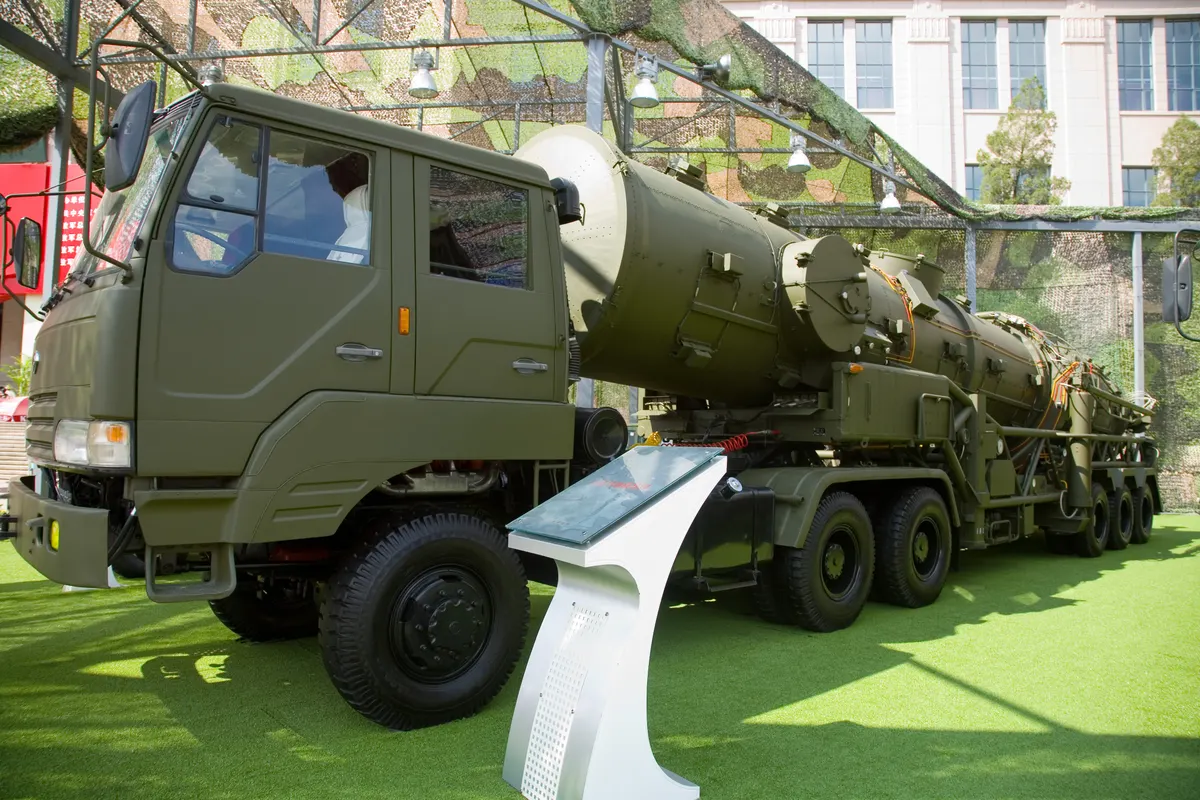
The DF-21C carries the same 10.7 meter long, 1.4 meter diameter, roughly 14,700 kilogram airframe as the rest of the DF-21 family, a two-stage solid-propellant missile originally derived from work that also produced the JL-1 submarine-launched missile.1,2 Its distinguishing features are internal rather than external. Where the nuclear DF-21A relies on inertial guidance alone, sufficient for a warhead whose destructive radius makes precise aim less important, the DF-21C adds a terminal guidance stage on top of inertial midcourse flight, letting a conventional high-explosive warhead do useful military damage against a specific building or runway rather than a general area.3
DF-21C brigades of the PLA Rocket Force, the successor to the Second Artillery Corps that operated the type before 2015-2016, are based in China's interior western provinces, positioned to range Japan, the Korean Peninsula, and the Taiwan theater without exposing launch sites near the coast.3 The missile sits in the middle of a layered Chinese conventional-strike architecture, above the shorter-range DF-16 and DF-15 that are aimed mainly at Taiwan, and below the longer-range DF-26 that can reach Guam. This article covers the DF-21C's specifications, its unusual and still-debated public identification history, and the strategic role it plays in China's anti-access approach to a Western Pacific conflict, drawing throughout on how the DF-21C compares with the DF-21A it shares a body with and the DF-21D anti-ship variant it is frequently confused with.
DF-21C specifications start from an airframe common to the whole family. It is a two-stage, solid-fuel missile measuring 10.7 meters in length and 1.4 meters in diameter, with a launch weight around 14,700 kilograms, figures that Missile Threat (CSIS) and Wikipedia both attribute to the DF-21C sharing its basic platform with the DF-21 and DF-21A.1,2 The solid-propellant design lets the missile be fueled at the factory and stored ready to fire, a real operational advantage over liquid-fueled predecessors that required fueling shortly before launch, and it is what makes the entire DF-21 line practical to move on a road-mobile transporter erector launcher (TEL) instead of a fixed silo.
- Missile Classmrbm
- Service Entry Year2006
- DesignerChangfeng Mechanics and Electronics Technology Academy
- Length10.7 m
- Diameter1.4 m
- Launch Weight14,700 kg
- In ServiceYes
Range is where the DF-21C's specifications diverge most from its stablemates. Wikipedia and most secondary sources give a commonly cited 1,700 kilometer maximum range.1 Hans Kristensen's analysis for the Federation of American Scientists puts it more precisely at 1,770 kilometers, explicitly noting that this is shorter than the DF-21A's roughly 2,150 kilometer range, a tradeoff made in exchange for carrying a heavier payload.3 CSIS's Missile Threat project lists 2,150 kilometers for the DF-21C, a figure that more plausibly belongs to the DF-21A and appears to reflect some conflation between the two variants on that page.2 Given the specificity of the satellite-imagery-based analysis, the 1,700-1,770 kilometer range is treated here as the better-supported figure, with the wider 1,700-2,150 kilometer spread noted as the range you will see across different references.
- Propulsion Typetwo-stage solid-propellant rocket motor
- Number of Stages2
- Fuel Typesolid propellant
- Solid-FuelYes
Accuracy tells a similar story of source disagreement, though all sources agree on the underlying point, that the DF-21C is dramatically more accurate than the nuclear DF-21/DF-21A. Wikipedia cites a circular error probable (CEP) of 50 to 100 meters, CSIS gives 40 to 50 meters, and at least one secondary synthesis cites 30 to 40 meters, a figure that likely conflates the DF-21C with the tighter roughly 20 meter CEP reported for the anti-ship DF-21D.1,2 The safest characterization is that the DF-21C's CEP falls somewhere in the tens of meters, a dramatic improvement over the several-hundred-meter-to-kilometer-class accuracy typical of a purely inertially guided nuclear MRBM, and that improvement in accuracy is the entire point of building the "C" variant in the first place.
- Maximum Range1,700 km
- Throw Weight2,000 kg
The guidance system responsible for that accuracy improvement is not authoritatively pinned down in open-source reporting. Descriptions generally converge on an inertial midcourse phase followed by some form of terminal guidance, variously described as active radar homing, satellite-navigation-aided (potentially BeiDou-linked) updates to the inertial system, or some combination of the two.2,3 No source consulted here identifies the exact seeker hardware with confidence, so the terminal-guidance sensor should be treated as a real but imprecisely documented feature rather than a settled fact. The DF-21C's warhead is most consistently described as a conventional high-explosive unitary charge, with a payload capacity of up to roughly 2,000 kilograms, notably larger than the payload the nuclear DF-21A carries, another factor behind the range reduction between the two variants.3
- Circular Error Probable (CEP)50 m
- Guidance TypeActive Radar
- Terminal GuidanceYes
- Maneuverable Re-Entry Vehicle (MaRV)No
Basing follows the same road-mobile pattern as the rest of the family. One source, Army Recognition, names a specific WS-2500 10x10 high-mobility truck chassis with roughly 28 tons of load capacity as the DF-21C's transporter erector launcher, describing horizontal road transport followed by hydraulic-stabilized vertical erection immediately before launch.4 That level of detail comes from a single source and should be treated as plausible rather than fully confirmed. Kristensen's satellite-imagery analysis of the DF-21C's actual deployment area adds an important qualifier regardless of TEL model, noting that launch sites remain tied to prepared roads and fixed pads, meaning the missile is considerably less capable of true off-road, anywhere-anytime mobility than the term "road-mobile" implies on its own.3
- Warhead Typeconventional high-explosive unitary (dual-capable, can also carry a nuclear warhead)
- NuclearYes
- MIRVNo
- Warhead / RV Count1
- Conventional-CapableYes
- Basing Moderoad-mobile transporter erector launcher (TEL)
- Silo-BasedNo
- Road-Mobile (TEL)Yes
- Rail-MobileNo
- Submarine-LaunchedNo
- Operators1
The DF-21 itself traces back to Chinese solid-fuel missile work beginning in the late 1960s, first flight-tested around 1985, and entering service as a nuclear-armed MRBM in 1991, the Changfeng Mechanics and Electronics Technology Academy credited as its developer.1 The conventional DF-21C represents a distinct later phase in that program, part of a broader PLA shift beginning in the 2000s toward conventionally armed precision ballistic missiles as a substitute for airpower in denying an opponent the use of regional military bases.3 Descriptions of a conventional DF-21 variant circulated in Western analysis as early as 2005, and the DF-21C was publicly identified by name in Western reporting in 2006, the year most reference sources, and the DB record for this weapon, treat as its likely service-entry point, though this reflects first identification rather than a confirmed initial operational capability date.1,3

The DF-21C's first confirmed public appearance came on October 1, 2009, at the parade marking the 60th anniversary of the People's Republic of China. China's Ministry of National Defense itself identified the missile on display as the conventional DF-21C, alongside the newly revealed DF-31A intercontinental missile.6 Hans Kristensen of the Federation of American Scientists described this as, to his knowledge, the first time Chinese authorities had officially named the DF-21C in public.6 The timing is unusual in its own right. US intelligence assessments at the time reportedly did not yet consider the DF-21C to be operationally deployed, meaning the missile was shown to the world in Beijing before Western agencies had confirmed it was actually in the field.6
That gap closed on June 14, 2010, when commercial satellite imagery from the GeoEye-1 satellite, analyzed by Kristensen, showed the first confirmed DF-21C deployment area, located roughly 230 kilometers west of Delingha in Qinghai province, near Mount Qilian and the G215 national road.3 The imagery identified two separate launch-unit sites about 7 kilometers apart, each covering a footprint of roughly 300 by 300 meters and including barracks, logistics buildings, launcher-service facilities, and fuel storage, evidence of an established brigade rather than a temporary deployment.3 A 2010 US Department of Defense report similarly flagged DF-21C deployments near Golmud and Delingha, a location China analysts noted also drew attention in India given its proximity to the disputed India border region.3
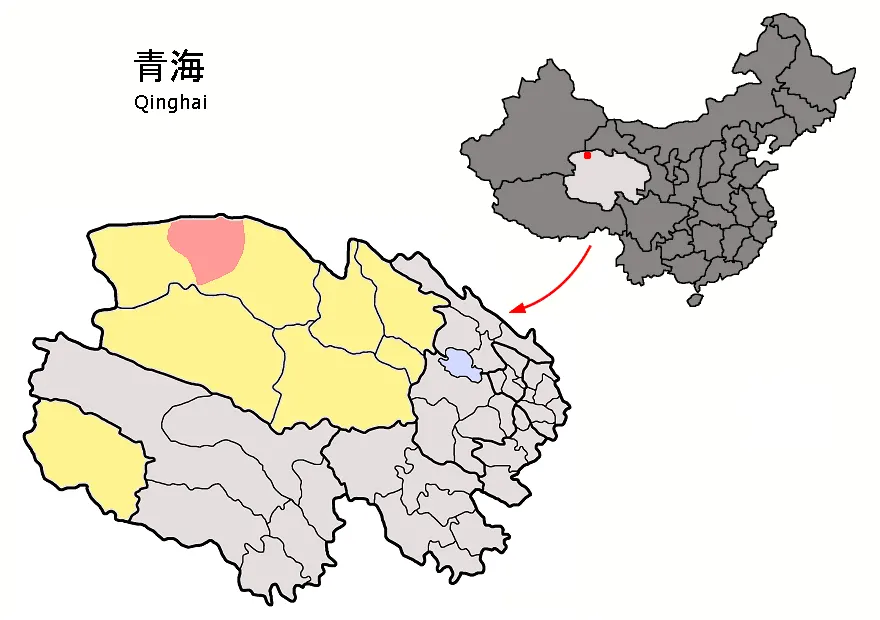
That western-interior basing pattern reflects the broader build-out of China's conventional missile force during this period. Analysts have noted that eleven new Second Artillery missile brigades were reportedly stood up between 2001 and 2010, several equipped with dual-use systems comparable to the DF-21C, positioning China's precision-strike inventory well back from the coast while still holding forward US and allied bases at risk.3
The DF-21C has not been confirmed at any Chinese military parade since 2009. A frequently repeated claim of a 2015 DF-21C parade appearance does not hold up. The confirmed ballistic-missile lineup at the September 3, 2015 Victory Day parade in Beijing was the DF-5B, DF-15B, DF-16, DF-21D, DF-26, and DF-31A, with the DF-21D, the anti-ship variant, occupying the slot often mistaken for its land-attack sibling given the two missiles' near-identical canisters and launch vehicles.7,8 The DF-21 family, including the DF-21C, was also absent from the October 1, 2019 parade marking the 70th anniversary of the People's Republic, which instead premiered the DF-17 hypersonic glide vehicle, the DF-41 intercontinental missile, and the DF-100.9
The DF-21C has never been fired in combat, and its significance lies instead in the strategic role it plays in China's anti-access/area-denial posture toward a Taiwan Strait or broader Western Pacific contingency. Its conventional precision-strike role is aimed explicitly at logistics nodes and regional military bases, above all the airfields clustered around Okinawa, including Kadena Air Base and, by extension, Yokota, Misawa, and Iwakuni air bases and the naval facilities at Yokosuka and Sasebo.10 Degrading those bases in the opening phase of a crisis is meant to prevent the United States from flowing reinforcements and sortie-generating airpower through forward positions in Japan.
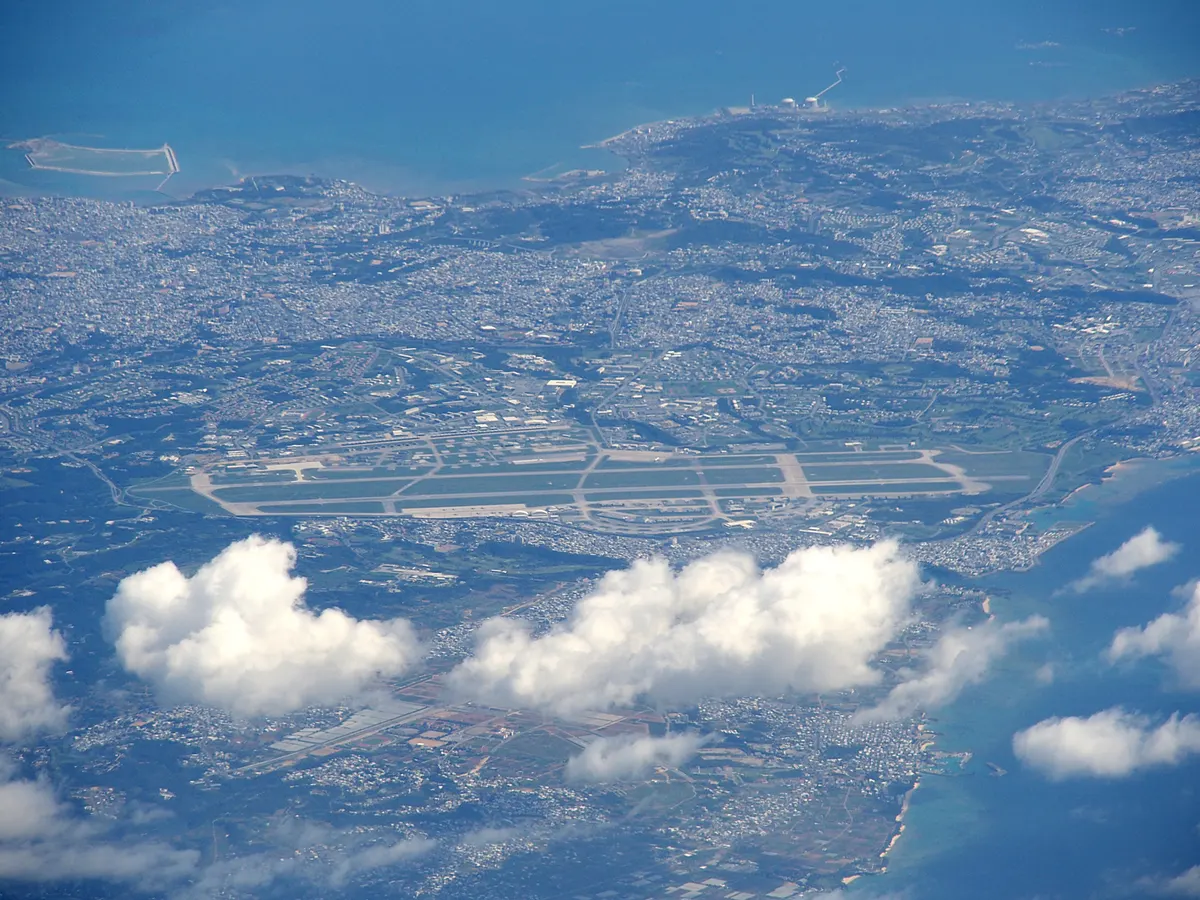
Kadena Air Base sits roughly 650 kilometers from the Chinese coast, comfortably inside the DF-21C's 1,700-plus kilometer range, and has been called the keystone of American airpower in the Pacific.10 Analysis from the Stimson Center models what happens if bases like Kadena are put out of action early in a conflict, forcing US air operations back to Andersen Air Base on Guam, roughly 2,300 kilometers further from the potential fight, a shift that would sharply strain sortie generation and tanker support for any operation over Taiwan or the East China Sea.10 That gap between a forward Japan-based posture and a rearward Guam-based one is precisely why a theater-range precision missile aimed at airbases carries outsized strategic leverage, a point that Toshi Yoshihara's testimony to the US-China Economic and Security Review Commission develops in detail, including reports that PLA Rocket Force training exercises in western China have rehearsed strikes against mockups resembling Kadena's runway layout.11

Within that architecture, the DF-21C occupies a specific tier. It sits above the shorter-range DF-16 and DF-15 short-range ballistic missiles used more directly against targets on Taiwan itself, and below China's longer-range DF-26 intermediate-range ballistic missile, nicknamed the Guam killer after its 2015 parade debut, which extends the same layered conventional-strike logic further into the second island chain.7 The DF-21C's distinguishing contribution to that layered structure is theater reach combined with precision, letting China threaten fixed, high-value targets in Japan and beyond Taiwan itself without needing the accuracy-degrading tradeoffs of the older, purely inertially guided DF-21A.
Whether this strike architecture would work as planned in an actual crisis remains untested, since the DF-21C has never been fired in anger. Modeling from the Stimson Center cautions that cratering a runway with ballistic-missile strikes has only a temporary effect. Repair crews can fill craters and restore flight operations within hours, so keeping an airbase closed requires repeated salvos rather than a single successful hit.10 That caveat does not remove the DF-21C from serious strategic planning. It means the missile's realistic contribution is complicating and delaying a US response, rather than permanently shutting a base down on the first strike.
The DF-21 family's internal naming is genuinely disputed among specialists, and the disagreement is worth stating plainly rather than picking a side silently. The US intelligence community designates the whole family CSS-5, with Mod numbers distinguishing individual variants. Jeffrey Lewis's analysis at ArmsControlWonk assigns the DF-21C the designation CSS-5 Mod 3, reserving Mod 4 for the separate anti-ship DF-21D.4 CSIS's Missile Threat page, by contrast, labels the DF-21C itself as CSS-5 Mod 4, conflicting directly with the ArmsControlWonk mapping.2 The ArmsControlWonk reasoning, developed specifically to resolve early media confusion between the land-attack and anti-ship variants, reads as the more carefully argued of the two, so Mod 3 is treated here as the better-supported designation for the DF-21C, while the CSIS discrepancy is flagged rather than silently discarded.
That confusion had a real origin. When the anti-ship ballistic missile now known as the DF-21D first drew Western attention, some early media coverage called it the DF-21C as well, since both share the same base airframe and canister-style launcher. Lewis and other specialists argued at the time that the anti-ship missile, using an entirely different maneuvering reentry vehicle to hit moving ships at sea, deserved its own designation rather than being folded into the land-attack DF-21C, and the DF-21D name that resulted has stuck.4 The DF-21D reportedly reached initial operational capability around 2010 to 2012, with a CEP cited around 20 meters, tighter than the DF-21C's already improved terminal-guided accuracy, reflecting the additional guidance demands of hitting a moving target at sea rather than a fixed one on land.5
| Variant | NATO/DoD name | Role | Status |
|---|---|---|---|
| DF-21 | CSS-5 Mod 1 | Nuclear MRBM | Operational since 19911 |
| DF-21A | CSS-5 Mod 2 | Improved-range nuclear MRBM | Deployed late 1990s1 |
| DF-21C | CSS-5 Mod 3 (disputed, see above) | Conventional/dual-capable precision land-attack | Identified 2006, deployed by 20103,4 |
| DF-21D | CSS-5 Mod 4 | Anti-ship ballistic missile | IOC circa 2010-20125 |
Set against its own family, the DF-21C's core distinction from the base DF-21 and the DF-21A is guidance rather than airframe. Both older variants rely on inertial guidance alone, which is adequate for a nuclear warhead whose lethal radius makes precise aim less important, while the DF-21C's added terminal guidance stage lets a conventional warhead do useful damage against a specific point target, the change that makes the C variant a genuinely different weapon rather than a minor upgrade of the same missile.

The DF-21C is operated exclusively by China, through brigades of the PLA Rocket Force, known as the Second Artillery Corps until its 2015-2016 reorganization into a full-fledged military service branch.3 Confirmed units are based in China's interior western provinces, particularly the Qinghai and Gansu region near Delingha, a basing choice that keeps launch sites away from the coast while still positioning them to range Japan, the Korean Peninsula, Guam-adjacent approaches, and the Taiwan theater depending on which brigade is involved.3
Operating a dual-capable missile alongside purely nuclear systems in the same force creates its own complication. Because DF-21C brigades sit inside the same PLA Rocket Force command structure as brigades flying the nuclear-only DF-21A, and because the DF-21C itself can reportedly carry either warhead type, an adversary observing a launch during a crisis cannot necessarily tell from the missile alone whether it is carrying a conventional or a nuclear payload.3 That warhead ambiguity is a frequently cited risk in analysis of China's theater-range missile forces, and it applies to the DF-21C specifically because of how closely its basing and command arrangements are shared with the nuclear DF-21A.
No export sales or foreign operators of the DF-21C have been reported in any source reviewed here, consistent with China's general practice of keeping its ballistic missile inventory, particularly nuclear-capable dual-use systems, entirely within its own armed forces.
The clearest way to place the DF-21C is against the missile it shares an airframe with, the nuclear-armed DF-21A, because the two missiles make an almost perfect natural experiment in what terminal guidance buys you. Both use the same roughly 14,700 kilogram, two-stage solid-fuel body. The DF-21A trades payload for range, reaching a widely cited 2,150 kilometers with inertial-only guidance and a CEP in the hundreds of meters, adequate for a nuclear yield but useless against a specific building.1,3 The DF-21C trades some of that range back, landing around 1,700 to 1,770 kilometers, in exchange for carrying a heavier conventional payload and a terminal guidance package that brings its CEP down into the tens of meters.2,3 That tradeoff is the entire reason the DF-21C exists rather than China simply arming the DF-21A with a conventional warhead.
| Spec | DF-21C | DF-21A |
|---|---|---|
| Range | ~1,700-1,770 km2,3 | ~2,150 km3 |
| CEP | ~40-100 m1,2 | hundreds of meters3 |
| Guidance | Inertial + terminal2,3 | Inertial only3 |
| Warhead | Conventional HE, dual-capable1,2 | Nuclear1 |
The comparison against the anti-ship DF-21D is a comparison of mission rather than of specifications. Both are conventional derivatives of the same CSS-5 family, and both were confused for each other in early 2009-2010 media coverage, but they solve different problems. The DF-21C is a land-attack weapon aimed at fixed targets, airbases, ports, and logistics sites that do not move. The DF-21D is the world's first operational anti-ship ballistic missile, built around a maneuvering reentry vehicle able to adjust its final approach against a moving warship at sea, reportedly with an even tighter CEP around 20 meters and an initial operational capability in the 2010-2012 timeframe.5 A reader searching for how the DF-21C compares to the DF-21D should take away that the two missiles look nearly identical on a launch pad and belong to the same designation family, but they are built to solve opposite problems, one hitting a runway that cannot move, the other hitting a ship that can.
Against the shorter-range DF-16 and DF-15, the comparison is one of reach rather than of guidance concept. DF-15 is the older of the two, a short-range ballistic missile with a roughly 500 to 700 kilometer range and the largest deployed inventory of any Chinese ballistic missile family, cited in the thousand-plus range, aimed primarily at targets on Taiwan itself.3 DF-16 is a newer, longer-ranged missile developed from the same DF-11/DF-15 design line, harder for missile defenses like PAC-3 to intercept and still Taiwan-focused in its likely targeting.3 The DF-21C sits a tier above both in range, extending China's conventional precision-strike reach past Taiwan to the US and allied facilities in Japan, a distinction that matters enormously for anyone assessing which Chinese missile threatens which specific set of targets in a regional crisis.

What is the DF-21C missile used for? The DF-21C is a Chinese medium-range ballistic missile built to strike fixed targets such as airbases, ports, and logistics facilities with a conventional high-explosive warhead, though most sources describe it as dual-capable and able to carry a nuclear warhead as well.1,2
What is the range of the DF-21C? Sources place the DF-21C's maximum range between roughly 1,700 and 2,150 kilometers, with the more specific satellite-imagery-based analysis from the Federation of American Scientists favoring the lower end, around 1,700 to 1,770 kilometers.1,3
How accurate is the DF-21C? Its circular error probable (CEP) is commonly cited in the range of 40 to 100 meters, a large improvement over the several-hundred-meter accuracy of the purely inertially guided nuclear DF-21 and DF-21A.1,2
Is the DF-21C nuclear or conventional? Most reporting describes it as dual-capable, meaning it can be armed with either a conventional high-explosive warhead or a nuclear warhead depending on the mission, though its primary purpose was to give China a conventional precision-strike option it did not previously have.1,2
Is the DF-21C still in service? Yes. Satellite imagery first confirmed operational DF-21C deployment sites near Delingha, Qinghai, in June 2010, and the type remains in service with the PLA Rocket Force, with no confirmed retirement or replacement.3
What is the difference between the DF-21C and the DF-21D? The DF-21C is a land-attack missile aimed at fixed targets, while the DF-21D is a separate anti-ship ballistic missile variant built around a maneuvering reentry vehicle to hit moving ships at sea, a distinction that some early media coverage blurred by calling both missiles the DF-21C.4,5
- "DF-21", Wikipedia — en.wikipedia.org ↩
- "DF-21 (CSS-5)", Missile Threat, CSIS — missilethreat.csis.org ↩
- "DF-21C Missile Deploys to Central China", Federation of American Scientists — fas.org ↩
- "DF-21 Delta aka CSS-5 Mod 4", ArmsControlWonk — armscontrolwonk.com ↩
- "China Deploys World's First Long-Range, Land-Based Carrier Killer (DF-21D) Anti-Ship Ballistic Missile (ASBM) Reaches Initial Operational Capability (IOC)", China SignPost — chinasignpost.com ↩
- "Missile Mystery in Beijing", Federation of American Scientists — fas.org ↩
- "2015 China Victory Day Parade", Wikipedia — en.wikipedia.org ↩
- "China's Parade Puts US Navy on Notice", Defense News — defensenews.com ↩
- "A Modern, Advanced People's Liberation Army, First Takeaways from the 70th Anniversary Parade", The Diplomat — thediplomat.com ↩
- "Cratering Effects, Chinese Missile Threats to US Air Bases in the Indo-Pacific", Stimson Center — stimson.org ↩
- Toshi Yoshihara, Testimony before the US-China Economic and Security Review Commission, April 1, 2015 — uscc.gov ↩