

A ballistic missile is road-mobile when it fires from a wheeled or tracked transporter-erector-launcher, or TEL, that drives over ordinary roads and launches from a position chosen shortly beforehand. That trait separates it from a silo-based missile, ready inside a hardened tube whose coordinates an adversary can identify years ahead of time, and from the rarer rail-mobile scheme, where the missile rides a disguised railcar among ordinary freight traffic. Road-mobile deployment trades a silo's reinforced concrete for something a satellite cannot fix in advance, namely where the launcher actually is on a given day.
The tradeoff runs both ways. A TEL still has to halt, raise its canister to vertical, and run a countdown before firing, so mobility buys concealment rather than instant readiness.1 Road-mobile also does not mean launching from the pavement itself. Convoys use public roads mainly to reach a dispersal site, a forest clearing, a tunnel mouth, or a field position, before the crew erects the missile.
01From the V-2's Meillerwagen to the Soviet SS-20's Road Convoys
The idea predates the Cold War. Germany's V-2 program towed its rocket horizontally on the Meillerwagen, a semi-trailer that doubled as the erector, to launch points needing nothing more than flat ground.1 The Soviet Union turned that improvisation into doctrine, fielding the first true TELs for the R-11 family, known in the West as the Scud, in the late 1950s. The term TEL itself came from these launchers, which drove to a site, raised the missile to vertical, and fired from a launch table.1
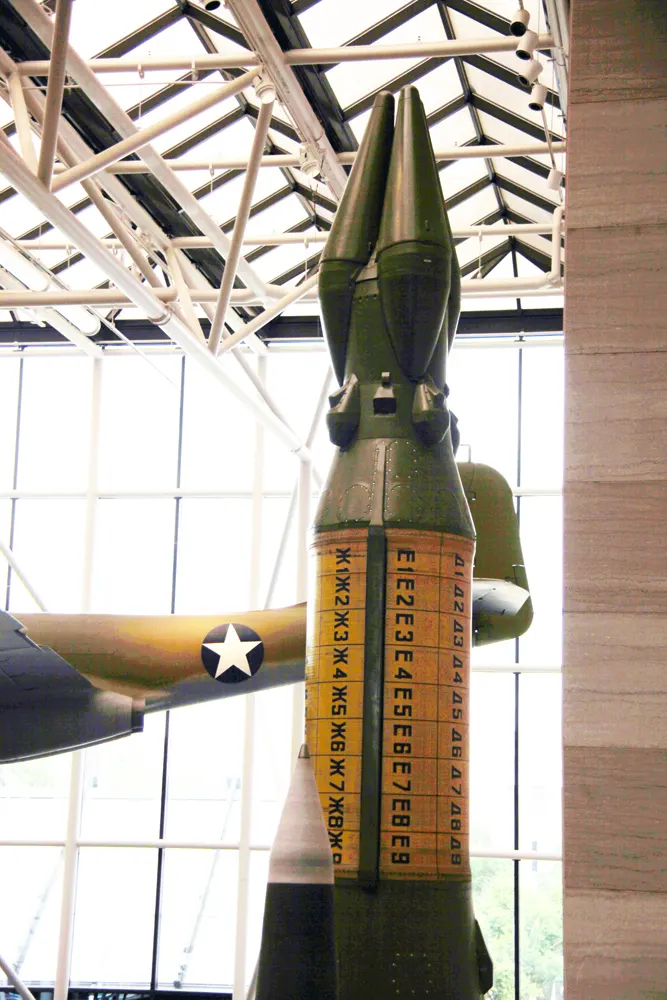
The doctrine matured with the RSD-10 Pioneer, NATO's SS-20 Saber, a solid-fuel missile the Moscow Institute of Thermal Technology designed and the Soviet Union began fielding in 1976.2 Dispersed SS-20 regiments were hard for NATO to track in real time, and that uncertainty helped drive NATO's 1979 Double-Track Decision to station Pershing II missiles in response.3
The RSD-10 Pioneer did not survive the standoff it provoked. The 1987 Intermediate-Range Nuclear Forces Treaty banned ground-launched missiles in its range band outright, and by May 1991 the Soviet Union had destroyed all 654 missiles built and 499 of the launchers that carried them.2
01How a Road-Mobile Launcher Actually Fires a Missile
A modern TEL usually carries its missile inside a sealed canister rather than exposed on an open cradle, which protects the rocket motor from weather and skips a separate loading step. The sequence still follows the same stages early Scud TELs used. The vehicle reaches its position, hydraulic arms raise the canister to vertical, and the crew runs a countdown before the missile leaves the tube.1
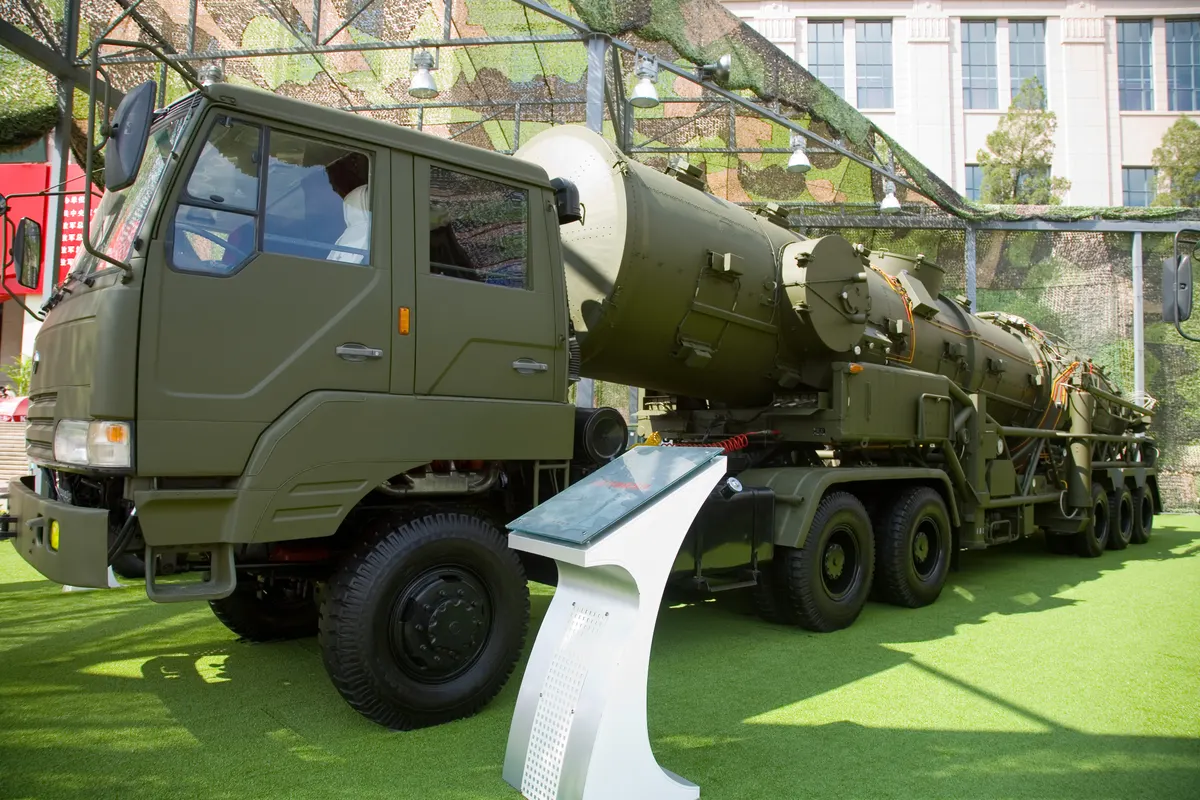
Some road-mobile missiles add a cold launch step, where a gas generator ejects the missile clear of its canister before the rocket motor ignites, rather than igniting inside the tube. India's Agni-P uses this method from an eight-axle wheeled TEL, which the Defence Research and Development Organisation says lets a failed missile eject safely instead of destroying the launcher.6
Chassis design varies by mission. Russia's heaviest road-mobile ICBM launchers ride sixteen-wheel, all-wheel-drive trucks built to climb steep grades and cross broken ground toward a dispersal point, not just paved highway.9 Lighter medium-range systems stay closer to improved roads, moving from garrison to a concealed position before a fire-control chain clears the launch.5
01Road-Mobile Arsenals From Turkey to Pakistan
Road-mobile deployment is now the default for new medium-range ballistic missiles outside the handful of states still committed to silos alone. China's DF-21 family spans that range of roles, from the nuclear-armed DF-21C to the road-mobile DF-21D anti-ship variant, whose TELs disperse into China's interior to complicate the targeting a carrier strike group would need before finding it.4

India applies the same logic to its Agni-II and the newer Agni-P, while Pakistan's Ababeel, a three-stage design the National Defence Complex built for multiple independently targetable reentry vehicles, rides the same road-mobile TEL basis as its Shaheen-series predecessors.7 Israel has never confirmed its nuclear-capable program, but the road-mobile Jericho 2 reportedly operates from caves near Sdot Micha alongside a silo option, rare dual basing for one missile family.8
Turkey is the newest entrant. The prototype Cenk missile, under development by Roketsan, was displayed on the same launch platform already used for its Tayfun predecessor, pointing toward the same road-mobile basis once fielded.10 China's own brigades take dispersal furthest, hiding among a tunnel network state media calls the underground Great Wall.11
01Notes and Sources
- "Transporter-Erector-Launcher (TEL)", GlobalSecurity.org — globalsecurity.org ↩
- "RSD-10 Pioneer", Wikipedia — en.wikipedia.org ↩
- "RSD-10 Pioneer (SS-20)", CSIS Missile Threat — missilethreat.csis.org ↩
- "WU-14 Dong Feng-21D (DF21D) / CSS-5 Mod 5", GlobalSecurity.org — globalsecurity.org ↩
- "Supplemental Second-Strike, Road-Mobile ICBMs in the Two-Peer Environment", Center for Global Security Research, Lawrence Livermore National Laboratory — cgsr.llnl.gov ↩
- "Agni Ballistic Missile", TheDefenseWatch — thedefensewatch.com ↩
- "Ababeel", CSIS Missile Threat — missilethreat.csis.org ↩
- "Jericho 2", CSIS Missile Threat — missilethreat.csis.org ↩
- "Chassis for the Topol", Minsk Wheel Tractor Plant (MZKT) — mzkt.by ↩
- "Roketsan unveils mystery ballistic missile, opens $1B facilities, delivers 20 systems", Türkiye Today — turkiyetoday.com ↩
- "Underground Great Wall, China Nuclear Forces", GlobalSecurity.org — globalsecurity.org ↩


