


M5-RD (Russian М5-РД, also written R-5RD) was not an operational weapon at all. It was a flight-test vehicle, built on the airframe of the nuclear-armed R-5M missile and flown ten times in 1956 to prove out guidance, telemetry, and warhead-survival hardware destined for the far larger R-7 Semyorka intercontinental missile.1,2 No M5-RD flight carried a live nuclear warhead. Instead, each round replaced the R-5M's warhead section with an instrumented test package, heat-resistant coatings under evaluation for a future re-entry vehicle plus the telemetry gear needed to radio the results back to the ground.2 Some published spec figures for M5-RD have historically been confused with the closely related R-5M and R-5 Pobeda, both already-documented weapons that shared the same 20.75-meter, 1.65-meter-diameter airframe, and this article corrects several of those figures against the specific M5-RD test program rather than repeating the R-5M's operational nuclear specification.2,3 M5-RD sits at the obscure edge of the medium-range ballistic missile category, more a laboratory tool that happened to fly on an MRBM-sized airframe than a fielded weapon in its own right.
- Cheap, already-proven R-5M airframe reused as a flying testbed
- Ten-for-ten successful launch record across two 1956 test campaigns
- Directly validated systems later used on the R-7 Semyorka and R-9 Desna programs
- Low political and technical risk compared to testing new hardware on an unproven airframe
- Never an operational weapon, so it has no combat or deployment history of its own
- Sourcing is thin, split between short Russian technical retrospectives and passing Western mentions
- Some existing records blur its specs with the operational R-5M and R-5 Pobeda
- Achieved test ranges fell short of the R-5M's full 1,200-kilometer reach
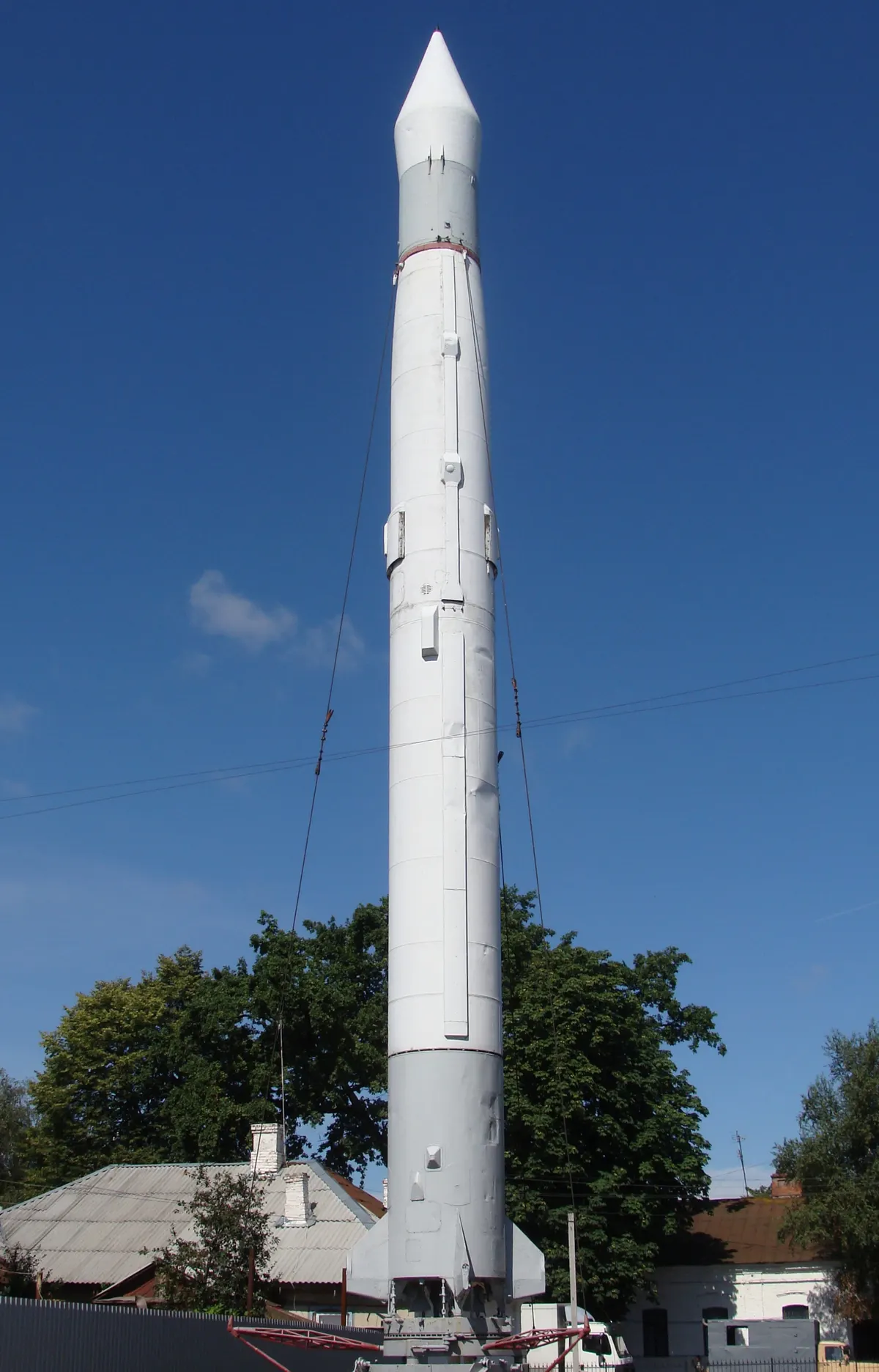
Soviet engineers at OKB-1, the Korolev design bureau, built M5-RD specifically because flying new control and telemetry hardware on the untested, far more expensive R-7 airframe first would have been reckless.3 Instead they put that hardware on a missile everyone already trusted. By 1956 the R-5 family, in its conventional R-5 Pobeda and nuclear R-5M forms, had already flown dozens of times from Kapustin Yar, giving OKB-1 a known, reliable airframe to carry unproven electronics into real flight conditions cheaply and repeatedly.1,3 That is the whole reason M5-RD exists as a distinct designation. It is not a weapon with its own combat role, a service history, or an operator beyond the Soviet test program that flew it.
The designation itself is inconsistent across sources. Russian technical literature most often writes it as М5-РД, transliterated M5-RD, while several Western and enthusiast references instead call the same program R-5RD, treating it as a lettered sub-variant of the R-5 family rather than a separately numbered item.2,9 Both labels describe the identical ten-flight 1956 test campaign, and the inconsistency itself is a small but genuine sign of how thin and scattered the sourcing on this specific program remains compared to the well-documented R-5M and R-5 Pobeda.
An R-5M Airframe Carrying Test Instrumentation, Not a Warhead
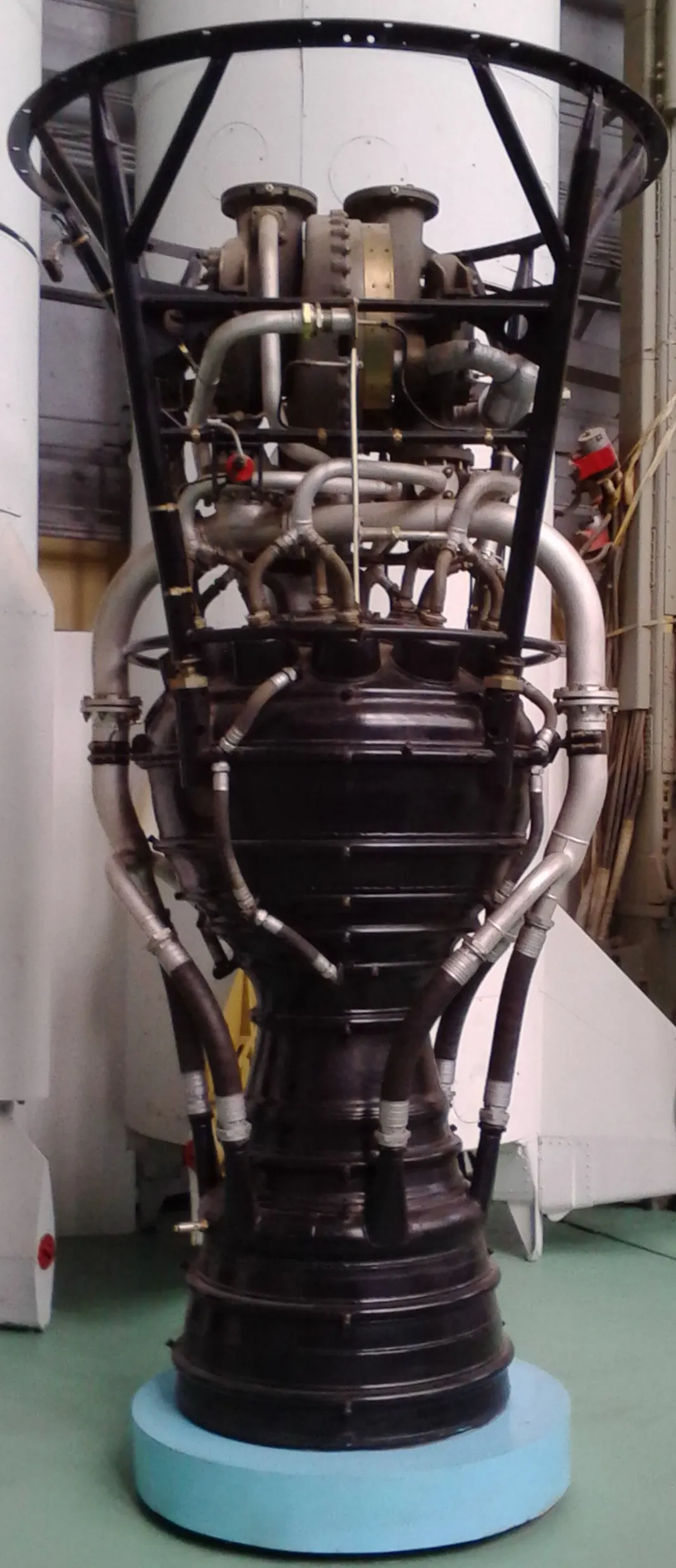
M5-RD's airframe specifications track the R-5M closely because it was, structurally, an R-5M. Length ran to 20.75 meters and diameter to 1.65 meters, the same dimensions published for both the R-5M and the earlier R-5 Pobeda, and the fully fueled launch weight of roughly 29,100 kilograms is likewise inherited from the R-5M rather than independently documented for the test rounds specifically.2,4 The single RD-103 engine burned a mixture of ninety-two percent ethanol and water against a liquid-oxygen oxidizer, the same propellant combination used across the entire R-5 family and traceable back to the German V-2's own alcohol-and-LOX system.4,5 None of that propulsion or structural engineering was new for M5-RD. The whole point of reusing the R-5M shell was to hold the airframe constant and vary only the systems actually under test.
- Missile Classmedium_range_ballistic_missile
- Service Entry Year1956
- Designerokb_1
- Length20.75 m
- Diameter1.65 m
- Launch Weight29,100 kg
- In ServiceNo
What changed was the nose. Where the R-5M carried a live RDS-4 fission warhead and the conventional R-5 Pobeda carried roughly 1,000 kilograms of high explosive, M5-RD's forward section held silicon-carbide and asbestos-textile heat-resistant coating samples under evaluation for a future re-entry vehicle, along with the Тral (Trawl) telemetry package and additional optical tracking aids that let engineers on the ground reconstruct exactly how the test article behaved during re-entry.2 That distinction matters more than any single dimension. A missile's length and diameter say little about what it actually did in flight, and what M5-RD did was gather thermal and telemetry data, not deliver a payload to a target.
- Propulsion Typeliquid_propellant_rocket
- Number of Stages1
- Fuel Type92_ethanol_liquid_oxygen
- Solid-FuelNo
- Cold-LaunchNo
- CanisterizedNo
Guidance, and a Genuine Correction to Watch For
M5-RD used the same inertial navigation instruments as the R-5M, refined with ground radio correction of lateral drift during powered flight, a scheme the R-5 family had carried since its earliest R-1 and R-2 ancestors.3,6 No satellite navigation of any kind existed in 1956, more than two decades before the first operational GPS satellite reached orbit, so any classification of a 1956 Soviet test vehicle's guidance as satellite-assisted is a plain anachronism rather than a real historical fact. The correct description is inertial guidance with radio-command lateral correction, full stop.
- Maximum Range1,160 km
- Throw Weight1,000 kg
- Depressed-Trajectory CapableNo
Reported ranges for the ten 1956 test flights cluster around 1,130 to 1,160 kilometers, a touch short of the R-5M's full roughly 1,200-kilometer operational reach, consistent with flights flown to validate subsystems rather than deliberately pushed to maximum distance.2,7 Circular error probable and throw-weight figures specific to M5-RD are not documented with any precision in open sources, and figures sometimes attached to this designation are, again, R-5M or R-5 Pobeda numbers rather than measurements from the test program itself.
- Circular Error Probable (CEP)1,500 m
- Guidance TypeInertial / GPS
- Terminal GuidanceNo
- Maneuverable Re-Entry Vehicle (MaRV)No
- Penetration Aids / DecoysNo
- Warhead TypeInstrumentation and thermal-protection test payload, no live warhead
- NuclearNo
- ThermonuclearNo
- Yield (per warhead)80
- MIRVNo
- Warhead / RV Count1
- Conventional-CapableNo
- Basing ModeFixed launch pad (Kapustin Yar test range)
- Silo-BasedNo
- Road-Mobile (TEL)Yes
- Submarine-LaunchedNo
- Total Production10
- Operators1
- First Test1956
A May 1954 Decree and a Little-Known Chief Designer
The M5-RD program traces to a Soviet Council of Ministers decree dated 20 May 1954, which authorized building a small run of R-5-derived test rounds to validate hardware for the future R-7 intercontinental missile well before the R-7 itself would be ready to fly.2 Overall responsibility sat with Sergei Korolev's OKB-1 bureau, but the M5-RD sub-project's own chief designer is recorded as M. S. Khomyakov, a figure who appears in Russian technical retrospectives on this program but almost nowhere in Western literature, a reminder of how many mid-level Soviet engineers behind the Cold War missile race remain undocumented outside specialist Russian sources.2
Ten M5-RD rounds flew from Kapustin Yar in two distinct campaigns during 1956. The first five launches ran from 16 February to 23 March, and the second five from 20 July to 18 August, with every flight in both campaigns recorded as successful.2 That is an unusually clean run for Soviet missile testing in this period, and it let OKB-1 validate several systems earmarked for the R-7 in a single year rather than stretching the work across a longer, riskier campaign on the R-7 airframe itself.
What the Ten Flights Actually Tested
The test matrix covered systems that had nothing to do with M5-RD as a weapon and everything to do with de-risking the R-7 program. Engineers validated a simultaneous-emptying system for the R-7's propellant tanks, an apparent-velocity regulator, normal and lateral stabilization instruments, gyroscopic sensors, vibration-damping hardware, and the Тral telemetry and optical-tracking systems needed to actually measure how all of that performed in real flight.2 The heat-resistant coating samples riding in the nose addressed a separate but related problem, how to protect a warhead-sized object from re-entry heating, work that fed the same broader re-entry engineering effort documented in the R-5M's own live nuclear warhead program.2,3 Soviet sources describe the collected data as feeding directly into both the R-7 Semyorka and, afterward, the R-9 Desna intercontinental missile programs, making M5-RD a genuine, if obscure, contributor to the hardware that eventually launched Sputnik and carried Soviet nuclear forces into the true ICBM era.2
That last point deserves emphasis given how thin Western sourcing on M5-RD specifically remains. American radar and radio intercept sites in Turkey detected the broader wave of Kapustin Yar missile activity throughout 1956, logging dozens of launches at ranges consistent with the R-5 family, but declassified U.S. intelligence retrospectives make clear that discriminating between the ordinary R-5 Pobeda, the nuclear R-5M, and specialized test rounds like M5-RD was simply beyond American technical means at the time.8 Everything specific known about M5-RD's own test matrix, dates, and purpose comes from Russian-language technical histories written decades later, not from any contemporary American assessment. That gap is worth stating plainly rather than glossing over, since it is exactly the kind of obscure Cold War program where Western open sources genuinely have little to add.
M5-RD's ten flights therefore occupy a narrow but real place in Cold War missile history, a program documented almost entirely through Soviet-era engineering retrospectives rather than the intelligence record the West built around the more visible R-5M nuclear test and the R-7 launches that followed it.
M5-RD never approached a battlefield and was never intended to. Its ten 1956 launches were entirely a Kapustin Yar test-range activity, conducted at the height of early Cold War missile competition but with no combat role, no forward deployment, and no operational alert posture of any kind. Its only connection to the wider Cold War is indirect, through the R-7 and R-9 Desna programs it helped validate, both of which went on to underpin Soviet strategic nuclear deterrence for the rest of the twentieth century.
M5-RD was itself one of several specialized test derivatives built on the R-5 airframe, alongside the R-5R, which flew five radio-guidance test launches in 1954 and 1955, and the later R-5A and R-5V, which turned the same basic missile into a recoverable sounding rocket for biological and geophysical research into the 1960s.1,9 Where those other variants tested guidance refinements or served science, M5-RD's ten flights were aimed squarely at the R-7 ICBM program, making it the most directly weapons-relevant of the R-5 family's non-operational test rounds even though it never became a weapon itself.
No foreign country ever built or flew an equivalent to M5-RD under license, and the designation itself never referred to anything beyond this single ten-flight Soviet test campaign. It should not be confused with the operational R-5M, which is a separate, combat-relevant weapon covered in its own article, or with the conventional R-5 Pobeda that preceded both.
Russian technical retrospectives also record internal sub-batch markings distinguishing the first five-launch 1956 campaign from the second, distinctions that essentially never appear in Western-language treatments of the program and illustrate how much of M5-RD's own documentation survives only in specialist Russian sources rather than in any Western reference work.7

M5-RD was never fielded to any military unit. All ten flights were conducted directly by Soviet test personnel at Kapustin Yar under OKB-1 and NII-88 institutional control, not by an operational missile brigade of the kind that later fielded the R-5M under the Strategic Rocket Forces.2 Russia, as the Soviet successor state, is the only country ever associated with the program, and that association is purely historical, since the test campaign ended in 1956 and no M5-RD hardware remained in any form of use afterward.
The clearest comparison for M5-RD is the missile it was built from, the R-5M, because the difference between the two is entirely one of purpose rather than airframe. The R-5M carried a live RDS-4 nuclear warhead into operational Soviet service in 1956 and stood ready to strike real targets across Western Europe from Soviet or East German soil.3 M5-RD, flying the identical airframe in the same year, carried no warhead at all, only test instrumentation, and answered to no military chain of command beyond the Soviet test-range program that flew it. One is a Cold War weapon with a documented combat-deterrent role. The other is the flying laboratory that happened to share its shell.
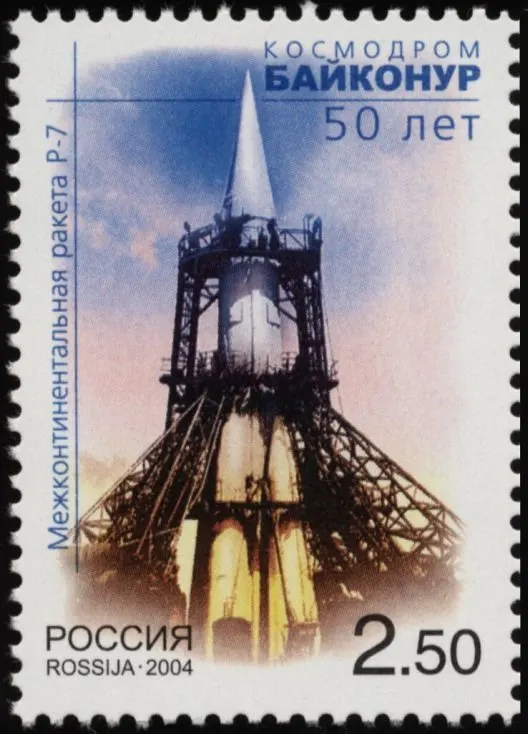
Set against the R-7 Semyorka, the comparison runs the other way. The R-7 was the actual intercontinental missile M5-RD existed to serve, a vastly larger, multi-stage design that first flew successfully in August 1957 and went on to launch Sputnik that October.1 M5-RD's contribution was narrow but genuinely necessary, proving stabilization, telemetry, and thermal-protection concepts cheaply on a known airframe before committing them to the R-7's far more expensive and technically ambitious test program. Neither missile makes sense in isolation. The R-7's rapid, largely successful transition into an operational ICBM and space launcher owed something real, if hard to quantify precisely, to the groundwork M5-RD's ten flights laid down the year before.
| Spec | M5-RD | R-5M | R-7 Semyorka |
|---|---|---|---|
| Role | Subsystem test vehicle | Operational nuclear MRBM | Operational ICBM |
| Warhead | Test instrumentation only2 | Live RDS-4, nuclear3 | Nuclear1 |
| Max range achieved | ~1,130-1,160 km2 | ~1,200 km3 | Intercontinental1 |
| First flight | 16 February 19562 | 21 January 19553 | August 19571 |
| SPEC | M5-RD | R-5M |
|---|---|---|
| First Test | 1956 year | — |

What is the M5-RD missile? M5-RD (М5-РД, also written R-5RD) was a 1956 Soviet flight-test vehicle built on the R-5M airframe, flown ten times to validate guidance, telemetry, and thermal-protection hardware for the R-7 Semyorka intercontinental missile. It was never an operational weapon.2
Is M5-RD the same missile as the R-5M? No. M5-RD shared the R-5M's airframe, length, diameter, and propellant system, but it carried test instrumentation in place of the R-5M's live nuclear warhead and was never fielded as a weapon.2,3
Did M5-RD carry a nuclear warhead? No. Every M5-RD flight carried an instrumented test payload, including heat-resistant coating samples and telemetry gear, not a live warhead of any kind.2
How many M5-RD test flights were there? Ten, flown from Kapustin Yar in two campaigns, five launches from 16 February to 23 March 1956 and five more from 20 July to 18 August 1956, all successful.2
What was M5-RD's role in Soviet missile development? It validated flight-control, telemetry, and re-entry thermal-protection concepts on a cheap, already-proven airframe before those systems were committed to the far larger and more expensive R-7 Semyorka and R-9 Desna programs.2
- "R-7 Semyorka", Wikipedia — en.wikipedia.org ↩
- "М5-РД", Russian Wikipedia — ru.wikipedia.org ↩
- "R-5M", Encyclopedia Astronautica — astronautix.com ↩
- "R-5 Pobeda", Wikipedia — en.wikipedia.org ↩
- "R-5 (SS-3 Shyster) Russian Medium Range Ballistic Missile", The Military Standard — themilitarystandard.com ↩
- "R-5 / SS-3 Shyster", Federation of American Scientists — nuke.fas.org ↩
- "Ballisticheskaya raketa srednei dal'nosti R-5, R-5M (8A62, 8K51)", RVSN.info — rvsn.info ↩
- "Starting to Crack a Hard Target: U.S. Intelligence Efforts against the Soviet Missile Program through 1957", National Security Archive — nsarchive.gwu.edu ↩
- "The Soviet R-5 Missile and its Variants", Casual Landscapes — casuallandscapes.net ↩