

A medium-range ballistic missile is a ground-launched weapon that flies a ballistic trajectory, powered only during an initial boost phase and coasting the rest of the way under gravity, to a range generally counted between 1,000 and 3,000 kilometers. That single distinction, ballistic flight rather than sustained powered flight, is what separates every missile in this leaf from a cruise missile, which flies under its own aerodynamic lift and engine thrust for the whole trip, closer to a small unmanned aircraft than a thrown artillery shell. Within the wider ballistic missile family itself, range is the organizing idea. A short-range ballistic missile covers the tactical battlefield, generally under 1,000 kilometers. A medium-range ballistic missile reaches from one country deep into a neighboring region, enough to put an entire rival nation's capital within reach from a launch site on home soil. Past roughly 3,000 kilometers the category becomes an intermediate-range ballistic missile, and past 5,500 kilometers an intercontinental ballistic missile, capable of striking across oceans. These lines are administrative rather than physical, drawn by treaty negotiators and intelligence analysts rather than by any hard engineering wall, and several missiles in this leaf sit close enough to the MRBM/IRBM boundary that different trackers classify them differently.
The medium-range ballistic missile as a weapon class is older than most of the other categories covered on this site, tracing directly back to the German V-2 of the Second World War and the first generation of Soviet and American missiles built from captured V-2 hardware and engineers in the late 1940s and 1950s. Every missile in this leaf descends, at some technical remove, from that starting point. What changed across seven decades was not the basic physics of a rocket rising, coasting, and falling back to earth, but who built the missile, what it carried, and how it launched. Early medium-range missiles burned liquid propellant that had to be pumped aboard in the hours before launch, a slow, hazardous, and visible process. Later missiles switched to solid-fuel motors that arrive from the factory already loaded, cutting launch preparation from hours to minutes and letting a missile disperse on a road-mobile launcher rather than sit exposed on a fixed pad. A parallel line of development pushed toward submarine-launched missiles, the SLBM category, whose compact solid motors were repeatedly adapted back onto land, a pattern this leaf's Chinese and North Korean programs both followed independently decades apart. This article traces that history chronologically and by national program, following the medium-range ballistic missile from the earliest Soviet and American Cold War systems through the Euromissile Crisis, into the proliferation era that produced China's Dongfeng family, Israel's undeclared Jericho arsenal, and the Pakistani, North Korean, Indian, and Iranian programs that dominate the category today. No two of those national programs arrived at their own medium-range missile by the same route. Some built a missile from a clean sheet, others imported and reverse-engineered a rival's hardware outright, and at least two adapted a submarine-launched design onto a wheeled or tracked ground vehicle rather than starting over, three genuinely different paths to the same rough performance band that recur throughout the sections below.
01The First Soviet Steps, From the R-5 Pobeda to Cuba
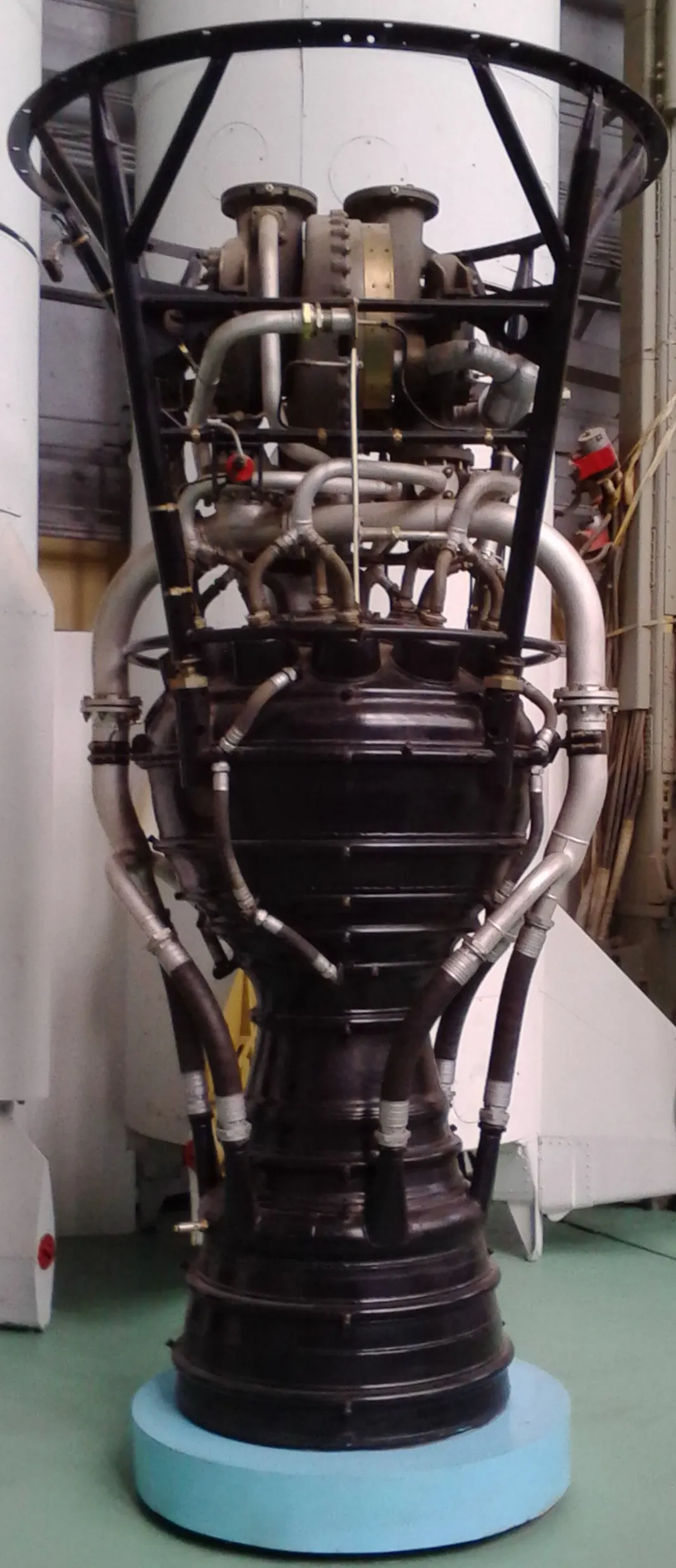
The Soviet Union built the world's first true medium-range ballistic missile in 1955. Sergei Korolev's OKB-1 bureau, having already stretched the captured German V-2 design into the shorter R-1 and R-2 missiles, broke past the 1,000-kilometer mark with the R-5 Pobeda, a single-stage, liquid-fueled missile carrying a conventional warhead to roughly 1,200 kilometers on an ethanol and liquid-oxygen motor descended directly from V-2 propulsion. The R-5 Pobeda introduced a separable warhead section and welded monocoque fuel tanks, both firsts for a Soviet missile, but it never carried a nuclear payload in its own right.1 That role belonged to a reinforced sister design, the R-5M, built by the same S.P. Korolev Rocket and Space Corporation Energia design chain, which entered service in 1956 and flew the Soviet Union's first live nuclear warhead ever tested on an operational ballistic missile, later stationed with Soviet forces inside East Germany, the first time a nuclear-associated Soviet missile unit had been based outside the USSR's own borders.1 A third, less celebrated derivative, sometimes catalogued as the M5-RD, reused the same proven airframe purely as a flying testbed, flying ten missions in 1956 to validate subsystems destined for the much larger R-7 Semyorka intercontinental missile that would later launch Sputnik.1
Both the R-5 Pobeda and the R-5M shared one crippling limitation, cryogenic liquid oxygen that boiled away within hours and forced every missile to fuel on an exposed pad shortly before firing. Mikhail Yangel's newly split-off design bureau at Dnipropetrovsk, later folded into what became Pivdenmash, solved that problem with the R-12 Dvina, entering service in 1959 on storable propellants that let a missile sit fueled and ready for hours or days rather than minutes.2 The R-12 Dvina became the single most consequential weapon of the entire Cold War without ever being fired at a target. Forty-two of them, shipped secretly to Cuba under Operation Anadyr in the autumn of 1962, are what a U-2 pilot photographed over San Cristobal on 14 October that year, triggering the thirteen days of the Cuban Missile Crisis.2 A longer-legged sibling from the same Yangel bureau, the R-14 Chusovaya, built with production support from Production Corporation Polyot and reaching roughly 4,500 kilometers against the R-12's 2,500, was shipped to Cuba alongside it, but its regiments were still under construction and nowhere near operational when the crisis broke, which is why the shorter-ranged R-12 Dvina, already fuelling by mid-October, is the missile history remembers.2
The secrecy behind that deployment went well beyond a codename. Soviet planners handwrote rather than typed the operation's orders to avoid leaks through clerical staff, and ship captains carrying the missiles did not learn their true destination until already at sea.2 Once discovered, the crisis played out through a naval quarantine rather than an immediate strike, and its resolution carried a second, secret half. In exchange for the Soviet Union withdrawing the R-12 Dvina from Cuba, the United States privately agreed to remove its own Jupiter missiles from Turkey and Italy, a trade not publicly confirmed for almost three decades.2,3
01America's Answer, the Jupiter Trade and the Force de Frappe
The United States fielded its own first operational medium-range ballistic missile at almost exactly the same moment. Wernher von Braun's Army Ballistic Missile Agency scaled up the Redstone missile into the PGM-19 Jupiter, a single-stage, liquid-fueled design burning kerosene and liquid oxygen through a Rocketdyne engine and a Goodyear Aerospace reentry vehicle to carry a 1.45-megaton warhead roughly 2,400 kilometers. An Army-Air Force turf war handed control of the missile to the Air Force before it ever flew, and Jupiters built by Chrysler reached NATO squadrons in Italy and Turkey in 1961, close enough to Soviet territory that Nikita Khrushchev reportedly called the Turkish battery a bone stuck in his throat.3 That grievance is widely credited as a direct motivation for the Cuban deployment described above, and when the missile crisis reached its most dangerous point, the two superpowers quietly traded their forward-deployed missiles away. Robert Kennedy privately told the Soviet ambassador that the Jupiters would leave Turkey regardless, so long as nobody said so in public, and every Jupiter was gone from Italy and Turkey by April 1963, a secret arrangement not officially confirmed until 1989.3 The deployment was not free of trouble even before the crisis. Lightning struck Italian Jupiter sites on four separate occasions between late 1961 and mid-1962, twice partially arming a warhead by injecting boost gas into it, incidents serious enough that the Air Force installed protective lightning towers at every site afterward.3
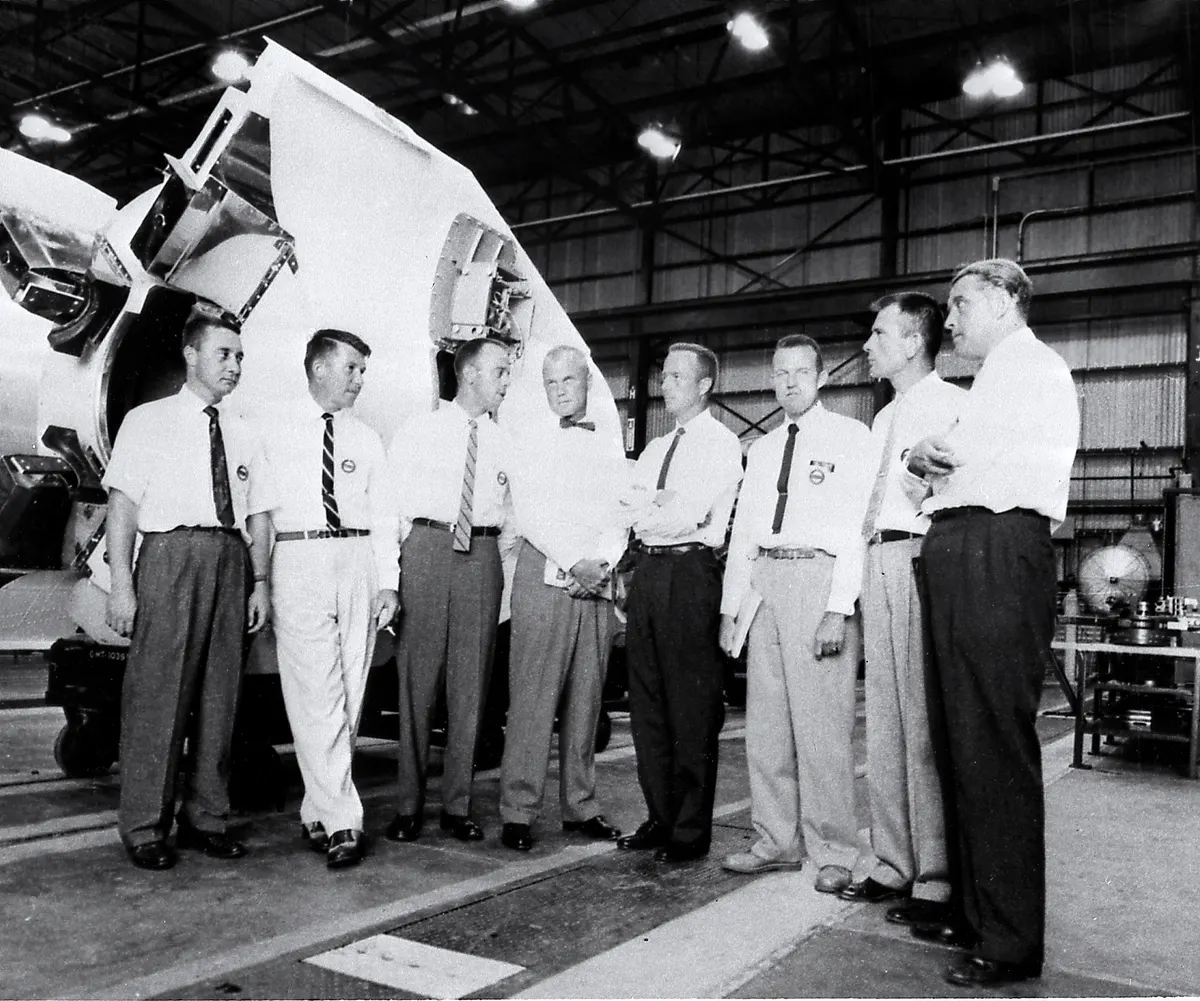
France drew a different lesson from that same episode. President Charles de Gaulle treated the secret Jupiter withdrawal as proof that a deterrent controlled from Washington could be negotiated away over a European ally's head without that ally getting a vote, and France built its own land-based nuclear missile specifically so no other government could ever bargain it away. The result, the S2, built by the SEREB consortium of Sud Aviation and Nord Aviation, later merged into Aérospatiale, entered combat-ready service in 1971 as the land leg of France's independent force de frappe, and it made the opposite engineering bet from every mobile missile discussed so far.4 Eighteen S2 missiles sat in permanently ready underground silos on the Plateau d'Albion in southern France rather than dispersing on a road-mobile launcher, a deliberately immobile, hardened force built around a single 120-kiloton warhead and roughly one kilometer of accuracy.4 Its single reentry vehicle, the MR 31, was an unboosted pure-fission device rather than a staged thermonuclear weapon, and French engineers needed an unusually large plutonium core to reach that yield without the extra boost stage most contemporaries relied on, a design choice several sources describe as the largest unboosted fission warhead ever fielded.4 It was the only Western European medium-range missile ever based this way, and it lasted less than a decade before its own silos were rebuilt for the longer-ranged S3, itself withdrawn in 1996 once French planners judged that improving enemy missile accuracy had turned a fixed silo from an asset into a liability.4
01Solid Fuel Stumbles, Then Succeeds, the RT-15 and the RSD-10 Pioneer
The Soviet Union's own push toward a solid-fuel, road-mobile medium-range missile did not succeed on its first attempt. The RT-15, built through the 1960s by Arsenal Design Bureau with launcher drawings from the Kirov Plant on a modified heavy-tank chassis, reused proven rocket stages from the RT-2 intercontinental program and passed enough of its own flight-test campaign to be recommended for production.5 The Ministry of Defense refused to accept it into general service anyway. Its launch electronics were judged too bulky and fragile for the field, its guidance and control system never reached a fully satisfactory state, and after barely a year of trial deployment with a single battalion in Belarus, the whole program was quietly scrapped.5 The RT-15's launcher itself, a modified heavy tank chassis carrying the missile inside a sealed transport-launch container, was meant to fire straight out of that container rather than from an open pad, an early attempt at the same cold-launch principle later Soviet and North Korean designs would use, but the short 3,000 to 5,000-kilometer overhaul interval between chassis maintenance cycles made it a poor fit for a real field regiment.5 RT-15 mattered for what it revealed rather than what it accomplished, an early, unsuccessful proof of concept for putting a strategic solid-fuel missile on a self-propelled chassis, and its specific failures are exactly the problems a later, more successful design had to solve.5
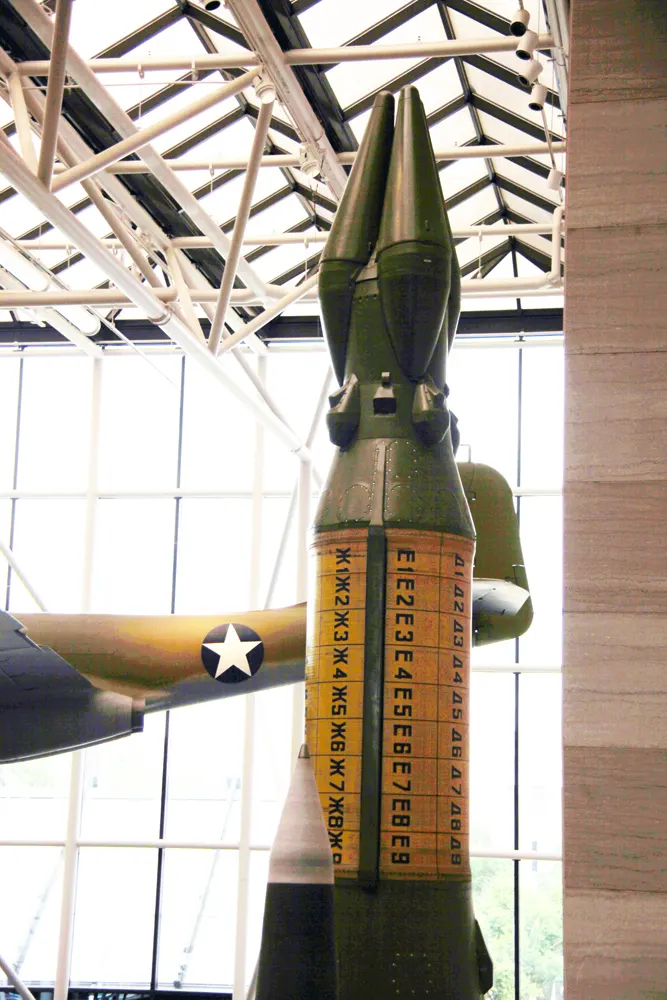
That later design was the RSD-10 Pioneer, known in the West as the SS-20 Saber, designed by Alexander Nadiradze at the Moscow Institute of Thermal Technology and built on a Minsk Automobile Plant transporter erector launcher with production support from the Votkinsk Machine Building Plant, fielded from 1976 on a road-mobile launcher carrying up to three independently targetable MIRV warheads.5 Where the R-12 Dvina and R-14 Chusovaya sat inside treaty limits that only regulated intercontinental-range systems, the RSD-10 Pioneer's roughly 5,000-kilometer reach let the Soviet Union threaten every NATO capital in Western Europe from launchers deep inside Soviet territory without technically violating any existing arms-control agreement.5 NATO's alarmed response, the December 1979 Double-Track Decision, paired arms-control talks with a threat to deploy 108 American Pershing II missiles and hundreds of ground-launched cruise missiles to Western Europe if negotiations failed.5 The Pershing II, built by Martin Marietta with motors from Hercules Inc. and a Goodyear Aerospace radar unit, paired a road-mobile, solid-fuel motor with an active-radar terminal guidance system that brought its accuracy down to roughly 30 meters, a leap over the RSD-10 Pioneer's inertial-only several-hundred-meter figure, though its own shorter 1,770-kilometer range forced NATO to base it forward in West Germany rather than deep inside allied territory the way the Soviet missile sat inside Soviet territory.5 Deployment of both missiles through the early 1980s produced Europe's largest peace protests since the Second World War and, at Camp Redleg in West Germany, killed three American soldiers when a Pershing II rocket motor ignited during routine handling.5 A permanent protest camp took root outside the Pershing II's Mutlangen storage site from Easter 1983 until the INF Treaty was signed four years later, becoming the most visible single symbol of West German opposition to the entire deployment, while Soviet negotiators walked out of the Geneva arms talks the same month the first Pershing II battery went on alert.5
The crisis those two missiles created ended in the December 1987 Intermediate-Range Nuclear Forces Treaty, signed by Ronald Reagan and Mikhail Gorbachev, the first arms-control agreement in history to eliminate an entire class of weapons outright rather than merely cap the numbers each side could hold.5 Every RSD-10 Pioneer, every Pershing II, and every remaining R-12 Dvina and R-14 Chusovaya was destroyed under mutual on-site verification by 1991, closing out the medium-range ballistic missile's first great crisis and, for more than three decades, banning the entire category of ground-launched intermediate-range missile from both American and Russian arsenals until the United States withdrew from the treaty in 2019.2,5
01China's Road-Mobile Turn, From the DF-2 to the Carrier Killer
The People's Republic of China entered the medium-range ballistic missile category from a standing start in the 1960s, building its first missile, the DF-2, through the China Academy of Launch Vehicle Technology on liquid-fuel technology derived from early Soviet cooperation that collapsed with the Sino-Soviet split before it fully matured.6 The longer-ranged DF-3, also built by the China Academy of Launch Vehicle Technology and entering service in 1971, stayed on the same liquid-fuel path for more than four decades, exported in the 1980s to Saudi Arabia in a deal Riyadh eventually acknowledged by publicly parading the missiles in 2014, and remaining in Chinese service until 2014.6 Both missiles shared liquid propellant's defining weakness, hours of exposed fueling before launch, and China's answer arrived in 1991 with the DF-21, built by the China Aerospace Science and Industry Corporation Limited, its first road-mobile, solid-fuel medium-range missile.6
The DF-21's propulsion did not come from a clean-sheet design. Chinese engineers adapted the two-stage solid motor from the submarine-launched JL-1 program onto a wheeled semi-trailer launcher, cutting launch preparation to roughly ten to fifteen minutes and letting a DF-21 brigade erect and fire before satellite reconnaissance could catch it fuelling.6 The baseline missile's inertial-only guidance gave it a wide 300 to 700 meter circular error probable, and it was superseded within five years by the improved DF-21A, built by the China Aerospace Science and Technology Corporation, which tightened that figure to roughly 100 to 300 meters and became the family's mainstay nuclear-armed member through the 1990s and 2000s.6 The conventional-capable, GPS-aided DF-21C, revealed around 2006 with inertial-gps terminal guidance, gave China its first dual-capable member of the family, and the DF-21D, built with the China Space Sanjiang Group Corporation and first paraded in 2015 and nicknamed the carrier killer, added a maneuverable reentry vehicle with active-radar terminal guidance built specifically to strike moving naval targets at sea, a mission no earlier Dongfeng missile had attempted.6 China built a separate, shorter-ranged conventional-strike design alongside the DF-21 family in the DF-16, also fielded by the China Aerospace Science and Industry Corporation Limited, a distinct system rather than a direct DF-21 derivative, extending Chinese road-mobile missile coverage across the full spectrum from tactical to medium range.6 None of the DF-21 family variants has ever been confirmed used in combat, and the type's most public appearance beyond routine deployment came in January 2007, when a modified DF-21 first stage destroyed a defunct Chinese weather satellite in the country's first anti-satellite weapon test, littering low earth orbit with more than 3,000 pieces of trackable debris.6 Reporting first published in 2014 also described a quiet 2007 sale of baseline DF-21 missiles to Saudi Arabia, a deal reportedly cleared with Washington only after CIA technicians examined the exported nosecones and concluded they lacked room for a nuclear device, though neither Beijing nor Riyadh has ever officially confirmed the transaction.6
01Undeclared Arsenals, Israel's Jericho II and South Africa's RSA-3
Not every medium-range ballistic missile program has been openly declared. Israel built its own missile, the Jericho II, after a 1975 request to buy the American Pershing II was refused as part of Sinai withdrawal negotiations with Egypt. Developed by Israel Aerospace Industries from earlier French Dassault Aviation technology, the two-stage, solid-fuel Jericho II reached flight testing in 1987 and is generally dated to operational service around 1989, though Israel has never confirmed the missile's basic dimensions, its exact range, or whether it carries a nuclear warhead at all.7 That silence is deliberate policy, a decades-old doctrine known as amimut, or nuclear opacity, under which Israel neither confirms nor denies possessing nuclear weapons while separately stating it will not be the first state to introduce them into the Middle East.7 The policy traces to a specific 1968 diplomatic formulation, Ambassador Yitzhak Rabin's private clarification to the US State Department that Israel's own pledge covered testing, openly deploying, or publicly declaring a nuclear weapon, leaving plain possession outside that definition entirely, and every subsequent Israeli statement about the Jericho II has flowed from that single interpretive move.7

The Jericho II's most consequential foreign relationship ran through South Africa's apartheid-era government, which received Israeli rocket propulsion and guidance technology in exchange for uranium and remote test facilities through the 1970s and 1980s. South African engineers, working through Armscor alongside Denel and Israel Military Industries, used that transferred technology to build the RSA-3, a three-stage rocket that flew two test flights in 1989 and 1990 under the public cover of a civilian satellite launcher while UN investigators and Western intelligence agencies treated it as the delivery system for South Africa's own nuclear arsenal.7 Whether the RSA-3 was ever genuinely mated to a nuclear warhead is disputed, since South Africa's own declared nuclear devices may have been too heavy for the rocket's realistic payload, but the program was cancelled outright in 1993 as South Africa dismantled its nuclear weapons and joined the Missile Technology Control Regime, its remaining hardware dismantled and its test facilities demolished under a bilateral agreement with the United States.7 The two countries' cooperation in this same period is also the backdrop to the September 1979 Vela incident, a double flash of light over the South Atlantic recorded by an American surveillance satellite and widely believed, though never officially confirmed by either government, to have been a joint Israeli-South African nuclear test conducted the same years the Jericho II and RSA-3 programs were moving from paper to flight hardware.7 A third, far less successful undeclared program belonged to Iraq, whose Al-Tammuz project aimed to stretch Scud-derived technology to a claimed 2,000 kilometers in the late 1980s but never reached a confirmed flight test before the 1991 Gulf War and subsequent UN inspections ended the effort entirely, a reminder that not every national medium-range missile ambition of this era actually produced a working weapon.7
01The A.Q. Khan Network, Pakistan's Ghauri and North Korea's Nodong
The medium-range ballistic missile's proliferation era owes an enormous debt to a single technology transfer chain running through North Korea's Hwasong-7, known in the West as the No-Dong or Rodong, a single-stage, liquid-fuel missile built in the early 1990s on Scud-derived technology. North Korea treated the Hwasong-7 primarily as an export product, and Pakistan imported a dozen or more complete examples and major subassemblies through Khan Research Laboratories, the same organization run by A.Q. Khan that separately supplied North Korea with uranium-enrichment centrifuge designs during roughly the same period.8 KRL turned the imported hardware into the Ghauri-I, first tested on 6 April 1998 and one of the proximate triggers Indian officials cited for accelerating the Pokhran-II nuclear tests weeks later.8 Pakistani planners are reported to have named the missile after the twelfth-century conqueror Muhammad of Ghor specifically because they believed India's own Prithvi missile honored the historical Rajput rival Ghor once fought, even though Prithvi simply means earth in Hindi and carries no such reference at all, a small but telling episode in the psychological framing both countries brought to their missile competition.8 A longer-ranged, two-stage Ghauri-II followed in April 1999, fired within three days of India's own Agni-II test in a rhythm of matched responses that played out while Indian and Pakistani troops were actively fighting the Kargil War in the mountains above Kashmir.8,9
Pakistan did not stop at importing North Korean liquid-fuel technology. Its Shaheen-II, developed by the National Engineering and Scientific Commission and National Development Complex, moved to a solid-fuel, two-stage design entered service around 2004, giving Pakistan the same fast-reaction, road-mobile advantage the Ghauri's liquid propellant could never match.8 That same North Korean technology chain reached a third country independently. Iran acquired its own No-Dong hardware in the mid-1990s and reworked it into the Shahab-3, discussed in full below, and North Korea's own Hwasong-7 later fed a distinct, disputed engine heritage into North Korea's larger Hwasong-10 missile.8,10,12 One Nodong-1 design, transferred or replicated across three separate national programs through the 1990s and 2000s, is a rare, well-documented case of a single Cold War-derived missile underwriting an entire proliferation triangle.8
01India's Agni Family Answers Pakistan and China
India answered Pakistan's Ghauri-I within a year. The Agni-II grew out of India's Integrated Guided Missile Development Programme, launched in the early 1980s under scientist APJ Abdul Kalam, who later became India's president, and it descended from an earlier single-stage Agni technology demonstrator that first flew in 1989 purely to prove reentry-vehicle survivability rather than to reach any fixed operational range.9 Developed by the Defence Research and Development Organisation and integrated by Bharat Dynamics Limited, the Agni-II first flew on 11 April 1999, breaking a five-year Indian pause on flight testing that had been held under diplomatic pressure, and it gave India's Strategic Forces Command its first missile able to strike all of Pakistan and into southern China.9 Unlike Pakistan's liquid-fuel Ghauri line, the Agni-II ran on a two-stage solid motor and was cleared to fire from both road-mobile and rail-mobile launchers from the start of its test program, a dual-basing arrangement few nuclear states have ever fielded.9 Two consecutive user-trial failures in 2009 delayed the missile's full operational certification by roughly a year, a rocky path DRDO also hit with a follow-on extended-range design, the Agni-II Prime, whose single 2010 flight test failed before the effort was folded into the separately designated Agni-IV program rather than fielded under its own name.9

India's newest medium-range design, the Agni-P, developed by the same Defence Research and Development Organisation and Bharat Dynamics Limited partnership and first tested in 2021, returned to the Agni-II's dual road- and rail-mobile basing while adding full canisterized storage the older missile never had, cutting exposure time further and giving India a modern counterpart to Pakistan's own newest medium-range program, discussed below.9 India has never exported any Agni-family missile, keeping the entire line, from the Agni-II through the Agni-P, in exclusively domestic Strategic Forces Command service.9
01North Korea's Solid-Fuel Pivot and a Missile Six Years in the Making
North Korea's own medium-range arsenal split into two very different technical stories. The liquid-fuel Hwasong-9, a stretched Scud-ER derivative entering service in 1993, gave North Korea a reliable, thoroughly proven system reaching 700 to 1,000 kilometers, built and fielded by the hundreds over three decades.10 The Hwasong-10, known to Western intelligence as the Musudan, took a far riskier path, adapting the engine from the Soviet R-27 submarine-launched missile after North Korea recruited Russian Makeyev Rocket Design Bureau engineers in the economic chaos following the Soviet collapse.10 North Korea displayed the Hwasong-10 in a 2010 parade six years before it ever flew, and when it finally did fly in a concentrated 2016 test campaign, it failed catastrophically in roughly seven of eight known attempts, one of the worst flight-test records of any missile a country has simultaneously described as combat-ready.10 That disastrous record pushed North Korea toward an entirely different engine family for its later missiles, but the Hwasong-10's technology reportedly reached Iran as well, feeding into the Iranian Khorramshahr missile discussed below.10,12
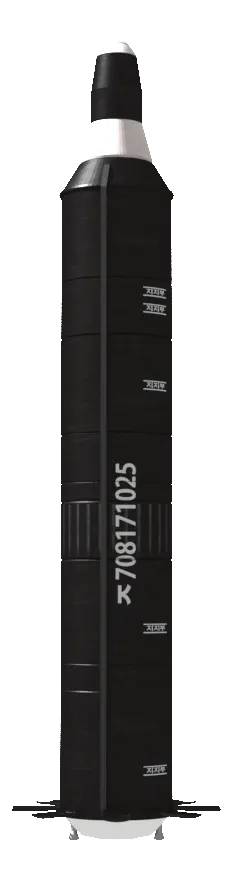
North Korea's more successful solid-fuel pivot came through its submarine program rather than a land-based clean-sheet design. After successfully testing the submarine-launched Pukguksong-1 in August 2016, North Korean engineers enlarged the same two-stage solid motor onto a tracked, road-mobile launcher, producing the Pukguksong-2 within six months, a direct echo of the same submarine-to-shore shortcut China had taken decades earlier with the JL-1 and DF-21.10 Fired from a cold-launch canister on a tracked chassis that can leave paved roads entirely, the Pukguksong-2 gave North Korea a fast-reacting, dispersible medium-range missile to complement its older liquid-fuel Hwasong-9, though the type has been flight-tested only twice since 2017, an unusually thin test record for a system North Korean state media describes as combat-ready.10 Its 12 February 2017 debut test happened to fall on the same day Japanese Prime Minister Shinzo Abe was meeting President Donald Trump at Mar-a-Lago in Florida, and the two leaders reviewed the launch at a public dinner table rather than a secure facility, an episode that drew its own separate controversy over handling sensitive material in view of other club guests.10
01Pakistan's MIRV Gambit, the Ababeel
Pakistan's newest medium-range design answers a narrower question than range or payload. The Ababeel, first flight-tested on 24 January 2017 and built on the airframe of Pakistan's longer-ranged Shaheen-III, is the country's first missile publicly credited with a MIRV payload, and Pakistani officials have described its purpose explicitly as defeating India's developing ballistic-missile-defense shield rather than extending Pakistan's own reach.11 The tradeoff shows directly in the numbers, a declared maximum range of 2,200 kilometers against the Shaheen-III's 2,750, the difference consistent with a heavier, multi-warhead bus replacing pure range.11 Whether the Ababeel's re-entry vehicles genuinely separate and steer independently, the technical definition of a true MIRV, has never been confirmed by public flight telemetry, and the missile's three known tests in 2017, 2023, and 2025 show a pattern of shortened flights and a documented 2025 failure rather than a settled operational capability.11 Analysts at the Center for Strategic and International Studies note that a genuine MIRV bus needs a working post-boost vehicle capable of firing small thrusters to place each reentry vehicle on its own separate trajectory, precision engineering Pakistan's missile industry had not previously had to demonstrate, and several point to reported Chinese technical assistance as the likely source of whatever progress the program has actually made.11 India's own answer sits in the newer, canisterized Agni-P described above, and the pairing gives South Asia's medium-range missile competition its most current chapter, an unresolved MIRV claim on one side answered by a still-maturing canisterized design on the other.9,11
02Iran's Shahab Line, From a North Korean Import to a Sprawling Family
No country's medium-range ballistic missile program in this leaf runs deeper or wider than Iran's, and its roots trace directly to the Iran-Iraq War of the 1980s, whose War of the Cities missile exchanges convinced Iranian planners that range mattered as much as any other military capability.12 The Shahab-3, declared operational on 7 July 2003 after Iran acquired No-Dong hardware and technical assistance from North Korea in the 1990s, gave Iran its first ability to strike Israel and every American base in the Persian Gulf from Iranian soil.12 Run by the Aerospace Industries Organization's Shahid Hemmat Industrial Group under chief designer Hassan Tehrani Moghaddam, killed in a 2011 explosion at an IRGC missile base, the Shahab-3's real significance is less its own modest performance, a wide 2,500-meter circular error probable on basic inertial guidance, and more what it enabled afterward.12 The Ghadr-110, built by the Aerospace Industries Organization together with the Defense Industries Organization and reaching operational status around 2007, kept the Shahab-3's airframe and engine but added strap-down guidance that cut its accuracy to roughly 300 meters, and the Emad missile, first tested in 2015, went further still with a maneuverable reentry vehicle, becoming Iran's first missile marketed as capable of striking a target rather than an area.12 A parallel development effort under the name Ashoura, also credited to the Defense Industries Organization, pursued similar improvements around 2007 within the same Shahid Hemmat institutional base.12 The United Nations Security Council's own non-binding language after the 2015 nuclear deal called on Iran to avoid ballistic missile activity capable of delivering a nuclear weapon, a category most outside technical assessments placed the original Shahab-3 design inside even as Iranian officials insisted every version was built purely for conventional delivery.12
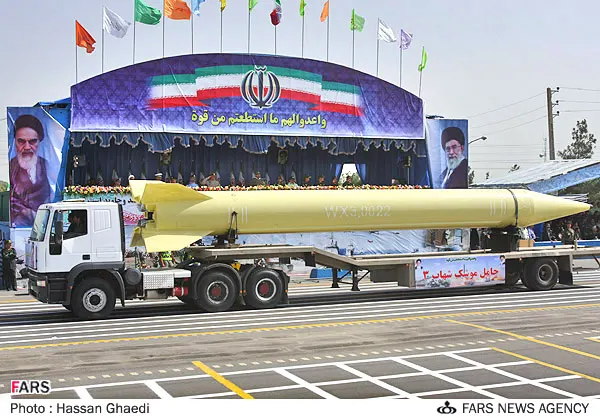
Iran's most recent liquid-fuel derivative, the Khorramshahr, first paraded in 2017, is widely assessed by outside analysts as a reworked, more compact version of North Korea's Musudan design described above, though whether Iran received actual Musudan hardware or simply developed a similar missile from shared technical roots remains genuinely disputed in open reporting.10,12 Every one of these missiles, Shahab-3, Ghadr-110, Emad, Ashoura, and Khorramshahr, traces its propulsion and airframe engineering back to the same single Iranian program that began with a North Korean import in the 1990s, making Iran's liquid-fuel missile family one of the most direct present-day descendants of the A.Q. Khan-era proliferation network described earlier in this article.8,12
01Iran's Solid-Fuel Turn and the Wars of 2024 to 2026
Iran broke from that liquid-fuel line with the Sejjil, its first genuinely indigenous two-stage, solid-propellant medium-range missile, first flight-tested successfully in November 2008 after an earlier failed 2007 test under the related Ashoura name.13 Where every Shahab-3 derivative needs an hour or more of exposed fueling before launch, the Sejjil's solid motors arrive from storage already loaded, and Iranian officials have described that difference as making the missile considerably harder to catch in launch preparation.13 The Sejjil went almost silent for a decade after 2011, appearing only in parades rather than confirmed flight tests, until Iran finally fired it in combat during the June 2025 Twelve-Day War, seventeen years after its first test flight.13

Iran's third-generation missiles, developed by the Aerospace Force of the Islamic Revolutionary Guard Corps, built on the Sejjil's solid-fuel approach with a lighter airframe and a more explicit focus on defeating missile defenses. The Dezful, entering the same solid and hybrid-fuel development track around 2019, and the Kheibar Shekan, unveiled in 2022 with a composite airframe roughly a third lighter than earlier Iranian missiles of similar range, both carry maneuverable reentry vehicles meant to defeat terminal interception rather than simply fall on a fixed ballistic path.13 The Kheibar Shekan's own name, drawn from the historical fortress of Khaybar taken by early Muslim forces in the seventh century paired with the Persian word for breaker, is one of several Iranian missile names built around this kind of religious and historical reference, a naming pattern that runs across much of Iran's arsenal.13 The Kheibar Shekan's combat debut came on 16 January 2024, against a target near Syria's Idlib Governorate, Iran's longest-range ballistic missile shot at the time, and it has since been named repeatedly in Iranian strikes against Israel through the 2025 Twelve-Day War and the wider 2026 Iran War.13 Haj Qasem, built by the Ministry of Defense and Armed Forces Logistics together with the Iran Aviation Industries Organization and unveiled on 20 August 2020 alongside a new anti-ship cruise missile named for a second commander killed in the same January 2020 strike, followed the same solid-fuel, maneuverable-warhead template, and its 2025 terminal-guidance upgrade, publicized under the name Qassem Bassir with an added electro-optical seeker and a carbon-fiber airframe meant to cut its radar signature, was presented by Iran as a direct answer to lessons drawn from its 2024 exchanges with Israel.13
The American missile-defense systems Iran's newer missiles are built to defeat did not develop in a vacuum either. The United States spent decades testing interceptors like THAAD and Patriot PAC-3 against Hera, a target vehicle built from decommissioned Minuteman II motors and a guidance section derived from the same Pershing II program described earlier in this article, flown on a Scud-like trajectory shaped to resemble exactly the kind of Iranian and North Korean medium-range missile this leaf otherwise catalogues.14 Hera carries no warhead of its own. Its entire purpose is to give American radars and interceptors something realistic to shoot at long before either side meets in an actual war, a reminder that the medium-range ballistic missile category has shaped weapons built to destroy it as much as weapons built to threaten with it.14
Iran's most recent solid-fuel designs, the Rezvan and Etemad, both entering testing in 2022 and 2025 respectively and both also credited to the Aerospace Force of the Islamic Revolutionary Guard Corps, and the Palestine-2, unveiled in 2024, extend the same development line without yet having the combat record of the Kheibar Shekan or Haj Qasem, and open-source detail on all three remains thinner than for their better-documented predecessors.13 Taken together, Iran's Sejjil-derived solid-fuel family has become the country's most heavily used medium-range arsenal in the Twelve-Day War of June 2025 and the 2026 Iran War that followed, running alongside the older liquid-fuel Shahab-3 descendants rather than fully replacing them.13
01The Category Today
The medium-range ballistic missile began as a Cold War answer to a narrow problem, how to threaten a rival superpower's allied territory without building an intercontinental missile, and the Soviet Union, the United States, and France each answered that problem within a decade of each other in the 1950s, 1960s, and early 1970s. The Euromissile Crisis that followed, and the 1987 INF Treaty that ended it, briefly suggested the category itself might disappear from the world's two largest arsenals entirely. It did not disappear. It proliferated instead, carried outward by a single North Korean export line that reached Pakistan and Iran within the same decade, by China's independent adaptation of submarine-missile technology onto road-mobile launchers, and by Israel and South Africa's undeclared Cold War-era partnership.
Even the countries at the edges of this leaf keep adding to it. Turkey's state manufacturer ROKETSAN, already a major supplier of shorter-range rockets and cruise missiles, unveiled its own medium-range design, the Cenk, in 2025, one of the newest entrants in a leaf that otherwise spans seven decades, and a reminder that the national roster covered here is still growing rather than fixed.15
What defines the category today is not the Soviet-American standoff that produced the R-12 Dvina and the Pershing II, but the cluster of national programs that grew from it. China's DF-21 family has matured into a genuinely diverse arsenal spanning nuclear deterrence and anti-ship strike. Pakistan and India continue an unresolved missile-defense competition through the Ababeel and Agni-P. North Korea's Pukguksong-2 and the catastrophic test record of its Hwasong-10 sit alongside newer, more reliable designs still in development. And Iran's medium-range arsenal, split between an older liquid-fuel Shahab-3 line and a newer solid-fuel family built around the Sejjil, Kheibar Shekan, and Haj Qasem, has become the most actively fired collection of medium-range ballistic missiles anywhere in the world across the Twelve-Day War of 2025 and the 2026 Iran War that followed it.
That last shift, from a category most people associate with two vanished Cold War arsenals to one now defined by live combat use in the Middle East, is the biggest change this leaf has undergone since the 1987 INF Treaty. A missile class built to sit on alert for decades without ever firing has, in Iran's case alone, now been launched in anger across at least four separate rounds of fighting within three years. The same category that once defined a standoff between two superpowers now defines several separate regional crises at once, each with its own missiles, its own history, and, so far, no equivalent of the treaty that once eliminated the category from Europe entirely.
02Notes and Sources
- MRBM archive — R-5 Pobeda, R-5M, M5-RD, Military Archive — /en/weapons/r-5-pobeda, /en/weapons/r-5m, /en/weapons/m5-rd ↩
- MRBM archive — R-12 Dvina, R-14 Chusovaya, Military Archive — /en/weapons/r-12-dvina, /en/weapons/r-14-chusovaya ↩
- MRBM archive — PGM-19 Jupiter, Military Archive — /en/weapons/pgm-19-jupiter ↩
- MRBM archive — S2, Military Archive — /en/weapons/s2 ↩
- MRBM archive — RT-15, RSD-10 Pioneer, Pershing II Weapon System, Military Archive — /en/weapons/rt-15, /en/weapons/rsd-10-pioneer, /en/weapons/pershing-ii-weapon-system ↩
- MRBM archive — DF-2, DF-3, DF-21, DF-21A, DF-21C, DF-21D, DF-16, Military Archive — /en/weapons/df-2, /en/weapons/df-3, /en/weapons/df-21, /en/weapons/df-21a, /en/weapons/df-21c, /en/weapons/df-21d, /en/weapons/df-16 ↩
- MRBM archive — Jericho II, RSA-3, Al-Tammuz, Military Archive — /en/weapons/jericho-2, /en/weapons/rsa-3, /en/weapons/al-tammuz ↩
- MRBM archive — Hwasong-7, Ghauri-I, Ghauri-II, Shaheen-II, Military Archive — /en/weapons/hwasong-7, /en/weapons/ghauri-i, /en/weapons/ghauri-ii, /en/weapons/shaheen-ii ↩
- MRBM archive — Agni-II, Agni-II Prime, Agni-P, Military Archive — /en/weapons/agni-ii, /en/weapons/agni-ii-prime, /en/weapons/agni-p ↩
- MRBM archive — Hwasong-9, Hwasong-10, Pukguksong-2, Military Archive — /en/weapons/hwasong-9, /en/weapons/hwasong-10, /en/weapons/pukguksong-2 ↩
- MRBM archive — Ababeel, Military Archive — /en/weapons/ababeel ↩
- MRBM archive — Shahab-3, Ghadr-110, Emad, Ashoura, Khorramshahr, Military Archive — /en/weapons/shahab-3, /en/weapons/ghadr-110, /en/weapons/emad-missile, /en/weapons/ashoura, /en/weapons/khorramshahr ↩
- MRBM archive — Sejjil, Dezful, Kheibar Shekan, Haj Qasem, Qassem Bassir, Rezvan, Etemad, Palestine-2, Military Archive — /en/weapons/sejjil, /en/weapons/dezful, /en/weapons/kheibarshekan, /en/weapons/haj-qasem, /en/weapons/qassem-bassir, /en/weapons/rezvan-missile, /en/weapons/etemad-missile, /en/weapons/palestine-2 ↩
- MRBM archive — Hera, Military Archive — /en/weapons/hera ↩
- MRBM archive — Cenk, Military Archive — /en/weapons/cenk-missile ↩


