


On the morning of April 6, 1998, Pakistan flight-tested a missile it called Ghauri, and the launch became one of the proximate triggers Indian officials later cited when explaining the accelerated timeline behind the Pokhran-II nuclear tests just weeks afterward.1,2 Carrying the military designation Hatf-V, the Ghauri-I is a single-stage, road-mobile, liquid-propellant medium-range ballistic missile (MRBM) built by Khan Research Laboratories (KRL) at Kahuta, and it became Pakistan's first ballistic missile capable of reaching deep into India, including New Delhi and much of India's western nuclear infrastructure, from launch sites well inside Pakistani territory.2,3
- First Pakistani missile able to strike deep into India
- Combat-proven Nodong-1 airframe reduced design risk
- Road-mobile TEL improves survivability over fixed silos
- Dual-capable warhead (conventional or nuclear)
- Liquid propellant requires hours of pre-launch fueling
- Reentry vehicle needed years of redesign after 1998 failure
- Reported accuracy (CEP) varies wildly across sources
The Ghauri-I missile did not emerge from an independent Pakistani design effort. American intelligence assessments from the period concluded its airframe and propulsion were derived directly from North Korea's Hwasong-7, the missile Western analysts call the Nodong-1.1,5 That North Korean origin, discussed in more detail below, sits at the center of one of the more scrutinized proliferation stories of the 1990s, tying Pakistan's ballistic missile program to the same KRL network that later exported uranium-enrichment technology abroad.6 Pakistan first fielded the Ghauri-I operationally with its Army Strategic Forces Command in 2003, five years after that first public test, and the missile remains one of the most frequently exercised systems in the Pakistani strategic missile inventory today.12
Pakistan's own account of the Ghauri-I's naming adds a layer of historical symbolism that is worth understanding on its own terms. A KRL scientist with an interest in medieval history proposed naming the missile after the twelfth-century conqueror Muhammad of Ghor, and Prime Minister Benazir Bhutto approved the codename in 1994.1,14 Ghor's most famous battle was against the Rajput ruler Prithviraj Chauhan, whom he initially lost to and then defeated and killed two years later near Delhi.14 Pakistani missile planners reportedly believed India's earlier Prithvi missile had been named for that same Rajput king, and picked the name Ghauri as a symbolic answer, even though Prithvi is simply the Hindi word for earth and carries no reference to Chauhan at all.14 That naming pattern, of historical conquerors of the subcontinent, continues through later Pakistani missiles like the Ghaznavi and Abdali lines.
The Ghauri-I's place in the broader mrbm category is unusual for how directly its test history is tied to a specific diplomatic crisis. Where most medium-range ballistic missiles enter service quietly and draw attention only from specialist analysts, the Ghauri-I's first flight became front-page news across South Asia within hours, precisely because it demonstrated that Pakistan could threaten the Indian heartland with a nuclear-capable ballistic missile for the first time.2,9 Questions that persist today, including how far the Ghauri missile can actually reach, whether the Ghauri missile is still in service, and how its accuracy compares with Indian and Chinese systems, all trace back to the ambiguity built into that first, rushed test three decades ago.
Public specification sheets for the Ghauri-I missile converge on a fairly narrow band of figures. The missile measures approximately 15.9 meters in length and 1.35 meters in diameter, with a launch weight cited at 15,850 kilograms.2,3 It carries a single warhead reported between 700 and 1,200 kilograms depending on the source, a spread that reflects different assumptions about how much of that mass is structural reentry-vehicle hardware versus actual explosive or nuclear payload.2,3 Pakistan's Ghauri missile specifications describe a nuclear yield in the 12 to 35 kiloton range, alongside high-explosive, submunition, and reported chemical-warhead options, making the Ghauri-I explicitly dual-capable rather than a single-purpose nuclear delivery system.2,3
- Missile Classmrbm
- Service Entry Year2003
- Designerkhan_research_laboratories_krl
- Length15.9 m
- Diameter1.35 m
- Launch Weight15,850 kg
- In ServiceYes
Propulsion is a single-stage liquid-propellant rocket motor burning TM-185 fuel (roughly 80 percent kerosene, 20 percent gasoline) against an AK-27I oxidizer (nitric acid with nitrogen tetroxide), the same storable hypergolic combination used across the wider Scud-derived missile family.3 Reported thrust runs close to 26,000 kilogram-force with a burn time near 110 seconds, propelling the missile to a reported first-test altitude of roughly 350 kilometers before the reentry vehicle separated.3 Guidance is an inertial navigation package with reported terminal corrections, though this is precisely where the Ghauri-I's specifications diverge most sharply between sources.
- Propulsion Typesingle_stage_liquid_propellant_rocket
- Number of Stages1
- Fuel Typeliquid_propellant
- Solid-FuelNo
- Cold-LaunchNo
- CanisterizedNo
The missile launches from a road-mobile transporter-erector-launcher, originally a modified Soviet-era Scud-B TEL and later reportedly moved onto a Mercedes-Benz Atego 8-wheel-drive semi-trailer carrying Pakistani military markings.1,3 That road-mobile basing, rather than a fixed silo, lets the Army Strategic Forces Command disperse Ghauri launchers and complicate any first-strike targeting problem, at the cost of the hours of pre-launch fueling every liquid-propellant system requires.3,12
- Minimum Range1,250 km
- Maximum Range1,500 km
- Apogee350 km
- Throw Weight700 kg
- Depressed-Trajectory CapableNo
The Nodong-1 Origin and the KRL Redesign Effort
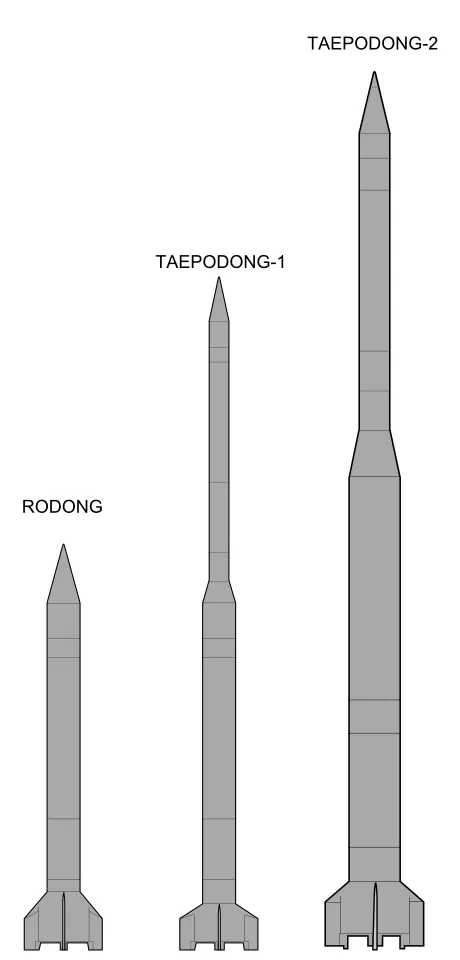
The single most important design fact about the Ghauri-I is that Khan Research Laboratories did not design it from a blank sheet. Late-1990s American intelligence assessments concluded the Ghauri-I's airframe, propulsion, and general layout were copied almost directly from North Korea's Hwasong-7, and Pakistan is estimated to have imported roughly a dozen or more complete Nodong-1 missiles or major subassemblies during the mid-1990s.1,5 North Korean engineers reportedly began teaching aerospace and missile-related courses at Pakistani institutions as early as 1993, well before the Ghauri name itself was chosen.1
- Circular Error Probable (CEP)190 m
- Guidance TypeInertial / GPS
- Terminal GuidanceYes
- Maneuverable Re-Entry Vehicle (MaRV)No
- Penetration Aids / DecoysNo
The technology flow between Pyongyang and Islamabad has been reported, with varying degrees of certainty, to have run in both directions. Investigations by nonproliferation researchers and journalists concluded that KRL, under A.Q. Khan, supplied North Korea with Zippe-type gas centrifuge uranium-enrichment designs and, in some accounts, small numbers of actual centrifuge components, during roughly the same period Pakistan was receiving Nodong-1 hardware and technical assistance.6,7 Other reporting indicates Pakistan's finance ministry under Benazir Bhutto simply paid North Korea in cash for early missile hardware, rather than relying purely on a missile-for-centrifuge barter, and the exact balance between direct payment and technology exchange remains contested among researchers who have studied the case.1,6
- Warhead Typehe_nuclear
- NuclearYes
- ThermonuclearNo
- Yield (per warhead)12
- MIRVNo
- Warhead / RV Count1
- Conventional-CapableYes
Pakistan's own official account of the April 1998 test describes it as a full success, but independent technical analysis published shortly afterward, examining the limited public trajectory data, raised doubts about whether the Ghauri-I's original conical reentry vehicle actually survived reentry heating intact.15 Later Pakistani accounts effectively confirmed the doubts existed for good reason. The missile's original sharp-angled nose section reportedly melted under reentry shock and heating during that first flight, and KRL had to redesign the reentry vehicle with a blunter, rounded profile before the Ghauri-I could be considered reliable enough for operational service, a process that took years and pushed deployment back to 2003.1
- Basing Moderoad_mobile_semi_trailer
- Silo-BasedNo
- Road-Mobile (TEL)Yes
- Rail-MobileNo
- Submarine-LaunchedNo
The North Korean design that produced the Ghauri-I did not stop at Pakistan's border. The same Nodong-1 technology base that KRL turned into the Ghauri-I was separately exported to Iran, where engineers reworked it into the Shahab-3 family, creating a three-way proliferation triangle in which one North Korean missile design underwrote three separate national ballistic-missile programs through the 1990s and 2000s.16 Pakistan changed the Nodong-1's external shape the least of the three recipients, while Iranian engineers experimented more freely with nose cone shape and propellant refinements on their own Shahab-3 variants.16
- Total Production30
- Operators1
- First Test1998
- Detonation Mechanism / Fuzeimpact
- Explosive Filler Typehe_ne
Pakistan's ballistic missile program traces back to a secretive effort code-named Hatf, launched in 1987, but the Ghauri line specifically began development at Khan Research Laboratories in 1994, under direct pressure to match India's own missile progress.1 Development work, spanning warhead design, control-system engineering, and reentry vehicle testing, continued at KRL from 1994 through roughly 2001, well past the missile's first public test.1
The Ghauri-I had its first public flight test early in the morning on April 6, 1998, launched from the Mashhood Test Firing Range near Jhelum Cantonment, roughly 76 miles south of Islamabad.1,4 The missile flew approximately 1,100 kilometers downrange in a flight lasting just under ten minutes, and Pakistan had given India advance notice of the launch under existing bilateral confidence-building arrangements.1,4 India's public reaction was deliberately restrained. Defence Minister George Fernandes called the development unsurprising and stated that no part of Pakistan lay outside the range of India's own Prithvi missile, while separately accusing China of continuing to support Pakistan's missile program.4
Behind that calm public statement, the Ghauri-I test landed at a politically sensitive moment. Prime Minister Atal Bihari Vajpayee had returned to power in March 1998 and had already begun quietly moving toward authorizing renewed nuclear testing, a decision India had considered and shelved at least twice in the preceding years.9 On April 9, three days after the Ghauri-I launch, Vajpayee met with his scientific advisers and asked how quickly a nuclear test series could be readied, and was told roughly thirty days.9 India detonated three nuclear devices simultaneously on May 11, 1998, followed by two more on May 13, in the Pokhran-II test series, and Indian officials afterward pointed to the Ghauri-I test as one of the developments that justified the timing, even though internal planning for renewed testing predated the missile launch.1,10
Pakistan answered in kind. Fifteen days after Pokhran-II, on May 28, 1998, Pakistan detonated five nuclear devices simultaneously at the Ras Koh Hills in Chagai district, Balochistan, in a test series known as Chagai-I, followed by a second detonation, Chagai-II, on May 30.11 Prime Minister Nawaz Sharif later told journalists plainly that Pakistan would not have tested had India not done so first, framing Chagai-I as a response driven by domestic political pressure rather than pure military necessity.9 The United Nations Security Council responded with Resolution 1172, condemning both countries' tests, and the United States and other governments imposed economic sanctions on Islamabad and New Delhi, including missile-proliferation sanctions specifically targeting KRL and a North Korean trading company tied to the Ghauri-I's development.4,9
The escalation did not end with the May 1998 nuclear tests. Just under a year later, on April 11, 1999, India test-fired its own Agni-II medium-range ballistic missile from Wheeler Island off the Orissa coast, after giving Pakistan and major powers advance notice under the 1999 Lahore Declaration framework.8 Pakistan responded within seventy-two hours, test-firing the longer-ranged Ghauri-II on April 14, 1999, followed the very next day by a first flight of the solid-fuel Shaheen-I missile, a rapid, deliberately matched sequence of missile tests that played out while Indian and Pakistani troops were actively fighting in the mountains above Kargil.8,13
The Ghauri-I has never been fired in anger, and no confirmed operational combat launch exists in the open record. Its relevance to actual fighting between India and Pakistan has always been indirect, functioning as a background deterrent and signaling tool rather than a weapon employed on any battlefield.12 That indirect relevance was sharpest in the weeks immediately surrounding its own first test and the escalation that followed.
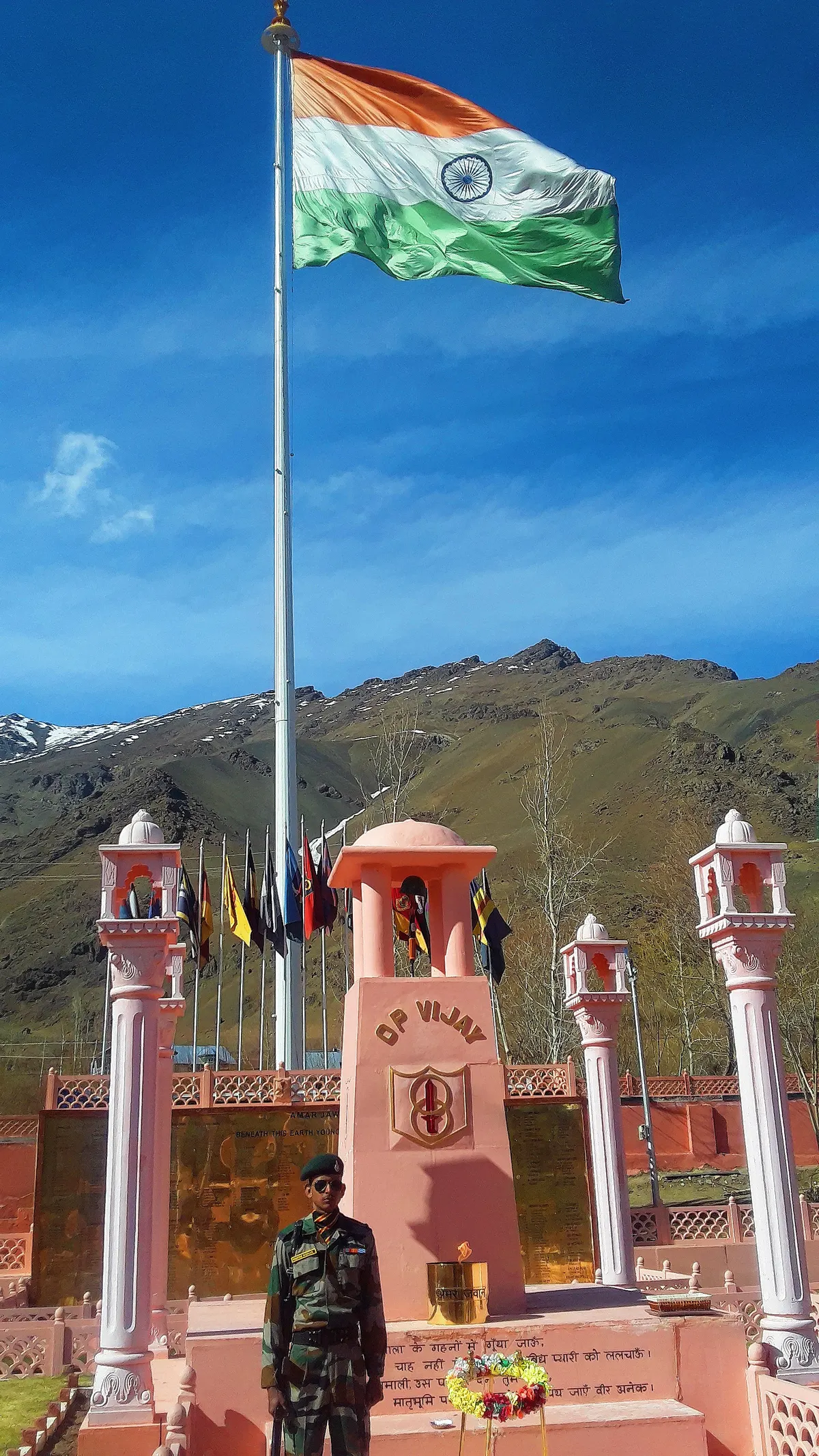
The Kargil War, fought between May and July 1999 in the mountains above Dras and Kargil in Indian-administered Kashmir, ran almost exactly parallel to the Ghauri-II and Agni-II missile tests described above.13 The Ghauri-I itself was not tested or employed during that specific window, having already completed its first flight a year earlier in April 1998, but the broader Ghauri missile family's continuing test activity fed directly into the atmosphere of nuclear brinkmanship that made the Kargil fighting, a conventional border conflict between two newly declared nuclear states, so internationally alarming at the time.9,13 Analysts who studied the crisis afterward generally concluded that neither side's missile force, Ghauri included, functioned as a genuinely ready nuclear delivery system in mid-1999, since command and control arrangements for both countries' missile forces were still being organized barely a year after the 1998 tests.9
More broadly, the Ghauri-I's real strategic role sits within Pakistan's overall nuclear deterrent posture against India, a posture built around the assumption that any large-scale conventional war between the two countries carries an irreducible risk of nuclear escalation. Pakistan's Army Strategic Forces Command has periodically exercised the Ghauri-I specifically to demonstrate continued readiness during periods of heightened India-Pakistan tension, including test launches in 2010, 2012, 2015, and again in October 2023, each timed to signal operational continuity rather than to threaten any specific ongoing conflict.12
The Ghauri-I spawned two follow-on designs that stretched its basic Nodong-1-derived architecture for greater range, though neither ever achieved the same confirmed operational status as the original missile. Ghauri-II, also known as Hatf-VA, lengthened the motor casing by roughly two meters and adopted a two-stage configuration to push reported range out to somewhere between 1,800 and 2,300 kilometers, extending Pakistani missile coverage to virtually all of India rather than the Ghauri-I's more limited western and central reach.13 Ghauri-II first flew on April 14, 1999, in direct response to India's Agni-II test three days earlier, and flew only once more, in 2004, without ever receiving a confirmed separate operational designation or induction date.13
A further-stretched design, Ghauri-III, reportedly reached at least a static engine test around 1999 with a design target range beyond 3,000 kilometers, well into intermediate-range territory, but the program was shelved before any confirmed flight test took place.5 Unlike the Ghauri-I, which entered confirmed Army Strategic Forces Command service in 2003 and has been repeatedly tested since, neither Ghauri-II nor Ghauri-III has been described in open-source assessments as a fully fielded, separately inducted weapon system.

The Ghauri-I's only confirmed operator is Pakistan, fielded exclusively by the Pakistan Army's Army Strategic Forces Command (ASFC), the unified command responsible for Pakistan's land-based nuclear and conventional ballistic and cruise missile forces.12 Pakistan has never exported the Ghauri-I or any variant, consistent with the missile's role as a core piece of national nuclear deterrent infrastructure rather than an export product.
Production estimates for the Ghauri-I are imprecise, with open-source assessments in the early 2020s putting the total inventory at roughly 30 missiles, a figure that should be read as a rough order-of-magnitude estimate rather than a confirmed count, since Pakistan does not publish missile production or stockpile numbers.1 The Army Strategic Forces Command maintains several dispersed missile groups equipped with Ghauri-I launchers, prioritizing mobility and concealment over the kind of fixed, hardened basing more commonly associated with silo-based systems.3,12
Pakistan's Ghauri-I and India's Agni-II were not designed in isolation from each other. Each country's missile program moved in direct, dated response to the other's test schedule through 1998 and 1999, making the pair less a case of two independently converging designs and more a documented, back-and-forth arms competition. The Ghauri-I's April 1998 test came first and forced India's hand on both nuclear testing and missile development, and India's April 1999 Agni-II test then triggered Pakistan's own Ghauri-II test three days later, a rhythm of matched responses rather than parallel development.1,8
Technically, the two missiles reflect different design choices and different eras of missile engineering. The Ghauri-I is a single-stage liquid-propellant design with a reported range of roughly 1,250 to 1,500 kilometers, derived from North Korea's Nodong-1 and requiring hours of pre-launch fueling.2,3 Agni-II is a two-stage, solid-fuel design with a considerably longer reported range near 2,000 to 3,000 kilometers, benefiting from India's more mature indigenous solid-propellant industry and offering much faster launch readiness than any liquid-fueled missile can match.8 That gap in propellant technology is arguably the single most consequential technical difference between the two countries' missile programs from this period, and it explains why Pakistan's own newer missiles, including the solid-fuel Shaheen-II, moved away from the Ghauri-I's liquid-propellant approach even as the Ghauri-I itself stayed in service.
| Feature | Ghauri-I (Hatf-V) | Agni-II |
|---|---|---|
| Propellant | Single-stage liquid | Two-stage solid |
| Reported range | ~1,250-1,500 km | ~2,000-3,000 km |
| First test | April 6, 1998 | April 11, 1999 |
| Service entry | 2003 | 2004 |
Both missiles remain fielded, dual-capable, road-mobile systems built around the same basic strategic logic, deterring the other side through the credible threat of a nuclear-capable strike deep into national territory. Neither the Ghauri-I nor the Agni-II has ever been used in actual combat, and both exist primarily as the visible, testable component of a much larger and mostly invisible nuclear deterrent relationship between two states that have fought four wars since 1947 and remain in a state of periodic border conflict today.8,9


How far can the Ghauri missile reach The Ghauri-I has a reported range of roughly 1,250 to 1,500 kilometers depending on payload weight, enough to reach targets across most of northern and central India from launch sites inside Pakistan.2,3
Is the Ghauri missile still in service Yes. The Ghauri-I entered confirmed operational service with Pakistan's Army Strategic Forces Command in 2003 and remains active, with readiness test launches recorded as recently as October 2023.12
What triggered the 1998 India-Pakistan nuclear tests Pakistan's April 6, 1998 Ghauri missile test is widely cited, alongside longer-running Indian strategic planning, as one of the developments that led India to conduct the Pokhran-II nuclear tests in May 1998, which Pakistan answered with its own Chagai-I and Chagai-II tests later that same month.1,9,11
What is the Ghauri missile's warhead capacity Sources place the Ghauri-I's payload between roughly 700 and 1,200 kilograms, with a nuclear yield reported in the 12 to 35 kiloton range alongside conventional high-explosive and reported chemical or submunition options.2,3
Who manufactures the Ghauri missile Khan Research Laboratories, Pakistan's premier nuclear and missile research organization, designed and built the Ghauri-I, drawing on imported North Korean Nodong-1 missile technology.1,5
- "Ghauri (missile)", Wikipedia — en.wikipedia.org) ↩
- "Ghauri (Hatf 5)", CSIS Missile Threat — missilethreat.csis.org ↩
- "Ghauri [Hatf-5]", Federation of American Scientists — nuke.fas.org ↩
- "U.S. Imposes Sanctions on Pakistan, N. Korea Following Missile Test", Arms Control Association — armscontrol.org ↩
- "Ghauri (Hatf-5)", GlobalSecurity.org — globalsecurity.org ↩
- "A.Q. Khan and Pakistan Helped North Korea Get Nuclear Weapons", Foreign Policy — foreignpolicy.com ↩
- "A. Q. Khan Nuclear Chronology", Carnegie Endowment for International Peace — carnegieendowment.org ↩
- "India, Pakistan Test New Missiles; U.S. Urges Restraint", Arms Control Association — armscontrol.org ↩
- "India and Pakistan on the Brink, The 1998 Nuclear Tests", Association for Diplomatic Studies and Training — adst.org ↩
- "Pokhran-II", Wikipedia — en.wikipedia.org ↩
- "Chagai-I", Wikipedia — en.wikipedia.org ↩
- "Pakistan launches Ghauri ballistic missile in test of readiness", Defense News — defensenews.com ↩
- "Ghauri-II", Wikipedia — en.wikipedia.org ↩
- "The strange case of Ghauri Missile's naming", Musings (Kulveer Samra) — kulveersamra.wordpress.com ↩
- "An analysis of the Pakistani Ghauri missile test of April 6, 1998", Science & Global Security — scienceandglobalsecurity.org ↩
- "NoDong", Missile Defense Advocacy Alliance — missiledefenseadvocacy.org ↩