

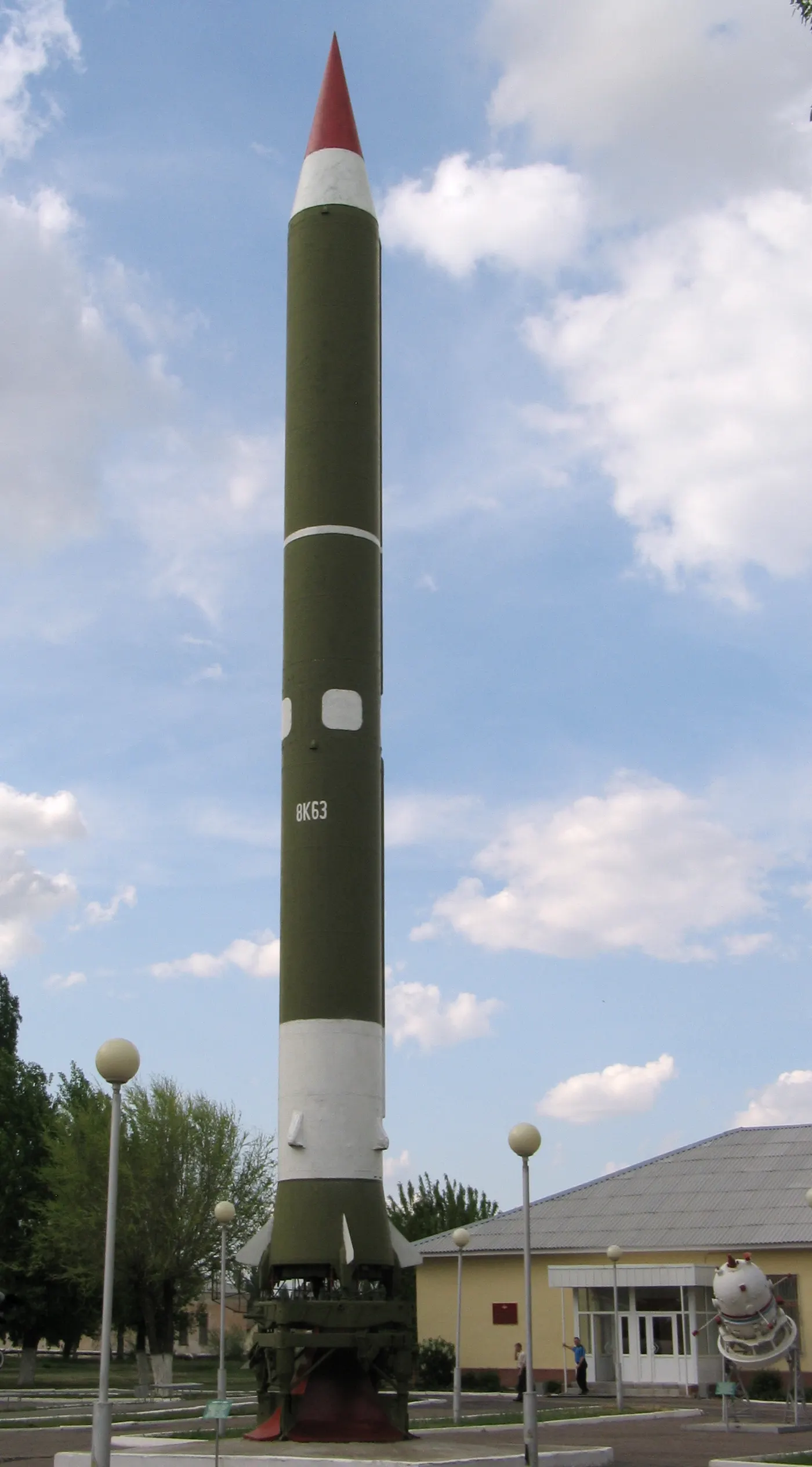

The R-12 Dvina, known in NATO reporting as the SS-4 Sandal, is a Soviet single-stage, liquid-fuelled medium-range ballistic missile that entered service in 1959 and became the single most consequential weapon of the entire Cold War without ever being fired at a target. Designed by Mikhail Yangel's new bureau at Dnipropetrovsk and built on the production line of what later became Pivdenmash (Yuzhmash), the R-12 Dvina carried a single thermonuclear warhead out to roughly 2,000 to 2,500 kilometers, enough to strike every NATO capital in Western Europe from bases inside the Soviet Union.1,2 Forty two of these missiles, shipped secretly to Cuba in the autumn of 1962 as part of Operation Anadyr, are what a U-2 pilot photographed over San Cristobal on 14 October 1962, setting off the thirteen days of the Cuban Missile Crisis.3,7
- Storable propellant, fast reaction vs earlier cryogenic missiles
- Simple single-stage design, cheap to mass-produce
- Road-transportable, could be hidden and dispersed
- Long service life, in the arsenal for three decades
- Modest accuracy, CEP measured in kilometers not meters
- Range too short to threaten the continental United States from Soviet territory
- Soft launch sites vulnerable before the silo-based R-12U arrived
- No maneuvering reentry vehicle or penetration aids
The R-12 Dvina's technical story is less dramatic than its political one. It was a conventional evolution of Soviet ballistic missile design, trading the cryogenic liquid oxygen of the earlier R-5 for storable propellants that let a regiment sit fuelled and ready for hours or days instead of minutes.1 That single change, more than any warhead figure, is what made the R-12 Dvina usable as a forward-deployed crisis weapon in the first place. Some 2,335 missiles were built between 1959 and the mid-1960s, and at its peak the Soviet Strategic Rocket Forces fielded 608 R-12 launchers, the great majority aimed west at NATO's central front.1 The type stayed in frontline Soviet service for almost three decades after Cuba, and was only eliminated under the 1987 Intermediate-Range Nuclear Forces (INF) Treaty, with the last missile destroyed at Lesnaya in Belarus in May 1990.11
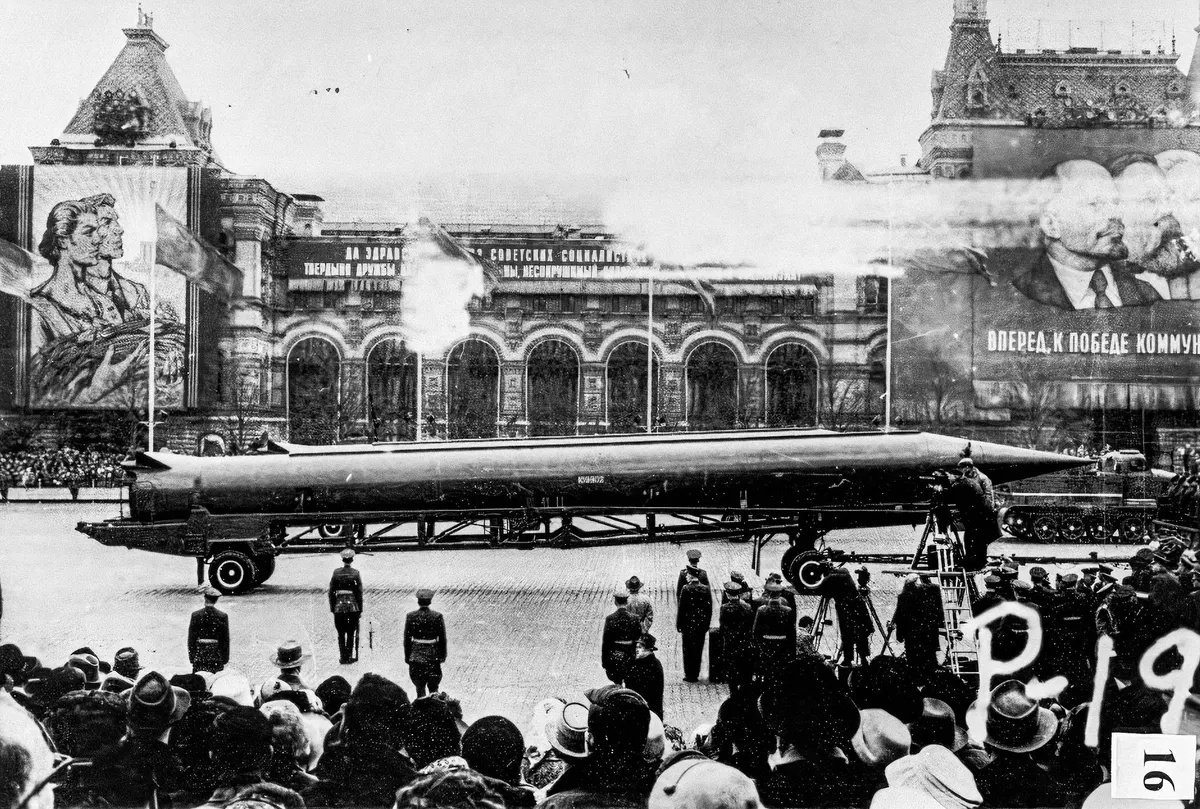
Every element of the R-12 Dvina's design reflects the mid-1950s moment it was built in. The Soviet Union needed a missile that could reach Turkey, Italy, West Germany and Britain, all NATO members hosting American nuclear delivery systems, and it needed that missile in numbers fast. Sergei Korolev's bureau was fully committed to the R-7 intercontinental program, so the medium-range mission went to a newly split-off design team under Yangel instead. What that team produced was unglamorous but effective, a missile good enough to arm hundreds of launchers across the western Soviet Union by the mid-1960s and reliable enough that Nikita Khrushchev was willing to gamble it on a secret deployment ninety miles from Florida. The sections below cover the R-12 Dvina's specifications and design, its development and the Cuban crisis in detail, its variants, its operators, and how it compares with the American missile it was secretly traded against, the PGM-19 Jupiter.
The RD-214 Engine and the End of Radio Guidance
The R-12 Dvina is 22.1 meters long and 1.65 meters in diameter, with a fully fuelled launch weight of 41.7 tonnes.1,2 Its single-stage airframe borrows directly from the earlier R-5 missile, but the engine underneath it is new. Valentin Glushko's bureau built the RD-214, a four-chamber engine burning AK-27I (concentrated nitric acid oxidizer) against TM-185, a kerosene-based fuel, generating around 650 kilonewtons of thrust over a burn of roughly 140 seconds.1,12 Both propellants are storable at ambient temperature, unlike the liquid oxygen the R-5 needed, which boiled off within hours and forced a fuelled missile to launch almost immediately or be drained and refuelled from scratch. A storable-propellant R-12 Dvina, by contrast, could sit fuelled on its pad for an extended period, a genuinely important operational change even though it reads as a footnote next to the missile's warhead.
- Missile ClassMedium-Range Ballistic Missiles (Conv.)
- Service Entry Year1959
- DesignerMikhail Yangel (OKB-586/Yuzhnoye Design Bureau)
- Length22.1 m
- Diameter1.65 m
- Launch Weight41,700 kg
- In ServiceNo
Guidance is autonomous inertial, engineered by Nikolay Pilyugin's team, and it deliberately dropped the radio-command correction link that earlier Soviet missiles like the R-5 had relied on.1 Removing the radio link made the R-12 Dvina immune to jamming and simpler to operate from a dispersed launch position, at some cost to accuracy. Circular error probable (CEP) estimates vary sharply by source, from a Western intelligence figure around 1.5 to 3 kilometers up to Russian-published figures closer to 5 kilometers, a spread that reflects both genuine accuracy uncertainty at the time and the different test conditions each side was measuring.1,2 None of that mattered much against the kind of target the R-12 Dvina was built to hit. A single-digit-kilometer miss distance is irrelevant when the payload is a multi-megaton thermonuclear warhead aimed at a city.
- Propulsion Typeliquid-propellant rocket engine
- Number of Stages1
- Fuel Typeliquid (AK-27I / TM-185)
- Solid-FuelNo
Warhead Options and the Weight of a Single Reentry Vehicle
The R-12 Dvina carries one thermonuclear warhead on a single reentry vehicle, with a throw weight around 1.6 tonnes.2 Yield varied by warhead type fitted, with figures across Soviet service life ranging from roughly 1 megaton up to a standard 2.3 megatons, an order of magnitude beyond the weapons that ended the Second World War.1 The 36 missiles actually shipped to Cuba in October 1962 carried warheads in the 1-megaton class, delivered separately from the missiles themselves aboard the freighter Indigirka and stored under guard away from the launch sites until the Soviet command decided whether to arm them.9 There is no MIRV capability and no terminal guidance package on the R-12 Dvina. It is a first-generation strategic weapon in the truest sense, one missile, one warhead, one impact point, built to overwhelm an adversary through sheer numbers of launchers rather than any single missile's precision.
- Minimum Range2,000 km
- Maximum Range2,500 km
- Throw Weight1,600 kg
Basing Modes, From Soft Launch Pads to the Dvina Silo Complex
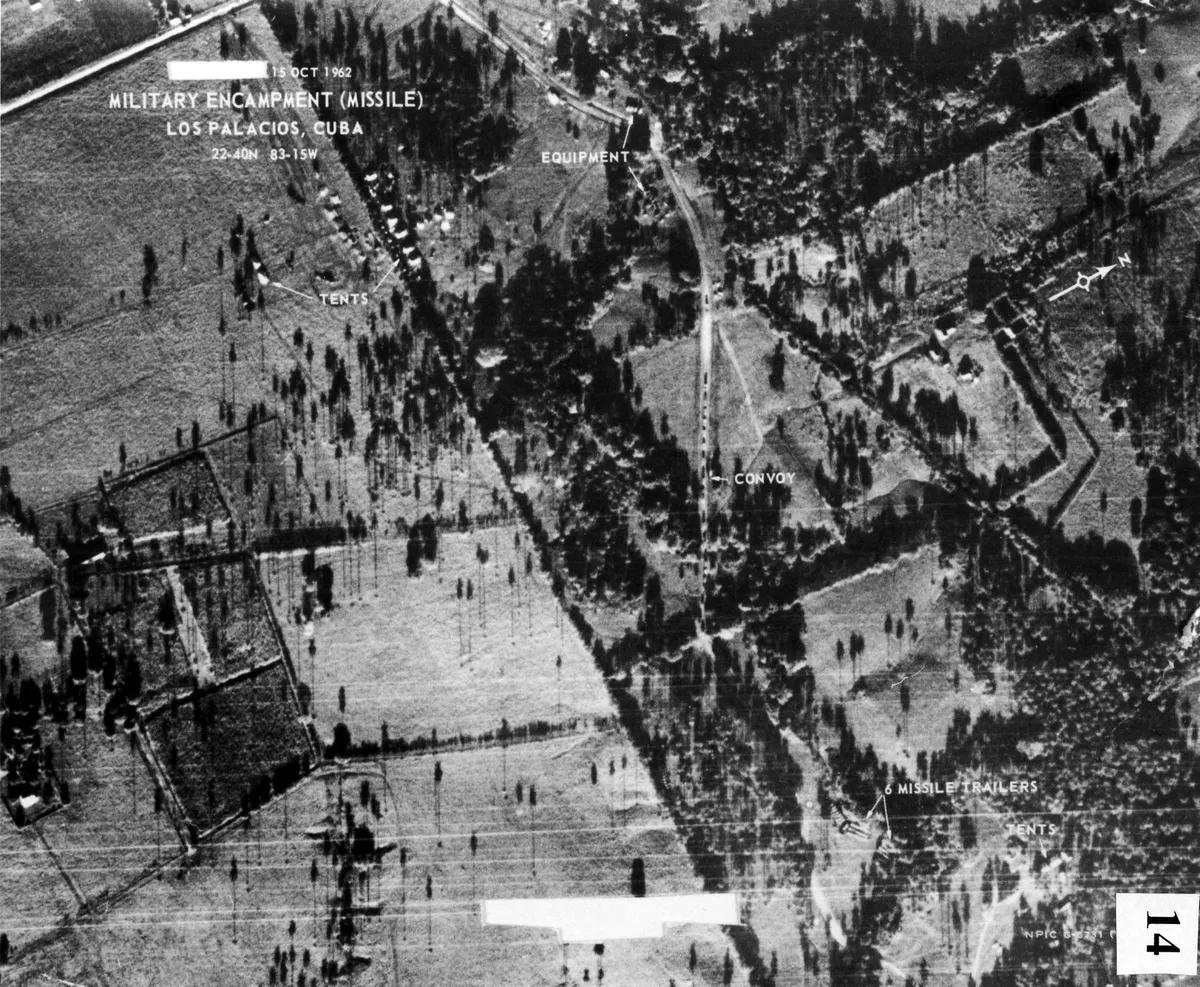
The earliest R-12 Dvina regiments fired from unhardened, above-ground launch pads, with the missile and its transporter-erector towed into position by road and the rocket raised vertically on a mobile stand shortly before launch.8 That is the configuration the Soviet military shipped to Cuba, visible in the U-2 imagery as bare concrete pads with missiles and support trailers parked in the open, not buried silos.3 From 1963 the Soviet military began fielding a hardened alternative, the R-12U, launched from a four-silo complex known as Dvina, giving the same missile far better survivability against a first strike.1 Both configurations stayed in the inventory simultaneously for years, so the R-12 Dvina genuinely combined silo-based and road-mobile basing rather than relying on one or the other. Neither configuration gave the R-12 Dvina anything like the fire-and-drive mobility of later Soviet mobile missiles, road-transport here meant moving to a fixed, pre-surveyed site rather than launching from the vehicle itself.
- Circular Error Probable (CEP)4,280 m
- Guidance TypeInertial / GPS
- Terminal GuidanceNo
- Warhead Typethermonuclear
- NuclearYes
- ThermonuclearYes
- Yield (per warhead)2,300
- MIRVNo
- Warhead / RV Count1
- Conventional-CapableNo
- Basing Modesilo and road-mobile
- Silo-BasedYes
- Road-Mobile (TEL)Yes
- Rail-MobileNo
- Submarine-LaunchedNo
- Total Production2,335
- First Test1957
- Explosive Filler TypeThermonuclear
From the R-5 Airframe to a New Bureau at Dnipropetrovsk
The R-12 Dvina's origin lies in a 1953 Council of Ministers decision to build a longer-ranged successor to the R-5 missile, and the job went to a brand-new organization, OKB-586, carved out of Sergei Korolev's production infrastructure at Dnipropetrovsk in 1954 and placed under Mikhail Yangel.1 Yangel's team kept the R-5's basic airframe dimensions but replaced its engine with a derivative of the one built for the short-range R-11 Zemlya, already proven with storable propellants. The first R-12 Dvina test flight lifted off from Kapustin Yar on 22 June 1957, and after a further round of development, Khrushchev personally watched a successful launch in September 1958, after which mass production began at the Dnipropetrovsk plant that would eventually become Pivdenmash.1 The missile formally entered Soviet inventory on 4 March 1959, though Western intelligence had already tracked deployments by late 1958.1,2 For their work on the program, OKB-586 received the Order of Lenin in July 1959, and Yangel himself was named a Hero of Socialist Labor.1
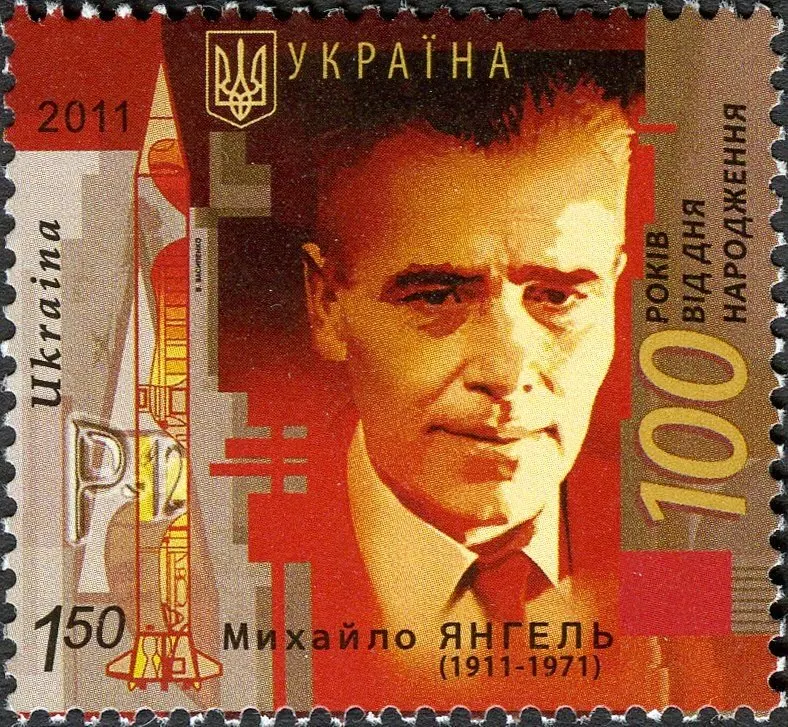
Production ramped quickly. By 1964 to 1966 the Strategic Rocket Forces had roughly 608 R-12 Dvina launchers in service, the largest medium-range force the Soviet Union ever fielded, with roughly nine in ten of them positioned in the western military districts to cover NATO's central front during the Cold War.1 The remainder shifted eastward over the 1960s. As relations with China soured after the Sino-Soviet split, several hundred R-12 launchers were repositioned to bases in Central Asia aimed at Chinese targets, a redeployment that had nothing to do with NATO and everything to do with a fracturing Communist alliance.12 Ironically, two actual R-12 missiles had been handed to China back in 1957 under an early technical-cooperation agreement, along with a promise of production drawings that never fully arrived before the two countries' relationship collapsed.1
Operation Anadyr and the Journey to Cuba
Khrushchev approved the concept of a secret missile deployment to Cuba in May 1962, and by early July the plan, codenamed Operation Anadyr after a river and remote bomber base in the Soviet far east, had final sign-off.7 The name itself was the first layer of deception, chosen precisely because it suggested an Arctic exercise rather than a Caribbean deployment.7 Roughly 40,000 Soviet personnel eventually moved to Cuba by sea, alongside 42 R-12 Dvina missiles intended for three regiments of eight launchers each, and 36 longer-ranged R-14 Chusovaya missiles for a further two regiments that never became fully operational before the crisis broke.7 Warheads for both types travelled separately, aboard the specialized transport Indigirka, which reached the Cuban port of Mariel on 4 October 1962.9
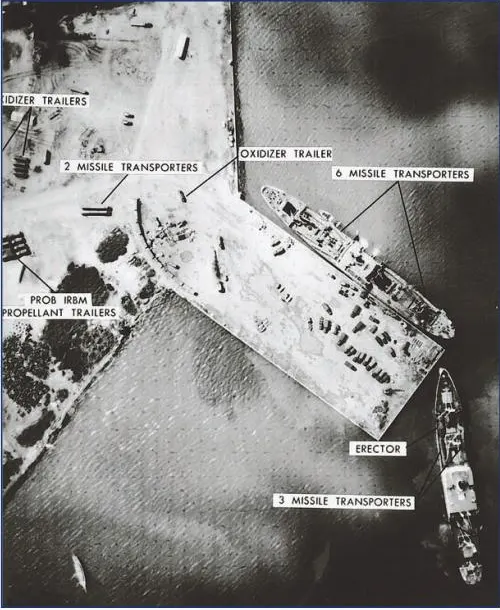
The secrecy around the whole operation went further than a codename. Only a handful of senior General Staff officers knew the deployment's real destination in the planning stage, orders were handwritten rather than typed to avoid leaks through clerical staff, and ship captains themselves did not learn where they were bound until already at sea.7 Missiles were hidden under plywood superstructures and metal sheeting, and roughly 50,000 Soviet personnel were required to stay below deck during daylight hours whenever a ship passed near shipping lanes.7 Soviet ambassador Anatoly Dobrynin meanwhile assured Washington directly, through Robert Kennedy, that no offensive weapons were headed to Cuba, a claim already false by the time it was made.7
By early October the first R-12 Dvina missiles were arriving at their prepared sites in western Cuba. U.S. intelligence would later assess that ten missiles were fuelling-ready by 10 October and roughly twenty at or near launch positions by 20 October, figures Soviet veterans have since disputed, with historian Boris Chertok noting that no R-12 Dvina missile was ever actually mated to its warhead during the crisis itself.8
San Cristobal, the U-2, and Thirteen Days on the Brink
The deployment stayed hidden from American intelligence for weeks, but not indefinitely. On 14 October 1962, a U-2 reconnaissance aircraft flown by Major Richard Heyser overflew western Cuba on a flight path chosen by Defense Intelligence Agency analysts, and its cameras captured a construction site near San Cristobal in Pinar del Rio province.3 Analysts at the CIA's National Photographic Interpretation Center identified missile erectors, fuel trailers and tents consistent with a Soviet medium-range ballistic missile regiment the next day, and presented the imagery to President Kennedy on 16 October.3,6 That single reconnaissance flight is the direct reason the Cuban Missile Crisis has a start date at all, since the R-12 Dvina missiles themselves had already been in Cuba for roughly two weeks by the time anyone in Washington knew it.
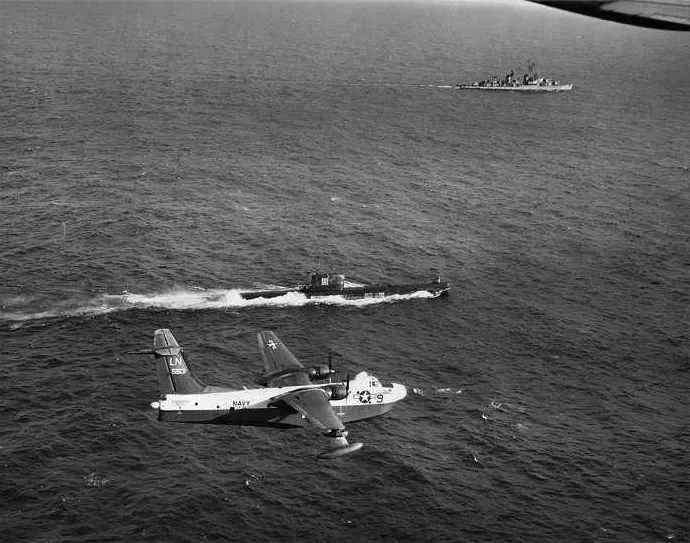
Kennedy convened a secret advisory group, later known as ExComm, on 16 October, and after a week of internal debate over air strikes against the sites versus a blockade, announced a naval quarantine of Cuba on national television on the evening of 22 October.6 The quarantine formally took effect on 23 October, with U.S. Navy ships stationed along a line roughly 500 miles from the Cuban coast to intercept Soviet vessels carrying further military cargo.6 Most Soviet ships bound for Cuba slowed, altered course or turned back as they approached the line. One notable exception, the tanker Bucharest, was allowed through after identifying itself as carrying only oil, while the freighter Marucla was boarded and inspected on 26 October and found to be carrying no offensive material.6
Tension peaked on 27 October, since remembered as Black Saturday, when a Soviet surface-to-air missile shot down a U-2 over Cuba and killed its pilot, Major Rudolf Anderson, the only combat fatality directly caused by the crisis, even though it was an air-defense missile rather than the R-12 Dvina itself that fired the fatal shot.6 Behind the scenes, Attorney General Robert Kennedy met secretly with Ambassador Dobrynin that same evening and indicated that the United States intended to withdraw its own Jupiter missiles from Turkey regardless, so long as that withdrawal was never linked publicly to the Cuban settlement.4,5 Khrushchev accepted the broader terms the next morning, announcing on Radio Moscow on 28 October that Soviet missile sites in Cuba would be dismantled in exchange for a U.S. pledge not to invade the island.6
The Jupiter Trade and the Withdrawal
The Kennedy-Khrushchev arrangement had two parts, one public and one secret. Publicly, the Soviet Union withdrew its missiles from Cuba in exchange for an American pledge not to invade the island. Privately, the United States agreed to remove its own PGM-19 Jupiter intermediate-range missiles from Turkey, a trade so sensitive that only a handful of officials on either side knew about it, and it was not publicly confirmed until 1989.4,5
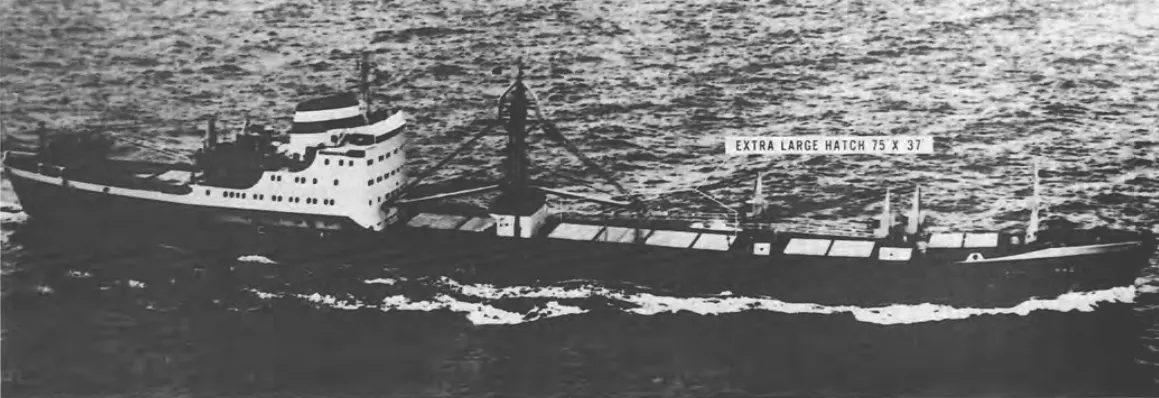
Removing the R-12 Dvina missiles from Cuba took weeks of further negotiation, complicated by Fidel Castro's refusal to allow on-the-ground inspection of the withdrawal. As a compromise, Soviet ships carrying the missiles home uncovered their deck cargo so American reconnaissance aircraft and warships could photograph and count the missiles as they left, including the freighter Leninsky Komsomol, tracked out of the port of Casilda by the U.S. Navy ship Dahlgren on 10 November 1962.10 All 42 R-12 Dvina missiles were confirmed loaded aboard eight Soviet ships and withdrawn by mid-November, though tactical nuclear warheads for shorter-range systems left separately, with the last shipment departing Mariel aboard the Arkhangelsk on 1 December and reaching Severomorsk on 20 December 1962.9 The naval quarantine itself did not end until 20 November, once the Soviet Union additionally agreed to remove Ilyushin Il-28 bombers that had also been stationed on the island.6 Turkey's own Jupiter missiles were dismantled by April 1963, and Italy's followed under similar arrangements, closing out the secret half of the bargain.4
Three More Decades in Soviet Service
Removed from Cuba, the R-12 Dvina simply went back to being an ordinary part of the Soviet strategic arsenal, and it stayed there for a remarkably long time. Soft-site launchers began phasing out in 1968 and hardened silo sites followed from 1972, with the newer solid-fuel RSD-10 Pioneer gradually taking over the medium-range mission from 1978 onward.1 Even so, R-12 Dvina units remained on alert into the 1980s. The type's final retirement came only with the December 1987 INF Treaty, signed by Ronald Reagan and Mikhail Gorbachev and entered into force in June 1988, under which the Soviet Union agreed to eliminate every ground-launched missile with a range between 500 and 5,500 kilometers, ballistic or cruise.11 The last of 149 remaining R-12 Dvina missiles was destroyed under American observation at the Lesnaya elimination facility in Belarus on 22 May 1990, closing out a service career that had begun in 1959 and run through Cuba, the China border build-up, and finally a treaty neither side could have imagined signing at the height of the 1962 crisis.11
The R-12 Dvina was never fired in anger anywhere, and its only real appearance in a shooting conflict is indirect, through the surface-to-air missile that killed Major Anderson's U-2 over Cuba during the standoff its own deployment caused.6 Its combat relevance instead lies entirely in deterrence and crisis posture. The Cuban deployment under Operation Anadyr is the R-12 Dvina's defining historical episode, placing Soviet nuclear-armed missiles within easy range of Washington for the first time and forcing the closest approach to direct superpower war of the entire Cold War.7 A second, quieter conflict context shaped the missile's later career, the Sino-Soviet split of the early 1960s, which saw several hundred R-12 Dvina launchers repositioned to Central Asia specifically to hold Chinese targets at risk after Beijing and Moscow broke from each other politically.12 Neither episode involved a shot fired by an R-12 Dvina crew, which is precisely the point of a weapon whose entire value lay in the threat of use rather than its use.
The baseline R-12 Dvina, fired from unhardened surface pads, remained in production alongside its improved successor for years. The R-12U (Soviet index 8K63U) adapted the missile for launch from hardened underground silos, grouped four to a complex under the designation Dvina, with testing running from December 1961 through December 1963 before entering service.1 The silo version traded some of the original's road-mobility for far greater survivability against a preemptive strike, addressing the single biggest weakness of the Cuba-era soft-site deployment.
A separate line of descent turned the R-12 Dvina into a satellite launcher. Fitted with an upper stage and redesignated 11K63, the airframe first flew as the Kosmos 63S1 booster, placing the Kosmos 1 navigation test satellite into orbit on 16 March 1962, the first Soviet orbital launch to use anything other than the R-7 Semyorka family.1 The modernized 11K63 configuration went on to fly 123 orbital missions between 1967 and 1977, making the R-12 Dvina's airframe, indirectly, one of the more prolific space launch vehicles of the Soviet program even as its parent missile was being phased toward retirement on the ground.
China represents a variant story that never fully happened. Under a 1957 technical-cooperation decree, the Soviet Union transferred two complete R-12 Dvina missiles to China along with a promise to supply full production drawings once Soviet testing concluded.1 The drawings never fully arrived before the Sino-Soviet split of the early 1960s ended technical cooperation between the two countries, leaving China's own medium-range missile program to develop independently rather than as an R-12 Dvina derivative.


| Year | Buyer | Quantity | Amount | Present Value (2025) |
|---|---|---|---|---|
| 1957 |  People's Republic of China | 2 | — | — |
The Soviet Union was the R-12 Dvina's only genuine operator across its entire service life, from formal entry into inventory in 1959 through the final elimination of the type in 1990 under the INF Treaty, well before the Soviet collapse in December 1991.1,11 Unlike its American rival, the R-12 Dvina was never exported, licensed for foreign production, or handed over to an ally's own command, even during the Cuban deployment. Soviet officers retained physical and procedural control of every R-12 Dvina missile and warhead in Cuba throughout the crisis, over Fidel Castro's own objections that Cuban forces should have a say in their use, a point of friction between Havana and Moscow that outlasted the crisis itself.7 China's brief 1957 acquisition of two example missiles, discussed above under Variants, never constituted operational service, since neither missile entered a Chinese military unit's inventory.1
The R-12 Dvina's defining comparison is not a matter of raw specifications but of a literal trade. When the Cuban Missile Crisis ended, the United States agreed to withdraw its PGM-19 Jupiter missiles from Turkey and Italy specifically in exchange for the R-12 Dvina's removal from Cuba, making these two missiles the only pair in Cold War history directly bargained against each other in a superpower settlement.4,5 Technically the two systems were close contemporaries and near-equals. Jupiter carried a single 1.44-megaton warhead out to about 2,410 kilometers with a CEP near 1.5 kilometers, figures broadly comparable to the R-12 Dvina's own 2,000 to 2,500 kilometer range and multi-kilometer accuracy.13,1 The real difference was posture rather than performance. Jupiter was based openly in allied NATO territory under a dual-key arrangement with American custody of the warheads, while the R-12 Dvina in Cuba was deployed covertly, under exclusively Soviet control, specifically to avoid early detection, a distinction that shaped the entire crisis far more than either missile's range or yield did.
| Spec | R-12 Dvina | PGM-19 Jupiter |
|---|---|---|
| Range | 2,000-2,500 km1 | ~2,410 km13 |
| Warhead yield | 1-2.3 Mt1 | 1.44 Mt13 |
| CEP | ~1.5-5 km1,2 | ~1.5 km13 |
| Propellant | Storable (AK-27I/TM-185)1 | Cryogenic (RP-1/LOX)13 |
| Basing | Soft pad / silo1 | Above-ground, fixed13 |
Within the Soviet arsenal itself, the R-12 Dvina's closer relative was the R-14 Chusovaya, designed by the same Yangel bureau and shipped to Cuba alongside it under Operation Anadyr.7 The R-14 Chusovaya was the longer-legged sibling, reaching out to roughly 4,500 kilometers against the R-12 Dvina's 2,500, a difference that mattered enormously for what each missile could threaten from Cuban soil. An R-12 Dvina fired from western Cuba could reach Washington and much of the eastern seaboard, while the R-14 Chusovaya's greater range extended coverage across virtually the entire continental United States. In practice the R-14 Chusovaya regiments were still under construction and nowhere near operational when the crisis broke, which is one reason the R-12 Dvina, already fuelling and nearly ready to fire by mid-October, is remembered as the crisis missile while its longer-ranged sibling is comparatively obscure.7 The R-12 Dvina's eventual successor in Soviet service, the solid-fuel RSD-10 Pioneer, replaced both missiles from 1978 with a mobile, quick-reacting design the 1959-vintage R-12 Dvina could never have matched, though the Pioneer met the same fate under the same INF Treaty less than a decade later.

What was the R-12 Dvina missile? The R-12 Dvina, NATO reporting name SS-4 Sandal, was a Soviet single-stage medium-range ballistic missile that entered service in 1959 and carried a single thermonuclear warhead roughly 2,000 to 2,500 kilometers.1,2
Why did the R-12 Dvina cause the Cuban Missile Crisis? The Soviet Union secretly shipped 42 R-12 Dvina missiles to Cuba under Operation Anadyr in 1962. Their discovery by a U-2 reconnaissance flight over San Cristobal on 14 October 1962 triggered the thirteen-day crisis that followed.3,7
How far could the R-12 Dvina reach? Its range was roughly 2,000 to 2,500 kilometers, far enough from Cuba to strike Washington and most of the eastern United States, though not the full continental country the way the longer-ranged R-14 Chusovaya could.1
Is the R-12 Dvina still in service? No. Every R-12 Dvina was eliminated under the 1987 INF Treaty, with the last missile destroyed at Lesnaya, Belarus, on 22 May 1990.11
What replaced the R-12 Dvina? The solid-fuel RSD-10 Pioneer began replacing the R-12 Dvina in Soviet service from 1978, offering faster reaction times and road-mobile launch that the older missile's soft-pad and silo basing could not match.1
How many R-12 Dvina missiles were built? Soviet industry produced 2,335 R-12 Dvina missiles in total, with a peak deployed inventory of 608 launchers in the mid-1960s.1
- "R-12 Dvina", Wikipedia — en.wikipedia.org ↩
- "R-12 / SS-4 SANDAL", Federation of American Scientists — nuke.fas.org ↩
- "The First U-2 Photographs of Soviet Missiles in Cuba, 1962", National Security Archive — nsarchive.gwu.edu ↩
- "The Jupiter Missiles and the Endgame of the Cuban Missile Crisis: Sealing the Deal with Italy and Turkey", Wilson Center — wilsoncenter.org ↩
- "The Jupiter Missiles and the Cuban Missile Crisis Endgame", National Security Archive — nsarchive.gwu.edu ↩
- "The Cuban Missile Crisis, October 1962", Office of the Historian, U.S. Department of State — history.state.gov ↩
- "Operation Anadyr", Wikipedia — en.wikipedia.org ↩
- "R-12 / 8K63 / SS-4 / Sandal", RussianSpaceWeb — russianspaceweb.com ↩
- "Last Nuclear Weapons Left Cuba in December 1962", National Security Archive — nsarchive2.gwu.edu ↩
- "Cuban Missile Crisis, 1962", Naval History and Heritage Command — history.navy.mil ↩
- "Intermediate-Range Nuclear Forces [INF] Chronology", Federation of American Scientists — nuke.fas.org ↩
- "R-12 (SS-4 Sandal) Russian Medium Range Ballistic Missile", The Military Standard — themilitarystandard.com ↩
- "PGM-19 Jupiter", Wikipedia — en.wikipedia.org ↩