


The Palestine-2 is a medium-range ballistic missile fielded by Yemen's Houthi movement, known formally as Ansar Allah, and unveiled publicly in September 2024 as the group's declared answer to Israeli air defenses. Ansar Allah calls it a hypersonic weapon, claims it can fly at up to Mach 16, and says it can reach targets 2,150 km away, a figure that would put most of Israel and Saudi territory within range from launch sites inside Yemen1. Independent analysts treat almost all of this as marketing rather than confirmed performance, and Israeli officials have said outright that the Palestine-2 does not maneuver enough in flight to earn a genuine hypersonic classification, even if its raw speed at reentry technically exceeds Mach 52.
- solid-fuel propulsion cuts launch preparation time
- genuinely long range for a non-state actor's arsenal
- repeated partial penetrations of layered Israeli defenses
- propaganda value regardless of technical truth
- hypersonic and maneuvering claims are unverified
- physical wreckage recovered from strikes often matches older Scud-derivative missiles, not a distinct new airframe
- accuracy against specific point targets remains unconfirmed
- entirely dependent on Iranian design input and, plausibly, components
That gap between the claim and the confirmed record is the central fact of this missile's story. It is one of several ballistic missiles in a family that also includes an earlier, less refined Palestine-1, and it sits in the broader class of medium-range ballistic missiles that the Houthis have used to strike Israeli cities and infrastructure since Yemen entered the wider Gaza war as an active participant in late 2023. The Palestine-2 shares a visual profile, including its warhead fairing and joint interfaces, with Iran's Kheibar Shekan and Fattah-1 missiles, and several Western analysts describe it as a Houthi-branded derivative of Iranian design work rather than an independently engineered Yemeni system3.
The Palestine-2 is exclusively a Yemeni weapon in operational terms. No other force fields it, and the Houthis present it as evidence that a movement without a conventional defense industrial base can still put a medium-range ballistic missile capable of reaching Israel into service. Whether that missile is actually the sophisticated hypersonic-capable system the Houthis describe, or a rebranded and incrementally modified Scud-family missile, remains a live dispute among missile analysts covering the Yemeni civil war and the wider Red Sea and Gaza-war spillover into Israeli territory4. Both readings matter for understanding the weapon, and this article treats the Houthi claims and the independent technical pushback as two separate threads rather than blending them into one settled description.
Houthi-released specifications describe the Palestine-2 as roughly 10 meters long, 0.75 meters in diameter, with a launch weight near 4,500 kg and a 500 kg high-explosive warhead5. None of these figures have been independently confirmed by a government or research institute, and they should be read as the manufacturer's own claim rather than a measured value, the same caveat that applies to every number in this section drawn from Houthi military spokesman Yahya Saree's public statements.
- Missile Classmedium_range_ballistic_missile
- Service Entry Year2024
- DesignerAnsar Allah (Houthi movement) missile force, with Iranian design assistance
- Length10 m
- Diameter0.75 m
- Launch Weight4,500 kg
- In ServiceYes
The missile is described as two-stage and solid-fuel, a real technical step up from the liquid-propellant Scud-derivative missiles that made up most of the Houthi arsenal before 2023, since solid fuel needs no on-site fueling and shortens the time a launch crew spends exposed before firing6. Analysts who have compared photographs and video of the Palestine-2 to Iranian systems point to shared warhead-fin geometry and an aerodynamic fairing ahead of the stabilizing fins that also appears on Iran's Kheibar Shekan and on the Fattah-1, the missile Iran itself unveiled in 2023 under a similar hypersonic label7. The design resemblance is close enough that several defense writers describe the Palestine-2 as effectively a Houthi-branded Kheibar Shekan variant rather than a separate Yemeni engineering effort8.
- Propulsion Typesolid_fuel_rocket
- Number of Stages2
- Fuel Typesolid
- Solid-FuelYes

The hypersonic designation is the most contested part of the specification sheet. A missile only counts as genuinely hypersonic in a meaningful military sense if it maneuvers unpredictably during descent, not simply because its reentry speed passes Mach 5, something almost any ballistic missile with a range past roughly 1,200 km will do regardless of any special engineering9. Israeli defense officials have said the Palestine-2 shows no evidence of the kind of in-flight maneuvering that would justify the label, and independent commentators note that as of 2026 only a handful of states, the United States, China, Russia, and India, have demonstrated confirmed hypersonic glide or maneuvering reentry capability10. The Houthis have not published data or independent test footage that would settle the question either way.
- Maximum Range2,150 km
A parallel dispute concerns whether the missiles recovered after Palestine-2 attacks are actually a new airframe at all. A June 2025 wreckage analysis found that debris collected after several strikes attributed to the Palestine-2 consistently matched Scud-type combustion chambers rather than a distinct new engine design, and concluded there was no physical evidence the Houthis had successfully deployed the Palestine-2 (or its Toufan counterpart) at all, as opposed to a modified Zulfiqar-family missile fired under a new name4. That does not mean the Palestine-2 program is fictional. Iran has publicly transferred solid-fuel missile components and assembly know-how to the Houthis since at least 2015, and a genuine Palestine-2 airframe, even an incomplete or Iranian-assembled one, is consistent with that pattern12. It does mean that attributing any specific 2024-2025 strike to a confirmed Palestine-2 launch, rather than to a similarly named Scud derivative, should be treated cautiously.
- Warhead Typehigh_explosive
- NuclearNo
- ThermonuclearNo
- MIRVNo
- Warhead / RV Count1
- Conventional-CapableYes
- Basing Moderoad_mobile
- Silo-BasedNo
- Road-Mobile (TEL)Yes
- Rail-MobileNo
- Submarine-LaunchedNo
- Operators1
- First Test2024
The Palestine missile line began in June 2024, when Yahya Saree announced a new ballistic missile called simply Palestine, fired at a target near the Israeli Red Sea port of Eilat13. That first missile was a comparatively unrefined design, and the Houthis presented it mainly as a propaganda marker of solidarity with Gaza rather than a technical breakthrough. The upgraded Palestine-2 followed roughly three months later.

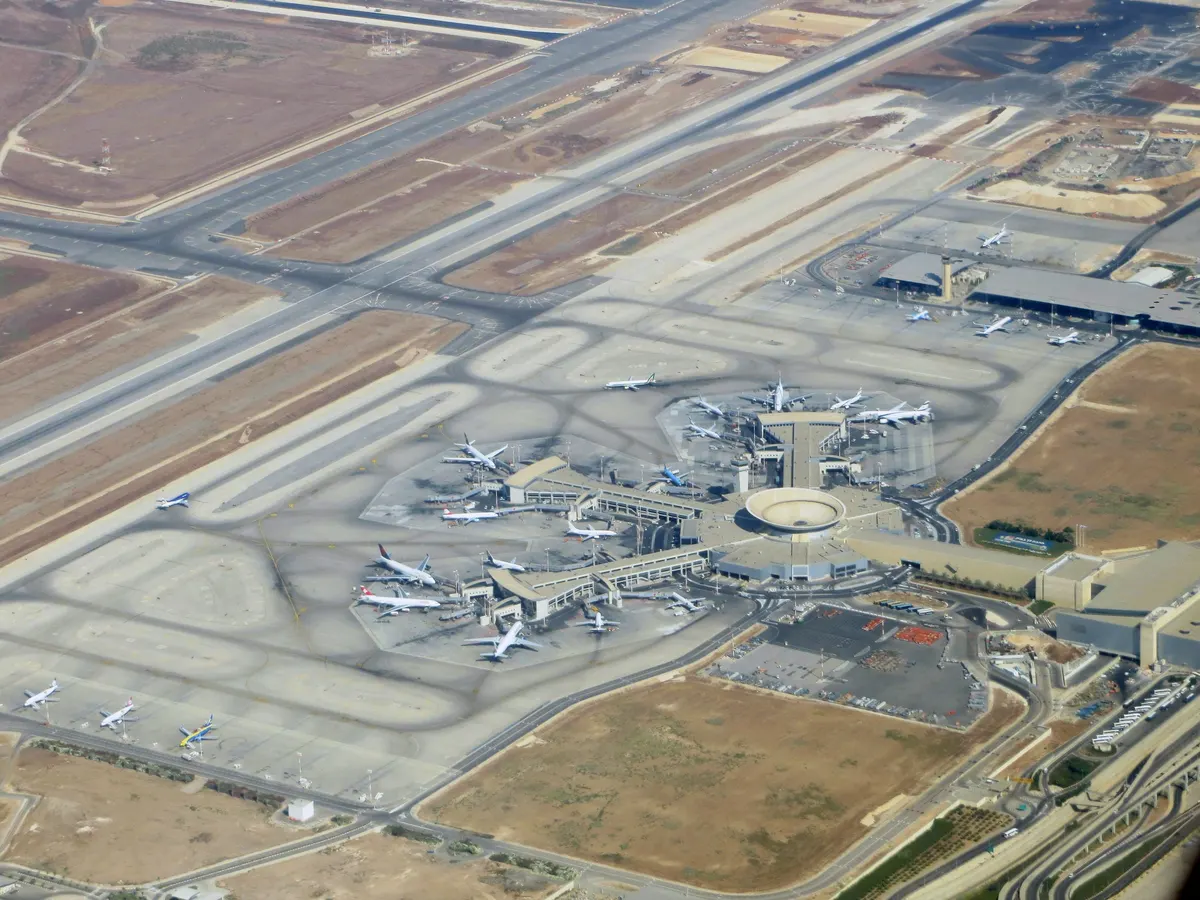
Yemen's Houthi armed forces first launched the Palestine-2 on September 15, 2024, aiming at a site near Ben Gurion Airport outside Tel Aviv, with the projectile landing in an open area and causing no injuries8. Saree formally unveiled the missile's claimed specifications the next day, timing the announcement to coincide with the tenth anniversary of the Houthi takeover of Sanaa and framing the new missile as a direct response to Israel's conduct of the Gaza war6. The September 15 launch mattered technically as much as symbolically. Israel's Arrow interceptor system reportedly struck the incoming missile but did not fully destroy it, an outcome Israeli reviewers later cited as evidence the missile had at least partially defeated the intercept attempt even without confirming any exotic maneuvering capability3.
Through the following year the Houthis repeated the Palestine-2 name for a long string of launches against Israel, using it as a general label for their showcase long-range weapon even when wreckage evidence pointed to an older missile type underneath4. Iranian assistance runs through the entire history of the program. Since roughly 2015, Iran's Islamic Revolutionary Guard Corps Qods Force has shipped increasingly sophisticated missile components to Yemen for local assembly, a track record United Nations Panel of Experts reporting and Western intelligence assessments have both documented in detail12. The Aerospace Industries Organization, Iran's main state missile-development body, and the Aerospace Force of the Islamic Revolutionary Guard Corps are the entities most consistently named in that supply chain, though neither Tehran nor the Houthis have publicly confirmed a direct manufacturing role for either organization in the Palestine-2 specifically17.
The Palestine-2's combat record sits within the wider Gaza war, the conflict the Houthis cite as their justification for striking Israel from roughly 1,800 km away. The most consequential single launch came on December 21, 2024, when a missile the Houthis identified as the Palestine-2 struck Tel Aviv's Jaffa district after Israeli forces made repeated interception attempts, first in the upper atmosphere and then closer to the ground, both of which failed18. Sixteen people were hurt, mostly by glass and debris rather than the blast itself, and Israel's military opened an internal inquiry into why both interception layers missed19.
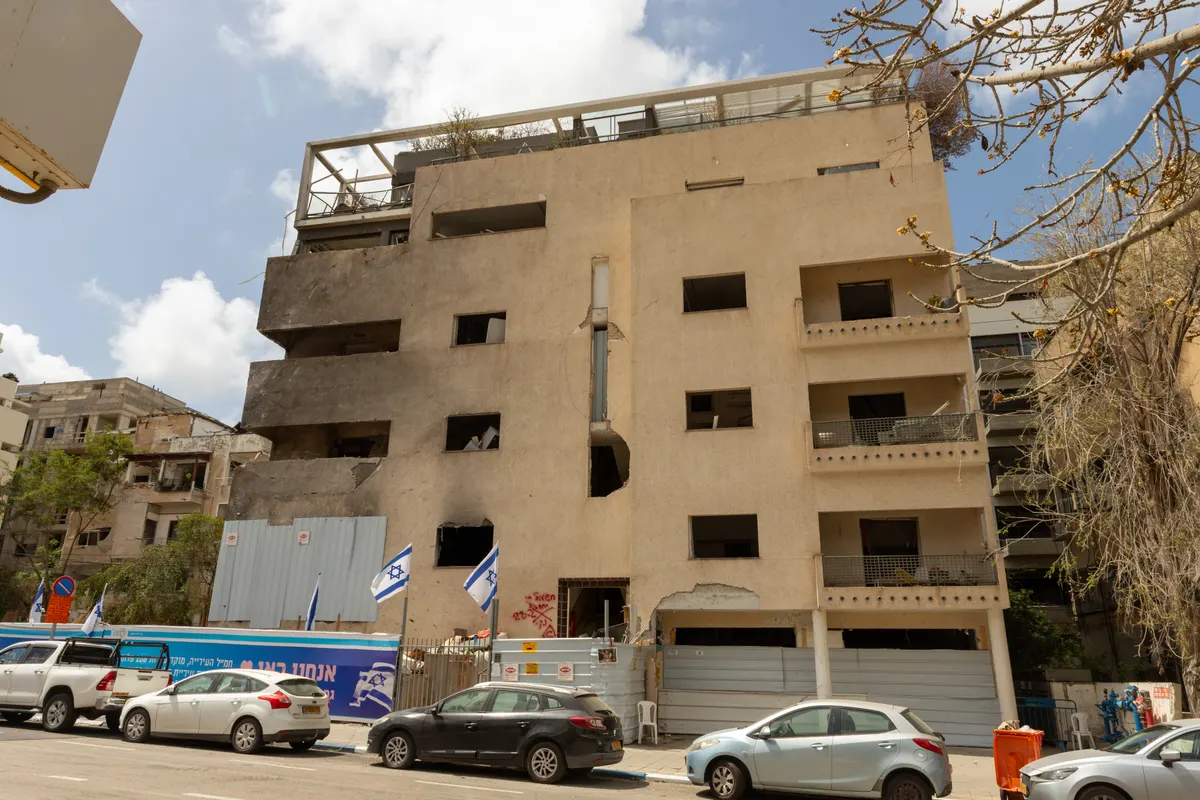
Further launches followed through 2025. On January 5, 2025, Saree claimed a Palestine-2 had struck the Orot Rabin power plant south of Haifa, but Israel's military said its air defenses intercepted the missile before it entered Israeli airspace, one of several instances where the Houthi successful hit narrative directly contradicted the Israeli account20. A missile aimed at the Nevatim air base followed in March 202521. The most disruptive single event came on May 4, 2025, when a missile struck the perimeter of Ben Gurion Airport's main terminal area, leaving a crater near an access road after both Arrow and THAAD batteries failed to intercept it. Eight people were injured, and the strike halted flights long enough that British Airways, Lufthansa, and several other carriers suspended service to Israel for days afterward22. Israel struck Houthi-controlled Hodeidah and Sanaa's airport within a day, and Washington and the Houthis reached a separate ceasefire arrangement covering Red Sea shipping on May 6, 2025, that did not extend to Houthi strikes on Israel itself23.
The pattern continued into the second half of 2025. Saree said in June that Houthi forces had fired a number of Palestine-2 missiles at the Jaffa area within a single 24-hour period, treating the name as a general label for the group's long-range strike capability rather than a single confirmed airframe24. On August 23, 2025, a missile the Houthis again called Palestine-2 struck near Lod Airport carrying cluster munitions, the first time Israeli forces confirmed the Houthis had used a cluster munition payload against Israel. Israel retaliated the same weekend with strikes on Sanaa's Haziz power station and other targets25. Nearly all Houthi ballistic and cruise missile launches toward Israel have been intercepted or have missed populated areas entirely, so the handful of strikes that got through, especially December 2024 and May 2025, drew outsized attention relative to their actual frequency4.
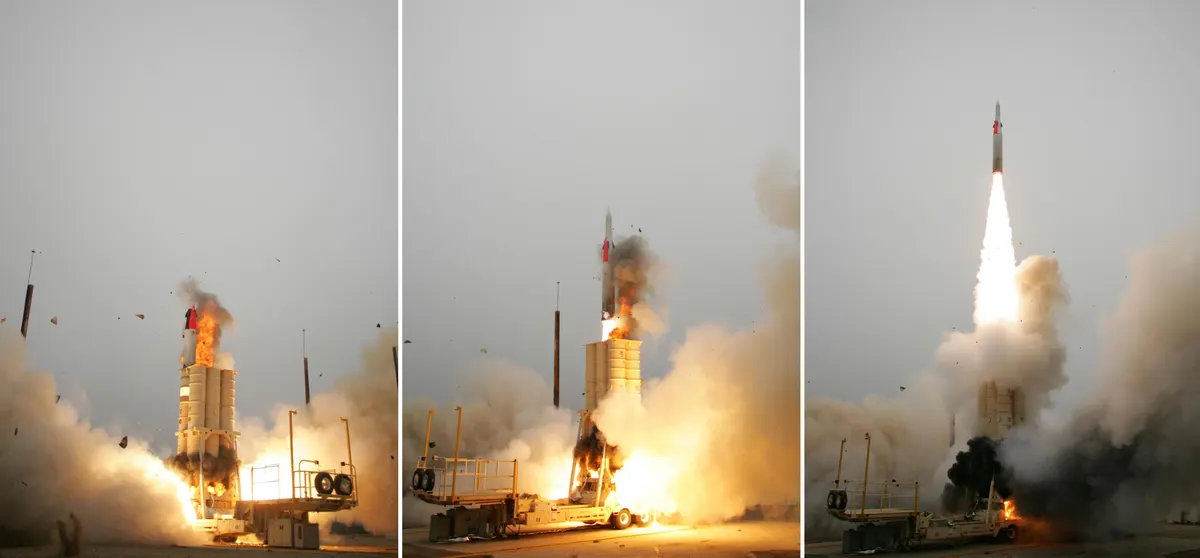
Israel's Arrow, American THAAD, and Israel's David's Sling batteries form the layered defense the Palestine-2 is specifically built, at least on paper, to defeat. Each has intercepted the large majority of Houthi ballistic missile launches since 2024, which is precisely why the failures at Jaffa in December 2024 and at Ben Gurion Airport in May 2025 became the defining moments of the Palestine-2's public reputation, regardless of whether the airframe involved was truly the advanced missile the Houthis describe22,18.
Ansar Allah has publicly distinguished only two named versions, the original Palestine (retroactively called Palestine-1 once the successor appeared) fired at Eilat in June 2024, and the Palestine-2 unveiled in September 2024 with the more detailed, and more disputed, hypersonic specification sheet13. The difference between the two, based on available imagery, appears to be aerodynamic refinement of the warhead section and fin design rather than a change in fuel type or overall size, both are described as solid-fuel missiles in the same general dimensional range.
The Houthis field a separate, larger missile called Toufan, similar in concept to Iran's liquid-fuel Ghadr line, that is sometimes confused with the Palestine-2 in press coverage because both are marketed as long-range strike weapons against Israel. Unlike the Palestine-2, Toufan has no confirmed instance of successful use against Israel at all, and the same June 2025 wreckage analysis that questioned Palestine-2 attributions found no physical evidence that the Toufan had ever actually reached an Israeli target either4. That leaves the Palestine-2 name doing most of the work in Houthi public messaging, whether or not every strike attributed to it involved the same physical missile.

Yemen's Houthi movement is the sole operator of the Palestine-2, and it is not exported, sold, or shared with any other force, a fact consistent with its origin as a movement-specific propaganda and strike weapon built with Iranian design support rather than a system marketed for foreign sales1. The Houthis do not publish production numbers, and no independent source has estimated how many Palestine-2 missiles the group actually holds, a gap that is itself informative given how heavily Iran restricts its own solid-fuel missile technology transfers even to close partners12.
Iranian support runs underneath that single-operator picture without translating into a second flag on the missile. United Nations sanctions monitors and Western intelligence services have both concluded that Iran supplies the Houthis with missile components, guidance electronics, and technical assistance rather than complete finished weapons in most cases, which keeps Iran formally off the operator list even though it is central to the Palestine-2's existence12. The United States has struck Houthi missile infrastructure repeatedly since 2024 specifically to degrade this capability, without eliminating the group's ability to keep launching missiles under the Palestine-2 name into 2025 and 202623.
The Palestine-2 is best understood next to the missile it visually resembles rather than any weapon the Houthis themselves built from scratch. Iran's Kheibar Shekan is a confirmed, tested, state-operated medium-range ballistic missile with a documented 2022 service entry and an independently reported 1,450 km range, well short of the 2,150 km the Houthis claim for the Palestine-226. Where Kheibar Shekan's specifications rest on Iranian government disclosure and some outside reporting, the Palestine-2's rest almost entirely on Houthi self-description, which is the core difference in how confidently each missile's numbers can be treated.
| Palestine-2 (claimed) | Kheibar Shekan (Iran) | |
|---|---|---|
| Range | 2,150 km (Houthi claim, unverified)1 | 1,450 km (Iranian state disclosure)26 |
| Propulsion | Two-stage solid fuel6 | Single-stage solid fuel26 |
| Status | Combat-claimed against Israel since 202418 | Iranian service since 2022, no confirmed direct strikes on Israel under this name |
| Independent verification | Largely unverified, wreckage disputes exist4 | Iranian state weapon, moderately documented |
The more operationally relevant comparison is with the Scud-derivative missiles, generally identified in wreckage as Zulfiqar-family systems, that the Houthis reliably used against Israel before the Palestine name appeared. Those older missiles carry a smaller payload and a shorter confirmed range once modified for extended flight, but they have a far more solid evidentiary trail connecting specific recovered debris to specific launches4. The Palestine-2's advantage, if the Houthi claims hold up at all, is reduced launch preparation time from solid fuel and a genuinely longer stated range. Its disadvantage, from a reader's standpoint rather than a battlefield one, is that almost nothing about it can be confirmed the way the older Scud-derivative strikes can.


Is the Palestine-2 missile actually hypersonic? Not in the sense that matters militarily. It likely exceeds Mach 5 during reentry, which almost any ballistic missile of its claimed range would do, but Israeli officials say it shows no evidence of the sustained in-flight maneuvering that defines a true hypersonic threat, and no independent body has confirmed the Houthi Mach 16 figure9,10.
What is the Palestine-2 missile's range? The Houthis claim 2,150 km. No government or research institute has independently verified this figure, and it should be treated as an unverified claim rather than a confirmed specification1.
Who makes the Palestine-2 missile? Yemen's Houthi movement (Ansar Allah) presents it as a domestically developed weapon, but the design closely parallels Iran's Kheibar Shekan and Fattah-1 missiles, and Iran has documented history of supplying missile components and technical assistance to the Houthis, which most analysts see as the more likely explanation for the missile's origin7,12.
Is the Palestine-2 still in use against Israel? Yes. The Houthis continued attributing launches to the Palestine-2 name through 2025 and into 2026, including the cluster-munition strike near Lod Airport in August 202525.
How many Palestine-2 missiles have actually hit Israel? Most Houthi ballistic missile launches toward Israel are intercepted. A small number, most notably the December 2024 Jaffa strike and the May 2025 Ben Gurion Airport strike, evaded interception, and those are the events driving most public attention to the missile18,22.
- "Palestine-2 hypersonic missile", Army Recognition — armyrecognition.com ↩
- "Houthis boast of 'hypersonic' capabilities amid ballistic missiles barrage on Israel", The Jerusalem Post — jpost.com ↩
- "Do the Houthis really have a hypersonic missile?", Atlantic Council — atlanticcouncil.org ↩
- "Houthis have previously used modified Scud missiles to strike Israel: Exclusive analysis", Breaking Defense — breakingdefense.com ↩
- "Houthis' Palestine-2 Hypersonic Missile: What We Know So Far", DefenseFeeds — defensefeeds.com ↩
- "Iran is Democratizing Advanced Missile Technologies: The Houthi's Palestine Missile in Context", Basha Report (Substack) — bashareport.substack.com ↩
- "The Middle East and the Global Arms Race: How Iranian Technology Made Houthi Missiles Harder for Israel To Intercept", The Media Line — themedialine.org ↩
- "'Palestine 2' missile launched by the Houthis Towards Israel (September 15)", Alma Research and Education Center — israel-alma.org ↩
- "Roundup: Yemen's Houthis unveil new 'hypersonic' missile following attack on Israel", Xinhua — english.news.cn ↩
- "Israel Intercepts Houthi Hypersonic Ballistic Missile Aimed at Ben Gurion Airport in New Escalation Phase", Army Recognition — armyrecognition.com ↩
- "UN expert: Iran transformed Yemen's Houthi rebels into potent military force", VOA News — voanews.com ↩
- "Israel Intercepts Houthi Ballistic Missile Targeting Eilat", FDD's Long War Journal — fdd.org ↩
- "2140 Yemen Sanctions Committee Chair Briefs Security Council, as Speakers Address Efforts for Stemming Arms, Dual-Use Components to Houthis", UN Meetings Coverage — press.un.org ↩
- "Houthis fire a missile at Tel Aviv; Israeli strikes kill several children in Gaza", NBC News — nbcnews.com ↩
- "Several interceptors failed to knock down Houthi missile that hit Tel Aviv, IDF probe", The Times of Israel — timesofisrael.com ↩
- "Yemen's Houthis claim missile attack on power plant in northern Israel", Middle East Monitor — middleeastmonitor.com ↩
- "Houthis claim ballistic missile strike on Israel's Nevatim Airbase", Middle East Monitor — middleeastmonitor.com ↩
- "Israel fails to intercept Houthi missile targeting its main airport, showing the limits of US efforts to weaken the group", CNN — cnn.com ↩
- "2025 Houthi attack on Tel Aviv airport", Wikipedia — en.wikipedia.org ↩
- "The Houthis join Iran's attacks on Israel", FDD's Long War Journal — longwarjournal.org ↩
- "Houthi missile attack on Israel uses cluster munitions", The Jerusalem Post — jpost.com ↩
- "Kheibar Shekan", Wikipedia — en.wikipedia.org ↩