

DroneHunter F700 is an autonomous, radar-cued interceptor drone built by Fortem Technologies of Utah in the United States to physically capture hostile unmanned aircraft rather than jam or destroy them.1 Instead of flooding the electromagnetic spectrum, as radio-frequency jammers do, or ramming and detonating on the target, as some rival interceptors do, the F700 detects a threat with its own onboard radar, closes in under autonomous guidance, and fires a rapidly expanding tether net from a modular NetGun to entangle the target's rotors or wings in mid-air.1,2 The captured drone is then towed to a designated landing zone, or, for heavier threats, released under a parachute for a controlled descent, so the intercept produces almost no falling debris and leaves the airframe intact for forensic examination.2
- Captures drones intact for forensic analysis instead of destroying them in the air
- Works against fully autonomous, radio-silent drones that defeat RF jammers and cyber-takeover systems
- Reusable airframe, reloads for a repeat sortie in under three minutes
- Layered net options cover threats from small quadcopters up to roughly 55 kg fixed-wing drones
- Only system publicly authorized for drone-on-drone kinetic intercepts in US domestic airspace
- Short flight endurance and net-gun ammunition limit each sortie to a handful of engagements before reload
- Net deployment and terminal intercept geometry are more sensitive to high wind, heavy rain, or icing than jamming-based defeat methods
- Publicly disclosed weight, exact engagement range, and unit pricing figures are thin and mostly come from reseller listings rather than Fortem's own data sheets
- Currently still requires a human authorization step to fire, despite marketing emphasis on full autonomy
- Effective mainly against Group 1 to low Group 3 drones, not against faster cruise-missile-class or high-altitude threats
That capture-and-recover approach places the F700 in a mechanically distinct category from most other counter-drone tools. It does not disrupt a target's control link, the way D-Fend EnforceAir does, and it does not depend on wideband radio noise, the way DroneShield's DroneGun MkIII does, both of which lose their effect against a drone with no live radio uplink to a ground controller.3 Because the F700 tracks its target visually and by radar rather than by listening to a control signal, it can engage a fully autonomous, pre-programmed drone that carries no exploitable radio link at all, a growing share of the threat set Fortem's own engineers cite as the reason they built a physical interceptor in the first place.3
Fortem Technologies was founded in 2016 by Timothy Bean and Adam Robertson, and by 2026 the company described the DroneHunter line as validated in operational use across the United States, Ukraine, the Middle East, and East Asia, with the company stating it remains the only firm authorized to fly a drone-on-drone kinetic interceptor within US domestic airspace.4 Fortem is privately held, backed by investors including Lockheed Martin, Toshiba, DCVC, Hanwha Aerospace, and AE Industrial Partners.5,6
Fortem states the DroneHunter F700 is produced and manufactured entirely in the United States, expanded in 2025 with a new Utah manufacturing headquarters to meet demand.
An 18-Kilogram Carbon-Fiber Interceptor Built Around a Radar Seeker
Fortem describes the F700 as designed from the ground up for counter-drone work rather than adapted from a commercial airframe, prioritizing acceleration and agility over sustained patrol endurance.2 Reseller listings that mirror Fortem's own data sheet put the airframe's weight at around 18 kilograms (about 40 pounds), built around a lightweight carbon-fiber frame with a flexible undercarriage that accepts interchangeable countermeasure payloads.7,8 CEO Jon Gruen has described the interceptor's size as roughly four times that of a consumer DJI Phantom quadcopter, while stressing that the airframe itself is entirely produced and manufactured in the United States.9 The F700 launches from a fixed or vehicle-mounted DroneHangar, a weatherproofed, climate-controlled launch box that Fortem says can get an interceptor airborne in under six seconds from a stored, trickle-charged standby state.10,11
- System TypeAutonomous net-capture interceptor drone
- Service Entry Year2020
- Engagement Layer (SHORAD/Med/Long)Close-in kinetic capture
- MobileYes
- Crew1
- In ServiceYes
- System Weight18 kg
Guidance runs through an onboard TrueView radar seeker, an AI-enabled, electronically scanned phased-array set that Fortem also sells as a standalone ground-based detection sensor.12 A single TrueView R20 panel scans a 120-degree sector, and Fortem's marketing describes the radar family as tracking up to 100 simultaneous targets at very low transmit power, classifying them as birds, friendly aircraft, or hostile drones before handing a track to a DroneHunter for pursuit.9,12 Multiple panels networked together, along with input from optional electro-optical and infrared cameras, extend that coverage to a full 360 degrees around a protected site, feeding the picture into Fortem's SkyDome Manager command-and-control software, which the company has also integrated with the US Army's Forward Area Air Defense Command and Control (FAAD C2) system through an open application programming interface.13,14
- Guidance TypeRadar-cued autonomous terminal homing with onboard computer vision
- Fire-and-ForgetNo
- Simultaneous Engagements5
- All-WeatherYes
- Yes
The interceptor accelerates to roughly 50 miles per hour within seconds of launch and, according to reporting from Ukraine's deployment, sustains speeds above 100 kilometers per hour in pursuit.15,16 Fortem's own marketing cites an engagement, or kill, range against a locked target of roughly 2 to 3 kilometers, with the wider radar-detection and cueing picture reaching out to about 5 kilometers and configurable further depending on the sensor layout.17 Because Fortem has not published a full, itemized specification sheet on its main product pages, several of these figures are best treated as approximate, sourced mainly from resellers and secondary reporting rather than a primary data sheet.7,17
- Search RadarFortem TrueView R20
- Search Range5 km
- AESA RadarYes
- Targets Tracked100
- Passive / EO ModeNo
NetGuns, DrogueNet, and the Capture Rather Than Kill Doctrine
The F700's undercarriage mounts one or more NetGun modules, rapid-firing launchers that eject a folded net which expands in flight to ensnare a target.2 Fortem fields the payload in two operating modes, an attack configuration with a smaller net optimized for pursuing small quadcopters and low-end Group 2 drones, and a defense configuration with a larger net head built to intercept faster fixed-wing aircraft up through the low end of Group 3.9 Standard NetGuns are built to entangle and physically tow a captured drone weighing up to about 13 pounds (5.9 kilograms) back to a landing zone, while the parachute-equipped DrogueNet variant is rated against far heavier threats, up to roughly 55 kilograms (121 pounds), where the target is released to parachute to the ground under control rather than being towed by the smaller interceptor.18,19 Fortem states that in test conditions only about 15 percent of target drones evade a DroneHunter's first shot, and the company has logged more than 4,500 documented field captures across its DroneHunter fleet.1,2
- PlatformGround/vehicle-launched VTOL multirotor interceptor
Targeting decisions run through onboard artificial intelligence that Fortem calls AI at the edge, letting a single DroneHunter classify, pursue, and align on a target without a remote pilot flying it manually.3,20 A person still has to authorize the interceptor to fire its net on another aircraft under current policy, a distinction Fortem's own engineers have described as full autonomy in navigation and targeting paired with a human-on-the-loop trigger for the actual engagement.3,20 In February 2026, Fortem said its SkyDome software coordinated what it billed as the first fully autonomous five-versus-five drone intercept, in which five DroneHunter F700s independently pursued and safely captured five simultaneous incoming drones under AI direction with no human intervention in the individual engagements, though the underlying fire-authorization framework for that specific test was not detailed in the company's public statement.21,22
- Sensor SuiteOnboard TrueView AESA radar seeker with dual EO/IR cameras
- EO/IR SensorYes
- RF Direction-Finding / ESMNo
- Command & Control SoftwareFortem SkyDome Manager
A fifth-generation hardware refresh, marketed as DroneHunter 5.0, began customer deliveries in January 2026. Fortem describes it as a clean break from earlier F700 generations rather than an incremental update, adding dual onboard cameras, more onboard computing power, a redesigned airframe and landing gear that cuts setup time, and an optional four-NetGun loadout that doubles the standard two-gun configuration for a given sortie.21,23 The company positions the upgrade specifically around coordinated counter-swarm defense, letting a single SkyDome operator manage several interceptors against multiple simultaneous threats rather than one interceptor per target sequentially.21
- Effective Jamming Range2,500 m
- Non-Kinetic Defeat MechanismNo
From a DARPA-Validated Concept to a 2018 Prototype
Fortem's founders began working with the Defense Advanced Research Projects Agency (DARPA) in 2016 after the agency validated a need for radar-guided aircraft able to counter the growing rogue-drone threat.4 In 2017, the Air Force Research Laboratory issued a Small Business Innovation Research solicitation for counter-drone technology, and Bean and Robertson pitched the concept that would become the DroneHunter F700, an autonomous, radar-guided platform built to detect and physically defeat hostile drones.4 Fortem's engineers built early prototypes around commercial off-the-shelf airframes while developing the radar-guidance and net-capture software, improving on earlier net-gun designs that could only catch stationary or slow-moving targets.4 The company unveiled a working prototype publicly in February 2018, drawing coverage from NBC News as an early demonstration of autonomous, radar-guided drone capture.4,24

The F700 variant secured its first significant government commitment in February 2020, when the Defense Innovation Unit awarded Fortem a multimillion-dollar contract for its SkyDome system, pairing DroneHunter interceptors with TrueView radar for base-defense evaluation.24,25 Robertson, Fortem's co-founder and chief technology officer, told reporters at the time that several US combatant commands had expressed interest in the system, framing the appeal around a gap other counter-drone tools could not close, a fully autonomous drone with no live radio link back to an operator, which RF jammers and cyber-takeover systems have no signal to disrupt.25 The F700 went on to win a Robotics Product of the Year award later that year.26 In March 2021, Fortem demonstrated integration between SkyDome and the US Army's Forward Area Air Defense Command and Control system at a government test event, and the same month Toshiba Infrastructure Systems and Solutions invested 15 million dollars in Fortem and signed a strategic alliance to integrate the two companies' detection technologies and expand sales across the United States, Japan, and other markets including Europe and the Middle East.13,27
Ukraine, Crowdfunded Interceptors, and the Shahed-136 Threat
Fortem's DroneHunter line entered active combat use in Ukraine earlier than most Western counter-drone systems on the market. The company announced its first deployment of a transportable counter-UAS solution to Ukraine in May 2022, developed in coordination with Ukraine's Ministry of Defense, and by CEO Gruen's own account roughly two DroneHunter systems were operating in the country by around mid-2022, adapting through hard-won lessons about operating in a heavily contested electronic-warfare environment on both sides of the front.9,28 Fortem updated the system that October to better handle the larger, slower Iranian-designed Shahed-136 and Russian Orlan-10 drones then being used in mass strikes against Ukrainian cities.29
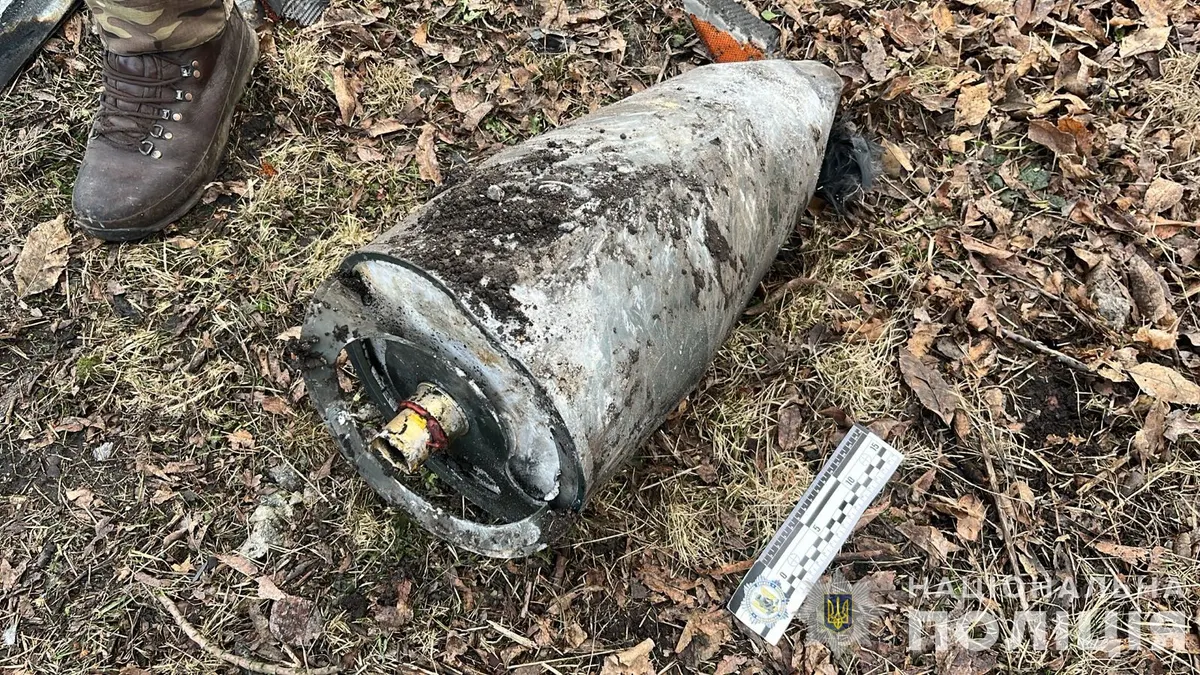
By February 2023, Ukraine's Ministry of Digital Transformation announced that six Fortem DroneHunter F700 systems, funded through the UNITED24 crowdfunding platform and Ukrainian fintech entrepreneur Oleh Horokhovskyi's monobank initiative, were already protecting Ukrainian energy infrastructure from Russian drone strikes.30 Deputy Prime Minister Mykhailo Fedorov, announcing the delivery, said the systems were already defending power facilities from Russian drones, part of a broader effort to shield the country's electrical grid through the winter bombardment campaign that targeted it.30,31
Institutional US Adoption Through 2025 and 2026
Fortem's US government relationship deepened through Lockheed Martin's growing involvement. Lockheed Martin Ventures led a 17.8 million dollar funding round in February 2023 alongside Hanwha Aerospace and AIM13, and in April 2026 Lockheed Martin announced a further 25 million dollar investment as the initial tranche of Fortem's Series B round, aimed at meeting what Lockheed described as urgent demand for counter-drone capability.5,6 The following month, Fortem's DroneHunter and TrueView radar were integrated into Lockheed Martin's Sanctum air-defense command system.32
On the acquisition side, the US Army admitted Fortem to its new Global Tactical Edge Acquisition Directorate (G-TEAD) marketplace in November 2025, a streamlined contracting framework clearing the company to sell counter-drone systems directly to Army units without going through a prime-contractor intermediary.33 In February 2026, the Army awarded Fortem a three-year, 18 million dollar contract to field DroneHunter interceptors and field-support services across Army installations worldwide.34 Separately, Joint Interagency Task Force 401, the Pentagon office coordinating the Replicator 2 initiative to accelerate homeland counter-drone capability, selected two DroneHunter F700 interceptors as its first Replicator 2 purchase in January 2026.35,36
Beyond the United States and Ukraine, Fortem reported in October 2025 that allied governments across Europe and the Middle East had ordered roughly a dozen additional counter-drone systems that quarter, citing regional conflicts including the war in Gaza and continued fighting involving Yemen as drivers of demand, though the specific buyer nations and whether the order includes DroneHunter interceptors rather than only SkyDome and TrueView detection hardware were not broken out in that reporting.37
The clearest documented combat use of the DroneHunter F700 is in the full-scale Russo-Ukrainian War, where Fortem systems have operated since 2022 protecting Ukrainian energy infrastructure against Russian drone strikes, including Iranian-designed Shahed-136 loitering munitions and Russian Orlan-10 reconnaissance drones.28,29,30 The six crowdfunded F700 units confirmed in early 2023 were specifically tasked with power-grid defense during a period when Russia was conducting sustained missile and drone bombardment of Ukraine's electrical infrastructure.30,31
Fortem's broader footprint touches other active conflict zones without the same level of confirmed, named engagement. The company states its technology has been validated in operational deployments across the Middle East and East Asia in addition to Ukraine, and its October 2025 disclosure tied a wave of European and Middle Eastern orders to regional tensions including the Gaza war and the continued Yemen-linked drone and missile threat to shipping and territory in the region, though public reporting has not named a specific Middle Eastern conflict in which a DroneHunter F700 has made a confirmed intercept.4,37 That leaves Ukraine as the only conflict where open-source reporting confirms both the presence of DroneHunter F700 units and the specific threat, mission, and outcome they were fielded against.
DroneHunter (original), the initial radar-guided, net-capture concept unveiled in February 2018, was built around early prototype hardware and software before the F700 airframe and NetGun payload system matured into a shipping product.4,24
DroneHunter F700 is the primary production variant covered in this article, fielded from around 2020 with attack and defense NetGun configurations and the DrogueNet heavy-target payload, and the subject of the bulk of Fortem's publicly documented military and Ukrainian deployments through 2025.9,25
DroneHunter 5.0 is a fifth-generation hardware and software refresh that began customer deliveries in January 2026, adding dual cameras, a redesigned airframe and landing gear, an optional four-NetGun loadout, and coordinated multi-interceptor swarm defense through an upgraded SkyDome software layer, demonstrated in a five-versus-five autonomous intercept test the following month.21,22,23


| Year | Buyer | Quantity | Amount | Present Value (2025) |
|---|---|---|---|---|
| 2026 |  United States | — | $18.0 M | $18.0 M |
| 2026 | United States | 2 | — | — |
| 2023 |  Ukraine | 6 | — | — |
The United States is Fortem's largest and best-documented operator base. The Defense Innovation Unit first contracted for DroneHunter and SkyDome evaluation in February 2020, the Army demonstrated FAAD C2 integration in 2021, and by 2025 and 2026 the relationship had matured into direct Army procurement through the G-TEAD marketplace, a three-year, 18 million dollar Army contract for installation defense, and Joint Interagency Task Force 401's first Replicator 2 purchase of two interceptors for homeland counter-drone defense.33,34,35 Fortem has also stated that additional combatant commands expressed early interest in the system beyond the units named in public contract announcements.25
Ukraine is the clearest confirmed operator outside the United States. Six crowdfunded DroneHunter F700 systems were delivered and operating by early 2023, tasked with defending energy infrastructure against Russian drone strikes, following an initial, smaller deployment in 2022 that Fortem used to adapt the system to a contested electronic-warfare environment.28,30 Beyond these two countries, Fortem's public disclosures reference operational use across the Middle East and East Asia and a wave of 2025 orders from unnamed European and Middle Eastern allied governments, but the company has not published country-by-country figures for those deployments, consistent with typical counter-drone-industry reticence about naming specific foreign security customers.4,37
The F700's closest published US rival is Anduril's Anvil, a small autonomous interceptor that defeats Group 1 and Group 2 drones by ramming them at high speed rather than capturing them.38 Both systems are cued by an external command-and-control layer, Fortem's SkyDome and Anduril's Lattice respectively, and both keep a human in the authorization loop for the actual engagement under current US policy.3,38 The core difference is destructive method and reusability. Anvil carries no radar of its own and depends entirely on Anduril's separate Sentry and Wisp sensor towers for detection, reaching roughly 200 miles per hour on its terminal ramming run and typically destroying itself along with the target airframe.38 The F700 carries its own onboard TrueView radar seeker, engages at a claimed 2 to 3 kilometers rather than Anvil's shorter ramming-pass geometry, and is built to be recovered, reloaded, and flown again within minutes rather than expended on every engagement.17,38
| Attribute | Fortem DroneHunter F700 | Anduril Anvil |
|---|---|---|
| Defeat mechanism | Tether-net capture, tow-away or parachute recovery | High-speed physical ramming |
| Onboard sensor | Yes, TrueView radar seeker | None, external cueing only (Sentry, Wisp, Lattice) |
| Claimed engagement range | About 2 to 3 km | Short, terminal ramming-pass range |
| Reusability | Reusable, reload under 3 minutes | Typically expended on impact |
| Target recovered for forensics | Yes | No |
| SPEC | Fortem DroneHunter F700 | Anduril Anvil |
|---|---|---|
| Non-Kinetic Defeat Mechanism | — | — |
| Effective Jamming Range | 2500 m | — |
| Platform | Ground/vehicle-launched VTOL multirotor interceptor | man-portable, ground-launched from Launch Box container |
The trade-off is speed and cost against reversibility. Anvil's ramming kill is simpler to engineer, does not depend on characterizing a net's fit against every possible target airframe, and Anduril has scaled it into multibillion-dollar, decade-long US contracts covering installation defense across several military services.38 The F700's capture approach costs it some raw closing speed and adds mechanical complexity in the net-firing hardware, but it preserves the captured drone intact, useful for identifying the operator, payload, or launch origin of a hostile system, and lets a single airframe fly repeat missions rather than being consumed on each intercept.
MASS Assessment
MASS scoring rates the F700 across ten components tied to what is publicly documented about the system, rather than a single blended figure.
Mobility (90) is the F700's clearest strength, reflecting a self-contained interceptor that carries its own radar seeker, launches from a compact ground station, and returns to fly again within minutes rather than depending on a separate fixed sensor network. Non-kinetic options (60) is its weakest component. The F700 has exactly one defeat mode, a physical net capture, with no jamming or spoofing fallback if a target evades the net or flies outside engagement geometry, unlike systems that pair a kinetic option with an electronic-warfare layer as a backup.
How does the Fortem DroneHunter F700 work? An onboard TrueView radar, backed by a wider ground-based radar and camera network feeding Fortem's SkyDome software, detects and classifies an incoming drone. The F700 then launches autonomously from its DroneHangar, closes on the target under AI-driven guidance, and fires a NetGun payload that expands a tether net to entangle the target's rotors or wings, after which the drone is towed away or, for heavier threats, released to parachute down under a DrogueNet.1,2,9
What are the DroneHunter F700's specifications? Fortem has not published a full official data sheet with every figure. Reseller listings and secondary sources put the airframe at roughly 18 kilograms, with an engagement range of about 2 to 3 kilometers, a wider detection and cueing range of around 5 kilometers, launch from standby in under six seconds, and a reload time of less than three minutes between sorties.7,11,17
Is the DroneHunter F700 still in service? Yes. As of 2026 it remains Fortem's primary fielded interceptor, in active US Army and Pentagon procurement through the Replicator 2 program, alongside continued Ukrainian and allied deployments, even as the newer fifth-generation DroneHunter 5.0 hardware begins replacing earlier units in new deliveries.21,34,35
How does the DroneHunter F700 compare to Anduril's Anvil? Both are small, radar-or-sensor-cued autonomous interceptors built to physically defeat Group 1 and Group 2 drones with minimal collateral damage. The F700 captures its target in a net using its own onboard radar and can be reused after reload, while Anvil destroys the target by ramming it at high speed and depends on external sensor towers for detection, typically expending the interceptor on each engagement.17,38
What does the DroneHunter F700 cost? Fortem has not published an official unit price. A European reseller listing quoted a price of 99,999 euros (roughly 108,000 US dollars at the time), though that listing was marked as currently unavailable and does not necessarily reflect Fortem's direct government contract pricing.39
- "DroneHunter F700", Fortem Technologies — fortemtech.com ↩
- "F700 Building the World's Best Drone Interceptor", Fortem Technologies — fortemtech.com ↩
- "Hunting Drones With Drones", National Defense Magazine — nationaldefensemagazine.org ↩
- "DroneHunter Counter Unmanned Aerial System (C-UAS), US", Army Technology — army-technology.com ↩
- "Fortem Technologies Closes $17.8M in Funding Round to Scale Airspace Safety and Security Capabilities", PR Newswire — prnewswire.com ↩
- "Lockheed Martin Invests $25M in Fortem Technologies to Meet Urgent Demand for Countering UAS Threats", Lockheed Martin — news.lockheedmartin.com ↩
- "Fortem DroneHunter F700", RAW-TECH — raw-tech.lv ↩
- "DroneHunter Products", Dronehunter — dronehunter.in ↩
- "A Better C-UAS Option? Capture Enemy Drones In A Net", Breaking Defense — breakingdefense.com ↩
- "DroneHangar", Fortem Technologies — fortemtech.com ↩
- "Fortem Technologies Introduces DroneHangar", Fortem Technologies — fortemtech.com ↩
- "Fortem TrueView R20", Radar Tutorial — radartutorial.eu ↩
- "DroneHunter Counter Unmanned Aerial System (C-UAS), US", Army Technology — army-technology.com ↩
- "DroneHunter F700", Fortem Technologies — fortemtech.com ↩
- "Hunting Drones With Drones", National Defense Magazine — nationaldefensemagazine.org ↩
- "Ukraine Receives Drone Hunters to Neutralize Iranian Shaheds", The Defense Post — thedefensepost.com ↩
- "DroneHunter Products", Dronehunter — dronehunter.in ↩
- "Fortem's F700 DroneHunter: Open Architecture Autonomous Drone-to-Drone Combat", Avionics International — aviationtoday.com ↩
- "Ukraine Receives Drone Hunters to Neutralize Iranian Shaheds", The Defense Post — thedefensepost.com ↩
- "Fortem's F700 DroneHunter: Open Architecture Autonomous Drone-to-Drone Combat", Avionics International — aviationtoday.com ↩
- "Fortem Technologies Begins Deliveries of Next-Generation DroneHunter 5.0, Advancing Counter-Swarm Defense", Fortem Technologies — fortemtech.com ↩
- "Fortem's AI-Powered SkyDome Neutralizes Drone Swarm With Zero Collateral Damage", Business Wire — businesswire.com ↩
- "New US Interceptor Drone With Net-Gun Autonomously Counters UAV Swarms", Interesting Engineering — interestingengineering.com ↩
- "F700 Building the World's Best Drone Interceptor", Fortem Technologies — fortemtech.com ↩
- "The Pentagon Is Spending Millions on Hunter Drones With Nets", Defense One — defenseone.com ↩
- "DroneHunter Counter Unmanned Aerial System (C-UAS), US", Army Technology — army-technology.com ↩
- "Fortem Technologies and Toshiba Announce Strategic Alliance", Fortem Technologies — fortemtech.com ↩
- "Fortem Technologies Deploys Man-Portable Counter-UAS Solution in Ukraine", Fortem Technologies — fortemtech.com ↩
- "Fortem Anti-UAV Tech Upgrade Can Neutralize Larger Drones Now Battering Ukraine Cities", DroneDJ — dronedj.com ↩
- "Ukraine Receives Drone Hunters to Neutralize Iranian Shaheds", The Defense Post — thedefensepost.com ↩
- "Drone Hunters Are Already Protecting Ukraine's Critical Infrastructure", Defense Express — en.defence-ua.com ↩
- "Fortem DroneHunter and TrueView Radar Join Lockheed Martin Sanctum", DroneLife — dronelife.com ↩
- "Fortem Technologies Cleared to Sell Counter-Drone Systems Directly to US Army", The Defense Post — thedefensepost.com ↩
- "Fortem Technologies Awarded 3-Year, $18M U.S. Army Contract for Counter-Drone Solutions", Business Wire — businesswire.com ↩
- "Fortem Technologies Welcomes JIATF-401's Selection of DroneHunter as First Replicator 2 Purchase", Business Wire — businesswire.com ↩
- "Joint Interagency Task Force Announces First Replicator 2 Purchase to Counter Homeland Drone Threats", U.S. Army — army.mil ↩
- "Exclusive: Fortem Counter-Drone Kit Headed to Middle East and Europe", Axios — axios.com ↩
- "Anvil", Anduril Industries — anduril.com ↩
- "Fortem DroneHunter F700", RAW-TECH — raw-tech.lv ↩