


Data Quality88%
MASS(Military Archive Scoring System)
ⓘ Regardless of era, the same scoring system applies to all units in the anti-aircraft artillery (aaa) category.
01 / Overview
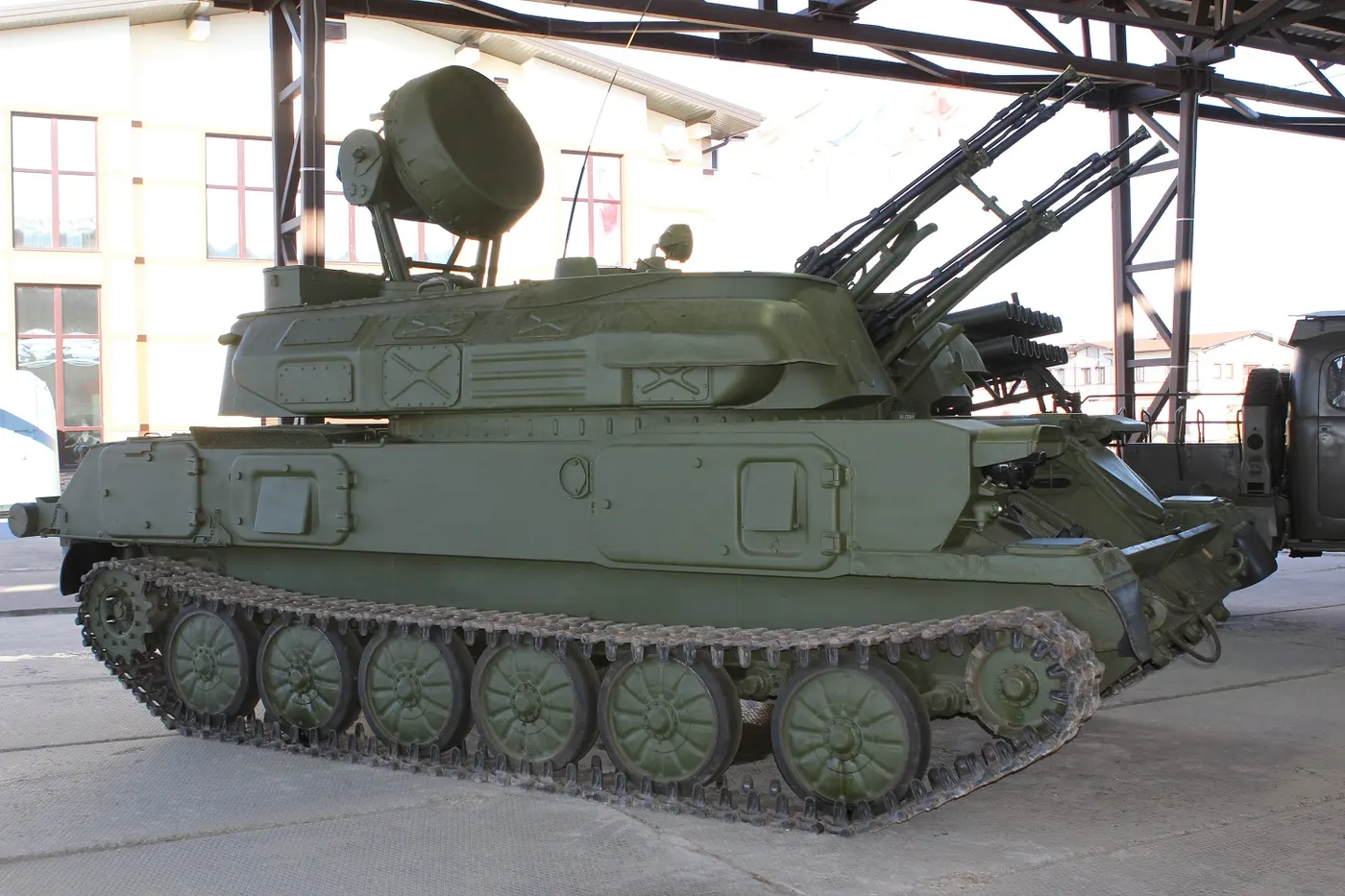
ZSU-23-4 Shilka
Category
Country
Production
1962–1982
Quantity
6,500
Unit Price (current)
$2.7M↗ 670% inflation · 1972→2025
Original Price
$357.0K (1972)
Operators
Conflicts
💰 PERFORMANCE / PRICE ASSESSMENT Methodology ↗
ANTI-AIRCRAFT ARTILLERY (AAA) · EARLY COLD WAR
1
PERFORMANCE/PRICE
94
UNIT COST (2025 USD)
$2.7M
Original: $357.0K (1972)
Inflation: +%670
ⓘ Performance/Price and MASS score are computed across all units in the anti-aircraft artillery (aaa) category, regardless of era.
02 / Specs & Design
◎General6MOD.6
- Service Entry Year1963
- Combat Weight19,000 kg
- Travel Weight19,000 kg
- Crew4
- Carriage / Platformtracked
- In ServiceYes
◈Ordnance8MOD.8
- Calibre23 mm
- Barrel Length (calibres)87
- Ordnance Typeautocannon
- Breech Typegas-operated
- Recoil SystemHydro-Pneumatic
- Muzzle BrakeNo
- Bore EvacuatorNo
- Tube Life (rounds)4,500
▣Performance9MOD.9
- Minimum Range0.2 km
- Maximum Range (standard)2.5 km
- Maximum Range (rocket-assisted)4 km
- Maximum Range (guided)0 km
- Muzzle Velocity970 m/s
- Rate of Fire (burst)3,400
- Rate of Fire (sustained)800
- Elevation-4 to +85 degrees
- Traverse360 degrees
◇Ammunition9MOD.9
- Projectile Weight0.19 kg
- Ammunition TypesHEI, HE-T, AP-T
- Charge Zones1
- HE RoundYes
- Smoke RoundYes
- Illumination RoundNo
- Cluster / DPICMNo
- Precision-Guided RoundNo
- MRSI CapableNo
◆Fire Control5MOD.5
▤Mobility9MOD.9
- Self-PropelledYes
- Prime MoverGM-575 tracked chassis
- Emplacement Time5
- Displacement Time2
- Shoot-and-ScootNo
- Road Speed (if SP)50 km/h
- Range (if SP)450 km
- AutoloaderYes
- Protected Crew CabYes
⬢Ammunition Handling2MOD.2
- Ready Rounds2,000
- Total Rounds Carried2,000
▲Dimensions3MOD.3
- Length6.535 m
- Width3.125 m
- Height2.576 m
◎Production2MOD.2
- Total Production6,500
- Production Start1,964 year
◈Self-Propelled Chassis6MOD.6
- Engine Power280 hp
- Transmissionmechanical
- SuspensionIndividual torsion bar
- Hull Armourup to 15 mm
- Secondary Armament9K38 Igla (in M4/M5 variants)
- NBC ProtectionNo
03 / History
SERVICE LIFESPANStill in Service
- 1962Production started
- 1971Sale: Iran (30 units)
- 1972Sale: Libya
- 1973First deployment: Yom Kippur War
- 1982Production ended
- 1991Entered service
64
years in service
20
years in production
6,500
units produced
39
countries operating
ⓘ The producing country still actively operates it. 2 countries retired it.
04 / Conflicts
ZSU-23-4 SHILKA · CONFLICTS SERVED IN0% win
Total Conflicts
1
Victories
0
Ongoing
0
Losses
0
ⓘ Shown only from conflicts recorded in our database.
05 / Variants
▚ WEAPON FAMILY

06 / Operators
Operator Inventory15country · 780units


780active
ZSU-23-4 ShilkaSALES2records
 Libya
 Iran
ⓘ "Present Value" is an estimated amount adjusted for inflation.
07 / MASS Score
ANTI-AIRCRAFT ARTILLERY (AAA) RANKING Anti-Aircraft Artillery (AAA) · Early Cold War


MASS RANKINGSMASS ↗
12ANTI-AIRCRAFT ARTILLERY (AAA)1EARLY COLD WAR · ANTI-AIRCRAFT ARTILLERY (AAA)239RUSSIA · ALL WEAPONS7PRICE · ANTI-AIRCRAFT ARTILLERY (AAA)544PRICE · ALL WEAPONS1PERFORMANCE/PRICE · ANTI-AIRCRAFT ARTILLERY (AAA)
ⓘ Rankings are within theAnti-Aircraft Artillery (AAA)category.
📖 TERMS ON THIS PAGE8terms
Automated laying is a fire‑control capability that uses sensors and a computer to automatically set a towed artillery or mortar’s elevation and azimuth to the calculated firing solution.
A digital fire-control system employs computational algorithms to calculate and adjust artillery fire parameters, enhancing accuracy and efficiency in towed systems.
High Explosive (HE) round: an artillery or mortar projectile containing explosive filler designed to inflict damage through blast and fragmentation effects.
Recoil system using a combination of liquid and compressed gas to absorb and return energy from firing.
Radar system measuring projectile velocity at muzzle exit.
An armored crew compartment on towed artillery or mortar systems designed to protect operators from small arms fire, shrapnel, and blast effects during operation.
Artillery system with integrated propulsion, enabling movement under its own power rather than being towed.
Smoke grenades are pyrotechnic devices deployed by infantry fighting vehicles to create a visual screen, obscuring movement or positions from enemy observation or targeting.
These terms are listed automatically because they appear on this page.full encyclopedia →
📚 Sources