


The FN FNAR is a semi-automatic 7.62x51mm NATO rifle built by FN Herstal for the American civilian and law-enforcement markets, first offered to buyers in 20081. FNAR stands for FN Automatic Rifle, and despite the tactical-looking Picatinny rails and polymer furniture, the rifle's action has no mechanical relation to FN's own FN SCAR family. It instead descends from the semi-automatic Browning BAR hunting rifle, a design FN Herstal's own engineers in Belgium built for Browning starting with the Carbine 66 project in 1966 and launched in 1967 and 19682,3. Fitting a hunting-rifle action into a magazine-fed, railed, designated marksman rifle shell is the single fact that explains most of the FNAR's strengths and its limits.
- Mild recoil for a .308 semi-automatic
- Factory 1 MOA accuracy guarantee
- Ambidextrous controls, detachable box magazines
- Cold hammer-forged, chrome-lined barrel
- Barrel is not free-floating, accuracy drifts as it heats
- Real-world groups often ran 1.5 to 3 MOA, not the advertised 1 MOA
- Discontinued after roughly a decade on the market
- Magazine cost and availability frustrated owners
FN America built the FNAR at FN Herstal's FN Manufacturing plant in Columbia, South Carolina, the same facility that produces the M4 and FN SCAR rifles for the US military under contract, though the FNAR itself was never adopted as a US service rifle4,5. That shared factory, and the shared FN name printed on the receiver, is likely why the FNAR gets mistaken for a SCAR relative so often. The two rifles share a manufacturer and a market, not an action.
Chambered only in 7.62x51mm NATO (.308 Winchester), the FN FNAR was marketed as a mid-range precision option for law enforcement stand-off and perimeter work and for civilian hunting and target shooting, rather than as a front-line military designated marksman rifle7. FN America and its dealers advertised 1 MOA accuracy out of the box on both factory configurations, a claim the rifle's actual test record only partly lived up to1,8. No confirmed foreign military contract for the FNAR has surfaced in the years since its 2008 launch, and production ended around 20199. Understanding what the FN FNAR is built from, what it costs, and why it never displaced rivals such as the SR-25 in institutional sales is really one story rather than several separate ones.
A Browning BAR Action Wearing Tactical Furniture
The FN FNAR is gas-operated, running a short-stroke gas piston beneath the barrel that drives a multi-lug rotating bolt, the same basic locking arrangement Marcel Olinger's FN team and Bruce Browning built for the original Browning BAR hunting rifle in the late 1960s2,3. The receiver is machined from aircraft-grade 7075-T6 aluminum alloy, with a one-piece MIL-STD-1913 optic rail running the length of the top and shorter rail sections at the front for lights or a foregrip1. Both factory barrels measured 20 inches (508mm) at launch, cold hammer-forged, chrome-lined, and fluted, with a 1:12-inch, four-groove, right-hand twist and a recessed target crown1,7.
- First Production Year2008
- DesignerFN Herstal engineering team (Marcel Olinger and Bruce Browning, original Browning BAR design), adapted for the FNAR by FN Manufacturing Co. in 2008
- Weight (Empty)4.08 kg
- Currently In ServiceNo
- Notable UsersUnited States civilian and law enforcement market, no confirmed foreign military adoption

Feeding is by detachable magazine, standard 20-round steel box magazines with 5- and 10-round options for jurisdictions that cap capacity1. The trigger is a two-stage, non-adjustable unit breaking between 3.25 and 5.5 pounds, and both the magazine release and the crossbolt safety are fully ambidextrous1,7. FN shipped the FNAR with no iron sights at all, betting entirely on optics mounted to the top rail1. At 9 pounds (4.08kg) empty for the original Light Barrel configuration, or 10 pounds (4.54kg) for the Heavy Barrel version, the FNAR sits noticeably heavier than a bolt-action hunting rifle in the same chambering, the direct cost of adding a gas system, a heavier bolt carrier, and a detachable-magazine well to a design that began as a sporting rifle1,8.
- Cartridge7.62x51mm NATO (.308 Winchester)
- Calibre7.62 mm
- Case Length51 mm
- Calibre Classfull-power rifle cartridge
Muzzle velocity with 7.62x51mm NATO ball ammunition runs about 2,500 feet per second (762 m/s), in the same range as any .308 semi-automatic rifle of comparable barrel length1. FN rated the Light Barrel model's effective range at 800 meters and the Heavy Barrel model, with its stiffer, slower-heating barrel, at 1,100 meters1.
- Action TypeGas-Operated
- Select FireNo
- Feed SystemDetachable Magazine
- Magazine Capacity20
- Trigger Typetwo-stage, non-adjustable, 3.25 to 5.5 lb pull
In practice, reviewers and forum owners reported a wide spread of real-world accuracy, some rifles shooting sub-MOA as FN advertised, others grouping at 1.5 to 3 MOA depending on ammunition, and a documented factor behind that spread is that the FNAR's barrel is not free-floating10,11. The factory piston return spring can deflect the barrel by roughly 0.008 inches, and that deflection grows worse as the barrel heats during a shooting session, which is why FN later introduced the heavier-contour barrel option specifically to fight the problem11.
- Muzzle Velocity762 m/s
- Effective Range (point)800 m
- Accuracy1
- Barrel Length508 mm
- Rifling Twist1 in 12 inches, right-hand, four-groove
- Optic RailYes
- Iron SightsNo
- Overall Length1,054 mm
- Receiver Materialaircraft-grade 7075-T6 aluminum alloy
- Furniture Materialsynthetic polymer stock with adjustable comb and pistol grip (laminated wood on the Competition model)
- Ambidextrous ControlsYes
- Production Start2008
- Production End2019
- Unit Cost1,450 USD
- Variants5
From a 1960s Belgian Hunting Rifle to a 2008 American Precision Rifle
The FN FNAR's mechanical ancestor is the Browning BAR, a semi-automatic hunting rifle FN Herstal's own automatic-weapons engineers, led by Marcel Olinger and Bruce Browning, grandson of John Moses Browning, developed in Belgium under the internal codename Carbine 66, with full development and testing through 1966 ahead of the rifle's 1967 launch and 1968 public introduction2. That hunting BAR shares only its market-facing name with the unrelated M1918 Browning Automatic Rifle of the First and Second World Wars, a genuinely separate weapon family entirely2.

Roughly four decades later, FN Herstal's American subsidiary, then branded FNH USA, adapted that same hunting-rifle action into a railed, magazine-fed configuration aimed at the designated marksman rifle and precision-shooting market, introducing the finished FN FNAR to shooters in 20081,7. The rifle was built at FN Manufacturing's plant in Columbia, South Carolina, the same site that had produced US military M16A4 and M240 contracts since the early 1980s4,5. FN's own marketing leaned heavily on a law-enforcement stand-off and perimeter-security angle for the rifle, particularly the Heavy Barrel version, positioning it as a mid-range option between a patrol carbine and a dedicated bolt-action sniper rifle7.
Retail pricing tells its own part of the story. FN's suggested retail price at launch sat around 1,400 to 1,500 US dollars, and early buyers frequently paid close to that figure12,13. Demand never matched FN's production run, and by the middle of the 2010s the company was clearing FNAR inventory through rebates and dealer discounts that pushed street prices down toward 1,000 dollars or less, a sign of an overstocked, underselling product line rather than a rifle growing more popular over time12,13.
Forum and reviewer commentary from FNAR owners converges on a consistent explanation for that soft demand. The FNAR launched into an already crowded field of proven .308 semi-automatic platforms, competing directly against established battle rifles and AR-10 pattern designs like the SR-25 that already had years of institutional and commercial reputation behind them, while FNAR-specific magazines were both harder to find and more expensive than magazines for those more established rivals9,14. FN discontinued the standard FNAR line by around 2019, moving it to the company's own discontinued-products listing alongside the Heavy Barrel and Competition variants9,15,16.
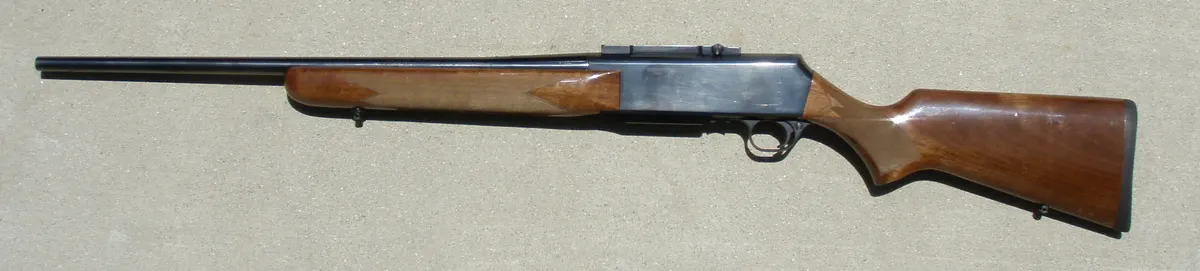
The FNAR Light Barrel, sold at launch simply as the FNAR, paired a 20-inch barrel with a 9-pound overall weight and FN's advertised 800-meter effective range1. The FNAR Heavy Barrel kept the same 20-inch length but added a stiffer contour that pushed weight to 10 pounds and effective range to a claimed 1,100 meters, aimed specifically at the law-enforcement stand-off role FN marketed hardest1,7. A dedicated FNAR Competition model followed, built on a blue and gray laminated wood stock with an adjustable cheekpiece rather than the standard polymer furniture, marketed toward 3-gun and precision competition shooters, though user reviews of its actual competition performance were mixed at best17,15.
FN also sold a compact FNAR Standard configuration late in the line's life with a 16-inch barrel and a 37.5-inch overall length, a shorter, lighter build aimed at buyers in states with rifle-length restrictions16. Because FN Herstal holds the US trademark and licensing rights to both Browning and Winchester, the same underlying action reached the market a second time under the Winchester SX-AR name, finished in a Mossy Oak camouflage pattern rather than FN's own black polymer, and using magazines interchangeable with the 20-round FNAR magazine6,1. No FNAR variant was ever chambered outside 7.62x51mm NATO commercially, despite persistent buyer interest in a .338 Federal option that FN never brought to market18.

The United States is the FN FNAR's only significant market. FN and its dealer network sold the rifle to American civilian shooters and to individual law-enforcement officers and agencies through programs like FN's officer discount program, marketed specifically for mid-range perimeter and stand-off roles rather than as a patrol carbine replacement7,19. No confirmed foreign military or police contract for the FNAR has been documented, a contrast with FN's own more successful export lines such as the FN SCAR and the FN Five-seveN pistol5,19.
Because the FNAR line is discontinued, its remaining user base today is almost entirely secondhand, existing rifles held by the original civilian and law-enforcement buyers who purchased them between 2008 and 2019, rather than any ongoing procurement. Surplus and used-market FNAR rifles still circulate through American gun dealers and online marketplaces at prices well below the original launch MSRP, reflecting both the rifle's discontinued status and its mixed reputation among long-time owners.
That single-country, civilian-and-agency user base is a genuine outlier for a rifle carrying the FN Herstal name. FN's other 7.62x51mm NATO products, from the FN SCAR-H to the FN MAG machine gun, built export lists spanning dozens of countries over their service lives. The FN FNAR never left its home market in any documented, verifiable way, a fact that says as much about how institutional buyers evaluate a semi-automatic precision rifle as it does about the FNAR itself.
The clearest way to place the FN FNAR against the SR-25 is by looking at which rifle institutions actually bought. Both are gas-operated, semi-automatic, 7.62x51mm NATO rifles feeding from detachable box magazines and aimed at a precision role rather than general infantry issue. Knight's Armament sold the SR-25 commercially for years before the US Navy adopted a shortened version as the Mk 11 Mod 0 in 2000, and the SR-25's AR-10 derived action later became the basis for the US Army's own M110 Semi-Automatic Sniper System family. The FN FNAR, despite a comparable launch price and a similar on-paper accuracy claim, never won a single confirmed military or major police contract in seventeen years on the commercial market.
That gap traces back to the two rifles' different design starting points. The SR-25 scaled up Eugene Stoner's AR-10 rifle, already a purpose-built precision-oriented action from its very first design, while the FNAR adapted a hunting-rifle action never engineered around a free-floating barrel or the sustained precision-fire demands a military or SWAT customer would test for. The M110 Semi-Automatic Sniper System reinforces the same pattern from the buyer's side, since the US Army ran a formal 2005 competition specifically to select a 7.62mm semi-automatic sniper rifle and picked a KAC-refined SR-25 derivative rather than any hunting-rifle-based competitor.
| Feature | FN FNAR (Heavy Barrel) | SR-25 | M110 Semi-Automatic Sniper System |
|---|---|---|---|
| Cartridge | 7.62x51mm NATO | 7.62x51mm NATO | 7.62x51mm NATO |
| Action basis | Browning BAR hunting rifle | AR-10 (Stoner) | AR-10 (Stoner), via SR-25 |
| Barrel | 20 in (508mm) | 16-24 in | 20 in (508mm) |
| Weight (empty) | 10 lb (4.54kg) | 10.75 lb (4.88kg), Match Rifle | not disclosed |
| Military adoption | None confirmed | US Navy SEALs (2000) | US Army, USMC (2007-08) |
| Unit cost | ~1,400 to 1,500 USD retail (2008) | ~4,600 to 5,040 USD retail | ~11,214 USD (Army contract) |
The price and role gap is just as telling. The FNAR retailed for roughly a third of a comparable commercial SR-25 build, yet the institutional market treated the two very differently, buying the more expensive AR-10 derived rifle in volume while leaving the FNAR to civilian and individual-officer sales alone. A designated marksman rifle earns institutional adoption mainly on accuracy consistency and parts commonality with an existing inventory, not launch price, and that is exactly where the FNAR's hunting-rifle roots left it short against purpose-built precision designs.

What caliber does the FN FNAR use The FN FNAR is chambered in 7.62x51mm NATO, commercially interchangeable with .308 Winchester ammunition. No other caliber was ever offered commercially1,18.
Is the FN FNAR still in production No. FN discontinued the FNAR line, including the Standard, Heavy Barrel, and Competition models, around 2019, roughly eleven years after its 2008 launch9,15,16.
Is the FN FNAR used by the military No confirmed military service, domestic or foreign, has been documented for the FN FNAR. It was marketed toward US law enforcement and civilian buyers, not adopted as a service rifle by any armed force7,19.
How much does an FN FNAR cost FN's original suggested retail price at the 2008 launch was around 1,400 to 1,500 US dollars. Overstock and weak demand pushed street prices down toward 1,000 dollars by the mid-2010s, and used examples now sell for less on the secondhand market12,13.
How does the FN FNAR work It is a gas-operated semi-automatic rifle, a short-stroke piston beneath the barrel cycling a multi-lug rotating bolt, the same basic mechanism used in the semi-automatic Browning BAR hunting rifle the FNAR's action is built from2,1.
What is the difference between the FN FNAR and the FN SCAR They share a manufacturer and a Picatinny-railed, tactical-looking exterior, nothing else. The FN SCAR is a select-fire military rifle built around a proprietary short-stroke piston system FN engineered from scratch for US Special Operations Command, while the FN FNAR's action derives from the decades-older, civilian, semi-automatic-only Browning BAR hunting rifle1,2.
- "FN FNAR", Wikipedia — en.wikipedia.org/wiki/FN_FNAR ↩
- "A Brief History of the Browning BAR", Browning — browning.com ↩
- "Browning BAR", Wikipedia — en.wikipedia.org/wiki/Browning_BAR ↩
- "FN Announces 18 Million Dollar Expansion Project at Columbia, South Carolina Production Facility", FN America — fnamerica.com ↩
- "Select-Fire, FN Factory Tour to See How M240s, SCARs, and 509s Are Born", Guns.com — guns.com ↩
- "FNH USA FNAR Rifle", American Rifleman — americanrifleman.org ↩
- "Heavy Barrel FNAR Shines As a Mid-Range Perimeter Gun For LE", Athlon Outdoors — athlonoutdoors.com ↩
- "FN FNAR", Modern Firearms — modernfirearms.net ↩
- "Why did the FNAR fail", FN Forum — fnforum.net ↩
- "FNAR accuracy woes", FN Forum — fnforum.net ↩
- "Accuracy Problems with FNAR", FN Forum — fnforum.net ↩
- "FNAR New and Used Price, Value, and Trends", TrueGunValue — truegunvalue.com ↩
- "FNAR Retail Cost", FN Forum — fnforum.net ↩
- "FN FNAR Review, A Diamond in the Rough", Guns.com — guns.com ↩
- "FNAR Standard", FN America — fnamerica.com ↩
- "FNAR Heavy", FN America — fnamerica.com ↩
- "Review, FNAR, Competition Rifle That Is Not Ready For Competition", The Gun Divas — thegundivas.com ↩
- ".338 Federal", Wikipedia — en.wikipedia.org/wiki/.338_Federal ↩
- "Law Enforcement", FN America — fnamerica.com ↩