

Select fire describes a rifle built around a mechanical switch that changes how its trigger group behaves, rather than a rifle with only one fixed behavior. The sear and disconnector inside the trigger housing sit in more than one relationship, and the selector lever picks which one is active. In the semi-automatic position the disconnector releases the sear the instant a round fires, so the weapon needs a fresh trigger pull each time. In the automatic position the same disconnector stays held against the sear, so firing continues as long as the trigger stays back and the magazine still feeds. A few designs add a third detent for a fixed burst, counted off by a small ratchet inside the same housing rather than a plain two-way switch.
A semi-automatic rifle has none of that hardware. Its trigger group holds only the semi-automatic relationship, so every shot chambers the next round on its own with no lever to bypass it. Most modern designated marksman rifles are built this way on purpose, even sharing a receiver family with a select-fire parent design. A designated marksman puts single rounds on a point target out to 300 to 600 meters, a distance at which automatic fire from the shoulder throws every round after the first well off the aim point within seconds, burning a magazine for no added hits. That tradeoff is why the wider battle rifle family the DMR grew out of was often select-fire, while the DMR class built from it trends semi-automatic only.
01Selector Switches Before and During the First World War
Amerigo Cei-Rigotti, a major in the Italian Bersaglieri, tested a gas-operated self-loading rifle as early as 1900 with a selector lever on the left rear of the receiver for switching between single shots and automatic fire.1
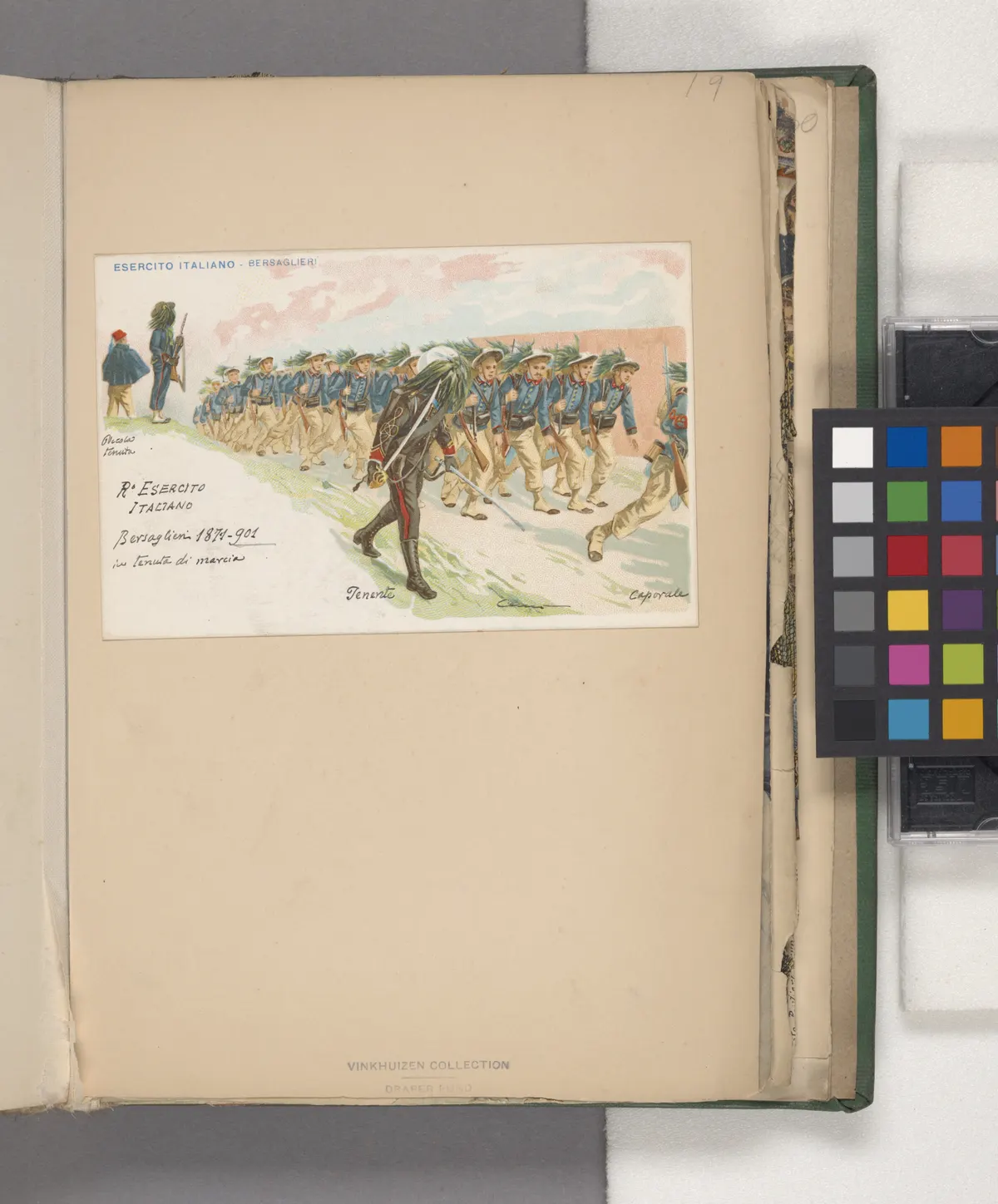
No army adopted the Cei-Rigotti despite trials in several countries over the following decade, and unreliable functioning is usually blamed even though period reports rarely spell out the cause.1 Credit for the first select-fire rifle in real service goes to Vladimir Fyodorov of the Russian Empire. His Fyodorov Automat entered limited service in 1916, rechambered for the Japanese 6.5x50mmSR Arisaka cartridge after wartime shortages ruled out his original round, keeping the selector switch from his earlier semi-automatic prototype.2 It was issued that year to a company of the 189th Izmail Infantry Regiment, one of the earliest select-fire weapons to see combat.2

A third early attempt sat between the Cei-Rigotti and the Fyodorov Automat in complexity, if not in outcome. The Chauchat-Ribeyrolles 1918, tested by France in the last year of the war, carried a radial selector above the trigger guard with positions for safe, semi-automatic, and full-automatic fire, cycling at roughly 550 to 600 rounds a minute in its automatic setting.3 France never adopted it in numbers either, and like the Cei-Rigotti it survives mostly as a case study in how many armies experimented with selector-equipped rifles years before any single design proved reliable enough to issue widely.
The M1918 Browning Automatic Rifle, fielded by the United States that same year, combined its selector with the manual safety on one lever on the left side of the receiver, an S position for safe, an F for semi-automatic fire, and an A for automatic.4 The M1918A1 replaced that simple lever with a two-rate automatic-fire reducer bought from FN Herstal, then swapped again for a redesigned reducer from Springfield Armory housed in the buttstock.4 The final M1918A2 went the opposite direction from every rifle mentioned so far, dropping the semi-automatic setting altogether and leaving only two selectable rates of automatic fire, on the reasoning that a rifle built to feed a squad from a bipod had little use for single shots.4
01How the Selector Moves the Sear and Disconnector
The selector lever only rotates a small block inside the trigger housing, and every difference in behavior follows from what that block presents to the disconnector.5 In the semi-automatic detent the block lets the disconnector separate fully from the sear after each shot, so the sear always catches the bolt carrier before a second round fires. In the automatic detent the block keeps the disconnector's catch end pressed against the sear's latch, holding the sear clear until the trigger is released.5 That is why select fire is designed into the trigger group from the outset, rather than bolted on as an extra part later.
That same hardware distinction is why the law treats the automatic and burst detents differently from the semi-automatic one. In the United States, the National Firearms Act of 1934 defines a machine gun as any weapon that fires more than one round per single function of the trigger, a definition written around exactly the sear and disconnector relationship described above rather than around outward appearance.6 A selector switch that lets a disconnector hold the sear open, whether for sustained automatic fire or for a fixed burst, brings a rifle under that definition, while a trigger group wired only for the semi-automatic relationship does not, regardless of how similar the two look side by side. Civilian manufacture of new transferable machine guns has been closed since 1986, which is a large part of why semi-automatic-only clones of military rifles fill the commercial market instead of true select-fire copies.
01The Three-Round Burst as an Unsuccessful Middle Ground
A fixed burst detent asks the same trigger group to count shots, and the mechanism the U.S. Army chose for the M16A2 in the 1980s shows how much extra complexity that counting adds. A six-notch ratchet turns 60 degrees every time the hammer cycles, so two three-round bursts pass for every full turn of the ratchet, and only the third notch in each half turn is cut deep enough to let the disconnector catch the hammer and stop the burst.8 The Army added that complexity for a specific reason. Soldiers in Vietnam carrying the earlier M16 and M16A1 on full-automatic were found to empty a magazine in a few seconds without hitting much of anything, and a fixed three-round burst was meant to cap that waste while still giving faster follow-up shots than a plain semi-automatic trigger.7
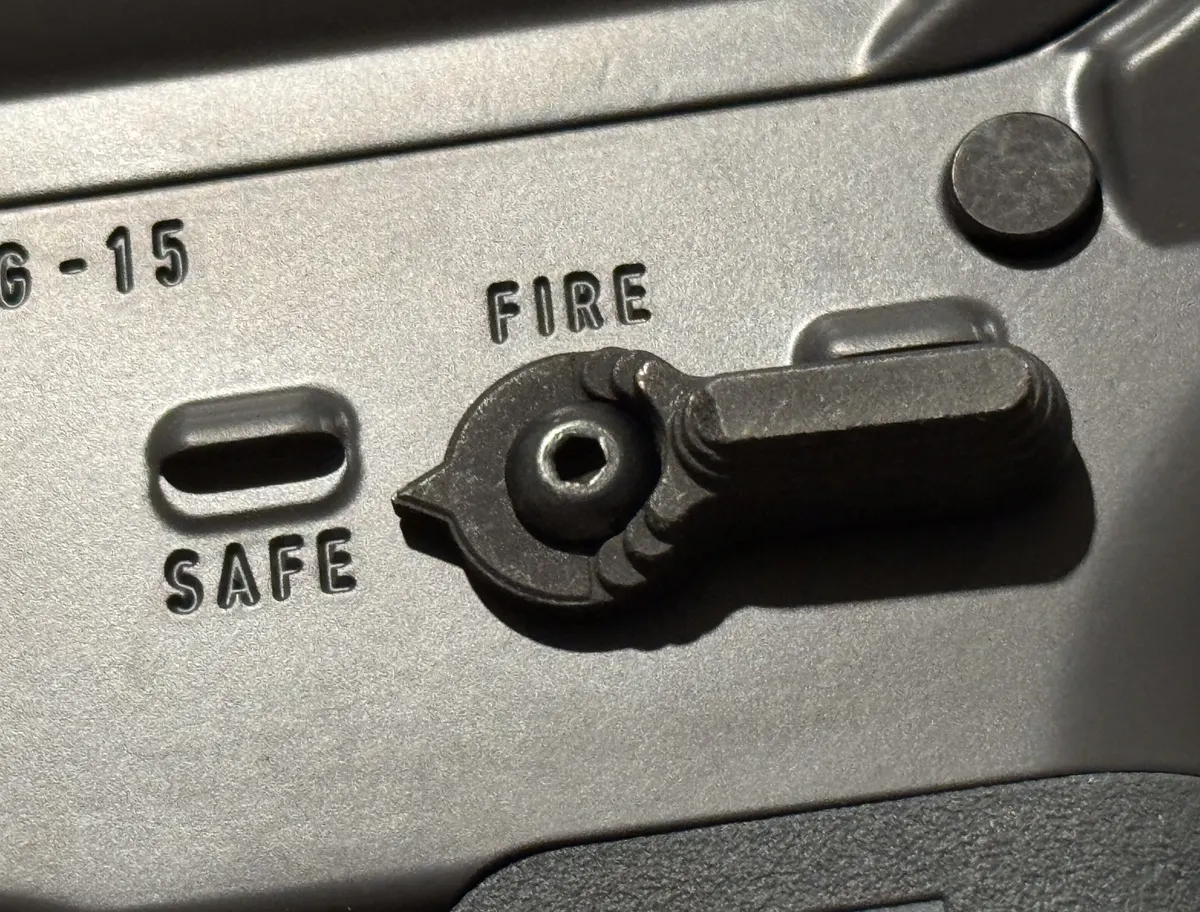
The fix created problems of its own. Because the ratchet does not reset when the trigger is released early, a soldier who lets go after one or two rounds leaves the mechanism partway through its cycle, so the next pull may only complete the interrupted burst rather than start a fresh three rounds, an inconsistency that is hard to judge under stress.9 The same cam also stiffens and roughens the trigger pull on every shot, semi-automatic included, since the sear has to work past it on every cycle rather than only during automatic fire.8 Testing never showed that the fixed burst improved hit probability over trained shooters using either full-automatic fire in short bursts or plain semi-automatic fire, which undercut the entire rationale for building the mechanism in the first place.9 The Army's answer was the M4 carbine's later M4A1 variant, which returned to a conventional safe, semi, and automatic selector and dropped the burst detent altogether.10
Not every army reached the same conclusion. Russia's AK-12, adopted in 2018, kept a two-round burst position alongside safe, semi-automatic, and full-automatic on its selector, treating the shorter count as a genuine fourth option rather than a substitute for full-automatic fire the way the M16A2 used it.9 Austria's Steyr AUG solved the same problem from a different angle entirely, replacing the mechanical selector with a trigger that reads how hard it is pulled, breaking a single shot under 7.1 kilograms of pressure and running fully automatic once the pull exceeds that weight, so the shooter picks the mode with finger pressure instead of a separate lever.7
01Full-Power Recoil and the Retreat From Automatic Fire
The FN FAL and the Heckler and Koch G3, both chambered for 7.62x51mm NATO through the 1950s, carried this selector arrangement into full-power battle rifle service. Armies that tested the FAL on automatic fire found the setting close to uncontrollable, recoil drove the muzzle up so fast that only the first shot of a burst landed near the aim point, and many NATO users ran the FAL as a semi-automatic rifle regardless of the fitted switch.11 The G3's inline stock and roller-delayed action controlled the same cartridge only slightly better.12

That recoil problem, more than any flaw in the rifles themselves, is why later marksman-focused designs drop the automatic setting entirely rather than fit a switch few shooters can use at range. Select fire persists instead on rifles meant for close, general-issue combat. The ArmaLite AR-10 offered a select-fire configuration alongside semi-automatic variants in the 1950s, and the FN SCAR-H and Heckler and Koch HK417 both keep a select-fire option in their general-issue models even as the U.S. Army runs the same HK417 receiver semi-automatic only in the M110A1 Squad Designated Marksman Rifle. Germany's paratrooper FG 42 and Japan's Howa Type 64 paired a selector with an open-bolt automatic setting for suppressive fire, a role no DMR fills, while Switzerland's SIG SG 510 rounded out a mid-century wave of select-fire battle rifles fielded before semi-automatic marksman rifles split the two roles apart.
That split, a general-issue rifle keeping automatic fire and a marksman-role derivative dropping it, has held up better than the three-round burst compromise in between. The M4A1's return to a plain automatic setting shows the general-issue side of that split moving back toward full-automatic fire rather than away from it, on the reasoning that close-range suppressive fire and room clearing are served better by a consistent automatic trigger than by a fixed burst count.10 The marksman side keeps moving the other way, since the squad designated marksman variant and its DMR peers are built around single well-placed shots at distances where automatic fire offers nothing, so the same HK417 receiver family straddles both trends only by fielding two different trigger groups depending on the role, one that still carries a selector and one that never fits one at all.
01Notes and Sources
- "Italian Cei-Rigotti Self-loading Rifle", Forgotten Weapons — forgottenweapons.com ↩
- "Fedorov Avtomat", Wikipedia — en.wikipedia.org ↩
- "Ribeyrolles 1918 automatic carbine", Wikipedia — en.wikipedia.org ↩
- "M1918 Browning automatic rifle", Wikipedia — en.wikipedia.org ↩
- "Sear (firearm)", Wikipedia — en.wikipedia.org) ↩
- "National Firearms Act", Wikipedia — en.wikipedia.org ↩
- "Select fire", Wikipedia — en.wikipedia.org ↩
- "TAC Trigger System for the M16", Small Arms Review — smallarmsreview.com ↩
- "Burst Selectors: Going the Way of the Dodo?", The Firearm Blog — thefirearmblog.com ↩
- "Army continues rollout of more durable, full-auto M4A1", Army Times — armytimes.com ↩
- "FN FAL", Wikipedia — en.wikipedia.org ↩
- "Heckler and Koch G3", Wikipedia — en.wikipedia.org ↩


