


The CZ BREN 2 BR is a 7.62x51mm NATO battle rifle built by Ceska zbrojovka (CZUB) in Uhersky Brod, Czech Republic, as the full-power derivative of the company's 5.56mm CZ BREN 2 service rifle.1 It keeps the same short-stroke gas piston action, the same aluminum upper and polymer lower construction, and the same side-folding adjustable stock as the smaller-caliber BREN 2, rebuilt around a larger bolt and a 7.62mm-length receiver. CZUB first showed the rifle publicly in September 2018 and gave it a fuller unveiling in January 2019, then displayed it formally at the IDET trade fair in Brno that May.2 The company's own marketing frames the BR as combining the accuracy and ergonomics of the BREN 2 family with the longer reach of a full-power cartridge, without a major weight penalty over the 5.56mm rifle.2
- short-stroke gas piston, tolerant of fouling and neglect
- fully ambidextrous controls and a tool-free field strip
- AR-10/SR-25-pattern magazines, wide commercial and military compatibility
- modular design shared with the wider BREN 2 rifle family
- hard-chrome barrel rated for roughly 20,000 rounds
- heavier and harder to control on automatic fire than the 5.56mm BREN 2
- restricted to military and law-enforcement buyers, no civilian sales of this chambering
- criticized by some Czech commentators as expensive next to rival battle rifles
- no independently confirmed combat deployment of the select-fire BR variant itself as of 2026
The BR arrived at a moment when the Czech Armed Forces were already replacing the Cold War era Sa vz. 58 rifle with the 5.56mm BREN 2, and CZUB positioned the heavier-caliber rifle as an option for roles that call for more range and downrange energy than an intermediate cartridge provides.3 That positioning ended up mattering most for a semi-automatic rifle built directly on the same platform rather than for the select-fire BR itself. Developed from the BR, the CZ BREN 2 PPS (Puska pro Presnou Strelbu, meaning rifle for precise shooting) is now the Czech Army's standard designated marksman rifle, replacing the Soviet-designed SVD Dragunov in front-line units from 2022.1 The BR and the PPS are distinct products sharing one architecture, and that relationship, along with the BR's more tentative export story, runs through the sections below.
A Short-Stroke Piston Scaled Up From the 5.56mm BREN 2
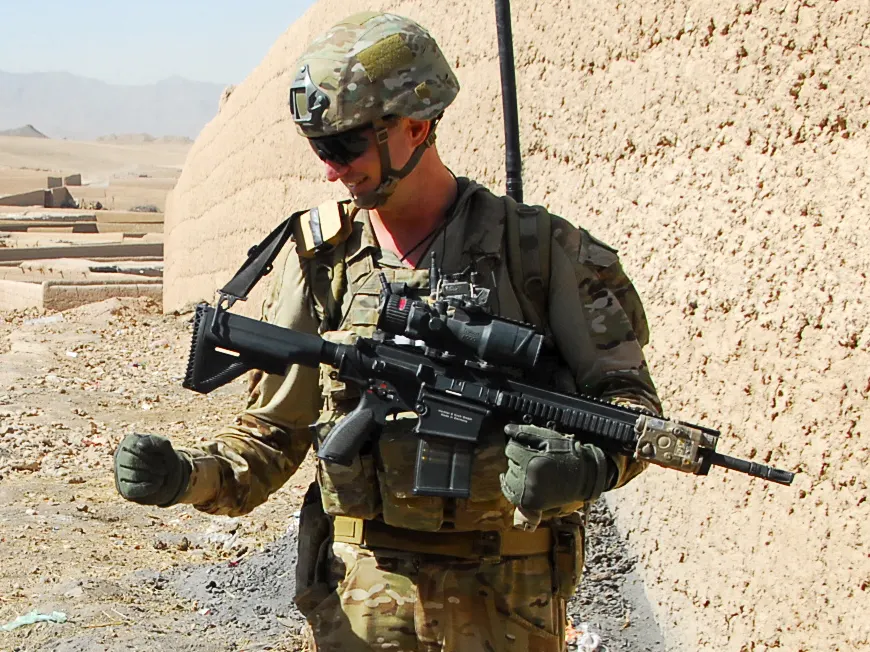
The BR cycles on a short-stroke gas piston with a rotating bolt, the same operating principle as the smaller-caliber BREN 2, scaled up to handle 7.62x51mm NATO pressures.3 A three-position gas regulator lets the operator adjust gas flow by hand, useful for running a suppressor or for degraded conditions where more gas volume is needed to guarantee cycling. The rifle fires from a closed bolt, feeds from a 25-round detachable box magazine, and uses the AR-10/SR-25 magazine pattern rather than a proprietary design, the same pattern used by the HK417, so it accepts most commercial and military 7.62mm magazines built to that standard, including Magpul's polymer PMag.4 That magazine choice matters commercially. It puts the BR on the same logistics footing as a large existing family of 7.62mm rifles rather than asking an adopting force to stock a magazine found nowhere else.
- First Production Year2018
- Service Entry Year2022
- Weight (Empty)3.78 kg
- Currently In ServiceYes
- Notable UsersCzech Republic (via BREN 2 PPS/DMR derivative, active since 2022); Bangladesh (trial)
Weight empty is approximately 3.78 kilograms, only a few hundred grams over the 5.56mm BREN 2 despite the larger cartridge, a figure CZUB highlights as one of the design's selling points.3 The standard barrel is 407mm (16 inches) long and hard-chrome lined, rated by the manufacturer for roughly 20,000 rounds before replacement.4 Overall length varies with the stock's telescoping position, running from roughly 925mm collapsed to about 995mm fully extended, and the stock folds to the side for transport or vehicle storage. Publicly available sources do not report a muzzle velocity or a hard effective-range figure specific to the 16-inch 7.62mm BR configuration. That gap is left open here rather than papered over with an invented number.
- Cartridge7.62x51mm NATO
- Calibre Class7.62mm
Ambidextrous Controls and the Universal Receiver Claim
Every major control on the BR, the safety selector, magazine release, bolt catch, and a non-reciprocating charging handle that can be moved to either side, is reachable without shifting the firing grip, and the rifle field-strips without tools.2 The upper receiver is machined from 7075-series aircraft aluminum, while the lower and trigger housing are carbon-fiber-reinforced polymer, the same material split used across the BREN 2 line. Army Recognition describes the BR as convertible to 5.56x45mm NATO through a barrel and bolt swap, part of CZUB's broader Universal Receiver pitch for the BREN 2 family, in which one receiver is meant to accept barrels and bolt groups for 5.56x45mm, 7.62x39mm, and 7.62x51mm.2 That claim describes the wider BREN 2 architecture rather than an independently tested conversion procedure for the BR specifically, and it should be read as a manufacturer statement rather than a verified field capability.
- Action TypeGas-Operated
- Fire Modessafe / semi-automatic / full-automatic
- Select FireYes
- Feed SystemDetachable Magazine
- Magazine Capacity25
- Cyclic Rate of Fire850
The rifle is select-fire, with safe, semi-automatic, and fully automatic settings through an ambidextrous selector, and a cyclic rate cited at roughly 850 rounds per minute.3 That rate sits well above most other 7.62mm battle rifles, which typically cycle in the 550 to 650 rounds-per-minute range, and Czech commentators have flagged the resulting recoil and muzzle climb on automatic fire as a genuine handling drawback for a rifle this light.5
- Barrel Length407 mm
- Optic RailYes
- Receiver Material7075 aluminum upper, carbon-fiber-reinforced polymer lower
- Furniture Materialcarbon-fiber-reinforced polymer
- Folding / Collapsing StockYes
- Ambidextrous ControlsYes
- ModularityCZUB Universal Receiver concept, barrel/bolt swap advertised across 5.56x45mm, 7.62x39mm, 7.62x51mm
- Production Start2019
From the Sa vz. 58 Replacement Program to a Full-Power Rifle
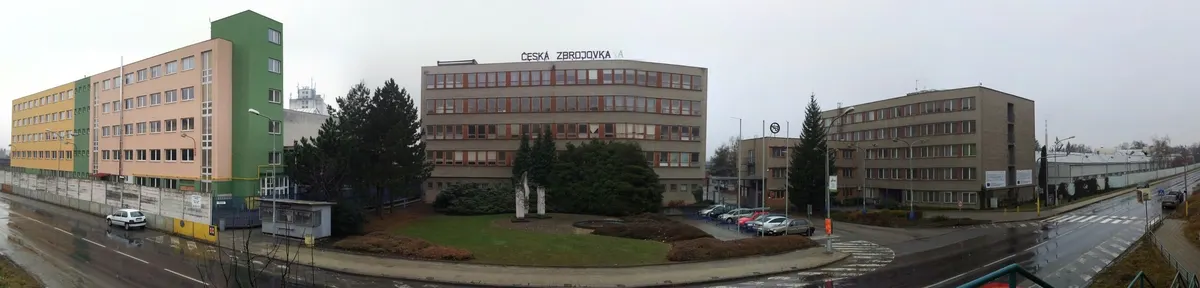
CZUB built the original 5.56mm BREN 2 as the winning entry in the Czech Army's program to replace the vz. 58, adopted from 2015, and the BR followed a few years later as a full-power sibling rather than a competing program.3 The Firearm Blog ran an early look at the rifle in September 2018 and a fuller set of photographs and technical detail in January 2019, ahead of CZUB's formal unveiling at the IDET defense trade fair in Brno in May that year.1 At launch, CZUB restricted BR sales to military and law-enforcement customers only, unlike the 5.56mm BREN 2, which also reached civilian semi-automatic buyers under the BREN 2 Ms designation.
The CZ BREN 2 PPS Replaces the SVD Dragunov
The clearest operational story to come out of the BR program centers on a semi-automatic derivative built on the same receiver rather than on the select-fire rifle itself. Known in Czech Army service as the CZ BREN 2 PPS, and marketed internationally as the BREN 2 DMR, the rifle entered service from 2022 as the Czech Armed Forces' new designated marksman rifle, replacing the Soviet-era SVD Dragunov and the modernized SVDN-3 Tiger sniper variant then in Czech inventory.6 The switch was explicitly about caliber standardization. The SVD fires the Russian 7.62x54mmR rimmed cartridge, a round the Czech military otherwise has no use for, while the PPS shares 7.62x51mm NATO with the rest of the alliance's logistics chain.
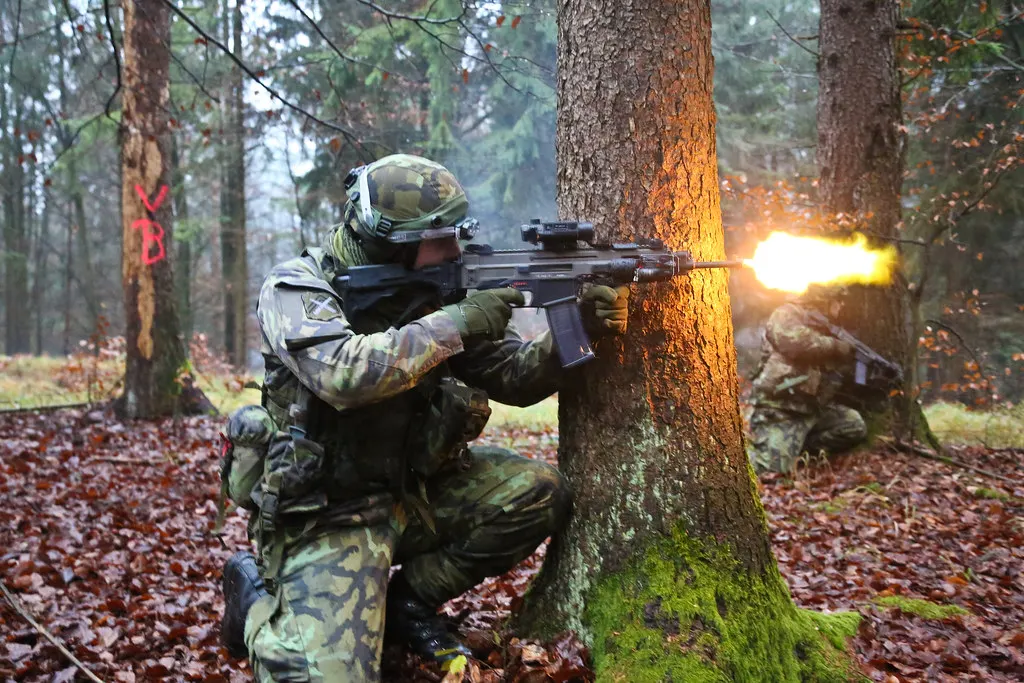
The Czech Ministry of Defence ordered 350 PPS rifles in total, with 242 delivered as of the most recent public reporting, issued to the 7th Mechanized Brigade, the 4th Rapid Deployment Brigade, the 43rd Airborne Regiment, and the 102nd Reconnaissance Battalion.6 The PPS differs from the select-fire BR in several concrete ways, built as a semi-automatic-only precision rifle rather than a general-issue battle rifle. It carries an 18-inch (457mm) barrel against the BR's 16-inch barrel, weighs about 4.6 kilograms empty against the BR's 3.78 kilograms, and runs to an overall length of roughly 1,300mm. CZUB and Czech Army sources cite an effective range of 600 to 800 meters and an accuracy specification of about 2 minutes of angle for the PPS, figures tied specifically to the marksman rifle rather than the select-fire BR.7
Deliveries continue against the original 350-rifle order, with the four gaining units named above expected to reach full PPS fielding over the following few years as older SVD and SVDN-3 rifles are withdrawn.6 The rollout mirrors a broader pattern across NATO armies, several of which have moved their designated marksman rifles onto commercial AR-10-pattern receivers chambered in 7.62x51mm rather than keeping bespoke sniper-support designs in the supply chain.
BR (Select-Fire) and PPS/DMR (Semi-Automatic), Not the Same Rifle
| Feature | BREN 2 BR | BREN 2 PPS / DMR |
|---|---|---|
| Fire control | Safe / semi / full-auto | Semi-automatic only |
| Barrel length | 407mm (16 in) | 457mm (18 in) |
| Weight, empty | ~3.78 kg | ~4.6 kg |
| Role | General-issue battle rifle | Designated marksman rifle |
Both rifles share the same receiver architecture, the same short-stroke gas piston, and the same AR-10/SR-25 magazine compatibility, but they are built for different jobs and should not be treated as one product with two names.5 The select-fire BR is aimed at squad-level roles where a soldier may need automatic fire at close range as well as precision fire at distance. The PPS strips out the automatic setting, lengthens the barrel, and adds the weight of a heavier free-floated barrel profile, all trade-offs aimed at wringing more practical accuracy out of the same basic action rather than at close-range firepower.
Beyond the PPS, CZUB advertises the wider BREN 2 platform's ability to swap between 5.56x45mm, 7.62x39mm, and 7.62x51mm chamberings on a common receiver through barrel, bolt, and magazine-well changes, an idea the company brands its Universal Receiver concept.2 Independent verification of how quickly or easily a BR-configured rifle specifically converts down to 5.56mm has not surfaced in public reporting, and the claim is best understood as a modularity pitch rather than a documented field procedure.


Czech Republic and a Bangladeshi Trial Program

The Czech Republic is the only country with a confirmed, documented adoption tied to the BR platform, through the PPS derivative's ongoing fielding since 2022 described above.6 Czech special forces units have generally been reported carrying Daniel Defence AR-pattern rifles rather than BREN-family weapons, so the PPS's user base sits with conventional army formations rather than special operations.
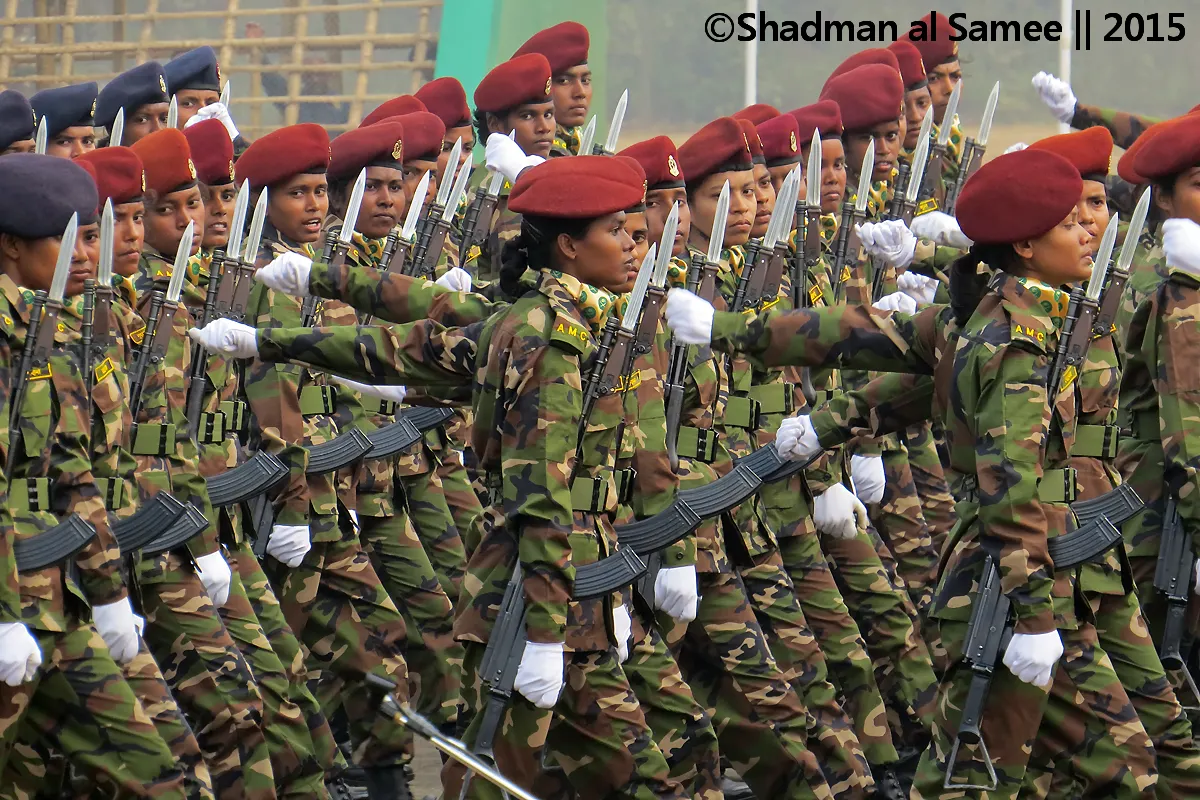
Bangladesh has trialed the BR as one of three BREN 2 configurations evaluated to replace the Bangladesh Army's locally built BD-08 rifle, itself a licensed derivative of the Type 81 assault rifle.8 Reporting puts the trial batch at 257 rifles spanning all three configurations, alongside a much larger planned import figure, reported around 25,000 rifles, that appears to cover the whole BREN 2 family rather than the 7.62mm BR alone, with eventual local production under a technology-transfer arrangement also discussed. The same reporting describes this program superseding an earlier plan to buy Russian-made AK-15 rifles, a plan reportedly dropped after 2022 amid geopolitical and export-control complications tied to Russian arms sales.8 Given the trial's limited public documentation, this should be read as a confirmed evaluation rather than a finalized BR purchase.
Other countries, including Indonesia, Hungary, Egypt, Vietnam, France, and Ukraine, have appeared in scattered reporting as users or evaluators of the wider BREN 2 family, but the available sourcing does not distinguish reliably between the base 5.56mm rifle and the 7.62mm BR in most of these mentions, so none are presented here as confirmed BR operators.
A Modular 7.62mm Rifle Against the SCAR-H and the HK417
The BR's closest conceptual rival is the FN SCAR-H, another modular, AR-10-magazine-compatible 7.62mm battle rifle built around a two-piece polymer-and-aluminum receiver and a short-stroke piston.3 Both rifles chase the same idea, a full-power alternative built to share design language and, in the SCAR's case, a common receiver, with a 5.56mm sibling. Where they differ most is production history and track record. The SCAR-H has fifteen years of documented USSOCOM combat use behind it, while the BR has no independently confirmed combat deployment of its own, its clearest fielded success being the semi-automatic PPS derivative rather than the select-fire rifle itself.
Heckler & Koch's HK417 is the more precise comparison for the semi-automatic PPS derivative, since both are AR-10-derived 7.62mm rifles fielded partly in a designated marksman role, and both feed from AR-10/SR-25-pattern magazines.3 The HK417 has a far longer service record, in use with multiple NATO militaries and special operations units since the mid-2000s, against the PPS's fielding beginning only in 2022. Civilian owners of the base 5.56mm BREN 2 have favorably compared its fully machined upper receiver and trigger to the SCAR's extruded receiver, a reputation point that carries over informally to the BR given the shared architecture, though this is subjective owner commentary rather than a formal trial result.7 CZUB's own literature has called the BREN 2 line the best automatic rifle available, a marketing claim rather than the result of an independent competition, and one that sits alongside published criticism of the rifle's recoil on automatic fire and its comparatively high price against established rivals.5


What caliber does the CZ BREN 2 BR fire? The BR fires 7.62x51mm NATO (.308 Winchester), the full-power NATO-standard rifle cartridge, rather than the 5.56x45mm round used by the base BREN 2.4
Is the CZ BREN 2 BR still in service? The select-fire BR itself has no independently confirmed general-issue fielding, but its semi-automatic derivative, the CZ BREN 2 PPS, has been in active Czech Army service as a designated marksman rifle since 2022.6
How does the BREN 2 BR compare to the FN SCAR-H? Both are modular, AR-10-magazine-compatible 7.62mm battle rifles built around short-stroke gas pistons, but the SCAR-H has a documented combat record stretching back to 2009, while the BR's clearest fielded success is the PPS marksman derivative rather than the select-fire rifle.3
What is the CZ BREN 2 BR's unit cost? CZUB has not published a public unit price for the military-only BR, and Czech commentary has criticized the rifle's cost relative to established rivals without citing a specific figure.5
- "CZ Unveils 7.62x51mm BREN 2 BR", The Firearm Blog — thefirearmblog.com ↩
- "CZ BREN 2 BR at IDET 2019", Army Recognition — armyrecognition.com ↩
- "CZ BREN 2", Modern Firearms — modernfirearms.net ↩
- "CZ BREN 2 BR Specifications", GunsWeek — gunsweek.com ↩
- "CZ BREN 2 PPS Review", Top War — topwar.ru ↩
- "Czech Army Fields CZ BREN 2 PPS", CZ Defence — czdefence.com ↩
- "CZ BREN 2 PPS Accuracy and Range", Popular Airsoft — popularairsoft.com ↩
- "Bangladesh Army Trials CZ BREN 2 Rifles", BD Military — bdmilitary.com ↩