


Colt stopped building the CM901 by around 2017, yet rifles from that production run remain in active service with several foreign forces more than a decade after they were delivered.1 The design's central idea is a single 7.62mm-length lower receiver built for modular caliber-swapping, letting an armorer move a rifle between 5.56x45mm NATO and 7.62x51mm NATO by exchanging the bolt carrier group and the magazine well insert rather than issuing a second weapon.2 Colt advertised four chamberings for the CM901, 5.56x45mm NATO, 6.8x43mm Remington SPC, 7.62x39mm and 7.62x51mm NATO, but the 7.62x39mm option never existed as a drop-in upper for the CM901 lower. It shipped instead as the CK901, a related rifle with a lower based on the CM901 but largely non-interchangeable internal parts, sold to a single confirmed buyer.2,3 That caliber list is really two groups, a 5.56mm/6.8mm group and a 7.62x51mm group sharing one lower, plus a separate AK-magazine-fed rifle that only resembles a third option.
- Common lower keeps optics zeroed across 5.56mm/6.8mm and 7.62x51mm upper swaps
- Fully ambidextrous safety, magazine release and bolt release
- Quick-change barrel system spans multiple lengths and roles
- 7.62x39mm option requires a separate, largely incompatible CK901 lower
- Proprietary bolt, extractor and firing pin, no standard AR-10 parts interchange
- Never secured a confirmed military contract in its country of origin
Colt's Manufacturing Company, based in West Hartford, United States, built the rifle for military and law-enforcement customers, alongside a semi-automatic civilian line sold under the LE901 and later M.A.R.C. 901 names.1,4
The rifle runs a gas-operated, direct-impingement action with a rotating bolt, and fires select-fire in its military configuration, semi-automatic only in civilian-legal variants.1,4 Feed is by detachable magazine, STANAG-pattern for the 5.56mm/6.8mm uppers and SR-25-pattern for the 7.62x51mm upper, a split that a single flat capacity figure does not capture (see Specs and Design). All controls, the safety selector, magazine release and bolt release, are ambidextrous, a deliberate design choice credited to Colt engineers Art Daigle and Casimir Pawlowski.1
Actual military and police use of the CM901 has stayed small in scale. Malaysia's army bought roughly 200 rifles around 2013, and a unit of the Telangana State Police in India has fielded it for jungle counter-insurgency work.5,6 No branch of the United States armed forces ever adopted it, despite an active pitch to special operations customers early in the program.1
The Offset Bolt Carrier That Lets One Lower Handle Two Calibers
Colt engineer Kevin Audibert refined the CM901's mechanism after reviewing existing 7.62mm rifle designs, including the FN FAL, the Heckler & Koch G3 and the ArmaLite AR-10 family, before basing the magazine system on the SR-25 pattern.1 The trick that lets a single receiver extension and buffer tube serve both 5.56mm and 7.62x51mm bolt carrier groups is an offset carrier, described by Colt engineers as combining the back end of a .308-length carrier with a 5.56mm bolt face, so the standard-length receiver extension fits both.1 Changing caliber means swapping the upper receiver, the bolt carrier group and the magazine well insert together, not just the barrel.
- DesignerLarry Robbins (original SCAR-Heavy concept, 2004-2009), Kevin Audibert (production refinement, magazine system)
- Weight (Empty)4.3 kg
- Currently In ServiceYes
- Notable UsersMalaysia (Army, ~200 rifles, 7.62x51mm, ~2013; Royal Malaysia Police Sabah; Maritime Enforcement Agency STAR unit), India (Telangana State Police Greyhounds, since at least 2021). Yemen's Republican Guard fields the related CK901 (7.62x39mm, AK-magazine, largely non-interchangeable lower), not the CM901 itself.

A 30-round capacity is often quoted for the CM901, but it only describes the 5.56mm/6.8mm SPC configuration, which uses standard STANAG magazines shared with the M4 carbine family. The 7.62x51mm NATO upper, the chambering most period reviews treated as the CM901's real strength, instead feeds from 20-round SR-25-pattern magazines, commonly Magpul's PMag 20LR in test reports.1,4 Barrel length also needs more than a single figure. The 409mm (16.1in) configuration is the most common baseline, but the system was built around quick-change barrels ranging roughly from 262mm to 508mm (about 10.3 to 20 inches), spanning short-barreled, standard and extended-range builds.7
- Cartridge5.56x45mm NATO / 6.8x43mm Remington SPC / 7.62x51mm NATO on one shared lower (different bolt carrier group + magazine well insert per family). 7.62x39mm is not a true CM901 upper option, it is only available via the separate CK901 rifle with a largely non-interchangeable lower.
- RimfireNo
- Caseless AmmunitionNo
The stock is best described as adjustable and telescoping. Period sources point to a VLTOR Modstock buffer tube and stock, and no source describes the CM901 folding to the side.1 Weight comes in at 4.3kg (9.4lb) unloaded, on the heavier side for a rifle in this class, and reviewers at the time called the 7.62x51mm build bulky next to a purpose-built .308 AR-10, since the lower and magazine well are sized for the larger cartridge even on 5.56mm configurations.8 Cyclic rate is reported between 700 and 950 rounds per minute depending on configuration, and the 409mm 7.62x51mm barrel produced roughly 845 meters per second (2,770 feet per second) at the muzzle in period test-firing.7 Effective range for the 7.62x51mm configuration is rated around 700m, consistent with other rifles in the battle rifle class.
- Action TypeGas-Operated
- Fire Modesselect-fire (safe/semi/auto, military CM901); semi-automatic only (civilian LE901/M.A.R.C. 901 variants)
- Select FireYes
- Feed SystemDetachable Magazine
- Magazine Capacity30
- Cyclic Rate of Fire700
Early production units had a documented reliability issue. An 11in gas system caused extractor breakage after roughly 3,000 rounds, which Colt corrected by moving to a 9in midlength gas system.1 The CM901's bolt, extractor and firing pin are proprietary and do not interchange with standard AR-10-pattern parts from other manufacturers, a real disadvantage against more open-ecosystem 7.62mm AR-10 rifles.1
- Muzzle Velocity845 m/s
- Effective Range (point)700 m
The CK901, a Related but Mechanically Separate 7.62x39mm Rifle
The CK901 deserves its own description rather than a place in the CM901's caliber list. Firearms outlets describe its lower as based on the CM901 design but built with largely proprietary, non-interchangeable parts, engineered specifically to solve tapered AK-pattern magazine feeding problems that had defeated Colt's own earlier 7.62x39mm AR-platform attempts.2,3 It feeds from standard AK-pattern magazines rather than any AR-10 or STANAG magazine.2
- Barrel Length409 mm
- Sight Typeflip_up_fixed
- Optic RailYes
- Iron SightsYes
- Threaded BarrelNo
- Overall Length950 mm
- Folding / Collapsing StockNo
- Bullpup LayoutNo
- Ambidextrous ControlsYes
- Modularitymodular_multi_caliber_system (single lower shares 5.56x45mm/6.8x43mm SPC/7.62x51mm NATO uppers via swappable bolt carrier group + mag-well insert; 7.62x39mm requires the separate CK901 lower, not a same-lower option)
- Production Start2010
- Production End2017
- Variants4
From a Lost SOCOM Bid to a Rifle of Its Own

The CM901 traces back to Colt's entry in the U.S. Special Operations Command's SCAR program in the early 2000s. Designer Larry Robbins, who had joined Colt in 1991 with no prior firearms background, developed a conceptual SCAR-Heavy design and received two patents covering a modular upper receiver and magazine-well adapter.1 Colt's SCAR entries lost the actual SOCOM competition to FN Herstal in November 2004, and FN's winning design went into service as the SCAR-H and SCAR-L.1
Robbins returned to the project in 2009 at the request of retired Marine Corps General William Morgan Keys, who wanted a modular carbine able to convert between 7.62x51mm and 5.56mm on one lower receiver.1
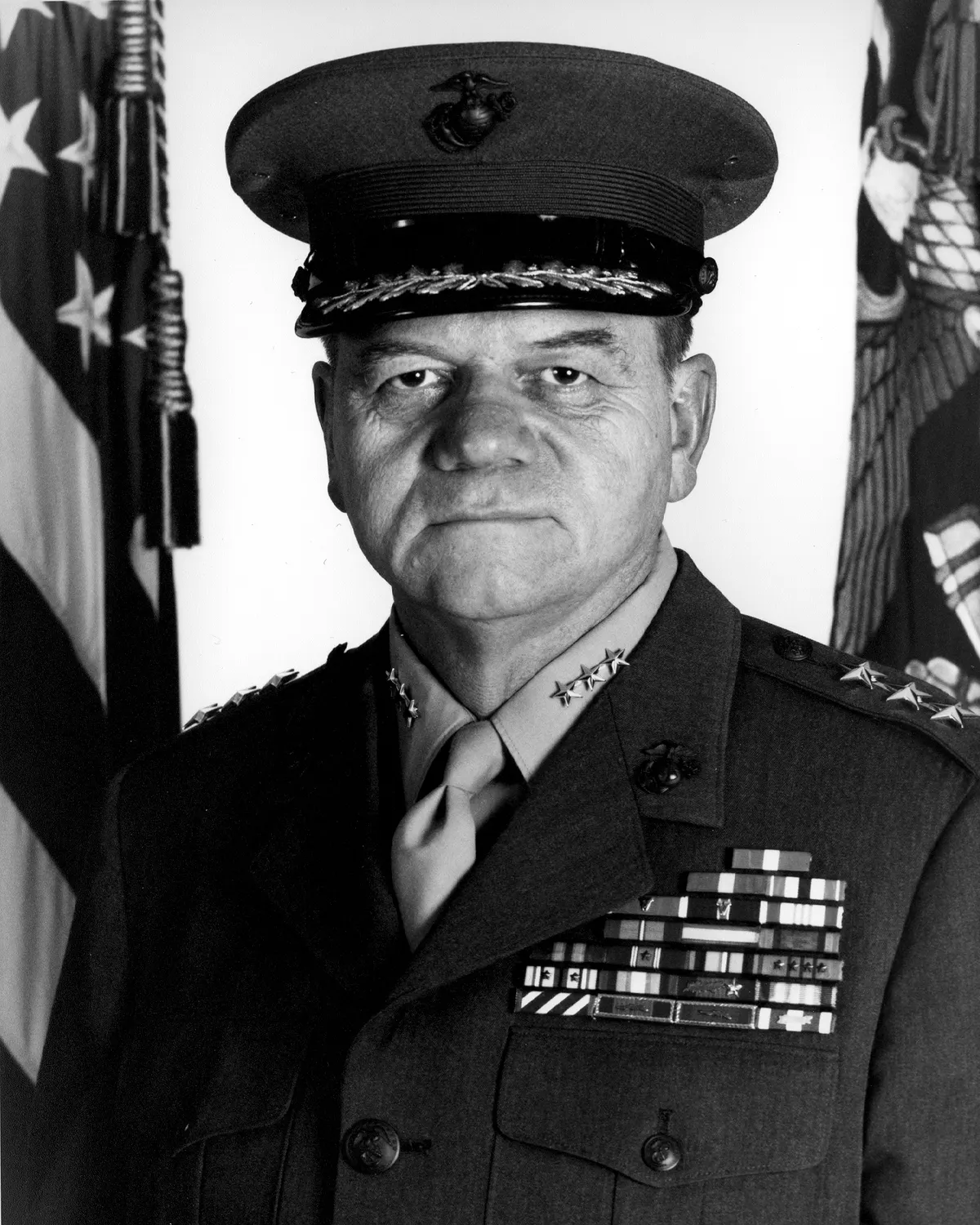
Audibert took over refinements once Robbins' contract ended, and the first prototype reached industry hands by September 2010, ahead of an expected unveiling at that October's AUSA convention.9 The rifle's real public debut came at SHOT Show in Las Vegas, January 18 to 21, 2011, where Colt displayed the select-fire CM901 alongside its semi-automatic civilian sibling.10,11
The Individual Carbine Trial Colt Walked Away From
In November 2011, Colt entered the CM901 into the U.S. Army's Individual Carbine competition, an effort to find a possible M4 successor that also drew the FN SCAR, the Heckler & Koch HK416, the Remington ACR, the Robinson Armament XCR, Knight's Armament's SR-16 and LWRC's M6A4.12 Colt withdrew during Phase I testing over a contract term requiring the eventual winner to hand technical data rights to the Army, which planned to distribute the design to two additional manufacturers for a third of the total order each. Other companies, including Smith and Wesson, Stag Arms, LWRC and Knight's Armament, withdrew for similar reasons.12 The Army cancelled the entire Individual Carbine competition on June 13, 2013, after spending roughly 14 million dollars, concluding no submitted rifle offered enough improvement over the M4 to justify replacing it.12
The CM901 never lost on performance grounds. It withdrew over a data-rights dispute, and the program it left behind produced no winner regardless.
Discontinuation and What Replaced It
Colt rebranded the line as M.A.R.C. 901 in 2015, introducing updated AR901-16S and LE901-16SE models, before production of the entire CM901/LE901/M.A.R.C. 901 family ended around 2017.13 Colt's current modular carbines, the CM65 in 6.5 Creedmoor and CM762 in .308 Winchester, introduced in 2019, carry the shared-lower idea forward with modern M-LOK rails, replacing the CM901's dated quad-rail furniture, in a line reportedly continued since under an M7 designation.13 Whether the CM901 counts as in service today depends on the definition used, existing owners still field the rifles, but Colt itself moved on to newer product names years ago.
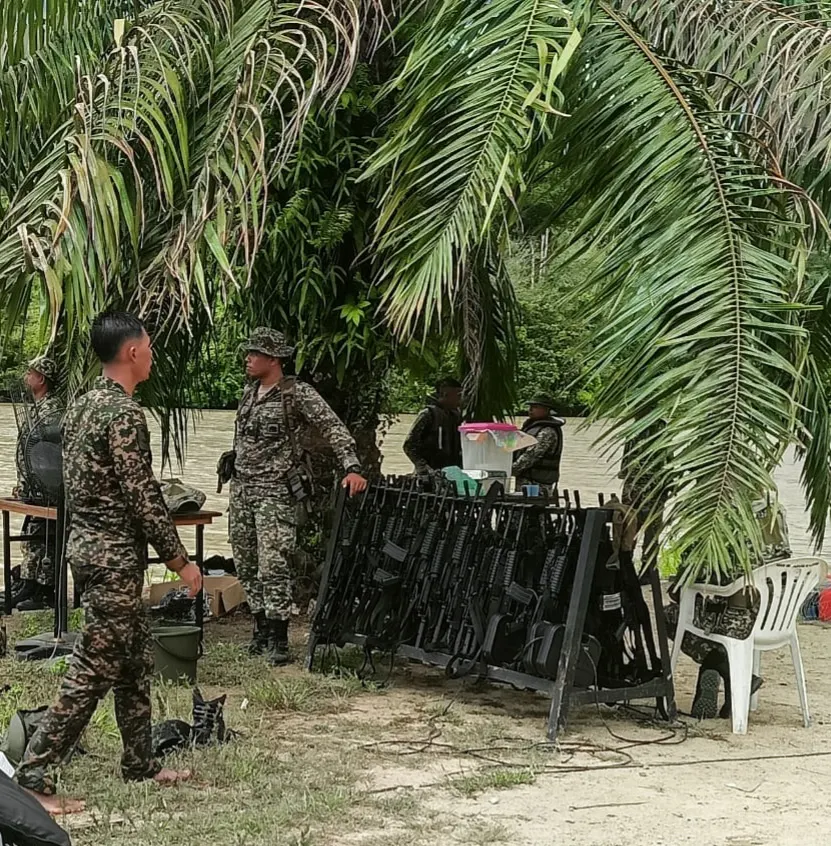
Malaysia's Army bought approximately 200 CM901 rifles in 7.62x51mm NATO, reported around June 2013 by the Malaysian defense outlet malaysiandefence.com.5 Given the small quantity relative to a national army's total rifle inventory, that purchase reads as issuing the CM901 to specific units rather than replacing Malaysia's standard-issue rifle. The Royal Malaysia Police in Sabah state used CM901 rifles during the 2013 armed incursion into Sabah by Filipino Sulu Army claimants, an episode widely known as the Lahad Datu standoff, and the country's Maritime Enforcement Agency lists the rifle with its STAR unit.5 The primary malaysiandefence.com report could not be directly verified beyond secondary summaries citing it, so the 200-rifle figure is probably accurate but rests on a single original source.
Yemen's Republican Guard bought the CK901 in 2014, described by Colt as that model's first commercial order, with contract rifles reportedly carrying YEM-prefixed serial numbers.2,3 Yemen is a genuine buyer in the CM901 family, but the caliber identity is commonly misreported. The rifle involved was the AK-magazine-fed CK901, a separate design, rather than a 7.62x39mm CM901 upper. The delivery landed only months before the Houthi takeover of Sanaa in September 2014 and Yemen's descent into the wider civil war, though no source documents the CK901 in a specific engagement of that conflict.2
The CM901 line ran to several distinct models rather than one fixed rifle. The base CM901 is the select-fire military and law-enforcement version, restricted to government buyers under U.S. arms-control rules.4 The LE901-16S, released July 20, 2012, is its semi-automatic civilian-legal counterpart, followed in 2015 by the M.A.R.C. 901-branded AR901-16S and LE901-16SE updates.4,13
The CK901, covered in detail above, is best treated as a related product rather than a CM901 variant, sharing a design approach but not parts interchangeability.2 Colt's successor line, the CM65 and CM762, introduced in 2019, and later designs marketed under the M7 name, replaced the CM901 family in Colt's current catalog.13

| Year | Buyer | Quantity | Amount | Present Value (2025) |
|---|---|---|---|---|
| 2013 |  Malaysia | 200 | — | — |
Confirmed CM901 users remain few and specialized rather than large standing forces. Malaysia's Army, the Royal Malaysia Police in Sabah and the Maritime Enforcement Agency's STAR unit make up the largest confirmed bloc, at roughly 200 army rifles plus smaller police and maritime holdings.5 India's Greyhounds, an elite Telangana State Police unit built for jungle counter-insurgency operations against Naxalite groups, have fielded the CM901 since at least 2021, in an unspecified quantity.6 Yemen's Republican Guard operates the related CK901 rather than the CM901 itself.2 No U.S. military or federal law-enforcement agency ever adopted either rifle.12
Colt built the CM901 in direct response to losing the SOCOM SCAR competition its own SCAR-Heavy concept had been designed for, so FN Herstal's SCAR-H is less a rival than the design the CM901 exists to answer. The two solve the multi-caliber problem differently. SCAR-H and SCAR-L are two distinct receivers built around a common short-stroke gas-piston system, while the CM901 uses one shared lower with an offset bolt carrier that lets 5.56mm and 7.62x51mm uppers mount on the same receiver extension.1,14 Colt's engineers argued this preserved a pre-zeroed optic across a caliber swap in a way SCAR upper changes did not always guarantee, a claim FN itself later validated in a sense, its Mk17 SCAR-H Common Receiver concept moved toward a CM901-style shared lower years after Colt's rifle appeared.14
| Feature | Colt CM901 | FN SCAR-H |
|---|---|---|
| Operating system | Direct impingement, offset bolt carrier | Short-stroke gas piston |
| Caliber approach | One lower, swappable bolt/upper/mag insert | Separate SCAR-L and SCAR-H receivers |
| SOCOM adoption | Lost the 2004 competition | Selected, fielded from 2009 |
| 7.62x39mm option | Via separate CK901 product | Not offered |
The CM901 also had to compete for attention within the wider field of battle rifles against established 7.62mm AR-10-pattern rifles already carrying combat records, including the SIG 716 and the Navy's Mk 14 Enhanced Battle Rifle, both built on the original ArmaLite AR-10 pattern the CM901's own 7.62x51mm upper was engineered around.1 Where the CM901 offered genuine caliber flexibility on one lower, those rivals offered a simpler, single-caliber rifle with a longer service record and open aftermarket parts support, an advantage the CM901's proprietary bolt and extractor could not match.1 The CM901's shared-lower idea anticipated, without directly influencing, the U.S. Army's later Next Generation Squad Weapon program, an early attempt at one rifle spanning multiple modern service calibers roughly a decade before that concept found real institutional funding elsewhere.


Is the Colt CM901 still in service? Yes, in the sense that existing owners, including Malaysia's armed forces and police, India's Telangana Greyhounds, and Yemen's Republican Guard with the related CK901, still field rifles from the production run. Colt itself stopped manufacturing the CM901 nameplate around 2017.5,6,13
How does the Colt CM901's caliber-swap system work? A single lower receiver accepts different upper receivers, each paired with its own bolt carrier group and magazine well insert, covering 5.56x45mm NATO, 6.8x43mm Remington SPC and 7.62x51mm NATO. The 7.62x39mm option is not a drop-in upper for this lower. It ships as the separate CK901 rifle.1,2
Did the U.S. military adopt the Colt CM901? No. Colt entered it in the Army's Individual Carbine trials in 2011 but withdrew over data-rights terms, and the Army cancelled the entire competition in June 2013 without selecting any rifle.12
How does the Colt CM901 compare to the FN SCAR? Both trace back to Colt's and FN's competing SCAR-Heavy submissions from 2004. FN's SCAR-H uses a dedicated 7.62mm receiver with a gas-piston system, while the CM901 uses one lower receiver across calibers with a piston-free direct-impingement design.1,14
What does the Colt CM901 cost? Colt never published an official military unit price. Civilian semi-automatic variants like the LE901-16SE and AR901-16S historically retailed between about 1,600 and 2,200 dollars, well above a standard AR-15-pattern carbine.8
- "The Colt LE901 Modular Rifle", Small Arms Defense Journal — sadefensejournal.com ↩
- "Colt CK901, An AR in 7.62x39mm for the Yemeni Military", Forgotten Weapons — forgottenweapons.com ↩
- "Bonafide Colt AK, Colt releases the 7.62x39 CK901", The Firearm Blog — thefirearmblog.com ↩
- "Colt CM901", Wikipedia — en.wikipedia.org ↩
- "New Colt Rifle for the Army", Malaysian Defence — malaysiandefence.com ↩
- "Colt CM901", Grokipedia — grokipedia.com ↩
- "Colt CM901", Soldier Systems Daily — soldiersystems.net ↩
- "Colt CM901", GunCritic — guncritic.com ↩
- "Colt CM901 Modular 7.62mm NATO Battle Rifle, It Exists", DefenseReview — defensereview.com ↩
- "SHOT Show 2011, Colt Debuts Modular LE901 Carbine", Police Magazine — policemag.com ↩
- "Inside the Colt CM901", Military.com Kit Up — military.com ↩
- "Individual Carbine", Wikipedia — en.wikipedia.org ↩
- "10 Years with the Colt 901 (Part 3)", Scattered Shots — scatteredshots.com ↩
- "Back to the Future, FN SCAR Moving to 7.62mm/5.56mm Multi-Caliber Mk17 SCAR-H Common Receiver vs Colt CM901", DefenseReview — defensereview.com ↩