


The IWI Tavor 7 is an Israeli bullpup battle rifle chambered in 7.62x51mm NATO, built by Israel Weapon Industries (IWI) as the full-power-cartridge member of the Tavor family alongside the 5.56mm TAR-21 and the compact X95.1 It packages a rifle-length 7.62mm barrel into a bullpup shell roughly 7 to 10 inches shorter overall than a conventional rifle with the same barrel length, the core appeal of the bullpup layout for a full-power cartridge.2 IWI first showed the rifle at AUSA 2017 and began commercial deliveries in early 2018, after IWI itself delayed the launch by more than a year to rework the gun's accuracy.3
- full-power 7.62 ballistics in carbine-length dimensions
- fully ambidextrous controls, field-reversible ejection port
- uses common SR-25/AR-10 pattern magazines
- smoother recoil impulse than typical AR-10 pattern rifles
- accuracy in independent tests trails purpose-built DMRs
- cannot be fired comfortably off-shoulder without reconfiguring the port
- no confirmed formal military adoption by name as of the most recent reporting
Unlike the earlier TAR-21 and X95, which both use a long-stroke gas piston derived from the Kalashnikov system, the Tavor 7 runs a short-stroke gas piston with a rotating bolt, a deliberate change IWI made for the heavier 7.62 cartridge.1 The rifle feeds from SR-25/AR-10 pattern magazines rather than the metric-pattern magazines used by older NATO battle rifles such as the FN FAL or HK G3, putting it into the same magazine ecosystem as the FN SCAR-H and the M110 family rather than the legacy battle-rifle standard.1
The design is aimed squarely at users who want the ballistics of a rifle-length 7.62 barrel without the bulk that normally comes with it, vehicle crews, special-operations teams, and designated marksmen working in confined spaces.2 IWI's own commercial framing describes the project as answering requests from both military and civilian customers for a full-power-cartridge bullpup, rather than a response to any single tender.3 That framing matters because, as described in the Operators section below, no government has publicly confirmed adopting the Tavor 7 as a named service rifle.
The military-specification Tavor 7 weighs 4.1kg (9.04lb) unloaded and measures 730mm (28.7in) overall with its standard 17in (432mm) barrel, or 806mm (31.7in) with the optional 20in (508mm) barrel.1 The barrel is hammer-forged and chrome-lined, free-floated inside the handguard, with 4-groove right-hand rifling at a 1-in-12in twist.1 The select-fire military version is rated for a cyclic rate of 600 to 900 rounds per minute, a figure that does not apply to the semi-automatic-only civilian rifle sold in the United States.1
- First Production Year2017
- Weight (Empty)4.1 kg
- Currently In ServiceNo
A four-position gas regulator sits above the barrel, offering Regular, Adverse (for sand and dirt fouling), Suppressed, and a fourth Off position that stops gas flow entirely, letting the rifle be run manually like a straight-pull or bolt-action gun if the piston system needs to be bypassed.1 The rifle is fully ambidextrous. The ejection port and charging handle can both be moved to the opposite side in the field in a few minutes using nothing more than a cartridge case as a tool, no dedicated armorer's kit required.1 A single Picatinny rail runs the length of the receiver's top for optics, and the standard configuration ships without iron sights.4
- Cartridge7.62x51mm NATO
- Calibre7.62 mm
- Case Length51 mm
- Calibre Classfull-power battle rifle cartridge
- RimfireNo
- Caseless AmmunitionNo
The commercial T7B16 sold by IWI US trims the barrel to 16.5in for an overall length of 26.75in (679.5mm) at the same 9lb (4.1kg) empty weight, and drops to semi-automatic fire only.4 It ships with a 20-round Magpul PMAG built to the SR-25/LR-308 pattern, with a 10-round option for magazine-restricted states, and the same cold-hammer-forged chrome-lined barrel steel and 1-in-12in twist as the military gun.4 The handguard carries Picatinny rails at 6 and 12 o'clock with M-LOK slots at 3 and 9 o'clock, and reviewers have consistently rated the factory trigger, breaking at roughly 4.5 to 6lb after some takeup, as unusually crisp for a bullpup.2
- Action TypeGas-Operated
- Select FireYes
- Feed SystemDetachable Magazine
- Magazine Capacity20
- Safety Typeambidextrous 45-degree manual safety
Independent test data backs up that framing rather than the original 1.5 MOA ambition. Ammunition testing published by Athlon Outdoors put muzzle velocity through the 16.5in civilian barrel at roughly 2,530 to 2,635 feet per second across five 7.62/.308 loads (about 2,600fps, or 793 m/s, averaged), broadly in line with other short-barreled 7.62 rifles.2 Gun-press reviewers have informally cited an effective range on man-sized targets of around 600 yards (550m) for the civilian rifle, though this is a field estimate rather than an official military specification.5
- Muzzle Velocity793 m/s
- Effective Range (point)550 m
Two independent accuracy tests give a consistent picture. GunsAmerica's review recorded a best 100-yard five-shot group of 3in with Winchester Silvertip 168-grain ammunition, with four of six loads producing sub-1.5in three-shot groups, but the rifle completely failed to cycle Tula steel-cased .308 ammunition, a reliability caveat the reviewers traced to insufficient firing-pin protrusion against the deeply-seated Tula primers.3 Athlon Outdoors' own testing averaged roughly 2.0 to 2.66in five-shot groups (about 3 MOA) across five match and hunting loads at 100 yards.2 A three-way comparative test run by GAT Daily, firing Federal M80 ball ammunition in 10-round groups from a supported prone position through 4x optics, put the Tavor 7 against the FN SCAR17S and the Knight's Armament M110 SASS. The Tavor 7 grouped worst of the three, though by a modest margin, with the established M110 SASS (roughly 1.1 MOA) performing best and the SCAR17S second.6 The reviewer's verdict was blunt, stating plainly that the rifle is not going to win a PRS match, noting that precision competition is not its job or its design, and concluding it is practically accurate for battle-rifle use.6
- Barrel Length432 mm
- Rifling Twist1 in 12 in
- Rifling Grooves4
- Sight Typenone standard, top Picatinny rail for optics
- Optic RailYes
- Iron SightsNo
Recoil is where several reviewers say the bullpup layout pays off for a 7.62 rifle. Because the receiver and much of the rifle's mass sit behind the shooter's shoulder rather than out in front of the trigger hand, and the bore sits in a straight line back to the buttstock, multiple testers describe the felt recoil as noticeably smoother than a typical AR-10-pattern .308 rifle of similar weight.2 The tradeoff is a real, functional limitation. One reviewer noted the ejection port sits close enough to the shooter's face that the rifle cannot comfortably be fired off-shoulder, or support-side, without first physically reconfiguring the port to the other side, unlike a conventional rifle that can simply be shouldered either way.3
- Overall Length730 mm
- Receiver Materialsteel
- Furniture Materialreinforced polymer
- Folding / Collapsing StockNo
- Bullpup LayoutYes
- Ambidextrous ControlsYes
- Modularityfield-reversible ejection port and charging handle, 17in and 20in barrel configurations
- Production Start2017
- Unit Cost2,000 USD
- Variants3
The Tavor line traces back to 1995, when designers Zalmen Shebs and Tamir Porat at Israel Military Industries set out to build something more maneuverable than the Galil or M16 for close-quarters and counter-terrorism work.1 The resulting TAR-21 entered Israel's IDF service starting around 2001, with wider fielding by 2006.1
IMI's small-arms division was privatized in 2005 and became IWI, later coming under SK Group, a private holding company controlled by Samy Katsav (an 83.4 percent stake) alongside Chaya Katsav, whose portfolio also includes Israel Shipyards and the radar-imaging firm Camero-Tech.7 IWI unveiled the Tavor 7 at the AUSA exposition in October 2017, then carried it through a run of international trade shows over the following year, including Defense and Security Thailand, Milipol Paris, and Expodefensa in Colombia's capital Bogota that December.3 Commercial sales in the United States began in the first quarter of 2018.3 Those appearances were exhibition and marketing stops rather than confirmed trials, and none of them has been tied publicly to a specific country's formal evaluation of the Tavor 7 itself.
What IWI did not advertise at launch was how long the accuracy work had taken behind the scenes.
Early prototypes grouped closer to 4 MOA, well off the roughly 1.5 MOA precision IWI had set as an internal target, and the company held the commercial release back by more than a year while it worked the problem before deciding, in Gresham's words, that reliable minute-of-man performance mattered more than a DMR-grade group size.3
The civilian rifle launched in Black, FDE, and OD Green finishes at an MSRP of $2,099 to $2,199, later settling closer to $1,700 to $2,000 at retail, with the used market since averaging around $1,836 for new examples and $1,435 for used ones.4
The baseline military-specification rifle carries a 17in (432mm) barrel and is capable of select fire, cycling at 600 to 900 rounds per minute in full-auto.1 A 20in (508mm) barrel option stretches the overall length to 806mm (31.7in) and is generally read by reviewers as a designated-marksman configuration, intended for the extra velocity and reach a longer 7.62 barrel provides.1
The commercial line sold through IWI US is the T7B16, semi-automatic only, with a 16.5in barrel and the shorter 26.75in overall length described above.4 It ships standard with a 20-round SR-25/LR-308 pattern magazine, with a compliance-oriented 10-round magazine offered for states that cap civilian magazine capacity.4 Finish options at launch covered Black, Flat Dark Earth, and OD Green polymer furniture over the same steel receiver and barrel assembly used across the line.4
Formal military adoption of the Tavor 7 by name remains unconfirmed. The most careful public reporting on the subject is a June 2019 correction from The Firearm Blog, which walked back an earlier Jerusalem Post report that had circulated with, in the outlet's words, misleading wording and comments from IWI taken out of context.8 The corrected account states plainly that the IDF was, as of 2019, considering fielding a compact designated-marksman rifle, and that the Tavor 7 would fit that requirement, but that there were no formal plans for the IDF to adopt the Tavor 7 at that time.8
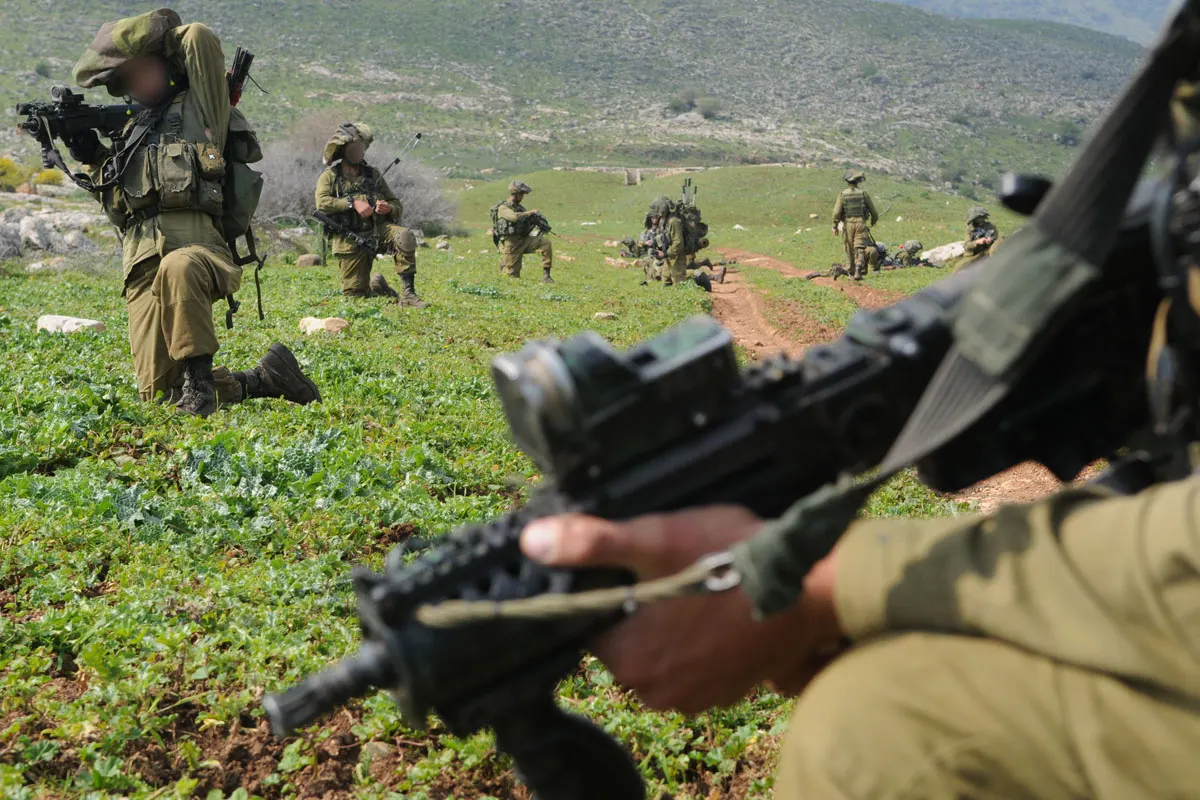
A separate, less rigorously sourced report from strategypage.com claims Israeli special-operations units began receiving the rifle in 2020, with some snipers following later, but that account stands alone and has not been corroborated by other reporting, so it is presented here only as an unverified claim rather than a confirmed fielding.9 The broader Tavor family, principally the 5.56mm TAR-21 and X95, has been exported to more than a dozen countries since 2006 for police and special-forces use, a track record that predates and is separate from the 7.62mm Tavor 7.1 No country's documented use of the 5.56mm Tavor rifles should be read as evidence of Tavor 7 adoption.
In the United States, the rifle is sold commercially in semi-automatic form to civilian, law-enforcement, and dealer-sample markets through IWI US, which is the only sales channel with confirmed, verifiable transactions for this specific model.4 No combat use specific to the Tavor 7 has been documented in available reporting. That absence is notable given the rifle's public profile since 2017, and stands in contrast to the TAR-21 and X95, both of which have seen extensive documented service and combat use.
The clearest comparison is the GAT Daily three-way test against the FN SCAR17S and the Knight's Armament M110 SASS, all fired with 4x optics and the same Federal M80 ball ammunition from a supported prone position.6 The result placed the Tavor 7 behind both rivals in raw group size, though the gap to the SCAR17S was not large.
| Rifle | Format | Test result |
|---|---|---|
| IWI Tavor 7 | Bullpup, 16.5-17in barrel | Worst of the three, modest margin6 |
| FN SCAR-H (SCAR17S) | Conventional layout, gas piston | Second of the three6 |
| M110 SASS | Conventional layout, direct impingement | Best of the three, roughly 1.1 MOA established6 |
The comparison illustrates a role difference more than a manufacturing shortfall. The M110 SASS was built from the outset as a precision semi-automatic sniper system, with a longer, heavier barrel and a fire-control package tuned for that job. The SCAR-H is a rifleman's 7.62 rifle in a conventional footprint, sharing the same SR-25 magazine family as the Tavor 7 but without the length reduction bullpup construction provides. The Tavor 7 trades some of that raw precision for a shorter package at the same barrel length, a fair exchange for a vehicle crewman or urban assault team but a real cost for a rifle whose main job is precision fire at distance. None of the three rifles' respective owners have released head-to-head institutional testing, so the GAT Daily comparison, while informal, is the most direct public data available.


What caliber is the IWI Tavor 7? It is chambered in 7.62x51mm NATO, the full-power NATO rifle cartridge, distinguishing it from the 5.56mm TAR-21 and X95 in the same Tavor family.1
How does the Tavor 7 work? It uses a short-stroke gas piston system with a rotating bolt, a design changed from the long-stroke Kalashnikov-derived piston of the earlier Tavor rifles specifically to handle the heavier 7.62 cartridge.1 A four-position gas regulator lets the shooter tune the system for normal use, adverse fouling, suppressed fire, or manual cycling.1
Is the IWI Tavor 7 accurate? Independent testing puts it around 2 to 3 MOA with quality ammunition, short of IWI's original 1.5 MOA development target but consistent with what IWI's own sales staff describe as a battlefield reliability standard rather than a precision-rifle standard.3,2
Is the Tavor 7 still in service? No government has publicly confirmed formally adopting the Tavor 7 by name. The IDF was reported in 2019 to be considering it for a compact designated-marksman role, and one uncorroborated report claims limited fielding to Israeli special-operations units from 2020, but neither amounts to a confirmed, named service adoption.8,9
What does the IWI Tavor 7 cost? The civilian T7B16 launched in the United States at an MSRP of $2,099 to $2,199 in 2018, with street prices later settling closer to $1,700 to $2,000.4 No official military unit cost has been published.
What is the IWI Tavor 7 vs FN SCAR-H comparison? In the one public head-to-head test available, the Tavor 7 grouped slightly worse than the SCAR17S variant of the SCAR-H, though the gap was described as modest, with both rifles behind the purpose-built M110 SASS.6 The Tavor 7's advantage lies in a shorter overall package at the same barrel length.
- "IWI Tavor 7", Wikipedia — en.wikipedia.org ↩
- "Tavor 7: IWI's Latest Bullpup Is a Serious Alternative to ARs and AKs", Athlon Outdoors — athlonoutdoors.com ↩
- "IWI TAVOR 7 in 7.62 NATO, A Bigger Hammer", GunsAmerica Digest — gunsamerica.com ↩
- "Tavor 7, 7.62 NATO Bullpup Rifle", IWI US — iwi.us ↩
- "Review, IWI Tavor 7 Bullpup", American Rifleman (NRA) — americanrifleman.org ↩
- "Is The Tavor 7 Accurate", GAT Daily (Guns Ammo Tactical) — gatdaily.com ↩
- "Israel Weapon Industries", Wikipedia — en.wikipedia.org ↩
- "Correction, IDF Considering Compact DMR, Tavor 7 a Possibility", The Firearm Blog — thefirearmblog.com ↩
- "Israel Adopts a Sniper Bullpup", StrategyPage — strategypage.com ↩
- "Battlefield 6", Internet Movie Firearms Database — imfdb.org ↩