

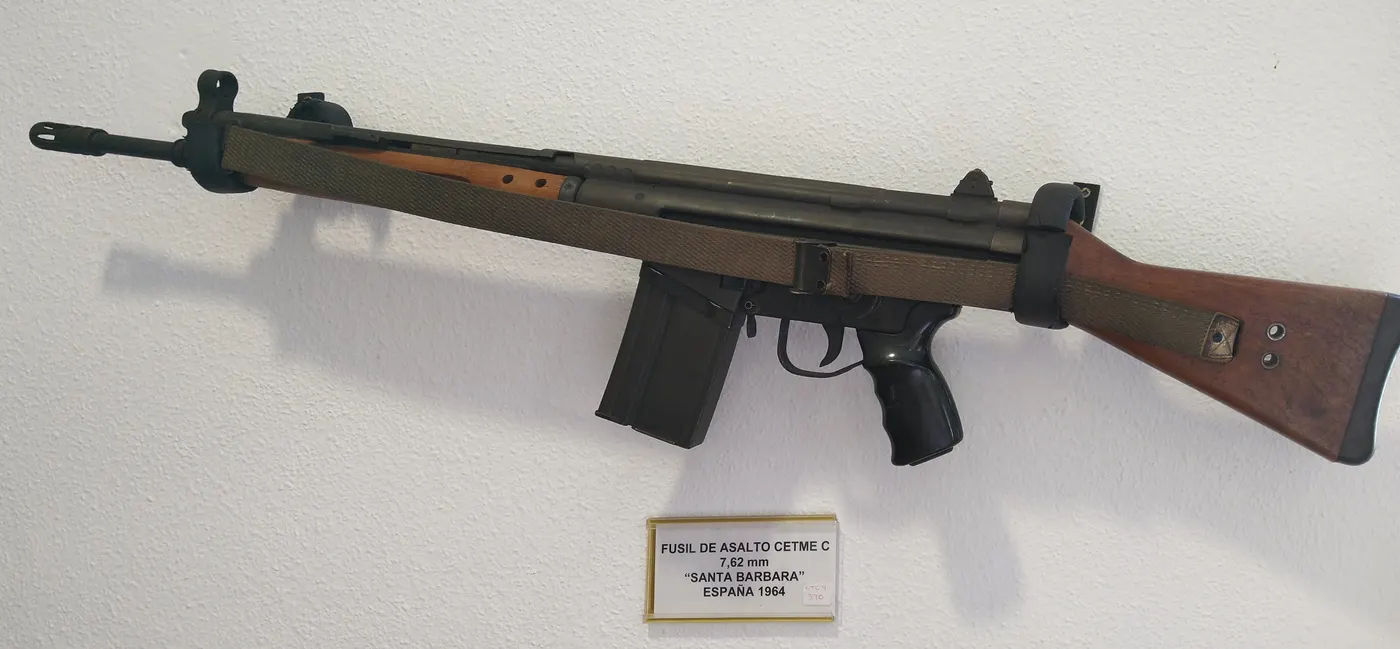

The CETME rifle is a Spanish battle rifle developed from the early 1950s onward by the Centro de Estudios Técnicos de Materiales Especiales, the state design institute in Madrid that gave the weapon its name.1 It fires from a roller-delayed blowback action, a mechanism that uses no gas system at all, first engineered in Germany during the Second World War, refined afterward in France, and matured in Spain before crossing back into Germany as the basis of the Heckler & Koch G3.2 The Spanish Army adopted the definitive Model B as its standard infantry rifle in September 1957, under the official designation Fusil de Asalto CETME Modelo 1958, and the strengthened Model C, chambered for full-power 7.62x51mm NATO ammunition, followed in 1964.3
- roller-delayed action needs no gas system to adjust or foul
- fluted chamber compensates for the design's less positive extraction
- proven mechanism, later mass-produced worldwide as the G3
- reduced-power original cartridge kept full-auto fire controllable
- Model C's switch to full-power NATO ammunition made automatic fire harder to manage
- comparatively modest export footprint next to the FN FAL or its own G3 descendant
- perforated steel and later wood furniture, dated ergonomics by modern standards
- underlying cartridge history is confusing, several non-interchangeable 7.62mm loadings share the name
The rifle's real historical weight sits less in its own service record, which stayed comparatively modest and mostly confined to Spain and a handful of client states, and more in what it made possible elsewhere. Its roller-delayed action, engineered by Ludwig Vorgrimler alongside a shifting cast of German, French, and Spanish collaborators, is the direct ancestor of the G3, a rifle that eventually reached more than 8 million units across roughly 50 countries, dwarfing the parent design that produced it.4 Understanding the CETME means tracing an unusually circuitous engineering path, from a wartime Mauser research group through an Allied-controlled French laboratory to a Spanish state institute, and back to a rebuilt West German arms industry, described in full in the History section below.
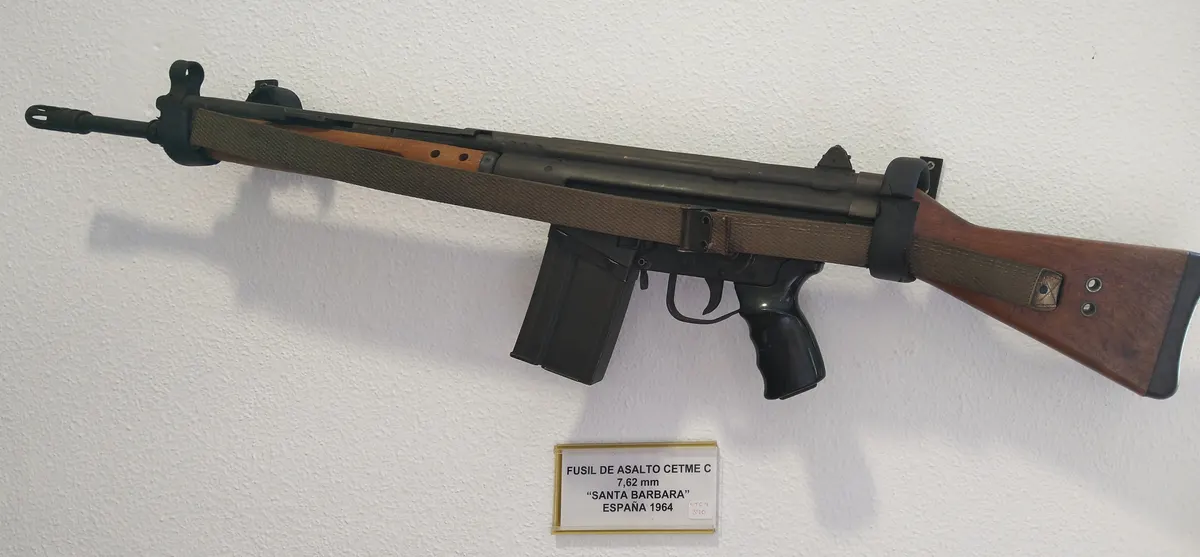
At roughly 4.5 kilograms empty and firing from a 20-round detachable box magazine, the CETME sits in the same weight and cartridge class as its Cold War rivals, the FN FAL and the American M14.5 It remained Spain's standard rifle for more than two decades, was still being issued to Spanish Guardia Civil units as recently as 2019, and was exported, in smaller and less consistently documented numbers, to countries as far apart as Lebanon, Chad, and Bolivia, a spread covered in Operators below.
The Roller-Delayed Blowback Action and Its Fluted Chamber
The CETME's bolt is built in two parts, a bolt head and a heavier bolt carrier, connected by a pair of rollers that sit in recesses machined into the barrel extension.6 When the rifle fires, chamber pressure pushes the rollers inward and drives the bolt carrier rearward well before the bolt head itself begins to move, delaying the moment the chamber opens until pressure has already dropped. There is no gas port, no gas piston, and nothing to adjust for different ammunition loads, which is the mechanism's main selling point over a gas-operated rival like the FAL.
- First Production Year1954
- Service Entry Year1957
- DesignerLudwig Vorgrimler
- Weight (Empty)4.5 kg
- Weight (Loaded)5 kg
- Currently In ServiceYes
- Notable UsersSpanish Armed Forces, Guardia Civil, Biafran Armed Forces, Bolivian Policia Nacional, Chadian forces, Congolese forces, Equatorial Guinean forces, Lebanese Armed Forces, Mauritanian forces, Nigerian forces, Spanish Commandos Marine
That delay alone is not enough to extract a fired case cleanly, so every CETME and G3-family rifle also cuts longitudinal flutes into the chamber wall, letting a thin layer of propellant gas float the case away from the chamber surface during extraction.7 The flutes leave visible horizontal marks on every spent case the rifle fires, a detail gunsmiths and collectors treat as the signature of the whole roller-delayed family. The underlying geometry, including the locking-piece angles that make the timing work, was worked out mathematically rather than by trial and error, a point covered in the History section's account of the design's wartime origin.
- Cartridge7.62×51mm NATO
- Calibre7.62 mm
- Case Length51 mm
- Calibre Classfull power rifle
- Bullet Weight9.3 g
- RimfireNo
- Caseless AmmunitionNo
A Reduced-Power Cartridge Built to Tame Full-Automatic Fire
CETME's founding brief from the Spanish military called for a rifle under about 4.1 kilograms, accurate out to 1 kilometer, built around a new reduced-recoil cartridge that would keep automatic fire controllable, an assault-rifle style requirement rather than a traditional full-power battle-rifle one.8 The first fielded chambering, the 7.92x41mm CETME of 1953, used an aluminum-cored, partially jacketed bullet designed by ballistics expert Günther Voss, cutting recoil by roughly 60 percent compared with a conventional loading while reportedly matching the wound performance of far smaller-caliber rounds.9
- Action TypeDelayed Blowback
- Fire Modesselective fire
- Select FireYes
- Feed SystemDetachable Magazine
- Magazine Capacity20
- Cyclic Rate of Fire600
- Practical Rate of Fire40
- Trigger Typehammer
- Safety Typelever
Involvement from West Germany's Bundesgrenzschutz pushed the bullet diameter to 7.62mm, and by the mid-1950s the cartridge had been reworked again into the 7.62x51mm CETME round, dimensionally close to standard 7.62x51mm NATO but loaded with a lighter bullet and a reduced propellant charge to keep the rifle controllable on full-auto.10 This round, adopted in 1955, never met true NATO pressure specifications and was informally known as 7.62x51mm Spanish. It was improved during the 1960s into a hotter loading called NATO-CETME Light, and only Spanish-made ammunition produced after 1988 finally reached full NATO-Regular specification.
- Muzzle Velocity786 m/s
- Muzzle Energy3,400
- Effective Range (point)600 m
- Effective Range (area)800 m
- Maximum Range2,000 m
- Sighting Range800 m
- Penetration300 mm
- Accuracy3
From Model A to Model C, Redesigning for Full-Power NATO Ammunition
The Model A, unveiled in 1953 and given a limited Spanish Army introduction in 1954, existed in several closed-bolt semi-automatic and open-bolt automatic prototype forms as the cartridge itself was still being finalized. The Model B that followed became the first mass-production version, formally named the Fusil de Asalto CETME Modelo 1958 and adopted by the Spanish Army in September 1957, still firing the reduced-power 7.62x51mm CETME round through a perforated steel handguard.11
- Barrel Length475 mm
- Rifling Twist1:254 mm
- Rifling Grooves4
- Sight Typeiron sights
- Sight Radius540 mm
- Optic RailNo
- Iron SightsYes
- Threaded BarrelNo
As NATO members standardized on full-power 7.62x51mm ammunition, Spain came under pressure to conform, and the Model C of 1964 was the result. Its locking rollers and bolt group were strengthened to handle full NATO chamber pressures, its handguards changed to wood, and it gained a four-position diopter rear sight, at the cost of the softer recoil impulse the original cartridge program had been built to deliver.12
- Receiver Materialsteel
- Furniture Materialwood or plastic
- Folding / Collapsing StockNo
- Bullpup LayoutNo
- Ambidextrous ControlsNo
- Modularitylimited
| Model B (1957) | Model C (1964) | |
|---|---|---|
| Cartridge | 7.62x51mm CETME, reduced power | 7.62x51mm NATO, full power |
| Handguard | Perforated steel | Wood |
| Rear sight | Fixed aperture | Four-position diopter |
- Production Start1954
- Production End1983
- Variants5
- Width80 mm
- Height250 mm
Mauser's Department 37 and the Bolt-Bounce Problem
The roller-delayed action did not begin as a Spanish idea. It originated during the Second World War at Mauser's Light Weapon Development Group, informally called Department 37, at the company's Oberndorf am Neckar works under director Ott-Helmuth von Lossnitzer.13 There, engineers Ludwig Vorgrimler and Wilhelm Stähle co-patented a roller-delayed blowback locking system, but an early prototype suffered from bolt bounce, a timing fault that could cause the rifle to fire out of battery. Mauser mathematician Karl Maier solved the problem through numerical analysis in December 1943, establishing the locking-piece angles, roughly 45 and 27 degrees, and the bolt-carrier-to-bolt-head mass ratio of about 3 to 1 that made the mechanism reliable.14
The refined mechanism became the MKb Gerät 06H prototype, then the StG 45(M), pitched as a cheaper alternative to the StG 44 at roughly 9 man-hours and 45 Reichsmarks of material per rifle against the StG 44's 19 man-hours and 66 to 70 Reichsmarks.15 Germany ordered 30 pre-production units in February 1945, but the war ended before the rifle reached service.
Vorgrimler's Postwar Path From Mulhouse to Madrid
Allied occupation authorities relocated Mauser's Department 37 equipment to Mulhouse in eastern France, where a joint research center run by the French defense administration, DEFA, continued the work.16 Vorgrimler and a rival French-employed engineer, Theodor Löffler, led competing teams adapting the roller-delayed principle to new French cartridges, first 7.65x35mm and then the American .30 Carbine round. Löffler's design won the internal competition and became the CEAM Modèle 1950 carbine, though France never adopted it. Facing the end of his position in France, Vorgrimler requested emigration to Spain and left the country on 30 June 1950.17
He reached Madrid in mid-1950 and joined the newly created CETME, a state research institute founded the previous year by Spain's National Institute of Industry, where he worked alongside ballistics specialist Günther Voss on the reduced-power cartridge program described above.18 Vorgrimler's own prototype, called the Modelo 2, beat a rival gas-operated design by engineer Hartmut Menneking, the Modelo 1, in trials during 1952, and the Spanish government selected it for continued development that July. It became the CETME Model A.
The Reverse License That Sent the Design Back to Germany
West Germany's rebuilt Bundeswehr needed a rifle firing full-power 7.62x51mm NATO ammunition, unlike Spain's own reduced-power CETME round, so Spanish technicians worked with the newly formed Heckler & Koch to modify the bolt group, extractor, and ejection system for the hotter cartridge.20 The resulting design, trialed as the Gewehr-58, beat the Swiss SIG SG-510 and the American ArmaLite AR-10 in West German rifle trials and was formally adopted by the Bundeswehr in January 1959 as the G3.

The licensing chain ran through a Dutch intermediary, Nederlandse Wapen en Munitiefabriek, which obtained a transferable license from CETME and sold it on to the West German government, which in turn relicensed production to Heckler & Koch and Rheinmetall.21 In 1977, the West German government ceded exclusive G3 manufacturing rights to Heckler & Koch alone. The G3 went on to sell more than 8 million units to roughly 50 nations, formally returning a design that began in Nazi Germany, was refined in occupied France, and was perfected in Franco's Spain, back to a rebuilt German arms industry under an entirely different political order.
Vorgrimler himself is rightly credited as the lead figure across all three countries, but the CETME rifle was never a one-man design. Stähle and Maier shaped the original wartime patent and mathematics, Löffler led the winning French-phase team that Vorgrimler's own group lost to, and Voss's cartridge work was as central to the Spanish rifle's identity as Vorgrimler's mechanism. Vorgrimler returned to West Germany in 1956, became head of research and development at Mauser, was awarded Spain's Encomienda de Alfonso X el Sabio medal in 1958 for his work there, and continued patenting sporting rifles, caseless-ammunition designs, and automatic cannons into the 1970s before his death on 10 January 1983.23
The Ifni War and Spain's First Combat Deployment
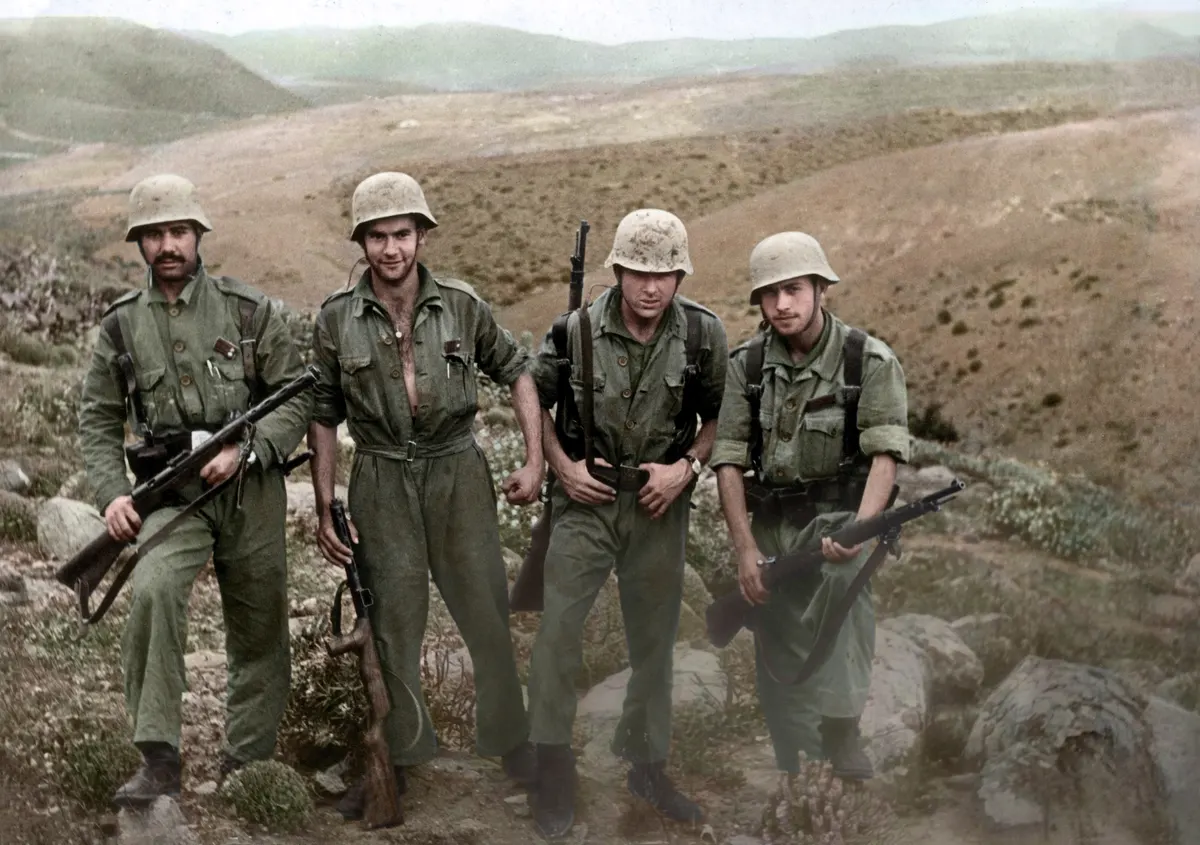
Spain fought what is often called its Forgotten War, the Ifni War, from November 1957 to June 1958, against Moroccan-backed insurgents in the Spanish enclave of Ifni and in Spanish Sahara, immediately after Morocco's own 1956 independence.24 The timing lines up closely with the Model B's September 1957 adoption, and general accounts of the rifle's combat record list the Ifni War among its earliest deployments, though detailed unit-level accounts of CETME use in that specific campaign are thin.
Counter-Insurgency in the Western Sahara
Through the 1970s, in the Western Sahara War, dedicated Spanish Legion units formed specifically for heliborne patrols and ambushes fought the Polisario Front and allied Moroccan irregulars across Spanish Sahara, described as the only Spanish special-operations forces of that era to see sustained combat and take casualties.25 Their standard weapon was the CETME, initially the Model B and later the Model C as that upgrade reached Legion units.
A Smuggled Cargo and the Algerian War's French Commandos
In March 1961, during the Algerian War, a French maritime patrol intercepted the Danish freighter Margot Hansen off the Algerian coast, carrying 200 brand-new CETME Model B rifles and ammunition intended for Algerian independence fighters.26 The confiscated cargo was stored at the French naval base at Mers El Kébir, where stationed French Marine Commandos noticed the Spanish rifles outperformed their own MAS 49/56 rifles, which held only 10-round magazines, and began carrying the captured CETMEs operationally.
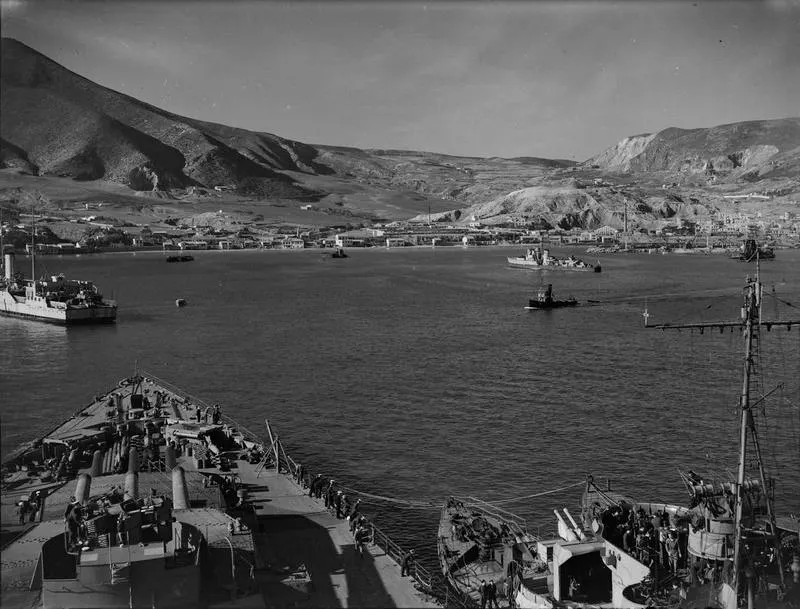
The smuggled rifles were missing their firing pins, likely withheld deliberately by the smugglers, so machinists at the French naval depot reverse-engineered and manufactured replacement firing pins on site, though the improvised parts broke often enough that commandos carried spares.27 The CETME was never formally adopted by the French military. Its use in Algeria was an informal, opportunistic reuse of a single captured cache by front-line troops who liked what they found, not a procurement decision, a distinction worth keeping in mind whenever France appears on lists of CETME operators.
Biafra, Congo, and Lebanon, a Wider but Thinner Combat Record
Beyond Spain's own conflicts, the CETME appears in general listings of weapons used during the Nigerian Civil War, fought largely in the breakaway region of Biafra, the wider Congo Crisis, and the Lebanese Civil War.28 Sourcing for these deployments is broad rather than deep. The rifles reached these conflicts mainly through surplus and secondhand channels rather than direct Spanish state export programs, and no detailed unit-level accounts comparable to the Algerian episode above have surfaced for them.
Model A, B, and C, the Core Battle Rifle Line
The Model A covers the early 1953 to 1954 prototypes described in Specs and Design, built in both semi-automatic and automatic configurations while the cartridge program was still unsettled. The Model B, adopted in 1957, was the first version built and issued in mass quantity, recognizable by its perforated steel handguard and reduced-power 7.62x51mm CETME chambering. The Model C, from 1964, is the definitive full-power NATO version, with wood furniture, a four-position diopter sight, and a strengthened bolt group, and it remained Spain's standard infantry rifle for two more decades.
Model E, Model R, and the Lightweight Model L
A lightweight Model E, built with heavier use of plastic and aluminum components, proved too fragile for sustained service and was withdrawn quickly after introduction. The Model R removed the stock entirely for mounting in armored vehicles. In 1984, Spain adopted the smaller-caliber CETME Model L and its carbine variant, the LC, chambered for 5.56x45mm NATO rather than the original full-power round, effectively ending the 7.62mm battle rifle's run as Spain's front-line infantry weapon even though Model C rifles stayed in reserve and police service for years afterward.29
The Century Arms C308, a Modern Commercial Descendant
Spanish-made CETME sporters reached American civilian buyers as early as the 1960s, when the Mars Equipment Corporation imported 1,254 semi-automatic units between 1966 and 1971.30 A modern commercial line continues that thread. Century Arms International's C308, built through the 2010s from genuine surplus CETME parts kits mated to a new American-made receiver from PTR Industries, keeps the authentic roller-locked delayed-blowback action and fluted chamber, and is compatible with HK91 and G3 magazines, direct evidence of how closely the two rifle families still share parts even today.31 Owners are generally advised against feeding it commercial .308 Winchester ammunition, whose softer brass can tear at the extractor or the case rim in a chamber cut for the original 7.62x51mm NATO military specification, a small but telling echo of the CETME's long and confusing cartridge history.

| Year | Buyer | Quantity | Amount | Present Value (2025) |
|---|---|---|---|---|
| 2003 |  Bolivia | 1,500 | — | — |
Spain's Standard Rifle and the Guardia Civil's 2019 Return to Service
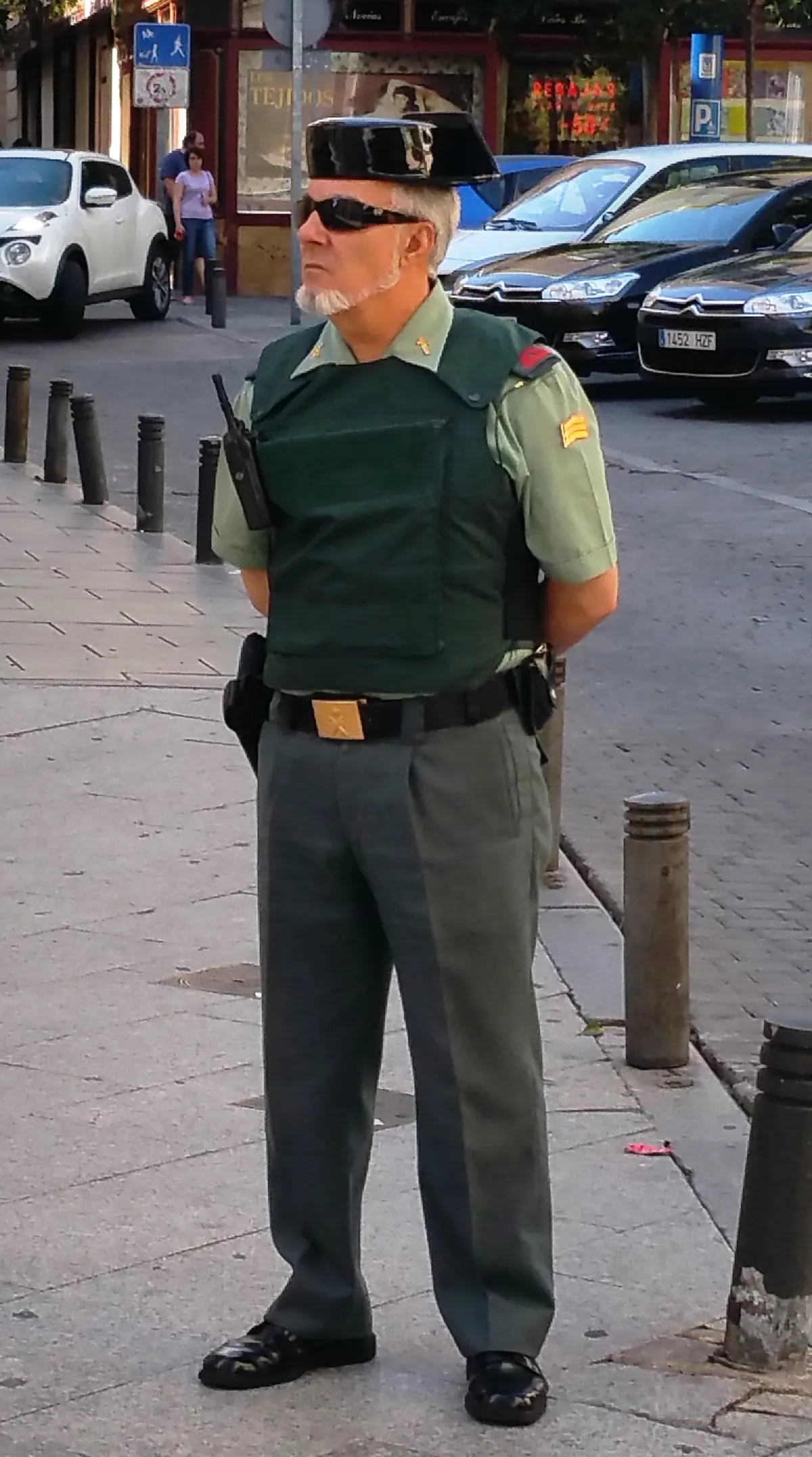
The Spanish Army carried the CETME Model B from 1957 and the Model C from 1964 as its standard infantry rifle for more than two decades combined.32 The Guardia Civil, Spain's national gendarmerie, used the Model C for extended service and later fielded the 5.56mm Model LC after its 1984 adoption, but budget pressure meant the older 7.62mm rifles were never fully retired even as the Guardia Civil transitioned toward the Heckler & Koch G36 starting in 1999. In 2019, Model C rifles dating from the 1960s were reissued to Guardia Civil units in northern Spain because of equipment shortages, an episode that drew public surprise and criticism from the Unión de Guardias Civiles union over handing a six-decade-old rifle design to active police officers.33
From a State Institute to Santa Bárbara Sistemas and General Dynamics
CETME itself began in 1949 as a state research institute created by Spain's National Institute of Industry, with rifles actually built at separate state arms factories at Oviedo and elsewhere.34 In 1960, Spain's military-owned arms plants were consolidated under a new state holding company, Empresa Nacional Santa Bárbara de Industrias Militares. CETME became a joint-stock company in its own right in 1981, renamed CETMESA, before General Dynamics acquired Santa Bárbara Sistemas from the Spanish government on 25 July 2001, folding it into General Dynamics European Land Systems. Santa Bárbara Sistemas today builds armored vehicles for the Spanish military as its main business, and CETME's small-arms legacy, including the related CETME Ameli light machine gun, survives as a minor product line still produced at the former Santa Bárbara plant in A Coruña.
Export Users From Equatorial Guinea to Bolivia
Beyond Spain, CETME rifles reached a scattered list of operators, generally through surplus transfers rather than large direct sales, including Lebanon, Nigeria, Chad, Mauritania, the Dominican Republic, Guatemala, Djibouti, and both the Democratic Republic of the Congo and the Republic of the Congo.35 Equatorial Guinea, a former Spanish colony that became independent on 12 October 1968, plausibly inherited CETME stock from its former colonial administration, though direct sourcing on the transfer itself is thin. Bolivia is the best-documented modern export case, acquiring roughly 1,500 surplus Model C rifles in 2003 to equip army reserve units.36
The CETME Against Its Own German Descendant, the G3
The G3 is, in the most literal sense, the CETME's own child. Heckler & Koch took the Spanish Model B design, reworked its bolt and extraction system for full-power NATO ammunition, and built it in far greater numbers than Spain ever did, more than 8 million rifles across roughly 50 countries against a Spanish parent design whose total production figures were never centrally tallied.37 Mechanically the two rifles share the same roller-delayed blowback action and fluted chamber, and a G3 armorer would recognize a CETME's internals immediately. The practical difference is chambering history rather than mechanism. The CETME line spent most of its life firing a reduced-power cartridge purpose-built for controllable automatic fire, while the G3 was full-power NATO from its first day of service, a divergence that shaped how each rifle handled on automatic fire and how each was perceived by the armies that adopted it.
| CETME Model C | Heckler & Koch G3 | |
|---|---|---|
| Action | Roller-delayed blowback | Roller-delayed blowback |
| Cartridge | 7.62x51mm NATO | 7.62x51mm NATO |
| Weight (empty) | approx. 4.5 kg38 | 4.38 kg39 |
| Countries fielded | Spain and a handful of export users | Roughly 50 nations |
The CETME/G3 Family Against the FN FAL
Few rifle rivalries of the era were as closely contested as the one between the G3 and the Belgian FN FAL, and the CETME sits at the root of that contest even though it was the G3, not the CETME itself, that did the actual competing.40 Both rifle families entered service in the same postwar decade, both were originally conceived and trialed in lighter chamberings before settling on 7.62x51mm NATO, and both spent the Cold War competing for the same export markets across Africa, the Middle East, and Latin America. The FAL ultimately reached wider adoption, described by some assessments as arming roughly 90 countries, but without the G3's cost and reliability advantages carved from the CETME's own design, the FAL might have gone on to dominate the West's Cold War rifle market far more completely than it actually did.
The CETME Model C itself appears under the in-game name C58 in Call of Duty, Black Ops Cold War, added in a 2021 seasonal update, complete with a reload animation that taps the charging handle in a nod to the rifle's G3 kinship.41 Most other CETME appearances in film and games, including several Call of Duty titles, actually depict the separate CETME Ameli light machine gun or the 5.56mm Model L rather than the original 7.62mm Model A/B/C battle rifle, so the wider CETME name carries more on-screen presence than the specific Model A/B/C line does.


How does the CETME rifle work? The CETME fires from a roller-delayed blowback action with no gas system. A two-piece bolt, braced by rollers seated in the barrel extension, delays the bolt carrier's rearward movement just long enough for chamber pressure to drop, while a fluted chamber floats the fired case away from the chamber wall to ease extraction.42
What are the CETME rifle's specifications? The definitive Model C weighs about 4.5 kilograms empty, fires 7.62x51mm NATO ammunition from a 20-round detachable box magazine, cycles at roughly 600 rounds per minute on automatic fire, and uses a 475mm barrel with iron sights out to about 600 meters of effective range.43
Is the CETME rifle still in service? Spain's own frontline army moved to the 5.56mm Model L and later rifles decades ago, but Model C rifles remained in Guardia Civil reserve use as recently as 2019, and several export users, including Chad, Mauritania, and Bolivia, are believed to still hold the rifle in active or reserve inventories.44
How does the CETME compare to the H&K G3? They share the same roller-delayed blowback mechanism and fluted chamber, since the G3 was directly developed from the CETME design, but the G3 was built from the start for full-power NATO ammunition and was manufactured in far greater numbers, reaching roughly 50 countries against the CETME's much smaller export footprint.45
What did a CETME rifle cost compared to rivals like the FAL? No consistent historical unit-cost figure survives across CETME's production run, but its state-institute origin and comparatively small production scale meant it never achieved the same economies of scale as the G3, which was explicitly engineered with a cheaper, mass-producible stamped-steel receiver for large-scale NATO-era export.46
- "CETME", Wikipedia — en.wikipedia.org ↩
- "Roller-delayed blowback", Wikipedia — en.wikipedia.org ↩
- "CETME", Wikipedia — en.wikipedia.org ↩
- "Heckler & Koch G3", Wikipedia — en.wikipedia.org ↩
- "CETME Model C", Modern Firearms — modernfirearms.net ↩
- "Roller-delayed blowback", Wikipedia — en.wikipedia.org ↩
- "CETME", Wikipedia — en.wikipedia.org ↩
- "CETME", Wikipedia — en.wikipedia.org ↩
- "CETME Model A/B/C", Modern Firearms — modernfirearms.net ↩
- "7.62x51mm CETME", Cartridge Collectors Reference — cartridgecollector.net ↩
- "CETME", Wikipedia — en.wikipedia.org ↩
- "CETME Model A/B/C", Modern Firearms — modernfirearms.net ↩
- "Sturmgewehr 45", Wikipedia — en.wikipedia.org ↩
- "Sturmgewehr 45", Wikipedia — en.wikipedia.org ↩
- "Sturmgewehr 45", Wikipedia — en.wikipedia.org ↩
- "CETME", Wikipedia — en.wikipedia.org ↩
- "Ludwig Vorgrimler", Forgotten Weapons — forgottenweapons.com ↩
- "CETME", Wikipedia — en.wikipedia.org ↩
- "Heckler & Koch G3", Wikipedia — en.wikipedia.org ↩
- "Heckler & Koch G3", Wikipedia — en.wikipedia.org ↩
- "Heckler & Koch G3", Wikipedia — en.wikipedia.org ↩
- "Heckler & Koch G3", Wikipedia — en.wikipedia.org ↩
- "Ludwig Vorgrimler", Forgotten Weapons — forgottenweapons.com ↩
- "Ifni War", Wikipedia — en.wikipedia.org ↩
- "Western Sahara War", Wikipedia — en.wikipedia.org ↩
- "CETME", Wikipedia — en.wikipedia.org ↩
- "CETME", Wikipedia — en.wikipedia.org ↩
- "CETME", Wikipedia — en.wikipedia.org ↩
- "CETME Model L", Wikipedia — en.wikipedia.org ↩
- "CETME", Wikipedia — en.wikipedia.org ↩
- "Century Arms C308", Century Arms — centuryarms.com ↩
- "CETME", Wikipedia — en.wikipedia.org ↩
- "La Guardia Civil recupera fusiles CETME de los años 60 por falta de material", El Diario — eldiario.es ↩
- "CETME", Wikipedia — en.wikipedia.org ↩
- "CETME", Wikipedia — en.wikipedia.org ↩
- "CETME", Wikipedia — en.wikipedia.org ↩
- "Heckler & Koch G3", Wikipedia — en.wikipedia.org ↩
- "CETME Model A/B/C", Modern Firearms — modernfirearms.net ↩
- "Heckler & Koch G3", Modern Firearms — modernfirearms.net ↩
- "G3 vs FAL: Comparing Cold War Battle Rifles", Small Arms Review — smallarmsreview.com ↩
- "CETME C58", Call of Duty Wiki — callofduty.fandom.com ↩
- "Roller-delayed blowback", Wikipedia — en.wikipedia.org ↩
- "CETME Model A/B/C", Modern Firearms — modernfirearms.net ↩
- "La Guardia Civil recupera fusiles CETME de los años 60 por falta de material", El Diario — eldiario.es ↩
- "Heckler & Koch G3", Wikipedia — en.wikipedia.org ↩
- "G3 vs FAL: Comparing Cold War Battle Rifles", Small Arms Review — smallarmsreview.com ↩