



The Shahed 107 is a small, piston-engined Iranian loitering munition that combines a live video feed with an explosive warhead, positioned by its makers as a scout-and-strike system rather than a pure reconnaissance drone or a mass-saturation weapon like the Shahed 136. It was first described publicly in January 2024, when an anonymous security source told Sky News that Iran had offered a batch of the type to Russia.1 The Islamic Revolutionary Guard Corps (IRGC) Aerospace Force did not put a face to the name until June 16, 2025, when it formally unveiled the Shahed 107 during the twelve-day war with Israel.2
- combined reconnaissance and strike role in one airframe
- small radar and infrared signature relative to jet-powered cruise missiles
- anti-jamming CRPA antenna and inertial backup navigation
- cheap Chinese commercial engine keeps unit cost down
- flexible launch options (catapult, rocket booster, wheeled trolley)
- real range and payload figures fall well short of Iranian claims
- warhead (roughly 8 to 15 kg) is too small to reliably destroy hardened targets
- slow cruise speed leaves it vulnerable to short-range air defenses and interceptor drones
- publicly documented combat record is still thin compared to the Shahed 131 and 136
Confusion between the Shahed 107 and its more famous relatives is common, and understandable. The Shahed 136 is a delta-wing, long-range saturation drone with a far larger warhead, while the Shahed 107 is shorter, lighter, and built around a single mid-size warhead rather than swarms of cheap airframes. Independent examinations of downed and recovered examples describe the Shahed 107 as an armed loitering munition, not a reconnaissance-only platform, though its onboard camera and real-time video link do give it a genuine intelligence-gathering role on the way to a target.3 Some accounts frame it as sitting between small first-person-view kamikaze drones and heavier cruise-missile-class weapons, a niche the Shahed family had not filled before.4
Development is credited to Shahed Aviation Industries, the IRGC-linked design bureau behind the wider Shahed drone lineup, with production tied to Iran's broader unmanned-systems industrial base, which also includes the Iran Aircraft Manufacturing Industrial Company (HESA), the manufacturer publicly associated with the Shahed 131 and Shahed 136 lines.5 The Shahed 107 belongs to Iran's wider family of loitering munitions, a category built around cheap, expendable airframes that fly to a target area, loiter, and strike rather than being fired on a fixed ballistic path.
The Shahed 107's dimensions are themselves a point of dispute. The version described to Sky News in January 2024 and shown at the June 2025 IRGC unveiling was said to measure roughly 2.5 meters long with a 3-meter wingspan and a claimed range of up to 1,500 kilometers.1,2 But Ukrainian intelligence and volunteer drone-hunting units that examined airframes recovered from the battlefield in late 2025 describe a noticeably smaller aircraft, about 1.6 meters long with a 2.5-meter wingspan and a total launch weight of around 26 kilograms, more in line with the earlier Shahed 101 than with the drone Iran publicly unveiled.6,7 Whether this reflects two distinct production batches, a scaled-down export variant, or simple confusion between related Shahed types in open-source reporting has not been resolved.
Search interest in phrases like Shahed 107 specifications, Shahed 107 vs Shahed 136, and is the Shahed 107 armed has grown since the drone started turning up in Ukraine in late 2025, reflecting how much of its profile is still being pieced together from wreckage rather than official data sheets.
The Shahed 107 is built around a twin-cylinder, two-stroke DLE 111 gasoline engine, a commercially available Chinese-made unit from Mile Haoxiang Technology Co., normally sold for radio-controlled aircraft and rated at roughly 11 horsepower (about 8 kilowatts).6 Using an off-the-shelf hobbyist engine rather than a bespoke military powerplant is a recurring theme across the Shahed family and keeps production costs and lead times down, a point Ukrainian analysts have highlighted when tracing the drone's component supply chain.6
- İHA Sınıfıloitering munition
- Kategori (MALE/HALE/Taktik/Mikro)loitering munitions
- Hizmete Giriş Yılı2025
- Birincil Görevreconnaissance strike loitering munition
- HizmetteEvet
Structurally the airframe uses a carbon-fiber-composite fuselage with aluminum-alloy internal elements, a rectangular high-mounted wing, and an X-shaped tail assembly that keeps the drone stable at low speed without the control complexity of a conventional tail.7 A Pitot tube ahead of the nose feeds airspeed data to a standard flight control unit (FCU) autopilot, which drives the elevon servos and throttle. Navigation blends an inertial measurement unit, similar in concept to Iran's Sadra system, with GNSS satellite positioning and a four-element controlled-reception-pattern antenna (CRPA) intended to resist jamming, a feature increasingly common on Iranian-designed drones as Russian and Ukrainian electronic warfare units have grown more effective against GPS-guided threats.6
- Uzunluk1,6 m
- Kanat Açıklığı2,5 m
- Maks Kalkış Ağırlığı26 kg
- Düşük GörünürlükHayır
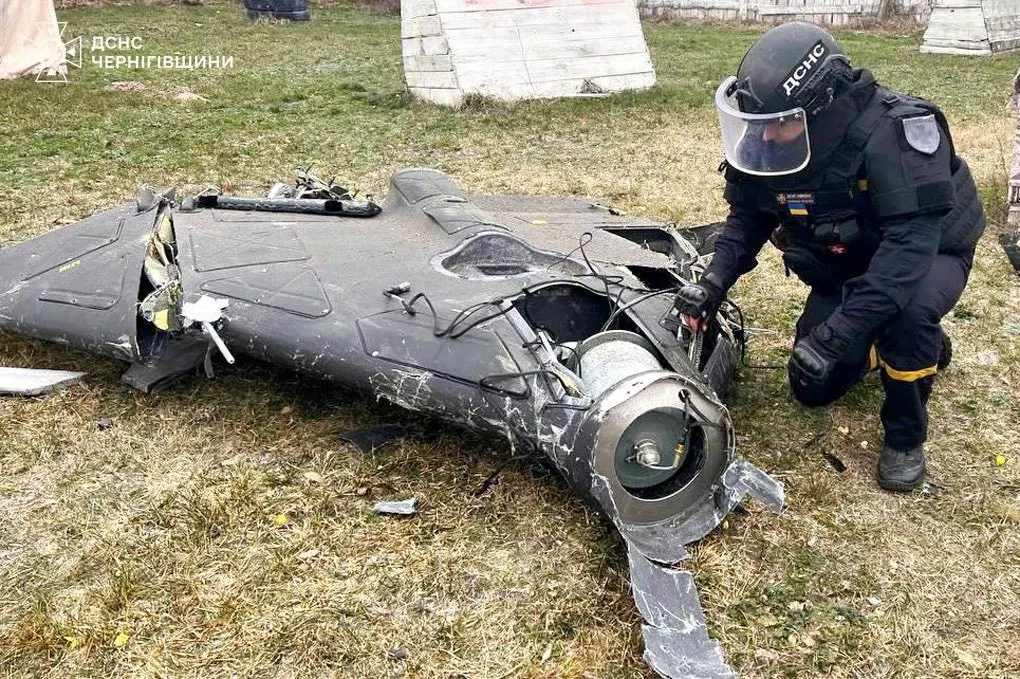
Reported cruise speed is around 120 km/h with a service ceiling near 3,000 meters.4 The warhead is the most contested figure in the whole profile. Ukraine's GUR describes a 15-kilogram cumulative fragmentation high-explosive charge, while several press assessments of drones examined after being downed put the figure closer to 8 to 9 kilograms.6,4 Either way, the Shahed 107's warhead is far smaller than the Shahed 136's 40 to 90 kilogram payload, which is the clearest evidence that the two drones are built for different jobs, precision strikes on a single high-value target rather than saturating an air defense network with overwhelming numbers.8
- Motor Tipipiston engine
- Motor Sayısı1
- Motor Gücü8 kW
- Elektrikli TahrikHayır
Range claims show a similar spread. Iranian sources and the June 2025 unveiling cited up to 1,500 kilometers, but Ukrainian defense intelligence, working from an examined airframe's 28-liter fuel tank and known engine fuel consumption, calculated an operational range closer to 300 kilometers, with other open-source estimates spanning as high as 600 to 800 kilometers depending on flight profile and payload.1,6,9 That is a wide enough gap that any figure should be treated as provisional until more airframes are recovered and tested.
- Seyir Hızı120 km/sa
- Hizmet Tavanı3.000 m
- Menzil300 km
- Azami Faydalı Yük15 kg
Launch methods described in reporting include a vehicle-mounted catapult, a solid-fuel rocket booster, and a wheeled ground trolley for a short runway roll before the trolley detaches, giving operators flexibility depending on available infrastructure.2 The Shahed 107 is armed in the strict sense that it carries and delivers an explosive warhead to end its flight, and its live video downlink is used for terminal targeting and battle damage assessment rather than standing in as a substitute for the warhead. That combination, cheap airframe, real explosive payload, onboard camera, is the core design idea behind the whole loitering-munition category the Shahed 107 belongs to.
- EO/IR SensörEvet
- SAR / GMTI RadarHayır
- SIGINT Faydalı YüküHayır
- Lazer İşaretleyiciHayır
- SilahlıEvet
- Silah Yükü15 kg
- Silah Tiplerihigh explosive fragmentation warhead
- Havadan Yere FüzelerHayır
- Kontrol Tipiinertial navigation with GNSS
- Uydu (BLOS) BağlantısıHayır
- Otonom KabiliyetliEvet
- Sürü KabiliyetliHayır
- Üretim Başlangıcı2024
- Operasyonel Durumin service
Iran's Shahed drone program dates back over a decade, built around a series of piston-engined, GPS/INS-guided airframes that graduated from small reconnaissance types into armed one-way-attack weapons. The Shahed 107 sits late in that lineage. It was first reported publicly in January 2024, when a security source told Sky News that Tehran had offered Moscow a small batch, reportedly valued at more than 2 million US dollars, for potential use against Ukrainian HIMARS rocket artillery, a claim Iranian officials denied at the time.1
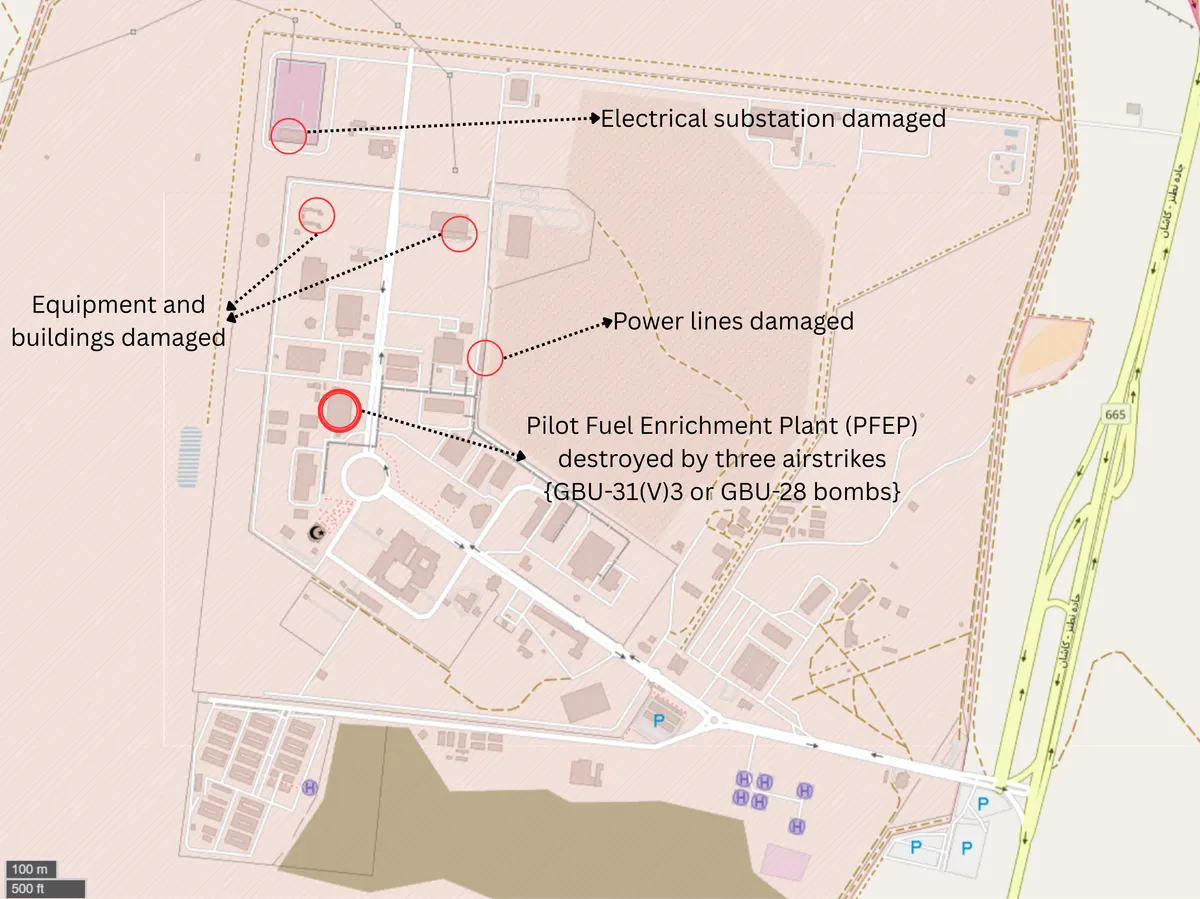
The IRGC's June 2025 unveiling came in the middle of a fast-moving war. Israel had opened Operation Rising Lion against Iranian nuclear, missile, and drone infrastructure on June 13, and Iran replied with a retaliatory missile and drone campaign it named Operation True Promise III.2 Iranian state media described the Shahed 107 as intended for deep strikes on high-value targets such as command posts, radar sites, and logistics nodes rather than for mass barrages, and released disputed footage said to show the type approaching an Israeli Arrow-3 interceptor battery, though the authenticity of that video has not been independently confirmed.2
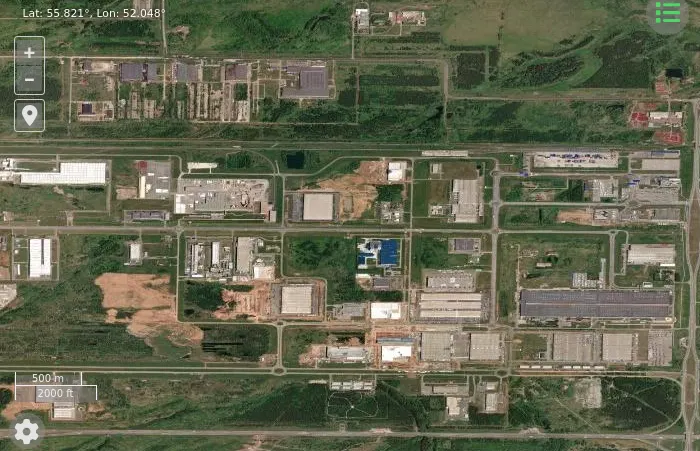
By late 2025 the Shahed 107 had appeared far from Iranian or Israeli airspace. Ukraine's 47th Separate Mechanised Brigade Magura and the volunteer group Wild Hornets, using a STING interceptor drone fitted with a thermal camera, claimed the first confirmed downing of a Shahed 107 on December 30, 2025.7 Analysts had already flagged the type's appearance on the eastern front weeks earlier, and Ukrainian sources describe examples recovered in Russian-controlled territory as carrying Iranian manufacturing markings alongside evidence that Russia had begun assembling its own copies at the Alabuga special economic zone, the same site that produces Russia's Geran-2 version of the Shahed 136.7
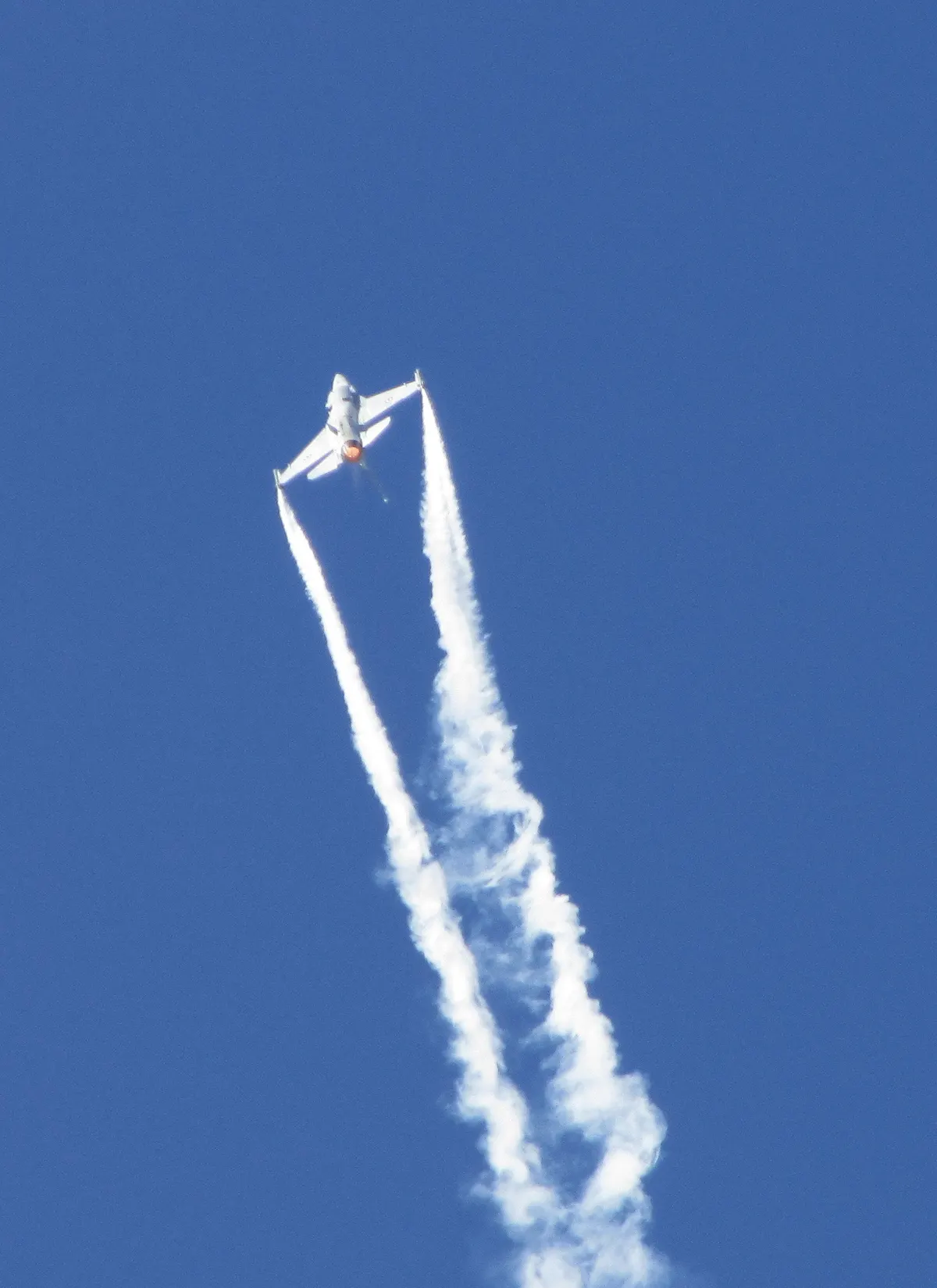
In March 2026, the United Arab Emirates Ministry of Defence disclosed that its air force had intercepted a mix of Iranian Shahed 136 and Shahed 107 drones over four days of attacks, using F-16 Block 60 Desert Falcon and Mirage 2000-9 fighters, part of the wider regional escalation now referred to as the 2026 Iran War.9 Analysts noted that the Shahed 107's smaller size and shorter flight profile made it a harder intercept than the larger Shahed 136, despite carrying a lighter warhead.9
The clearest documented combat use of the Shahed 107 is by Russia against Ukraine, as part of the full-scale Russo-Ukrainian War. Ukrainian sources describe it as a mid-tier addition to Russia's drone arsenal, sitting between small first-person-view kamikaze drones and heavier Shahed 136-class weapons, intended for more selective strikes on logistics and infrastructure rather than mass saturation attacks.4,7
Iran's own claimed use of the Shahed 107 came during Operation True Promise III, the retaliatory campaign it launched against Israel in June 2025 after Israel's strikes on Iranian nuclear and military sites.2 That episode, along with the broader missile and drone exchanges between the two countries, forms part of the escalation that observers have come to call the 2026 Iran War, during which the United Arab Emirates also reported intercepting Shahed 107 drones as part of the UAE's involvement in that wider conflict.9
One question this article deliberately leaves open is Houthi use in Yemen. Iran-aligned Houthi forces are documented operators of the related Shahed 131, and open-source reporting has drawn visual and technical comparisons between the Shahed 107 and smaller Houthi-operated types such as the Khatif-2, but no source found in researching this article confirms that the Houthis themselves have fielded the Shahed 107 specifically.4 Given how recently the type entered service and how much of its combat record so far traces back to direct IRGC and Russian use, treating a Houthi connection as confirmed would be premature.
Public reporting has not identified named sub-variants of the Shahed 107 comparable to, for example, the Shahed 136 to Geran-2 licensing relationship. The clearest variation documented so far is the dimensional and performance gap between the airframe described at Iran's June 2025 unveiling (2.5 meter length, 3 meter wingspan, claimed 1,500 kilometer range) and the smaller airframes recovered from the Ukrainian front in late 2025 (1.6 meter length, 2.5 meter wingspan, roughly 26 kilogram launch weight), which several analysts treat as evidence of a scaled-down production or export configuration rather than a formally named variant.1,2,6,7
Analysts at Defense Express have also noted that the Shahed 107 appears to build on the smaller Shahed 101, sharing its general layout and piston propulsion while adding a larger warhead and improved navigation hardware, which suggests an evolutionary rather than a clean-sheet design process within Iran's Shahed family.7


Iran operates the Shahed 107 through the IRGC Aerospace Force, which formally unveiled the type in June 2025 and has claimed to have used it operationally against Israel.2 Russia is the only other confirmed operator, having received early units as part of a reported 2024 transfer deal and having deployed the type on the Ukrainian front by late 2025, alongside evidence of local assembly inside Russia.1,7
No other country or non-state group has been confirmed as an operator of the Shahed 107 specifically in the sourcing available for this article, in contrast to the broader Shahed family, where the Shahed 131 and Shahed 136 are both documented in Houthi hands in Yemen as well as with Iran and Russia.
The Shahed 107's closest point of comparison inside its own family is not the famous Shahed 136 but the smaller Shahed 101, which shares a broadly similar airframe size and piston propulsion. Where the two diverge is payload and role. The Shahed 101 in Iranian and Ukrainian assessments carries a smaller guided munition or anti-radiation payload and leans more heavily on its electro-optical sensor, while the Shahed 107 trades some of that sensor emphasis for a larger explosive warhead, shifting it further toward a strike role even though both aircraft retain a genuine reconnaissance function through their live video downlinks.
Against the Shahed 136, the difference in intent is stark. The Shahed 136 is a delta-wing airframe built for mass, cheap, and expendable in numbers large enough to overwhelm air defenses, carrying a 40 to 90 kilogram warhead over a range Iranian and Ukrainian sources put at roughly 2,000 to 2,500 kilometers.8 The Shahed 107 is smaller, quieter, and armed with a warhead roughly a fifth the size, better suited to a single precision strike on a specific building, vehicle, or air-defense node than to blanketing a city's power grid. A useful way to think about the split is that the Shahed 136 answers the question of how many drones can be sent at once, while the Shahed 107 answers a different question, how to hit one specific target without giving away where the shot came from.
| Spec | Shahed 107 | Shahed 136 |
|---|---|---|
| Length | ~1.6-2.5 m | 3.5 m |
| Warhead | 8-15 kg | 40-90 kg |
| Claimed range | 300-1,500 km | ~2,000-2,500 km |
| Engine | DLE 111 piston | MD-550 piston |
| Sensor | EO camera, live video | none confirmed |
Compared to the Shahed 131, a smaller and stealthier delta-wing loitering munition already in wide Houthi, Iranian, and Russian use, the Shahed 107's conventional wing-and-tail layout is easier and cheaper to build but gives up the low radar signature that makes the Shahed 131 harder to detect on approach. The Shahed 107 answers that tradeoff with better electronic counter-countermeasures on the navigation side, its CRPA antenna and inertial backup, at the cost of a larger, more conventional airframe that is comparatively easy for a thermal-imaging interceptor drone or a short-range air-defense system to pick up, as Ukraine's December 2025 downing demonstrated.
Is the Shahed 107 an armed drone or a reconnaissance drone? It is armed. Airframes examined by Ukrainian military intelligence and shot down over the Russo-Ukrainian front carried a high-explosive fragmentation warhead reported at between 8 and 15 kilograms, and the drone has been used operationally as a one-way-attack weapon by both Iran and Russia. Its onboard camera and live video feed give it a real reconnaissance function on the way to a target, but that does not make it an unarmed ISR platform.6,7
What is the Shahed 107's range? Iran has claimed up to 1,500 kilometers, but the only independently examined airframe suggests an operational range closer to 300 kilometers based on its 28-liter fuel tank, with other open-source estimates as high as 600 to 800 kilometers depending on flight profile.1,6,9
How does the Shahed 107 differ from the Shahed 136? The Shahed 136 is a larger, delta-wing saturation weapon built to be launched in large batches with a 40 to 90 kilogram warhead. The Shahed 107 is smaller, carries a much lighter warhead (8-15 kg), and is positioned for more selective strikes on individual high-value targets rather than mass attacks.8
Is the Shahed 107 still in service? Yes. It remains in active use by Iran's IRGC Aerospace Force and by Russian forces on the Ukrainian front as of the most recent reporting available, and examples have continued to be intercepted by regional air forces into 2026.7,9
Who manufactures the Shahed 107? Development is attributed to Shahed Aviation Industries, the IRGC-linked design bureau behind the wider Shahed drone family, with production support from Iran's broader state aerospace industry.5
- "Iran Unveils Shahed-107 Attack Drone With 1,500 km Range, Likely Already Supplied to Russia", UNITED24 Media — united24media.com ↩
- "Iran strengthens deep strike operations on high-value targets with new Shahed-107 suicide drone", Army Recognition — armyrecognition.com ↩
- "Shahed 107", Wikipedia — en.wikipedia.org ↩
- "Russia Unleashes Shahed-107! Ukraine's Interceptor Drone 'Stings' Brand New Iranian Kamikaze UAV", Eurasian Times — eurasiantimes.com ↩
- "Shahed drones", Wikipedia — en.wikipedia.org ↩
- "Shahed-107 UAV", Ukrainian Defense Intelligence (GUR) — war-sanctions.gur.gov.ua ↩
- "Inside the Shahed-107 Drone: Ukraine Maps Out Iran's Latest Kamikaze UAV", Defense Express — en.defence-ua.com ↩
- "HESA Shahed 136", Wikipedia — en.wikipedia.org ↩
- "UAE Reveals Combat Interception of Iranian Shahed-136 and Shahed-107 One-Way Attack Drones", Army Recognition — armyrecognition.com ↩