


In November 2009 the Israel Defense Forces picked the IWI Tavor X95 to become its future standard infantry rifle, replacing the M4 carbine and M16 across most combat units.1 The X95 is a compact, bullpup assault rifle built by Israel Weapon Industries (IWI), chambered primarily in 5.56x45mm NATO and sold with conversion kits for 9mm and .300 AAC Blackout.2 It is the compact, extensively redesigned sibling of the original TAR-21 and the later 7.62mm Tavor 7, and it is the version most people mean when they say simply Tavor today, both inside Israel and in the export market.1
- full rifle-length barrel in a carbine-sized package
- fully ambidextrous controls, quick side-swap ejection
- multi-caliber conversion kits (9mm, .300 AAC Blackout, 5.45x39mm)
- combat-proven since 2009, wide export base
- trigger pull sits behind AR-15-pattern rifles for precision work
- reach to the magazine release/controls is criticized by some larger-handed shooters
- balance point sits rearward, unfamiliar to shooters used to conventional rifles
The X95 is often called the Micro Tavor, a name IWI itself used for years, referring to its origins as a shortened offshoot of the earlier TAR-21.3 Israel remains the weapon's largest single operator through the IDF, but the rifle has also been adopted, in whole or through locally produced variants, by India, Ukraine, Colombia, Azerbaijan, Georgia and more than a dozen other states.4 Design work on the X95 ran from 2003 to 2009, a six-year redesign effort that followed an earlier, abandoned attempt at a super-compact Tavor variant.3 That history, not just the rifle's specifications, is what separates the X95 from the older TAR-21 it eventually replaced across most IDF units.
The X95 weighs 3.3kg empty and 3.62kg loaded with a 30-round magazine, short enough at 580mm overall (with the standard 330mm barrel) to nearly match a submachine gun's footprint while retaining a rifle-length barrel and full-power ballistics.2 That combination, a full 330mm (13in) barrel packed into a receiver only 580mm long, is the entire point of the bullpup layout, and it is roughly 150 to 200mm shorter overall than a conventional carbine with the same barrel length.5 Two longer-barrel variants exist alongside the standard 330mm gun, a 380mm (15in) version the IDF began fielding to some infantry units from late 2014 with a lighter trigger pull, and a 419mm (16.5in) rifle-length version aimed more at export and commercial buyers.6
- İlk Üretim Yılı2009
- Hizmete Giriş Yılı2009
- TasarımcıIsrael Weapon Industries
- Ağırlık (Boş)3,3 kg
- Ağırlık (Yüklü)3,62 kg
- Halen HizmetteEvet
- Önemli Kullanıcılarİsrail, Hindistan, Ukrayna, Azerbaycan, Kolombiya, Kıbrıs, Gürcistan, Honduras, Angola, Tayland
The rifle runs a gas-operated, gas-piston-operated long-stroke system derived from the same Kalashnikov-pattern operating rod used in the earlier TAR-21, feeding from detachable STANAG magazines with a rated cyclic rate commonly cited around 750 rounds per minute, though IWI and independent sources have listed figures as high as 900 to 950 depending on ammunition and gas setting.2,7 Fire control offers safe, semi-automatic, a three-round burst option and full automatic, controlled through a select-fire selector that, like every other control on the rifle, is fully ambidextrous.2
- Fişek5.56×45mm NATO, .300 AAC Blackout, 5.45×39mm
- Çap5,56 mm
- Kovan Uzunluğu45 mm
- Çap Sınıfıorta güçlü
- Mermi Ağırlığı4 g
- Kenar AteşlemeliHayır
- Kovansız MühimmatHayır
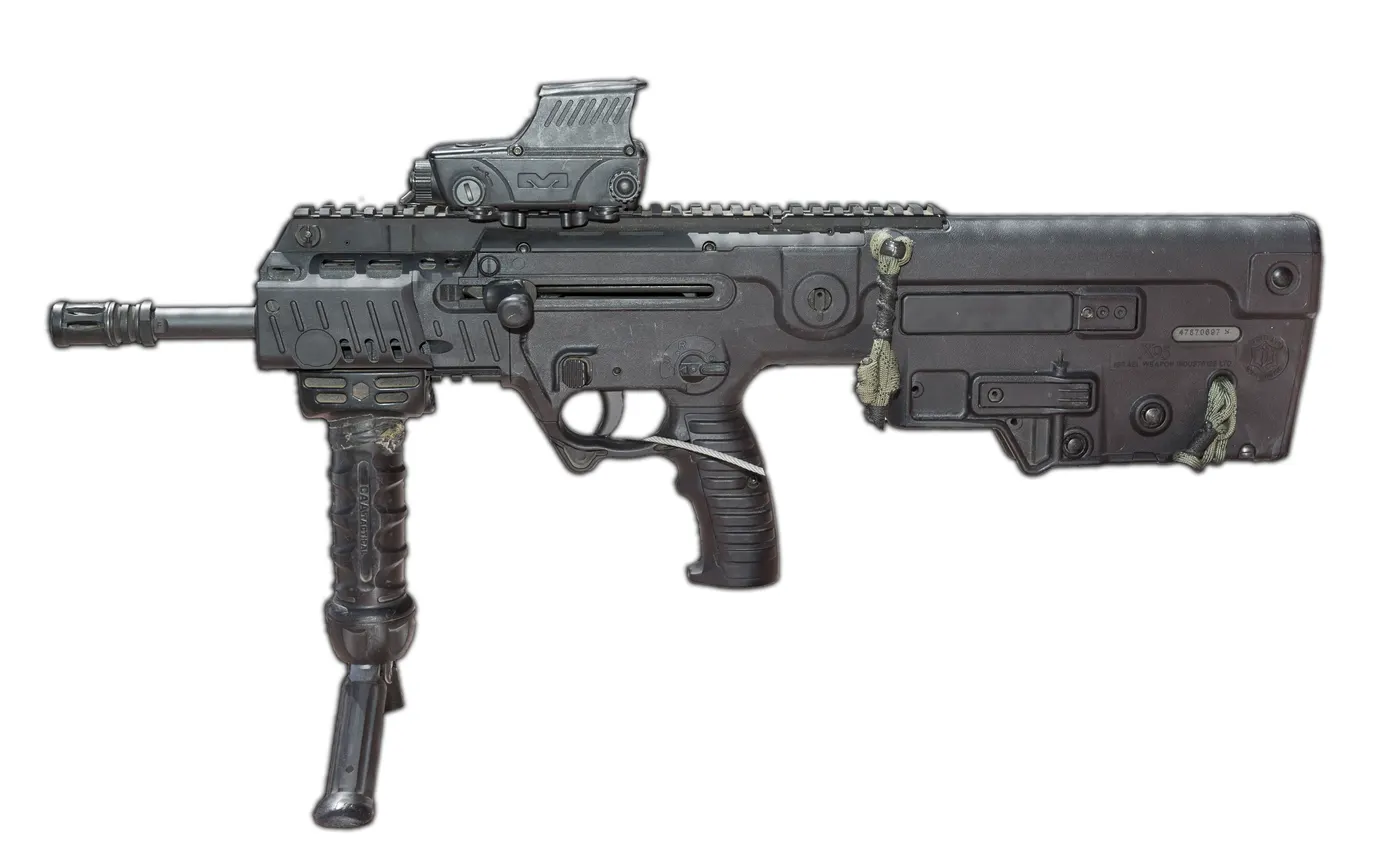
The defining ergonomic change from the TAR-21 is the charging handle, moved from a position near the muzzle on the older rifle to a spot close to the pistol grip on the X95, so a shooter can rack the bolt without breaking their firing grip or reaching forward past the handguard.3 The magazine release moved too, from a rear-mounted lever on the TAR-21 to a button positioned in front of the trigger guard in an AR-15-like location, and the buttstock was reshaped for a more consistent cheek weld.3 IWI redesigned the rifle's threaded barrel muzzle, iron sights and top rail over the production run, and by 2015 the rounded early handguard had given way to a monolithic flattop optic rail that runs the full length of the receiver on later production and aftermarket-upgraded rifles.8 Every control location, the ejection port itself, and the safety selector can be switched to the shooter's other side in the field, a feature carried over from the TAR-21 and shared with the Tavor 7.2
- Mekanizma TipiGazlı
- Atış Modlarıemniyet, yarı otomatik, seri, tam otomatik
- Seçmeli AtışEvet
- Besleme SistemiÇıkarılabilir Şarjör
- Şarjör Kapasitesi30
- Teorik Atış Hızı750
- Tetik Tipitek kademeli
- Emniyet Tipiseçici kol
The X95's most distinctive commercial feature is its factory-supported caliber conversion. A dedicated kit swaps the rifle to fire 9x19mm from Colt-pattern submachine gun magazines using a straight blowback bolt, while a separate .300 AAC Blackout kit reuses the 5.56mm bolt carrier with a different barrel and adjustable gas block, letting the same lower receiver group run three distinct cartridges depending on the mission.9 IWI briefly sold a fourth chambering, a 5.45x39mm variant called the X95-R aimed at markets that had standardized on Soviet-pattern ammunition, before folding that option back into the standard product line.2 IWI US currently sells complete 5.56mm rifles with 16.5in or 18.5in barrels, alongside a 13in short-barreled configuration for law-enforcement and NFA buyers, priced around $1,999 to $2,049 MSRP as of the most recent published pricing.9
- Etkili Menzil (nokta)550 m
- Etkili Menzil (alan)800 m
- Azami Menzil3.600 m
- Namlu Uzunluğu330 mm
- Yiv Adımı1:7
- Nişangah TipiMekanik nişangah veya optikler için Picatinny ray
- Optik RayıEvet
- Açık NişangahEvet
- Dişli NamluEvet
- Toplam Uzunluk580 mm
- Gövde Malzemesi (Receiver)polimer
- Kabza/Dipçik Malzemesipolimer
- Katlanır / Toplanır DipçikHayır
- Bullpup DüzeniEvet
- Çift Yönlü KumandalarEvet
- Modülerlik9mm hafif makineli tabanca için dönüşüm kiti, .300 AAC Blackout, bombaatar montajı
- Susturucuya HazırEvet
- Süngü TakozuHayır
- Entegre BipodEvet
- Bombaatar KabiliyetliEvet
- Gaz PistonluEvet
- Üretim Başlangıcı2003
- Varyantlar10
The X95's direct ancestor was not the TAR-21 fielded by the IDF from 2001, but a far more radical and short-lived project called the Micro Tavor, or MTAR-21, an extremely compact carbine barely 590mm (23.2in) long overall with a stub 330mm (13in) barrel, built on its own dedicated polymer chassis rather than a shortened TAR-21.3 Reports describe a small batch of that original MTAR-21 being issued to Mossad close-protection details for VIP security work, a low-visibility role suited to its extreme compactness.3
{{photo-req side=right q="Givati Brigade IDF recruits swearing in ceremony rifle" caption="IDF recruits of the Givati Brigade, the first unit to receive the X95 as its standard-issue rifle starting around 2013." alt="Israeli infantry recruits standing in formation with rifles"}}
IWI scrapped the original MTAR-21 concept in 2003, judging the tiny chassis too compromised on ergonomics and control layout for wider service, and launched a fresh internal project known as Tavor 2 to build a more practical short Tavor from the ground up.3 That project became the X95, refining the charging handle position, magazine release and stock shape described above over roughly six years of development before the IDF's November 2009 selection decision.1 Actual issue to troops trailed that decision by several years. The Israel Defense Forces began handing X95 rifles to combat recruits only from around 2013, starting with the Givati Brigade, and the changeover away from the older M4 and M16 across regular infantry continued in phases through the following decade.10
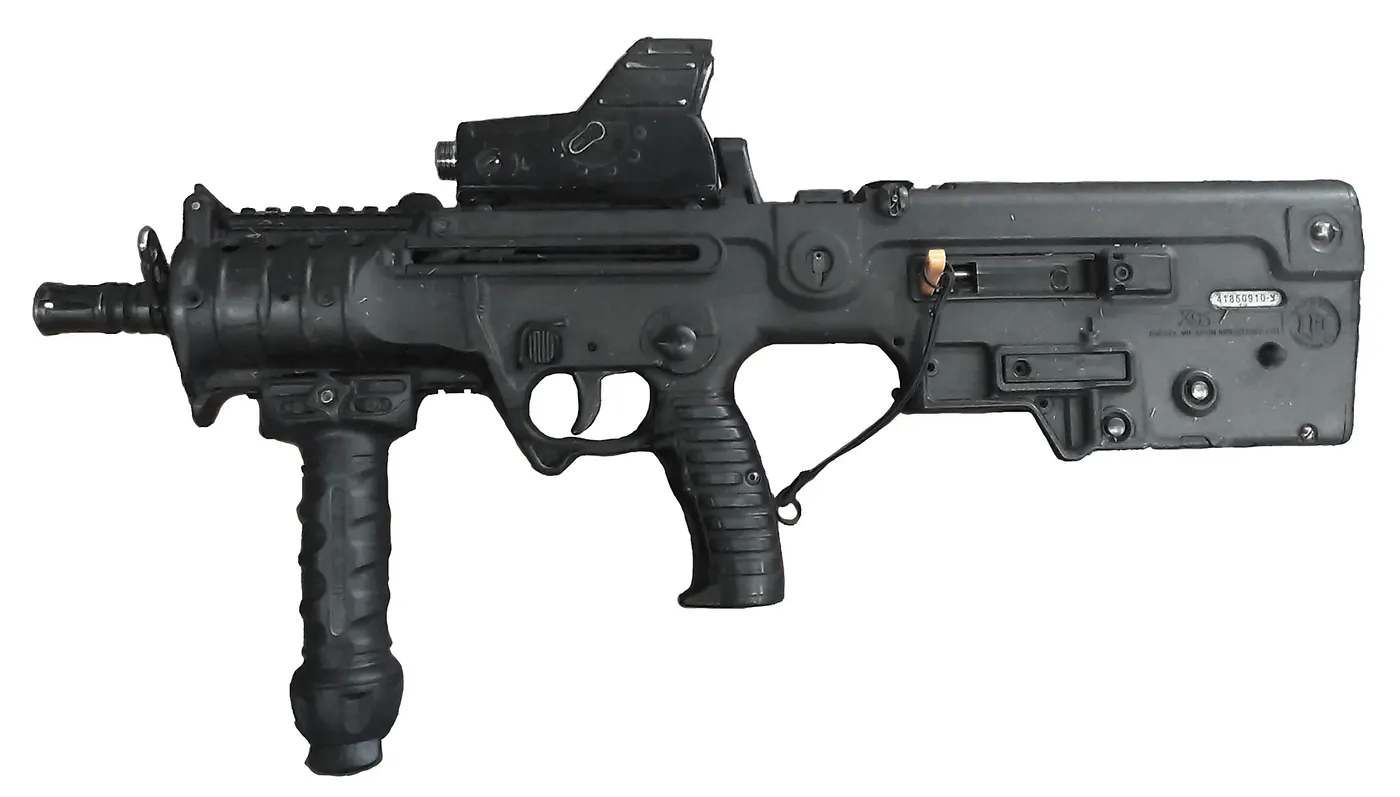
In 2014 the IDF announced a running upgrade, an X95 variant with a longer 380mm barrel and a lighter factory trigger pull, intended for infantry units that wanted more reach without giving up the bullpup's compact footprint.6 IWI kept refining the platform commercially through the 2010s, adding the monolithic flattop rail around 2015 and, in spring 2020, updating new-production 5.56mm rifles with the sturdier recoil spring and buffer assembly originally engineered for the harder-kicking .300 AAC Blackout chambering.2 That IDF-standard status was not permanent. Starting in September 2021, some IDF front-line units began transitioning to imported M4 carbines, with Micro Tavor rifles shifted toward reserve formations, a rebalancing driven partly by soldier feedback and partly by Israel's broader small-arms procurement strategy rather than any single documented failure of the X95 itself.11 IWI's newer, conventionally configured Carmel rifle is a parallel development effort rather than a direct X95 successor, aimed at a different segment of the same modernization program.12
{{photo-req side=left q="Gaza Strip aerial map border Israel" caption="A map of the Gaza Strip and the Israeli border area, the setting for much of the X95's early combat use after its 2009 selection." alt="Map showing the Gaza Strip and surrounding Israeli territory"}}
The X95 entered active IDF service in time to see use during the 2006 Gaza–Israel conflict and the Second Intifada era of urban and counter-insurgency operations, phases where IWI and IDF sources describe the earlier Tavor family's close-quarters handling as a selling point over the M16 and M4.1 Deployment volume grew substantially once the IDF's 2009 selection decision translated into fielded rifles from 2013 onward, and the X95 has since equipped IDF units across the range of Gaza and West Bank operations that followed.10
{{photo-req side=right q="IDF soldier Tavor X95 rifle patrol" caption="An Israeli infantry soldier carrying a Tavor X95, the rifle that became the IDF's standard-issue weapon starting in 2009." alt="Israeli soldier holding an IWI Tavor X95 bullpup rifle during a patrol"}}
Outside Israeli service, the clearest documented combat use is in Ukraine, where the National Guard of Ukraine fields the Fort-224, a licensed Ukrainian-made X95 derivative built domestically by RPC Fort under an earlier IWI licensing arrangement, alongside the related Fort-223 based on the 419mm X95.13 OSINT photography from the Russo-Ukrainian War has repeatedly documented Fort-22x series rifles in the hands of Ukrainian National Guard, army marksmen and units linked to the Azov Brigade, making Ukraine the clearest non-Israeli combat theater for the X95 pattern rifle since 2022.13
India's Central Reserve Police Force has fielded the X95 directly against insurgent and separatist groups in Kashmir since the early 2010s. CRPF commanders on record described the rifle as more effective than their older AKM-pattern weapons in that theater, citing its compact size, retained power and longer effective reach compared to the shorter-barreled AK variants they had been carrying.14 That Kashmir deployment, alongside the Gaza and West Bank operations described above and Ukraine's defensive use against the Russian invasion, makes the X95 one of the more combat-tested Western-aligned bullpup rifles in current service, spanning three distinct and unrelated conflict zones on three continents.
The core X95 lineup is organized by barrel length under IWI's own naming, the X95 330 (330mm/13in barrel, the original compact carbine), the X95 380 (380mm/15in, added for the IDF from 2014), and the X95 419 (419mm/16.5in, a rifle-length option favored by export and commercial customers).6 All three share the same receiver, controls and 30-round STANAG magazine compatibility, differing only in barrel length, weight and the resulting balance of compactness versus effective range.
The 9mm conversion, built around a straight blowback bolt firing from Colt-pattern submachine gun magazines, and the .300 AAC Blackout kit, which reuses the 5.56mm bolt carrier group with a dedicated barrel and adjustable gas system for both subsonic and supersonic loads, both let an operator reconfigure a single X95 lower for a different mission profile without a separate rifle.9 IWI also produced a limited 5.45x39mm-chambered variant, the X95-R, intended for customers whose existing ammunition stocks and logistics were built around the Soviet-legacy cartridge rather than 5.56mm NATO.2
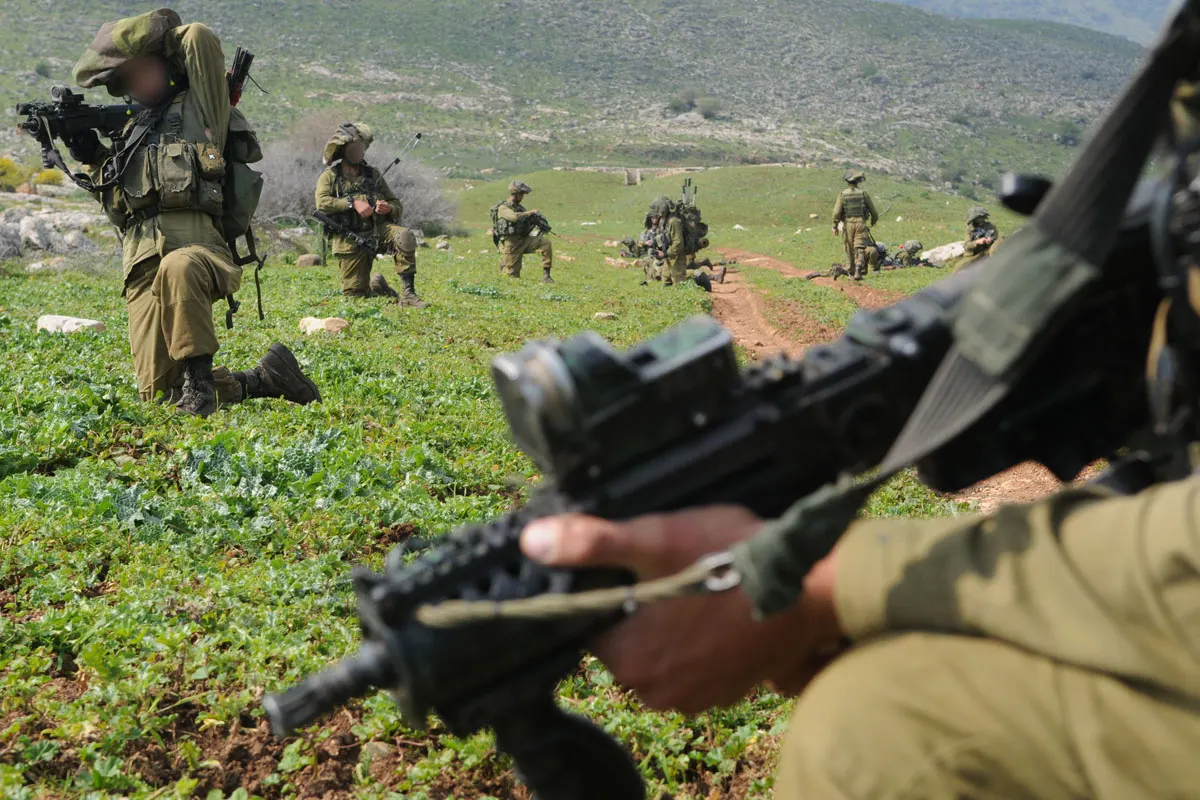
Licensed and derivative production extends the variant list further. India's Ordnance Factories Board agreed with IWI to build a locally produced X95 under the name Zittara, chambered for 5.56mm NATO, the Indian 5.56x30mm MINSAS round, or 9x19mm, though the program produced only limited prototype numbers and never reached full local-production status.15 Ukraine's RPC Fort built the Fort-223 and Fort-224 as domestically manufactured derivatives before Russia's 2022 invasion, giving Ukraine's National Guard and internal security services a locally sourced X95-pattern rifle independent of further Israeli export.13

 Hindistan
 Ukrayna
Israel remains the X95's anchor operator. The IDF's November 2009 selection made it the standard infantry rifle across most combat formations, with fielding to line units beginning around 2013 and continuing in phases through the 2010s, though front-line units began a partial shift back toward imported M4 carbines from September 2021, pushing more Micro Tavor rifles toward reserve brigades rather than retiring the platform outright.1,11
{{photo-req side=left q="CRPF soldier Kashmir patrol rifle" caption="An Indian Central Reserve Police Force trooper on patrol. The CRPF's 12,000-rifle order made India the X95's largest single export customer." alt="Indian paramilitary police officer on patrol carrying a rifle"}}
India's Central Reserve Police Force placed an order for 12,000 X95 rifles, which entered service from early 2011, with further batches reported afterward for CRPF units engaged in internal-security and counter-insurgency operations, principally in Kashmir.14 Ukraine's National Guard fields the domestically built Fort-224 derivative, Colombia's national police operate the X95 directly, and Azerbaijan's State Border Service and marine infantry, Georgia's security services, Cyprus, Honduras, Angola, Thailand, Indonesia, North Macedonia, Morocco (from around 2018), the Philippines and Senegal round out a customer list built mainly around police, border-security and special-operations units rather than mass conventional-army adoption.4
In the United States, the X95 is sold commercially through IWI US as a semi-automatic-only civilian rifle, assembled domestically in Harrisburg, Pennsylvania from a mix of Israeli-made and American-made parts to satisfy the US import-compliance requirements of 18 U.S.C. Section 922(r).16 That import-compliance rule is also why civilian X95 owners in the United States are directed to use only American-made magazines with their rifles, since an imported magazine could tip the parts count out of compliance.16 The commercial rifle is functionally distinct from the IDF's select-fire service weapon, most importantly lacking the burst and full-automatic settings, but it shares the same receiver architecture, caliber-conversion capability and control layout that define the military X95.
The Steyr AUG is the obvious reference point for the X95, since it is the bullpup design that proved the concept commercially decades earlier, entering Austrian service in 1978 with a similar charging-handle-forward, ambidextrous-capable layout. Where the AUG relies on a proprietary short-recoil-influenced gas system and its own magazine pattern, the X95 uses standard STANAG magazines and a more conventional long-stroke piston shared with the rest of the Tavor family, trading some of the AUG's early mechanical novelty for logistics compatibility with existing NATO-pattern ammunition and magazine stocks.2 Both rifles solve the same problem, a full-length barrel in a shortened package, but the X95 came two decades later with the benefit of combat feedback the AUG's designers did not have in the 1970s.
A more direct rival on the conventional side is the Heckler & Koch HK416, a piston-driven AR-15-pattern rifle adopted by special-operations units worldwide for many of the same reliability reasons IWI cites for the X95's gas-piston system. The X95's bullpup layout gives it a meaningful edge in overall compactness at a given barrel length, useful for vehicle crews and close-quarters work, but that same layout puts the ejection port and much of the rifle's mass close to the shooter's face, a tradeoff the conventionally configured HK416 does not carry. Reviewers and shooters more familiar with AR-pattern ergonomics also tend to find the HK416's trigger and general handling more immediately intuitive, while X95 shooters cite the ambidextrous, side-reversible controls as the bullpup's clearer advantage for weapon-mount or dominant-hand-injury situations.
| Rifle | Layout | Barrel-to-overall-length ratio | Standard caliber |
|---|---|---|---|
| IWI Tavor X95 | Bullpup | 330mm barrel / 580mm overall | 5.56x45mm NATO2 |
| Steyr AUG | Bullpup | 508mm barrel / 790mm overall (standard rifle) | 5.56x45mm NATO |
| HK416 | Conventional, telescoping stock | 368mm barrel / 840mm overall (extended) | 5.56x45mm NATO |


What caliber does the IWI Tavor X95 use? The standard chambering is 5.56x45mm NATO, with factory conversion kits available for 9x19mm and .300 AAC Blackout, and a limited-production 5.45x39mm variant sold under the X95-R designation.2,9
How does the IWI Tavor X95 work? It uses a long-stroke gas piston system with a rotating bolt, the same operating principle as the earlier TAR-21, feeding from detachable STANAG-pattern magazines with a cyclic rate typically cited around 750 rounds per minute.2,7
Is the Tavor X95 still in service? Yes. The IDF still fields the X95 widely, though some front-line units began a partial shift to imported M4 carbines from September 2021, moving more Micro Tavor rifles to reserve formations rather than retiring the platform.11 It also remains in active service with India's CRPF, Ukraine's National Guard through the domestically built Fort-224, and more than a dozen other operators.4,13,14
What is the difference between the Tavor X95 and the TAR-21? The X95 relocated the charging handle from near the muzzle to a position close to the pistol grip, moved the magazine release to a forward AR-15-style button, and reshaped the buttstock, all changes aimed at faster, more intuitive handling than the original TAR-21 offered.3
How much does an IWI Tavor X95 cost? The civilian semi-automatic version sold through IWI US carries an MSRP of roughly $1,999 to $2,049 depending on barrel length and configuration, as of the most recently published US pricing.9 No official Israeli military unit cost has been published.
What is the effective range of the Tavor X95? IWI and IDF-linked sourcing put the point-target effective range around 550m and area-target effective range around 800m for the standard 330mm-barrel configuration, broadly comparable to other 5.56mm NATO service rifles with similar barrel lengths.2
- "IWI Tavor X95", Wikipedia — en.wikipedia.org ↩
- "IWI X95 | Micro TAVOR x95", IWI — iwi.net ↩
- "IWI Tavor X95, the civilized warrior (the origins)", GUNSweek.com — gunsweek.com ↩
- "IWI X95 (Micro-Tavor) Compact Bullpup Assault Rifle", Military Factory — militaryfactory.com ↩
- "IWI Tavor 7", Wikipedia — en.wikipedia.org ↩
- "Israel Weapon Industries Micro-TAVOR X95", Joint Forces News — joint-forces.com ↩
- "IWI Tavor X95 Bullpup Carbine Review, Flagship Israeli Rifle", Gunmade — gunmade.com ↩
- "The Tavor X95, An Iconic Israeli Modern Weapon of War", SOFREP — sofrep.com ↩
- "Tavor X95, Modern Bullpup 5.56, 300Blk & 9mm Rifles", IWI US — iwi.us ↩
- "IWI US Tavor X95 Rifle", American Rifleman (NRA) — shootingillustrated.com ↩
- "IWI Tavor X95", Wikipedia (2021 M4 transition, front-line to reserve reassignment) — en.wikipedia.org ↩
- "IWI Reveals New Assault Rifle", Israel Defense — israeldefense.co.il ↩
- "Ukraine's Tavors", The Firearm Blog — thefirearmblog.com ↩
- "Tavor in India, Israeli Assault Rifle's Journey and Prospects in India", Strategic Front — strategicfront.org ↩
- "IWI Tavor X95", Wikipedia (Zittara licensed-production program) — en.wikipedia.org ↩
- "IWI US Tavor", rifleshooter.com — rifleshooter.com ↩