


Ukraine's armed forces spent decades depending on the Soviet-designed SVD Dragunov for designated-marksman work, and the Zbroyar Z-10 is the rifle Kyiv built to end that dependency. Manufactured by the private Ukrainian firm Zbroyar, the Z-10 is a semi-automatic designated marksman rifle chambered in 7.62x51mm NATO and built on the gas-operated ArmaLite AR-10 platform rather than the Kalashnikov-derived layout of the SVD it replaces. In February 2018 the Ministry of Defense of Ukraine formally adopted the rifle under the military designation UAR-10, a NATO-caliber semi-automatic sniper rifle meant to modernize Ukrainian marksman capability and move the army off the rimmed 7.62x54mmR cartridge entirely.1,3
- NATO-standard 7.62x51mm chambering, interoperable with allied ammunition
- Claimed 1,200 m maximum effective range, well past the SVD's 800 m
- Domestically produced, reducing Ukraine's reliance on imported DMRs
- Modular AR-10 pattern accepts widely available rails, optics and stocks
- Barrels were still imported from the United States and Spain as late as 2014
- No independently confirmed muzzle velocity or unit price figures exist
- Semi-automatic only, unlike some rival DMRs offered in select-fire form
- Limited total production numbers compared to Warsaw Pact-era SVD stocks
The Zbroyar Z-10 rifle specifications place it firmly in the modern AR-10 pattern DMR class, weighing roughly 5 kg (11 lb) unloaded with a detachable-magazine system, an aluminum upper and lower receiver, and a chrome-lined, cold hammer-forged barrel rated for 7,000 rounds of guaranteed service life.4,5 Sourcing is genuinely thin on some figures, no publicly available source gives an official Zbroyar Z-10 muzzle velocity or a retail unit cost, so those numbers are left out here rather than estimated.
Is the Zbroyar Z-10 still in service today? Yes. It remains a standard rifle of the Armed Forces of Ukraine and the National Guard of Ukraine, and it has been documented in continuous frontline sniper use since the Russo-Ukrainian War began in 2014, through the full-scale invasion that started in 2022.1,10 The rifle is also known commercially simply as the Z-10, with UAR-10 reserved for the specific military-issue configuration accepted into Ukrainian service.3 Zbroyar itself is a private manufacturer headquartered in Kyiv, and sources differ on exactly when the company was founded, citing either 2004 or 2007, though both traditions agree it began as a small precision-rifle workshop rather than a state arsenal.2,6
An AR-10 Derived Action Built With Ukrainian-Made Receivers
The Zbroyar Z-10 operates on a gas-operated rotating-bolt system copied directly from Eugene Stoner's original AR-10, designed by American manufacturer ArmaLite, feeding from detachable-magazine box magazines that typically hold 20 rounds, with 10-round magazines also offered for legal compliance in some markets.4,5 The upper and lower receivers are machined aluminum, matching the American original's construction rather than the stamped steel used in the SVD Dragunov, and by 2014 Zbroyar had achieved local self-sufficiency in producing its own receivers, bolt carriers and gas systems in Ukraine.1 Barrels, however, remained an imported component even at that stage, sourced from manufacturers in the United States and Spain rather than made in-house, a detail that complicates any simple fully Ukrainian description of the rifle's supply chain.1
- İlk Üretim Yılı2012
- Hizmete Giriş Yılı2018
- Ağırlık (Boş)5 kg
- Halen HizmetteEvet
- Önemli KullanıcılarArmed Forces of Ukraine, National Guard of Ukraine, Ukraine's Foreign Intelligence Service
Barrel, Chambering and the Case for NATO Standardization
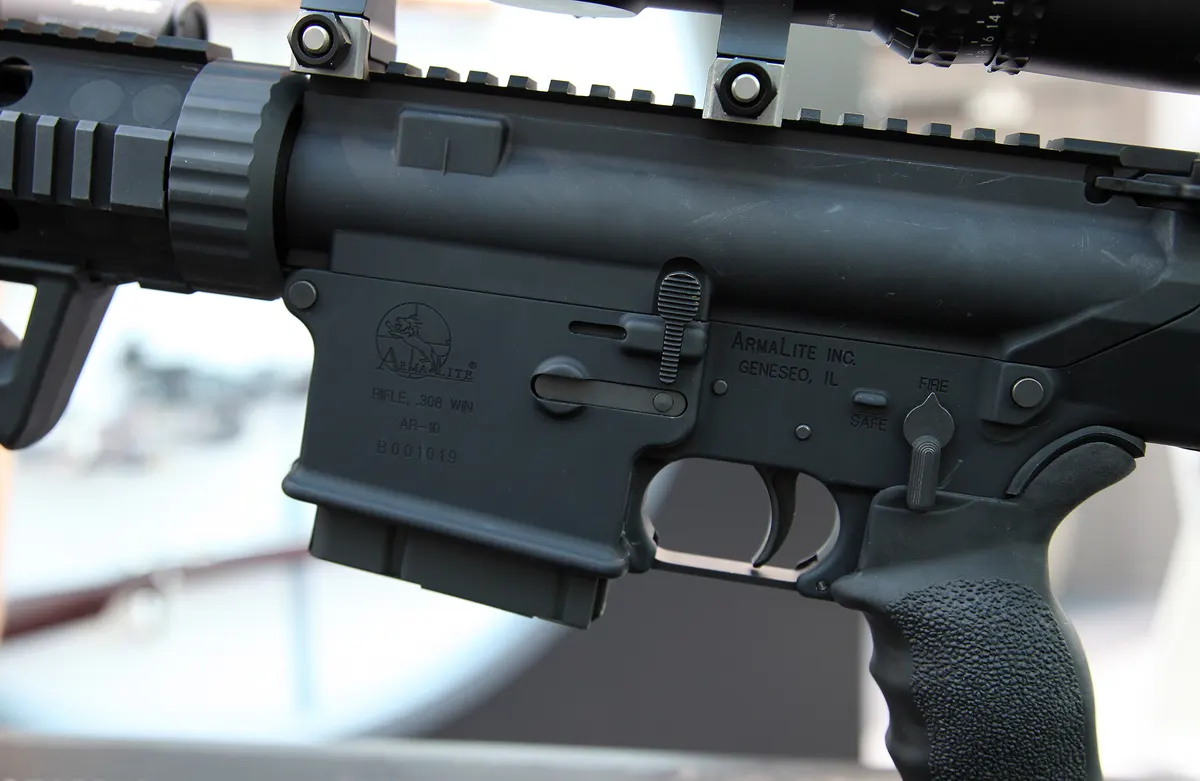
The production Zbroyar Z-10 fires the 7.62x51mm NATO cartridge rather than the Soviet 7.62x54mmR round used in the SVD, a chambering choice that lets Ukrainian snipers share ammunition with NATO allies. The rifle's cold hammer-forged, chrome-lined barrel is commonly cited at 20 inches (roughly 508 mm) on the standard military-configured UAR-10, though civilian and export Z-10 catalogs list barrel options ranging from 16 to 24 inches depending on role, and Zbroyar's own overall-length figure of 1,140 mm corresponds to a longer-barreled configuration.1,3,4 Accuracy is specified at roughly 1 MOA with match-grade ammunition, with some sources citing a tighter 0.7 to 1.25 MOA band depending on ammunition and barrel length.4,5
- Fişek7.62x51mm NATO
- Çap7,62 mm
- Kovan Uzunluğu51 mm
Furniture, Optics and Accessories
The rifle wears a full-length Picatinny rail over the receiver for day, night or thermal optics, a configurable free-floating handguard, and an adjustable LUTH-AR MBA buttstock rather than a fixed stock. A rearward-canted, M16-style pistol grip and an oversized trigger guard sized for gloved operation round out the ergonomics package, and the muzzle is threaded 5/8-24 for a slotted muzzle brake that is also suppressor-ready.4 A hinged, detachable bipod is offered as a standard accessory on most military-issue rifles.4 Modularity is the Z-10's real design case, its receiver, rail and stock interfaces accept the same wide aftermarket ecosystem built up around the AR-10 pattern in the United States, rather than the far narrower accessory pool available for the Kalashnikov-pattern SVD.
- Mekanizma TipiGazlı
- Seçmeli AtışHayır
- Besleme SistemiÇıkarılabilir Şarjör
- Şarjör Kapasitesi20
- Etkili Menzil (nokta)800 m
- Azami Menzil1.200 m
- İsabet1
- Namlu Uzunluğu508 mm
- Optik RayıEvet
- Dişli NamluEvet
- Toplam Uzunluk1.140 mm
- Gövde Malzemesi (Receiver)Aluminum
- ModülerlikAR-10 pattern receiver, rail and stock interfaces compatible with the wider AR-10 aftermarket ecosystem
- Susturucuya HazırEvet
- Entegre BipodEvet
- Üretim Başlangıcı2012
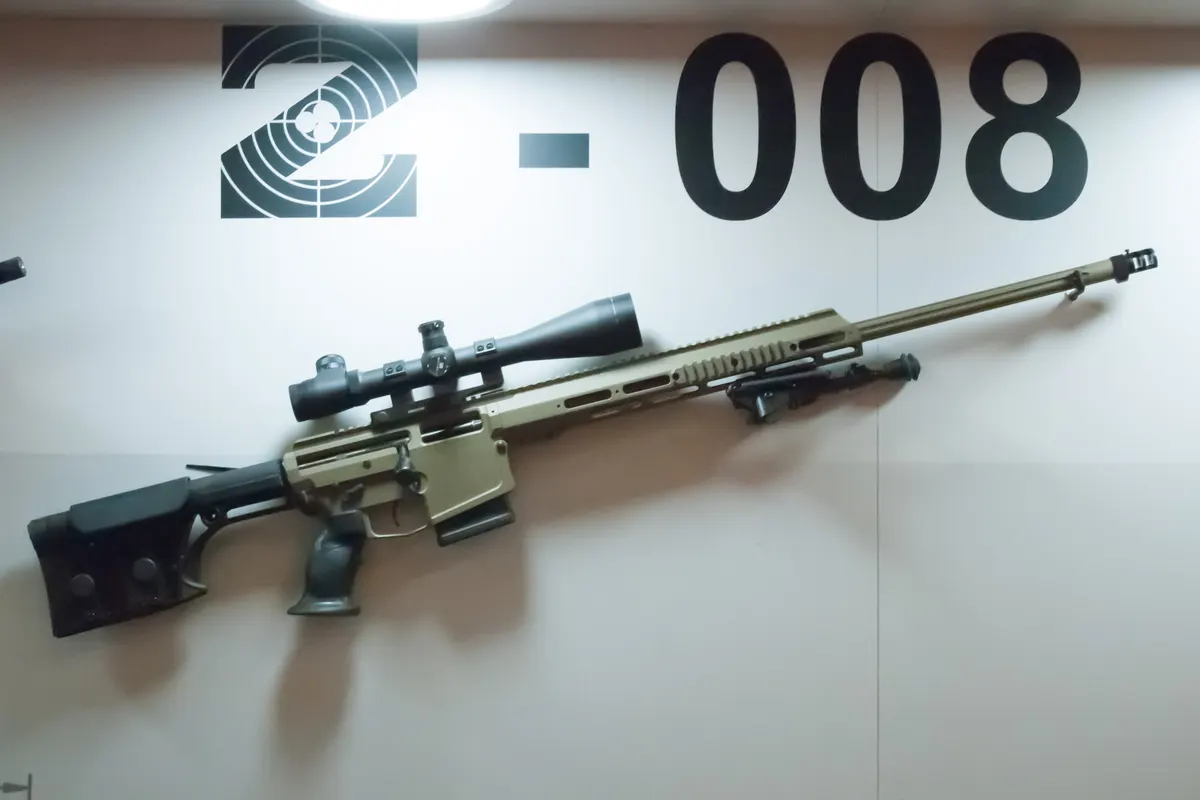
Zbroyar built its reputation before the Z-10 ever existed, on the back of the Z-008, a bolt-action precision rifle with an AR-style ergonomic layout whose shooting team took second place at the European F-Class Championships in both 2011 and 2012.6 The company, founded in either 2004 or 2007 depending on the source, started on a small fleet of leased machines at the former Kyiv Radio Plant before a 2013 reorganization brought in specialists with aerospace and defense backgrounds and grew the workforce past 80 employees.2,6
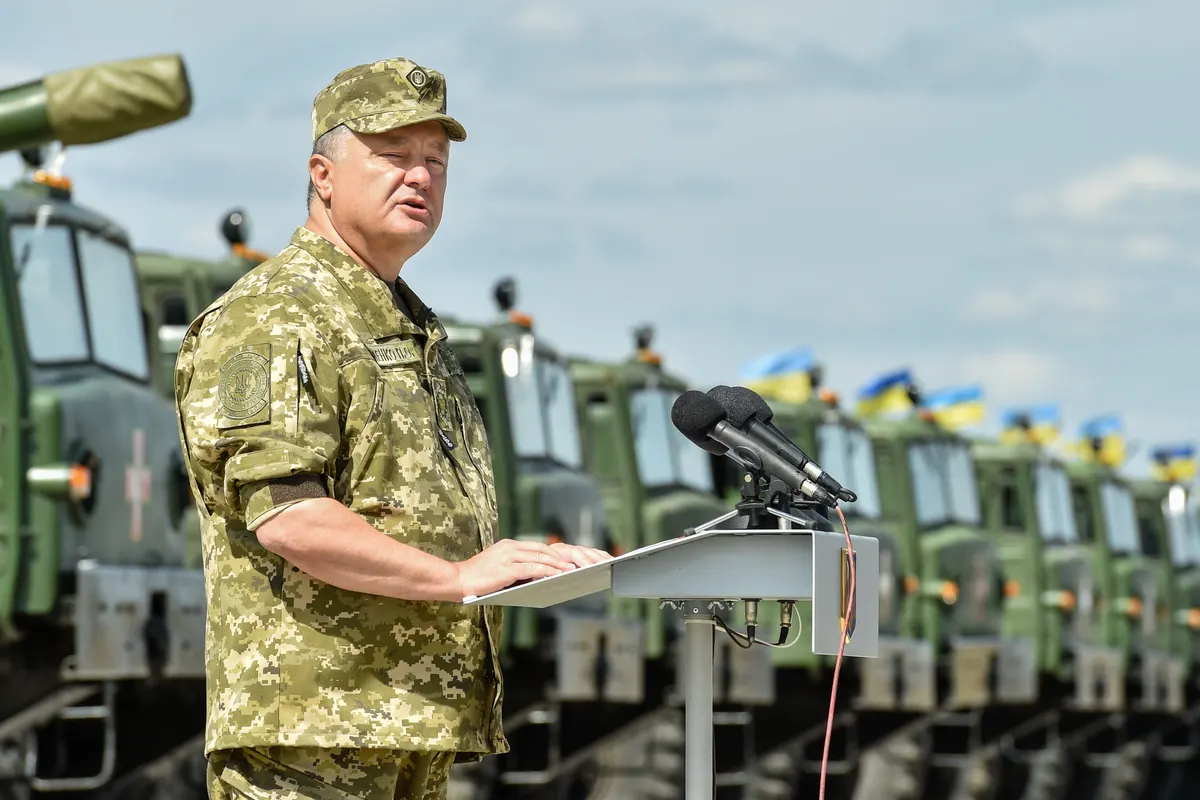
The semi-automatic Z-10 followed directly from that reputation, with the first rifles manufactured in May 2012.1 Field trials came first. In October 2015, Ukrainian media published photographs of the 79th Air Assault Brigade using two Z-10 rifles fitted with optical sights, bipods, Luth-AR stocks and Ergo grips, well before any formal government contract existed.1 Individual purchases mattered too, Ukrainian businessman and later president Petro Poroshenko personally bought 82 Z-10 rifles for frontline units during this pre-adoption period.1
Formal adoption came in February 2018, when the Ministry of Defense designated the 7.62x51mm Z-10 as the UAR-10 self-loading sniper rifle, explicitly intended to supplant the aging SVD Dragunov inventory.1,3 Deliveries followed at real scale rather than symbolic numbers, by November 2019 Colonel Vladislav Shostak of Ukraine's Department of Military-Technical Policy stated that troops had received about 600 UAR-10 and UAR-008 rifles that year alone.1 The UAR-008 designation refers to a bolt-action sibling built on Zbroyar's original Z-008 action, procured alongside the semi-automatic UAR-10 in the same contracts.
The rifle Bilozerska nicknamed hers Halia, after a Ukrainian folk story about a spoiled girl who is constantly fussed over, because she kept the Z-10 meticulously cleaned and adjusted.8 Bilozerska went on to record at least 10 confirmed kills as one of the relatively few women serving in Ukrainian sniper ranks, a detail that drew international press attention well before Russia's full-scale invasion in 2022.8
The Zbroyar Z-10's combat record runs through both phases of the Russo-Ukrainian War, the localized fighting in the Donbas from 2014 and the full-scale 2022 Russian invasion of Ukraine that followed. Its documented combat debut predates formal adoption, Olena Bilozerska's August 2017 engagement against Russian-backed militants near the contact line used a Z-10 still years away from becoming the standardized UAR-10.8
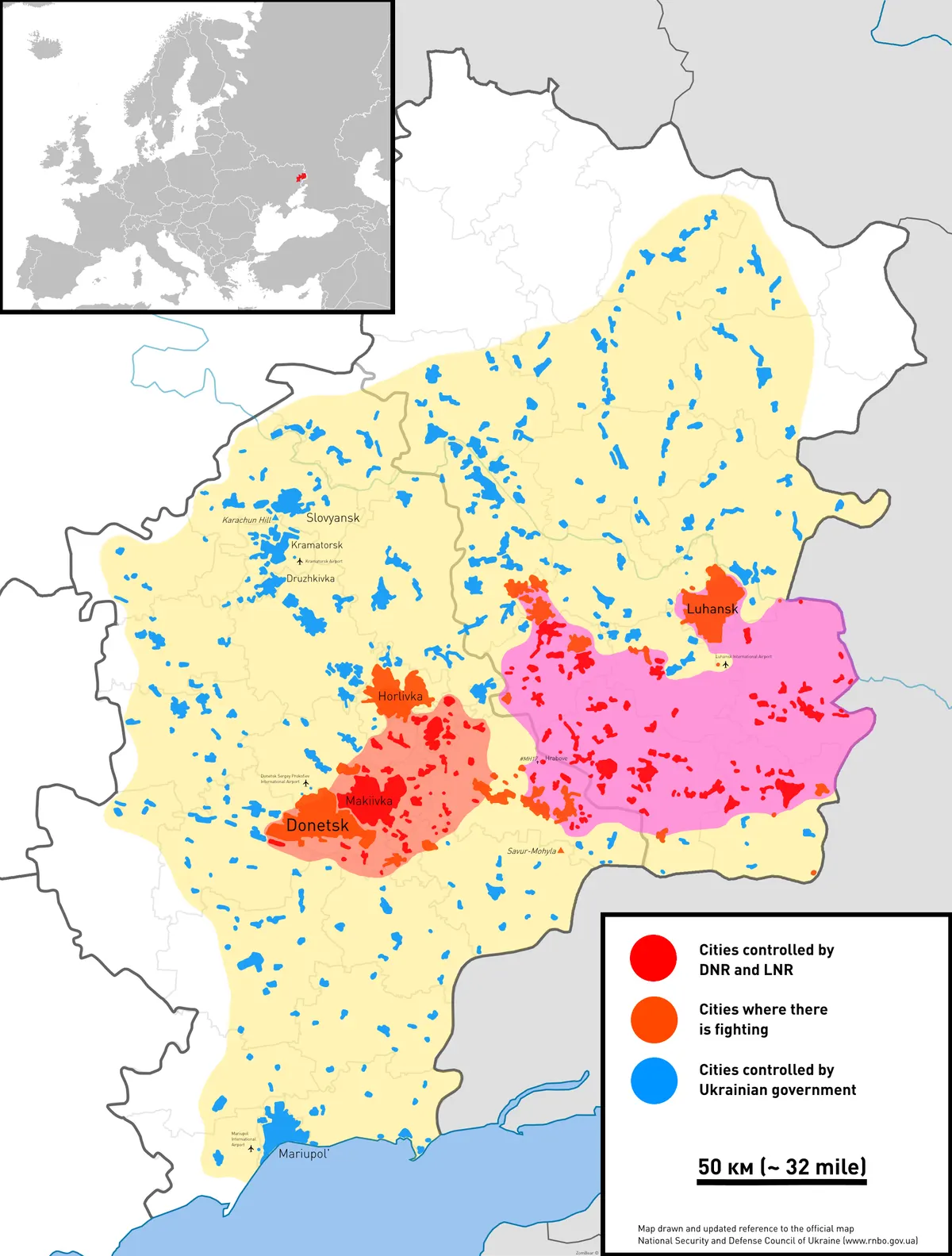
Since the 2022 invasion, Ukrainian marksmen have carried the UAR-10 extensively in the trench fighting that has defined the war's eastern and southern fronts, valuing its 7.62x51mm NATO chambering, its claimed 1,200 meter maximum effective range against the Dragunov's roughly 800 meters, and its compatibility with Western optics supplied through wartime aid.1,10 The rifle's reach into the war has an ironic second half as well. In July 2022, Russian military sources reported that Russian sniper teams operating in the Kharkiv region and Luhansk had begun using captured UAR-10 rifles seized from Ukrainian positions, describing the weapons as performing well in combat despite some unfamiliarity with the Western-pattern controls.9
Confirmed individual kill claims from named marksmen carrying the rifle, including Bilozerska's 10 confirmed kills and the unverified 100-kill claim attributed to the Frenchman, should be read as attributed battlefield claims rather than independently audited totals.8,10 No comprehensive count of UAR-10 losses, captures or total units fielded across the war has been published by either side.
The core Z-10 line splits along a civilian-to-military axis rather than a clean model-number sequence. The civilian Z-10 is sold with a choice of barrel lengths, commonly 16, 20 or 24 inches, aimed at long-range sport shooting and hunting customers, while the UAR-10 is the specific 7.62x51mm military configuration formally adopted by Ukraine's armed forces in 2018 with its standardized furniture and optics rail package.1,3 Alongside it, the UAR-008 designation covers a bolt-action sibling built on Zbroyar's older Z-008 action rather than the Z-10's semi-automatic AR-10 pattern, procured in the same Ministry of Defense contracts and often mentioned in the same delivery figures as the UAR-10.1,6
A separate but related product, the Z-15, is a 5.56x45mm AR-15 pattern carbine rather than a Z-10 variant proper, adopted as the UAR-15 in February 2023 to replace Kalashnikov-pattern rifles across the same force structure.7 Three further UAR-15 modifications distinguished only by barrel length, the UAR-15S, UAR-15S1 and UAR-15SM, were introduced in November 2023, following the same barrel-length-based variant logic Zbroyar already used on the Z-10.7

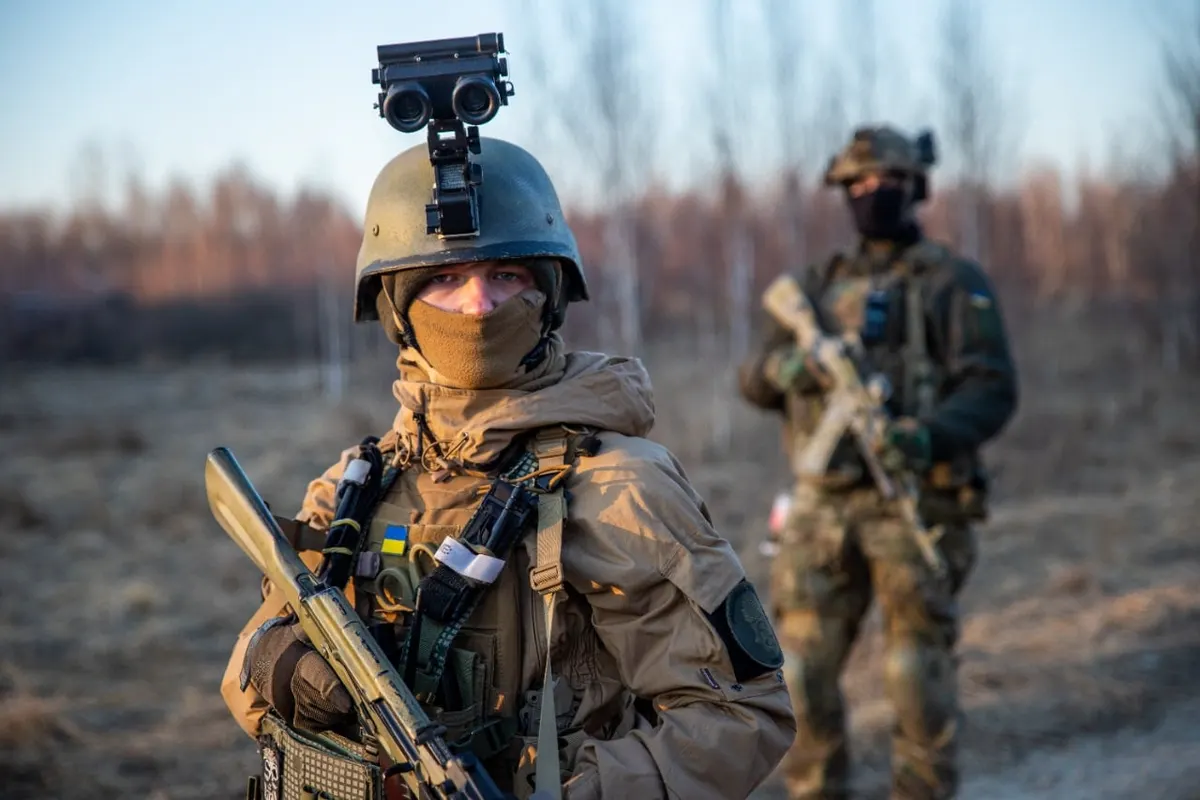
The Ukraine is the only confirmed state operator of the Zbroyar Z-10 and its UAR-10 military variant, fielded across the Armed Forces of Ukraine, the National Guard of Ukraine and reportedly Ukraine's Foreign Intelligence Service.1 The National Guard's October 2021 decision to formally replace its Soviet-pattern Kalashnikov and Dragunov inventory with Zbroyar's UAR-15 and UAR-10 lines extended the rifle's reach across a roughly 60,000-strong force beyond the regular army.11
Captured examples in Russian hands do not constitute formal adoption. Russian sniper units reported using seized UAR-10 rifles in 2022, but no Russian military structure has issued the weapon as standard equipment, and the rifles in Russian use are trophies of war rather than a procurement decision.9 No third country has publicly confirmed purchasing the Zbroyar Z-10 or UAR-10, and Ukrainian export data on Zbroyar products more broadly has remained minimal, reflecting the government's wartime priority of keeping domestic small-arms production for its own forces rather than for sale abroad.
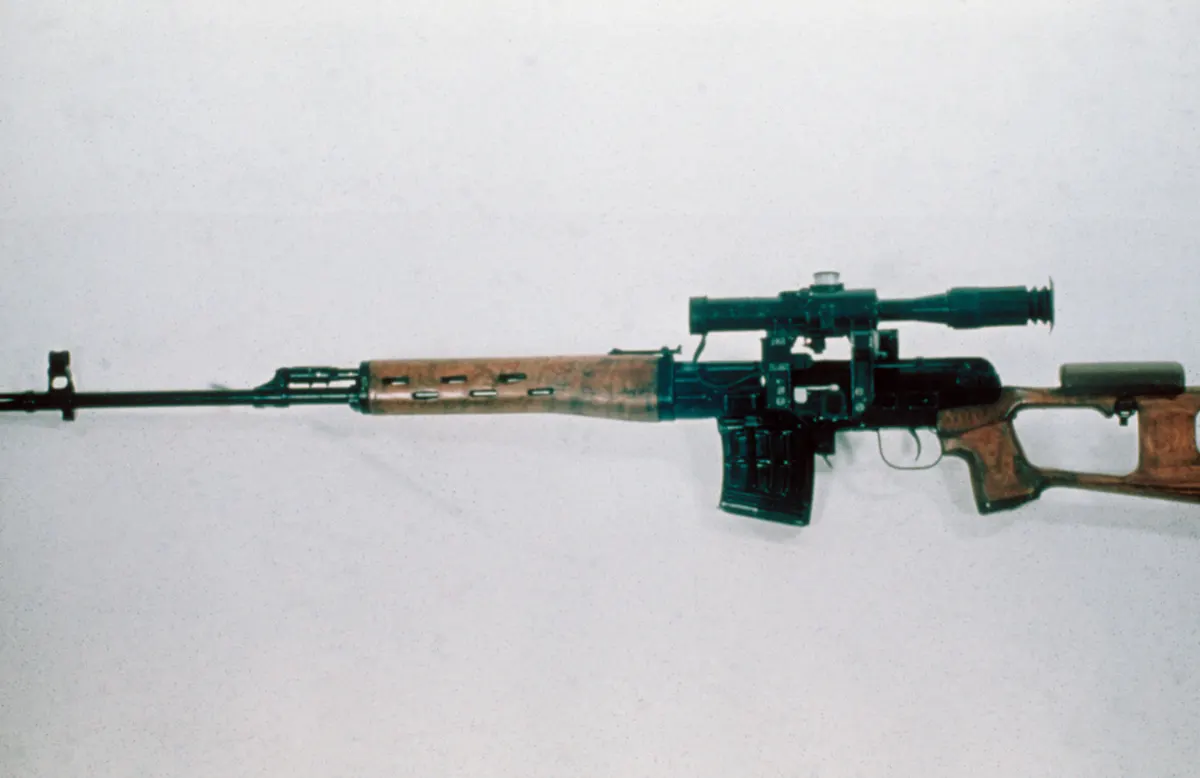
The Zbroyar Z-10's defining rivalry is not with another AR-10 pattern rifle but with the Soviet design it was built to replace, the SVD Dragunov. Where the Dragunov is a short-stroke gas-piston rifle firing the rimmed 7.62x54mmR cartridge from a Kalashnikov-derived action, the Z-10 runs a direct AR-10 pattern gas system in the rimless 7.62x51mm NATO chambering, a difference that governs everything from magazine design to allied ammunition compatibility. Ukraine's own military claims the UAR-10 reaches out to 1,200 meters against the Dragunov's 800 meter effective range, though independent verification of that extended figure is limited, and it should be read as a service claim rather than an independently tested result.1,10
| Spec | Zbroyar Z-10 / UAR-10 | SVD Dragunov |
|---|---|---|
| Cartridge | 7.62x51mm NATO | 7.62x54mmR |
| Action | Gas-operated, AR-10 pattern | Short-stroke gas piston, Kalashnikov-derived |
| Claimed effective range | Up to 1,200 m1 | 800 m1 |
| Weight (empty) | ~5 kg4 | ~4.3 kg |
A second useful comparison is with the American M110 semi-automatic sniper system, another AR-10 pattern rifle fielded by a NATO-aligned force in the same 7.62x51mm chambering. Both rifles share the same basic operating system and magazine interface, but the M110 entered US service already backed by an established defense-industrial base and a mature suppressor and optics ecosystem, while the Zbroyar Z-10 had to build that same modular AR-10 supply chain largely from scratch inside a country with no prior tradition of AR-pattern rifle manufacturing. The practical result is that Ukrainian units gained a NATO-caliber semi-automatic DMR years before formal NATO membership talks matured, at the cost of a domestic production base that, as late as 2014, still depended on imported American and Spanish barrels rather than fully indigenous manufacturing.1


What caliber does the Zbroyar Z-10 use? The Zbroyar Z-10, adopted by Ukraine as the UAR-10, fires the 7.62x51mm NATO cartridge, replacing the Soviet 7.62x54mmR round used in the SVD Dragunov it succeeds.1,3
Is the Zbroyar Z-10 still in service? Yes. The UAR-10 remains standard issue with Ukraine's Armed Forces and National Guard and has seen continuous combat use through the full-scale Russo-Ukrainian War.1,10
How does the Zbroyar Z-10 compare to the SVD Dragunov? The Z-10 uses a gas-operated AR-10 pattern action in 7.62x51mm NATO rather than the Dragunov's Kalashnikov-derived short-stroke piston system in 7.62x54mmR, and Ukraine's military credits it with a longer claimed effective range of up to 1,200 meters against the SVD's 800 meters.1
Who manufactures the Zbroyar Z-10? The Zbroyar Z-10 is manufactured by Zbroyar, a privately owned Ukrainian small-arms firm based in Kyiv that also produces the Z-008 bolt-action rifle and the Z-15 carbine.2,6
What is the Zbroyar Z-10's effective range. Ukrainian sources cite a standard effective range around 800 meters with a claimed maximum useful engagement distance of up to 1,200 meters under favorable conditions, though the extended figure has not been independently verified.1,10
- "Zbroyar Z-10", Wikipedia — en.wikipedia.org ↩
- "Zbroyar", Wikipedia — en.wikipedia.org ↩
- "Ukraine Adopts New Semi-Automatic Sniper Rifle the UAR-10", TheFirearmBlog — thefirearmblog.com ↩
- "Zbroyar Z-10 Ukrainian 7.62mm Sniper Rifle", ODIN OE Data Integration Network (US Army TRADOC) — odin.tradoc.army.mil ↩
- "Zbroyar Z-10 Sniper / Designated Marksman Rifle (DMR)", Military Factory — militaryfactory.com ↩
- "The Bolt-Action Ukrainian Zbroyar Z-008 III", Small Arms Review — smallarmsreview.com ↩
- "Ukrainian Special Forces Equip With Advanced UAR-15 Rifle Models", Militarnyi — militarnyi.com ↩
- "Ukraine's Deadliest Female Sniper Who Has 10 Confirmed Kills Vows to Take on Putin Again", NY Times Post — nytimespost.com ↩
- "Russian Snipers in the NMD Zone Successfully Use Captured Ukrainian Sniper Rifles UAR-10", TopWar — en.topwar.ru ↩
- "The Sniper Rifle Wanted by Both Sides of the Ukraine War", Forces News — forcesnews.com ↩
- "Ukrainian National Guard to Replace Soviet-Made Small Arms", Israel Defense — israeldefense.co.il ↩