


The US Army had no organized sniper program left by the mid-1960s. World War II and Korea-era scoped M1C and M1D Garands sat in storage, and the only accurate rifles in general circulation were National Match competition guns built for target shooting, not combat. Early attempts to scope the M16 for long-range work failed outright, the 5.56mm cartridge simply could not deliver the range performance a counter-sniper role demanded1. The M21 Sniper Weapon System was the fix the Army settled on, a hand-accurized National Match M14 rebuilt around the 7.62x51mm NATO cartridge and topped with a purpose-built ranging scope, and it became the starting point for the entire family of M14-based designated marksman rifles that followed.
- Semi-automatic follow-up shots, faster target engagement than a bolt gun
- ART scope's cam mechanism combined rangefinding and drop compensation in one motion
- Compatible with contemporary night-vision devices for after-dark sniping
- National Match accuracy standard, sub-10-inch groups at 900 meters
- Each rifle individually hand-fitted, effectively non-interchangeable parts
- Non-standard scope mount and glass-bedded action made field repair difficult
- Heavier and less concealable than a dedicated bolt-action sniper rifle
- Visible ejected brass compared to a bolt gun
On 23 February 1967, Army Headquarters tasked the Army Concept Team in Vietnam (ACTIV) with defining what a sniper program should actually look like2. ACTIV spent roughly six months field testing four rifle and optic pairings, including an M16 with a 3x Realist sight and a Winchester Model 70 in .30-06, before settling on an accurized M14 paired with a Redfield scope. Troops rated that combination 75 to 100 percent confident, and specifically praised the optic's magnification and range-finding capability2. The Army's 1968 classified report Sniper Operations and Equipment formally recommended the accurized M14 as Vietnam's standard sniper rifle.

The Army deliberately rejected a bolt-action design at this stage. Semi-automatic fire let a sniper take rapid follow-up shots, engage more than one target, and better defend himself if his position was compromised, and the M14 action was already compatible with contemporary night-vision devices1. The tradeoff, a heavier rifle with visible ejected brass, was accepted as worthwhile. This decision put the M21 on the opposite side of the philosophical divide from the later bolt-action M24 Sniper Weapon System that eventually replaced it, and from the Marine Corps' own bolt-action M40, both built around the idea that manual cycling is inherently more reliable and precise than a gas-operated action.
Every M21 began life as a gas-operated, rotating-bolt M14 rifle, a member of the broader family of battle rifles adopted across NATO in the 1950s and 1960s. Rock Island Arsenal disassembled each National Match M14 to the receiver and rebuilt it by hand, and the finished rifle, though capable of select-fire operation like the standard service M14, was issued and fired exclusively semi-automatic in the sniper role. The result was a systematic conversion program applied to an existing service rifle, and it is that conversion, plus the Leatherwood ranging scope bolted to it, that makes the M21 Sniper Weapon System historically distinct from the M14 it was built from.
The National Match Accurizing Process
The base rifle for every XM21 and M21 was a National Match grade M14, a hand-selected and hand-fitted competition rifle refined by the US Army Marksmanship Training Unit (USAMTU)1. Rock Island Arsenal disassembled each rifle to the bare receiver and rebuilt it through a fixed sequence of steps. Barrels were selected for straightness and uniformity and installed with minimum headspace, some rifles kept standard GI barrels held to tighter tolerances while others received premium commercial barrels from Douglas or Shilen. Gas cylinders and pistons were hand-polished, and flash suppressors were reamed specifically to match M118 ammunition. Handguards were trimmed and every cam, corner, and bearing surface smoothed for consistent cycling. The two-stage military-match trigger was tuned to just over 4.5 lb, and National Match sights were fitted before the action went through a two-stage glass-bedding process, first centering the action, then damping barrel vibration1.
- İlk Üretim Yılı1969
- Hizmete Giriş Yılı1969
- TasarımcıRock Island Arsenal and the US Army Marksmanship Training Unit (National Match accurizing); 2nd Lieutenant James M. Leatherwood (ART ranging scope)
- Ağırlık (Boş)5,2 kg
- Halen HizmetteHayır
- Önemli KullanıcılarUnited States Army (Vietnam War snipers, 1969-1988), Philippines, Israel, Tunisia, El Salvador
Because barrel selection, hand-lapped actions, and glass bedding were all matched to one specific stock and receiver, each XM21 was effectively a one-off rifle. No two were truly interchangeable, an unusual degree of individualized craftsmanship for a general-issue military weapon, and a decision that would come back to hurt the M21 twenty years later (see History). Rock Island Arsenal fed these rifles a diet of Lake City-manufactured M118 and later XM118 7.62x51mm Match ammunition, a specially loaded long-range round paired with the rifle through accuracy testing and issue. The accuracy standard achieved was 10-round groups under 10 inches at 900 meters1, a genuinely demanding figure for a semi-automatic combat rifle of the era.
- Fişek7.62x51mm NATO (.308 Winchester)
- Çap7,62 mm
- Kovan Uzunluğu51 mm
- Çap Sınıfıfull-power rifle cartridge
The Leatherwood ART (Adjustable Ranging Telescope)
The M21's signature feature was its scope, designed by 2nd Lieutenant James M. Leatherwood of the US Army, who conceived the ranging-cam concept in 1964 and presented it to the Limited Warfare Laboratory at Fort Benning in 19652,3. The ART was built around a commercial Redfield Accu-Range 3-9x40mm scope body, re-housed in an aluminum mount unique to the system, the same base commercial optic the Marine Corps independently adopted for the M401. As the sniper turned the power ring to align stadia marks in the reticle with a target's height, typically belt line to the top of the head, a mechanical cam simultaneously tilted the entire scope body to compensate for bullet drop at the range implied by that magnification setting, a combined rangefinder and automatic drop compensator in one motion1. Reticle stadia were calibrated to 30 inches at 300 meters vertically and 60 inches at 300 meters horizontally, and interchangeable ranging cams were available for different loads, including one each for M118 Match, M80 Ball, and even .50 BMG ammunition1. Two generations were fielded, ART I and a refined-reticle ART II2.
- Mekanizma TipiGazlı
- Seçmeli AtışHayır
- Besleme SistemiÇıkarılabilir Şarjör
- Şarjör Kapasitesi20
- Tetik Tipitwo-stage military match trigger, approximately 4.5 lb pull
The ART's non-removable, non-standard mount would later become one of the specific complaints in the 1989 Fort Benning assessment that pushed the Army toward its bolt-action replacement2. It was, in effect, an analog smart scope, a mechanical computer for bullet drop decades before laser rangefinders became standard sniper equipment.
- Namlu Çıkış Hızı853 m/sn
- Etkili Menzil (nokta)900 m
- Azami Menzil3.725 m
Weight, Range, and the Fiberglass Stock Switch
The M21 Sniper Weapon System fired the same 7.62x51mm NATO (.308 Winchester) round as the parent M14, with a 22 in (559 mm) barrel and an overall length of 44.1 in (1,118 mm). Loaded weight without the scope ran 11.25 to 11.6 lb (5.11 to 5.27 kg), with Wikipedia and Sniper Central figures cross-checking closely but not exactly1,2. Muzzle velocity with M118 Match ammunition reached 853 m/s (2,800 ft/s), and the M21's detachable-magazine fed from standard M14 box magazines in 5, 10, or 20-round capacities. Rifling twist ran one turn in 10 inches, right-hand. Effective range in service is usually cited at 460 to 900 meters, though at least one veteran account describes a 1,200-meter field kill, an outlier rather than a typical figure (see History).
- Namlu Uzunluğu559 mm
- Yiv Adımı1 in 10 inches (254mm), right-hand
- Nişangah TipiLeatherwood/Redfield Accu-Range 3-9x40mm Adjustable Ranging Telescope (ART I / ART II)
The XM21 carried a wood National Match walnut stock through 1972, when the formally standardized M21 designation switched to a fiberglass stock built by McMillan for better stability in humid or wet conditions2,3. Finish was Parkerized throughout production.
- Toplam Uzunluk1.118 mm
- Gövde Malzemesi (Receiver)forged steel M14-pattern receiver
- Kabza/Dipçik MalzemesiNational Match walnut wood stock, epoxy-impregnated (XM21, 1969-1972); McMillan fiberglass stock (M21, from 1972)
- Üretim Başlangıcı1969
- Varyantlar2

Roughly ten early XM21 rifles reached Vietnam for evaluation in 1967. By 1968, USAMTU had sent ten instructors into the country and the first XM21s were issued to the 9th Infantry Division, alongside the classified ACTIV report that formally recommended the platform3. In early 1969, Sionics suppressors for the M14 were trialed at the 9th Infantry Division's sniper school with reported success3. The program received full funding in February 1969, and Rock Island Arsenal ramped conversion output to roughly 50 rifles a week3. The XM21 fielded in significant numbers through the second half of 1969, primarily to Army infantry divisions in Vietnam, and Rock Island Arsenal converted somewhere between 1,200 and 1,435 National Match M14 rifles over the program's full life, sources disagree on the exact figure2,1.
In 1972 the fiberglass-stocked, formally standardized M21 designation, officially titled Rifle, 7.62mm Sniper, M21, replaced the XM21 name2. The M21 stood as the US Army's standard-issue sniper rifle from the mid-1970s until 1988, and it followed American troops into the 1983 invasion of Grenada3.
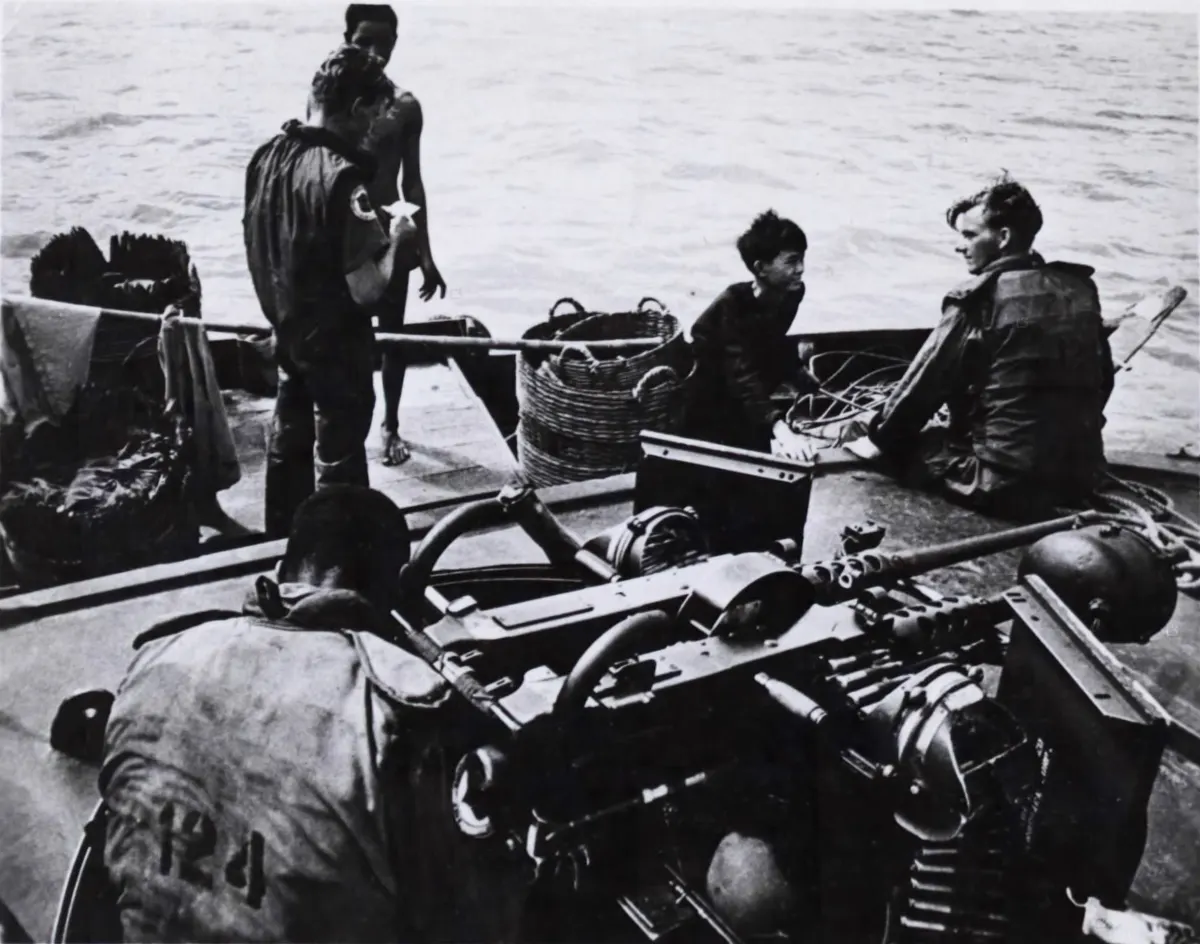
Over 1,300 XM21s saw service in Vietnam according to Sniper Central, concentrated in the 9th Infantry Division, which hosted the primary USAMTU-run sniper school, along with documented use by the 173rd Airborne Brigade, the Americal Division, the 23rd Infantry Division, the 199th Infantry Brigade, and the 101st Airborne's 3rd Battalion, 187th Infantry1. The single most famous name attached to the rifle is Adelbert F. Waldron III, a 9th Infantry Division sniper credited with 109 confirmed kills, the most of any American sniper in the Vietnam War, a record that stood until 20114. Waldron often worked at night with a starlight scope and frequently fired from moving riverine patrol boats. His best-known shot killed a Viet Cong shooter concealed atop a coconut tree at a range beyond 900 meters, fired in a single round from a moving boat4,5. He received the Distinguished Service Cross twice, both in 1969, plus a Silver Star and multiple Bronze Stars5,6.
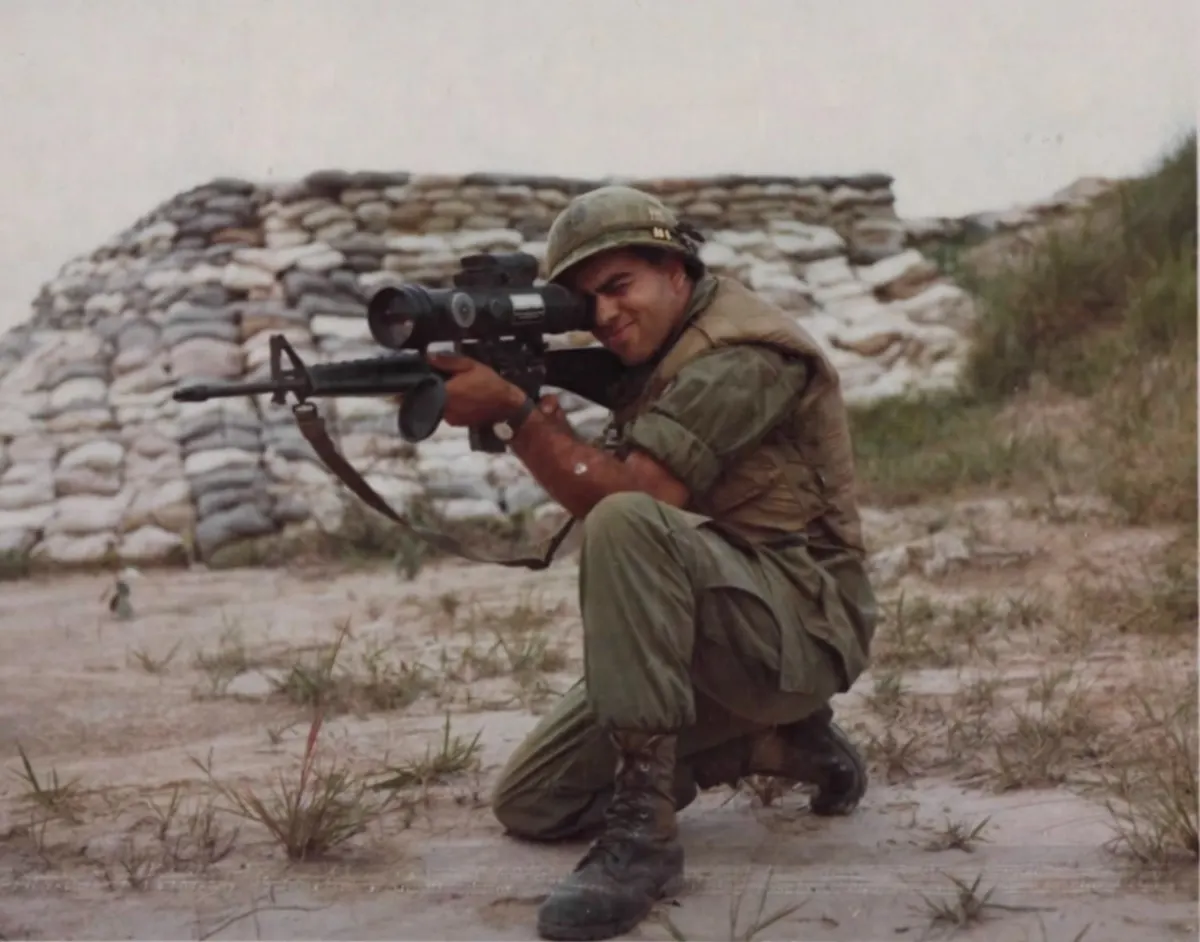
USAMTU instructor Joe White, a Vietnam veteran credited with more than 50 confirmed kills, helped run the Army's sniper instruction on the M21 and was still training new snipers on the rifle at Fort Campbell as late as 1986, alongside co-instructor Bosworth and student SFC Kevin M. DeVos1. Veteran testimony names a wider circle of XM21 users too, including Terry Christianson of the 9th Infantry Division, Rene F. Macare and Carl Dodd of the 173rd Airborne in the Central Highlands, William Morgan of the 101st Airborne, and Frederick Carman of the Americal Division1. One veteran reported a personal longest kill of 1,200 meters with the system, an extreme outlier well beyond the rifle's typical effective range figures, worth citing as an anecdote rather than a specification1.
By the mid-1980s, renewed Cold War-era investment in formal Army sniper training exposed the M21 as an aging, hand-built Vietnam-era conversion rather than a purpose-designed sniper system. A 1989 Fort Benning assessment concluded the rifle cannot be maintained under field conditions, citing its non-removable scope mount and the individually glass-bedded actions that complicated routine field repair2. The exact hand-fitting that made it so accurate in the first place became its maintenance liability. Sniper Central frames the same flaw slightly differently, arguing the platform's accuracy was adequate for general infantry use but wringing full sniper-grade precision out of it demanded a dedicated armorer's attention that field units often could not provide1. Notably, the Army had tested the M21 as recently as 1976 against the M40A1, the .50-caliber M82 (the Barrett-precursor design), and the Armalite AR-10, and found the M21 more than held its own1. Its 1988 retirement in favor of the Remington-700-based M24 Sniper Weapon System was driven by doctrine shifting toward bolt-action simplicity and durability, not by any collapse in accuracy. Army Ranger Battalions had fully transitioned to the M24 by 19902. Some M21s reportedly remain in Army storage, though not in widespread active use1.

The M21's primary combat record is the Vietnam War, where it equipped Army snipers from 1969 onward, concentrated in the 9th Infantry Division's Mekong Delta operations and extending to the 173rd Airborne Brigade, the Americal Division, the 23rd Infantry Division, the 199th Infantry Brigade, and elements of the 101st Airborne Division1,3. The rifle's confirmed post-Vietnam combat use includes the 1983 invasion of Grenada, where American forces carried the M21 during Operation Urgent Fury3. Beyond that operation, M21s stayed in limited service with National Guard and specialized units even after the M24 formally replaced it as the Army's standard sniper rifle in 19883.
The XM21 (1969 to 1972) was the original walnut-stocked, Rock Island Arsenal-converted National Match M14 fitted with the ART I or ART II scope, the Vietnam-era combat configuration. The M21 (1972 to 1988) was the formally standardized designation, switched to a fiberglass McMillan stock for better environmental stability, officially titled Rifle, 7.62mm Sniper, M21.
A related but genuinely distinct rifle is the M25 Sniper Rifle, built by Special Forces armorers on the same M14 pattern in the early 1990s with its own McMillan stock, treated here as a separate weapon rather than a further M21 revision. The M21's technical descendants resurfaced decades later in the 2000s as the Mk 14 Enhanced Battle Rifle and the Crazy Horse rifle, known in the field as the M21A5, both built around a Sage International aircraft-aluminum chassis stock that accepts night-vision devices forward of the day optic. These modern rebuilds carried M21-pattern actions back into Iraq and Afghanistan service as the M21 family's most recent operational descendants rather than the M21 itself3.
The Army's later designated marksman programs took a different technical path from the M21's M14 accurizing formula. The Army's own M110 Semi-Automatic Sniper System, and its later refinements the M110A1 Squad Designated Marksman Rifle, the M110A1 Compact Semi-Automatic Sniper System, and the M110A2 Semi-Automatic Sniper System, all trace their design roots to the AR-10 pattern rather than the M14, as does the M38 Designated Marksman Rifle. All of them eventually did what the M21 could not, replace a hand-fitted, individually accurized service rifle with a factory-interchangeable modular system.


The United States was the M21's sole wartime operator during its 1969 to 1988 Army service, with rifles also reaching National Guard and specialized units afterward. Wikipedia lists a handful of other current and former operators of M21-pattern rifles, including the Philippines, Israel, Tunisia, and El Salvador, with the Panama Defense Forces as a former operator prior to their 1989 dissolution2. None of these secondary operator relationships come with a confirmed transfer date or quantity in available sourcing, so they are reported here as documented users rather than dated acquisitions.
The M21 Sniper Weapon System and the bolt-action M24 Sniper Weapon System that replaced it in 1988 sit on opposite sides of a genuine doctrinal argument rather than a simple accuracy contest. Both are 7.62x51mm NATO rifles, both trace to well-established American rifle actions (the M14 for the M21, the Remington 700 for the M24), and by the Army's own 1976 comparison testing the M21 more than held its own against contemporaries1. The M21's case rested on rate of fire, a semi-automatic sniper can put a second round on target in roughly a second, engage a second shooter, or fight his way out of a compromised position, none of which a bolt gun offers as readily. The M24's case rested on maintainability and inherent mechanical precision, a factory-built bolt action needs no individual glass-bedding or hand-lapped gas system to hold zero, and its parts interchange between rifles in a way no XM21 or M21 ever could. The 1989 Fort Benning assessment that ended the M21's Army career was explicit that the decision was about field maintenance, not raw accuracy2.
| M21 Sniper Weapon System | M24 Sniper Weapon System | |
|---|---|---|
| Action | Gas-operated, semi-automatic | Bolt-action, manually cycled |
| Base platform | National Match M14 | Remington 700 |
| Adopted | 1969 (XM21) / 1972 (M21) | 1988 |
| Effective range | 460 to 900 m1 | Typically cited to 800 m+ |
A second, later comparison matters more for understanding why the M21 never fully disappeared. The Mk 14 Enhanced Battle Rifle and Crazy Horse rebuilds of the 2000s revived the M21's semi-automatic, rapid-follow-up logic almost exactly, just with a modern aluminum chassis stock replacing hand-fitted wood or fiberglass furniture. Where the SVD Dragunov took the Soviet Union down a purpose-built semi-automatic sniper rifle path from the start, rather than accurizing an existing service rifle, the American answer in 1969 was to convert what the Army already had in inventory, a decision shaped as much by wartime urgency in Vietnam as by any settled theory of what a sniper rifle should be.


What is the M21 Sniper Weapon System? The M21 Sniper Weapon System is a 7.62x51mm NATO semi-automatic sniper rifle the US Army fielded from 1969, built from a hand-accurized National Match M14 fitted with the Leatherwood/Redfield Adjustable Ranging Telescope (ART) scope1,2.
How does the M21's ART scope work? The ART scope's power ring is mechanically linked to a cam that tilts the scope body as the sniper zooms to size up a target, automatically compensating for bullet drop at the range implied by that magnification setting, effectively combining a rangefinder and a drop compensator in one motion1.
Is the M21 still in service? No, the US Army officially replaced the M21 with the bolt-action M24 Sniper Weapon System in 1988, though some M21s reportedly remain in storage and a handful of other countries still field M21-pattern rifles2,1.
What replaced the M21 Sniper Weapon System? The bolt-action M24 Sniper Weapon System formally replaced the M21 in Army service in 1988, and Army Ranger Battalions had fully converted by 19902. Decades later, M21-pattern M14 actions returned to service in the Mk 14 Enhanced Battle Rifle and Crazy Horse (M21A5) configurations used in Iraq and Afghanistan.
What is the M21's effective range? Sources cite an effective range of roughly 460 to 900 meters in service use, with a 10-round accuracy standard of under 10 inches at 900 meters during testing, and at least one veteran account of a 1,200-meter field kill treated as an outlier rather than a typical figure1.
How many M21 rifles were built? Rock Island Arsenal converted somewhere between roughly 1,200 and 1,435 National Match M14 rifles into XM21/M21 configuration over the program's life, sources disagree slightly on the exact total2,1.
- "US Army M21 and XM21", Sniper Central — snipercentral.com ↩
- "M21 Sniper Weapon System", Wikipedia — en.wikipedia.org ↩
- "M21 Sniper Rifle, A Short History", The Armory Life — thearmorylife.com ↩
- "Adelbert Waldron", Wikipedia — en.wikipedia.org ↩
- "Meet the Highest-Scoring Sniper of the Vietnam War", HistoryNet — historynet.com ↩
- "Adelbert F. Waldron III", Sniper Central — snipercentral.com ↩