

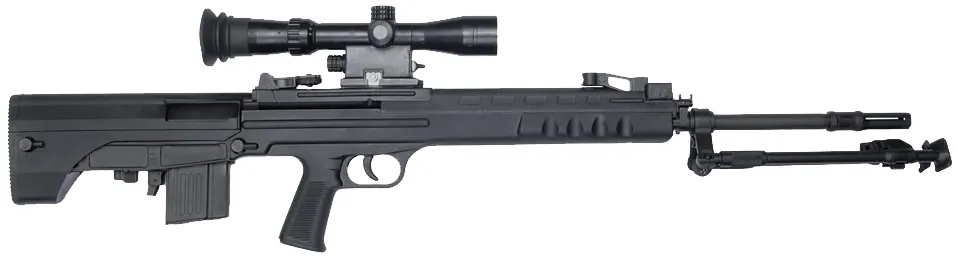

The QBU-88, more commonly known outside China as the Type 88, is a 5.8×42mm designated marksman rifle built by Norinco (China North Industries Corporation) and issued to the People's Liberation Army starting in 1997. It is one of the few production designated marksman rifles built around a bullpup layout, a configuration where the magazine and action sit behind the trigger group rather than in front of it, and it fires a cartridge China designed entirely on its own rather than adopting NATO's 5.56×45mm or the Soviet 7.62×54mmR used in the SVD Dragunov. Norinco fielded the QBU-88 as the intended replacement for the Type 85, itself a refined Chinese copy of the SVD, closing out a development chain that ran from a captured Soviet rifle to a fully indigenous Chinese design in under two decades.
- Compact 920mm overall length for a 640mm barrel (bullpup layout)
- Indigenous 5.8x42mm cartridge, no foreign ammunition dependency
- Tight 206mm rifling twist stabilizes the heavy sniper-load bullet well
- Modern 3-9x40 scope with bullet-drop compensator as standard issue
- Bipod clamps to the barrel, causing point-of-impact shift when deployed
- Safety lever sits under the receiver, awkward to reach quickly
- No confirmed major combat record since 1997 adoption
- Ammunition manufacturing quality has been inconsistent (propellant, bullet weight variance)
The QBU-88 entered service just in time to arm the PLA Hong Kong Garrison for the 1997 Hong Kong handover ceremony, a date that made the rifle a visible symbol of Chinese small-arms self-sufficiency at a politically loaded moment.1 Since then it has spread modestly through PLA ground units, the People's Armed Police, and Chinese naval infantry, but the People's Liberation Army has not fought a major war in the nearly three decades the QBU-88 has been in inventory, so unlike the SVD Dragunov it carries no combat record of note. The rifle's 5.8×42mm chambering, gas-operated action, and short 920mm overall length despite a 640mm barrel are all direct consequences of the bullpup layout, discussed in depth below alongside two genuine, well-documented design flaws.
Norinco built the QBU-88 as part of a broader family of 5.8mm-caliber Chinese small arms that also includes the QBZ-95 bullpup assault rifle, adopted the same year and sharing the same proprietary ammunition. Understanding the QBU-88 rifle therefore means understanding two separate Chinese engineering decisions made at once, first to build a marksman rifle around a bullpup receiver rather than the conventional stock-behind-magazine layout used by the SVD Dragunov and most other DMRs, and second to walk away from both NATO and Soviet cartridge standards entirely.
A Bullpup Layout for a Rifle That Usually Isn't One
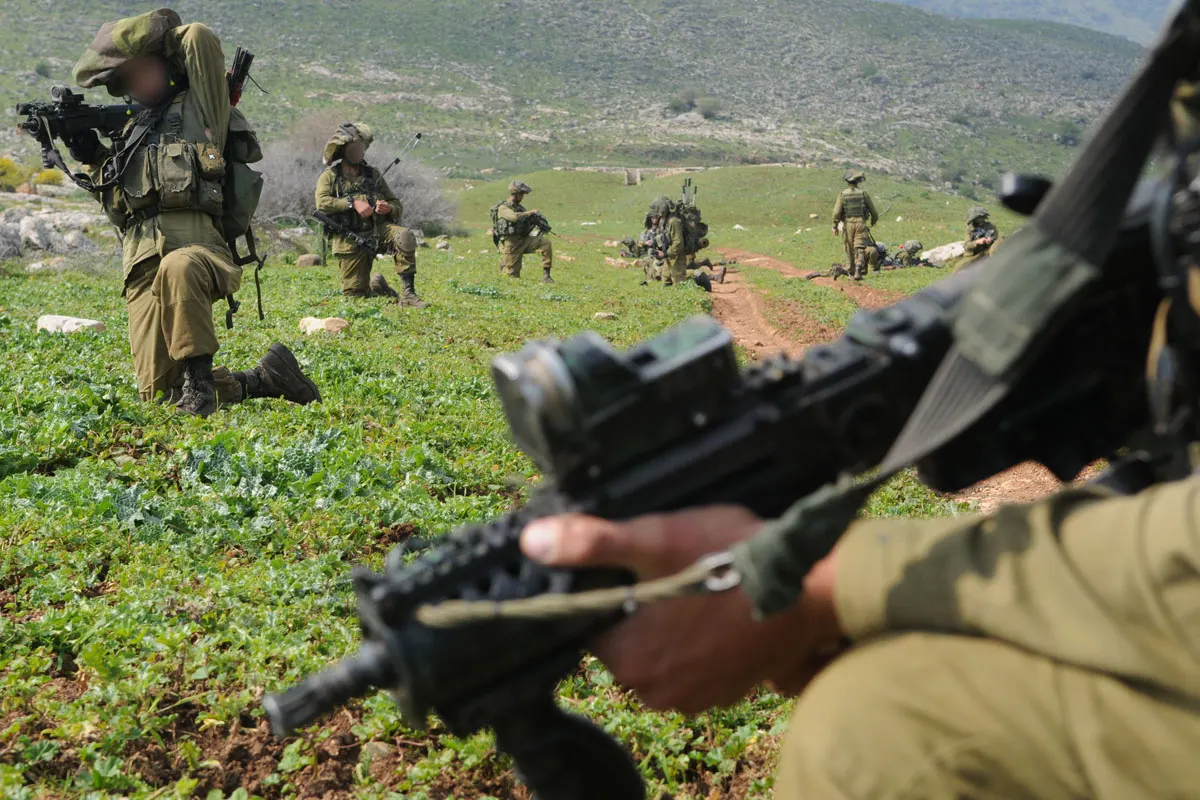
Most designated marksman rifles, including the SVD Dragunov, the M14 derivatives, and their many international copies, use a conventional layout with the action and magazine forward of the stock. The QBU-88 does not. Its action and 10-round detachable magazine sit inside a polymer housing built around a compact steel receiver, positioned behind the pistol grip and trigger group in true bullpup fashion. That layout is what lets a rifle with a 640mm (25.2 in) barrel come in at only 920mm (36.2 in) overall, dimensions that would be impossible on a conventional stock. Norinco was not alone in trying this. The Soviet Dragunov SVU took an existing SVD action and folded it into a bullpup housing decades earlier, and outside the DMR category, rifles like the IWI Tavor and its successor IWI Tavor 7 built entire service-rifle families around the same basic idea of moving the action rearward.
- Ağırlık (Boş)4,1 kg
Internally the QBU-88 is a gas-operated rifle using a short-stroke gas piston mounted above the barrel and a three-lug rotating bolt, firing semi-automatically only with no select-fire capability. The gas-piston operated system and rotating bolt are conventional choices for a modern marksman rifle. What is not conventional is wrapping them inside a bullpup shell and feeding them from a cartridge nobody else in the world uses.
- Fişek5.8×42mm DBP87 (with non-standard loading); 5.56×45mm NATO (QBU-97A export variant)
- Çap5,8 mm
- Çap Sınıfıindigenous intermediate cartridge scaled to a heavy sniper loading
The barrel itself is hammer-forged and match-grade, with most sources agreeing on 640mm (25.2 in), though Modern Firearms lists a shorter 620mm figure for the same rifle, a minor discrepancy worth flagging rather than resolving with false confidence.2 The rifling twist is a tight 206mm (8.1 in), noticeably faster than the companion QBZ-95 assault rifle's 244mm (9.6 in) twist, because the QBU-88 has to stabilize a heavier 70 to 77-grain sniper-load bullet rather than the lighter standard rifle round.
- Mekanizma TipiGazlı
- Besleme SistemiÇıkarılabilir Şarjör
- Şarjör Kapasitesi10
Two Documented Design Flaws, the Bipod and the Safety Lever
The QBU-88 ships with a quick-detachable bipod and a long birdcage-style flash suppressor, but the bipod's mounting point is the real story. It clamps directly to the barrel forward of the receiver rather than to a fixed fore-end or receiver point, and multiple analyses have identified this as a genuine design flaw, because clamping a bipod to a free-floating barrel changes how the barrel harmonics behave under load and produces a point-of-impact shift exactly when a shooter deploys the bipod for a supported precision shot, the situation where a marksman rifle is supposed to be at its most accurate.3 The second commonly cited flaw is ergonomic rather than ballistic. The safety lever sits underneath the receiver immediately behind the magazine well, forcing the shooter to rotate the support hand nearly 180 degrees to reach it, a much slower and more awkward motion than the thumb safeties or trigger-guard-mounted levers on most Western rifles.3
- Namlu Çıkış Hızı945 m/sn
- Etkili Menzil (nokta)800 m
The 5.8×42mm Cartridge China Built From Scratch
The QBU-88's most distinctive feature may not be its bullpup layout at all but its 5.8×42mm cartridge, standardized as DBP87. China began work on a cartridge to replace its Soviet-derived 7.62×39mm as early as 1971, at a planning meeting known as the 713 Conference, which set goals of roughly 6mm caliber, around 1,000 m/s muzzle velocity, reduced recoil, and better accuracy than the aging 7.62×39mm China had used since adopting it from the Soviet Union in the mid-1950s.4 A follow-up 744 Conference narrowed the choice between 5.8mm and 6mm bores, the caliber was fixed in 1979, and the cartridge reached final standardization as DBP87 in 1987. The logic mirrors why NATO settled on 5.56×45mm and the Soviets on 5.45×39mm, since a lighter, smaller-recoil round lets an infantryman carry more ammunition and shoot controllably in automatic fire, but China chose to design an entirely proprietary cartridge family rather than adopt either existing standard, a deliberate move toward small-arms self-sufficiency.
- Namlu Uzunluğu640 mm
- Yiv Adımı206mm (8.1 in)
- Nişangah Tipi3-9×40, 6-24×44 teleskopik nişangah
- Optik RayıEvet
- Açık NişangahEvet
The 5.8mm family split into two loadings for years, DBP87 at roughly 58mm overall length for standard rifle and assault-rifle use, and a heavier DBP88 loading at roughly 62mm for sniper rifles and machine guns. Sources disagree on which label precisely fits the QBU-88's ammunition, a discrepancy left unresolved rather than asserted with false precision. Standard 5.8mm rifle ammunition uses a 64-grain full metal jacket bullet with a steel-core penetrator and lead fill, while the heavier 1995-era sniper load steps up to a 77-grain bullet with a longer profile and deeper boat-tail in a brass rather than steel case. By the 2000s, running two separate loadings across the PLA's 5.8mm rifles proved logistically awkward, so China developed the DBP-10 round to unify the family, now the PLA's standard 5.8mm infantry cartridge, though that consolidation came after the QBU-88's original ammunition was already fielded.
- Toplam Uzunluk920 mm
- Bullpup DüzeniEvet
Reported accuracy for the QBU-88 with its heavy sniper load runs around 1.5 to 1.6 MOA, edging toward the roughly 2 MOA benchmark of a rifle like the M16A2, though some testing instead cites closer to 3 MOA as issued, with room to tighten to 2.5 MOA under optimized conditions. Penetration figures place the standard load punching through 10mm steel plate at 300 meters, while the heavier load reportedly defeats 16mm mild steel at 85 meters and 3.5mm hardened steel out to 1,000 meters. The tradeoff is a wound cavity roughly a third smaller than 5.56mm NATO produces, a consequence of the bullet's thick steel jacket and lack of a cannelure that limits fragmentation, a real and citeable ballistic tradeoff rather than a flaw in either direction.4 Chinese manufacturing quality has also drawn documented criticism, with inconsistent propellant charge weights, bullet weight variance between production lots, corrosive-powder fouling, and primer rust in storage all cited as genuine reliability concerns for the cartridge family the QBU-88 depends on.
- Entegre BipodEvet
- Gaz PistonluEvet
Sighting equipment consists of folding diopter-type adjustable iron sights as a backup, plus a proprietary dovetail rail on the receiver for optics. The standard-issue optic is a Chinese 3-9×40 variable telescopic scope with an integrated bullet-drop compensator and quick-release mount, a real upgrade over the fixed 4x optic carried on the older Type 85. A law-enforcement 6-24×44 tactical scope variant appeared around 2008 for police sharpshooter use.
From a Captured SVD to an Indigenous Bullpup
The QBU-88's development history begins not with the QBU-88 itself but with a captured rifle. During the Sino-Vietnamese War in 1979, Chinese forces obtained and studied examples of the Soviet SVD Dragunov, and Norinco produced a direct clone known as the Type 79 sniper rifle. That design was refined into the Type 85 sniper rifle, which Chinese sources describe as more accurate and durable than the Type 79 but still fundamentally an SVD derivative in layout and mechanism. Norinco began work on what would become the QBU-88 in 1988, aiming for a rifle with higher penetration and accuracy than the Type 85 while abandoning the SVD's conventional layout and Soviet ammunition entirely. The new rifle reached production trials by 1996 and entered service with the first units in 1997.
That 1997 timing was not incidental. Norinco and the PLA fielded the QBU-88 specifically so the PLA Hong Kong Garrison would carry a modern, fully indigenous Chinese rifle rather than an SVD derivative during the handover of Hong Kong from British to Chinese sovereignty, a geopolitically loaded event watched worldwide. No individual engineer's name behind the QBU-88's design is publicly documented in available sources, so credit for the design rests with Norinco (China North Industries Corporation) institutionally rather than any named designer.
By the 2000s the QBU-88 had spread beyond its symbolic Hong Kong role into broader PLA service, primarily equipping what Chinese sources describe as first grade mechanized units. Its adoption sits alongside the QBZ-95 bullpup assault rifle as part of the same generation of indigenous, 5.8mm-caliber Chinese infantry weapons, a deliberate break from decades of Soviet-pattern small arms that had defined the PLA's rifle inventory since the 1950s.
The People's Liberation Army has not fought a major war since the QBU-88 entered service in 1997, and there is no large-scale combat record for the rifle to report. That absence is itself a notable fact about the weapon rather than a gap to paper over. The one combat-adjacent data point that surfaces in research is tied to the 5.8×42mm cartridge family more broadly rather than confirmed specifically to QBU-88 rifle fire, an account of Chinese United Nations peacekeepers using 5.8mm-chambered weapons during a deployment to Haiti, though the peacekeepers in question also carried QBZ-95 rifles chambered in the same cartridge, so which weapon fired which round in that deployment is not established, and only a single source describes the episode at all.
The honest summary is that the QBU-88 functions primarily as a garrison, training, and police-sharpshooter weapon rather than a battle-tested rifle. Its most significant real-world moment remains the 1997 Hong Kong handover rather than any documented firefight, and readers searching for terms like QBU-88 combat record or is the QBU-88 combat proven should take that absence as the accurate answer rather than an oversight in reporting.
Norinco built an export-oriented variant, the QBU-97A (also called Type 97 or, in some recent sightings, NQU03, with no confirmed functional difference between the NQU03 and QBU-97A designations), chambered in 5.56×45mm NATO rather than the domestic 5.8×42mm cartridge, aimed at foreign security-force customers who use NATO-standard ammunition. The export model uses its own magazine design rather than accepting standard STANAG magazines, despite occasional claims to the contrary in secondary sources.
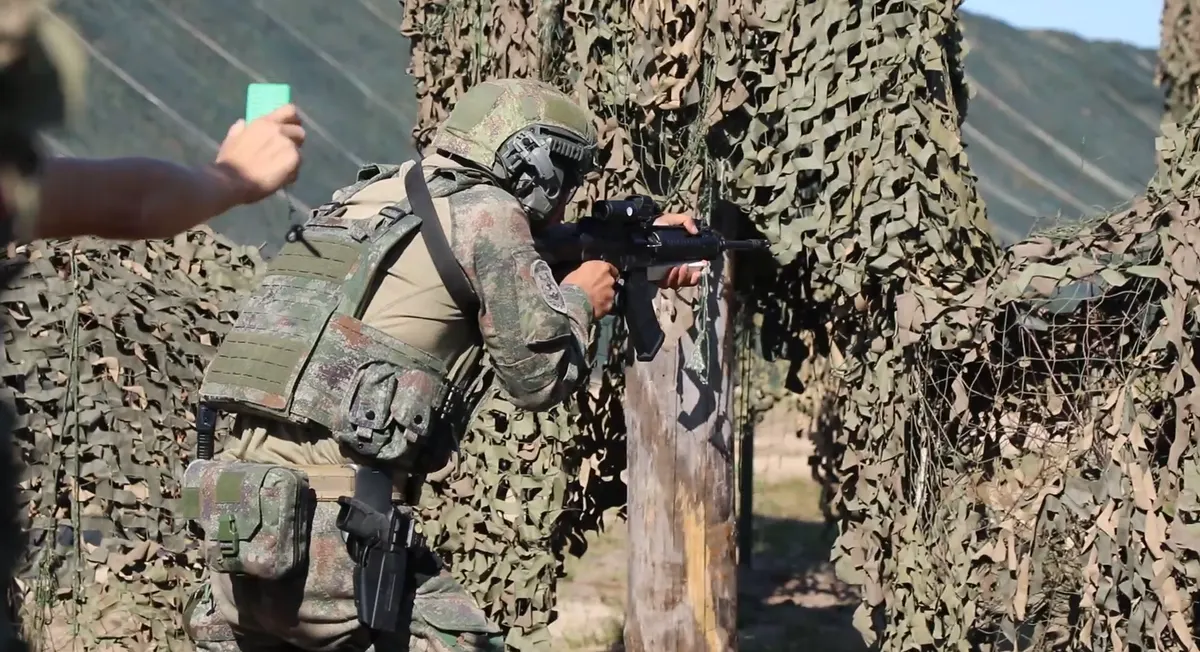
The PLA has begun replacing the QBU-88 with the QBU-191, a marksman variant of the newer modular QBZ-191 rifle family first shown publicly at the October 2019 military parade marking 70 years of the People's Republic. The number 191 in both designations denotes the year of development, 2019. The QBU-191 carries a shorter 470mm barrel, matches the QBU-88's roughly 800-meter effective range, and feeds from a larger 30-round magazine rather than the QBU-88's 10-round box. Replacement has begun in the Tibet Military District, where the QBU-191 is reportedly undergoing cold-weather and high-altitude testing, and the QBU-88 has already been formally retired from that specific district. In PLA Navy Marine Corps service, the QBU-88 is likewise being phased out in favor of a different rifle, the CS/LR4, illustrating that the QBU-88's active service life is now visibly winding down almost three decades after its 1997 introduction.


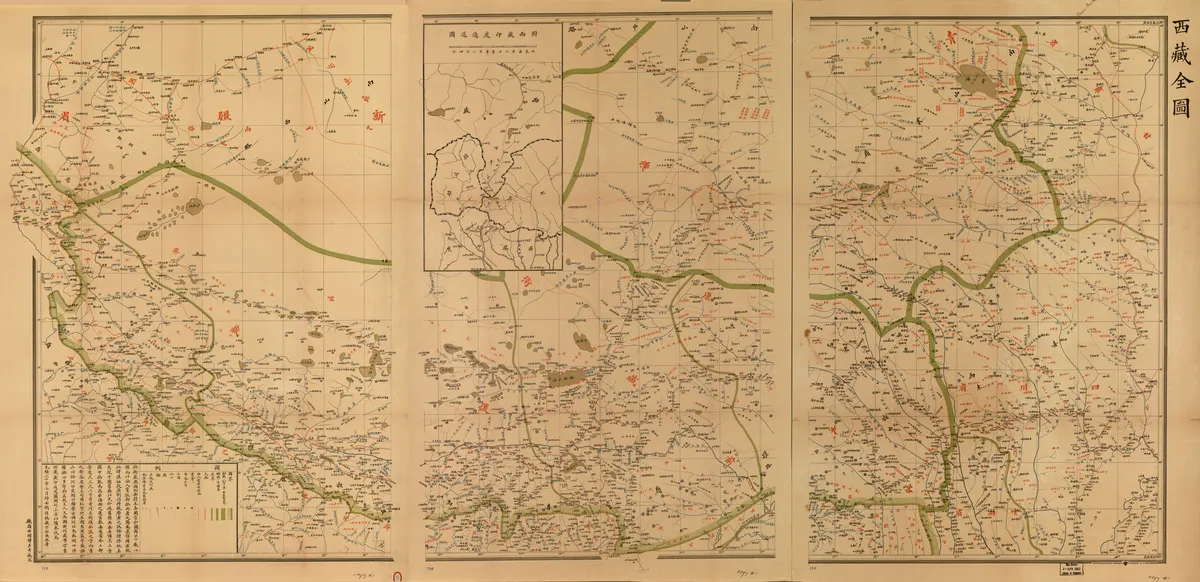
The People's Liberation Army remains the QBU-88's primary operator, spread across several branches with varying degrees of continued use. Wikipedia's operator listing, treated here with appropriate caution where it is the only source, credits the rifle to the PLA Ground Force, the PLA Navy Marine Corps (now phasing out in favor of the CS/LR4), the PLA Rocket Force Special Operations Regiment, and the People's Armed Police, which uses the QBU-88 as a sharpshooter weapon for internal security duties alongside some local Chinese police forces. The Tibet Military District previously fielded the rifle but has already retired it in favor of the newer QBU-191.
Outside China, Cambodia's Royal Gendarmerie is listed as a foreign operator of the QBU-88 in available references, though this claim rests on a single source with no independent corroboration found elsewhere, and should be read as a reported use rather than a confirmed export relationship. No confirmed unit procurement cost for the QBU-88 has surfaced in PLA-facing sources. A small batch of roughly ten semi-automatic-only QBU-88 rifles was imported into Canada around 2011 and sold to civilian collectors for approximately $3,000 CAD, with more recent secondary-market listings running $5,000 or higher, but that figure describes a civilian collector price rather than a military unit cost and does not answer what the QBU-88 costs for procurement purposes.
The QBU-88 and the SVD Dragunov sit on opposite ends of a decision China itself made twice, first cloning the SVD as the Type 79 and Type 85, then deliberately walking away from that same design in favor of a bullpup layout and a homegrown cartridge. Where the SVD Dragunov uses a conventional wood-and-steel stock with the magazine forward of the trigger group and fires the widely distributed 7.62×54mmR round shared across dozens of countries, the QBU-88 compresses the same basic rifle-plus-scope concept into a 920mm bullpup shell chambered for a cartridge only China uses. The practical result is a shorter, lighter package for roughly comparable effective range, at the cost of ammunition compatibility with any other country's supply chain.
| Spec | QBU-88 | SVD Dragunov |
|---|---|---|
| Layout | Bullpup | Conventional |
| Cartridge | 5.8x42mm DBP87 | 7.62x54mmR |
| Overall length | 920mm | 1,225mm |
| Barrel length | 640mm | 620mm |
| Magazine | 10-round detachable | 10-round detachable |
| Adopted | 1997 | 1963 |
The QBU-88 was not the only attempt to fold a Dragunov-pattern rifle into a bullpup shell. The Soviet Dragunov SVU took the SVD's own action and receiver and repackaged them in a bullpup housing decades before the QBU-88 existed, proving the concept was tempting to more than one country's small-arms designers even when the SVD itself never asked for it. Compared with general-purpose bullpup service rifles like the IWI Tavor and IWI Tavor 7, the QBU-88 is a narrower, purpose-built precision tool rather than a do-everything infantry rifle, reflecting its designated marksman role rather than the assault-rifle role those Israeli designs fill.
Within China's own arsenal, the closer comparison is the companion QBZ-95 bullpup assault rifle, adopted the same year and firing the same 5.8×42mm cartridge family. The QBZ-95 is a select-fire assault rifle built for volume of fire at shorter range, with a faster 244mm rifling twist tuned to the lighter standard-load bullet, while the QBU-88's tighter 206mm twist and semi-automatic-only action exist specifically to wring precision out of the heavier sniper loading at longer range. Together the two rifles show China building an entire generation of bullpup small arms around one cartridge family rather than mixing imported and domestic designs.


What caliber is the QBU-88? The QBU-88 is chambered in China's proprietary 5.8×42mm cartridge, standardized as DBP87, not in 5.56×45mm NATO or 7.62×54mmR. Only the export QBU-97A variant is chambered in 5.56×45mm NATO for foreign customers.
Is the QBU-88 still in service? Yes, though it is being gradually superseded. The PLA has begun fielding the newer QBU-191, a marksman variant of the modular QBZ-191 family, and the QBU-88 has already been retired from the Tibet Military District and is being phased out of PLA Navy Marine Corps service.
Is the QBU-88 based on the SVD Dragunov? Not directly. China's earlier Type 79 and Type 85 rifles were direct or refined clones of the SVD Dragunov, but the QBU-88 that replaced them is an indigenous bullpup design with its own cartridge, not an SVD derivative in layout or mechanism.
What does QBU stand for? QBU is a Chinese small-arms designation built from qiang (firearm), buqiang (rifle), and jiji (sniper), reflecting its role as a marksman/sniper rifle in PLA nomenclature.
How much does the QBU-88 cost? No confirmed PLA procurement unit cost has been published. The only public pricing comes from a small batch of civilian semi-automatic imports sold in Canada around 2011 for roughly $3,000 CAD, with later secondary-market listings above $5,000, figures that describe collector value rather than military unit cost.
What is the QBU-88's effective range? Commonly cited at 800 meters, though at least one source gives a broader 500 to 1,000 meter band depending on ammunition and optic.
- "QBU-88", Wikipedia — en.wikipedia.org ↩
- "QBU-88", Modern Firearms — modernfirearms.net ↩
- "Chinese Snipers Use Questionable Type 88 Rifle", Army Recognition — armyrecognition.com ↩
- "DBP87 5.8x42mm, China's High-Velocity Caliber", Guns & Ammo — gunsandammo.com ↩