


The L129A1 is a 7.62×51mm NATO semi-automatic designated marksman rifle built by the American firm Lewis Machine and Tool Company (LMT) for the British Armed Forces. It entered service in 2010 after being rushed through an Urgent Operational Requirement (UOR), the fast-track procurement process the United Kingdom uses to close capability gaps exposed during active operations.1 That gap was blunt. British infantry sections in Helmand were being engaged by Taliban riflemen and machine gunners at 500 to 800 meters, well beyond the effective reach of the section's 5.56mm SA80A2 rifles and light machine guns.2 The L129A1 filled that hole with one designated marksman per eight-man section, a rifle heavier and longer-ranged than a standard service rifle but still semi-automatic and section-portable, unlike a dedicated bolt-action sniper rifle.
- Extends section-level engagement range to 800m
- Semi-automatic, faster follow-up shots than a bolt gun
- Quick-change, free-floating barrel
- Fielded within months of the Urgent Operational Requirement
- Heavier than a standard 5.56mm service rifle
- 7.62mm ammunition adds section logistics burden
- Non-British production raised early sovereignty questions
- No full-automatic fire mode
The rifle is a member of the wider designated marksman rifle category, sitting between an assault rifle and a purpose-built sniper rifle in both range and rate of fire. Unlike most weapons rushed into service under a UOR, the L129A1 was never withdrawn once the war in Afghanistan wound down. It stayed in permanent British Army and Royal Marines inventory and is still being actively upgraded as of the mid-2020s.6 The winning LMT design beat out the German Heckler & Koch HK417 and the Belgian FN SCAR-H in the 2009 trial, an outcome that still surprises some observers given that LMT's rifle uses a direct gas impingement action rather than the gas-piston systems both rivals offered.1,4
The L129A1 is, mechanically, a British-service variant of LMT's own LM308MWS (Modular Weapon System), itself a refined commercial descendant of Eugene Stoner's SR-25/AR-10 platform.1 That heritage matters for one specific, often-misreported reason.
- İlk Üretim Yılı2010
- Hizmete Giriş Yılı2010
- TasarımcıLewis Machine and Tool Company (LM308MWS/LM7 base design)
- Ağırlık (Boş)4,4 kg
- Ağırlık (Yüklü)6,4 kg
- Halen HizmetteEvet
- Önemli KullanıcılarBritish Army, Royal Marines, New Zealand Defence Force
Critical correction on operating mechanism. The L129A1 is not gas-piston operated. It uses direct gas impingement, the same basic Stoner-pattern system as the SR-25 and the original AR-10, venting propellant gas directly into the bolt carrier through a tube rather than pushing a separate piston rod.1,4 Multiple independent specialist sources confirm this, including Forgotten Weapons, Small Arms Defense Journal, and Modern Firearms, all of which describe a gas-operated, rotating multi-lug bolt locking into a Stoner-style carrier.1,2,4 This is worth stressing because it runs against the era's conventional wisdom. Piston systems, like the one in the rival HK417, were marketed as the safer choice for sandy, dusty environments such as Helmand, yet the UK trial board picked the impingement-operated LMT design anyway.
- Fişek7.62x51mm NATO (.308 Winchester)
- Çap7,62 mm
- Kovan Uzunluğu51 mm
- Çap Sınıfı7.62mm NATO
- Kenar AteşlemeliHayır
- Kovansız MühimmatHayır
Beyond the operating system, the rifle's signature feature is its Monolithic Rail Platform (MRP), a single machined upper receiver that integrates the Picatinny optic rail directly into the receiver body rather than bolting a separate rail section on top. That one-piece construction keeps the optic mount rigid under recoil and heat, which matters for holding zero on a rifle expected to reach out to 800 meters.1 The barrel is a 16-inch (406mm) stainless-steel, quick-change unit that a unit armorer can swap by hand in minutes without special tools, with a rifling twist of one turn in 11.25 inches.2 Upper and lower receivers are forged 7075-T6 aluminum, the controls are fully ambidextrous, and the stock is an LMT SOPMOD unit adjustable across six length-of-pull positions.1 Feeding is from a 20-round detachable magazine in the same SR-25/AR-10 pattern, and the rifle offers only two fire settings, safe and semi-automatic, no burst and no full-auto.2 Standard optic is a Trijicon TA648 ACOG, a fixed 6x48 sight with a bullet-drop-compensating reticle calibrated to 7.62mm ballistics, typically paired in British service with a Trijicon RMR reflex sight for close-range work and backed by folding iron sights.2
- Mekanizma TipiGazlı
- Atış ModlarıSafe, semi-automatic
- Seçmeli AtışHayır
- Besleme SistemiÇıkarılabilir Şarjör
- Şarjör Kapasitesi20
- Emniyet TipiAmbidextrous safety selector
| Spec | L129A1 | Heckler & Koch HK417 |
|---|---|---|
| Operating system | Direct gas impingement | Gas piston |
| Caliber | 7.62×51mm NATO | 7.62×51mm NATO |
| Barrel length | 16 in (406mm) | 12 to 20 in, configuration-dependent |
| Weight (unloaded, no optic) | ~4.4 to 4.5 kg | 8.5 to 9.3 lb depending on barrel |
Sourced against the same 2009 UK trial data, with the L129A1's figures drawn from Forgotten Weapons and Small Arms Defense Journal and the HK417's from the same UK sharpshooter trial coverage.1,2
- Etkili Menzil (nokta)800 m
- Azami Menzil1.000 m
- Namlu Uzunluğu406 mm
- Yiv Adımı1 turn in 11.25 in, right-hand
- Nişangah TipiTrijicon TA648 ACOG 6x48 (BDC reticle) plus folding iron backup sights
- Optik RayıEvet
- Açık NişangahEvet
- Toplam Uzunluk990 mm
- Uzunluk (dipçik katlı)927 mm
- Gövde Malzemesi (Receiver)Forged 7075-T6 aluminum upper and lower receivers
- Katlanır / Toplanır DipçikEvet
- Bullpup DüzeniHayır
- Çift Yönlü KumandalarEvet
- ModülerlikMonolithic Rail Platform (MRP), user-removable quick-change free-floating barrel
- Bombaatar KabiliyetliHayır
- Gaz PistonluHayır
- Toplam Üretim3.000
- Üretim Başlangıcı2010
- Varyantlar3
British commanders in Helmand Province first identified the range gap during the intensified fighting that followed the 2006 troop increase into southern Afghanistan. Taliban fighters were engaging foot patrols and vehicle convoys from 500 to 800 meters, a distance the 5.56mm SA80A2 and section light machine guns could not answer effectively.2 The UK Ministry of Defence responded with an Urgent Operational Requirement, seeking a 7.62×51mm semi-automatic rifle that could hold its own out to 800 meters yet still work in close-quarters fighting inside compounds and villages.
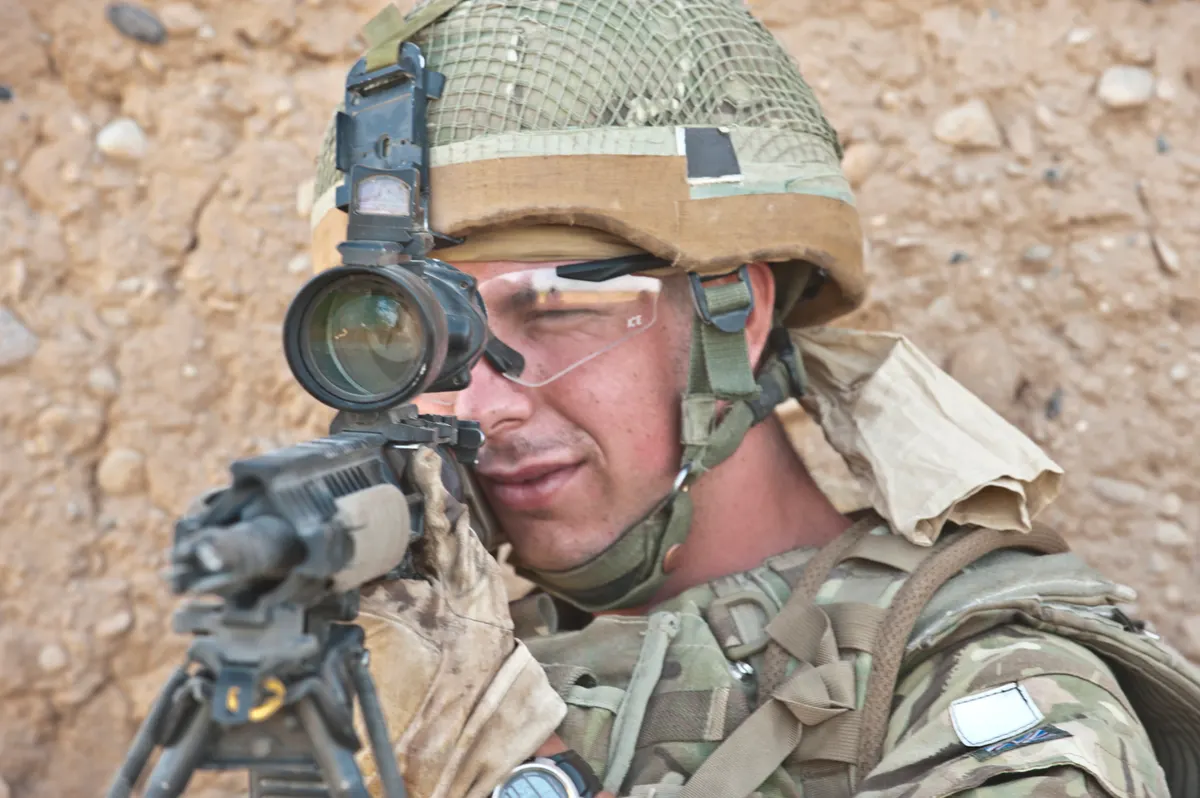
The trial that followed, widely dated to 2009, drew a strong field of established rifle makers. FN Herstal entered its SCAR-H, Sabre Defence entered its XR-10, and Knight's Armament Company and Oberland Arms are also reported to have submitted designs.1 The field narrowed to a final shootout between Heckler & Koch's HK417 and LMT's export-pattern LM7, the semi-automatic version of its LM308MWS. LMT had partnered with the UK-based importer Law Enforcement International (LEI Ltd), whose Greg Felton worked the submission alongside LMT's Karl Lewis, and that partnership's rifle won.1,2
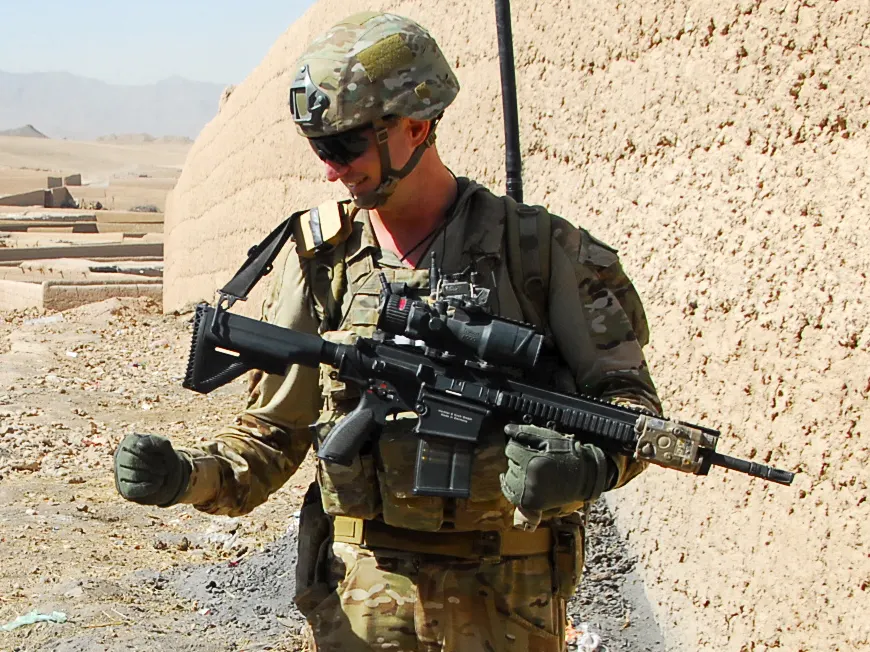
An initial order of 440 rifles followed in 2009, designated L129A1 in British service, at a total program cost of £1.5 million for that first batch.7 The designation stuck fast to real deployments. 40 Commando Royal Marines became the first unit to carry the L129A1 operationally, in Helmand from June 2010, and the 3rd Battalion, The Parachute Regiment (3 PARA) is documented using it in Afghanistan the following year.3,2
Fielding scaled quickly once the concept proved out. By December 2014, over 3,000 L129A1 rifles had been delivered to British forces, matching the total the type still carries in official inventory records.2 Most UOR-procured equipment gets shelved or scrapped once the operation that justified it ends, but the L129A1 did not follow that pattern. It stayed in permanent British service after the Helmand drawdown and through the wider withdrawal from Afghanistan in 2021, and by the 2020s the British Army and Royal Marines were funding a deliberate mid-life upgrade rather than a replacement program.6 In July 2024, the UK Ministry of Defence awarded LEI Ltd a direct, non-competitive £20 million contract to convert the existing L129A1 fleet to the upgraded L129A2 standard and to procure additional rifles to sustain fleet numbers during the transition.6
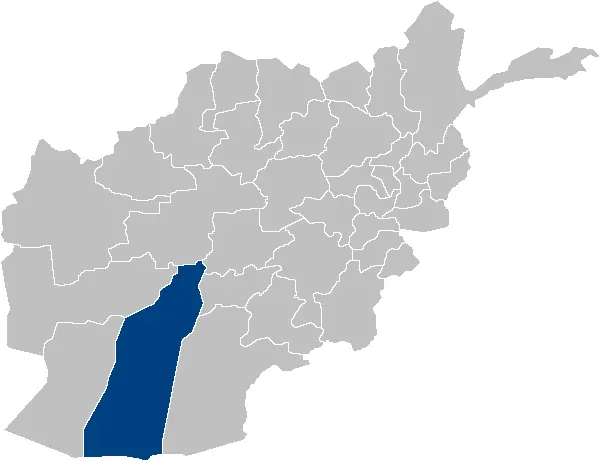
The L129A1's only substantiated combat theater is the war in Afghanistan (2001 to 2021), specifically the British Operation Herrick campaign in Helmand Province from 2010 onward.3,2 No reliable source documents the rifle in Iraq. British combat operations there had already ended in May 2009, before the L129A1 existed in service, so an occasional online claim pairing it with Iraq and Afghanistan does not hold up and should not be repeated as fact.
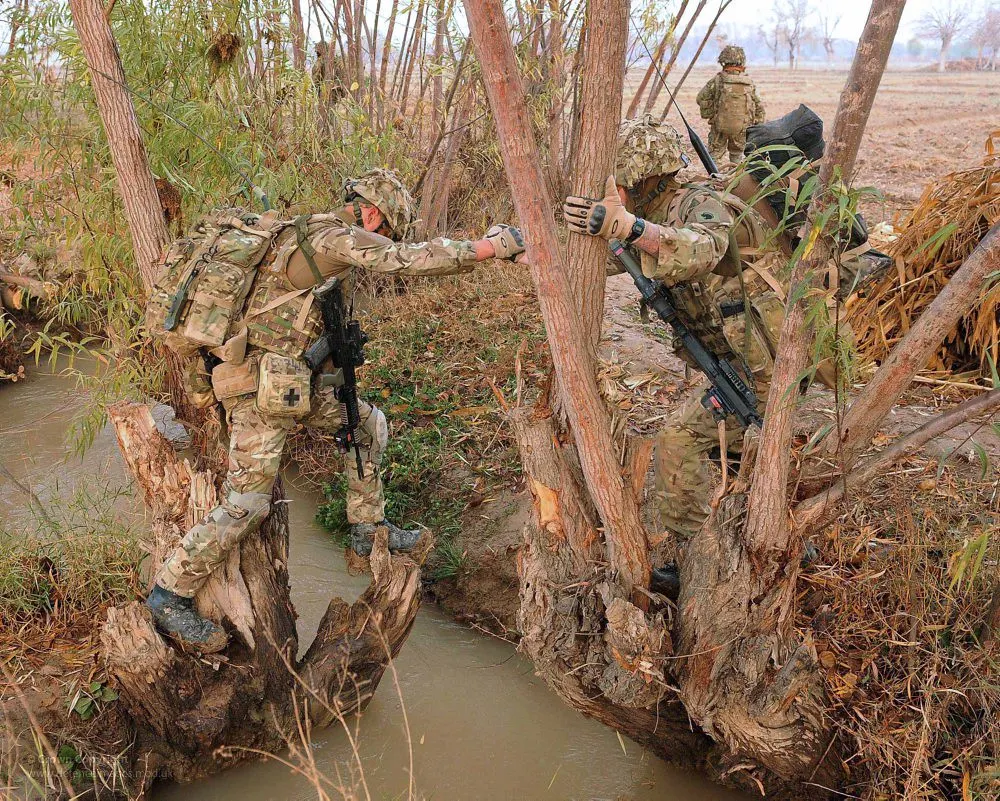
Within Helmand, the rifle filled a specific tactical role rather than a general-purpose one. Issued at roughly one designated marksman rifle per eight-man section, the L129A1 let a single soldier engage at ranges the rest of the section's 5.56mm weapons could not reach, without pulling a dedicated sniper pair off higher-value targets.2 Optional accessories reflected that role, including the Magnum Universal Night Sight (MUNS) night-vision attachment for after-dark overwatch.2
No verified record ties a specific named soldier or a documented long-range kill to the L129A1 specifically. That distinction belongs to a different British rifle entirely, the .338 Lapua L115A3 bolt-action sniper rifle used for Corporal Craig Harrison's 2,475-meter shot, and the two weapons should not be conflated despite both entering British service around the same period.
The base L129A1 described above remains the most numerous version in British service, but two purpose-built derivatives and one commercial spinoff exist.
The L129A1 SSW (Sniper Support Weapon) equips the spotter half of the British two-man sniper team that also carries the L115A3 bolt-action rifle chambered in .338 Lapua Magnum. The SSW variant swaps the standard ACOG for a Schmidt & Bender 3-12x50 scope under the British designation L17A2, adds a SureFire suppressor and a mini reflex sight, and deliberately shares its scope mount with the L115A3 so the spotter's optic can be transferred onto the sniper's rifle if the primary scope fails in the field.2
The L129A2, adopted first by the Royal Marines from September 2023, is a substantially reworked upgrade rather than a simple parts swap. It can be rebarreled to fire 6.5mm Creedmoor through an 18-inch, 1-in-8-twist barrel, extending effective range roughly 200 meters beyond the 7.62mm L129A1 while retaining backward compatibility with 7.62×51mm barrels.5,9 It adds a new ambidextrous MARS-H lower receiver, an M-LOK rail, an LMT adjustable stock, a Leupold Mark 5HD 3.6-18x44 scope with a Tremor 3 reticle, a HUXWRX HX-QD Helix 7.62 suppressor fitted as standard, and a new integral bipod.5,9 Crucially, the L129A2 keeps the same direct gas impingement operating system as its predecessor, it is a caliber and optics upgrade, not a change of operating mechanism.5
LMT also sells a semi-automatic-only civilian version, the LM308SSR (marketed as the L129A1 Reference Rifle), into the US commercial market, built to the same specifications as the British service rifle minus military-only features.


| Yıl | Alıcı | Adet | Tutar | Bugünkü Değer (2025) |
|---|---|---|---|---|
| 2009 |  Birleşik Krallık | 440 | — | — |
| — | Birleşik Krallık | 2,560 | — | — |
The United Kingdom is the L129A1's originating and largest operator, fielding it across the British Army and Royal Marines as the standard section-level designated marksman rifle.2 The New Zealand Defence Force adopted a modified L129A1 as its own designated marksman rifle in 2011, a genuine, separate adoption rather than a data error, though it should not be confused with New Zealand's later choice of the related 5.56mm MARS-L (also an LM7 derivative) as its standard service rifle in 2017.
Both militaries still list the L129A1 as active. Given the ongoing L129A2 conversion program, the type is not being retired so much as modernized in place, an unusual outcome for a rifle that started life as an emergency wartime purchase.6
The L129A1's defining rivalry is a mechanical irony rather than a simple win-loss story. Both it and the Heckler & Koch HK417 reached the final round of the UK's 2009 sharpshooter trial chambered in the same 7.62×51mm NATO cartridge, but they solved the same gas-operated problem two different ways. The HK417 uses a short-stroke gas piston, the design H&K built its post-G36 reputation on, marketed specifically on the claim that pistons run cleaner and cooler in dusty environments like Helmand. The L129A1 uses direct gas impingement, the Stoner-pattern system its SR-25 ancestor made famous, normally the design associated with more fouling near the chamber. The UK picked the impingement gun anyway, and it has run in British and New Zealand service for over a decade without the sand-related reliability problems the piston argument predicted.
A second comparison point worth separating out is technical ancestry rather than mechanism. The SR-25 is the L129A1's direct technical ancestor, the original Eugene Stoner AR-10 derivative that LMT's own LM308MWS/LM7 family, and therefore the L129A1 itself, was built from. Where the SR-25 was designed from the outset as a dedicated semi-automatic sniper platform for special operations use, the L129A1 is a general-issue section rifle, lighter demands on absolute precision in exchange for wider issue and a simpler user base.
| L129A1 | HK417 | SR-25 | |
|---|---|---|---|
| Country | United Kingdom (service) / United States (manufacture) | Germany | United States |
| Operating system | Direct gas impingement | Gas piston | Direct gas impingement |
| Role | Section-level designated marksman rifle | Designated marksman / sniper support | Special operations sniper/DMR platform |
The FN SCAR-H, also a 2009 trial entrant, is a more distant third point of comparison. It lost earlier in the same competition and never reached the HK417-versus-LMT final shootout, but as another 7.62mm, gas-piston-operated rifle offered to the same UK requirement, it underlines how much of an outlier the direct-impingement L129A1 was among its own competitors.1


What caliber does the L129A1 fire The L129A1 is chambered in 7.62×51mm NATO (.308 Winchester), firing standard NATO ball ammunition as well as the higher-grade L42A1 to L42A3 sniper-grade loads British forces issue for precision work.2
Is the L129A1 gas-piston or direct-impingement The L129A1 uses direct gas impingement, the same Stoner-pattern system as the AR-10 and SR-25, not a gas piston. This is confirmed independently by Forgotten Weapons, Small Arms Defense Journal, and Modern Firearms.1,2,4
Is the L129A1 still in service Yes. As of the mid-2020s the L129A1 remains active with the British Army and Royal Marines, and rather than being retired it is being converted to the upgraded L129A2 standard under a 2024 contract.6
How much does the L129A1 cost The original 2009 order of 440 rifles cost the UK Ministry of Defence a total of £1.5 million, which works out to roughly £3,400 per rifle as a derived, not officially quoted, unit figure. That is separate from the £20 million 2024 contract covering the L129A2 conversion and additional purchases.7,6
What is the effective range of the L129A1 The L129A1 is rated to an effective range of about 800 meters, with a maximum range out to roughly 1,000 meters, matching the standoff distance British forces needed to counter in Helmand.2
Who manufactures the L129A1 The L129A1 is manufactured by the American company Lewis Machine and Tool Company of West Milan, Illinois, in partnership with the UK importer Law Enforcement International (LEI Ltd), which handles British contracting and the L129A2 conversion program.1,6
- "British L129A1 Sharpshooter Rifle", Forgotten Weapons — forgottenweapons.com ↩
- "Sharpshooter, The UK's New L129A1 7.62x51mm Rifle", Small Arms Defense Journal — sadefensejournal.com ↩
- "Royal Marines are first to use new sharpshooter rifle in Helmand", UK Ministry of Defence — gov.uk ↩
- "L129A1 Sharpshooter", Modern Firearms — modernfirearms.net ↩
- "U.K. Royal Marines adopt a 6.5CM LMT as the L129A2, ft. HUXWRX and Leupold", The Firearm Blog — thefirearmblog.com ↩
- "UK starting mid-life improvement of L129A1 rifles", UK Defence Journal — ukdefencejournal.org.uk ↩
- Written question and answer on L129A1/L129A2 rifle programme costs, UK Parliament — questions-statements.parliament.uk ↩
- "L129A1 Sharpshooter Rifle", Squad Wiki — squad.fandom.com ↩
- "Britain's L129A2 Sharpshooter II, Range Tested and Fully Revealed", Small Arms Defense Journal — sadefensejournal.com ↩