


The Ashoura (also transliterated Ashura) is a two-stage, solid-fueled medium-range ballistic missile that Iran announced on 28 November 2007. Iranian defense minister Mostafa Mohammad-Najjar told state media that the country had built a missile with a range of roughly 2,000 to 2,500 kilometers, and Western analysts immediately flagged it as something new, the first Iranian ballistic missile built around a solid-fuel rocket motor rather than the liquid propellant used on the older Shahab-3 family.
- First confirmed Iranian solid-fuel MRBM design
- Faster launch preparation than liquid-fueled peers
- Road-mobile, harder to target preemptively
- Shares an industrial and propellant lineage with later, combat-tested designs
- Own operational history is essentially undocumented under this name
- Identity relative to Sejjil is disputed in open sources
- No independently confirmed flight test data exists
- 2007 performance claims came only from Iranian state announcements
That announcement is also where the certainty ends. No independent flight test under the name Ashoura has ever been confirmed by outside observers, and within about a year Western press and Pentagon officials had largely stopped using the name Ashoura and started calling the missile Sejjil instead. Some analysts treat Ashoura as an early or rumored working name for what became the Sejjil program. Others describe them as genuinely distinct efforts that happened to share a manufacturer, a propellant technology, and a rough size class. This article treats that ambiguity as a real, documented feature of the sourcing rather than something to paper over.
The name itself is not a technical designation. Ashura is the tenth day of the Islamic month of Muharram, the date of the martyrdom of Imam Hussein at Karbala and the most solemn day on the Shia religious calendar, a naming choice consistent with Iran's practice of giving missiles evocative religious and historical names rather than pure alphanumeric codes.
Because so much of what is publicly known about the Ashoura missile is either a single 2007 statement from Tehran or retrospective analysis written after the program had apparently been renamed, this entry leans harder than most on flagging what is genuinely verifiable against what is inference. The propulsion type, general size class, and the 2007 announcement date are solid. The exact diameter, the existence of an independent flight-test record, and the precise relationship to Sejjil are not. Readers researching Ashoura missile specifications or asking is Ashoura still in service should treat the answer as inseparable from the broader, better-documented Sejjil program described below.
Iran's own 2007 statements described the Ashoura missile as a two-stage design using solid rocket propellant in both stages, a genuine technical departure from the liquid-fueled Shahab-3 family that had anchored Iran's medium-range arsenal since the 1990s. Solid propellant lets a missile sit fully fueled in storage and launch on short notice, cutting the pre-launch window during which a mobile launcher can be located and struck, compared with a liquid-fueled missile that typically needs to be fueled in the field before firing.
- Füze Sınıfımrbm
- Hizmete Giriş Yılı2007
- Çap1,25 m
- HizmetteEvet
The Ashoura's reported range band of 2,000 to 2,500 kilometers and a single conventional warhead are consistent across most sourcing on the program, and it is described as road-mobile, carried and launched from a wheeled transporter erector launcher rather than a fixed silo. Guidance is reported as inertial, a self-contained navigation method that does not depend on external signals and is standard across Iran's medium-range inventory.
- Tahrik Tipikatı yakıtlı roket
- Kademe Sayısı2
- Yakıt Tipikatı
- Katı YakıtlıEvet
The 1.25 meter figure matters because it is one of the strongest technical threads tying Ashoura to Sejjil and to Ghadr-110. A 2009 assessment attributed to the Pentagon found that the missile profile of Sejjil closely matched Ashoura, Ghadr-110, and a fourth reported design called Samen, and concluded the four names most likely referred to overlapping or identical hardware rather than four distinct missiles.4 That is a stronger technical argument for treating Ashoura and Sejjil as the same underlying rocket than any single public statement from Tehran.
- Asgari Menzil2.000 km
- Azami Menzil2.500 km
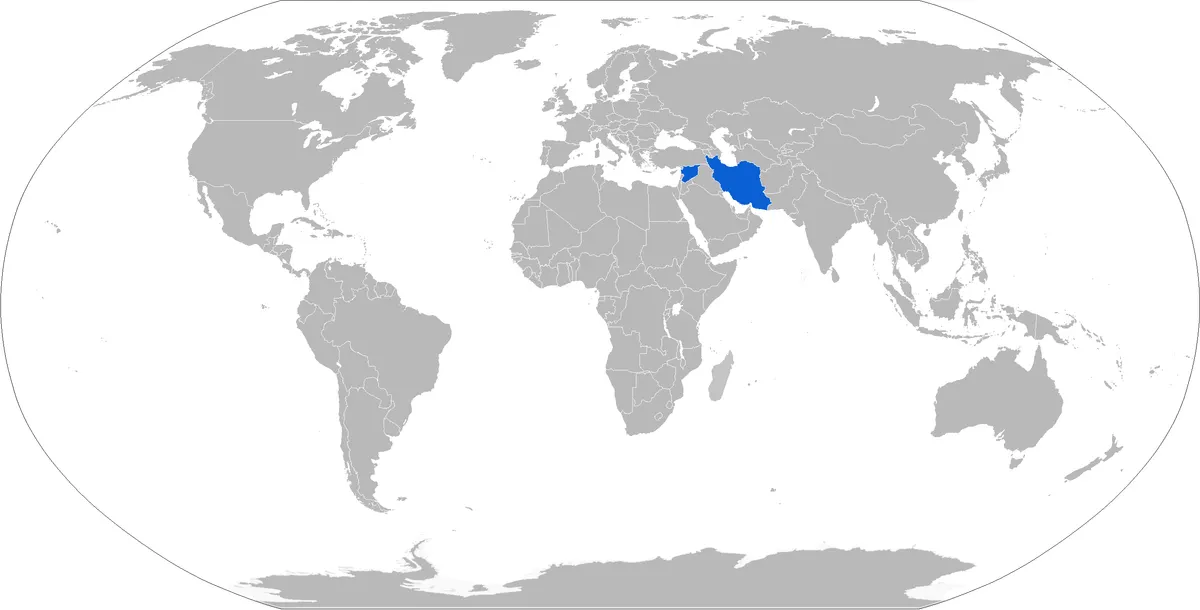
Iran's solid-propellant know-how did not appear from nothing in 2007. Multiple assessments trace the fuel chemistry and casting techniques used on the Ashoura and Sejjil missiles back to development work on the shorter-range Zelzal artillery rocket program through the 1990s, with unconfirmed reporting suggesting Chinese technical assistance along the way, both on propellant formulation and on the heavy transporter erector launcher vehicles the missile rides on.5,2 That lineage is one reason Western analysts treated the 2007 announcement as credible in kind even where Iran's specific performance claims were treated with skepticism, Iran had visibly been building toward a solid-fuel medium-range capability for years rather than claiming a sudden leap.
- Güdüm TipiAtaletsel / GPS
Reported launch weight for the shared airframe runs around 23,600 kilograms and length around 18 meters, with a payload that trades off against range, roughly 700 kilograms of warhead mass at 2,000 kilometers or up to about 1,500 kilograms at shorter distances.2,6 None of these secondary figures were published specifically under the Ashoura name in 2007, they come from later reporting on the Sejjil-designated missile that most analysts consider the same or a directly descended design.
- MIRVHayır
- Harp Başlığı / RV Sayısı1
- Konvansiyonel KabiliyetliEvet
| ÖZELLİK | Aşura (füze) | Kadir-110 |
|---|---|---|
| Azami Menzil | 2500 km | 2000 km |
| Çap | 1.25 m | — |
| Tahrik Tipi | katı yakıtlı roket | iki kademeli |
| Konuşlanma Şekli | karayolu mobil | karayolu mobil |
The comparison above is deliberately narrow. Ghadr-110 is usually described as a hybrid design, a liquid-fueled first stage descended from Shahab-3 paired with technology shared across Iran's missile-industrial base, while the Ashoura and Sejjil line is presented as solid-fueled in both stages. If the 1.25 meter body diameter really is shared across all three programs, as the Pentagon assessment suggests, it points to a common airframe and tooling base serving multiple propulsion strategies at once, a more efficient industrial answer than building entirely separate production lines for each missile.
- Konuşlanma Şeklikarayolu mobil
- Karayolu Hareketli (TEL)Evet
- Denizaltından FırlatılanHayır
- Kullanıcılar1
- İlk Test2007
- Patlayıcı Dolgu TipiBir
Iran's then-defense minister Mostafa Mohammad-Najjar announced the Ashoura missile on 28 November 2007, describing it to state broadcasters as one of the defense ministry's major recent achievements and specifically as never intended for use in an offensive strike against another country.1 The announcement gave a range figure of roughly 2,000 kilometers, enough to reach Israel and much of the Middle East and southeastern Europe from Iranian territory, and stressed the solid-fuel propulsion as the missile's defining feature.
The reaction in Washington was immediate and notably candid. U.S. Missile Defense Agency director Air Force Lieutenant General Henry Trey Obering told reporters the new missile was different from what the Pentagon had expected, and that its appearance was, in his own word, surprising, since defense planners had assumed Iran would reach that range class by upgrading the existing liquid-fueled Shahab-3 rather than fielding an entirely new solid-fuel design.7 Obering cited the Ashoura missile specifically while arguing for a European missile-defense radar and interceptor site, a sign of how quickly a single Iranian state announcement translated into concrete American defense-policy arguments.
Jane's Defence Weekly, one of the first specialist outlets to cover the announcement in detail, called the reported design a major breakthrough in Iranian missile technology and credited the Defense Industries Organization's Shahid Bagheri Industrial Group, operating under the Sanam Industrial Group known internally as Department 140, with developing it.1 The Defense Industries Organization is Iran's broader state defense-industrial holding company, and Iran later folded much of its strategic missile work under the umbrella of the Aerospace Industries Organization, the body most sources now associate with Sejjil-line production.
Whatever exactly happened between the 2007 statement and the missile's next public appearance, the naming had shifted by late 2008. On 12 to 13 November 2008, Iran conducted what state media and most subsequent Western reporting describe as the first flight test of a two-stage, solid-fuel medium-range missile under the name Sejjil, achieving a reported flight of roughly 800 kilometers.2,6 Jane's reported at the time that rumors circulating among analysts held that Ashoura had simply been renamed Sejjil between a winter 2008 prototype and a fall 2008 operational test article, which would make them the same missile under two labels rather than a program that was quietly replaced.9
Israeli missile-defense specialist Uzi Rubin, former director of Israel's Ballistic Missile Defense Organization, offered one of the more striking technical assessments of the resulting missile, noting that unlike most other Iranian systems, it bore no resemblance to any North Korean, Russian, Chinese, or Pakistani design he was aware of, an unusually genuine claim of indigenous origin for an Iranian strategic weapon.6 That assessment, made under the Sejjil name, is frequently read back onto the Ashoura announcement given how closely the two are believed to be connected, though it was never made about a missile specifically labeled Ashoura.
By around 2014 the missile, by then uniformly referred to as Sejjil or Sejjil-2, was widely assessed as operational within Iran's medium-range force, having passed through further tests across 2009 to 2011 focused on guidance refinement.2 The Ashoura name itself simply fell out of use in defense reporting during that period, without any formal announcement that the program had been renamed, cancelled, or absorbed.
No confirmed combat use exists under the Ashoura name specifically, and this article does not claim otherwise. What can be said is that the missile line most analysts connect to the 2007 Ashoura announcement, by then branded Sejjil, saw its first confirmed combat employment during the 2026 Iran war, as part of Iran's long-running exchange of strikes with Israel.
Iranian state media reported that a Sejjil-designated missile was launched for the first time in the conflict during the 54th wave of the True Promise 4 operation in March 2026, with Iranian outlets and several Middle East news services describing it as a dancing missile that Israeli air defenses struggled to intercept.10,11 Independent, non-Iranian confirmation of the specific missile type involved in any single strike is limited, which is a recurring problem across Iranian missile reporting generally and is not unique to this program.
One reported strike from that wave landed close to a building used by a U.S. consular official in Tel Aviv, according to regional press accounts, illustrating the kind of target set Iran's medium-range solid-fuel missiles are capable of reaching without staging through shorter-range systems.12,13 Whether the specific airframe fired in that strike descends directly from the hardware Najjar described in 2007, or represents a substantially redesigned missile that merely inherited the shared 1.25 meter body and the Ashoura/Sejjil naming confusion, is not something open-source reporting can resolve with confidence.
The clearest documented variant path runs through the Sejjil name rather than Ashoura. Sejjil-1 is generally treated as the baseline two-stage design tested from November 2008 onward, with a reported range around 2,000 to 2,400 kilometers.2 Sejjil-2 is used inconsistently in sourcing, sometimes describing a genuinely improved guidance package introduced during the 2009 to 2011 test series and sometimes simply referring to a later test of the same baseline missile, and it is the designation most commonly attached to the missile in current combat reporting from the 2026 Iran war.10
An unconfirmed Sejjil-3 has been reported with three stages, a launch weight near 38,000 kilograms, and a maximum range approaching 4,000 kilometers, which if real would represent a significant escalation beyond anything associated with the original Ashoura announcement.2 No independent flight test of a three-stage Sejjil variant has been publicly confirmed, and this figure should be read as a reported capability claim rather than an established fact.
The Pentagon assessment discussed above also names a fourth designation, Samen, as sharing the same missile profile, though Samen appears far less often in open-source reporting than either Ashoura or Sejjil and should be treated as the least documented of the four names.4 Taken together, the Ashoura, Sejjil, Ghadr-110, and Samen names illustrate a broader pattern in Iranian missile reporting, where a single hardware lineage can accumulate several public names across different announcements, tests, and journalistic sources, making a clean variant tree harder to construct than for most other missile programs in this leaf.

The Ashoura missile's only reported operator is Iran itself, specifically the Aerospace Force of the Islamic Revolutionary Guard Corps, the branch of Iran's Islamic Revolutionary Guard Corps responsible for the country's ballistic missile force. No export of this missile, under either the Ashoura or Sejjil designation, has ever been reported, unlike some of Iran's shorter-range systems that have reached Yemen's Houthi movement and other regional partners.
Because the Ashoura name has not appeared in operational reporting for well over a decade, questions like is Ashoura still in service are better answered by pointing to the Sejjil program's documented operational status than by looking for Ashoura-specific confirmation, which does not really exist past 2008. If the two are the same missile, as most analysts believe, then the answer is a qualified yes, filtered entirely through Sejjil-branded sourcing. If they are genuinely different programs, the Ashoura missile's current status is simply unknown.
Ghadr-110 and the Ashoura or Sejjil line were reportedly built around the same 1.25 meter body diameter, according to the Pentagon assessment already discussed, which makes them a more informative comparison than their raw range figures alone would suggest. Ghadr-110 keeps a liquid-fueled first stage inherited from the Shahab-3 family, trading faster launch readiness for a more mature, better-tested propulsion base, while the Ashoura and Sejjil design commits fully to solid propellant in both stages, prioritizing shorter launch-preparation time and better survivability against preemptive strikes on its mobile launcher.3,2 A buyer or planner choosing between the two approaches in the late 2000s was really choosing between proven liquid technology and a newer, higher-risk solid-fuel bet, and Iran ultimately pursued both in parallel rather than picking one.
Sejjil is the more informative comparison of the two, and also the more complicated one, since most of the available technical record for what is now called the Ashoura missile is really the Sejjil record read backward. Where the two names can be meaningfully separated at all, the separation is temporal rather than technical, Ashoura is the label used for the 2007 announcement and immediate aftermath, Sejjil is the label used for every confirmed test, guidance upgrade, and combat employment from November 2008 onward. Readers searching for Ashoura vs Sejjil should understand that most working defense analysts do not draw a hard line between them at all.


Is Ashoura the same missile as Sejjil? Most defense analysts believe so, based on a Pentagon assessment finding that Ashoura, Sejjil, Ghadr-110, and a fourth design called Samen share the same missile profile, and on Jane's Defence Weekly reporting that Ashoura was renamed Sejjil sometime in 2008.4,9 No source has definitively confirmed they are identical hardware, and the possibility of a genuinely separate but related program cannot be ruled out from open sources.
What is the Ashoura missile's range? Iran's 2007 announcement and most subsequent sourcing give a range of roughly 2,000 to 2,500 kilometers, sufficient to reach Israel, the Gulf states, and parts of southeastern Europe from Iranian territory.1,2
Who manufactures the Ashoura missile? Jane's Defence Weekly credited the Shahid Bagheri Industrial Group, operating under Iran's Defense Industries Organization, with the original 2007 design, while later Sejjil-designated production is generally attributed to Iran's Aerospace Industries Organization.1,2
Is the Ashoura missile still in service? There is no confirmed Ashoura-specific operational record past 2008. If Ashoura and Sejjil are the same program, as most analysts believe, then yes, in the form of the Sejjil missile that Iran has continued testing and, as of 2026, using in combat against Israel.10
What is the Ashoura missile's diameter? A widely repeated figure of 2.2 meters appears to be an error. Every technically detailed source on this missile family gives a body diameter of 1.25 meters, matching Sejjil and Ghadr-110.2,3
Has the Ashoura missile been used in combat? Not under that name specifically. The closely related Sejjil missile saw its first reported combat use in March 2026 during the 2026 Iran war.10,12
- "Ashoura (missile)", Wikipedia — en.wikipedia.org) ↩
- "Sejjil", Missile Threat, CSIS Missile Defense Project — missilethreat.csis.org ↩
- "Sejjil/Ghadr-110", GlobalSecurity.org — globalsecurity.org ↩
- "Iran's Ashura Missile Mystery", Arms Control Wonk — armscontrolwonk.com ↩
- "Iran Lauds Development of Solid-Fuel Missile", Arms Control Association — armscontrol.org ↩
- "Sejjil", Wikipedia — en.wikipedia.org ↩
- "Pentagon Sees Iranian 'Ashura' Missile As Worrying Development", Aerospace Daily & Defense Report via ABC News — abcnews.com ↩
- "Iranian Ballistic Missile Models", Nuclear Threat Initiative — nti.org ↩
- "Ghadr-110", Wikipedia — en.wikipedia.org ↩
- "Iran's IRGC Announces 54th Strike Wave on Israel, Debuts Sejjil Missile", Kurdistan24 — kurdistan24.net ↩
- "Sejjil-2: Iran's two-stage, solid-fuel ballistic missile that has become Israel's nightmare", Press TV — presstv.ir ↩
- "Sejjil Enters the War: Iranian Missile Hits Near US Consular Residence in Tel Aviv", Palestine Chronicle — palestinechronicle.com ↩
- "ALERT: Iran Claims First Use Sejjil Missile Fired with Potential Submunition Payload Over Israel", Army Recognition — armyrecognition.com ↩