


The Etemad missile is an Iranian liquid-fueled medium-range ballistic missile, publicly unveiled in Tehran on February 2, 2025.1 The name means trust in Persian, and Iranian state media presented it as the newest addition to the Aerospace Industries Organization's missile line, sharing the same 16 meter length and 1.25 meter diameter as the older Emad missile unveiled a decade earlier.2,3 Before writing this entry, it was worth checking whether Etemad could instead be a Houthi (Ansar Allah) system fielded in Yemen, since Iran's regional missile transfers have produced several look-alike or renamed weapons. No Yemeni missile carrying this name appears in any parade, arsenal survey, or sanctions listing reviewed for this article. Every confirmed reference to Etemad traces back to Iran's own Ministry of Defense and to Iran-focused missile trackers, so this article treats it strictly as an Iranian, IRGC-linked system, not a Houthi one.
- Shares a mature, already-produced Shahab-3 family airframe
- Claimed maneuverable warhead with in-flight course correction
- Domestically built, no foreign supply chain dependency
- Extends coverage to Gulf and Israeli targets from Iranian soil
- No independent verification of real accuracy or CEP
- Liquid propellant means slower launch readiness than newer solid-fuel types
- Never confirmed by name in any battle-damage assessment
- Unclear what capability it adds over the existing Emad
As a medium-range ballistic missile (MRBM), Etemad sits in the same broad category page as the rest of Iran's MRBM force. Officials claimed a maximum range of 1,700 km, enough to put targets across the Arabian Peninsula, the Gulf states, and Israel within reach from launch sites inside Iran.1,4 Beyond the length, diameter, and range figures repeated across Iranian and Western reporting, hard technical detail is thin. No independent flight-test data, verified accuracy figures, or combat record exist for Etemad specifically as of mid-2026, which is unusual for a missile that has now been in the public domain for over a year.
Etemad's disclosed dimensions, 16 meters long and 1.25 meters in diameter, are identical to the figures published for the Emad missile in 2015.2,6 Both weapons descend from the same Shahab-3 liquid-propellant airframe that Iran has iterated on for two decades, and the Emad itself is documented as a derivative with a redesigned reentry vehicle rather than a wholly new rocket.6 That shared airframe is why some open-source military commentary has described Etemad as an incrementally upgraded Emad rather than a distinct missile family, though Iranian state coverage presented it as a new named system in its own right.1,3
- Füze Sınıfımedium_range_ballistic_missile
- Hizmete Giriş Yılı2025
- TasarımcıAerospace Industries Organization
- Uzunluk16 m
- Çap1,25 m
- HizmetteEvet
Iranian officials describe Etemad's warhead as capable of adjusting its flight path during the terminal phase to improve strike precision, a feature usually associated with a maneuverable reentry vehicle and terminal guidance.1,2 Neither the actual payload weight nor a credible circular error probable figure has been published for Etemad. That absence matters because the Emad, Etemad's closest relative, made the same precision claims in 2015 (a roughly 500 meter CEP) and was later assessed very differently after its first documented combat use. A report shared with the Associated Press and reviewed by the James Martin Center for Nonproliferation Studies measured the April 2024 Emad strike near Nevatim Air Base at closer to a 1.2 km CEP, well short of the missile's marketed accuracy.7 Etemad's designers may have addressed that gap, but no comparable independent assessment of an Etemad strike exists yet.
- Tahrik Tipiliquid_fuel
- Kademe Sayısı1
- Yakıt Tipiliquid_fuel
- Katı YakıtlıHayır
- Soğuk FırlatmaHayır
- KanisterliHayır
Etemad is liquid-fueled and single-stage, the same propulsion choice as Emad and the newer Khorramshahr, and unlike the solid-fuel Sejjil or Kheibarshekan, it is not solid-fuel, which means longer fueling procedures and a slower launch sequence relative to Iran's newer solid-propellant missiles. It is road-mobile rather than silo-based, matching the transporter-erector-launcher basing used across the rest of the Aerospace Force of the Islamic Revolutionary Guard Corps's medium-range arsenal.
- Azami Menzil1.700 km
- Harp Başlığı Tipiconventional
- NükleerHayır
- TermonükleerHayır
- MIRVHayır
- Harp Başlığı / RV Sayısı1
- Konvansiyonel KabiliyetliEvet
- Konuşlanma Şekliroad_mobile
- Silo KonuşluHayır
- Karayolu Hareketli (TEL)Evet
- Rayda HareketliHayır
- Denizaltından FırlatılanHayır
- Kullanıcılar1
- İlk Test2025
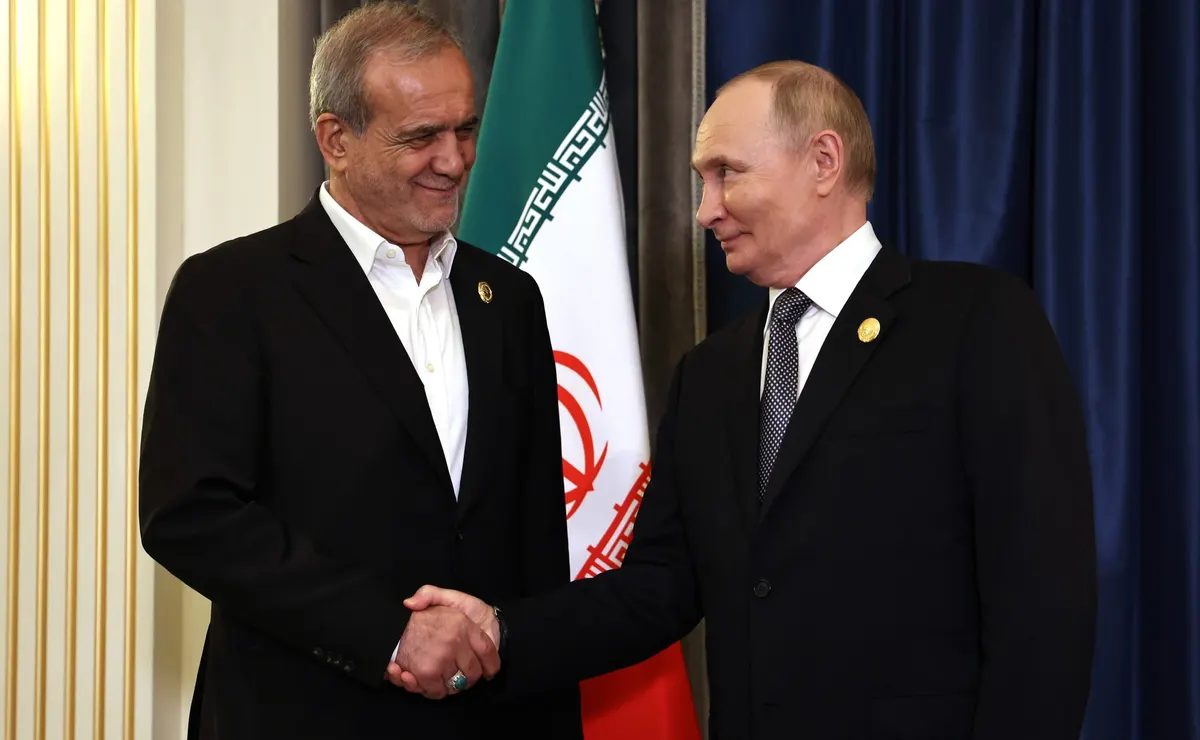
Iran unveiled the Etemad ballistic missile at a Tehran exhibition of the Defense Ministry's aerospace achievements on February 2, 2025, in an event attended by President Masoud Pezeshkian.1,3 The reveal fell on Iran's National Aerospace Day, itself folded into the Ten-Day Dawn commemorations of the 1979 revolution's anniversary, and the missile was presented alongside three new satellites, the Pars-1 and Pars-2 remote-sensing spacecraft and the Navak communications satellite.5,8 Pezeshkian told the audience that Iran's expanding defense and space capabilities were meant to deter any attack on the country rather than to threaten its neighbors.3
The timing sat inside a broader run of Iranian weapons disclosures in early 2025, coming only days after Iran had revealed the Ghadr-380 cruise missile, and against a backdrop of intensified Iranian military messaging following Donald Trump's return to the American presidency in January 2025.3 Analysts read the pairing of a new ballistic missile with new satellite hardware as a signal of Iran's space-launch and reentry-vehicle programs advancing together, since both draw on overlapping guidance and propulsion expertise inside the Aerospace Industries Organization.3,5
Iran fought two major air and missile wars with Israel within roughly a year of Etemad's unveiling, the Twelve-Day War of June 2025 and the wider 2026 Iran war that ran from late February through early June 2026.9,10 In both conflicts Iran drew heavily on its liquid- and solid-fueled medium-range force, firing hundreds of missiles from an arsenal that independent trackers put at roughly 2,000 medium-range weapons at the start of the 2026 fighting.11 Analysts at JINSA, tracking Iran's order of battle through the 2026 war, singled out the Kheibarshekan, Sejjil, Ghadr, and Emad as the mid-weight systems doing most of the damage to hardened targets.11 Etemad does not appear by name in that same order-of-battle reporting, which is worth stating plainly rather than assuming, since it suggests independent analysts either cannot distinguish Etemad launches from Emad launches by wreckage alone, or that Etemad has not been fired in meaningful numbers, or both.
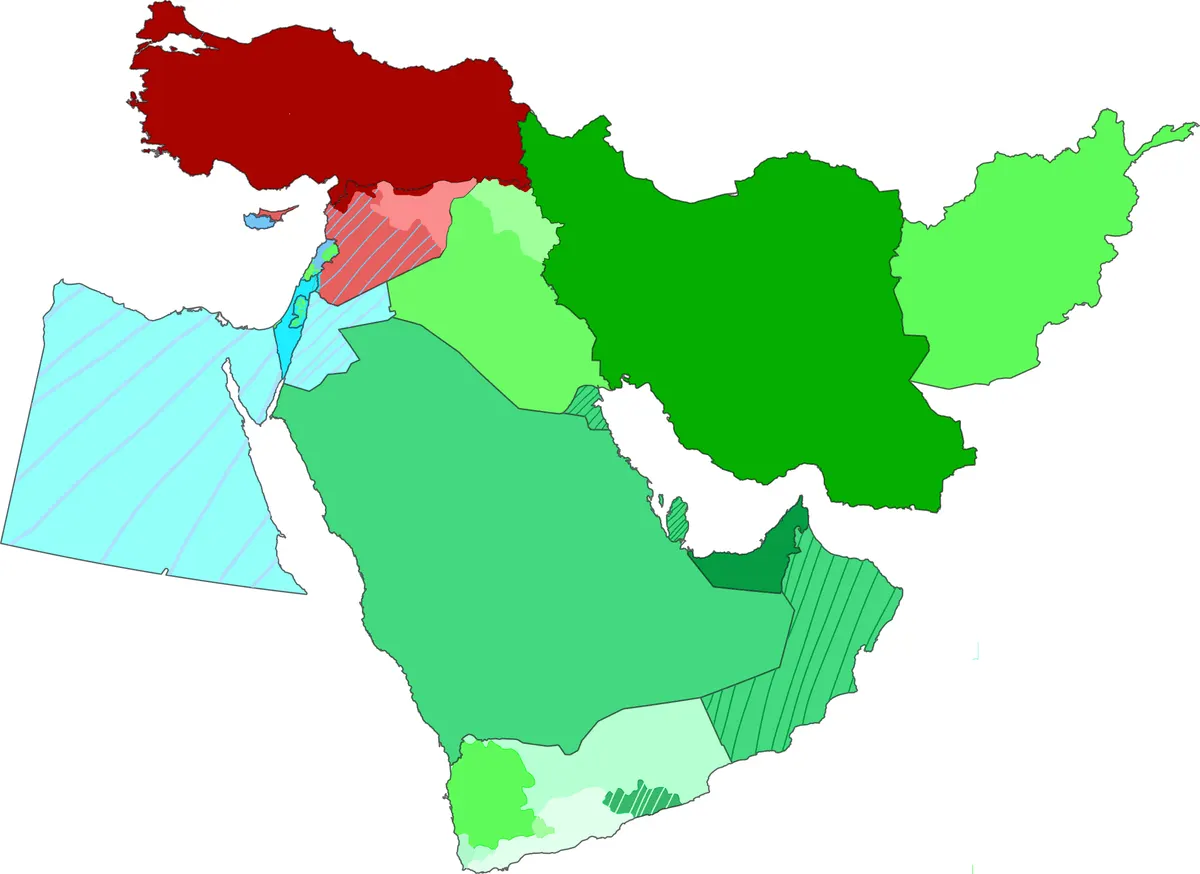
No sourced Iranian state media claim, IDF statement, or independent battle-damage assessment reviewed for this article names Etemad as the missile used in any specific strike during either war. That is a genuine gap in the public record, not an editorial choice to omit it. By contrast, the 2024 Nevatim strike involving the Emad missile was independently assessed and publicly reported by name, which shows that this kind of missile-specific confirmation is possible when analysts have wreckage or telemetry to work with.7

Iran is the only confirmed operator of the Etemad missile, fielded under the Aerospace Force of the Islamic Revolutionary Guard Corps, which controls Iran's strategic ballistic missile force separately from the conventional army.1,11 No export sale, transfer, or license-production arrangement has been reported for Etemad. That absence is directly relevant to the naming question raised at the start of this article. Iran has a well-documented history of shipping missile components, guidance parts, and complete rounds to the Houthi movement in Yemen, but the missiles the Houthis have publicly displayed and fired at Saudi Arabia and Israel carry entirely different names, such as Burkan, Quds, and Palestine variants, none of which any tracked source ties to Etemad.12
Etemad's closest technical relative is not a rival missile from another country, it is Iran's own Emad, and that relationship is the most useful lens for judging what Etemad actually adds. Both missiles are 16 meters long, 1.25 meters in diameter, liquid-fueled, and built around a maneuverable reentry vehicle intended to improve terminal accuracy over the plain Shahab-3 airframe.2,6 Where Emad's 2015 unveiling came with a specific claimed CEP of around 500 meters, Etemad's 2025 unveiling repeated the range and dimension figures but was noticeably quieter on accuracy, an omission that reads differently once the Emad's real-world Nevatim performance became public.1,6,7 Whether Etemad represents a genuine guidance upgrade or largely a rebrand of the same airframe with updated internals is not something any source consulted for this article can answer with confidence.
A more useful contrast in role, rather than airframe, is with the solid-fuel Sejjil. Sejjil trades Etemad's liquid propellant for a two-stage solid motor that cuts launch preparation time and extends range past 2,000 km, at the cost of a smaller, lighter payload class.13 Iran's decision to keep developing liquid-fueled missiles like Etemad alongside solid-fuel programs like Sejjil and Kheibarshekan suggests the two propulsion types serve different roles in Iranian planning, with liquid missiles like Etemad favored where a heavier throw weight matters more than launch speed.
| Missile | Propellant | Max Range | First Shown |
|---|---|---|---|
| Etemad | Liquid | 1,700 km | 2025 |
| Emad | Liquid | 1,700 km | 2015 |
| Sejjil | Solid | 2,500 km | 2008 |


Is the Etemad missile Iranian or a Houthi weapon? Etemad is an Iranian ballistic missile, unveiled by Iran's Defense Ministry in Tehran in February 2025. No Houthi-displayed missile in Yemen has been linked to this name by any source reviewed here.1,12
What is the Etemad missile's range? Iranian officials and multiple outlets reporting the 2025 unveiling put its maximum range at 1,700 km, enough to reach Israel and the Gulf states from Iranian territory.1,4
How does the Etemad missile differ from the Emad missile? The two share identical published length, diameter, and range figures. Etemad's guidance is described the same way Emad's was in 2015, as a maneuverable warhead with terminal course correction, and no source has detailed a specific technical improvement over Emad.2,6
Is the Etemad missile still in service? Iran presented it as an operational addition to its missile force at the 2025 unveiling, but no independent confirmation of serial production numbers or unit deployment exists as of this writing.1,3
Does the Etemad missile have a disclosed unit cost? No unit price for the Etemad missile has been published by Iran or by any independent tracker consulted for this article.
- "Iran unveils new ballistic missile that can reach Israel", The Times of Israel — timesofisrael.com ↩
- "Iran Unveils New Etamad 1700 km Ballistic Missile Strengthening Threats at International Level", Army Recognition — armyrecognition.com ↩
- "Iran unveils new ballistic missile in show of force", Dawn — dawn.com ↩
- "Iran unveils new ballistic missile called Etemad", Iran Watch — iranwatch.org ↩
- "'Etemad' Ballistic Missile, Three Satellites Unveiled", Kayhan International — kayhan.ir ↩
- "Emad (missile)", Wikipedia — en.wikipedia.org) ↩
- "Report calls into question accuracy of Iran's advanced Emad missile", The Times of Israel — timesofisrael.com ↩
- "Iran Unveils New Ballistic Missile, Satellites", Caspian News — caspiannews.com ↩
- "Twelve-Day War", Wikipedia — en.wikipedia.org ↩
- "2026 Iran war", Wikipedia — en.wikipedia.org ↩
- "Iran's Missile Firepower Has Almost Run Out", JINSA — jinsa.org ↩
- "Houthi Arsenal", Wilson Center — wilsoncenter.org ↩
- "Emad, Ghadr (Shahab-3 Variants)", CSIS Missile Threat — missilethreat.csis.org ↩