

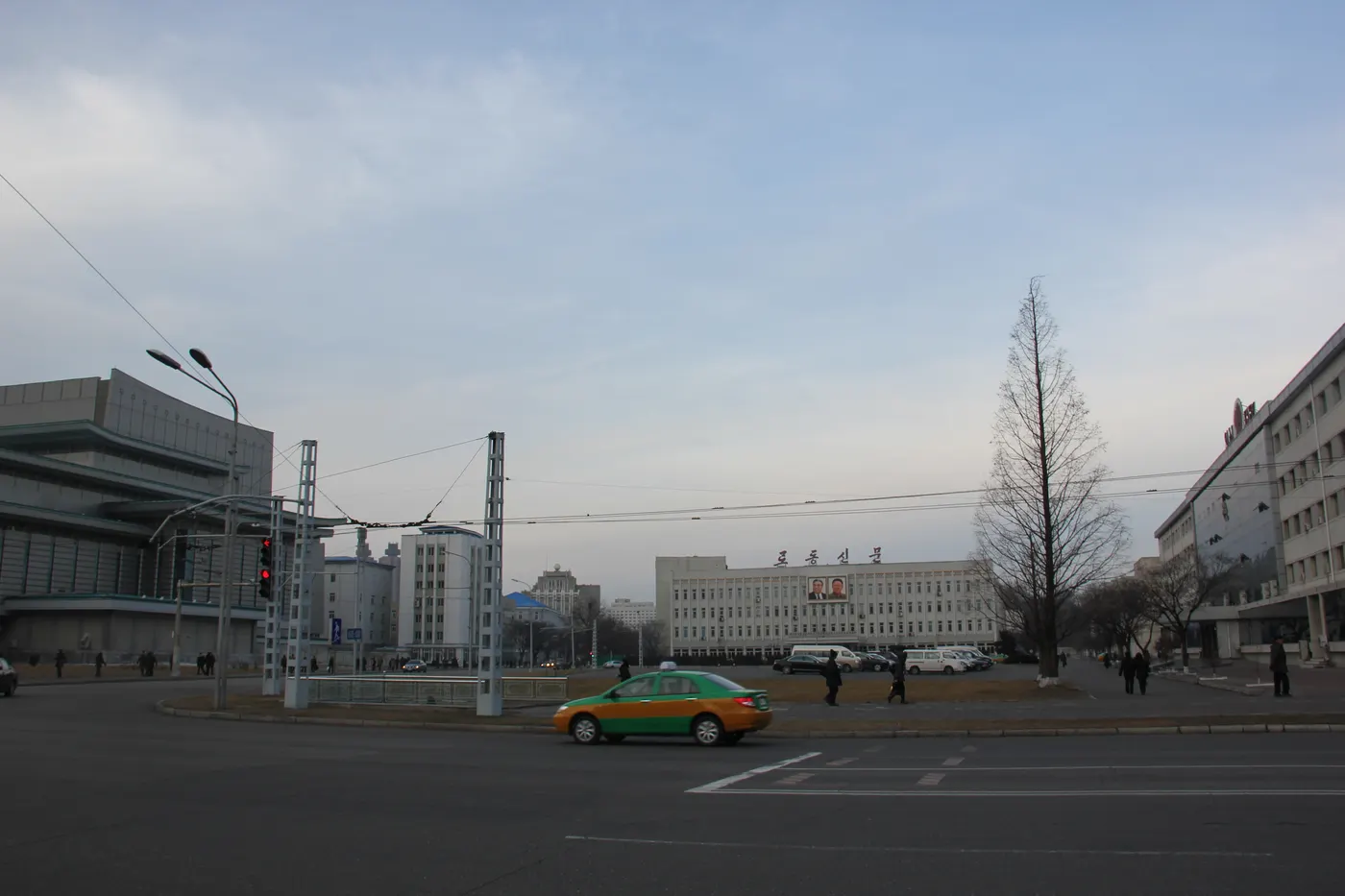

The Hwasong-7, better known abroad by its Western intelligence designation Rodong-1 (also transliterated Nodong-1 or No Dong), is a single-stage, road-mobile medium-range ballistic missile developed by North Korea in the 1980s. It is the single most consequential missile design North Korea has ever produced. Its own combat record is empty. What other countries built from it, however, is what secures its place in the region's missile history. Iran's Shahab-3 and Pakistan's Ghauri-I are both direct technological descendants of the Hwasong-7, and both nations received actual North Korean-built airframes before starting production of their own. The Hwasong-7's range of roughly 1,200 to 1,500 kilometers was the first North Korean missile capable of reaching all of Japan, and it remains the backbone of Pyongyang's medium-range strike force decades after its 1993 debut, even as newer solid-fuel systems enter service alongside it.
- Proven design behind two other nations' strategic missile forces
- Simple liquid-propellant design, easy for less advanced states to copy
- Range covers all of Japan and most regional US basing
- Basis for at least two other countries' strategic missile forces
- Poor accuracy against anything but large, undefended targets
- Liquid propellant means slow launch preparation, vulnerable TEL exposure
- No confirmed combat use of its own, unlike some derivatives
- Increasingly outdated next to North Korea's newer solid-fuel missiles
North Korea scaled the missile up from the Soviet R-17 Elbrus (NATO reporting name Scud), a weapon it had already reverse-engineered once before to produce the shorter-ranged Hwasong-5.1 The Hwasong-7 roughly doubles the Scud's cross-sectional diameter and stretches the airframe to carry far more propellant, trading the older missile's short-range battlefield role for a genuine theater-strike weapon.2 North Korea's own instructors, engineers and, according to declassified intelligence, a group of Soviet rocket specialists who were nearly smuggled out of Russia in 1992, all had a hand in the program.3
The missile carries a warhead in the range of 700 to 1,200 kilograms, depending on the source consulted, and Western estimates of its accuracy have swung wildly over the decades, from an early circular error probable (CEP) of several kilometers down to a revised figure near 190 meters once analysts concluded North Korea had adopted a spin-stabilization technique for the reentry vehicle.3 Its guidance is inertial, with later batches reportedly supplementing the inertial platform with GPS updates.4 Iraq, Egypt, Syria and Libya were all, at various points, reported customers or would-be customers, though only Iran and Pakistan are confirmed to have taken delivery of complete missiles.5 The Hwasong-7 sits at the center of the broader family of medium-range ballistic missiles that North Korea, Iran and Pakistan built their early strategic forces around, and its story is inseparable from the Cold War-era proliferation network that moved Scud technology from the Soviet Union through Egypt to Pyongyang and back out again to Tehran and Islamabad.
The Hwasong-7 is a single-stage, liquid-propellant missile burning TM-185 (a kerosene and gasoline blend) against the AK-27I oxidizer (nitric acid with nitrogen tetroxide), the same storable hypergolic-adjacent propellant combination North Korea inherited from Soviet Scud technology by way of Egypt.3 Published dimensions vary by source. North Korea's own state media and most Western open-source estimates put the airframe at 15.6 meters long and 1.25 meters in diameter, while the Center for Strategic and International Studies (CSIS) Missile Threat project cites a slightly larger 16.2 meters by 1.36 meters, illustrating how little confirmed data exists on a program North Korea has never opened to inspection.5 Launch weight is generally given as somewhere between 15,850 and 16,500 kilograms.
- Füze SınıfıOrta menzilli balistik füze
- Hizmete Giriş Yılı1995
- Uzunluk15,6 m
- Çap1,25 m
- HizmetteEvet
The missile rides on a locally modified copy of the Soviet MAZ-543 wheeled chassis, a five-axle transporter erector launcher (TEL) design North Korea has reproduced domestically for decades.4 That mobility is the Hwasong-7's core operational advantage over a fixed, silo-based system. It can deploy, erect, fuel and fire from unprepared roadside positions across North Korea's mountainous interior, complicating any effort to track or preemptively strike its launchers. The tradeoff is fuel handling. Liquid-propellant missiles of this generation are not stored fueled and ready, so a Hwasong-7 battery needs a meaningful window, generally estimated at under an hour, to complete fueling and erection before launch, a window that a well-cued adversary's reconnaissance-strike complex could in principle exploit.
- Tahrik Tipisıvı yakıtlı
- Kademe Sayısı1
- Yakıt TipiTM-185 ve AK-27I
- Katı YakıtlıHayır
- Soğuk FırlatmaHayır
- KanisterliHayır
Engineering-wise, the missile's single large engine (believed to trace to Isayev-bureau combustion-chamber technology used on earlier Soviet designs) replaces the cluster of smaller vernier and main engines that some other Scud derivatives use, giving it a comparatively simple, four-times-the-Scud propellant tankage in one continuous airframe rather than a bolted-together stretch.3 The warhead separates from the missile body prior to reentry, a design step North Korea's earlier Hwasong-5 and Hwasong-6 Scud copies did not reliably employ, and this separation is part of why later CEP estimates for the Hwasong-7 improved so sharply from initial Cold War-era guesses.3 Reentry speed is estimated near Mach 7, based on North Korean lofted-trajectory test data from 2014 that put a missile of this class at roughly 160 kilometers apogee on a shortened 650-kilometer flight.4
- Asgari Menzil1.200 km
- Azami Menzil1.500 km
- Apoje (En Yüksek Nokta)160 km
- Geri Giriş Hızı (Mach)7 Mach
- Taşıma Kapasitesi (Throw Weight)1.000 kg
- Alçak Yörünge KabiliyetliHayır
Warhead options are generally described as conventional high explosive in the 700-to-1,200-kilogram range, with a nuclear payload assessed by some agencies as technically feasible given North Korea's warhead miniaturization progress on other systems, though no confirmed nuclear test of a Hwasong-7-specific reentry vehicle exists.5 The missile carries no penetration aids and is not maneuverable during reentry, meaning its accuracy is effectively fixed by launch conditions rather than adjustable in flight, a real limitation against any target smaller than a city district, airbase or port facility.
- Dairesel Hata Olasılığı (CEP)190 m
- Güdüm TipiAtaletsel / GPS
- Terminal GüdümHayır
- Manevra Kabiliyetli Geri Giriş Aracı (MaRV)Hayır
- Delme Yardımcıları / YemlerHayır
- Harp Başlığı TipiKonvansiyonel, muhtemelen nükleer
- NükleerHayır
- TermonükleerHayır
- MIRVHayır
- Harp Başlığı / RV Sayısı1
- Konvansiyonel KabiliyetliEvet
- Konuşlanma Şeklikarayolu mobil
- Silo KonuşluHayır
- Karayolu Hareketli (TEL)Evet
- Rayda HareketliHayır
- Denizaltından FırlatılanHayır
- Toplam Üretim200
- Kullanıcılar3
- İlk Test1993
- Patlayıcı Dolgu TipiKonvansiyonel, muhtemelen nükleer
North Korea's Hwasong-7 program began with a much smaller missile. In the early 1980s, Egypt transferred at least two Soviet-built R-17 Elbrus (Scud-B) missiles and their transporter erector launchers to Pyongyang, reportedly in return for North Korean assistance during the 1973 and subsequent Arab-Israeli tensions.2 North Korean engineers spent the mid-1980s reverse-engineering that airframe into the Hwasong-5, a near-copy of the Scud-B that entered service around 1987, and its slightly stretched cousin, the Hwasong-6.1 The Hwasong-7 was the next, far more ambitious step, a design that kept the same basic propellant chemistry and aerodynamic shape but scaled the whole airframe up to roughly double the Scud's cross-sectional area, chasing a range increase from a few hundred kilometers to well over a thousand.2
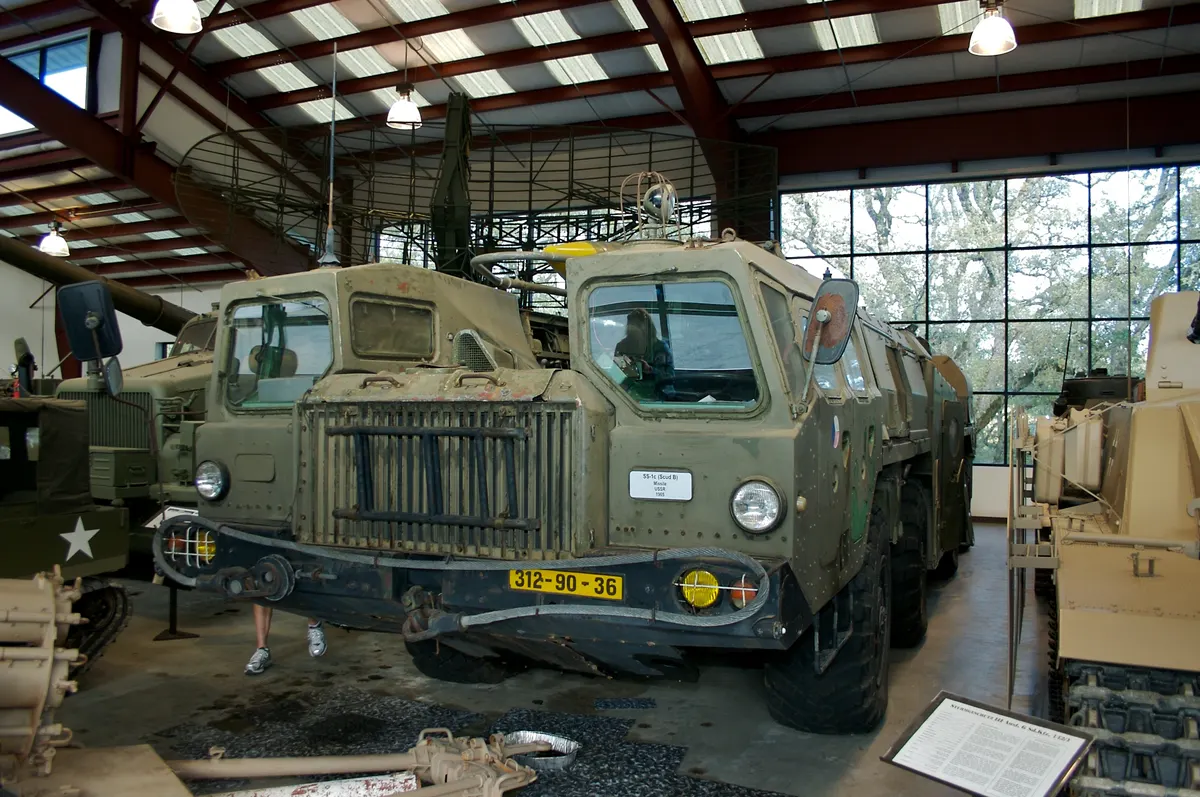
US reconnaissance satellites first photographed the new missile on a launch stand at the Musudan-ri test facility in May 1990, and Russian counterintelligence intercepted more than sixty Soviet missile specialists, including personnel connected to the Makeyev submarine-launched ballistic missile design bureau, attempting to leave for North Korea in October 1992, a strong indicator of outside technical help during the program's most difficult stretch.3 The Hwasong-7 achieved its first confirmed flight test on May 29 and 30, 1993, launching from a site near Hwadae County toward a target buoy in the Sea of Japan roughly 500 kilometers downrange. The missile struck close enough to the buoy to surprise Western analysts who had not expected North Korea to master that level of guidance accuracy on a first-generation indigenous design.6 Delegations from Iran and Pakistan are widely reported to have observed the test, a detail that lines up closely with both countries' missile programs accelerating in the years that followed.2
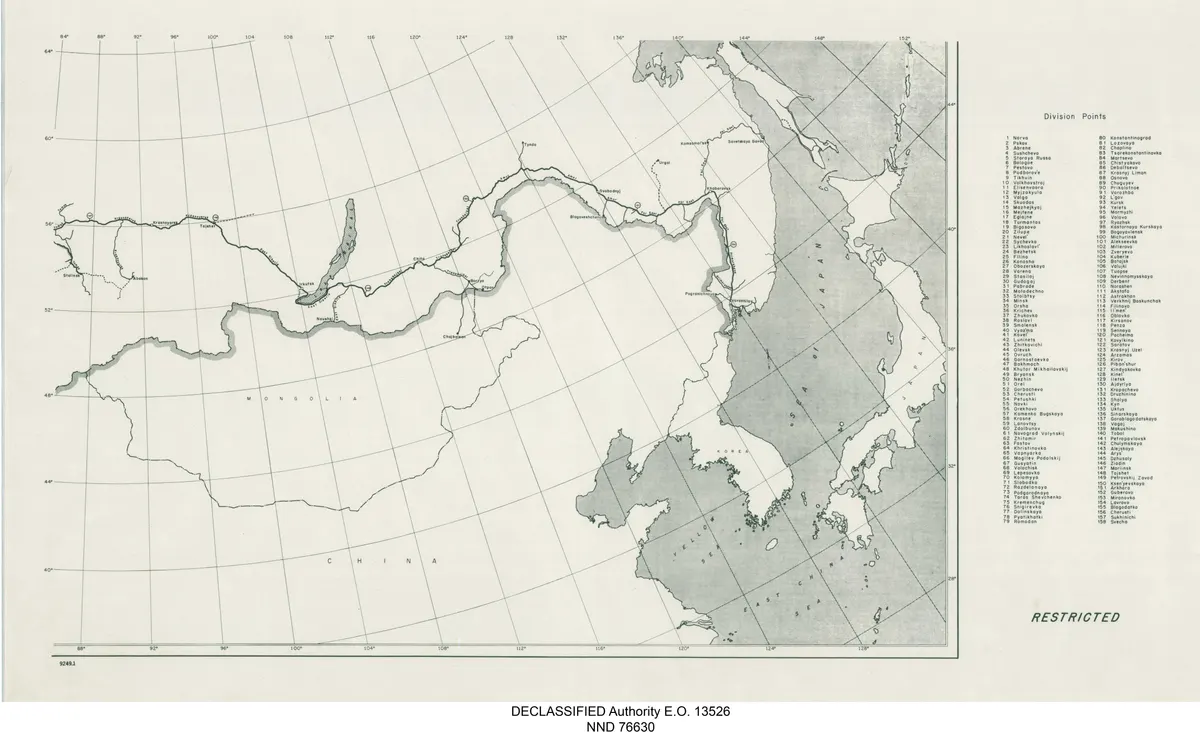
Serial production reportedly began in 1994, though estimates of when the Hwasong-7 actually entered operational service with the Korean People's Army range from 1995 to 1998. Then-US Secretary of Defense William Cohen stated in July 1998 that North Korea had completed development of the missile, while South Korean military sources that same period put confirmed deployed numbers in the single digits, illustrating how uncertain even basic fielding milestones were at the time.3 By the early 2000s the missile was firmly in North Korean service, and Western intelligence estimates of the inventory grew substantially over the following decade, from roughly 200 missiles in 2006 to around 300 by 2009, before declining toward fewer than 100 dedicated Hwasong-7 launch vehicles by 2020 as North Korea's strategic force diversified into newer systems.5
North Korea continued periodic test launches of the type through the 2000s and 2010s, including tests in 2006, 2009 and a notable March 2014 pair of lofted-trajectory shots that flew roughly 650 kilometers while reaching an apogee near 160 kilometers and speeds around Mach 7, data South Korean and Japanese analysts used to refine reentry performance estimates.4 A cluster of three missiles fired from North Korea's west coast into the Sea of Japan in September 2016 was widely reported at the time as the missile's most recent large-scale test event of that period.4 Since the mid-2010s, the type has increasingly shared its road-mobile medium-range role with newer North Korean systems including the Hwasong-9 (an extended-range Scud derivative) and the Hwasong-10 (an intermediate-range design drawing on separate Soviet submarine-missile technology), while solid-fuel short-range systems have taken over much of the tactical strike mission the Hwasong-7 originally shared with older Scud copies.
The Hwasong-7 itself has no confirmed combat launch. North Korea has fired the type only in test conditions, always into the Sea of Japan or on lofted domestic trajectories, and has never used it operationally against another state.5 Its role in actual conflicts has instead run through the countries that received the underlying technology. Pakistan's Ghauri-I and Iran's Shahab-3, both direct derivatives, entered service as the backbone of their national medium-range deterrents rather than as battlefield weapons, and neither has been fired in anger in the way that generic Scud-family missiles were used during the Iran-Iraq War or the Syrian civil war.7
Iraq is a useful illustration of how proliferation attempts around this missile frequently failed rather than succeeded. Baghdad reportedly paid North Korea a roughly $10 million down payment for a batch of Hwasong-7-derived missiles in the early 1990s, but North Korea never delivered the weapons and refused to refund the money, leaving Iraq's ballistic missile force dependent instead on its own Scud-derived Al Hussein and Al Samoud programs through the 1991 Gulf War and beyond.5 Libya's reported 1999 contract for roughly fifty systems similarly collapsed, this time because Tripoli dismantled its unconventional weapons programs in 2003 before any confirmed delivery took place.4 Syria is separately reported, though not conclusively confirmed, to have received a batch of missiles and launchers around 2000, a claim that if accurate would place Hwasong-7-derived hardware within reach of the Syrian civil war's missile campaigns, though the confirmed Scud-family strikes documented in that conflict are generally attributed to older, shorter-ranged Syrian Scud variants rather than to the Hwasong-7 specifically.4
North Korea's own inventory includes at least one notable operational refinement, an extended-range sub-variant that Western analysts have at times distinguished under separate tracking names (including references to a Scud-D designation), reflecting incremental improvements to propellant load and guidance rather than a wholesale redesign.3 In December 2022, North Korea test-launched two medium-range missiles from the Sohae Satellite Launching Station carrying a distinct white-painted airframe, described by state media as evaluating camera and data-transmission components for a future reconnaissance satellite, a rare case of the Hwasong-7's basic airframe being repurposed as a sensor testbed rather than a strike weapon.4
The two genuinely significant variant programs, however, sit outside North Korea entirely. Iran's Shahab-3 began as a direct structural copy of the Hwasong-7, built initially from imported components and later from a domestic production line reportedly set up near Isfahan with North Korean technical assistance, before Iranian engineers pushed the design further into the Ghadr and Emad missile families with extended range and improved reentry vehicles.8 Pakistan's Ghauri-I, formally designated Hatf-V, followed the same path, entering testing in 1998 after Pakistan received a reported 12 to 25 complete North Korean-built missiles as the technical basis for its own Army Strategic Forces Command deterrent.5 Both programs remain close enough to the original Hwasong-7 airframe that open-source analysts still describe them as carrying high structural and mechanical commonality with the North Korean parent design, even decades into independent development.3

 İran
 Pakistan
North Korea remains the primary operator, fielding the Hwasong-7 within the Korean People's Army Strategic Force alongside newer solid-fuel systems, with independent estimates in the mid-2020s still counting roughly a dozen dedicated launchers even as the broader force has diversified.5 Iran operates the missile both in its original imported form and, far more significantly, through the locally produced Shahab-3 family under the Islamic Revolutionary Guard Corps Aerospace Force.8 Pakistan fields the Ghauri-I under Army Strategic Forces Command as one leg of its nuclear-capable missile force, alongside solid-fuel systems of separate Chinese-linked origin.5
Egypt, despite its foundational role supplying the original Scud-B airframes that made the whole program possible, is not considered an operator of the Hwasong-7 itself, and Iraq's reported 1990s purchase never resulted in a delivered, fielded missile.5 Syria's reported acquisition around 2000 remains unconfirmed by independent open-source evidence, and Libya's near-purchase collapsed entirely before delivery.4 The result is a genuinely short confirmed operator list, just three states, next to a proliferation footprint that reaches considerably further through licensed and unlicensed derivative programs.
The most direct point of comparison is the missile the Hwasong-7 was built from rather than a genuine rival design, the Soviet R-17 Elbrus (Scud-B). Where the R-17 tops out around 300 kilometers of range with a roughly 1,000-kilogram warhead, the Hwasong-7 roughly quadruples that reach while carrying a comparable or larger payload, a jump achieved mainly by scaling the airframe rather than by adopting new propulsion technology. The two missiles share the same basic propellant chemistry and a broadly similar aerodynamic shape, but they occupy very different roles. The R-17 is a corps-level battlefield weapon meant to hit targets tens to a couple hundred kilometers behind the front line, while the Hwasong-7 is a genuine theater-strike system meant to threaten cities, ports and airbases across an entire country the size of Japan or Pakistan.
| Spec | Hwasong-7 (Rodong-1) | R-17 Elbrus (Scud-B) |
|---|---|---|
| Length | ~15.6-16.2 m | ~11.25 m |
| Range | ~1,200-1,500 km | ~300 km |
| Warhead | 700-1,200 kg | ~985-1,000 kg |
| CEP | ~190-2,000 m (estimates vary) | ~450 m |
Set against Iran's Shahab-3, the comparison runs the other direction. The Shahab-3 shares the Hwasong-7's basic airframe closely enough that independent analysts describe the two as carrying high structural commonality, yet Iran pushed its version considerably further after the initial transfer, extending range into the Ghadr and Emad follow-ons and investing far more heavily in warhead miniaturization and reentry vehicle refinement than North Korea appears to have done with the baseline Hwasong-7 itself.8 The practical difference today is less about the missile's core engineering, since both trace to the same original design, and more about which country kept investing in it. North Korea moved its own newer development effort toward solid-fuel systems, while Iran continued extending the liquid-propellant Hwasong-7 concept for another two decades.


What is the range of the Hwasong-7 (Rodong-1) missile? Most Western estimates place the Hwasong-7's range between 1,200 and 1,500 kilometers, enough to reach all of Japan and most of South Korea from launch positions inside North Korea.5
Is the Hwasong-7 still in service? Yes. North Korea continues to field the Hwasong-7 within its Strategic Force, though inventory estimates have declined from a peak of around 300 missiles in the late 2000s to roughly a dozen dedicated launchers by the mid-2020s as newer solid-fuel systems take over part of its role.5
What is the difference between the Hwasong-7 and Iran's Shahab-3? The Shahab-3 is a licensed and later domestically produced derivative of the Hwasong-7, built initially from North Korean components before Iran developed its own production line and extended the design into longer-range Ghadr and Emad variants.8
How accurate is the Rodong-1 missile? Early Cold War-era estimates put the Hwasong-7's CEP at several kilometers, but later analysis, following North Korea's adoption of warhead spin-stabilization, revised that figure down to roughly 190 meters at maximum range, a large improvement though still well short of a modern precision-guided weapon.3
Why is the Hwasong-7 also called Rodong-1 or No Dong? Rodong-1 (also written Nodong-1 or No Dong-1) is the Western intelligence community's tracking designation, drawn from the North Korean town of Nodong near the missile's early test activity, while Hwasong-7 is North Korea's own internal naming convention within its broader Hwasong missile family.5
- "Hwasong-5", Wikipedia — en.wikipedia.org ↩
- "Rodong-1: How North Korea's First Strategic Missile Program Came to Involve Pakistan, Iran and Egypt", Military Watch Magazine — militarywatchmagazine.com ↩
- "No-Dong 1", Federation of American Scientists — nuke.fas.org ↩
- "Hwasong-7", Wikipedia — en.wikipedia.org ↩
- "Hwasong-7 (Nodong 1)", Missile Threat, CSIS — missilethreat.csis.org ↩
- "1993 North Korean missile test", Wikipedia — en.wikipedia.org ↩
- "Shahab-3", Missile Threat, CSIS — missilethreat.csis.org ↩
- "North Korea-Iran Missile Cooperation", 38 North — 38north.org ↩